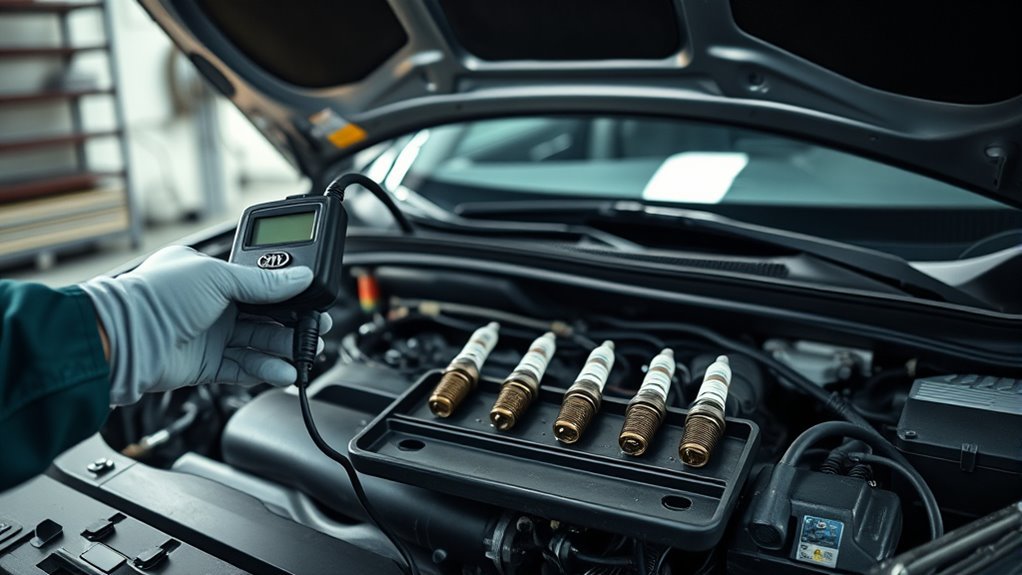
You’ll notice a Camry misfire as rough idle, sputtering, loss of power, poor fuel economy, and a flashing check-engine light. Start by inspecting spark plugs, coil boots, and wiring for damage or arcing. Backprobe injectors for battery voltage and pulse, and use an OBD‑II scanner to capture P030x codes. Swap coils or pull connectors to confirm the bad cylinder, then replace faulty coils/plugs and check compression—keep going to learn systematic fixes and prevention.
Camry Misfire Symptoms: What to Look and Listen For

How can you tell if your Camry is misfiring? You’ll notice a flashing check engine light while driving — an urgent flag that a misfire’s occurring and needs immediate diagnostic tools attention. Listen for rough idling, sputtering or popping from the engine at low RPMs, and a clear loss of acceleration or overall engine performance. You’ll feel a lack of power under load and see poorer fuel economy as incomplete combustion wastes fuel.
To localize the issue without unnecessary steps, disconnecting an ignition coil connector and observing a drastic RPM drop will usually identify the affected cylinder directly. That targeted test, coupled with a code reader, narrows your response: you won’t be guessing. These signs free you from uncertainty; they let you act decisively, prioritize repairs, and reclaim reliable motion. Stay focused on measurable symptoms and controlled tests to restore power and autonomy to your Camry.
Quick Triage: Rule Out Plugs, Wiring, and Fuel in Minutes
Start by pulling the plugs and inspecting their electrodes for wear, carbon fouling, or improper gap that could cause immediate misfires. Visually and physically check ignition wiring and coil boots for cracks, corrosion, or loose connections that interrupt spark delivery. Then verify fuel injector power and operation—use an OBD-II scanner to watch injector pulse and confirm fuel pressure is within spec.
Inspect Spark Plug Condition
If your Camry’s running rough or throwing a cylinder code, quickly pull and inspect the spark plugs and wiring to rule out ignition faults before deeper diagnostics. Perform a focused spark plug inspection and wear assessment: look for cracked porcelain, heavy carbon deposits, oil fouling, or electrode erosion. Measure the gap and compare to Toyota specs; an incorrect gap alters spark energy and causes misfires. Check plug threads and boots for corrosion or looseness that impede conductivity. Note mileage — replace plugs per interval (30k–100k miles) or sooner if degradation appears. Document findings and swap suspect plugs to liberate the drivetrain from avoidable faults. If plugs are clean and properly gapped, proceed to verify fuel and coil systems.
Check Ignition Wiring
Before diving into injector or ECU checks, quickly triage the ignition wiring: visually inspect harnesses, coil connectors, and ground straps for cuts, corrosion, heat damage, or loose pins that can cause intermittent misfires. You’ll want to perform a focused wiring inspection—follow each lead, flex connectors, probe continuity, and check grounds with a multimeter. Secure coils and replace any brittle boots or corroded terminals; loose connectors interrupt spark delivery. Use ignition troubleshooting to correlate visual faults with live data: monitor misfire P-codes via OBD-II while you wiggle connectors to reproduce faults. If plugs already checked fine, a failed harness or poor ground is often the limiter to reliable combustion. Repair or replace damaged segments, then re-scan to confirm the fault cleared.
Verify Fuel Injector Power
When you suspect an injector-related misfire, verify injector power quickly by backprobing the injector connector with a multimeter while cranking the engine—one terminal should show battery voltage (≈12 V) and the other should pulse to ground from the ECU. Use injector testing to separate bad injectors from electrical faults: listen for a distinct click with a stethoscope, check continuity, and watch for proper voltage under load. If you don’t see pulses, trace the control circuit.
- Backprobe connector during crank: expect ≈12 V steady and pulsing ground.
- Listen for clicking to confirm actuator response.
- Perform continuity test to rule out open/short in harness.
- Conduct wiring inspection for damage/corrosion at connectors.
- Verify ECU output if injector sees no pulses.
Camry P030x Codes: Read and Interpret Scanner Data
Hook your OBD-II scanner to read live P030x entries and freeze-frame data to see which cylinder(s) are misfiring and when. Compare misfire counts and timing with RPM/load readings to distinguish intermittent ignitions or consistent failures localized to a specific cylinder. After repairs, clear codes and monitor misfire counters for recurrence to verify the fix.
Reading Scan Tool Data
If your Camry throws a P0302, grab a scan tool and capture live data and freeze-frame info to start narrowing the fault to ignition, fuel, or mechanical causes. Use scan tool functionality to pull live data analysis: RPM, short/long fuel trims, misfire counters, and O2 readings. Freeze-frame shows load, temp, and throttle at fault time.
- Verify cylinder two misfire count and pattern across cylinders
- Check ignition coil voltage and spark dwell on cylinder two
- Compare fuel trim deviations for evidence of injector issues
- Review freeze-frame coolant and intake temps for mechanical causes
- Log regular scans to detect drift before failure
You’ll diagnose faster, act decisively, and reclaim vehicle reliability.
Interpreting Misfire Counts
Although a P030x code pinpoints the affected cylinder, you’ll rely on misfire counts from your scanner to judge severity and pattern, distinguishing intermittent glitches from persistent failures. Use misfire diagnostics to read real-time counts per cylinder and note trends: occasional single counts suggest intermittent faults; repeated counts on one cylinder indicate persistent failure. A flashing check engine light means severe misfire—stop driving to avoid damage. Run cylinder analysis before and after component swaps (coils, plugs, injectors); if counts follow the swapped part, you’ve isolated the fault. Track counts during idle, cruise, and load to reveal context-specific failures. Log data, quantify frequency, and prioritize repairs based on count escalation to restore operational freedom and reliability.
Confirm the Misfiring Cylinder (Drop Test, Pull Connector, Scan)
Start by confirming which cylinder is misfiring using three quick diagnostic steps: perform a drop test by pulling each ignition connector while watching RPMs, scan the vehicle with an OBD‑II reader for P030x codes to target the affected cylinder, and, if needed, swap ignition coils between cylinders to see whether the fault follows the coil. You’ll use proven diagnostic techniques to zero in on the fault and restore liberated engine performance.
- Perform a drop test: pull one ignition connector at a time; a clear RPM drop flags that cylinder.
- Scan for P030x codes with an OBD‑II reader to identify the exact cylinder number.
- Monitor engine response after connector disconnection to confirm involvement.
- Swap ignition coils between cylinders to observe whether the misfire transfers with the coil.
- If codes persist after swaps, broaden diagnostics beyond ignition components (fuel, compression, wiring).
Be methodical, document results, and let the data direct your next steps. This keeps troubleshooting efficient, targeted, and empowering.
Swap Ignition Coils to Isolate a Bad Coil on a 2007 Camry
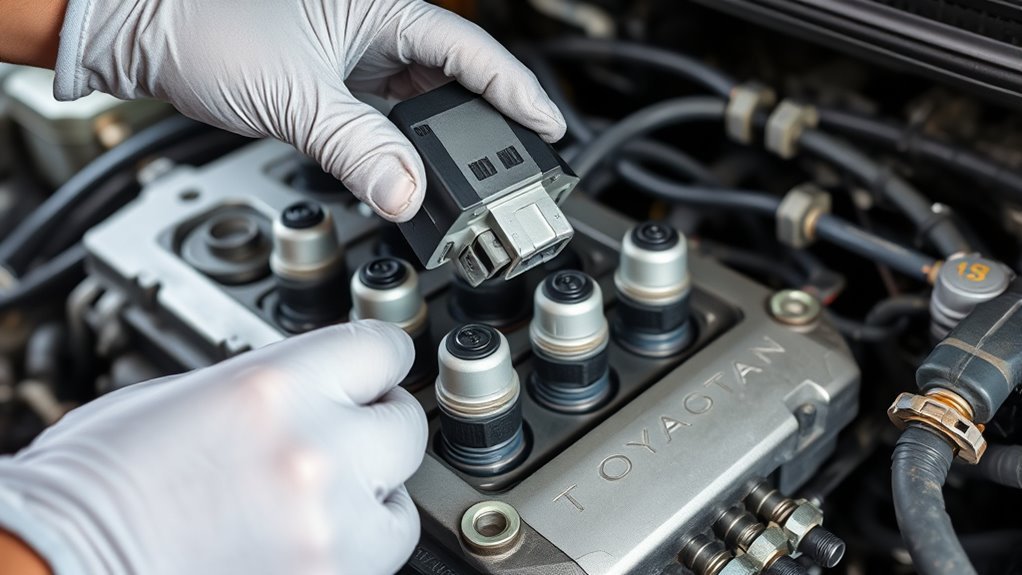
Swap the ignition coils between the suspected bad cylinder and a known-good cylinder to see whether the misfire follows the coil; if the P030x code changes to the new cylinder, the coil is defective and should be replaced. You’ll perform a controlled swap: engine off, ignition key off, disconnect battery if desired, remove coil from suspect and known-good cylinders, and exchange them. Use scan tools and live data to monitor misfire counters and RPM response immediately after the swap. If the misfire code follows the coil, you’ve isolated a bad coil by observing coil characteristics in service (resistance, arcing, heat damage). Complement the swap with a connector pull/drop test—an RPM drop on disconnect confirms the cylinder had been firing. Use diagnostic tools like an OBD-II scanner and a multimeter; avoid guessing. This method empowers you to free yourself from unnecessary parts replacement and directs targeted repair, restoring reliable engine performance efficiently.
Repair Checklist: Replace Coil, Plugs, Check Injector and Compression
Begin by replacing the identified bad ignition coil and inspect the replacement for proper fit and connector seating, since coils are the most common cause of cylinder-specific misfires like P030x. After coil swap, move through a focused repair checklist that keeps you in control: swap worn spark plugs, verify injector function, and confirm cylinder health with compression testing. Use clear ignition troubleshooting steps and record results for engine diagnostics.
Replace the faulty ignition coil, then systematically check plugs, injectors, and compression—record results and retest to confirm the fix
- Replace spark plug if electrode wear, fouling, or incorrect gap is present.
- Test fuel injector for power, resistance, and spray pattern; perform flow check if needed.
- Perform compression test on the affected cylinder and compare to bank values.
- Reinstall components with proper torque and secure connectors; clear codes and re-run diagnostics.
- Monitor misfire counts and freeze-frame data to verify repair effectiveness.
You’ll act decisively, eliminate common failure points, and use objective engine diagnostics to regain freedom from recurring misfires.
Preventive Maintenance: Tips to Avoid Future Camry Misfires
After you’ve repaired the immediate misfire—replacing coils, plugs, and verifying injectors and compression—focus on preventive maintenance to keep the Camry from returning to the shop. You’ll schedule Preventive Maintenance around clear milestones: inspect spark plugs every 30,000–100,000 miles and replace per spec to maintain combustion integrity. Include Routine Inspections of ignition coils; clean or replace coils showing carbon buildup or insulation breakdown, especially on older 2007 models prone to degradation. Preserve fuel delivery by using quality fuel and periodic fuel-system cleaners; remove injector deposits that cause lean or rich conditions and intermittent misfires. Run routine engine diagnostics to track RPM anomalies, flame-out events, or stored misfire codes so you catch drift before failure. Adhere to the manufacturer’s maintenance schedule for timed replacements and torque specs. You’ll log service entries, test after each action, and treat data as liberation—control over the engine’s behavior, fewer surprises, and longer intervals between shop visits.
Frequently Asked Questions
How to Find Out What’s Causing a Misfire?
Read the diagnostic code first, then inspect spark plug and ignition coil, swap coils to see if fault follows, test fuel injector flow, verify engine timing and run a compression test to pinpoint and liberate your engine.
Conclusion
You’ve seen the symptoms, scanned codes, and run quick tests — now act. Don’t assume a P0302 or rough idle means only a bad plug; confirm the cylinder with a drop test, coil swap, or by pulling the injector connector before replacing parts. If compression’s low, injectors or head issues may be the culprit. Replace the failed coil and plug, verify injector function and compression, then re-scan. That diagnostic sequence prevents unnecessary parts swaps and recurring misfires.