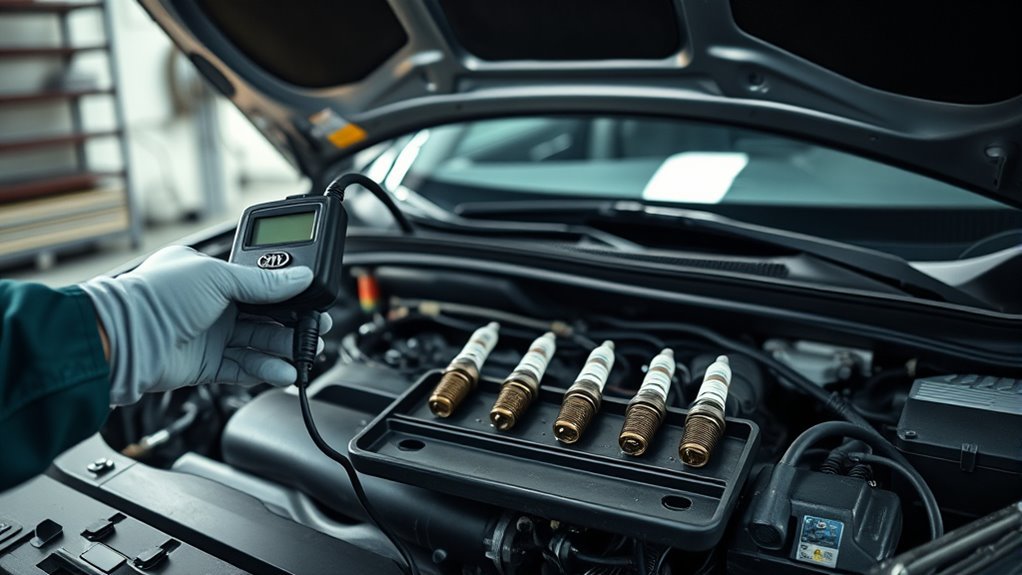
A Camry misfire means one or more cylinders are not burning the air-fuel mixture cleanly. In a Toyota Camry, the first checks are the OBD-II misfire code, spark plug condition, ignition coil, coil boot, injector signal, vacuum leaks, and compression. Do not keep driving if the check engine light flashes, because a severe misfire can overheat the catalytic converter. Start with the coded cylinder, confirm the failure, then replace only the part your tests prove faulty.
What’s in This Article
- Camry Misfire Code Quick Map
- Camry Misfire Symptoms: What to Look and Listen For
- Quick Triage: Rule Out Plugs, Wiring, and Fuel in Minutes
- Camry P030x Codes: Read and Interpret Scanner Data
- Confirm the Misfiring Cylinder With Safe Tests
- Swap Ignition Coils to Isolate a Bad Coil on a 2007 Camry
- Repair Checklist: Replace Coil, Plugs, Check Injector and Compression
- When to Stop Driving and Call a Mechanic
- Preventive Maintenance: Tips to Avoid Future Camry Misfires
- Sources Checked and Verification Notes
- Frequently Asked Questions
- Conclusion
Quick Answer
A Toyota Camry misfire often comes from a worn spark plug, weak ignition coil, cracked coil boot, damaged wiring, bad injector, vacuum leak, fuel delivery issue, or low compression. Scan the Camry first, save the freeze-frame data, inspect the coded cylinder, then swap the suspect coil with another cylinder while the engine is off. If the misfire follows the coil, replace the coil. If it stays on the same cylinder, test the plug, injector, wiring, intake leaks, and compression.
Key Takeaways
- Scan first, because P0300 and P030x codes help separate random misfires from cylinder-specific faults.
- Record freeze-frame data before clearing codes, because it shows when the misfire happened.
- Check spark plugs, coil boots, wiring, connectors, and injector signals before buying parts.
- Swap ignition coils with the engine off to see whether the misfire follows the coil.
- Stop driving if the check engine light flashes, because severe misfires can damage the catalytic converter.
Camry Misfire Code Quick Map
Use the scan result to decide where to start. A code does not name the failed part, but it does tell you whether the Camry has a random misfire or a cylinder-specific misfire. Confirm cylinder location with service data for your exact year and engine before you remove parts.
| Code or signal | What it usually means | Start here |
|---|---|---|
| P0300 | Random or multiple-cylinder misfire | Check fuel trims, vacuum leaks, shared ignition or fuel issues, and pending cylinder codes. |
| P0301-P0306 | Misfire detected on a specific cylinder | Inspect that cylinder’s spark plug, coil, boot, connector, injector signal, and compression. |
| P0302 | Misfire detected on cylinder two | Confirm cylinder two location for your engine, then test spark, fuel, wiring, air leaks, and compression. |
| Flashing check engine light | Severe active misfire risk | Stop driving safely and diagnose before the catalytic converter overheats. |
| Pending misfire code | Intermittent or early-stage fault | Save freeze-frame data and repeat the conditions shown in the scan tool data. |
Camry Misfire Symptoms: What to Look and Listen For

How can you tell if your Camry has a misfire? You may feel a rough idle, shaking, sputtering, hesitation, or popping from the engine. You may also notice weak acceleration, poor fuel economy, fuel smell from the exhaust, or hard starts.
A flashing check engine light points to a more serious misfire. Stop driving when you can do so safely, because unburned fuel can overheat and damage the catalytic converter. A steady check engine light still needs diagnosis, but it usually gives you more time to inspect the problem.
Use a code reader to check for P0300 or P030x codes. P0300 means random or multiple misfires. Codes such as P0301, P0302, P0303, P0304, P0305, or P0306 point to a specific cylinder on engines with that many cylinders.
Warning: Do not keep driving with a flashing check engine light, because severe misfires can damage the catalytic converter.
Quick Triage: Rule Out Plugs, Wiring, and Fuel in Minutes
Start with simple checks before you test deeper engine faults. Pull the spark plug from the coded cylinder and inspect it for wear, fouling, cracks, oil, coolant marks, or a wrong gap. Then check the coil boot, connector, and nearby wiring for heat damage, corrosion, loose pins, or arcing marks.
Next, check fuel delivery on the same cylinder. A fuel injector needs power on one side and a pulsed control signal from the engine control module on the other side. Use a multimeter, noid light, or scan tool data only when you know how to test the circuit safely.
[Products Worth Considering]

This set of four ignition coils is designed to restore smooth engine performance and reliable starting for compatible Toyota, Scion, and Lexus applications. Built to meet or exceed OE specifications, these coil packs help reduce misfires, hesitation, and check engine light issues while supporting stronger ignition output. The direct-fit design makes installation straightforward, and the package includes a warranty for added peace of mind.

The KZYEE KS40 helps diagnose weak spark plugs, ignition coil problems, and misfires by simulating real engine conditions under load. With adjustable RPM testing and dual-port comparison, it makes it easier to spot hidden ignition faults quickly and accurately. Its enclosed spark-proof design supports safer testing for both professionals and DIY users across a wide range of 12V gasoline engines.

The FOXWELL NT301 is a plug-and-play OBD2 code reader designed to help drivers and home mechanics diagnose check engine light issues with ease. It reads fault codes, clears emissions-related warnings, displays live sensor data in graph form, and shows I/M readiness so you can quickly check vehicle status before an emissions test. With broad compatibility across many OBD2 vehicles and a clear color screen, it offers a practical, user-friendly way to monitor and troubleshoot engine performance.
Inspect Spark Plug Condition
If your Camry runs rough or stores a cylinder code, inspect the spark plug before deeper diagnostics. Look for cracked porcelain, heavy carbon, oil fouling, worn electrodes, burned tips, or a fuel-soaked plug. Measure the gap and compare it with the correct specification for your engine.
Replace the plug if it shows clear wear or damage. If one plug looks much worse than the others, note that cylinder and keep testing. Oil fouling, coolant marks, or heavy fuel smell can point beyond the plug itself.
Check Ignition Wiring
Before you test the injector or engine control module, inspect the ignition wiring. Follow the harness near each coil and look for cuts, brittle insulation, loose connectors, corrosion, or heat damage. Flex the connector gently and check whether the pins fit tightly.
Use a multimeter to check grounds and continuity when the visual check does not show the problem. Poor grounds and loose connectors can cause an intermittent misfire that comes and goes. Repair damaged wiring, secure each connector, then rescan the Camry.
Verify Fuel Injector Power
When you suspect an injector-related misfire, backprobe the injector connector while cranking the engine if your service procedure allows it. One terminal may show battery voltage, and the other may pulse from the engine control module. Do not force probes into connectors, because spread terminals can create new faults.
- Backprobe the connector only with the correct probe and service procedure.
- Use a noid light or scan data to confirm injector pulse.
- Listen for a steady injector click with a mechanic’s stethoscope.
- Check injector resistance only if service data gives a test range.
- Inspect the harness for corrosion, broken wires, or loose terminals.
Note: Injector voltage tests vary by engine and wiring design, so use service data for your exact Camry year and engine.
Camry P030x Codes: Read and Interpret Scanner Data
Connect your OBD-II scanner and read stored, pending, and freeze-frame codes. Freeze-frame data shows the conditions when the code set, such as engine speed, load, coolant temperature, throttle position, road speed, and fuel trims. This helps you see whether the misfire happens at idle, under load, during cold starts, or at highway speed.
Do not clear the codes before you record them. Once you clear the codes, you lose useful clues. After the repair, clear the codes and watch live misfire data during a test drive.
[Products Worth Considering]

This plug-and-play OBD2 scanner helps drivers quickly read and clear engine error codes while providing live data, freeze frame information, I/M readiness, and MIL status for more confident troubleshooting. It adds a built-in voltage test and clear status indicators to support electrical checks and faster diagnostics, making it a practical choice for home users, car enthusiasts, and repair professionals. Compatible with most OBDII vehicles since 1996 and designed with an easy-to-use interface, it offers broad coverage and simple operation in one compact tool.

The ANCEL AD410 PRO combines engine diagnostics and 12V battery testing in one easy-to-use tool, helping you read and clear check engine codes while checking battery health, cranking, and charging performance. It also provides live data, freeze frame details, and I/M readiness checks to help you diagnose issues faster and prepare for emissions testing. With plug-and-play operation, a clear screen, and broad vehicle compatibility, it is a practical solution for home mechanics and everyday drivers.

This ignition coil and iridium spark plug kit is designed to restore smooth engine performance, reliable starts, and efficient combustion for compatible Toyota models. Built for a precise fit across select Camry, RAV4, Sienna, Highlander, and Venza applications, it helps improve idle stability, fuel economy, and emissions. The kit includes durable replacement parts backed by a one-year unlimited-mileage guarantee for added confidence on the road.
Reading Scan Tool Data
If your Camry stores P0302, the scanner points you toward cylinder two. Check live data for fuel trims, oxygen sensor activity, coolant temperature, engine speed, and misfire counters. The pattern helps separate ignition, fuel, air leak, and mechanical faults.
- Verify the misfire count on the coded cylinder.
- Compare fuel trims at idle and under light throttle.
- Review coolant and intake air temperature in freeze-frame data.
- Check whether the misfire appears only under load.
- Record the data before you replace parts.
Good scan data saves time. It also helps you avoid replacing parts that still work.
Interpreting Misfire Counts
A P030x code identifies the affected cylinder, but the misfire count shows how often the fault happens. A few scattered counts may point to an intermittent fault. Fast-rising counts on one cylinder usually show a steady failure.
Track counts at idle, cruise, and load. If the count rises at idle, check plugs, coils, injectors, vacuum leaks, fuel trims, and compression. If the count rises under load, suspect a weak coil, worn plug, fuel issue, or compression problem.
Confirm the Misfiring Cylinder With Safe Tests
Confirm the bad cylinder before you buy parts. Start with the scan code, then inspect the matching plug and coil. If the fault seems ignition-related and the engine uses separate coils, swap the ignition coil with a known-good cylinder while the engine is off.
Restart the engine and rescan. If the code moves to the cylinder that received the suspect coil, the coil likely failed. If the misfire stays on the same cylinder, continue with the plug, injector, wiring, vacuum leak, and compression tests.
- Read all stored and pending OBD-II codes before clearing anything.
- Save freeze-frame data so you know when the misfire occurred.
- Inspect the spark plug, coil boot, connector, and wiring on the coded cylinder.
- Swap the suspect coil with a known-good cylinder while the engine is off.
- Restart the engine, rescan, and check whether the misfire moved.
- Test injector power, vacuum leaks, and compression if the misfire stays put.
Avoid unplugging ignition coils or injectors while the engine runs unless a repair manual calls for that test. Modern ignition systems can produce high voltage, and rough testing can damage parts or create false results.
Swap Ignition Coils to Isolate a Bad Coil on a 2007 Camry
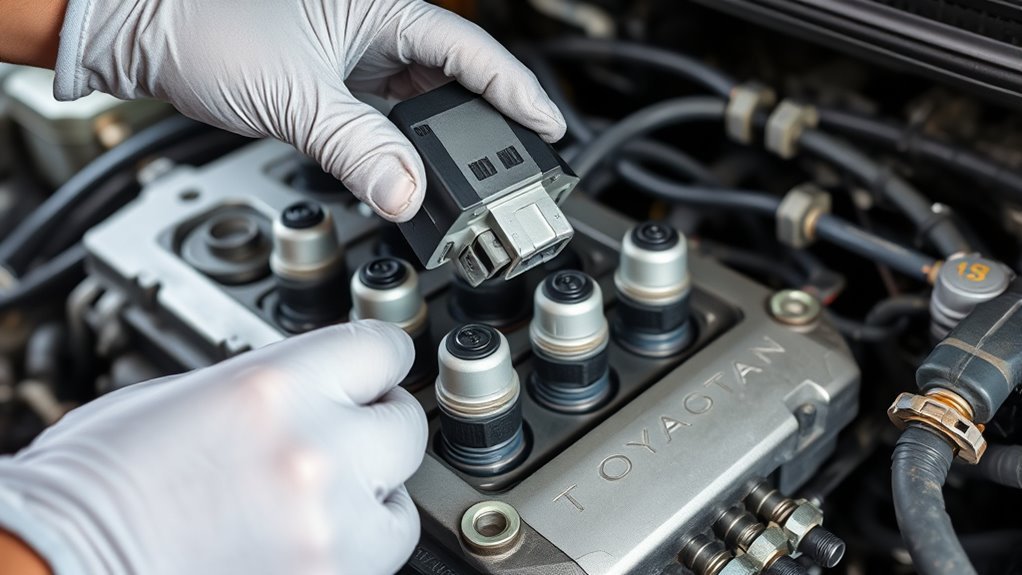
A coil swap works on common 2007 Camry engines that use individual coil-on-plug units. Turn the engine off, remove the key, and let the engine cool. Move the suspect coil to another cylinder, then move the known-good coil into the original spot.
After the swap, start the Camry and rescan for codes. If P0302 changes to P0303 after you move the coil from cylinder two to cylinder three, the coil likely caused the misfire. Replace the failed coil and inspect the matching spark plug, because a worn plug can stress a new coil.
If the misfire does not follow the coil, do not keep replacing coils. Test the plug, injector, connector, intake leak, and compression on that cylinder. This keeps the repair focused and prevents wasted parts.
Pro tip: Label each coil before a swap so you can track exactly where the misfire moves.
[Products Worth Considering]

This set of ignition coil packs is designed for a range of compatible Toyota, Scion, and Lexus 2.4L vehicles, helping restore smooth starting and consistent engine performance. Built to meet or exceed OE specifications, these coils are intended to improve ignition reliability, reduce misfires, and support better fuel efficiency. The direct-fit design makes installation straightforward, and the package includes four coil packs with warranty support.

Turn your iPhone, Android device, or Windows PC into a professional-grade diagnostic scan tool with this Bluetooth OBD2 adapter. It is designed for broad vehicle compatibility and supports popular apps for deeper diagnostics, live data, and code clearing. Built-in protections and firmware updates help keep your vehicle and scanner safe while delivering reliable performance.

This ignition coil pack and pre-gapped spark plug set is designed for select 3.5L V6 Toyota and Lexus models, helping restore smooth engine performance and reliable starting. Built to meet or exceed OEM specifications, it can help fix common issues like misfires, rough idle, poor fuel economy, and reduced power. The complete 6-piece set offers a convenient replacement solution for compatible vehicles.
Repair Checklist: Replace Coil, Plugs, Check Injector and Compression
Begin with the part your tests identified. If the coil swap moved the misfire, replace the bad ignition coil. Seat the coil fully, lock the connector, and check the boot for oil, carbon tracking, or cracks.
If the spark plug looks worn, fouled, cracked, or incorrectly gapped, replace it with the correct plug for your Camry engine. Use the proper torque from service data and avoid over-tightening. A damaged plug thread can turn a simple repair into a costly one.
Replace the failed part only after the test confirms it, then rescan and monitor misfire counts to verify the repair.
- Replace the ignition coil if the misfire follows it during a coil swap.
- Replace the spark plug if it has wear, fouling, damage, or the wrong gap.
- Test the injector for power, pulse, resistance, and clicking sound.
- Check for vacuum leaks near the intake manifold and hoses.
- Run a compression test if ignition and fuel checks pass.
- Clear the codes, drive the Camry, and watch for returning misfire counts.
When to Stop Driving and Call a Mechanic
Stop driving if the check engine light flashes, the engine shakes hard, or the Camry loses power in traffic. You should also stop if you smell raw fuel, hear loud knocking, or see smoke. These signs can point to a serious fuel, ignition, or mechanical fault.
Call a mechanic if the misfire returns after new plugs and coils. You may need a smoke test, injector balance test, compression test, leak-down test, or deeper wiring diagnosis. A shop can also check engine control module signals with tools most owners do not have.
Preventive Maintenance: Tips to Avoid Future Camry Misfires
After you fix the immediate misfire, keep the Camry on a steady maintenance plan. Replace spark plugs at the interval listed for your engine and driving conditions. Inspect coil boots, connectors, and wiring whenever you service the plugs.
Use quality fuel from a busy station and address fuel trim codes early. Keep air filters, vacuum hoses, and intake boots in good shape, because air leaks can lean out one or more cylinders. Scan for pending codes before a small issue becomes a rough-running engine.
Log each repair, code, and test result. A simple record helps you spot repeat failures and compare symptoms over time. It also gives a mechanic better clues if the problem returns.
Sources Checked and Verification Notes
This update checked the P0300 and P0302 definitions, common misfire causes, freeze-frame guidance, and flashing check engine light risk against independent diagnostic references. The article does not include engine-specific torque values, plug gaps, injector resistance, or cylinder-location diagrams because those values vary by Camry year and engine.
- OBD-Codes P0300 reference
- OBD-Codes P0302 reference
- AutoZone P0302 diagnostic guide
- RepairPal P0302 diagnostic reference
Frequently Asked Questions
How do you find out what’s causing a Camry misfire?
Read the diagnostic code first, then inspect the spark plug, ignition coil, coil boot, wiring, injector, and vacuum lines on the coded cylinder. Record freeze-frame data before clearing codes. If the fault looks ignition-related, swap the ignition coil with another cylinder while the engine is off. If the misfire follows the coil, replace that coil.
Can you drive a Camry with a misfire?
You should avoid driving if the check engine light flashes, the engine shakes hard, or the Camry loses power. A severe misfire can send unburned fuel into the exhaust and damage the catalytic converter. If the light stays steady and the car runs mostly normal, drive only as needed before diagnosis.
What does P0302 mean on a Toyota Camry?
P0302 means the engine computer detected a misfire on cylinder two. The code does not prove the coil or spark plug failed by itself. You still need to confirm cylinder location for your engine, then inspect the plug, coil, injector, wiring, vacuum leaks, and compression.
Why does my Camry misfire only at idle?
An idle-only misfire can come from a vacuum leak, dirty injector, weak spark, carbon buildup, a sticking EGR issue on applicable engines, or low compression. Check fuel trims at idle and under light throttle. If trims improve off idle, look closely for intake leaks.
What is the most common cause of a Camry misfire?
Ignition problems are the most common first checks, especially worn spark plugs, weak ignition coils, cracked coil boots, loose connectors, or damaged wiring. Do not assume the coil is bad from the code alone. Confirm the cylinder, inspect the plug, then swap-test the coil if the engine uses individual coils.
Can bad gas cause a Camry misfire?
Bad or contaminated fuel can contribute to rough running or misfire symptoms, but it should not be your only diagnosis. Scan the codes, check whether the misfire affects one cylinder or several cylinders, and inspect ignition, air, and fuel delivery before replacing parts.
Should you replace all coils or only the bad one?
You can replace only the failed coil if the others test well and the budget is tight. If the coils are old and one has failed, replacing the full set may reduce future labor. Always replace worn spark plugs before they strain new coils.
Conclusion
A Camry misfire needs a clear test path, not guesswork. Scan the codes, save freeze-frame data, confirm the affected cylinder, inspect the plug and coil, then test fuel, vacuum, wiring, and compression if needed. Replace the part your tests prove faulty, then clear the codes and monitor live data. A careful diagnosis helps your Camry run smoothly again and keeps the same misfire from coming back.