
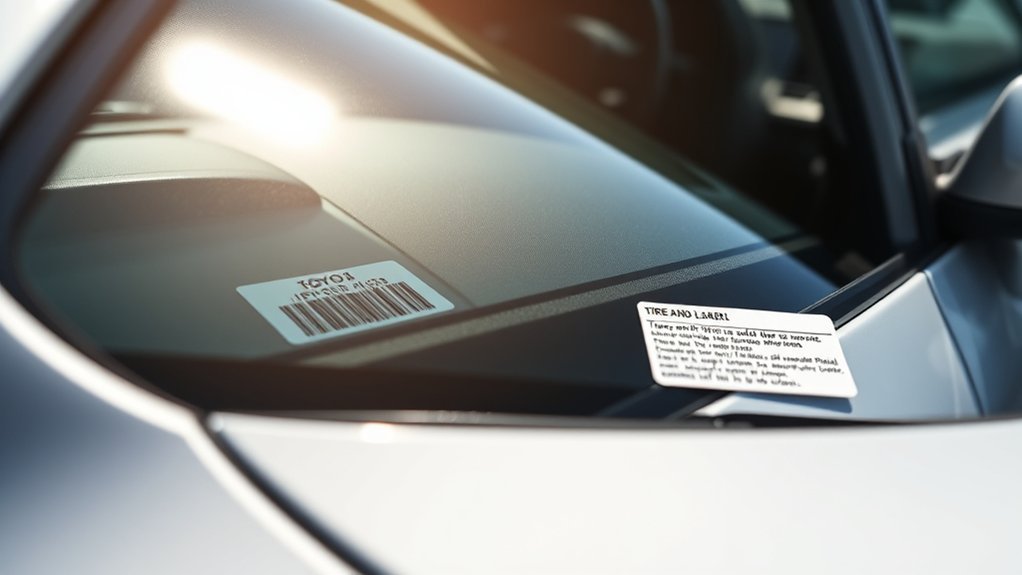
Finding the ID labels on a Toyota Camry is easiest when you know which labels matter and where Toyota normally places them. The most important number is the 17-character Vehicle Identification Number (VIN), but the driver’s door jamb and owner documents can also show useful details such as certification data, tire information, model code, and paint information.
Quick Answer
On most Toyota Camry models, the VIN is visible on a plate at the lower-left/top-left area of the instrument panel through the driver’s side windshield. You can also find it on the certification label inside the driver’s door jamb and on documents such as registration, title, and insurance paperwork.
Key Takeaways
- The dashboard/instrument-panel VIN and the driver’s door jamb certification label are the two best places to check first.
- A valid modern U.S.-market VIN has 17 characters and does not use the letters I, O, or Q.
- The 9th character is a check digit, the 10th character usually identifies the model year, and the 11th character identifies the assembly plant.
- Use the VIN for registration, insurance, recall checks, parts ordering, used-car history checks, and confirming that labels match.
At a Glance
| Time Required | 1–3 minutes |
| Difficulty | Easy |
| Tools Needed | None; a flashlight can help in low light |
| Cost | Free |
How to Locate Your Toyota Camry’s VIN
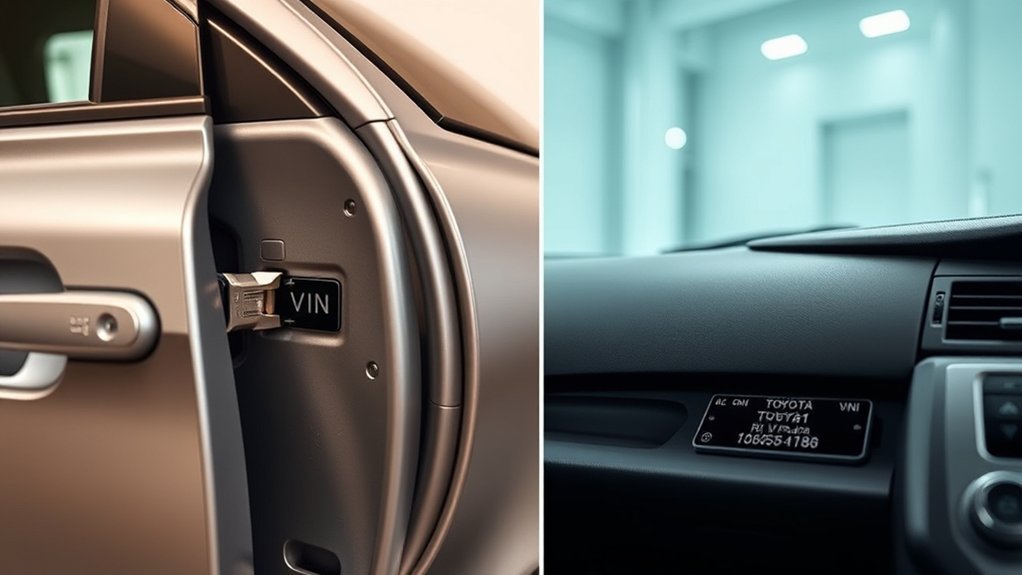
Start outside the vehicle on the driver’s side. Look through the lower-left corner of the windshield toward the top of the instrument panel. Toyota identifies this as one of the main VIN locations, and the 2025 Camry owner’s manual describes the VIN as being on the top left of the instrument panel.
Next, open the driver’s door and check the door jamb or door frame area. The certification label normally shows the VIN and vehicle certification details. This is often the easiest label to read because you can stand beside the car instead of looking through the glass.
You can also confirm the VIN on official documents, including your title, registration, insurance card, purchase paperwork, and some service records. Toyota also notes that some models may have the VIN stamped in an additional location, such as under the front passenger seat, but the instrument panel and driver’s door jamb should be checked first.
Pro Tip: Take a clear photo of the dashboard VIN and the door jamb label for your records. It can save time when ordering parts, requesting insurance quotes, checking recalls, or completing registration paperwork.
[Products Worth Considering]

This auxiliary jack adapter restores a broken or missing AUX connection so you can stream audio from your device through your Toyota stereo system. It is designed for compatible Toyota models and uses an 8-pin connector for a direct plug-and-play replacement. Built for reliable audio transmission, it helps bring back clear in-car sound without complicated installation.

This car document holder keeps registration, insurance cards, and other essential paperwork neatly organized and easy to access when needed. Its clear inner sleeves help you quickly identify documents, while the hidden magnetic closure keeps everything secure and protected in a compact, glove-box-friendly design.

This front left door lock actuator assembly is a direct replacement for select Toyota and Lexus models, helping restore reliable power door locking and latch operation. Built as an OEM-quality aftermarket part, it includes the latch assembly and is factory tested for dependable performance. It is designed for driver-side front door fitment across a wide range of compatible vehicles and comes with replacement support for added peace of mind.
Why Your VIN Matters
Your Camry’s VIN is the legal identifier for the vehicle. It is used to register ownership, verify vehicle records, identify factory specifications, and match the car to recall and service information.
- Registration and insurance: Agencies and insurers use the VIN to identify the exact vehicle, not just the make and model.
- Recall checks: A VIN check can show whether a specific Camry has open safety recalls or completed recall work.
- Parts ordering: Toyota parts catalogs and dealers often use the VIN to confirm trim, powertrain, model code, production details, and compatible parts.
- Used-car verification: Matching the dashboard VIN, door jamb label, title, and history report helps spot clerical errors or possible tampering.
Under U.S. VIN requirements, each covered vehicle VIN must consist of 17 characters and include a check digit in position 9.
Key Locations for ID Labels on Your Camry
Several labels and stamped numbers can appear on or inside a Toyota Camry. Not every label is a VIN label, so it helps to know what each one is for.
[Products Worth Considering]

These custom-fit front seat covers are designed for a wide range of Toyota models, helping protect your upholstery from daily wear, scratches, pet claw marks, and spills. The thicker foam padding and heavier faux leather surface provide a smoother look and added support, while the quick-install design helps most users complete setup in minutes. They also refresh older interiors with a classic style that blends protection and a clean factory-inspired appearance.

This KSaAuto short antenna is a factory replacement designed to fit a wide range of Toyota, Scion, and select hatchback models. It helps improve AM/FM reception while adding a clean, stylish look to your vehicle. The flexible, weather-resistant design and easy screw-on installation make it a simple upgrade for everyday driving.

This driver side sun visor is a direct replacement for compatible Toyota RAV4 models from 2006 to 2013, helping restore shade and visibility control on the front left side. It includes a vanity light and extension for added convenience, along with an easy no-screw installation designed to match the original fit and function. Built for dependable daily use, it offers a practical solution for replacing a worn or damaged visor.
Dashboard or Instrument Panel VIN Location
The dashboard VIN is visible from outside the vehicle through the driver’s side windshield. Look near the base of the windshield on the driver’s side. On many Camry models, it appears on a small metal plate mounted at the top of the instrument panel.
- Stand outside the driver’s side of the car.
- Look through the lower-left area of the windshield.
- Use a flashlight if glare, dust, or tint makes the characters hard to read.
- Write down all 17 characters exactly as shown.
Driver’s Door Jamb Certification Label
The driver’s door jamb is the second key location. Open the driver’s door and inspect the door frame or pillar area for the certification label. Depending on model year and market, the label may include the VIN, manufacturer information, gross vehicle weight ratings, production date, and other certification details.
You may also see nearby labels for tire and loading information, recommended tire pressures, paint or trim codes, or model code details. These labels are useful, but they are not all the same thing as the VIN.
Vehicle Documents
If you cannot read the VIN on the car, check your official paperwork. The VIN usually appears on:
- Vehicle title
- Registration card
- Insurance ID card
- Loan or lease paperwork
- Toyota dealer service records
- Recall notices or warranty documents
Note: The engine number is not the same as the VIN. Toyota manuals commonly list the engine number separately because it identifies the engine, while the VIN identifies the whole vehicle.
Decoding Your Toyota Camry’s VIN for Insights
A Toyota Camry VIN is more than a random string. It follows a standardized structure used to identify the manufacturer, vehicle attributes, model year, assembly plant, and individual production sequence.
- Characters 1–3: World Manufacturer Identifier (WMI), which identifies the manufacturer and general vehicle origin.
- Characters 4–8: Vehicle Descriptor Section (VDS), which can describe vehicle attributes such as body type, restraint system, engine, or model line depending on manufacturer coding.
- Character 9: Check digit used to help validate the VIN.
- Character 10: Model year code for many U.S.-market vehicles.
- Character 11: Assembly plant code.
- Characters 12–17: Sequential production number or vehicle identifier sequence.
What Does Each Part of Your VIN Tell You?
The first three characters form the WMI. For a Camry, this area helps identify Toyota as the manufacturer and can point to the vehicle’s production region. The next five characters are the VDS, which Toyota uses to encode vehicle details. Exact decoding can vary by model year, so a Toyota dealer, Toyota’s vehicle specification tool, or the NHTSA VIN Decoder is a safer option than guessing from a generic chart.
The 9th character is the check digit. If the VIN is mistyped, a decoder may reject it because the check digit no longer matches the rest of the VIN. The 10th character is commonly used for the model year on U.S.-market vehicles, while the 11th character identifies the assembly plant. The final six characters separate your Camry from other vehicles built with similar specifications.
Warning: Do not post your full VIN publicly unless you have a clear reason. A VIN is visible on the car, but sharing it broadly can still expose vehicle history, registration, and ownership-related information to people who do not need it.
Common Mistakes When Locating Your VIN
Most VIN lookup problems come from checking the wrong label, reading the wrong character, or copying only part of the number. Use the tips below before assuming the VIN is missing.
Overlooking Common Locations
Many owners start under the hood, but the best first checks are simpler:
- Dashboard/instrument panel: Look through the driver’s side windshield near the base of the glass.
- Driver’s door jamb: Open the driver’s door and inspect the certification label on the door frame or pillar.
- Official documents: Compare the VIN on the title, registration, and insurance card.
Under-hood labels may contain emissions, engine, or service information. Some may be useful for parts and maintenance, but they are not the primary place to verify a Camry VIN.
Misreading VIN Characters
A modern VIN has 17 characters. The letters I, O, and Q are not used in VINs because they can be confused with 1 and 0. If you think you see one of those letters, look again with better lighting or compare it with the door jamb label.
Common reading mistakes include:
- Typing 0 as O, even though O is not used in VINs
- Typing 1 as I, even though I is not used in VINs
- Missing the final character when copying from a photo
- Using the engine number or model code instead of the VIN
- Assuming a generic online chart can decode every Toyota-specific VDS detail
Best Practices for Safeguarding Your VIN Information
Your VIN is not a secret in the same way as a password, because part of it is visible through the windshield. Still, it is smart to share it only when there is a legitimate reason.
- Keep a private record: Store a photo or note in a secure folder so you do not need to recheck the car every time.
- Share with trusted parties only: Insurance companies, DMVs, lenders, dealers, repair shops, and legitimate buyers may need the VIN.
- Compare labels when buying used: The dashboard VIN, door jamb VIN, title, and vehicle history report should match exactly.
- Use official lookup tools: For recalls and specifications, choose Toyota or NHTSA resources before relying on unofficial VIN decoders.
Resources for Further VIN Information and Assistance
For the most reliable VIN information, use official or highly authoritative resources. Toyota’s owner support page explains where to find the VIN on Toyota vehicles, Toyota’s owner manuals confirm vehicle identification details for specific model years, and NHTSA’s VIN Decoder can identify manufacturer-coded vehicle data, including plant information.
When ordering parts, a Toyota dealer or Toyota parts catalog can use your VIN to confirm the exact configuration of your Camry. This is especially helpful when parts vary by trim, production date, hybrid system, body style, or market.
How to Verify a Toyota Camry VIN Step by Step
- Find the dashboard VIN: Look through the driver’s side windshield and record the 17 characters.
- Check the door jamb label: Open the driver’s door and confirm that the certification label shows the same VIN.
- Compare your paperwork: Match the VIN against the title, registration, and insurance card.
- Run an official lookup: Use Toyota’s vehicle specification tool or NHTSA’s VIN Decoder to confirm the vehicle details.
- Check recalls: Use Toyota’s recall lookup or NHTSA’s recall tools to see whether the vehicle has open safety recalls.
[Products Worth Considering]

This brake bleeder hose kit helps remove old brake fluid and air from motorcycle brake and clutch systems quickly and efficiently. Its one-way check valve prevents air from being drawn back into the system, while the easy-to-connect clips make bleeding simple for routine maintenance. Built for reliable use, it is a practical tool for keeping motorcycle braking performance responsive.

This left driver side sun visor is designed for Toyota RAV4 models from 2006 through 2013 and provides a direct replacement fit for the original part. It includes wiring for vehicles equipped with a lamp and is intended to restore sun protection and interior functionality with a gray finish that matches the vehicle interior.
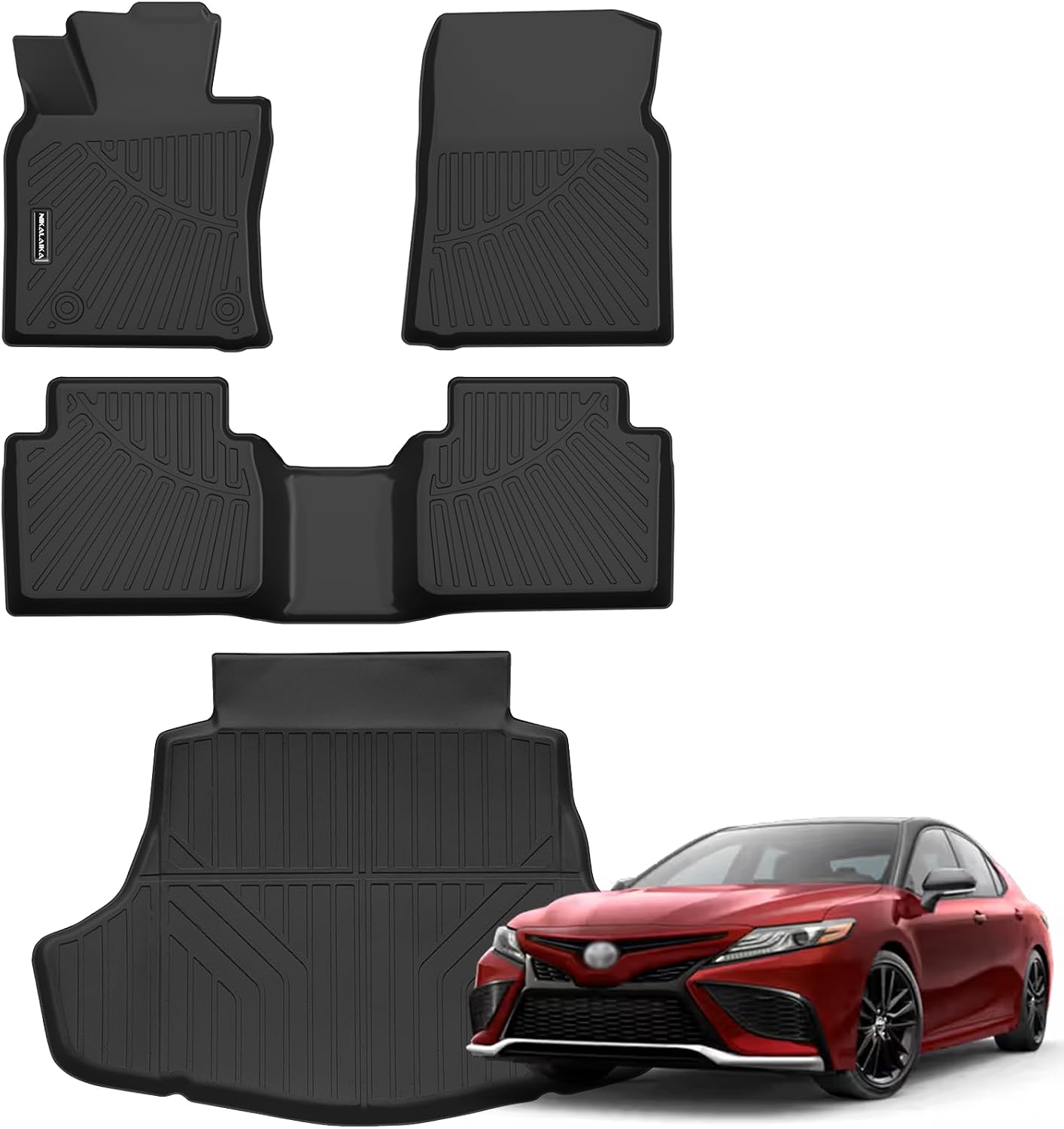
Designed for select Toyota Camry models, this custom floor mat and cargo liner set provides full-coverage protection without trimming. The all-weather TPE construction helps block water, mud, snow, and debris while staying flexible, odorless, and easy to clean. Raised edges, precision fitment, and secure retention help keep the mats in place and your vehicle’s interior looking neat.
Frequently Asked Questions
How do I read a Toyota VIN sticker?
Start by confirming that the VIN has 17 characters. The first three characters identify the manufacturer, characters 4–8 describe vehicle attributes, character 9 is the check digit, character 10 usually identifies the model year for U.S.-market vehicles, character 11 identifies the assembly plant, and characters 12–17 identify the individual vehicle sequence.
How do I read a Toyota Camry vehicle ID label?
Open the driver’s door and look for the certification label on the door jamb or pillar. Read the VIN exactly as printed, then review nearby information such as production date, certification data, tire information, paint code, or model code if shown. The VIN is the 17-character identifier; other codes on the label are not substitutes for the VIN.
How many VIN locations are on a Toyota Camry?
The two most useful VIN locations are the dashboard/instrument-panel plate visible through the driver’s side windshield and the certification label in the driver’s door jamb. Depending on model year and market, Toyota may also stamp or display the VIN in another body location, and the VIN will also appear on official documents.
How do I tell where my Toyota Camry was built by VIN?
The 11th character of the VIN identifies the assembly plant, but Toyota’s plant codes can vary by year and vehicle line. The safest way to confirm the build plant is to enter the full 17-character VIN into Toyota’s vehicle specification tool or NHTSA’s VIN Decoder.
Can I use the VIN to check Toyota Camry recalls?
Yes. A VIN-based recall lookup is the best way to check recalls for your exact Camry because recalls can depend on model year, production date, plant, equipment, and specific vehicle configuration.
Conclusion
Your Toyota Camry’s VIN and ID labels are easy to find once you know where to look. Start with the dashboard VIN visible through the driver’s side windshield, then confirm it on the driver’s door jamb certification label and your official documents. A clean VIN match helps with registration, insurance, recalls, parts ordering, and used-car verification.
Sources
- Toyota Owners Support — Toyota VIN locations including dashboard, driver’s door jamb certification label, and some model-specific additional locations
- 2025 Toyota Camry Owner’s Manual — vehicle identification section confirming the VIN as the legal identifier and listing instrument panel and certification label locations
- NHTSA VIN Decoder — official VIN decoding resource for vehicle and plant-of-manufacture information
- 49 CFR Part 565 — U.S. vehicle identification number requirements, including 17-character VIN format and check digit rules
- Toyota Vehicle Specification Tool — Toyota VIN lookup for vehicle year, color, technical specifications, and installed equipment


[…] The NHTSA VIN Decoder can decode manufacturer-submitted vehicle information from a VIN. It does not prove which physical engine block is currently installed after a replacement or swap. For a detailed VIN-location guide, see where to find the Toyota Camry VIN. […]