If your Toyota Camry’s brake lights aren’t working, start by checking the brake light switch above the pedal and inspect fuses four (15 amp) and 23. Look for damaged bulbs and check the wiring harness for corrosion or loose connections. Confirm the ground wire is secure. If these steps don’t solve the issue, a professional evaluation may be needed, as complicated problems could arise from the body control module or other components. Discover further troubleshooting steps to guarantee safe operation.
How to Diagnose Common Brake Light Failures in Your Toyota Camry
How can you quickly identify brake light issues in your Toyota Camry? Start with brake light troubleshooting to pinpoint common failures. First, inspect the brake light switch located above the brake pedal; a faulty switch often causes brake light failure. Next, check fuse number four (15 amp) and fuse number 23 in the fuse box. Blown fuses can disrupt the electrical circuit, leading to non-functioning lights.
Then, visually examine the brake light bulbs for wear or filament breakage, as damaged bulbs won’t illuminate. Don’t overlook the wiring harness connectors; loose or corroded connections can hinder electrical flow. Finally, verify the ground wire is securely connected; a damaged ground can critically affect brake light performance. By following these steps, you can maintain the electrical circuit and keep your brake lights functioning properly, safeguarding your safety on the road.
Step-by-Step Guide to Checking Your Brake Light Fuses
Once you’ve diagnosed potential brake light issues, checking the fuses is the next logical step. Follow these steps to guarantee everything’s in order:
Diagnosing brake light issues? Start by checking the fuses to ensure everything’s functioning properly.
- Locate the Fuse Box: It’s above the dashboard. Open the white cover to access the fuse layout.
- Identify Key Fuses: Look for fuse number four (15 amp) and fuse number 23. These are vital for your brake light functionality.
- Test with a Multimeter: Use a multimeter or a fuse tester to check for continuity. A blown fuse may look intact but can still be faulty.
If you find a blown fuse, replace it with a new one of the same amperage. Regularly inspect and test your fuses to prevent unexpected brake light failures. These fuse replacement tips will help you maintain safe driving conditions and keep your Toyota Camry running smoothly.
Inspect and Fix Your Brake Light Switch
To guarantee your brake lights function properly, inspect the brake light switch, which is located above the brake pedal. This switch plays an essential role in activating your brake lights when you press the pedal. If your brake lights aren’t illuminating, a faulty switch could be the culprit. Start your brake light troubleshooting by testing the switch: connect it with a wire, and if the brake lights turn on, it’s defective and needs replacement.
Regularly checking the brake light switch can help prevent unexpected failures and make certain your brake lights work as intended. When it comes to switch replacement tips, be sure to consult your vehicle’s manual for specific instructions and compatible parts. With a little effort, you can quickly resolve any brake light issues and drive with confidence, knowing your signals are functioning correctly.
Fixing Wiring Harness Issues for Brake Lights
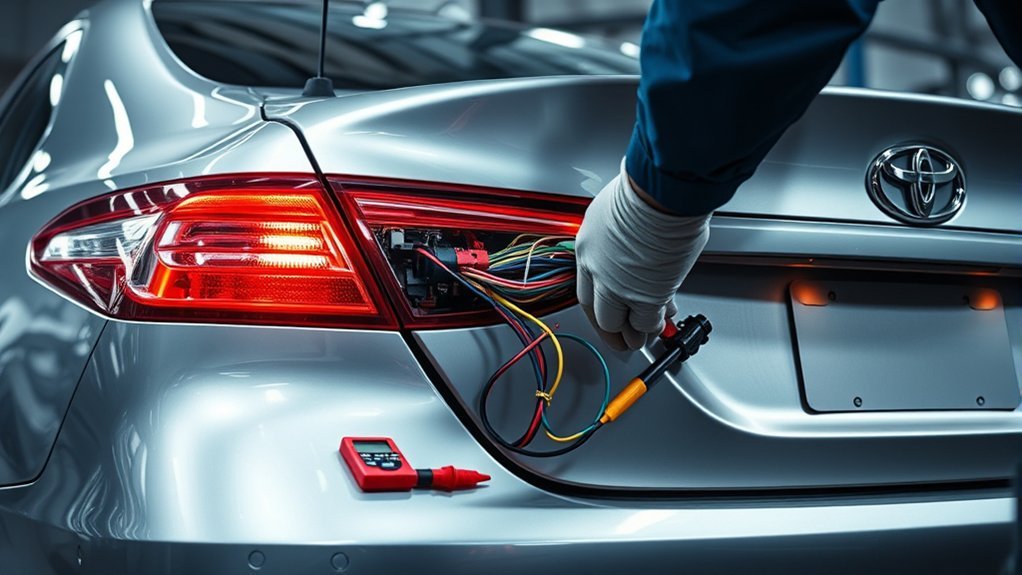
To fix wiring harness issues for your brake lights, start by inspecting the integrity of the connectors. Look for any signs of looseness or corrosion, as these can hinder electrical flow. If you find any damaged connections, repair or replace them to restore proper functionality.
Inspecting Connector Integrity
When inspecting connector integrity in the brake light system, you’ll want to focus on the wiring harness connectors for any signs of looseness or corrosion. These issues can disrupt electrical flow and prevent your brake lights from functioning. Follow these connector maintenance tips:
- Check for Corrosion: Look for any signs of corrosion on the pins; it can impede connectivity.
- Secure Connections: Confirm all connections within the wiring harness are tight; loose connections can lead to intermittent functionality.
- Refer to the Circuit Diagram: Use your vehicle’s circuit diagram to locate and inspect each connector effectively.
Repairing Corroded Connections
Corroded connections in the brake light wiring harness can lead to failure or erratic behavior of your brake lights, posing a safety risk. Start by inspecting the connectors for signs of corrosion or looseness, as these disrupt electrical flow. Use a multimeter to test the continuity; a lack of continuity means you need to repair or replace the wiring. Clean corroded connectors with dielectric grease to guarantee secure connections and aid in corrosion prevention. Regularly check for frayed wires and exposed connections that can cause short circuits. Finally, make certain all connections are tightly fastened, as loose connections can lead to intermittent brake light operation. Prioritize connector maintenance to keep your brake lights functioning reliably.
Why Your Ground Wire Matters for Brake Light Functionality
Your ground wire is essential for your brake lights to function correctly, as it completes the electrical circuit. If the ground connection is faulty or corroded, your brake lights may fail or operate intermittently, compromising safety. Regularly testing and maintaining these connections can prevent unexpected issues and guarantee your vehicle’s electrical system runs efficiently.
Importance of Ground Wiring
A solid ground wire is essential for the proper functioning of your brake lights. It completes the electrical circuit, allowing the lights to activate when needed. Poor connections or damage can lead to failures, posing serious safety risks. Here are three key points to contemplate:
- Regular Ground Wire Maintenance: Inspect your ground connections periodically to spot wear or corrosion.
- Effective Grounding Techniques: Guarantee a secure connection to enhance the efficiency of your vehicle’s electrical system.
- Quick Fixes: Reconnecting or replacing a faulty ground wire can resolve brake light issues without costly repairs.
Common Ground Wire Issues
While ground wire issues may seem minor, they play an important role in the functionality of your Toyota Camry’s brake lights. A damaged or poorly connected ground wire can disrupt the electrical circuit, leading to intermittent or complete brake light failure. Ground wire corrosion is a common culprit, impeding electrical flow and causing malfunctions. Regular ground connection maintenance is crucial; inspect and clean these connections to guarantee peak performance. Neglecting this can lead to misdiagnoses, mistaking a faulty ground wire for issues like a bad brake light switch or blown fuse. By prioritizing the condition of your ground wire, you enhance the reliability of your brake lights and overall electrical system.
Testing Ground Connections
Testing ground connections is essential for ensuring your Toyota Camry’s brake lights function properly. The ground wire completes the electrical circuit, and without it, your brake lights may fail. Follow these steps for effective ground testing:
- Inspect Connections: Check for corrosion or loose wires in the wiring harness that could disrupt signal continuity.
- Test Voltage: Use a multimeter to verify that voltage reaches the ground connection. If not, you likely have a broken wire.
- Repair or Replace: Reconnect or replace any damaged ground wires to restore functionality.
Regularly inspecting these connections can prevent brake light failures, enhancing your vehicle’s safety and performance. Don’t underestimate the importance of a reliable ground wire!
When to Call a Professional for Brake Light Problems
If you’ve replaced the brake light bulb and checked the fuse without success, it’s crucial to contemplate reaching out to a professional. Persistent issues with the brake light switch can indicate deeper electrical problems that demand expert attention. If you notice any corrosion or damage in the wiring harness connectors that you can’t repair yourself, a professional can guarantee safe and effective repairs.
When multiple electrical components fail simultaneously, it could suggest an issue with the vehicle’s body control module (BCM), warranting a professional evaluation. Additionally, if you find brake light troubleshooting steps beyond your comfort level or expertise, seeking professional help can save you time and prevent potential damage to your vehicle’s electrical system. Don’t hesitate—addressing these issues with a skilled technician can restore your brake lights and enhance your driving safety.
Frequently Asked Questions
Why Do My Tail Lights Work but Not My Brake Lights?
If your tail lights work but not your brake lights, check the brake light switches and perform tail light troubleshooting. A faulty switch or wiring issue often causes this specific lighting malfunction.
How to Fix Brake Lights Not Working?
If your brake lights aren’t working, start by checking the brake light switch, bulbs, fuses, and wiring. Electrical issues often stem from loose connections or blown fuses, so make sure everything’s secure and functional.
Conclusion
To summarize, tackling brake light issues in your Toyota Camry doesn’t have to be rocket science. By following the steps outlined, you can restore your brake lights to their former glory—like bringing a star back into the limelight! Always remember to check fuses, the brake light switch, and wiring connections. If you’re still in the dark, don’t hesitate to call a professional. Safety’s paramount, and you deserve a car that shines bright on the road!