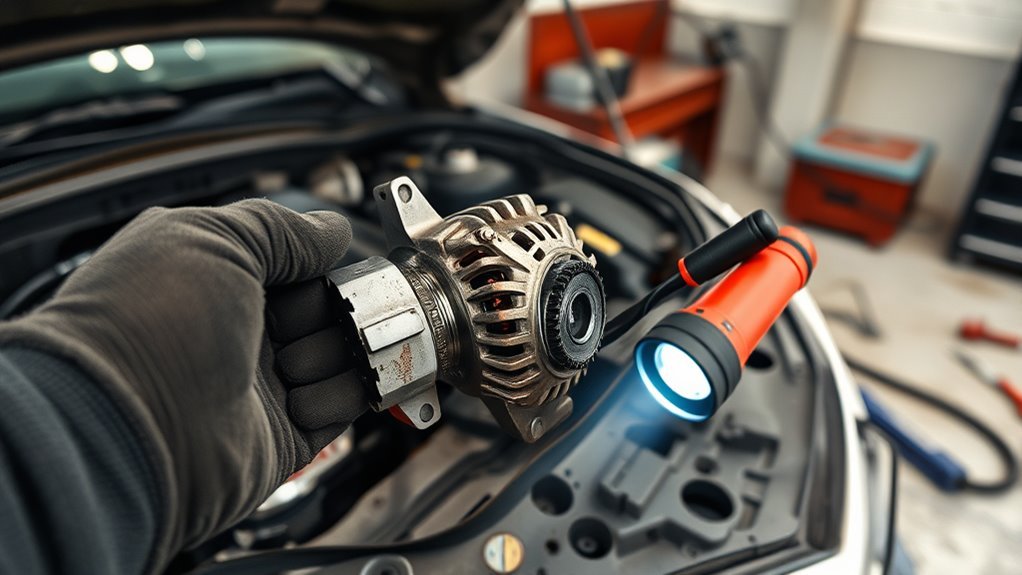
Your Camry’s alternator usually lasts about eight years or 100–150k miles, and you’ll see early signs like a persistent battery/ALT warning, dim or flickering headlights that brighten when you rev, whining or grinding noises, and frequent dead batteries or hard starts. Quick DIY checks: measure 13.8–14.5 V at the battery with the engine running, inspect the belt for wear and tension, and listen for bearing noise. Keep going to learn practical next steps and costs.
Quick Checklist: Is My Camry’s Alternator Failing?
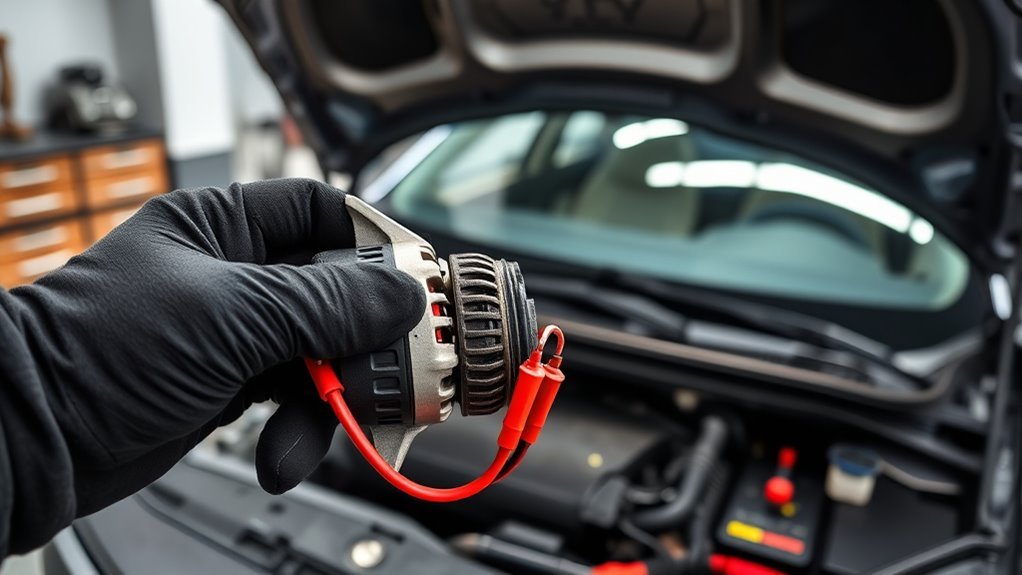
Wondering if your Camry’s alternator is failing? Start with a focused checklist you can act on immediately. Inspect dashboard indicators: a battery or “ALT” light is a clear diagnostic cue, not something to dismiss. Observe lighting: dim or flickering headlights that brighten when you rev the engine point to charging inconsistency. Listen under the hood for whining or grinding—those sounds often mean worn bearings and require prompt service. Note starting behavior: frequent dead batteries or difficulty cranking suggest the alternator isn’t maintaining charge. Track age and usage: alternators commonly last about eight years; schedule proactive checks as you approach that span. Apply basic alternator maintenance tips: secure connections, clean terminals, and belt tension checks to prevent premature failure. Challenge common misconceptions that a single dead battery proves alternator failure—run these checks and liberate yourself from guesswork by testing before replacing components.
5 Symptoms of Camry Alternator Failure
If your Camry’s alternator is failing, you’ll see electrical symptoms first: dim or flickering headlights, a battery warning light on the dash, and sluggish or intermittent operation of accessories like heated seats and phone chargers. You’ll notice stalls or sudden loss of electrical power when the alternator can’t sustain system voltage. Strange whining or grinding noises point to worn bearings or rotor issues and demand inspection.
- Dim/flicker under load: alternator output dropping instead of steady voltage.
- Dashboard battery lamp: indicates insufficient charging voltage or regulator failure.
- Accessory degradation: reduced performance of heaters, chargers, infotainment under normal conditions.
Diagnose quickly to reclaim control; don’t accept myths that batteries alone cause these faults. Combine alternator maintenance tips with targeted diagnostics and reject common myths that overlook regulator or bearing failure. Acting fast preserves mobility and prevents being stranded — liberation comes from knowledge and decisive repair.
3 Quick DIY Alternator Tests (Voltage, Belt, Noise)
After spotting dim lights or hearing grinding, you’ll want to run a few quick DIY checks to confirm the alternator’s condition. First, perform voltage testing: with the engine running, place a multimeter on the battery terminals. You should see 13.8–14.5 volts; lower or higher readings mean charging faults. Next, measure AC ripple voltage with the multimeter set to AC—readings above 0.5 volts suggest a diode failure and compromised rectification. Conduct a belt inspection visually and by hand: look for cracks, fraying, glazing, and verify tension; a loose or damaged belt will reduce alternator output and steal your freedom on the road. Finally, listen closely for whining, grinding, or growling from the alternator area—those noises point to worn bearings or internal damage. Monitor the dash for battery or ALT warnings as corroboration. These targeted checks let you diagnose core alternator issues quickly and decide your next move with confidence.
Repair vs Replace: How to Decide for Your Camry Alternator

How do you decide whether to repair or replace your Camry’s alternator? You’ll assess age, symptoms, and economics. Alternators average ~8 years or 100–150k miles, so older units lean toward replacement. If you see multiple failure signs—dimming lights, warning lamps, odd noises—replacement often beats repeated fixes. Use diagnostics to measure output and detect rectifier or bearing faults; a single serviceable part can be repaired if it restores full function.
- Compare repair costs to new-unit price; if repairs exceed ~50% of replacement, replace for reliability and the replacement benefits of warranty and full output.
- Prioritize replacement when power loss or stalling appears; that indicates systemic failure not solved by patchwork.
- Use periodic testing to choose proactively, avoiding roadside failure and maintaining your freedom to drive without constraint.
Decide with data: measured voltage, symptom count, and cost ratio will guide a liberated, practical choice.
Camry Alternator Cost, Timing, and What to Expect at the Shop
You’ve weighed repair versus replacement; now get practical about cost, time, and the shop process for a Camry alternator. Expect total replacement costs between $500 and $1,000, with the unit priced $150–$400 depending on OEM or aftermarket choice. That price range ties directly to alternator lifespan expectations and replacement options you choose.
Shops typically book 2–4 hours for the job: diagnosis, battery disconnect, belt removal, alternator access, swap, and system test. Ask the shop to run diagnostics first; early checks can confirm degraded output versus accessory or battery faults and preserve your autonomy from unnecessary service. Request written estimates, parts sourcing details, and a 1–3 year warranty on the new alternator to protect you post-repair.
You should pick replacement options that balance cost, longevity, and warranty. Be firm about tests and documentation so the shop delivers a reliable, transparent alternator service aligned with your freedom to move.
Frequently Asked Questions
How to Know if the Alternator Is Bad on a Toyota Camry?
You’ll spot alternator symptoms like dim/flickering headlights, dashboard warning light, engine stalling or hard starts, whining noises, and persistent electrical issues; test voltage (should be ~13–14.5V) and AC ripple to confirm failure.
How Long Does an Alternator Last in a Toyota Camry?
About eight years or 100,000–150,000 miles, though some last 200,000+ if maintained. You’ll watch signs of wear creep in; use alternator maintenance tips, run diagnostics, and reclaim freedom by replacing it before failure.
How Do I Tell if My Car Alternator Is Bad and Needs Replacement?
You’ll spot alternator symptoms: dim lights, battery warning, strange noises, stalling, or poor accessory power. Run diagnostic tests: voltage at battery (13V+ idle), load test, belt/bearing inspection; replace if output or parts fail.
How Often Should an Alternator Be Replaced on a Toyota?
Like clockwork, you should replace it around every eight years or 100–150k miles; follow alternator maintenance tips, monitor signs of wear, run regular diagnostics, and swap sooner if warning lights or performance drops threaten your driving freedom.
Conclusion
You’ve got the tools now: check voltage, belt, and listen for whine like a weathered mariner eyeing a storm. If your Camry shows dim lights, warning lights, or hard starts, don’t gamble—diagnose promptly. Small repairs can hold off replacement, but age, mileage, and repeated faults point to a swap. Think of the alternator as your car’s heartbeat; when it falters, treat it fast to avoid being stranded.