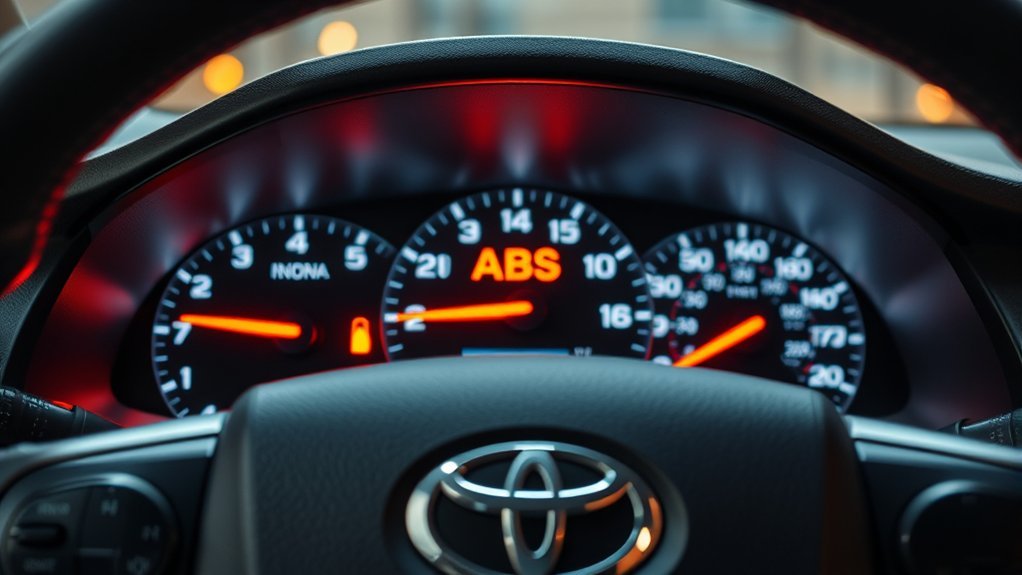
A steady Toyota Camry ABS light means the car has detected a malfunction in the anti-lock braking system or Brake Assist system. The conventional brakes may still operate if only the amber ABS warning is on, but anti-lock braking, traction control, or stability assistance may be limited. If the ABS light appears with a red BRAKE warning, a soft or sinking pedal, low fluid, leakage, grinding, smoke, or reduced braking, stop driving as soon as it is safe and arrange towing or professional inspection.
Last updated: July 23, 2026
Quick Answer
If only the amber Toyota Camry ABS light is on and the brake pedal feels normal, avoid hard braking and arrange prompt diagnosis. Do not replace parts or disconnect the battery to reset the light. Record the ABS codes with an ABS-capable scan tool first. Stop driving if a red BRAKE warning, abnormal pedal, fluid leak, grinding, smoke, pulling, or reduced braking appears.
Key Takeaways
- An amber ABS light means the anti-lock or Brake Assist system has detected a malfunction and may disable related assistance.
- A red BRAKE light, low fluid, leakage, grinding, smoke, pulling, or a soft or sinking pedal is more urgent and should be treated as a stop-driving warning.
- Wheel speed sensors, sensor wiring, hub or tone-ring problems, power-supply faults, and ABS actuator or module faults can produce similar warnings.
- Use an ABS-capable scan tool before replacing parts; a basic engine-code reader may not access ABS, TRAC, or VSC data.
- Use the exact Toyota manual for your model year and check the VIN for open recalls or service campaigns.
- Do not clear codes until you record them, repair the confirmed cause, and verify that the warning stays off.
At a Glance
| Time Required | 10–30 minutes for safe visual checks; longer for diagnosis or repair |
| Difficulty | Easy for warning, fluid, tire, and fuse checks; moderate to advanced for circuit testing |
| Tools Needed | Exact model-year owner’s manual, flashlight, clean rag, ABS-capable scan tool, optional multimeter |
| Cost | $0 for visual checks; about $117–$172 for a broad ABS diagnosis estimate; repairs vary by year and fault |
What Should You Do for Each ABS Warning Combination?
The warning combination is more important than the amber ABS symbol by itself. Use this table for initial triage only. It cannot identify the failed component.
| Warning or Symptom | What It May Mean | Safest Next Step |
|---|---|---|
| Amber ABS light only; pedal feels normal | ABS or Brake Assist has detected a fault; conventional braking may remain available. | Drive cautiously only as needed for prompt diagnosis. Avoid hard braking and slippery conditions. |
| ABS light with red BRAKE warning | Low fluid or a more serious brake-system or brake-control malfunction may be present. | Stop in a safe place and arrange towing or immediate professional inspection. |
| ABS with TRAC, VSC, or slip warning | A shared wheel-speed, brake-control, voltage, or communication fault may have disabled several assistance systems. | Scan the ABS/VSC and powertrain modules rather than assuming several parts failed. |
| Soft, sinking, unusually hard, or inconsistent pedal | A hydraulic, power-assist, actuator, booster, or fluid-loss problem may affect normal braking. | Do not continue driving. Arrange towing. |
| Warning started after brake, bearing, hub, tire, or suspension work | A sensor connector, harness, hub component, tire setup, or calibration-related issue may have been disturbed. | Inspect the serviced corner and scan the ABS system before replacing parts. |
What Does the Toyota Camry ABS Light Mean?
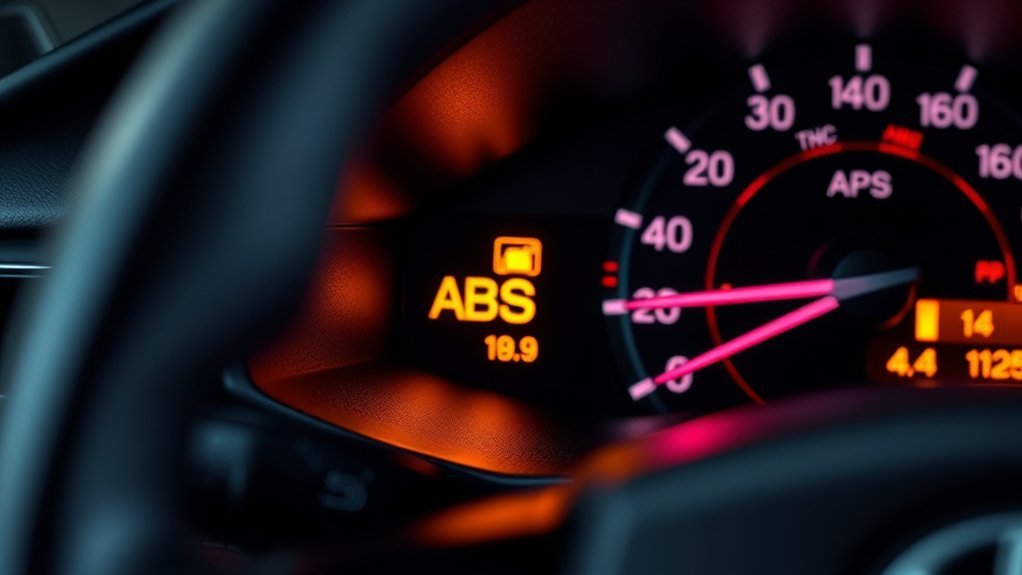
The ABS light indicates that the Camry has detected a malfunction in the Anti-lock Braking System or Brake Assist system. Toyota advises checking the exact owner’s manual because warning symbols, accompanying messages, and required actions can vary by model year and powertrain.
ABS uses wheel-speed information to detect when a wheel is approaching lockup. The system can reduce, hold, and reapply brake pressure so the wheel can keep rotating and the driver can retain more steering control during hard braking.
The ABS indicator normally illuminates during the dashboard self-check and then goes out. A light that never illuminates during the self-check, remains on after startup, or returns while driving needs inspection according to the exact manual for your Camry.
When the amber ABS warning stays on by itself, the conventional hydraulic brakes may still operate. However, anti-lock braking and related traction or stability functions may be unavailable when you need them.
Warning: If the ABS light appears with a red BRAKE warning light, low brake fluid, a soft or sinking brake pedal, grinding, pulling, smoke, reduced braking, or visible brake-fluid leakage, stop driving as soon as it is safe and have the Camry towed or inspected by a qualified technician.
Can You Drive With the Toyota Camry ABS Light On?
If only the amber ABS light is on and the brake pedal feels normal, the Camry may be driven cautiously for a short trip to a qualified repair facility. Reduce speed, leave extra following distance, avoid slippery roads when possible, and avoid hard braking.
Do not interpret this as permission to continue normal daily driving. Without functioning ABS, the wheels can lock more easily during emergency braking, and traction or stability assistance may also be limited.
Do not continue driving if the red BRAKE warning is on, the pedal feels soft, sinks, becomes unusually hard, or braking performance changes. A burning smell, smoke, fluid under the car, grinding, or a strong pull while braking also requires an immediate stop and towing.
Use Toyota’s owner’s manual lookup to confirm the warning response for the exact Camry year. Do not rely on a reset sequence written for another generation.
Why Does the Camry Model Year Matter?
Camry brake-control hardware, warning messages, scan access, and repair procedures have changed across generations. Gasoline and hybrid models may also use different brake-assist, actuator, booster, or hydraulic-control designs.
A procedure that retrieves or clears codes on an older Camry may be incorrect or unsafe on a newer model. Do not use universal terminal-jumper, pedal-pumping, fuse-removal, or battery-disconnect instructions unless the procedure appears in the official service information for your exact year and system.
Before authorizing an expensive actuator or module repair, check the 17-character VIN through Toyota’s Safety Recall and Service Campaign lookup and the NHTSA recall lookup. A year-and-model search is useful for research, but only a VIN lookup can identify whether a specific vehicle has an unrepaired recall listed in the system.
What Commonly Causes a Toyota Camry ABS Light?
Several faults can turn on the Toyota Camry ABS light. The exact cause depends on the model year, trim, powertrain, warning combination, and stored diagnostic trouble codes.
| Possible Cause | What It Means | What to Check |
|---|---|---|
| Wheel speed sensor or sensor-circuit fault | The ABS module is not receiving a reliable wheel-speed signal. | Read ABS codes and live data; inspect the sensor, connector, harness, mounting, and related hub components. |
| Damaged wiring or connector | A broken, corroded, stretched, shorted, or loose circuit can interrupt the sensor or module signal. | Look near wheel hubs and underbody areas exposed to water, salt, heat, movement, and road debris. |
| Hub, bearing, or tone-ring problem | Damage, excessive play, rust, debris, or an incorrect air gap can distort the wheel-speed signal. | Check for bearing noise or play, recent hub work, physical damage, and model-specific sensor construction. |
| Incorrect tire or wheel-speed condition | A temporary spare, mismatched tire size, severe inflation difference, or wheel damage can affect speed comparisons or related stability behavior. | Confirm tire sizes, placard pressures, spare-tire use, and recent tire or wheel work. |
| Blown ABS fuse or power-supply issue | The pump, actuator, or control module may not be receiving the required power. | Use the exact fuse diagram and replace a fuse only with the specified rating. Diagnose the circuit if it blows again. |
| Weak battery, charging fault, or low voltage | Low voltage can create warning lights, module resets, or communication faults. | Test the 12-volt battery and charging system if several warnings appeared together or after a low-voltage event. |
| Low brake fluid or hydraulic warning condition | Low fluid may trigger a brake-system warning and can appear with ABS or stability warnings depending on the model. | Check the reservoir from outside first. Inspect for pad wear or leakage rather than simply topping it off. |
| ABS actuator, pump, booster, or control-module fault | The electronic or hydraulic brake-control assembly has failed, overheated, lost pressure, or lost communication. | Professional scan, pressure, power, ground, communication, and model-specific service testing may be required. |
Worn brake pads are not usually a direct amber ABS-light trigger by themselves. However, worn pads can lower the reservoir level as the caliper pistons extend. Review the Toyota Camry brake warning light guide if the red BRAKE warning or low fluid is also present.
How Do You Troubleshoot a Toyota Camry ABS Light?
Use this sequence before buying parts. It protects useful diagnostic information and separates safe visual checks from model-specific brake-system work.
- Decide whether the car is safe to move. If the red BRAKE light is on, the pedal feels abnormal, braking has changed, or you see fluid, smoke, or severe damage, stop and arrange towing.
- Record every warning. Note the light color, exact message, buzzer, driving conditions, recent repairs, and whether ABS, TRAC, VSC, BRAKE, check-engine, battery, or hybrid warnings appeared together.
- Restart the Camry once only as an observation. A temporary change does not prove the fault is repaired. Do not repeatedly cycle the ignition to hide an intermittent warning.
- Check the exact owner’s manual. Confirm the symbol, response, brake-fluid specification, fuse location, and model-year instructions.
- Inspect brake fluid from outside the reservoir. Check whether the level is between the marks. Do not open the system or add fluid until you understand why the level is low.
- Check tires, wheels, and recent work. Look for a temporary spare, mismatched tire size, severe pressure difference, wheel damage, bearing noise, or a warning that began after tire, brake, hub, axle, or suspension service.
- Inspect the correct fuses. Replace a blown fuse only with the specified amperage. If it blows again, stop replacing fuses and diagnose the electrical fault.
- Check the 12-volt power supply. Test battery and charging voltage if several warnings appeared together, the vehicle was recently jump-started, or the battery was weak or replaced.
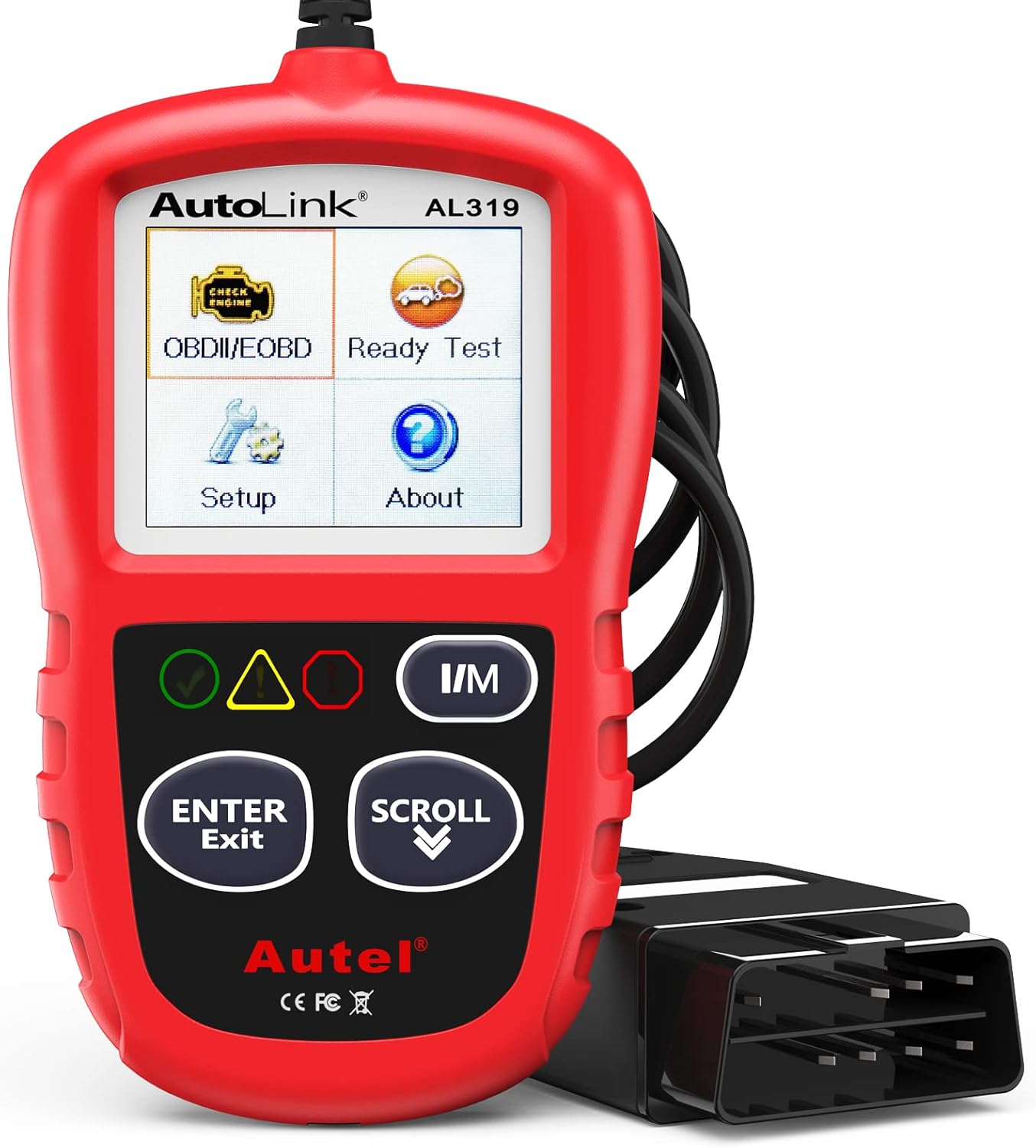
- Scan the ABS system. Use a scanner that can access the Toyota ABS/VSC module, stored and pending codes, freeze-frame information when available, and live wheel-speed data. A basic engine-code reader may not provide this access.
- Inspect the circuit indicated by the evidence. Check the sensor, connector, harness, mounting, hub, bearing, tone-ring area, power, ground, and communication path rather than replacing the first part named in a code description.
- Check the VIN. Review Toyota and NHTSA recall information before paying for an expensive brake-control assembly.
- Repair and verify. Record the original codes, complete the confirmed repair, follow the correct clearing or calibration procedure, and road-test the car only when it is safe. Confirm that the light stays off and live data remains stable.
[Products Worth Considering]

This brake bleeder bottle is designed to make fluid bleeding easier for one-person use with a built-in check valve and magnetic mount. The flexible hose fits most bleeder valves and helps reduce the chance of air entering the system during service. With a practical fluid capacity and universal fit, it is a handy tool for brake maintenance and repair.

The FOXWELL NT301 is a plug-and-play OBD2 code reader designed to help drivers and home mechanics diagnose check engine light issues with ease. It reads fault codes, clears emissions-related warnings, displays live sensor data in graph form, and shows I/M readiness so you can quickly check vehicle status before an emissions test. With broad compatibility across many OBD2 vehicles and a clear color screen, it offers a practical, user-friendly way to monitor and troubleshoot engine performance.

This universal brake bleeder kit makes one-person brake and clutch line bleeding simple by using compressed air to create stable vacuum-assisted fluid flow. Its extra-large 3L tank helps complete full-system flushes with fewer interruptions, while the included refill bottle, flexible hose, and universal adapter support clean, efficient use on standard and ABS brake systems.
What Symptoms Often Appear With an ABS Fault?
ABS faults can appear in several ways:
- The ABS light stays on after startup or returns while driving.
- ABS, traction-control, VSC, or slip warnings appear together.
- The brake pedal pulsates at very low speeds when the driver is not making an emergency stop.
- The speedometer or other vehicle-control behavior changes on some model years.
- The warning begins after brake, bearing, hub, tire, axle, or suspension work.
- Live wheel-speed data from one wheel drops out, stays at zero, or changes erratically.
- A pump or actuator runs unusually often on an electronically controlled brake system.
ABS, traction control, and stability control can share wheel-speed information and brake-control hardware. One sensor, wiring, voltage, hub, or communication fault can therefore illuminate several warnings without proving that several unrelated parts failed.
How Does Live Wheel-Speed Data Help?
One of the most useful diagnostic steps is comparing all available wheel-speed readings during a slow, controlled test. On a straight, steady roll, the readings should rise smoothly and remain reasonably consistent. A signal that stays at zero, drops out, spikes, or differs sharply from the other wheels points toward that wheel’s sensor circuit, mounting, hub, bearing, or tone-ring area.
Live data still requires interpretation. Tire size, temporary-spare use, connector movement, corrosion, bearing play, sensor air gap, and integrated hub-sensor designs can affect the reading. A code naming one wheel identifies where the module detected a problem; it does not automatically prove the sensor itself is defective.
Pro Tip: If the warning began immediately after brake, rotor, wheel-bearing, hub, axle, or suspension work, inspect the wheel-speed-sensor wiring and connector near the serviced corner first. The harness may have been stretched, pinched, contaminated, or left disconnected. See the Camry brake-pedal-pulsation guide if low-speed pulsation is also present.
Why Do Wheel Speed Sensors Matter?
Wheel speed sensors are key ABS inputs. They report wheel rotation to the brake-control module. When the module detects that a wheel is slowing toward lockup, it can command the hydraulic system to reduce, hold, and reapply brake pressure.
A damaged, unplugged, corroded, contaminated, or incorrectly mounted sensor can send unreliable data. Depending on the Camry year, the related encoder or tone-ring component may be separate, built into a bearing seal, or incorporated into a hub assembly.
Because the sensor and harness sit near the wheel, they are exposed to water, road salt, brake dust, heat, movement, impact, and service damage. Inspect the complete circuit rather than assuming visible dirt proves the sensor has failed.
Do not force a seized sensor out of a rusty hub. It can break during removal, and the design may require hub, bearing, or additional brake work. Use model-specific service information and proper lifting support.
How Do You Check Camry Brake Fluid Safely?

Brake fluid is safety-critical. Park on level ground, switch the vehicle off, allow hot components to cool, and check the reservoir from outside the translucent container. The fluid should be between the marked minimum and maximum levels.
What Should You Do if the Brake Fluid Is Low?
If the fluid is below the minimum mark, do not simply top it off and continue driving. The level can drop as brake pads wear, but it can also indicate leakage from a line, hose, caliper, wheel cylinder on applicable models, master cylinder, or electronically controlled brake component.
If a red brake warning, abnormal pedal, visible leak, or repeated fluid loss is present, leave the car parked and arrange professional inspection. Never crawl beneath a vehicle that is not properly supported.
Use only the fluid type specified for the exact Camry model year. Check the reservoir cap and Toyota owner’s manual. Federal brake-fluid labeling requires users to follow the vehicle manufacturer’s recommendation and keep fluid clean, dry, and protected from moisture.
Can Brake-Fluid Color Show Whether It Is Good?
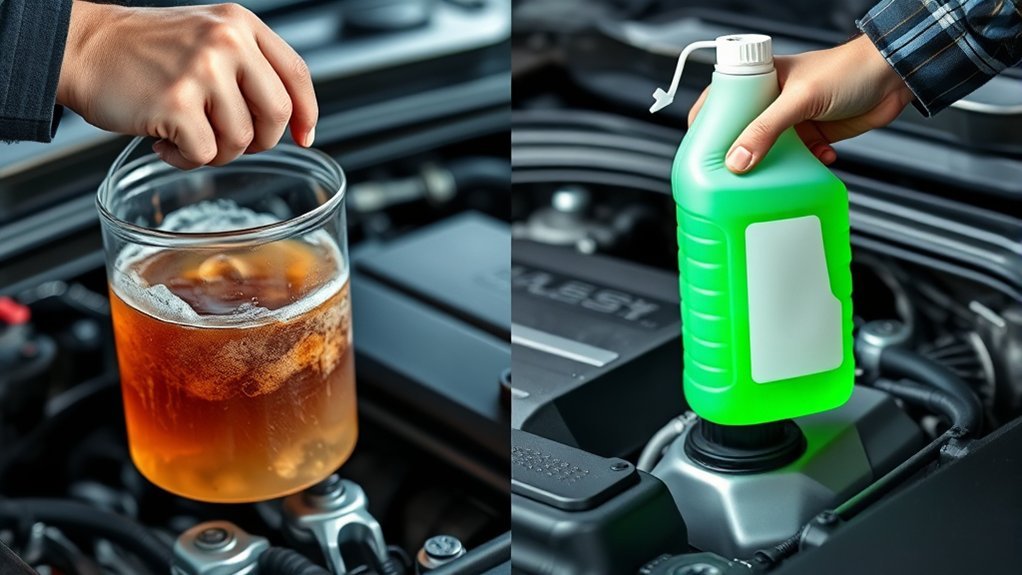
Brake fluid is often clear to light amber when new. Very dark, cloudy, or visibly contaminated fluid deserves inspection, but color is only a visual clue. It cannot confirm moisture content or prove that the fluid still meets the service requirements for your Camry.
Brake fluid absorbs moisture. Keep new fluid in its original tightly closed container, avoid introducing dirt or petroleum products, and do not leave the reservoir open longer than necessary.
Note: Brake fluid can damage paint. If it spills, wipe it up promptly and rinse the affected area. Do not use fluid from an open, dirty, or incorrectly labeled container.
What Is the Difference Between ABS, BRAKE, and Traction-Control Lights?
These warning lights can be related, but they do not mean the same thing.
- ABS light: Indicates a malfunction in the anti-lock braking or Brake Assist system.
- Red BRAKE light: Can indicate an applied parking brake, low brake fluid, or a brake-system malfunction. A persistent red warning requires the response stated in the exact owner’s manual.
- Traction-control, VSC, or slip warning: May appear with an ABS fault because these systems can use wheel-speed data and brake-control hardware.
- Check engine light: Usually indicates a powertrain or emissions fault, but a powertrain code can cause the vehicle to limit or disable traction and stability functions.
- Battery or charging warning: A low-voltage or charging problem can create several module and communication warnings.
If several lights appear together, scan all relevant systems rather than guessing. For traction-specific symptoms, see the Camry traction-control-light guide. For a broader symbol overview, use the Toyota Camry dashboard warning-lights guide.
When Should You Get Professional Help?
Get professional help promptly if the ABS light stays on after the initial checks, returns after repair, or cannot be accessed with your scan tool. ABS systems combine electronics, hydraulic components, network communication, and model-specific calibration.
Seek immediate service or towing if you notice any of these symptoms:
- The red BRAKE warning is on with the ABS light.
- The brake pedal feels soft, sinks, becomes unusually hard, or requires more force.
- Brake fluid is below the minimum mark, keeps dropping, or is visibly leaking.
- The vehicle pulls hard to one side or takes longer to stop.
- You hear grinding, scraping, or metal-on-metal brake noise.
- You see smoke or smell overheated brakes.
- ABS activates unexpectedly at low speeds.
- A pump or actuator runs unusually often.
- The warnings appeared after a wheel bearing, hub, brake, axle, tire, or suspension repair.
- The scan tool reports a brake actuator, pressure, pump, power-supply, or communication fault that requires service information and testing.
[Products Worth Considering]
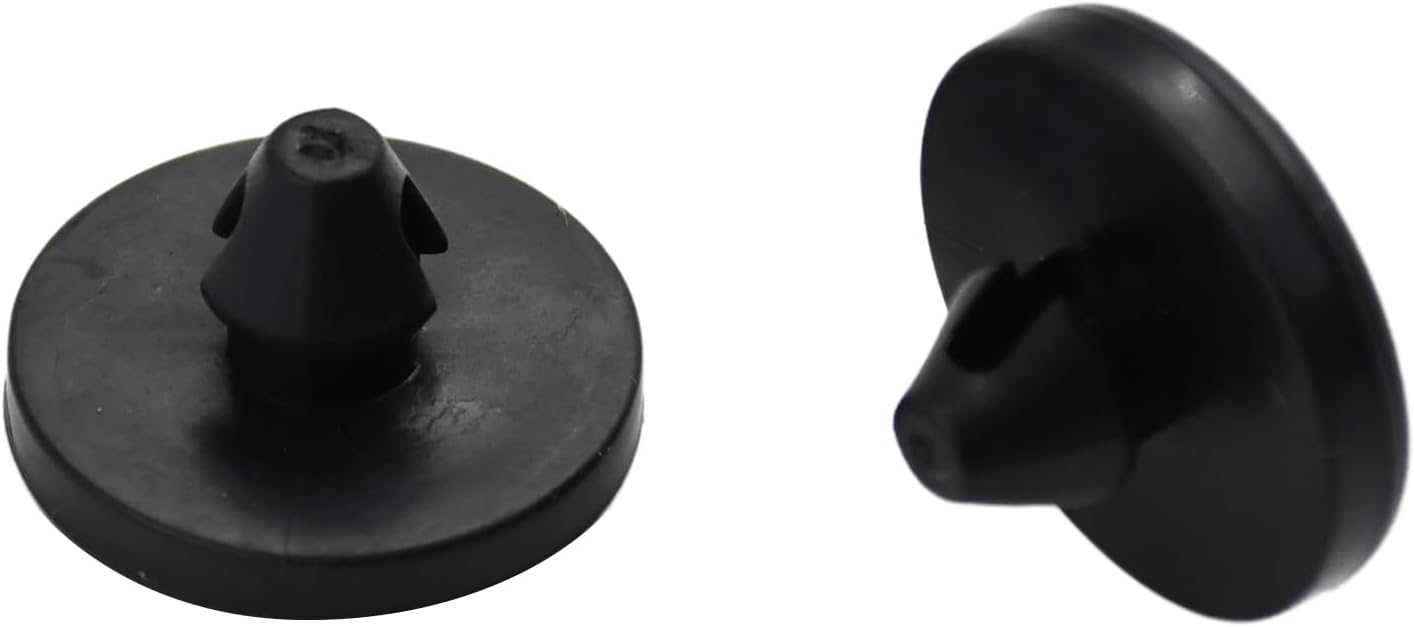
This brake switch stopper set helps restore proper brake pedal and brake light switch operation on a wide range of Toyota, Lexus, and Scion vehicles. Designed as a direct replacement part, it supports reliable pedal contact and can help fix worn or missing stoppers that affect brake light function. The package includes two stoppers for convenient replacement or spare use.
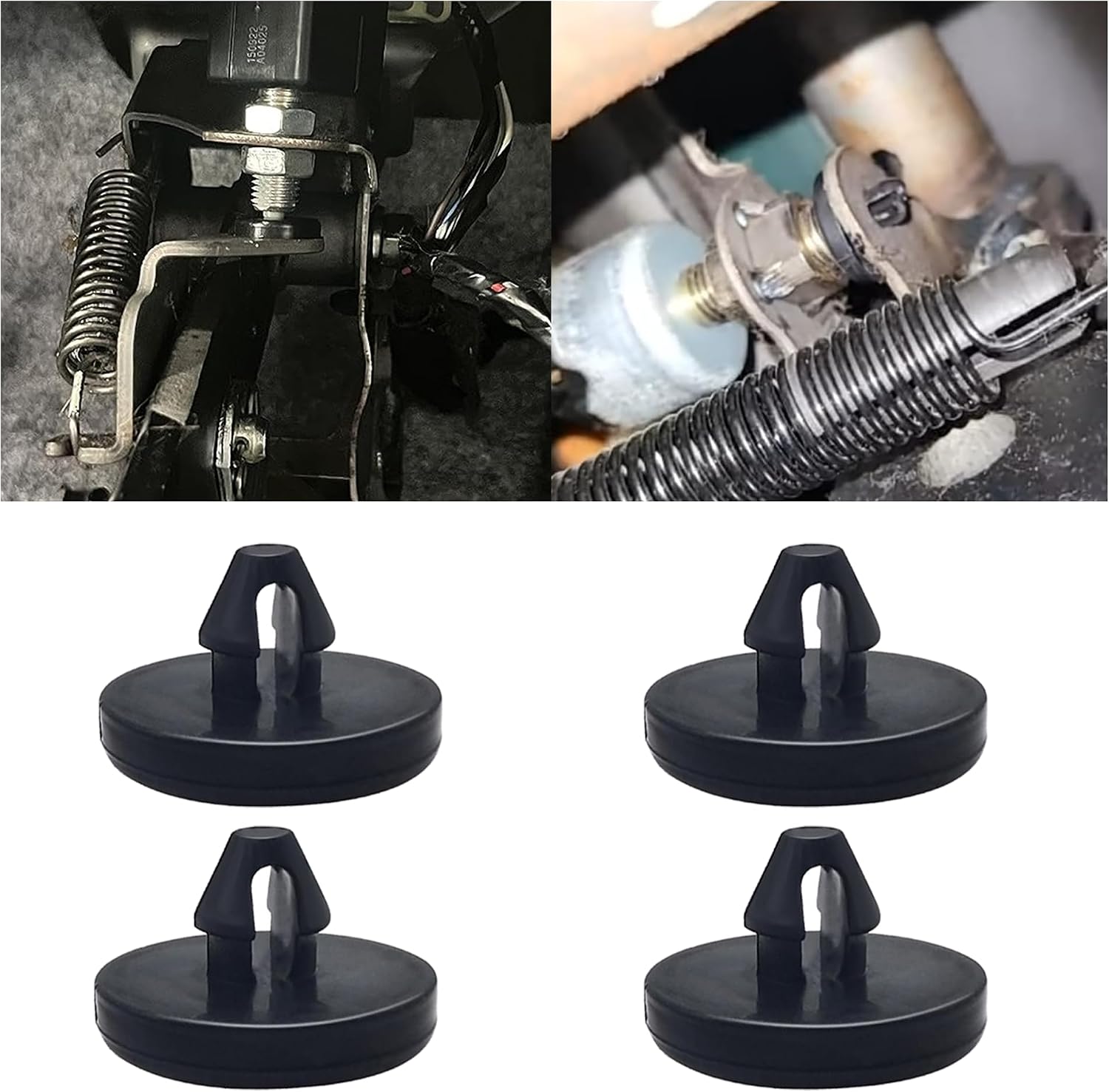
This brake pedal stop pad set is designed as an OEM replacement for compatible Toyota, Lexus, and Scion models, helping restore proper brake light switch function when the brake light stays on. Made from durable nylon, these compact stoppers are built for reliable long-term use and quick, tool-free installation. The set includes multiple pieces for convenient replacement and sharing.

The BLCKTEC 440 Bluetooth OBD2 scanner helps drivers and DIY mechanics quickly read and clear trouble codes, monitor live data, and check emissions readiness with confidence. Its color display, graphing capabilities, and battery and charging system testing make it a versatile diagnostic tool for OBD-compliant vehicles. Designed for plug-and-play convenience, it runs directly from your vehicle and includes support for report sharing and ongoing updates.
How Much Does a Toyota Camry ABS Repair Cost?
An ABS code identifies the circuit or condition detected by the module. It does not automatically prove that the named sensor, actuator, pump, or module must be replaced.
The following are broad U.S. third-party estimator ranges checked on July 23, 2026. They are not quotes. Model year, powertrain, part design, labor rate, location, taxes, shop fees, diagnostic time, calibration, brake bleeding, and related repairs can change the total substantially.
| Service | Broad Estimate | Notes |
|---|---|---|
| ABS diagnosis | About $117–$172 | A year-specific estimate may differ. Diagnosis is normally the best first expense if you lack Toyota-capable ABS equipment. |
| Wheel speed sensor replacement | About $369–$503 | Confirm the harness, connector, hub, bearing, mounting, and signal before replacing the sensor. |
| Wiring or connector repair | Varies widely | Cost depends on corrosion, harness access, circuit testing, connector availability, and whether damage extends into the main harness. |
| Hub or bearing repair | Varies by year and axle | Some sensor or encoder components are integrated with the hub or bearing design. |
| Brake fluid or hydraulic service | Varies by system and shop | Hybrid and electronically controlled systems may require model-specific bleeding equipment and procedures. |
| ABS control module replacement | About $1,205–$1,238 as a broad aggregate | Some model years differ substantially. Confirm power, grounds, communication, actuator condition, VIN coverage, and service procedures before replacement. |
Request a written estimate tied to the VIN, model year, powertrain, code results, and confirmed failed component. Do not approve an expensive module or actuator based only on the dashboard light.
[Products Worth Considering]

FOXWELL NT201 is an easy-to-use OBD2 scanner designed to help drivers quickly read and clear check engine codes, view live engine data, and check emissions readiness. Its color screen, one-key I/M readiness test, and broad compatibility with most gasoline vehicles since 1996 make it a practical tool for everyday diagnostics and maintenance. With plug-and-play operation and lifetime free updates, it offers a simple way to understand vehicle issues without expensive shop visits.

This brake bleeder hose kit helps remove old brake fluid and air from motorcycle brake and clutch systems quickly and efficiently. Its one-way check valve prevents air from being drawn back into the system, while the easy-to-connect clips make bleeding simple for routine maintenance. Built for reliable use, it is a practical tool for keeping motorcycle braking performance responsive.

This brake switch stopper helps restore proper brake light operation by providing a precise pedal stopping point, reducing issues where brake lights stay on. Made from durable nylon, it is designed for easy installation and dependable fitment across many Toyota, Lexus, and Scion models. The multi-pack supply makes it convenient to replace worn stoppers and keep spares on hand for future maintenance.
How Can You Reduce Future ABS Problems?
You cannot prevent every ABS fault, but routine brake, tire, hub, and electrical maintenance can reduce avoidable problems.
- Keep brake fluid clean, dry, and at the correct level.
- Use the fluid specification and maintenance guidance for the exact Camry year.
- Repair brake-fluid leaks immediately.
- Use matching tire sizes and maintain placard pressure.
- Address wheel-bearing noise, play, or hub damage promptly.
- Inspect sensor wiring and connectors during brake, bearing, axle, tire, and suspension work.
- Use the specified fuse rating and diagnose any fuse that blows again.
- Maintain the 12-volt battery and charging system.
- Scan the ABS system when the warning first appears instead of waiting for more lights.
- Check the VIN periodically for open recalls and Toyota service campaigns.
The safest ABS-light repair is the one confirmed by codes, live data, circuit testing, and inspection—not the one guessed from the dashboard symbol.
Frequently Asked Questions
How much does it cost to fix the ABS on a Toyota Camry?
The cost depends on the model year and confirmed fault. Broad U.S. estimator ranges checked July 23, 2026 list ABS diagnosis at about $117–$172, wheel speed sensor replacement at about $369–$503, and aggregate ABS control module replacement at about $1,205–$1,238. Some years differ substantially, and taxes, fees, calibration, bleeding, and related repairs can change the total.
Why does the ABS light stay on in my Toyota Camry?
The light may remain on because of a wheel-speed-sensor or sensor-circuit fault, damaged wiring, a hub or encoder problem, an incorrect tire condition, a fuse or voltage issue, or an ABS actuator or module fault. Read the ABS codes and live data before replacing parts.
Is it safe to drive a Camry with the ABS light on?
If only the amber ABS light is on and the brake pedal feels normal, you may be able to drive cautiously for a short trip to a repair facility. Avoid hard braking and slippery roads. Stop driving if a red BRAKE warning, abnormal pedal, leakage, grinding, smoke, pulling, or reduced braking appears.
Can I reset the Toyota Camry ABS light myself?
Do not reset the light before recording the codes and repairing the cause. Battery disconnection, fuse removal, terminal jumping, and pedal-reset methods are not universal across Camry generations. Use the exact model-year procedure and a capable scan tool when required.
Can low brake fluid turn on the ABS light?
Low fluid more directly indicates a brake-system warning condition, but it may appear with ABS or stability warnings depending on the model and fault. Treat low fluid seriously because it can result from brake wear or leakage. Do not simply top it off without finding the cause.
Why are the ABS and traction-control lights on together?
ABS, traction control, and stability control can share wheel-speed data and brake-control hardware. A sensor, wiring, hub, voltage, actuator, or communication fault may disable several systems and illuminate several warnings even when only one underlying fault is present.
Will the ABS light turn off after the problem is repaired?
It may turn off after the module completes a successful self-check, or it may require code clearing and a model-specific verification drive. The correct behavior depends on the Camry year and stored fault. Confirm the repair with a scan tool rather than assuming that an extinguished light proves the system is fixed.
Conclusion
If your Toyota Camry’s ABS light stays on, first identify every warning and decide whether the car is safe to move. Stop driving for a red BRAKE warning, abnormal pedal, fluid loss, grinding, smoke, pulling, or reduced braking. If only the amber ABS warning is present and braking feels normal, drive cautiously only as needed for prompt diagnosis.
Use the exact Toyota owner’s manual, scan the ABS/VSC system, compare live wheel-speed data, inspect the indicated circuit, and check the VIN for recalls or service campaigns. Repair the confirmed cause before clearing codes, then verify that the warning stays off and the system data remains stable.
Sources
- Toyota Owners — Warning Lights — Toyota guidance stating that the ABS warning can indicate an ABS or Brake Assist malfunction.
- Toyota Owners — Manuals and Warranties — model-year-specific warning, fluid, fuse, and operating guidance.
- Toyota — Safety Recall and Service Campaign Lookup — VIN-based Toyota, Lexus, and Scion recall and campaign lookup.
- NHTSA — Check for Recalls — VIN and vehicle recall information.
- NHTSA — ABS Interpretation — wheel-speed monitoring and brake-pressure modulation explanation.
- 49 CFR § 571.116 — Motor Vehicle Brake Fluids — manufacturer-fluid recommendations and clean, dry storage warnings.
- RepairPal — Toyota Camry ABS Diagnosis Cost — broad U.S. diagnostic estimate checked July 23, 2026.
- RepairPal — Toyota Camry Wheel Speed Sensor Replacement Cost — broad replacement estimate checked July 23, 2026.
- RepairPal — Toyota Camry ABS Control Module Replacement Cost — broad aggregate estimate and model-year variation warning.