Toyota 4Runner fuel economy depends heavily on the model year, powertrain, trim, tires, and type of driving. A 2024 fifth-generation 4Runner is EPA-rated at 17 MPG combined, while redesigned 2025 and 2026 versions can reach up to 23 MPG combined. Your actual mileage may be lower with short trips, high speeds, towing, heavy cargo, off-road tires, roof equipment, or cold weather.
Quick Answer
Toyota 4Runner MPG depends on model year. The 2024 fifth-generation model is rated at 16 city, 19 highway, and 17 combined MPG. Most 2025–2026 sixth-generation versions rate about 21–23 combined MPG. Real results change with speed, temperature, tires, cargo, terrain, towing, and driving style.
Key Takeaways
- A 2024 4Runner has an EPA rating of 16 city, 19 highway, and 17 combined MPG.
- Redesigned 2025–2026 gas models generally rate higher, while i-FORCE MAX versions can reach 23 MPG combined.
- High speed, short trips, cold weather, towing, roof cargo, lifts, and heavy tires can lower actual mileage.
- Check fuel economy over at least three full tanks rather than relying on one dashboard reading.
- Proper tire pressure, smooth driving, reasonable highway speeds, and prompt repairs can reduce avoidable fuel waste.
What 4Runner MPG to Expect by Model Year

You should identify your 4Runner’s model year and powertrain before comparing mileage. The redesigned sixth-generation model arrived for 2025, so a general claim that every “newer” 4Runner averages 17 MPG is no longer accurate.
| Model and configuration | EPA city/highway | Combined expectation |
|---|---|---|
| 2024 fifth-generation 4Runner | 16/19 MPG | 17 MPG |
| 2025–2026 SR5 and road-focused gas trims | Up to 20/26 MPG | About 22 MPG |
| 2025–2026 gas TRD Off-Road models | About 19/25 MPG | About 21 MPG |
| 2025–2026 i-FORCE MAX models | Up to 23/24 MPG | Up to 23 MPG |
Toyota lists the 2024 4Runner at 16 city, 19 highway, and 17 combined MPG. The company lists the 2025 4Runner and 2026 4Runner at up to 23 combined MPG, with ratings varying by trim and powertrain.
Note: EPA estimates are comparison tools, not promises. Your route, weather, fuel blend, vehicle condition, accessories, and driving behavior may produce a different result.
The most important MPG question is not simply “What does a 4Runner get?” It is “Which model year, powertrain, trim, tires, and driving conditions are being measured?”
Why Real-World 4Runner MPG Varies
EPA ratings come from standardized testing. Real-world driving adds changing traffic, temperatures, hills, wind, cargo, accessories, and driver behavior. This is why two owners with similar 4Runners can report different tank averages without either result being false.
City Driving and Short Trips
Short trips are often hard on fuel economy because the engine and drivetrain spend more time warming up. Repeated acceleration from traffic lights also requires more fuel than steady cruising. A five-mile urban trip may therefore produce a much lower dashboard average than a long highway drive.
Combining nearby errands can reduce the number of cold starts. You do not need to idle for a long time to warm the engine. Start the vehicle, allow the normal startup process to finish, and drive gently until it reaches operating temperature.
Weather, Terrain, and Wind
Cold temperatures can lower mileage through longer warm-up periods, denser air, winter fuel blends, increased accessory use, and lower tire pressure. Hills require extra engine load, while strong headwinds increase aerodynamic resistance. Snow, mud, loose gravel, and off-road driving also demand more energy than dry pavement.
Cargo, Passengers, and Towing
Passengers, tools, camping equipment, recovery gear, and trailer tongue weight all add to the load the engine must move. Towing also adds aerodynamic drag and may require lower gears or higher engine speeds. A towing tank should not be compared directly with an unloaded commuting tank.
How Driving Speed and Style Change Your 4Runner MPG
Speed and driving style can have a noticeable effect, but there is no universal promise that one habit will add a fixed number of MPG. The size of the improvement depends on how you drove before, the route, traffic, gearing, wind, temperature, and vehicle setup.
Speed vs. Fuel Tradeoff
Aerodynamic drag increases as speed rises. The U.S. Department of Energy reports that fuel economy generally drops quickly above 50 mph. A separate DOE summary found that fuel economy across tested light-duty vehicles was about 27% lower at 80 mph than at 60 mph.
This does not mean your 4Runner will gain exactly five MPG by slowing from 65 to 55 mph. It means that obeying speed limits and avoiding unnecessary high-speed cruising can improve range, especially in a tall, body-on-frame SUV.
Read the government’s fuel economy and highway-speed findings for the full testing context.
Smooth Acceleration Techniques
Use steady throttle pressure instead of repeatedly surging and backing off. Accelerate firmly enough to keep up with traffic, but avoid unnecessary full-throttle starts. Once you reach cruising speed, maintain a consistent pace where road and traffic conditions allow.
Hard acceleration may force the transmission into lower gears and higher engine speeds. Hard braking then throws away much of the momentum the engine used fuel to create. Smooth inputs reduce this cycle.
Anticipatory Driving Habits
Look well ahead for changing traffic lights, stopped vehicles, lane closures, and slower traffic. When it is safe, easing off the accelerator early may reduce the need for heavy braking. Leave enough following distance to make gradual speed changes rather than reacting at the last second.
| Driving action | Likely effect |
|---|---|
| Follow the speed limit | Reduces avoidable aerodynamic drag and high-speed fuel use. |
| Hold a steady pace | Avoids repeated acceleration and unnecessary gear changes. |
| Look farther ahead | Allows earlier, gentler speed adjustments. |
| Leave following distance | Reduces abrupt braking and acceleration in traffic. |
How to Calculate Your Real 4Runner MPG
A tank-to-tank calculation is more useful than judging one short dashboard reading. Use the same method for several tanks so that pump shutoff differences and unusual trips have less influence.
- Fill the tank until the pump automatically stops. Do not continue topping it off.
- Reset a trip meter or record the odometer reading.
- Drive normally until the next fill-up.
- Refill the tank and record the number of gallons added.
- Divide the miles driven by the gallons added.
Formula: Miles driven ÷ gallons added = MPG.
For example, if you drive 310 miles and add 16 gallons, the calculated result is 19.4 MPG. Average at least three full tanks before deciding that your fuel economy has changed.
Pro Tip: Keep short notes for towing, roof cargo, long idling, unusual weather, or off-road driving. These details make it easier to explain why one tank differs from another.
Quick Wins That Can Improve 4Runner Fuel Economy
No single habit guarantees a one-to-three-MPG gain, but several small changes can reduce avoidable fuel use:
- Follow posted speed limits and avoid unnecessary high-speed cruising.
- Use smooth acceleration and leave enough space for gradual braking.
- Combine short errands when practical.
- Remove heavy items that you do not need to carry every day.
- Remove unused roof boxes, baskets, or crossbar-mounted equipment.
- Check cold tire pressure monthly.
- Avoid unnecessary extended idling when safely parked.
- Address warning lights, brake drag, alignment problems, and poor engine performance promptly.
Which Maintenance Items Hurt or Help MPG
Routine maintenance protects the fuel economy your 4Runner was designed to deliver. It normally does not turn a 17-MPG vehicle into a 25-MPG vehicle, but it can prevent mechanical problems from wasting fuel.
| Item | How it can affect MPG | What to do |
|---|---|---|
| Tire pressure | Underinflation increases rolling resistance. | Check all tires cold at least monthly. |
| Wheel alignment | Poor alignment can increase tire scrub and uneven wear. | Inspect if the vehicle pulls or tires wear unevenly. |
| Dragging brake | A sticking caliper creates constant resistance and heat. | Have hot-wheel smells, pulling, or unusual heat inspected. |
| Engine-control fault | Sensor, ignition, or fuel-system problems may cause inefficient operation. | Diagnose a check-engine light rather than clearing it repeatedly. |
| Incorrect oil | The wrong viscosity may increase friction or conflict with manufacturer requirements. | Use the viscosity and specification listed for your model year. |
Follow Toyota’s maintenance schedule for oil, filters, spark plugs, fluids, inspections, and other model-specific services. Replacing parts early solely to chase MPG may waste money, while ignoring a genuine fault can allow fuel consumption to worsen.
Warning: Have the vehicle inspected promptly if an MPG drop appears with a flashing check-engine light, fuel smell, smoke, overheating, severe vibration, weak acceleration, or an unusually hot wheel. These signs may indicate a safety or mechanical problem, not normal mileage variation.
[Products Worth Considering]

The JACO ElitePro Digital Tire Pressure Gauge delivers shop-grade accuracy with a clear digital readout, making it easy to maintain proper tire pressure for safer driving and better performance. Built with rugged brass and steel components, a protective guard, and a flexible air hose, it is designed for reliable use across cars, trucks, motorcycles, bikes, RVs, and trailers. The lock-on display, built-in bleeder valve, and bright backlit screen add convenience in any lighting condition.
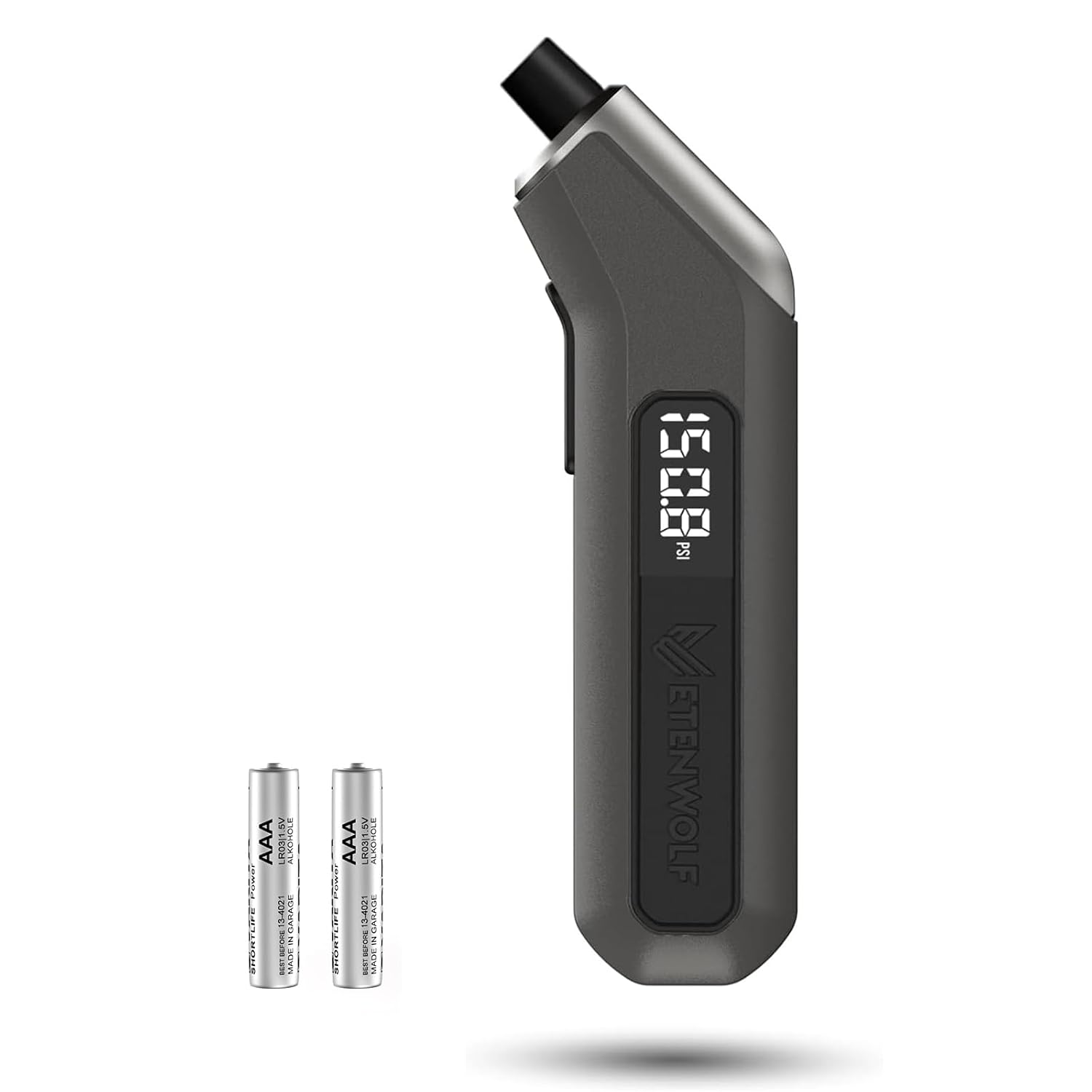
The ETENWOLF T300 digital tire pressure gauge delivers precise readings for cars, RVs, trucks, bikes, and heavy-duty vehicles with a wide measuring range and consistent accuracy. It is built to perform in extreme temperatures, includes a bright LED light for low-visibility use, and uses replaceable AAA batteries for convenient long-term operation. Durable enough to withstand rugged use, it is a practical tool for maintaining proper tire pressure across a variety of vehicles.

The AstroAI Portable Tire Inflator delivers fast, reliable inflation with an upgraded TrueGauge display for accurate pressure readings. Its durable metal construction, compact size, and versatile compatibility make it a practical tool for cars, bikes, motorcycles, sports balls, and inflatables. Designed for convenient storage and quick roadside use, it helps keep tires properly inflated for safer driving.
How Tires and Pressure Affect 4Runner MPG
Tires affect rolling resistance, vehicle weight, gearing, and aerodynamics. Pressure also changes as outdoor temperature changes, so a tire that was correct in warm weather may be low after a cold front.
[Products Worth Considering]
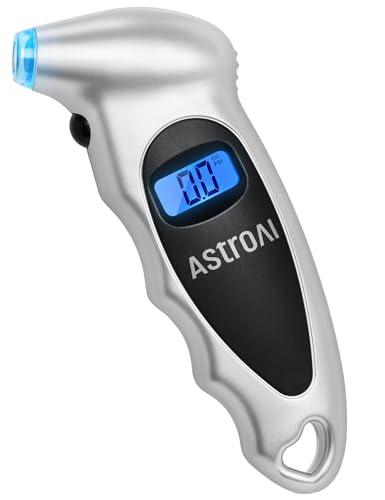
Accurate, Dependable Readings: Factory‑calibrated to ±1 PSI, so you can confidently match your vehicle’s recommended PSI (check the door jamb sticker). Ideal for monthly checks and road trips — consistent results every time, cold or warm.

PROCESS LEVEL ACCURACY: Each ETENWOLF’s digital tire pressure gauge is calibrated manually to ANSI B40.7 Grade 2A(plus-minus 1 PSI).Presta valve adapter not included, if used for bicycles, it must be purchased separately

HIGH ACCURACY: Every ETENWOLF's pencil tire gauge is calibrated to ANSI B40.1 Grade B, it is accurate to 2% of span in the middle 50% of range and 3% of span in the lower and upper 25% of range. Each ETENWOLF pencil tire pressure gauge is manually calibrated and has its unique calibration number printed on the pencil
Tire Pressure Effects
The U.S. Department of Energy says underinflated tires can reduce fuel economy, while the National Highway Traffic Safety Administration recommends checking tire pressure at least once a month when the tires are cold.
Use the cold-pressure specification on the driver-side door placard or in the owner’s manual. Do not use the maximum pressure printed on the tire sidewall as your normal target. The sidewall number is not the vehicle manufacturer’s recommended operating pressure.
See NHTSA TireWise guidance for pressure, tread, TPMS, and tire-safety information.
Tire Type Impact
Large all-terrain or mud-terrain tires often weigh more and create greater rolling resistance than lighter road-focused tires. A larger overall tire diameter can also change effective gearing and cause the odometer or trip calculation to become inaccurate unless the vehicle is recalibrated.
Low-rolling-resistance tires may reduce energy loss, but the benefit varies. Choose tires that still meet your load, traction, weather, durability, and off-road needs. Do not sacrifice safe wet, snow, or trail performance solely for a small possible fuel-economy improvement.
Note: A lift or larger tire does not automatically explain the entire MPG change. Tire weight, tread, diameter, alignment, speedometer accuracy, added armor, roof equipment, and driving pattern can all change at the same time.
Do You Need Premium Fuel? When Regular Is Fine
Premium gasoline does not contain more energy simply because it has a higher octane number. Octane describes resistance to engine knock. Use the minimum octane required by the owner’s manual for your exact model year and powertrain.
Current U.S.-spec 4Runners are designed to use regular-grade unleaded fuel. Buying premium is unlikely to create enough MPG improvement to recover its added cost when the vehicle does not require it. A modified engine, aftermarket tune, forced-induction kit, or unusual operating condition may have different requirements, so follow the instructions supplied for those changes.
| Fuel choice | Best practice |
|---|---|
| Regular unleaded | Use it when it meets the octane requirement in your manual. |
| Premium unleaded | Use it when required by the manufacturer or a properly documented modification. |
| Lower-than-required octane | Avoid it because it may cause knock or reduced performance. |
| Unknown model requirement | Check Toyota’s year-specific owner’s manual before filling. |
[Products Worth Considering]

[Vehicle Fitment]: Compatible with Toyota 4Runner 2010-2019 V6 4.0L (Sport Utility); Compatible with Lexus GX460 2012-2019 V8 4.6L (Sport Utility)

And Vehicle Specific

[COMPATIBILITY] - Compatible with Toyota: 4Runner 2001 Base Sport Utility 4-Door 3.4L 3378CC V6 GAS DOHC Naturally Aspirated 4Runner 1996-2001 Limited Sport Utility 4-Door 3378CC V6 GAS DOHC Naturally Aspirated 4Runner 1996-2002 SR5 Sport Utility 4-Door 3378CC V6 GAS DOHC Naturally Aspirated
How Drag, Cargo, and Idling Cut MPG
A roof basket, cargo box, awning, rooftop tent, spare tire, light bar, or exposed equipment can increase aerodynamic drag. The effect is usually most noticeable at highway speed because air resistance rises rapidly as speed increases.
Remove external equipment when you do not need it. When possible, place cargo inside the vehicle, secure it properly, and stay within the payload rating shown on the vehicle’s Tire and Loading Information label.
Idling also uses fuel while the vehicle travels zero miles. Avoid unnecessary extended idling when safely parked. Do not switch the engine off while moving, while stopped in active traffic, or when doing so would create a safety problem. Follow local anti-idling laws and any model-specific operating instructions.
The Department of Energy provides additional fuel-saving guidance covering speed, cargo, idling, maintenance, and tire pressure.
What Real Owners Report: How to Judge MPG Claims
Owner reports can help show the range of possible results, but only when enough context is supplied. A single number from a forum post may be a dashboard estimate from a short downhill drive, a full-tank calculation, or a long-term average covering thousands of miles.
Before comparing your result with another owner, look for:
- Model year and generation
- Gas or i-FORCE MAX powertrain
- Two-wheel drive, part-time four-wheel drive, or full-time four-wheel drive
- Trim and original tire size
- Lift, armor, roof rack, rooftop tent, and other modifications
- City, highway, towing, or off-road use
- Average speed and elevation
- Outdoor temperature and seasonal fuel
- Dashboard reading or tank-to-tank calculation
- Distance and number of tanks included
A multi-tank result from a vehicle matching your configuration is more useful than an isolated best-ever number. Treat unusually high or low claims carefully when the owner does not explain the method.
Which Common Mods Help or Hurt Fuel Economy
Many 4Runner modifications improve traction, clearance, protection, recovery capability, or cargo capacity. Those benefits may be worth the fuel-economy trade-off. The goal is to understand the trade-off rather than assume every modification is free.
Tire Size and Type
Larger and heavier tires increase rotating mass and may add rolling resistance. Aggressive tread blocks can also require more energy on pavement. If overall tire diameter changes, the displayed mileage and calculated MPG may become inaccurate until the vehicle is properly recalibrated.
Staying close to the original diameter and using the lightest suitable tire may help preserve road efficiency. However, tire selection should first match the vehicle’s load, terrain, climate, and safety requirements.
Roof Racks and Cargo
Roof-mounted gear sits directly in the airflow. A low-profile crossbar may have a smaller effect than a loaded rooftop tent or bulky cargo box, but even empty equipment can add noise and drag.
| Modification | Possible MPG effect | How to limit the effect |
|---|---|---|
| Larger all-terrain tires | More weight and rolling resistance | Choose an appropriate size and weight for your actual use. |
| Suspension lift | May increase frontal exposure and often accompanies larger tires | Use the minimum lift needed and maintain correct alignment. |
| Steel armor or bumpers | Adds permanent vehicle weight | Install protection that matches the terrain you actually drive. |
| Roof basket or cargo box | Adds aerodynamic drag, especially on highways | Remove it when unused and keep loads compact. |
| Rooftop tent | Adds high-mounted weight and substantial frontal area | Accept the trade-off or remove it between trips. |
Troubleshooting a Sudden Drop in 4Runner MPG
One low tank does not always indicate a problem. First check whether the route, weather, speed, fuel, cargo, or towing changed. If the decline continues for three or more comparable tanks, inspect the vehicle systematically.
- Confirm the calculation: Use miles driven divided by gallons added.
- Check tire pressure: Measure all tires cold and compare them with the door placard.
- Review recent changes: Note new tires, a lift, roof equipment, cargo, towing, or alignment work.
- Look for brake drag: Pulling, burning smells, reduced coasting, or one unusually hot wheel needs inspection.
- Check warning lights: Scan and diagnose stored trouble codes instead of guessing.
- Inspect for leaks: Fuel smells or visible liquid require immediate attention.
- Review maintenance history: Confirm the correct oil, scheduled service, and required inspections.
- Compare similar use: Do not compare a winter city tank with a summer highway tank.
A technician can review fuel trims, sensor readings, ignition operation, brake condition, alignment, and other systems when no obvious cause is found.
Cost vs. Benefit: When to Accept Lower MPG or Switch Vehicles
The 4Runner prioritizes towing ability, ground clearance, durability, cargo use, and off-road capability. Lower fuel economy may be a reasonable trade-off when you regularly use those strengths. It may be less reasonable when most driving is a long paved commute with little need for the vehicle’s capability.
Use these formulas instead of relying on a temporary national gas price:
- Annual gallons: Annual miles ÷ average MPG
- Annual fuel cost: Annual gallons × your local price per gallon
- Cost per mile: Fuel price ÷ average MPG
At 12,000 miles per year, a vehicle averaging 17 MPG uses about 706 gallons. One averaging 22 MPG uses about 545 gallons. The difference is roughly 160 gallons per year. Multiply that amount by your local fuel price to estimate the annual savings.
Keep the 4Runner when its capability, condition, expected service life, and ownership value outweigh the fuel expense. Consider a more efficient vehicle when fuel costs consistently strain your budget and you rarely use the 4Runner’s towing, cargo, or off-road strengths. Remember that replacing a reliable vehicle also creates purchase, tax, financing, insurance, and depreciation costs.
Frequently Asked Questions
What MPG does a Toyota 4Runner get?
A 2024 fifth-generation 4Runner is EPA-rated at 16 city, 19 highway, and 17 combined MPG. Redesigned 2025–2026 models vary by trim and powertrain, with official ratings reaching up to 23 MPG combined.
Why is my 4Runner getting worse MPG than the EPA estimate?
Short trips, cold weather, stop-and-go traffic, high speeds, hills, headwinds, towing, heavy cargo, roof equipment, large tires, idling, and mechanical problems can lower real-world mileage. Compare at least three similar tanks before assuming there is a fault.
How can I make a Toyota 4Runner more fuel efficient?
Follow speed limits, accelerate smoothly, keep tires at the recommended cold pressure, remove unused roof equipment, avoid carrying unnecessary weight, limit extended idling, and repair warning lights, brake drag, or alignment problems promptly.
Will premium gas improve 4Runner MPG?
Premium fuel normally does not provide a cost-effective MPG improvement when the engine is designed for regular fuel. Use the minimum octane specified in the owner’s manual for your model year and powertrain.
Do larger tires reduce 4Runner fuel economy?
They often can. Larger tires may weigh more, increase rolling resistance, alter effective gearing, and affect odometer accuracy. The result depends on tire diameter, construction, tread, pressure, wheel weight, and driving conditions.
Does the 4Runner hybrid get much better MPG?
The i-FORCE MAX system improves output and low-speed torque while reaching up to 23 MPG combined. Its advantage over some gas trims is modest because the system is designed for both capability and performance, not only maximum fuel savings.
How do I know whether my dashboard MPG is accurate?
Compare it with a tank-to-tank calculation. Divide the miles driven by the gallons added at the next fill-up, then average at least three tanks. Small differences are normal because pump shutoff points and dashboard calculations vary.
Conclusion
A realistic Toyota 4Runner MPG target starts with the correct model year. The 2024 fifth-generation model is rated at 17 MPG combined, while redesigned 2025–2026 versions can reach roughly 21–23 combined MPG, depending on trim and powertrain.
Measure your own mileage over several full tanks. Follow reasonable speed limits, use smooth inputs, maintain cold tire pressure, remove unused roof equipment, and investigate a persistent decline. Towing, larger tires, lifts, armor, and off-road use may lower mileage, but those trade-offs can still make sense when they support how you use the vehicle.
Sources
- Toyota: 2024 4Runner Fuel Economy — supports the 16 city, 19 highway, and 17 combined MPG rating.
- Toyota: 2025 4Runner — supports current-generation trim, powertrain, and MPG information.
- Toyota: 2026 4Runner — supports current 2026 MPG ratings and powertrain information.
- U.S. Department of Energy: Fuel Economy and Highway Speed — supports the effect of higher speed on fuel use.
- U.S. Department of Energy: Fuel-Saving Driving and Maintenance Tips — supports guidance on driving behavior, idling, cargo, maintenance, and tire pressure.
- NHTSA TireWise — supports monthly cold-pressure checks and use of the vehicle tire placard.