After beach driving, wash your 4Runner undercarriage as soon as practical to remove sand and salt before they remain trapped against metal, trim, and fasteners. Start with fresh water and gentle pressure, paying special attention to the wheel wells, frame surfaces, skid plates, rocker areas, and seams. Do not spray water into the engine compartment, and do not assume a pressure washer is safe for every 4Runner model year.
Quick Answer
Park on firm ground, set the parking brake, and let the exhaust cool. Remove loose sand, then rinse the undercarriage, wheel wells, frame rails, rocker areas, and drains with fresh water at gentle pressure. Use Salt-Away only as directed, dry accessible areas, inspect for residue, and dry the brakes before parking.
At a Glance
| Time Required | About 30 minutes for the initial rinse and inspection |
| Tools Needed | Fresh-water hose or sprinkler, sturdy gloves; optional Salt-Away and cordless leaf blower |
0–30 Minute Checklist: Quick Rinse, Sand Removal, Safety
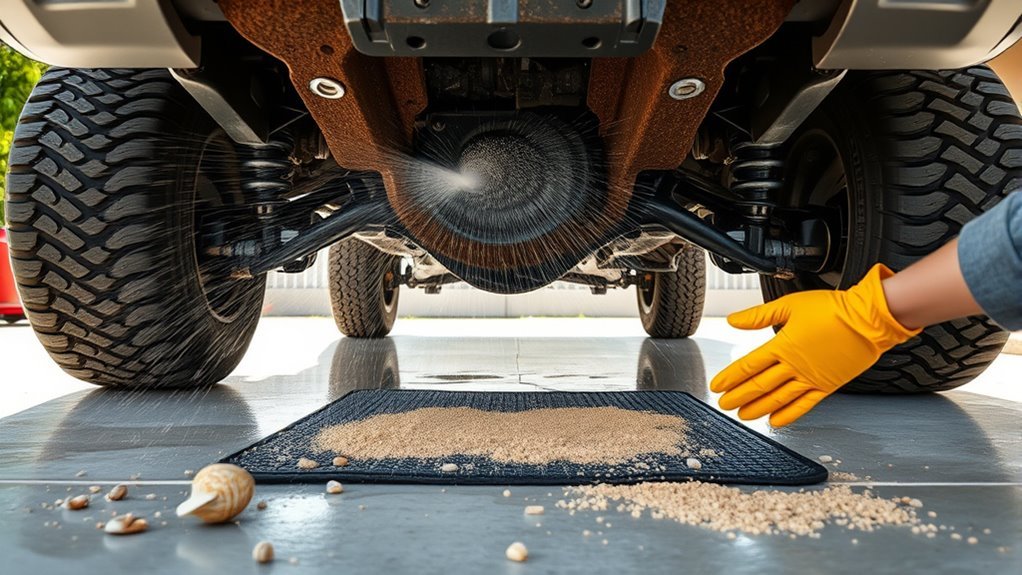
Your first job is to remove loose sand and salt without forcing either deeper into seals, connectors, or mechanical parts. Toyota recommends washing the vehicle promptly after corrosive exposure, and the safest year-agnostic approach is a thorough fresh-water rinse rather than immediately reaching for maximum pressure.
- Park safely. Stop on firm, level ground, engage the parking brake, switch the engine off, and allow the exhaust to cool before working underneath or around it.
- Remove loose sand first. Wearing gloves, shake or brush loose sand from wheel wells, mud flaps, rocker trim, door sills, side steps, and other pockets. Avoid rubbing gritty sand across paint.
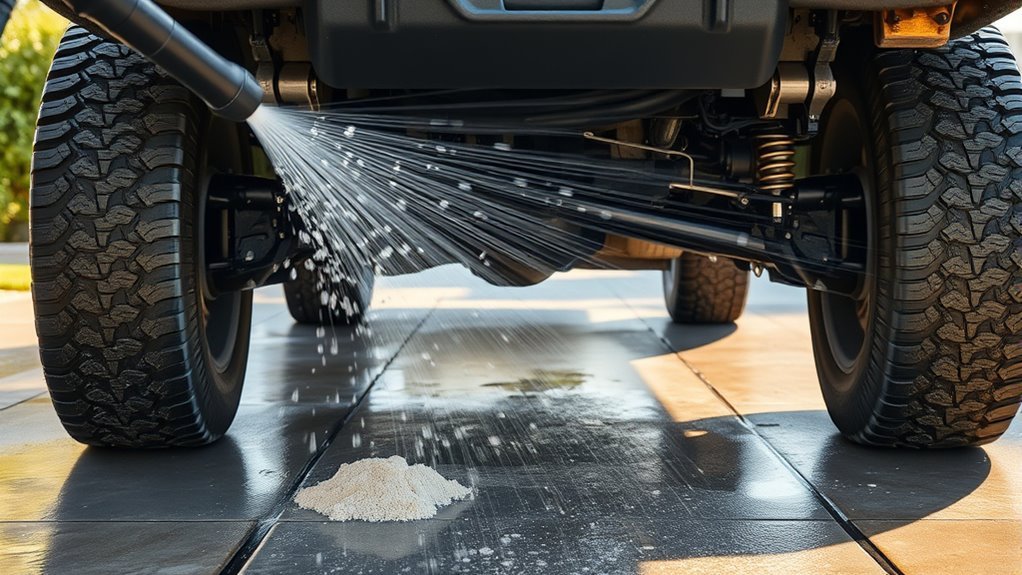
- Rinse the wheel wells and underside. Use a garden hose, fan spray, sprinkler, or other low-pressure fresh-water rinse to carry away loose grit and salt.
- Reach hidden collection points. Direct water toward frame surfaces, crossmembers, skid plates, suspension areas, and accessible drain openings from several angles. The goal is to flush debris out rather than simply make packed sand wet.
- Inspect the body and wheels. Rinse visible salt film from exterior panels, wheels, bumpers, and trim. Use a suitable automotive wash soap when water alone does not remove grime.
- Dry the brakes before parking. After washing, drive slowly in a safe area and apply the brakes several times so the pads and rotors can shed moisture.
Warning: Do not spray water into the engine compartment. The 2026 Toyota 4Runner Owner’s Manual warns against applying water inside the engine compartment and cautions that the exhaust can remain hot enough to burn you after driving.
Gather the Right Tools for an Undercarriage Wash
You do not need aggressive equipment to clean a 4Runner after beach driving. A fresh-water hose or sprinkler handles the basic flush, while gloves, a blower, and an optional salt-removing product help with trapped debris and drying.
- Garden hose: Best general-purpose choice for flushing the underside and wheel wells without unnecessary pressure.
- Fan-style lawn sprinkler: Useful for a long, gentle soak under areas holding dry or packed sand. The original routine uses roughly 30 minutes, moving the sprinkler as needed to cover the vehicle.
- Undercarriage rinse attachment: A garden-hose attachment can make it easier to direct fresh water upward without crawling far beneath the vehicle.
- Sturdy gloves: Protect your hands when checking trim edges, liners, drain openings, and other areas that may contain sharp debris.
- Salt remover: The manufacturer’s Salt-Away vehicle guidance lists the undercarriage, wheel wells, wheels, exhaust, brakes, and body among its vehicle applications. Follow the product instructions for the applicator and dilution method you use.
- Cordless leaf blower or gentle compressed air: Useful for moving water from accessible seams and exterior cavities after rinsing. Avoid forcing air directly into electrical connectors, seals, or sensitive components.
A pressure washer is optional rather than essential. Toyota’s pressure-washing instructions have changed between 4Runner generations, so your model-year owner’s manual should decide whether and where one can be used.
How to Rinse the 4Runner Undercarriage Safely
For most beach cleanup, start with the least aggressive method that removes the contamination. A sprinkler or garden hose provides continuous fresh water without the concentrated force that can damage seals, boots, sensors, finishes, or other sensitive parts.
| Method | Intensity | Result |
|---|---|---|
| Sprinkler | Low | Long, gentle rinse for loosening sand |
| Hose | Low | Controlled rinse for wheel wells and underbody |
| Pressure washer | Variable | Model-year dependent; check Toyota instructions first |
| Pay-and-spray | Variable | Useful when it provides dedicated underbody rinsing |
Begin with loose sand. Move the sprinkler or hose from the front toward the center and rear so fresh water reaches more than one section of the frame. Follow with a directed hose rinse around the wheel wells, skid plates, crossmembers, frame surfaces, rocker areas, and other places where beach sand remains visible.
Be careful with high-pressure equipment. Toyota’s 4Runner Owner’s Manual OM35B37U warns against bringing a pressure-washer nozzle close to connectors, boots, steering, suspension, traction, and brake components and specifically says not to wash the underside with a high-pressure car washer. Because instructions differ by model year, low-pressure fresh water is the safer default for a general 4Runner guide.
If you do not have a hose at home, a car wash with a dedicated underbody rinse can still help. AAA’s salt-damage guidance recommends prioritizing the undercarriage and rinsing loose salt before the rest of the wash. Inspect the vehicle afterward because automated sprays may miss sand packed behind trim or inside wheel-well edges.
Drying, Inspection & Salt Checks: Frame, Wheel Wells, Trim, Engine Bay
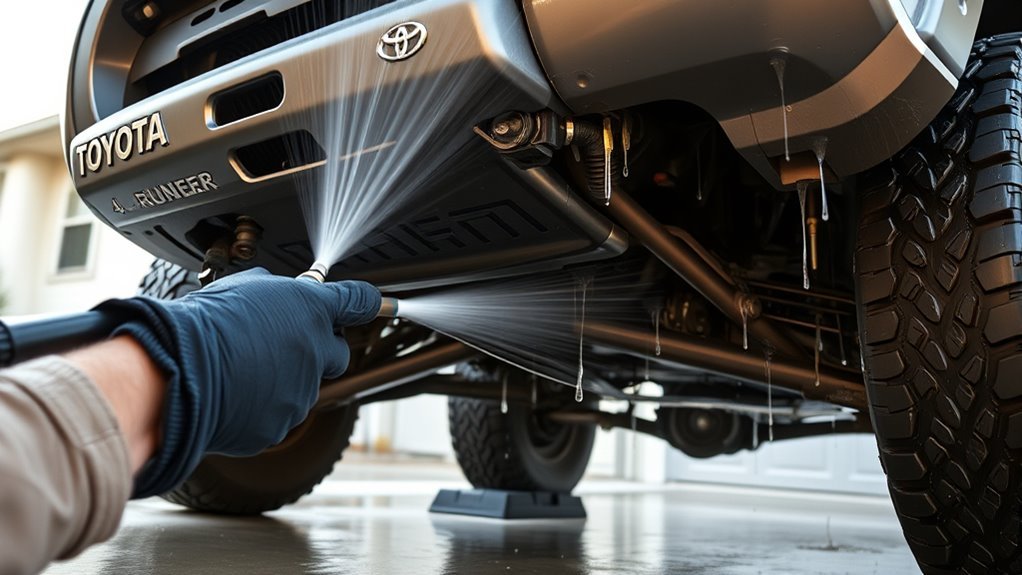
After rinsing, inspect before you put the hose away. Sand often remains where moving water cannot easily reach, including wheel-well liner edges, frame openings, rocker trim, door sills, clips, seams, skid-plate edges, and other cavities.
Use a microfiber towel on accessible painted or finished surfaces. A cordless leaf blower or gentle compressed air can push water and loose grit out of exterior crevices, but avoid aiming concentrated air into connectors, seals, bearings, sensors, or other protected assemblies.
Work from the front of the vehicle toward the rear. Look for visible grains of sand, white or chalky residue, blocked drain openings, or damp pockets that still hold debris. If you find more residue, rinse that area again rather than trying to grind it away with a dry cloth.
Do not rinse the engine bay as part of this process. If beach sand or saltwater has reached the engine compartment, do not follow the original advice to wash connectors or crevices with water. Inspect the contamination and follow the cleaning precautions for your specific model year; get professional help if saltwater reached electrical equipment or other components you cannot safely clean.
Finish by checking exposed frame surfaces, weld areas, bolts, fasteners, suspension mounting areas, and skid plates. Surface staining does not automatically mean structural corrosion, but flaking metal, deep scaling, perforation, or significant rust around structural or suspension mounting points deserves professional inspection.
When to Flush the Frame and a Simple Maintenance Schedule
Flush the undercarriage after every ocean-beach driving trip rather than waiting for your normal wash schedule. Frequent coastal exposure also justifies regular inspection because sand can hold salty moisture in frame, trim, and underbody areas that are difficult to see.
- After every beach trip: Rinse the body, wheel wells, and undercarriage with fresh water and inspect for trapped sand.
- Monthly in coastal zones: If the vehicle regularly lives or drives near salt air, give the underbody a targeted rinse and check drain areas for buildup.
- Every 3–6 months: Perform a more detailed undercarriage service, including flushing and inspecting frame surfaces, welds, bolts, fasteners, drain openings, and skid-plate areas.
- When you see surface rust or salt staining: Clean the area, address the corrosion appropriately, and re-inspect it within 72 hours to make sure residue is not still present.
Keep a simple record of beach trips, rinses, and areas where you repeatedly find packed sand or corrosion. Marking the same problem locations makes future inspections faster and helps you notice whether a stain or rust spot is growing.
A frame rinse does not require forcing a concentrated jet inside every opening. Use fresh water and a hose-compatible underbody nozzle where access permits, allow dirty water to drain out, and keep factory drain openings clear rather than blasting sensitive components.
Frequently Asked Questions
Should I Wash My Car After Going to the Beach?
Yes. Rinse the vehicle as soon as practical after ocean-beach driving, with special attention to the undercarriage, wheel wells, frame surfaces, rocker areas, and body seams. Remove loose sand first so you do not grind it into paint or trim, then use fresh water to flush away salt residue.
How to Clean a 4Runner Undercarriage?
Use a fresh-water hose or a low-pressure underbody rinse to flush wheel wells, frame rails, crossmembers, skid plates, and drain areas. Work from several angles, then inspect for packed sand, dry accessible crevices, and drive slowly while applying the brakes several times before parking.
Do Car Washes Really Clean the Undercarriage?
They can, but only if the wash has a dedicated underbody spray and the jets actually reach the areas holding sand and salt. An automatic wash may be a useful first pass, but inspect the wheel wells, frame openings, rocker areas, and trim afterward because trapped sand can remain.
Can I Pressure Wash a 4Runner Undercarriage?
Do not assume it is safe on every 4Runner. Toyota pressure-washer cautions vary by model year, and some 4Runner manuals specifically prohibit high-pressure washing of the underside. A garden hose or low-pressure underbody rinse is the safer default unless your model-year manual allows another method.
Should I Rinse the 4Runner Engine Bay After Beach Driving?
No. Do not spray water into the engine compartment as part of a beach cleanup. Toyota’s 2026 4Runner manual warns against applying water inside the engine compartment, so limit washing to the exterior and underbody and address engine-bay contamination according to the model-year manual or with professional help.
Conclusion
After beach driving, the most important step is a prompt, thorough fresh-water rinse that removes sand and salt instead of forcing them deeper into the vehicle. Concentrate on the undercarriage, wheel wells, frame surfaces, skid plates, rocker areas, and trim, then inspect what the water missed. A simple rinse-and-check routine after every beach trip is far easier than dealing with corrosion later.
Sources
- Toyota 2026 4Runner Owner’s Manual: Current vehicle-washing, engine-compartment, exhaust, wheel, and brake-care guidance.
- Toyota 4Runner Owner’s Manual OM35B37U: High-pressure washing precautions for connectors, steering, suspension, brake components, and the underbody.
- Salt-Away Personal Vehicles: Manufacturer guidance for applying its salt-removal product to vehicle undercarriages, wheel wells, wheels, brakes, and other surfaces.
- AAA: Winter Road Salt Can Cause Hidden Vehicle Damage: Undercarriage rinsing, loose-salt removal, and corrosion-prevention guidance.