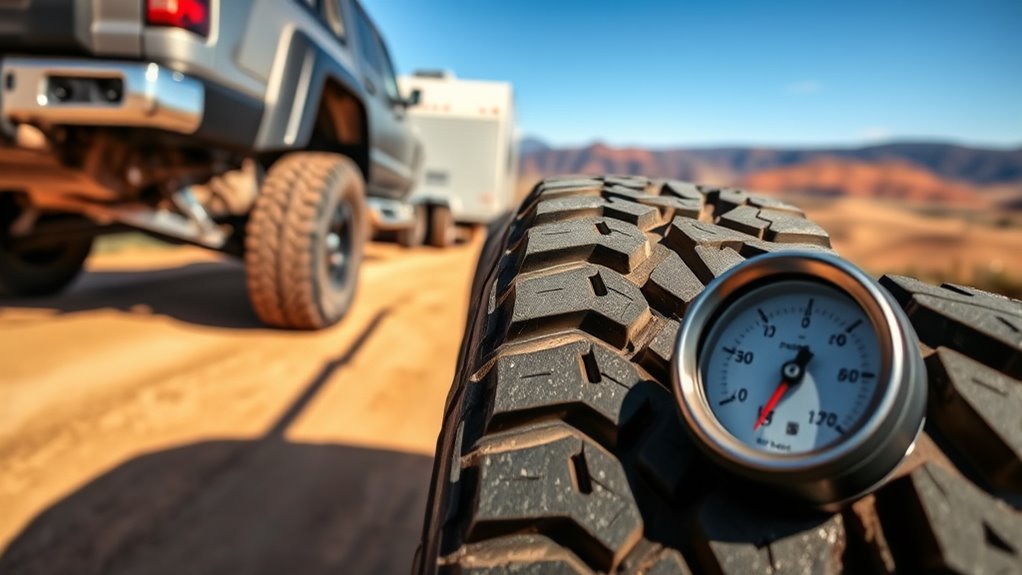
Proper tire pressure is crucial for safe towing, as it directly affects load stability and vehicle control. Underinflated tires can increase blowout risks by 50%, while overinflated ones reduce traction. Always consult the manufacturer’s recommendations and adjust for load weight, especially with heavy trailers. Seasonal temperature changes also influence PSI, so regular checks are essential. By adhering to these guidelines, you enhance safety and performance on your towing journeys. There’s more important information to reflect on for optimum towing stability.
Why Proper Tire Pressure Is Essential for Safe Towing

Proper tire pressure is vital for safe towing, as it directly impacts your vehicle’s handling and stability. Maintaining proper inflation guarantees your tires can support the maximum load without compromising grip. Underinflated tires can increase the risk of tire blowouts by 50%, primarily due to heat buildup from excessive sidewall flex. Conversely, overinflated tires reduce traction and create a rough ride, undermining towing safety. For ideal performance, inflate your tires to near their maximum sidewall PSI, typically between 60-80 PSI for heavier trailers. Regularly checking tire pressure before trips, especially when tires are cold, is important. Utilizing Tire Pressure Monitoring Systems (TPMS) can provide real-time alerts, helping you avoid unsafe situations caused by incorrect tire pressure during towing.
How to Determine the Right Tire Pressure for Safe Towing
To determine the right tire pressure for safe towing, start by evaluating the manufacturer’s recommendations, which provide a baseline for ideal performance. Next, factor in the load weight, as heavier trailers require higher PSI for stability and safety. Finally, monitor tire temperature, since changes can affect pressure and overall towing safety.
Assess Manufacturer’s Recommendations
While evaluating tire pressure for towing, it is important to consult the manufacturer’s recommendations found on the tire sidewall. These specifications detail maximum load and ideal tire pressure, which are essential for safety. Typically, adjust pressure to the maximum sidewall level when cold, especially for heavier loads. Manufacturer guidelines often differ for towing versus regular driving, so adherence is critical to prevent tire overload. Use a reliable gauge to check your tire pressure before every trip, ensuring accuracy and reducing the risk of heat-related tire failure. Regularly review and adjust tire pressure based on load changes and environmental conditions, as this approach maintains stability and control while towing, safeguarding both your cargo and vehicle.
Consider Load Weight
Understanding the load weight is essential for determining the right tire pressure when towing. Start by checking the tire sidewall for the load index, which indicates the maximum weight each tire can support at the recommended PSI. For heavy towing, if your trailer weight approaches 3,500 kg, you’ll typically need tire pressure set between 60-80 PSI to guarantee towing stability and prevent overheating. Regularly use a reliable tire pressure gauge to check the pressure when the tires are cold, as heat generation during towing can increase it by 1-2 PSI for every 10°F rise. Always factor in tongue weight when calculating total load; adjusting for it guarantees proper pressure for balanced towing and minimizes the risk of sway, enhancing safety.
Monitor Tire Temperature
Monitoring tire temperature is essential for determining the right tire pressure during towing. As heat buildup occurs from friction and load stress, tire pressure can rise by 1 to 2 PSI for every 10°F increase in temperature. Regularly check your tire temperature and pressure, especially after a long haul.
| Temperature Increase (°F) | PSI Increase | Recommended Action |
|---|---|---|
| 0-10 | 1-2 | Check visually |
| 11-20 | 2-4 | Adjust PSI as needed |
| 21+ | 5+ | Conduct thorough checks |
Ensure your towing setup meets load requirements, factoring in a 10-15% safety margin. Perform visual inspections regularly and prioritize tire maintenance to avoid pressure fluctuations, ensuring safety on the road.
Adjusting Tire Pressure for Towing Conditions
When adjusting tire pressure for towing, you’ll need to take into account the recommended PSI adjustments based on your trailer’s weight and tongue load. Additionally, seasonal changes can affect tire performance, necessitating further adjustments to maintain ideal pressure. By addressing these factors, you guarantee safety and stability during your towing operations.
Recommended PSI Adjustments
To guarantee safe and efficient towing, you should inflate your tires to the maximum pressure indicated on the sidewall. For heavier trailers, the recommended PSI typically ranges from 60 to 80 PSI, depending on load conditions. Always check tire pressure when the tires are cold, as temperature increases from driving can raise pressure by 1 to 2 PSI for every 10°F rise. Make necessary adjustments based on the load, incorporating a 10-15% safety margin for long-distance hauls to manage heat buildup effectively. Regular monitoring is essential, as underinflated tires can increase the risk of blowouts by 50%. Keeping tire pressure ideal guarantees stability and safety during towing, allowing for a smoother experience on the road.
Impact of Tongue Weight
Adjusting tire pressure in response to tongue weight is vital for maintaining stability and safety while towing. Tongue weight, typically 10-15% of the trailer’s total weight, directly affects load distribution across your vehicle’s tires. To guarantee peak tire performance, you should increase tire pressure, often near the maximum PSI indicated on the tire sidewall. This adjustment mitigates excessive tire flex, reducing the risk of overheating and potential blowouts. A well-balanced tongue weight enhances vehicle control, preventing swaying and handling issues. As a result, monitoring tongue weight and adjusting tire pressure accordingly is essential; even minor deviations can compromise safety and escalate the risk of tire failure. Prioritize these adjustments for a secure towing experience.
Seasonal Pressure Considerations
As temperatures fluctuate throughout the seasons, tire pressure can change greatly, impacting towing performance. Regular pressure adjustments are crucial for maintaining towing stability and safety. Here are three key considerations:
- In cold weather, tire pressure may drop 1 PSI for every 10°F decrease in ambient temperature. Higher pressure adjustments are necessary to guarantee ideal grip.
- During summer, trailer tires can heat up considerably, raising pressure by 1-2 PSI for every 10°F increase. Preemptive adjustments help prevent over-inflation and blowouts.
- Consistently monitoring tire pressure prevents under-inflation, which can lead to uneven tire wear and compromised handling.
Understanding Load Ratings and Their Influence on Tire Pressure

Tire load ratings play an essential role in determining the appropriate tire pressure for towing. The tire load index, marked on the sidewall, indicates the maximum weight your tires can safely carry at a specified pressure. It’s important that the combined weight of your vehicle and trailer meets or exceeds these load ratings for safe operation and towing stability. Under-inflated tires can lead to excessive flexing and heat buildup, increasing the risk of blowouts. Tires rated for higher loads, like Load Range E, require higher tire pressure, which enhances towing stability. Proper tire maintenance, including maintaining recommended tire pressure, is critical for control, handling, and tire longevity, especially on long-distance trips.
Avoid These Common Tire Pressure Mistakes While Towing
While towing, many overlook essential tire pressure considerations that can greatly impact safety and performance. To guarantee ideal stability and avoid dangerous situations, avoid these common mistakes:
Tire pressure is crucial for safe towing; neglecting it can lead to serious safety risks and performance issues.
- Neglecting Pressure Checks: Failing to regularly check tire pressure, especially when cold, can lead to underinflation, increasing the risk of blowouts by up to 50%.
- Ignoring Load Adjustments: Always adjust tire pressure based on load and environmental conditions. Neglecting this can cause reduced traction and increased trailer sway.
- Mixing Tire Pressures: Maintaining uniform tire pressure across all tires is vital. Different pressures on the same axle can compromise towing stability and lead to uneven wear.
Stay vigilant about these factors to enhance safety and performance while towing.
How Tire Maintenance Can Prevent Blowouts
Maintaining your tires is essential for preventing blowouts, especially when towing heavy loads. Regular tire inspections for cracks, bulges, and tread wear are critical; many blowouts result from neglected maintenance or improper inflation practices. Always check tire pressure before trips, as underinflated tires can increase blowout risk by 50% due to excessive heat buildup. Adhere to each tire’s load index, ensuring the combined weight of your vehicle and trailer stays within limits to prevent overheating. Use a reliable tire pressure gauge to measure pressure when tires are cold, as temperature increases can lead to overinflation. Implementing these maintenance tips, along with utilizing tire pressure monitoring systems, can greatly boost safety and help you avoid catastrophic failures while towing.
Benefits of Using Tire Pressure Monitoring Systems for Towing
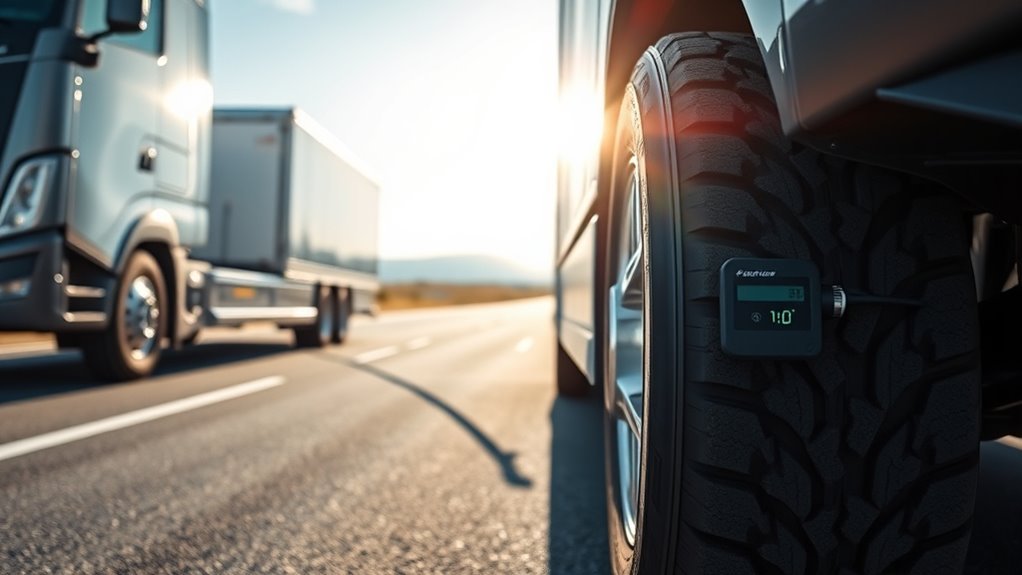
When towing heavy loads, utilizing a Tire Pressure Monitoring System (TPMS) can greatly enhance safety and performance. Here are three benefits of using TPMS for towing:
- Towing Safety: TPMS provides real-time pressure readings, alerting you to underinflated tires before they lead to blowouts, which can increase the likelihood of tire-related accidents by 50% due to heat buildup.
- Ideal Tire Pressure: Maintaining ideal tire pressure enhances stability and control, essential for handling heavy loads effectively.
- Fuel Efficiency: By ensuring tires remain within the recommended pressure range, a TPMS reduces uneven wear and improves fuel efficiency, ultimately extending tire longevity during long-distance towing trips.
Investing in a TPMS translates to a safer, more efficient towing experience.
Frequently Asked Questions
What Tire Pressure Should I Use When Towing?
When towing, adjust tire pressure according to load distribution importance, typically between 60-80 PSI. Utilize pressure monitoring systems to guarantee vehicle stability control, prevent tire wear patterns, and adhere to towing capacity limits for safety.
What Is the 5 PSI Rule?
The 5 PSI rule states that for every 10°F rise in tire temperature, pressure increases by 1 to 2 PSI. Regular monitoring, seasonal adjustments, and effective inflation techniques guarantee towing safety and peak tire performance.
What Tire Load Rating Do I Need for Towing?
For towing, choose tires with a load rating exceeding your trailer’s weight limits. Guarantee proper load distribution, monitor tire capacity, follow inflation guidelines, and prioritize safety precautions for ideal towing dynamics and tire maintenance.
What Is the 4 PSI Rule?
The 4 PSI Rule states that for every 10°F temperature rise, tire pressure can increase by 1 to 2 PSI. Monitoring this guarantees towing stability, proper load distribution, and enhances vehicle performance while minimizing tire wear.
Conclusion
In summary, maintaining proper tire pressure is essential for safe towing, as it directly impacts stability and load management. Studies show that under-inflated tires can reduce fuel efficiency by up to 20%, highlighting the importance of regular checks. By understanding the nuances of load ratings and adjusting tire pressure accordingly, you can greatly enhance safety and performance. Don’t overlook tire maintenance—it’s your first line of defense against blowouts and guarantees a smooth towing experience.