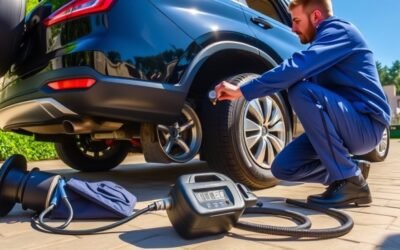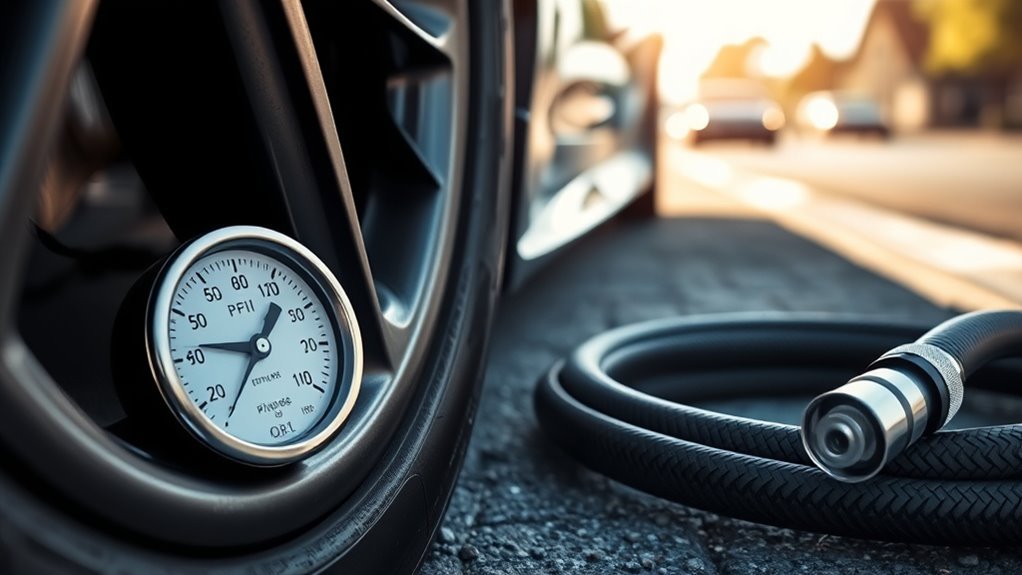
Maintaining proper tire pressure is essential for your safety on the road. Underinflation causes 95% of tire failures, greatly raising accident risks. It also reduces fuel efficiency and shortens tire lifespan, while overinflation can lead to punctures and handling issues. Regularly checking your tire pressure helps guarantee ideal traction and braking performance. By keeping an eye on tire health, you enhance your vehicle’s safety and efficiency. You’ll want to explore more about best practices for tire maintenance and performance.
Why Proper Tire Pressure Is Essential for Safety
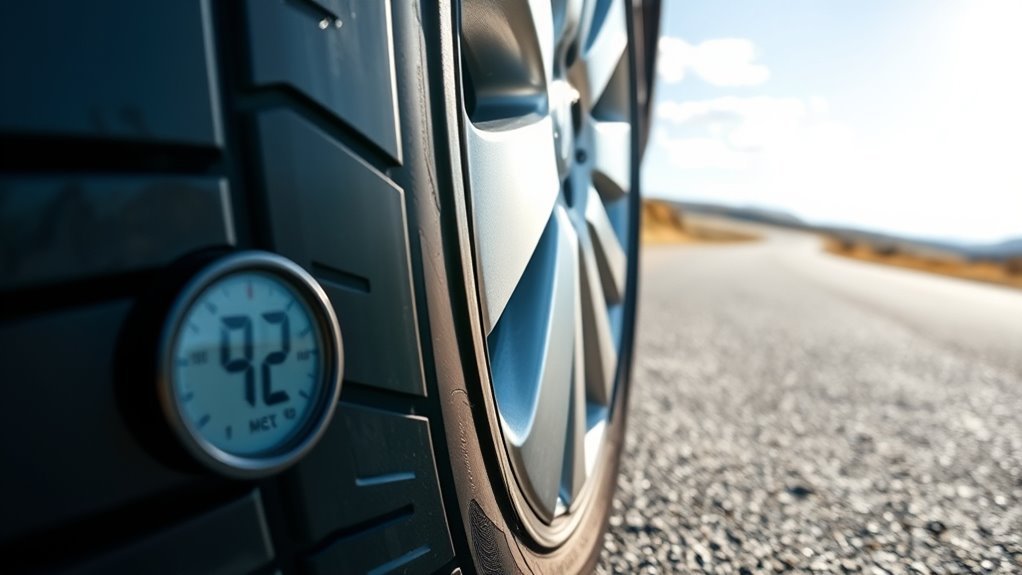
When you maintain proper tire pressure, you’re not just optimizing fuel efficiency; you’re greatly enhancing your vehicle’s safety. Under-inflated tires can drastically compromise traction, leading to longer stopping distances and an increased risk of blowouts. In fact, 95% of tire failures stem from low tire pressure. Keeping your tires inflated correctly not only improves fuel economy by reducing rolling resistance but also prolongs tire lifespan, as tires 20% under-inflated can wear out 30% faster. Regularly checking tire pressure—ideally monthly—ensures you’re operating within safe parameters. Over-inflation can also be dangerous, causing irregular wear and affecting handling. By prioritizing proper tire inflation, you actively safeguard your journey and embrace the freedom of safer driving experiences on the open road.
The Risks of Underinflation: What You Need to Know
Although many drivers underestimate its impact, under-inflation poses significant risks that can jeopardize both safety and vehicle performance. Under-inflated tires account for 95% of tire failures, leading to premature removal and increased safety hazards. When tire pressure is just 10% below ideal levels, temperatures can rise by 20 degrees, heightening the risk of blowouts. In addition, a 20% decrease in tire pressure can cut tire life by up to 30%, resulting in more frequent replacements and added costs. Additionally, under-inflated tires can decrease fuel economy by at least 1%, adversely affecting your overall operating costs. Maintaining proper tire pressure isn’t just about performance; it’s about ensuring your safety on the road.
Understanding the Dangers of Overinflation
Maintaining the right tire pressure is critical not just for preventing underinflation, but also for avoiding the dangers of overinflation. Over-inflated tires can compromise your safety in several ways:
- Increased likelihood of punctures and cuts due to a tighter fit.
- Reduced traction and handling from a smaller tire footprint, especially in adverse weather.
- Irregular tire wear that can shorten your tire’s lifespan by 7% to 15%.
- Elevated tire temperatures raising the risk of blowouts.
Identifying Incorrect Tire Pressure: Key Signs to Watch For
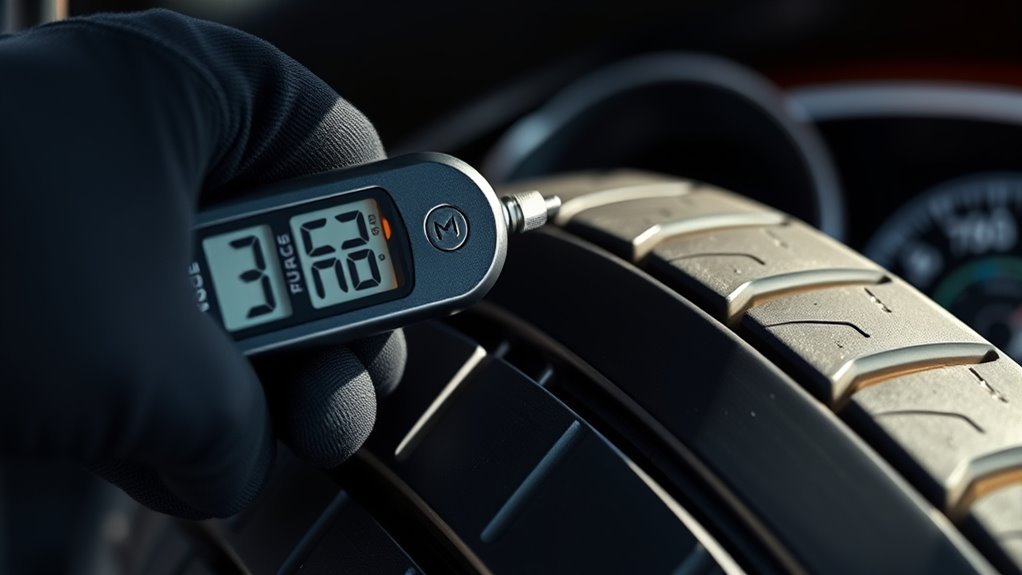
To identify incorrect tire pressure, watch for uneven wear patterns, which can indicate under- or over-inflation. You may also notice handling and stability issues while driving, signaling that your tires aren’t performing at their best. Additionally, keep an eye out for warning light indicators on your dashboard, as they provide essential alerts regarding tire pressure concerns.
Uneven Tire Wear Patterns
When your tires exhibit uneven wear patterns, it’s often a clear sign of incorrect tire pressure that needs your immediate attention. To guarantee your safety and vehicle performance, watch for these key indicators:
- Edge wear: Indicates under-inflation.
- Center tread wear: Points to over-inflation.
- Sharp edging or feathering: Suggests misalignment issues, often made worse by improper inflation.
- Penny test: If Lincoln’s head is visible, it signals insufficient tread depth, potentially linked to incorrect tire pressure.
Regularly checking tire pressure is crucial, as tires can lose 1-3 psi monthly. By maintaining correct tire pressure, you not only prevent uneven tire wear but also enhance your fuel efficiency, making your maintenance procedures more effective.
Handling and Stability Issues
Incorrect tire pressure can considerably compromise your vehicle’s handling and stability, making it essential to recognize the signs early. If you notice your car drifting or pulling to one side, it could indicate misalignment or under-inflation. Under-inflated tires wear more on the edges, while over-inflated tires exhibit center tread wear, both negatively impacting stability and performance. A mere 10% drop in tire pressure can raise tire temperature by 20 degrees, heightening the risk of blowouts. Additionally, tires that are 20% under-inflated may reduce lifespan by 30%, leading to unstable handling. Regularly check your tire pressure—especially before long trips—as tires lose 1-3 psi monthly, which can result in significant handling and safety issues.
Warning Light Indicators
While driving, it’s vital to stay alert for warning light indicators that signal incorrect tire pressure. Your vehicle’s Pressure Monitoring Systems (TPMS) will alert you when tire pressure drops by 25% or more, indicating low tire pressure. Regular monitoring is important, as under-inflated tires can lead to blowouts and impact performance. Watch for these key signs:
- TPMS warning light activation
- Uneven tread wear (edges vs. center)
- Increased fuel consumption
- Tires running hotter than normal
Check your tire pressure monthly, as they can lose 1-3 psi per month. Remember, a 10°F temperature drop can reduce pressure by about 1 psi. Stay vigilant to guarantee your safety on the road.
How Tire Pressure Affects Fuel Efficiency and Longevity
Maintaining proper tire pressure is essential not just for safety, but also for maximizing fuel efficiency and extending tire life. Under-inflated tires can decrease fuel economy by at least 1% due to increased rolling resistance. When tires operate 10% below the required pressure, they run 20 degrees warmer, heightening the risk of blowouts and reducing tire longevity by 30%. Properly inflated tires enhance overall vehicle performance and handling, contributing to safer driving conditions. Regularly checking tire pressure guarantees that your tires wear evenly, promoting longevity. By maintaining ideal tire pressure, you not only improve fuel efficiency but also guarantee that your tires last longer, providing a smoother and safer driving experience.
Best Practices for Maintaining Proper Tire Pressure
To maintain proper tire pressure, you should check your tires at least once a month and before long trips. Always measure the pressure when the tires are cold for the most accurate readings, and adhere to the manufacturer’s recommended pressure guidelines. Consistently monitoring and adjusting your tire pressure can enhance safety, improve handling, and extend tire life.
Recommended Tire Pressure Guidelines
Ensuring your tires are inflated to the recommended pressure is essential for ideal vehicle performance and safety. To maintain correct tire pressure, follow these guidelines:
- Check the placard inside your driver’s door frame or vehicle manual for the recommended tire pressure, usually between 30-35 psi.
- Use a tire pressure gauge regularly, as tires can lose up to 2 psi per month without temperature changes.
- Remember that a 10°F drop in temperature can decrease tire pressure by 1 psi.
- Always check tire pressure when tires are cold to avoid inaccurate readings caused by heat buildup from driving.
Regular Pressure Monitoring Practices
While monitoring tire pressure may seem like a minor task, it plays an essential role in your vehicle’s overall safety and performance. To maintain proper tire pressure, check it at least once a month and before long trips, as tires can lose 1-3 psi monthly. Always use a quality tire pressure gauge, checking when tires are cold for the most accurate readings. Follow the manufacturer’s recommendations, typically between 30-35 psi for most vehicles. Remember, under-inflated tires can reduce tire life by 20% and increase blowout risks due to higher operating temperatures. Although Tire Pressure Monitoring Systems (TPMS) offer alerts for significant under-inflation, they shouldn’t replace regular maintenance checks for ideal safety and performance on the road.
Using Your Tire Pressure Monitoring System (TPMS): Best Practices
Using your Tire Pressure Monitoring System (TPMS) effectively can greatly enhance your vehicle’s safety and performance. To get the most out of your TPMS, follow these best practices:
- Regularly check your tire pressure manually; TPMS isn’t a substitute for routine maintenance.
- Pay attention to the TPMS warning light; it indicates a tire is at least 25% below the recommended air pressure and needs immediate inspection.
- Conduct monthly inspections with an accurate gauge to verify all tires are properly inflated.
- Remember that visual inspections alone can’t reliably detect under-inflation, so rely on both TPMS and manual checks.
When Should You Get Professional Help for Tire Maintenance?
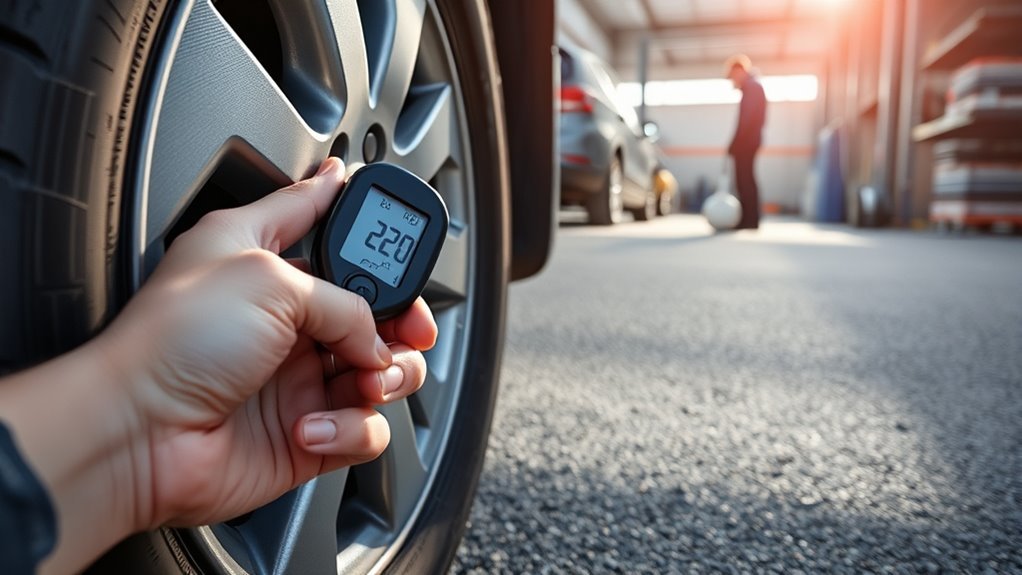
When should you consider seeking professional help for tire maintenance? If you notice uneven wear patterns, it’s vital to consult a technician, as this may signal alignment issues needing expert adjustment. If your tire pressure consistently drops below recommended levels despite regular checks, a professional can diagnose potential leaks or valve issues that aren’t easily detectable. Experiencing unusual vibrations or changes in handling? Don’t hesitate to reach out, as these could indicate balance problems or damaged tires. For tires over six years old, a professional inspection is important to assess aging signs like sidewall cracks. If you’re unsure about proper tire inflation pressures, a tire professional can guide you to guarantee peak performance and safety.
Frequently Asked Questions
Why Is Correct Air Pressure Important for Tires?
Correct air pressure in your tires is essential for minimizing tire wear, maximizing fuel efficiency, and enhancing handling performance. Maintaining the recommended PSI guarantees your vehicle operates safely and efficiently, empowering your driving experience.
What Is the 3% Tire Rule?
The 3% tire rule means your tire pressure should stay within 3% of the manufacturer’s recommendation. This keeps ideal performance, enhances fuel efficiency, and reduces risks like premature wear and blowouts, ensuring a safer driving experience.
What Is the 4 PSI Rule?
The 4 PSI Rule emphasizes that for every 10°F temperature change, tire pressure shifts by 1-2 psi. Regular pressure monitoring and tire maintenance tips are essential safety precautions to guarantee peak vehicle performance and longevity.
What Is the 5 PSI Rule?
The 5 PSI rule states that for every 10°F temperature change, tire pressure can shift by 1-2 psi. Staying aware of this helps debunk inflation myths and enhances your safety while driving. Regular checks are essential.
Conclusion
To summarize, maintaining proper tire pressure isn’t just a minor detail—it’s a life-or-death decision! Underinflated or overinflated tires can turn your vehicle into a ticking time bomb, jeopardizing your safety and draining your wallet at the pump. By staying vigilant and using your Tire Pressure Monitoring System, you can guarantee a smooth, safe ride while extending your tires’ lifespan. Don’t let negligence put you at risk—make tire pressure maintenance a top priority for every journey!