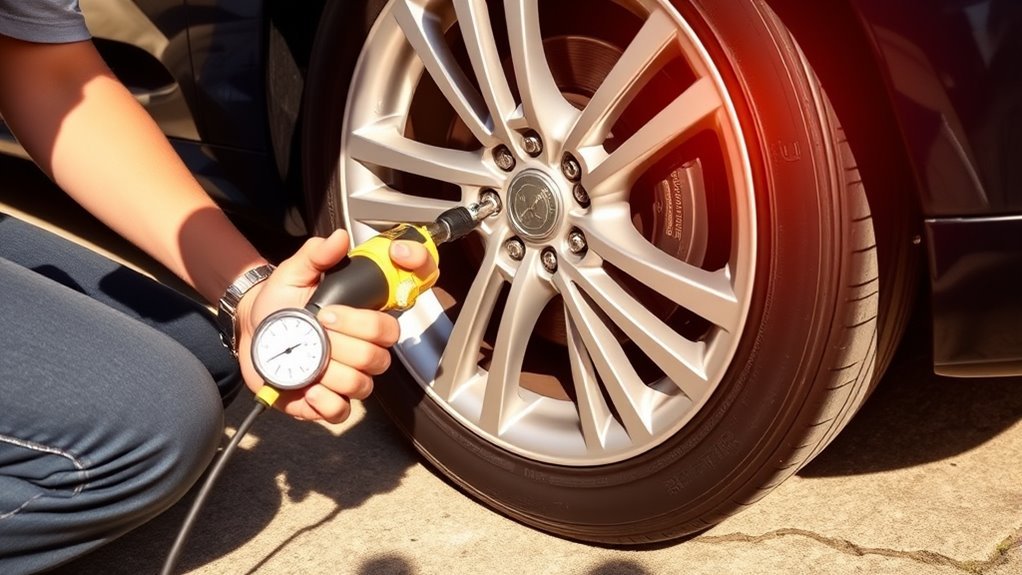
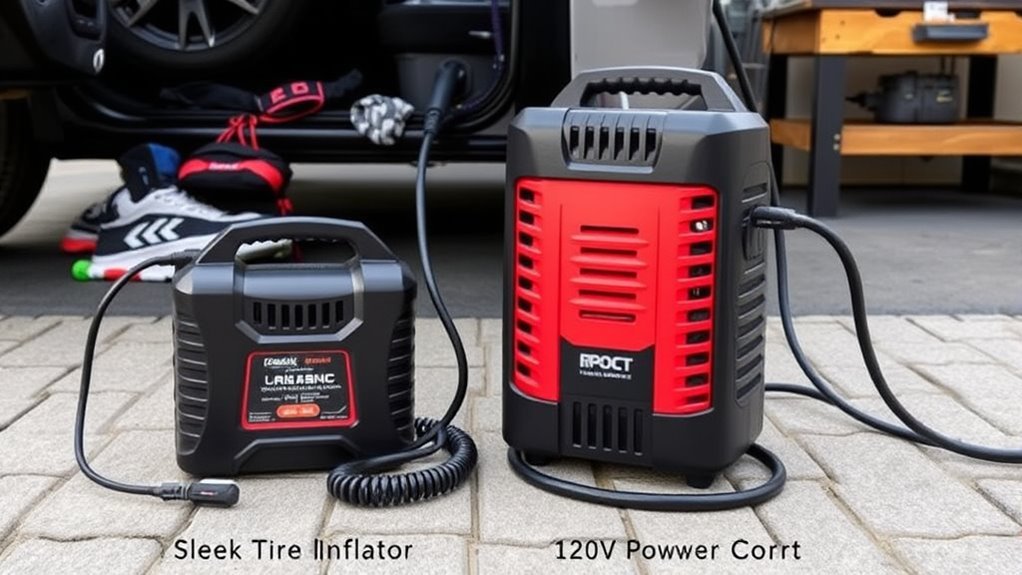
A tire inflator connector is the small fitting that joins your air hose, portable inflator, or compressor to the tire valve. Choosing the right one matters because the connector controls the seal, airflow, pressure reading, and how much air escapes when you attach or remove the inflator.
Quick Answer
The main tire inflator connector types are press-on air chucks, clip-on or lock-on chucks, screw-on chucks, quick-connect couplers, and valve adapters. Most car tires use Schrader valves, while many bicycles use Presta or Dunlop valves, so the best connector depends on valve type, thread size, pressure rating, and how leak-free you need the connection to be.
Key Takeaways
- A standard automotive tire valve is usually a Schrader valve, so most car tire inflator chucks are built for Schrader stems.
- Clip-on, lock-on, and screw-on chucks are better for hands-free inflation than basic press-on chucks.
- A 1/4-inch NPT air inlet is common on many North American inflator gauges and compressor accessories, but you should always confirm the thread before buying.
- Adapters are needed when a Schrader-style inflator is used on Presta, Dunlop, or newer bicycle valve systems.
- A good connector should seal quickly, match the valve, match the hose fitting, and be rated for the pressure you plan to use.
At a Glance
| Time Required | 2–5 minutes to identify the connector and valve type; 5–10 minutes to attach, inflate, check, and remove it correctly. |
| Difficulty | Easy for passenger vehicles and bicycles; moderate for dual wheels, trailers, RVs, and high-pressure applications. |
| Tools Needed | Tire inflator or compressor, pressure gauge, the correct air chuck or adapter, and the recommended tire pressure from the vehicle placard or owner’s manual. |
| Cost | Low for basic chucks and adapters; higher for lock-on chucks, dual-head chucks, and digital inflator gauges. |
Tire Inflator Connector Types and Functions

Tire inflator connectors create the working link between the air source and the valve stem. The right connector should press the valve core, seal around the stem, allow controlled airflow, and disconnect with minimal air loss. The wrong connector can leak, bend a valve stem, give a bad pressure reading, or fail to move air at all.
| Connector Type | Best For | Main Advantage |
| Press-on air chuck | Fast top-offs on standard Schrader valves | Simple, compact, and quick to use |
| Clip-on or lock-on air chuck | Hands-free inflation and shop use | Locks to the valve stem so you do not have to hold it in place |
| Screw-on chuck | Portable inflators, compact compressors, and hard-to-seal valves | Threaded connection can reduce leaks when installed squarely |
| Dual-head chuck | Dually trucks, trailers, RVs, and inner rear wheels | Reaches inward- and outward-facing valve stems |
| Quick-connect coupler and plug | Connecting air hoses, inflator gauges, and compressor accessories | Lets you swap tools without threading and unthreading fittings |
| Valve adapter | Bicycles, sports equipment, and mixed valve types | Converts one valve or pump style to another |
Open-Flow vs. Closed-Flow Air Chucks
Air chucks are often described as open-flow or closed-flow. An open-flow chuck allows air to pass through whenever the air line is pressurized, so it is commonly used with inflator gauges or controls that regulate airflow elsewhere in the tool. A closed-flow or sealing chuck helps stop airflow until the chuck is engaged with the valve. This can be useful when the chuck is connected directly to an air line, but the exact behavior depends on the inflator design.
Note: Do not assume every chuck works with every inflator gauge. Some closed-flow chucks are not intended for certain gauge setups. Check the tool manufacturer’s instructions before mixing parts.
Chucks vs. Clips: Choosing the Right Connector
The phrase “chucks vs. clips” can be confusing because many clips are actually part of a clip-on air chuck. A basic press-on chuck must usually be held against the valve stem while air flows. A clip-on chuck grips the valve threads or stem so it can stay attached during inflation. A screw-on chuck threads onto the valve stem and is common on many portable tire inflators.
For quick passenger-car top-offs, a press-on or clip-on chuck is usually enough. For a portable inflator that may vibrate while running, a screw-on chuck can be more secure. For trucks, trailers, and dual wheels, a dual-head chuck is often easier because it reaches valve stems that are angled inward or hidden behind the wheel.
Warning: Always inflate to the vehicle manufacturer’s recommended cold tire pressure, not the maximum number molded on the tire sidewall. The National Highway Traffic Safety Administration recommends checking tire pressure at least once a month when tires are cold and using the Tire and Loading Information Label or owner’s manual for the correct PSI.
[Products Worth Considering]

This portable tire inflator delivers fast, convenient inflation for cars, bikes, motorcycles, and balls with dual power options from a rechargeable battery or a 12V car cord. Its digital LCD pressure gauge and automatic shutoff help prevent over-inflation, while multiple preset modes and a custom setting make it easy to use for different inflation tasks. Built-in flashlight and USB power ports add extra emergency utility on the road.

This cordless portable air compressor delivers fast, reliable inflation for car tires and other inflatables with a powerful motor, high-pressure output, and automatic shut-off for precise results. Its rechargeable battery, compact size, and included accessories make it easy to carry and use at home, on the road, or during emergencies. A built-in LED light and preset modes add convenience and versatility for day or night use.

This portable 12V tire inflator delivers fast, convenient inflation for cars, SUVs, trucks, motorcycles, and other inflatables. It features a digital display, bright LED lighting, auto shutoff, and multiple nozzle adapters to help you inflate accurately and safely, even in low-light situations. The long power cord and air hose make it easy to reach all tires and handle roadside emergencies or routine maintenance.
What Makes Threaded Connectors Important for Tire Inflation?
Threaded connectors help create a stable, leak-resistant connection between the air hose, inflator gauge, and chuck. They do not guarantee a perfect seal by themselves; the thread type, gasket condition, valve stem condition, and installation angle all matter.
In many North American air-compressor accessories, a 1/4-inch NPT air inlet is common. For example, some professional inflator gauges from Milton Industries list a 1/4-inch NPT air inlet, a 0–255 PSI gauge range, and a hose rating that is separate from the tire connector. That matters because the safe working pressure is limited by the lowest-rated part in the setup: compressor, hose, gauge, fitting, chuck, and tire.
Before buying a threaded connector, confirm these details:
- Thread standard: NPT is common in North America, while BSP-style threads may appear on some imported tools. They are not automatically interchangeable.
- Thread gender: FNPT means female NPT; MNPT means male NPT. Match the connector to the hose or tool end.
- Hose size: Some connectors use threaded fittings, while others use barbed hose tails that must match the hose inside diameter.
- Pressure rating: Use fittings, hoses, and gauges rated for the pressure range you actually need.
- Seal condition: Worn rubber washers, damaged O-rings, and cross-threaded fittings can leak even when the connector type is correct.
Pro Tip: If a threaded connector starts leaking after months of use, inspect the washer or O-ring before replacing the whole inflator. A small seal can be the difference between a clean connection and constant air loss.
Adapters: Tire Inflator Connectors for Different Valve Types

Adapters allow one inflator or pump head to work with a different valve type. Most car, SUV, light-truck, motorcycle, trailer, and lawn-equipment tires use Schrader valves. Many road, gravel, and performance bicycle tires use Presta valves. Some bicycles use Dunlop/Woods valves, and newer systems such as the Schwalbe Clik Valve add another layer of pump-head compatibility.
A Schrader-to-Presta adapter is the most common bicycle example. It usually screws onto the Presta valve after the small Presta tip is loosened, allowing a Schrader-style inflator to connect. For tubeless bicycle setups, removable valve cores may also matter; Park Tool notes that valve-core tools are used with Schrader and Presta valve cores as well as Presta valve extenders.
Choose adapters carefully. A loose adapter can leak, while an adapter forced onto the wrong valve can bend the valve core, damage the threads, or give an inaccurate pressure reading.
[Products Worth Considering]
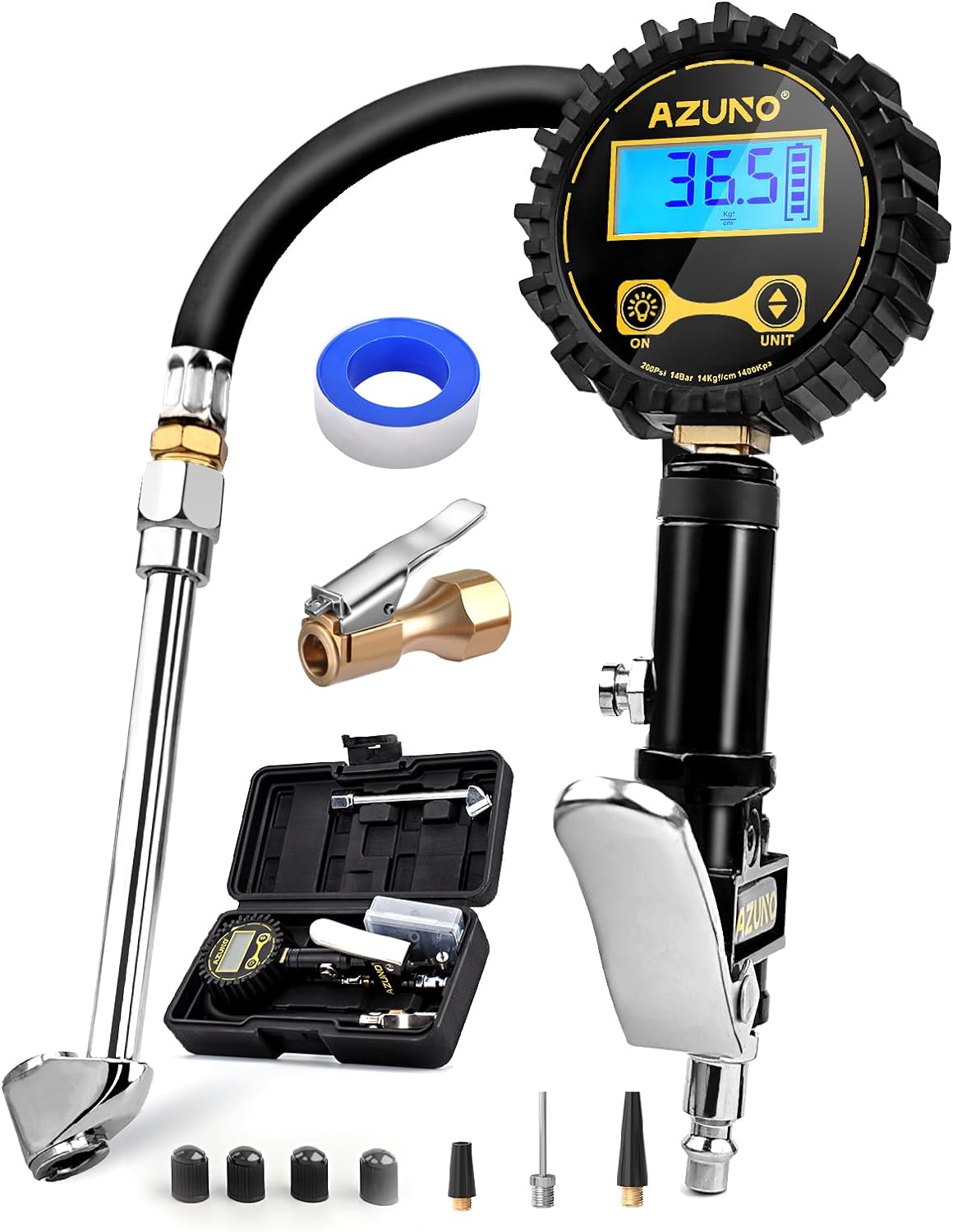
This digital tire inflator delivers accurate, easy-to-read pressure measurements with a bright backlit LCD and precise 0.1 resolution for confident inflation. Designed for single-handed use, it makes it simple to inflate or deflate tires while staying organized in the included portable carrying box. Built for a wide range of vehicles, it is a practical air compressor accessory for cars, trucks, SUVs, motorcycles, and more.

This smart color coded tire tread depth gauge makes it easy to check tread wear at a glance with clear red, yellow, and green ranges. Calibrated from 0 to 1 inch in 1/32 inch increments, it helps you quickly assess tire condition for safer driving and timely replacements. The pocket clip design makes it convenient to carry and use on trucks, motorcycles, cars, and other passenger vehicles.
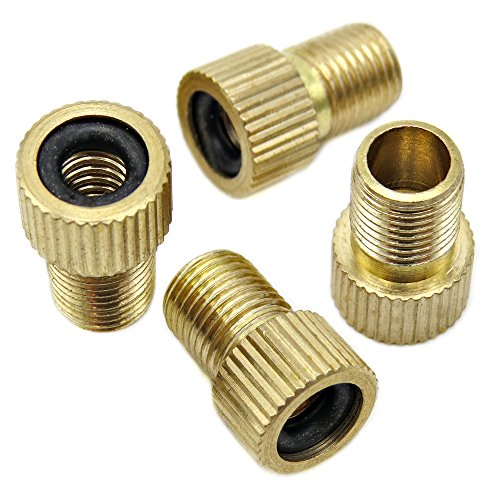
INFLATE AT ANY GAS STATION - This brass Schrader valve adapter screws onto your presta stem so a floor pump, mini pump, CO2 inflator, car tire inflator, 12V compressor or gas station air hose all fit. No more hunting for a bike shop when a road tire goes flat miles from home.
Essential Features to Look for in Tire Inflator Connectors
When comparing tire inflator connectors, do not shop by connector name alone. Look at how the connector seals, how it attaches, and whether it matches the valve and hose system you already own.
- Valve compatibility: Match the connector to Schrader, Presta, Dunlop, or the adapter system you use.
- Secure locking mechanism: Clip-on, lock-on, and screw-on designs reduce hand fatigue and help maintain a seal.
- Correct thread size: Confirm 1/4-inch NPT, 1/8-inch NPT, BSP, or hose-tail sizing before ordering.
- Durable materials: Brass is common for corrosion resistance, while plated steel and stainless parts may be used for strength in some applications.
- Pressure rating: The connector, hose, gauge, and inflator must all be rated for the job.
- Low air-loss removal: A good chuck disconnects cleanly without dumping several PSI from the tire.
- Reach and angle: Straight chucks are simple, angled chucks fit tight wheels, and dual-head chucks help with dually and trailer wheels.
How to Choose the Right Tire Inflator Connector
Use this simple process before buying or attaching a connector:
- Identify the valve. Cars usually use Schrader valves; many bicycles use Presta or Dunlop valves.
- Check your inflator end. Look for a built-in chuck, threaded hose end, quick coupler, or adapter requirement.
- Match the thread. Confirm male/female and NPT/BSP compatibility instead of relying on appearance.
- Choose the attachment style. Pick press-on for quick manual use, clip-on for hands-free inflation, screw-on for a secure portable-inflator seal, or dual-head for hard-to-reach wheels.
- Confirm pressure range. The connector and gauge should safely handle the tire pressure you plan to use.
- Test for leaks. Attach the connector squarely, listen for hissing, and watch whether the pressure reading stays stable.
[Products Worth Considering]

ONE PUMP FOR ALL YOUR BIKES – Works with both Presta and Schrader valves; no need for extra adapters; perfect for road bikes, mountain bikes & more

【16PCS Valve Adaptor Kit】YASI brass valve pump adapter kit included: 4 x DV/SV valve adapters, 2 x AV valve adapters, 2 x SV valve adapters, 2 x Ball pump needle, 2 x solid brass tapered inflatable nozzles and 4 x premium ABS tapered inflatable nozzles.
How to Attach a Tire Inflator Connector Without Losing Air
Remove the valve cap, line up the connector straight with the valve stem, and attach it firmly without bending the stem. For a clip-on chuck, press it onto the valve and engage the lock. For a screw-on chuck, turn it until it seals, but do not overtighten it. Inflate in short bursts, check the pressure, then remove the connector quickly and squarely.
If the tire is on a vehicle, use the recommended pressure from the vehicle placard or owner’s manual. NHTSA explains that the correct pressure is the vehicle manufacturer’s cold inflation pressure and that tires should be checked cold for the most accurate reading.
Note: Professional tire service can involve higher risk than a simple driveway top-off. Workplace rules such as California Title 8 Section 3325 require clip-on chucks, hose length, valves, and gauges for certain tire-inflation operations. For damaged tires, split rims, heavy truck tires, or unfamiliar equipment, use a qualified tire technician.
Troubleshooting Common Tire Inflator Connector Problems
| Problem | Likely Cause | Fix |
| Hissing at the valve | Connector is crooked, seal is worn, or valve threads are dirty | Re-seat the chuck squarely, clean the valve, or replace the washer/O-ring. |
| No air flows | Closed-flow chuck is not opening the valve core, or the wrong adapter is installed | Use the correct chuck style and confirm the valve core is being depressed. |
| Pressure reading jumps around | Poor seal, inflator vibration, or gauge not fully seated | Stop inflating, reattach the connector, and verify with a separate gauge if needed. |
| Connector will not thread on | Wrong thread type, damaged threads, or cross-threading | Stop immediately, compare thread standards, and replace damaged parts. |
| Large air loss when removing chuck | Slow removal, sticky lock, or poor chuck design | Remove the chuck straight and quickly; consider a better lock-on or low-loss connector. |
Maintenance and Replacement Tips
Inspect tire inflator connectors regularly, especially if you keep them in a trunk, garage, or tool bag where they collect dirt. Wipe the chuck face, check the rubber seal, and make sure the locking lever or screw-on threads move smoothly. Replace the connector if the seal is cracked, the chuck slips off the valve, the threads are damaged, or the tool leaks even after being re-seated.
Also inspect the hose and gauge. A good chuck cannot fix a cracked hose, a weak quick coupler, or an inaccurate gauge. If the inflator is used for RVs, trailers, or commercial tires, choose parts with ratings that clearly match the pressure range required.
Frequently Asked Questions
What are the different types of air chucks?
The main air chuck types are press-on chucks, clip-on or lock-on chucks, screw-on chucks, angled chucks, and dual-head chucks. Press-on chucks are simple but usually need to be held. Clip-on and screw-on chucks are better for hands-free inflation. Dual-head chucks are useful for dually trucks, RVs, and trailer wheels.
What are the different types of air compressor hose connectors?
Common air compressor hose connectors include quick-connect couplers, plugs, threaded fittings, hose barbs, and inflator chucks. The coupler and plug connect the hose to tools, while the air chuck connects the inflator to the tire valve. Always match the fitting style, thread size, and pressure rating.
What thread is an air chuck?
Many air chucks used with North American compressors have 1/4-inch NPT threads, often listed as 1/4-inch FNPT or MNPT. However, not every chuck uses that thread. Some tools use 1/8-inch NPT, BSP threads, or hose-tail fittings, so check the product label before buying.
What type of thread is an air compressor fitting?
Air compressor fittings commonly use NPT threads in North America, especially 1/4-inch NPT for many small air tools and inflator accessories. Imported tools may use BSP-style threads. NPT and BSP can look similar but may not seal correctly together.
Is a clip-on chuck better than a screw-on chuck?
A clip-on chuck is faster for frequent tire checks and hands-free shop use. A screw-on chuck often seals well on portable inflators but can release a little air while being removed. The better choice depends on whether you value speed, seal security, or one-handed operation.
Do I need an adapter for a Presta valve?
You need an adapter if your inflator only fits Schrader valves and your bicycle uses Presta valves. Open the small Presta tip first, screw on the adapter, attach the inflator, and inflate carefully. Do not force a Schrader chuck directly onto a bare Presta valve.
Why does my tire inflator connector leak?
The most common causes are a crooked chuck, worn washer, damaged O-ring, dirty valve threads, mismatched adapter, or cross-threaded fitting. Re-seat the connector straight, inspect the seal, and replace worn parts if the leak continues.
Conclusion
Understanding tire inflator connector types helps you inflate tires faster, more accurately, and with less air loss. For most automotive tires, start with a Schrader-compatible air chuck. Choose a clip-on or lock-on chuck for hands-free inflation, a screw-on chuck for a secure portable-inflator connection, a dual-head chuck for hard-to-reach wheels, and adapters for Presta, Dunlop, or newer bicycle valve systems. Most importantly, match the connector to the valve, thread, hose, gauge, and pressure rating before you inflate.
Sources
- NHTSA TireWise — cold tire pressure checks, vehicle placard pressure, TPMS, and tire safety guidance.
- California Code of Regulations, Title 8, Section 3325 — professional tire-inflation safety requirements for clip-on chucks, hoses, valves, and gauges.
- Milton Industries Digital Tire Inflator Gauge — example manufacturer specifications for 1/4-inch NPT air inlet, gauge range, hose rating, and lock-on chuck design.
- Park Tool VC-1 Valve Core Tool — Schrader and Presta valve-core compatibility and valve-core maintenance context.
- Schwalbe Clik Valve — current bicycle valve adapter and conversion-kit context for Presta, Dunlop, and Schrader valve systems.