Last updated: August 31, 2026
Editorial verification: This guide was checked against current NHTSA tire-safety guidance, 49 CFR 571.110, FuelEconomy.gov, Tire Rack technical references, and tire-manufacturer load-inflation guidance.
To adjust tire pressure for load, do not automatically add PSI just because you added passengers, cargo, or a trailer. Start with the vehicle manufacturer’s recommended cold tire pressure. Use a higher full-load or towing pressure only when the owner’s manual specifies it for your vehicle and tire setup.
For a trailer, start with the cold PSI on its Tire and Loading Information placard or certification label. If you changed tire size, construction, load range, or wheels, verify the correct pressure with the tire and trailer manufacturers’ guidance before driving.
Quick Answer
To adjust tire pressure for extra load, begin with the cold PSI on the vehicle’s door-jamb label or in the owner’s manual. Do not use a universal PSI-per-pound formula. Use a listed full-load or towing pressure only for the condition it describes. For trailers, follow the trailer placard first. If tires, wheels, or load ranges have changed, verify the pressure with approved tire-manufacturer load-inflation data while staying within the wheel, axle, vehicle, and trailer ratings.
Key Takeaways
- For cars, SUVs, vans, and pickups with the specified tire setup, start with the cold pressure on the Tire and Loading Information label or in the owner’s manual, not the tire sidewall maximum.
- Do not use a universal rule such as “1 PSI per 100 pounds.” Tire capacity depends on tire size, construction, load range, and actual inflation pressure.
- If the owner’s manual lists a separate full-load or towing pressure, use it only for the condition the manufacturer describes.
- For trailers, follow the trailer placard or certification label first. Use sidewall and load-table information only as part of the tire, wheel, and manufacturer requirements for the installed setup.
- For an accurate cold reading, check pressure after the vehicle or trailer has been parked for at least three hours.
- If you used a manufacturer-specified loaded pressure, recheck the manual after unloading and return to the normal specification when the alternate loaded condition no longer applies.
- Tire pressure cannot make an overloaded setup safe. Stay within payload, GVWR, GAWR, trailer GVWR, tongue-weight, hitch, wheel, and tire-capacity limits.
At a Glance
| Time Required | 5–10 minutes for a basic check; longer if weighing a loaded vehicle or trailer |
| Difficulty | Easy for checking and inflating; moderate if using axle weights and load-inflation tables |
| Tools Needed | Accurate tire pressure gauge, air compressor, valve caps, owner’s manual, and vehicle or trailer placard information |
| Cost | Usually free to low cost; a quality gauge is inexpensive and reusable |
Do You Need to Change Tire Pressure for Extra Load?
Not always. The correct decision depends on the installed tires, the vehicle manufacturer’s instructions, and whether the load changes the operating condition described in the owner’s manual. Use this order instead of guessing an increase.
| Situation | What to Do | Primary Pressure Source |
|---|---|---|
| Original tire setup, extra passengers or cargo, and no alternate loaded PSI is listed | Keep the manufacturer’s specified cold pressure while staying within payload and axle limits. | Vehicle placard and owner’s manual |
| Original tire setup and the manual lists a full-load or towing pressure | Use the alternate pressure only under the condition the manufacturer specifies. | Owner’s manual or manufacturer instructions |
| Different tire size, construction, or load range | Verify that the replacement setup preserves the vehicle’s required load capacity and determine pressure with approved manufacturer data. | Vehicle requirements plus the correct tire-manufacturer load-inflation table |
| Tow vehicle carrying tongue weight | Check payload, rear GAWR, tire capacity, hitch limits, and any towing-specific pressure in the manual. | Tow-vehicle placard and owner’s manual |
| Trailer tires | Use the trailer’s specified cold PSI and verify replacement-tire, wheel, GAWR, and load requirements if the setup changed. | Trailer placard or certification label |
| Load approaches a payload, axle, tire, or trailer rating | Weigh the loaded setup and reduce or redistribute weight if any rating is exceeded. Extra air does not increase the vehicle or axle rating. | Scale weights, manufacturer ratings, and approved tire data |
For more detail on why load capacity changes with tire size, construction, and inflation pressure, see the guide to tire pressure and load capacity.
Why Does Tire Pressure Matter More Under Load?
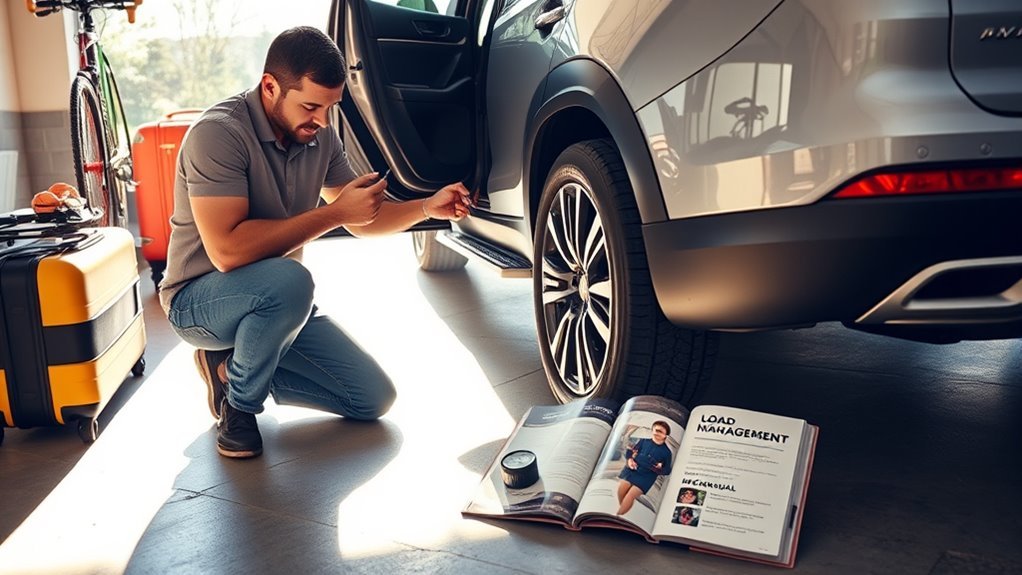
The air inside a tire supports much of the load. When a tire is underinflated for its application, its sidewall flexes more and generates additional heat. This can cause irregular wear, damage, or failure.
Excess pressure is not a safe cure for extra weight. It can produce a harsher ride and change the tire’s contact with the road. For the vehicle’s specified tire setup, the safest starting point is the manufacturer’s recommended cold pressure.
The National Highway Traffic Safety Administration says the correct vehicle pressure appears on the Tire and Loading Information label or in the owner’s manual, not simply on the tire sidewall.
Safety context: NHTSA reports that 511 people died in tire-related crashes in 2024. Tire pressure, load limits, tread condition, and regular inspections deserve more than a quick glance before a trip.
Warning: Never exceed the tire’s maximum cold inflation pressure, the wheel’s pressure rating, the vehicle’s payload rating, GVWR, GAWR, hitch rating, or the trailer’s GVWR. More air cannot make an overloaded vehicle or trailer safe.
How Do You Find the Right PSI for Passengers and Cargo?
Begin with the Tire and Loading Information label, usually found on the driver’s door jamb. It lists the original tire size, recommended cold PSI, seating capacity, and maximum combined weight of occupants and cargo.
Federal rules require covered light vehicles to display the manufacturer’s recommended cold inflation pressure and loading information. Trailers and recreational-vehicle trailers have related placard and cargo-capacity requirements.
[Products Worth Considering]

The JACO ElitePro Digital Tire Pressure Gauge delivers shop-grade accuracy with a clear digital readout, making it easy to maintain proper tire pressure for safer driving and better performance. Built with rugged brass and steel components, a protective guard, and a flexible air hose, it is designed for reliable use across cars, trucks, motorcycles, bikes, RVs, and trailers. The lock-on display, built-in bleeder valve, and bright backlit screen add convenience in any lighting condition.

The ANCEL AD410 helps drivers quickly read and clear engine-related fault codes, view live data, and understand why the check engine light is on before heading to a repair shop. With built-in code definitions, readiness checks, and support for common OBD2 functions, it makes basic diagnostics straightforward for beginners and DIY users. Powered directly from the vehicle and easy to use with no app required, it offers practical value for everyday vehicle troubleshooting.
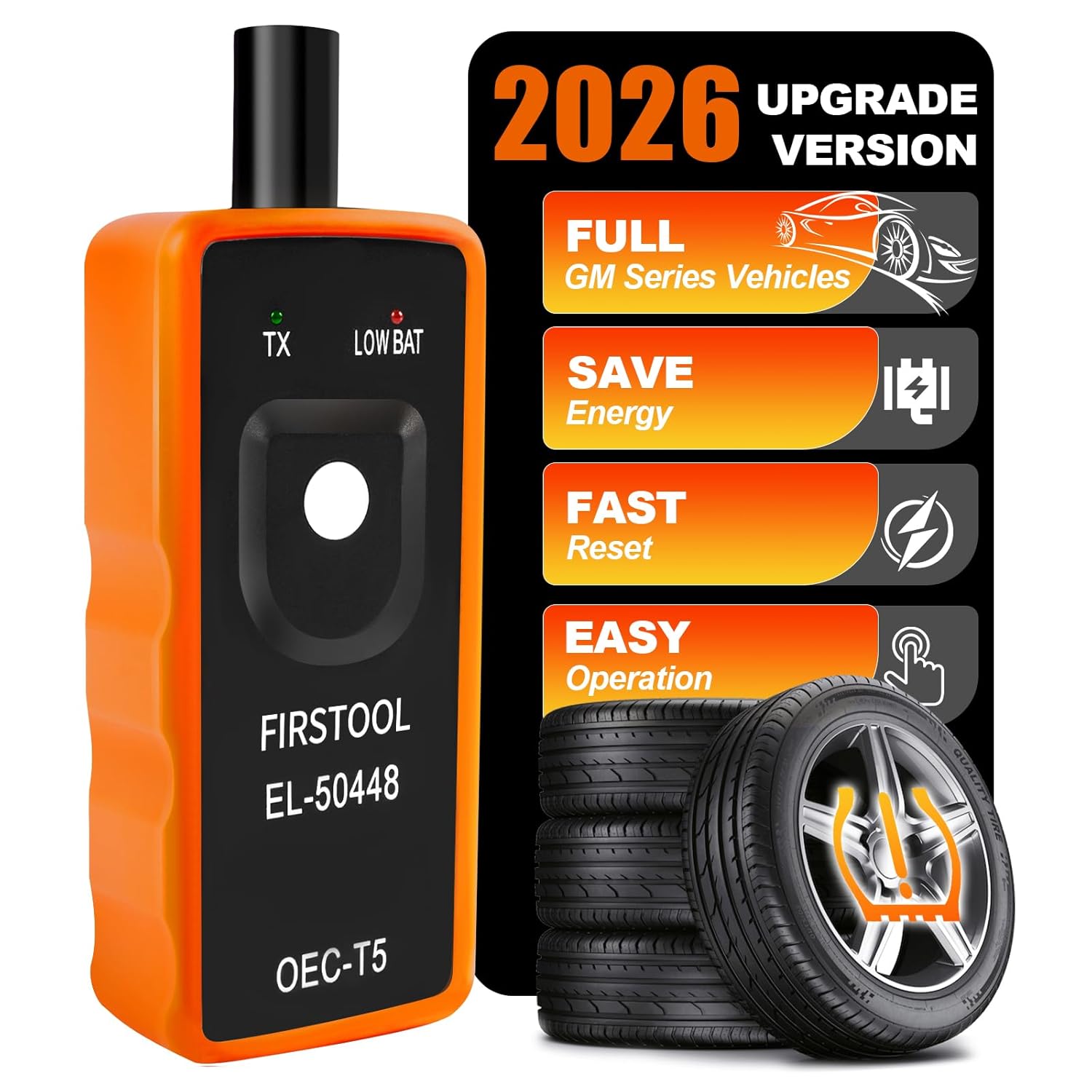
This EL-50448 TPMS relearn tool helps quickly activate and reset tire pressure sensors so your vehicle’s monitoring system stays accurate after tire rotations, sensor replacement, or seasonal tire changes. Designed for many GM-related vehicles and compatible with common 315 and 433 MHz TPMS systems, it offers simple one-button operation and reliable performance for clearing warning lights and relearning sensor positions.
Step 1: Read the Tire and Loading Information Label
Look for the statement, “The combined weight of occupants and cargo should never exceed…” That number is the vehicle’s stated capacity for people and cargo.
Next, find the recommended cold PSI for the front and rear tires. Some vehicles list the same pressure for both axles. Others specify different pressures because the axles carry different loads.
Step 2: Check the Owner’s Manual for Full-Load Pressure
Some vehicles list alternate pressures for heavy cargo, sustained high-speed driving, or towing. Use a full-load pressure only when the owner’s manual provides it for your vehicle and tire setup.
If the manual does not provide a higher loaded pressure, do not invent one. Stay with the listed cold PSI unless the vehicle or tire manufacturer supplies compatible load-inflation guidance.
Step 3: Keep the Load Within Vehicle Limits
Add the weight of passengers, luggage, tools, permanently installed accessories, cargo, and trailer tongue weight. Reduce the load if the total exceeds the vehicle’s payload rating.
Also check GAWR, which limits the weight carried by each axle. A vehicle can remain under its total payload limit while overloading the rear axle with cargo or trailer tongue weight.
Note: Do not add a fixed amount of pressure for every 100 pounds of extra weight. Tire capacity depends on tire size, construction, load range, and actual inflation pressure. Use manufacturer data instead of a universal formula.
How Do You Adjust Tire Pressure for Load?
Use this process when carrying extra passengers, loading the cargo area, hauling tools, or preparing for a long trip.
- Find the placard pressure. This is the baseline cold pressure for the vehicle’s specified tire setup.
- Read the owner’s manual. Use a listed full-load or towing pressure only for the condition it describes.
- Confirm the tire setup. Replacement tires must provide the load capacity required by the vehicle manufacturer.
- Calculate the added load. Include passengers, cargo, accessories, and trailer tongue weight.
- Check payload and axle ratings. Do not use extra PSI to compensate for overloading.
- Set the correct cold pressure. Use the same pressure on both tires on an axle unless the manufacturer specifies otherwise.
- Verify the loaded setup. If the vehicle sits unusually low, handles poorly, or approaches a rating limit, stop and check weight distribution, axle loads, and manufacturer instructions before driving.
[Products Worth Considering]
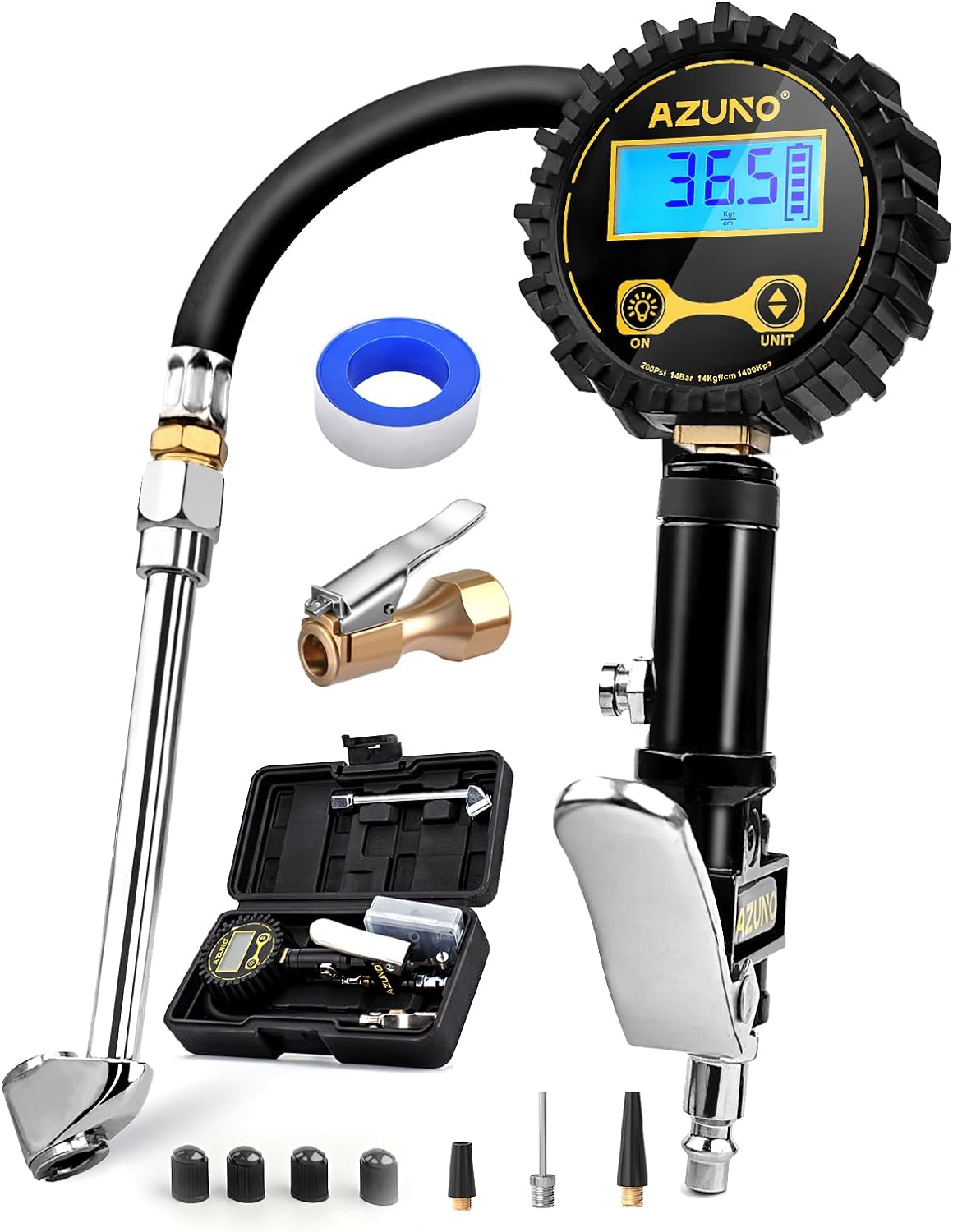
This digital tire inflator delivers accurate, easy-to-read pressure measurements with a bright backlit LCD and precise 0.1 resolution for confident inflation. Designed for single-handed use, it makes it simple to inflate or deflate tires while staying organized in the included portable carrying box. Built for a wide range of vehicles, it is a practical air compressor accessory for cars, trucks, SUVs, motorcycles, and more.

This long-handle car wash kit makes it easier to clean vehicles, RVs, trucks, boats, and household surfaces with less effort. The adjustable aluminum pole reaches high and hard-to-access areas, while the soft chenille microfiber heads help lift dirt without scratching. With removable, reusable, machine-washable covers and a 180-degree rotating design, it supports washing, drying, waxing, dusting, and polishing tasks.
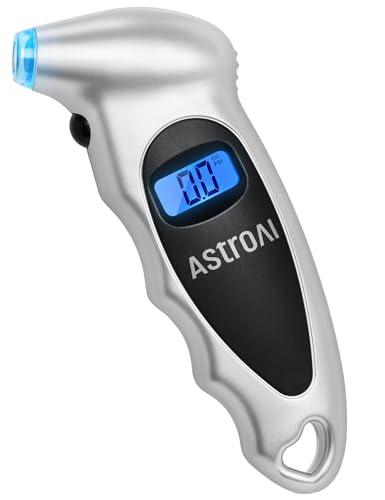
Accurate, Dependable Readings: Factory‑calibrated to ±1 PSI, so you can confidently match your vehicle’s recommended PSI (check the door jamb sticker). Ideal for monthly checks and road trips — consistent results every time, cold or warm.
When Should You Lower Tire Pressure After Unloading?
If your vehicle manufacturer specifies a separate pressure for a full-load, towing, or high-load condition, check the manual again after the extra load is removed. Return to the manufacturer’s normal cold-pressure specification when the alternate loaded-pressure condition no longer applies. Do not lower pressure merely because the tires are warm after driving; make the final adjustment when the tires are cold.
For passenger vehicles and light trucks, the sidewall maximum is a tire limit, not the default operating pressure. FuelEconomy.gov also warns drivers not to use the maximum sidewall pressure as the normal vehicle pressure.
What Tire Pressure Should You Use When Towing?
Towing creates two separate pressure decisions. Set the tow-vehicle tires from the tow vehicle’s specifications, and set the trailer tires from the trailer and tire specifications. The dedicated tire pressure for towing guide covers the towing-specific checks in more detail.
[Products Worth Considering]

PROCESS LEVEL ACCURACY: Each ETENWOLF’s digital tire pressure gauge is calibrated manually to ANSI B40.7 Grade 2A(plus-minus 1 PSI).Presta valve adapter not included, if used for bicycles, it must be purchased separately

Enhanced Visibility in Low Light: Features a green backlit LCD screen and integrated flashlight, allowing for clear reading of tire pressure even in dark or dimly light conditions.
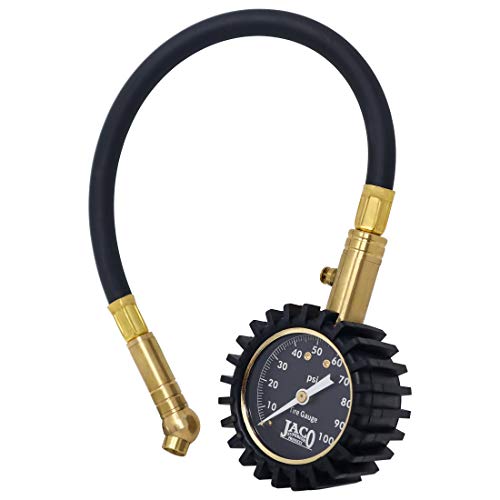
Mechanic Recommended - performance tested, certified, & calibrated accurate within ANSI Standards (±1.5%) at our ANSI accredited calibration facility, ensuring precise tire pressure readings without relying on batteries
Tow Vehicle Tire Pressure
For the tow vehicle, begin with the door-jamb placard and owner’s manual. Use a higher rear-tire, full-load, or towing pressure only when the manual provides one.
If no towing-specific PSI is listed, use the recommended cold pressure and verify that the vehicle, rear axle, hitch, wheels, and tires can carry the tongue weight and cargo.
Trailer Tire Pressure
For a trailer, start with the cold PSI on the trailer placard or certification label. That pressure was specified for the trailer’s installed application. For a deeper trailer-specific checklist, see the trailer tire pressure guide.
For some trailer tires, full rated load capacity is tied to the sidewall-marked maximum cold inflation pressure. However, that is not a universal instruction to ignore the trailer placard. If the tire size, construction, load range, wheel, or application changed, confirm the required pressure with the trailer and tire manufacturers.
Discount Tire explains that maximum sidewall inflation provides a trailer tire’s full load-carrying capacity. You must still respect the trailer manufacturer’s pressure, wheel rating, GAWR, and tire manufacturer guidance.
How Do Tire Load Ratings Work?
A tire’s load index identifies its rated maximum load under specified conditions. Load range describes aspects of its construction and permitted pressure capability, but load range alone does not establish how much weight the tire can carry at every PSI.
Tire Rack explains that capacity depends on tire size, construction, and actual inflation pressure. Use the load-inflation table for the exact tire size and construction rather than assuming a higher load range always carries more weight at the same pressure.
Compare the combined tire capacity on each trailer axle with the actual loaded axle weight. When possible for RVs and other heavy applications, obtain individual wheel-position weights because one side can carry more weight than the other.
The trailer must also remain within its GVWR, GAWR, cargo-capacity, wheel, hitch, and tire limits. A safe total weight does not guarantee that every axle or wheel position is within its limit.
Pro Tip: Weigh RVs, work trailers, horse trailers, and other heavy setups in their travel-ready condition. Include passengers, cargo, water, fuel, tools, and normal equipment. Axle and wheel-position weights are more useful than estimates based only on listed cargo weight.
How Do You Use Axle Weights and Load-Inflation Tables?
Use weight-based inflation only when the vehicle or tire manufacturer permits it. Weigh the fully loaded setup and locate the table for the exact tire size, construction, and single or dual application.
For replacement or optional tire sizes, Toyo Tires’ Load & Inflation Tables illustrate how manufacturer tables are used when a replacement size is not listed on the original vehicle placard. For original-equipment sizes, follow the vehicle placard and owner’s manual unless the manufacturer provides other approved guidance.
Dividing an axle weight by the number of tires on that axle gives only an initial average. Individual wheel-position weights are better for applications where manufacturer guidance permits weight-based inflation because left-to-right loads may differ. When the applicable manufacturer instructions call for axle-matched pressure, use the pressure required for the heavier wheel position across that axle.
Do not set a pressure below the vehicle or trailer manufacturer’s minimum recommendation without specific approval. Never exceed the tire sidewall limit or wheel pressure rating.
How Do You Check Tire Pressure Correctly?
NHTSA recommends checking all tires, including the spare, at least once a month. For an accurate cold reading, check pressure after the vehicle or trailer has been parked for at least three hours. Driving heats the tires and temporarily raises pressure, which can hide a low cold reading.
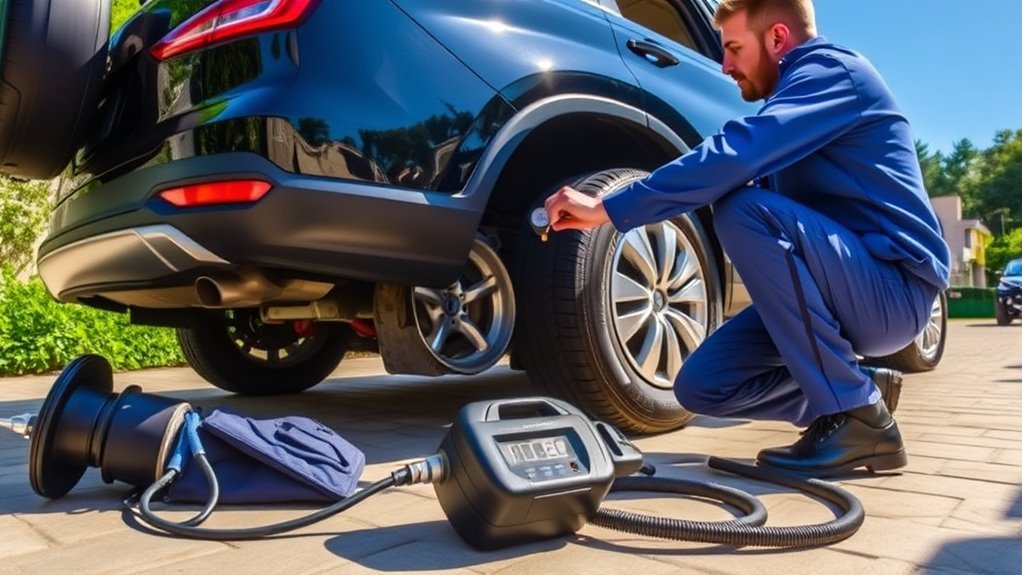
- Park on a level surface and allow the tires to become cold.
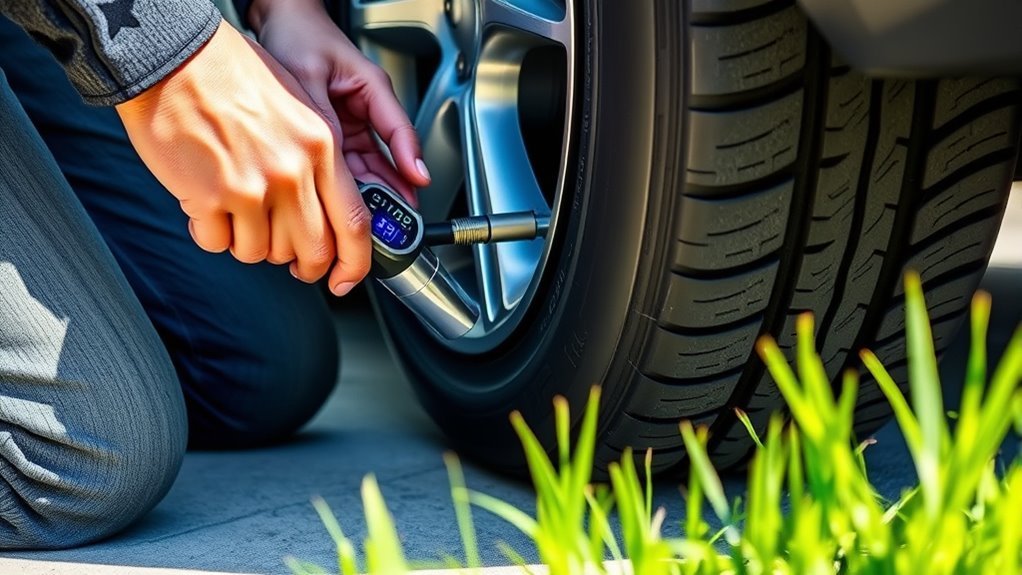
- Remove the valve cap and press a reliable gauge squarely onto the valve stem.
- Compare the reading with the correct cold PSI from the placard, owner’s manual, trailer label, or approved tire manufacturer guidance.
- Add air in short bursts if the pressure is low.
- Release air slowly if a cold tire is above the specified pressure.
- Recheck the pressure after each adjustment.
- Replace the valve cap and check every tire, including the spare if equipped.
If you must check a tire while it is warm, do not bleed it down to the cold target simply because normal driving raised the reading. If a warm tire appears underinflated, NHTSA recommends adding enough air to avoid driving significantly underinflated, then rechecking and correcting the pressure when the tire is cold.
Temperature also changes pressure. Tire Rack notes that pressure changes by about 2% for each 10°F change in air temperature. That is roughly 1 PSI for many light-duty tires and closer to 2 PSI for some high-pressure RV or truck tires.
Which Tire Inflation Mistakes Should You Avoid?
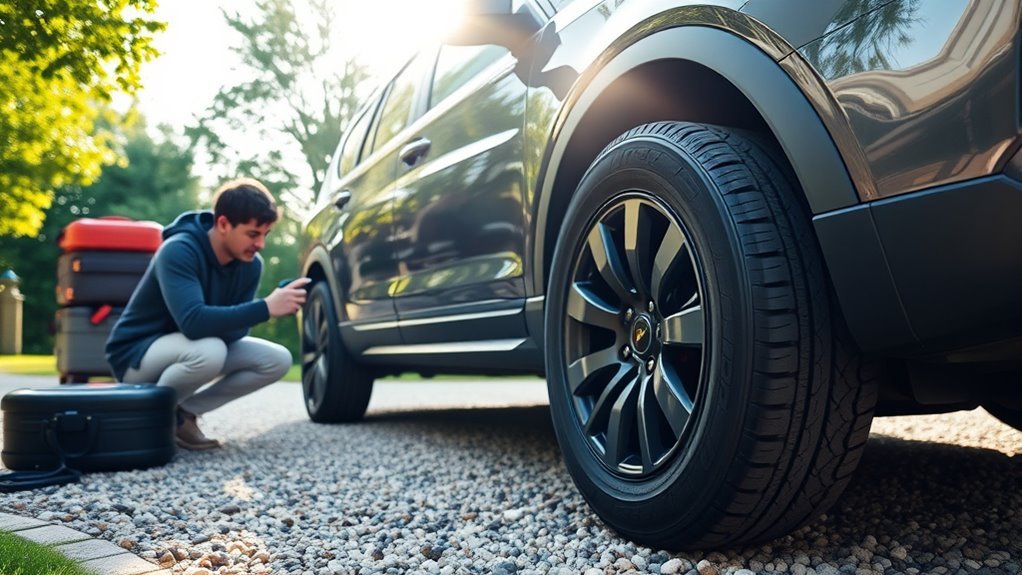
- Using the sidewall maximum as normal passenger-vehicle pressure. Use the vehicle placard and owner’s manual for the specified setup.
- Guessing with a universal PSI formula. Extra weight does not produce the same required pressure change in every tire.
- Ignoring the rear axle. Cargo and tongue weight often increase the rear axle load more than the front.
- Using unequal pressure side-to-side. Different pressures on the same axle can affect handling and braking unless the manufacturer specifies them.
- Assuming replacement tires use the same pressure. A different size, construction, or load range may require verification with an approved load-inflation table.
- Checking only after driving. Warm readings can hide a low cold pressure.
- Depending only on TPMS. TPMS warns of significant underinflation but does not confirm payload, axle load, trailer pressure, or the correct pressure for a changed tire setup.
- Overlooking the wheel rating. A tire may permit more pressure than the wheel can safely hold.
- Trying to fix overload with air. Remove weight or use a properly rated vehicle, trailer, tire, and wheel setup.
How Should You Check Tires on a Long Trip?
Before departure, check pressure, tread depth, visible damage, valve stems, and the spare tire. Check pressure before loading if you need access to the valves, then verify the loaded setup if it is near a vehicle, axle, wheel, or tire limit.
During the trip, inspect the tires at fuel or rest stops. Look for bulges, cuts, exposed cords, rapid pressure loss, uneven wear, or a tire that appears lower than its matching tire.
Without prolonged contact, note whether one tire or wheel seems noticeably hotter than comparable positions. Stop driving if you find smoke, a burning smell, visible damage, abnormal vibration, or rapid pressure loss.
Do not bleed air from a hot tire simply because pressure increased while driving. Pressure normally rises with operating temperature. Reducing a warm tire to the cold target can leave it underinflated after cooling.
How Does Tire Type Affect Load Capacity?
Passenger, LT, and ST tires are designed for different applications. Passenger tires emphasize everyday ride and handling. LT tires are designed for light-truck loads and tougher service. ST tires are intended for trailer use.
If you replace tires, match or exceed the original required load capacity, speed rating, and size requirements unless the vehicle or tire manufacturer approves another setup.
The federal tire and loading rules in 49 CFR 571.110 require covered vehicle and trailer placards to provide recommended cold inflation pressure, tire size, and loading information. Use that information as the baseline for the installed application.
What If You Changed Tire Size or Load Range?
The vehicle placard was developed for the original specified tire setup. A different tire size, P-metric-to-LT conversion, load range, or construction may not provide the same load capacity at the placard PSI.
Do not copy the new tire’s sidewall maximum or assume its pressure should match the old tire. Use the vehicle manufacturer’s requirements and the correct tire-manufacturer load-inflation data to confirm that the replacement setup provides the required capacity and remains compatible with the wheel.
The replacement setup must preserve at least the load capacity required for each axle while remaining within the vehicle, tire, and wheel limits.
When in doubt, ask a qualified tire dealer or the vehicle or trailer manufacturer to verify the tire size, construction, load range, wheel rating, and correct inflation pressure for your loaded use.
Frequently Asked Questions
Should I adjust my tire pressure when towing?
Check it, but do not automatically add pressure. For the tow vehicle, follow the door-jamb placard and owner’s manual, including any listed towing or full-load pressure. For the trailer, follow its placard or certification label and confirm replacement-tire guidance. Never exceed tire, wheel, axle, hitch, vehicle, or trailer ratings.
Should tire pressure be higher for a heavy load?
Sometimes. Use a higher full-load pressure only when the owner’s manual or manufacturer provides one for your setup. For approved weight-based applications, use actual axle or wheel-position weights and the correct tire-manufacturer load-inflation table. Never inflate beyond the tire or wheel limit.
Do I need to adjust tyre pressure when carrying load?
Check the vehicle placard and owner’s manual whenever you add passengers or cargo. Some vehicles provide a loaded-pressure recommendation, while others retain the normal placard pressure. Stay within payload and axle limits and check every tire with an accurate gauge.
How much PSI should I add for 500 pounds of extra weight?
There is no universal PSI increase for 500 pounds or any other fixed amount of added weight. Start with the vehicle placard and owner’s manual. If the manufacturer specifies a loaded pressure, use it for that condition. For applications approved for weight-based inflation, use actual axle or wheel-position weights with the correct tire-manufacturer load-inflation table.
Should I lower tire pressure after removing a heavy load?
If you were using a manufacturer-specified pressure for a full-load or towing condition, check the owner’s manual after unloading and return to the normal cold-pressure specification when that loaded condition no longer applies. Make the adjustment when the tires are cold, not immediately after driving.
What should the tire pressure be on a cargo trailer?
Use the cold pressure on the trailer placard or certification label. For some trailer tires, the sidewall-marked maximum cold pressure is associated with full rated load capacity, but it should not automatically replace the trailer manufacturer’s specification. Verify the pressure whenever tire size, construction, load range, wheels, or the original setup have changed.
Is the PSI on the tire sidewall the pressure I should use?
For most passenger vehicles, no. The sidewall shows tire-specific maximum or rated-load information, while the vehicle placard provides the manufacturer’s recommended operating pressure for the specified setup. Trailer applications also require you to check the trailer placard, wheel rating, and manufacturer guidance.
Can TPMS tell me if my loaded tire pressure is correct?
No. TPMS usually warns only when pressure is significantly low. It does not confirm that the loaded pressure is correct, that trailer tires match their placard, or that the vehicle remains within payload and axle limits. Use a gauge and check the applicable load information.
Conclusion
Correct tire pressure for load starts with the manufacturer’s cold-pressure specification, not a universal PSI increase. Use the vehicle placard and owner’s manual for the vehicle. Use the trailer placard, tire data, and wheel rating for the trailer.
When tires have changed or the load approaches a limit, weigh the setup and use approved manufacturer load-inflation data. Never use extra pressure to compensate for excessive payload, axle weight, tongue weight, or trailer weight.
FuelEconomy.gov estimates that keeping tires properly inflated improves gas mileage by about 0.6% on average and up to 3% in some cases. Correct inflation also supports tire life, handling, and safety.
Before your next loaded trip, check the placard and owner’s manual first, confirm the tires are cold, and set each axle to the pressure specified for that condition.
Sources
- NHTSA Tire Safety Ratings and Awareness: supports cold-pressure checks, the three-hour cold definition, placard location, monthly checks, TPMS limitations, and current tire-safety statistics.
- FuelEconomy.gov Gas Mileage Tips: supports using the vehicle recommendation rather than the tire sidewall maximum as normal vehicle pressure and the current fuel-economy estimates for correct inflation.
- 49 CFR 571.110: supports tire placard, recommended cold inflation pressure, vehicle capacity, tire-size, and covered trailer-label requirements.
- Tire Rack: What Is Maximum Load for a Tire?: supports the relationship among tire capacity, size, construction, load range, and actual inflation pressure.
- Tire Rack: How Temperature Change Affects Tire Air Pressure: supports the temperature-pressure rule of thumb and cold-pressure guidance.
- Discount Tire Trailer Tire Maintenance: supports trailer-tire full-load pressure guidance and trailer load-capacity checks.
- Toyo Tires Load & Inflation Tables: supports using manufacturer load-inflation tables for optional and replacement tire sizes while following the vehicle placard and owner’s manual for original-equipment applications.