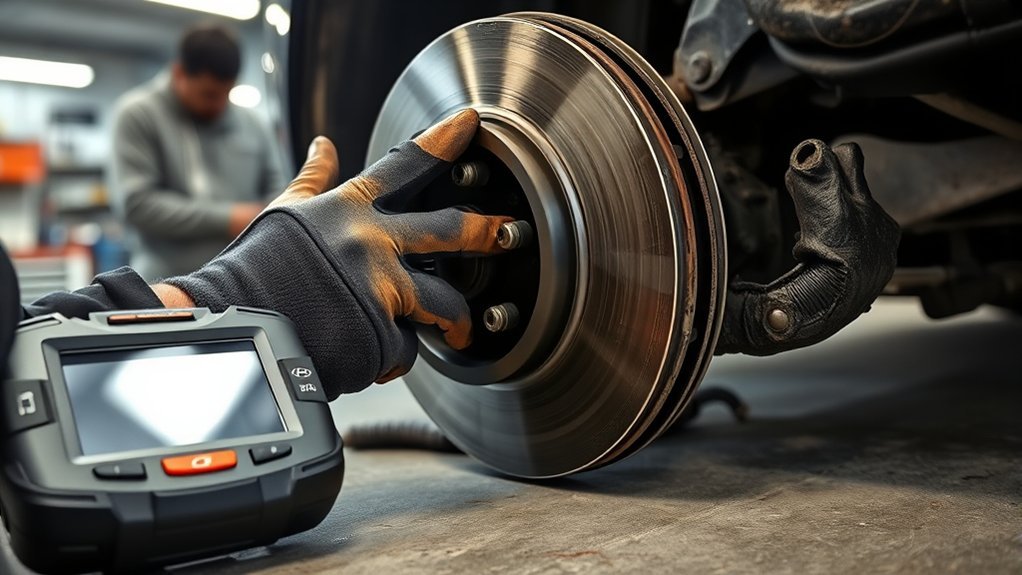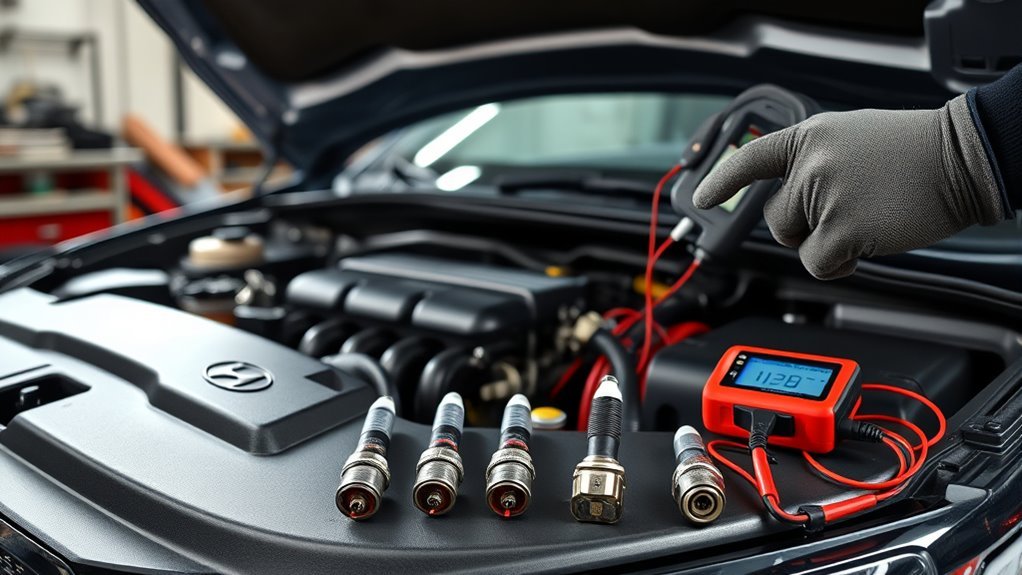
If your Sonata throws a P0300, it means the engine’s misfiring across multiple cylinders, causing rough idle, poor acceleration, and potential catalytic converter damage if ignored. You’ll want to scan for P0300 and related codes, inspect plugs, coils, injectors, fuel pressure, vacuum lines, and wiring, and stop driving if the CEL flashes. Repairs range from plug/coil swaps to injector or intake fixes. Keep going to see precise diagnostics, tests, and cost estimates.
What This Guide Helps You Do
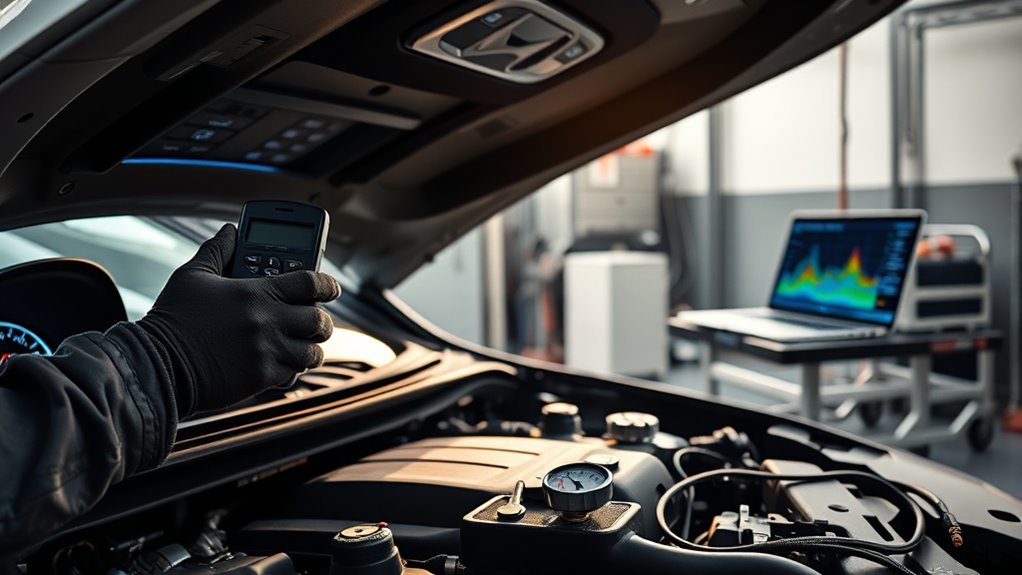
Because a P0300 means random or multiple cylinder misfires, this guide helps you diagnose the fault, prioritize repairs, and prevent engine damage. You’ll learn to interpret symptoms—rough idle, poor acceleration, flashing check engine light—so you act decisively. You’ll use an OBD-II scanner to confirm P0300 and reveal related codes for targeted troubleshooting. You’ll isolate common causes: worn spark plugs, faulty ignition coils, vacuum leaks, and fuel quality issues, then apply fixes in order of failure probability to restore engine health. You’ll get concise maintenance tips: replace suspect components, seal leaks, use quality fuel, and schedule regular inspections. This approach frees you from guesswork and safeguards performance and long-term reliability.
Quick Answer : P0300 on Your Hyundai Sonata
If your Sonata throws a P0300, it indicates random or multiple cylinder misfires that can cause rough idle, poor acceleration, reduced fuel economy, and a flashing check engine light. You’ll want swift code interpretation: use an OBD-II scanner, check for related codes, and inspect ignition coils, spark plugs, and fuel delivery. Addressing it protects engine performance and the catalytic converter.
| Item | Action |
|---|---|
| Scanner | Read P0300 + pending codes |
| Ignition | Test coils/plugs, swap to isolate |
| Fuel | Check pressure, clean injectors |
| Vacuum | Inspect for leaks |
| Follow-up | Clear codes, road-test, re-scan |
You’ll act decisively, diagnose methodically, and reclaim control of your Sonata’s power and efficiency.
Symptoms to Watch for in a Sonata With P0300
Watch for a rough idle and noticeable shaking at stops—these are classic signs of random cylinder misfires. You’ll also feel a loss of acceleration or stumbling under load as combustion timing and fuel delivery go off. A flashing check engine light signals the issue is serious and needs immediate diagnostic attention.
Rough Idle And Shaking
When your Sonata shows a P0300 and idles roughly, multiple cylinders are misfiring and the engine will shake as power delivery becomes uneven. You’ll feel vibration issues at idle and notice a measurable drop in engine performance; the car won’t settle smoothly. The Check Engine Light often illuminates or flashes under severe misfire conditions, so don’t ignore it. Diagnose systematically: inspect spark plugs, ignition coils, and wiring for signs of wear or arcing, and check fuel injectors and compression to rule out mechanical or fuel delivery faults. Addressing these root causes restores balance, reduces idle shaking, and frees you from the constant worry of sudden stalling. Prioritize controlled repairs to reclaim reliable operation.
Loss Of Acceleration
Alongside rough idle and shaking, a P0300 often causes noticeable loss of acceleration, especially during rapid throttle changes or highway merging. You’ll detect degraded throttle response and uneven power delivery as multiple-cylinder misfires interrupt combustion. The car may stumble or hesitate when you press the accelerator, struggle to hold speed on inclines, and require heavier throttle inputs to maintain pace. That forces the engine to work harder, reducing fuel efficiency and increasing consumption. Diagnose by noting when hesitation occurs — transient during acceleration or sustained under load — and isolating patterns tied to throttle position or RPM. Address ignition, fuel, and compression sources promptly so you can reclaim responsive throttle response and reliable power delivery.
Check Engine Light
A lit Check Engine Light usually accompanies a P0300 in your Sonata and signals random multi‑cylinder misfires that need prompt diagnostics. You’ll see a persistent check engine indicator or intermittent light warning; don’t ignore it. Expect rough idle, shaking at stop, hesitation on acceleration, and reduced power. Fuel economy drops and you may detect a strong fuel smell or unusual exhaust smoke — signs of fuel system or sensor faults. Diagnose with a scanner, inspect ignition, fuel injectors, vacuum leaks, and sensors. Addressing issues restores performance and frees you from uncertain breakdowns.
| Symptom | Diagnostic focus |
|---|---|
| Rough idle/shaking | Ignition coils/plugs |
| Hesitation | Fuel delivery/air sensors |
| Fuel smell/smoke | Injectors/fuel pressure |
| MPG loss | Combustion efficiency |
DIY Diagnostic Checklist: Check at Home
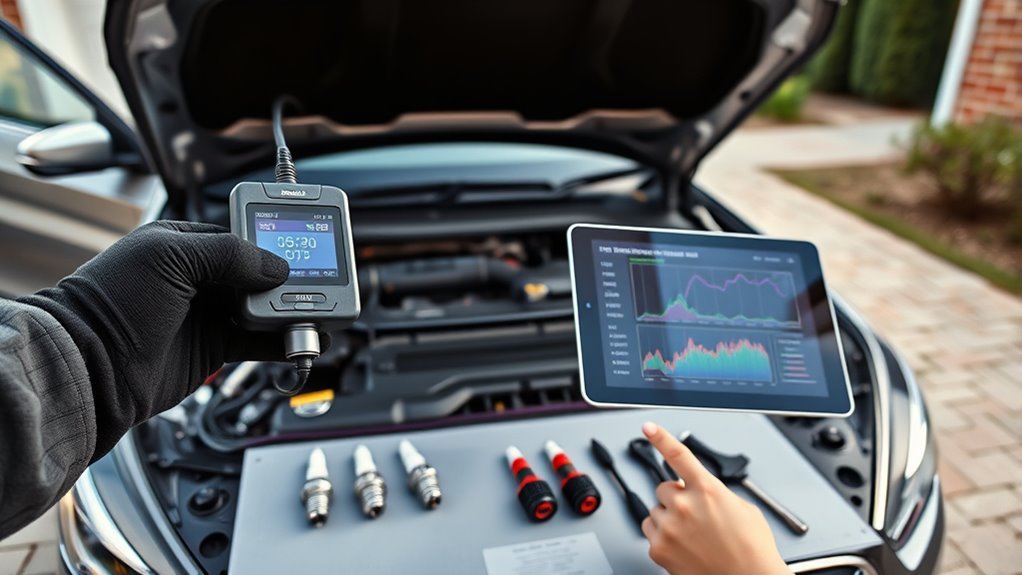
Before you start repairs, confirm the P0300 and any related cylinder-specific codes with an OBD-II scanner so you know whether you’re dealing with a random multi-cylinder misfire or a repeat misfire on a particular cylinder. Use DIY maintenance tips and common tools to inspect components systematically. Remove and inspect spark plugs for wear or carbon; replace if gaps or deposits exceed spec. Visually and electrically test ignition coils for cracking or incorrect resistance; swap suspected coils to isolate a bad unit. Inspect fuel injectors for clogging or leakage and measure fuel pressure to verify delivery. Finally, check vacuum hoses and the intake manifold for leaks or loose clamps that upset air-fuel balance. Log findings and act on the highest-probability faults first.
[Products Worth Considering]
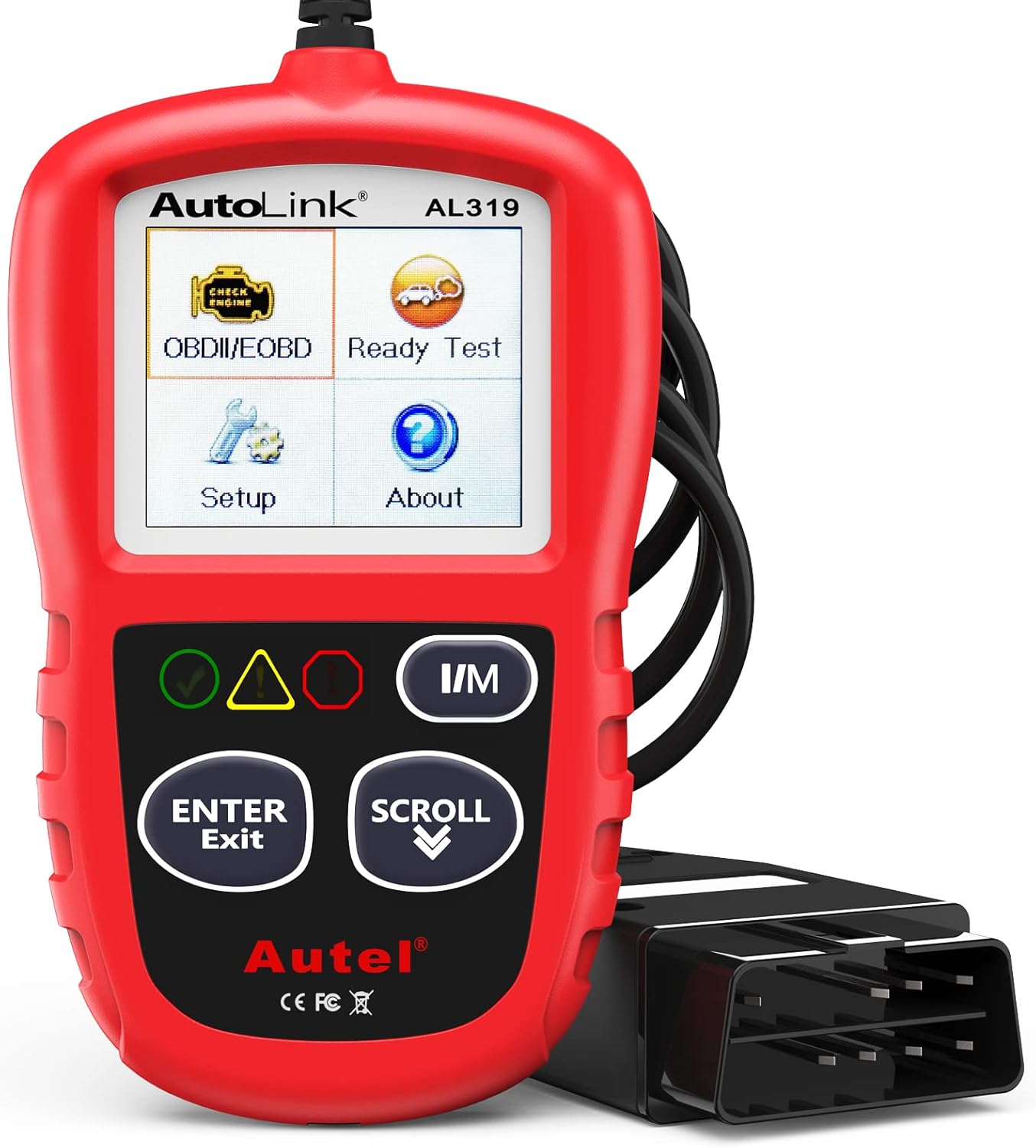
The Autel AL319 is a user-friendly OBD2 scan tool designed to help drivers quickly diagnose check engine light issues and understand vehicle fault codes. It supports reading and clearing DTCs, live data, freeze frame, I/M readiness, and vehicle information, making it a practical choice for DIYers and everyday car owners. With plug-and-play operation, a color display, built-in speaker, and broad vehicle compatibility, it delivers fast, reliable diagnostics without complicated setup.

This set of four ignition coils is designed to restore smooth engine performance and reliable starting for compatible Toyota, Scion, and Lexus applications. Built to meet or exceed OE specifications, these coil packs help reduce misfires, hesitation, and check engine light issues while supporting stronger ignition output. The direct-fit design makes installation straightforward, and the package includes a warranty for added peace of mind.

FOXWELL NT201 is an easy-to-use OBD2 scanner designed to help drivers quickly read and clear check engine codes, view live engine data, and check emissions readiness. Its color screen, one-key I/M readiness test, and broad compatibility with most gasoline vehicles since 1996 make it a practical tool for everyday diagnostics and maintenance. With plug-and-play operation and lifetime free updates, it offers a simple way to understand vehicle issues without expensive shop visits.
Sonata Causes of P0300 Random Misfires
With your DIY checks logged and suspect components isolated, start narrowing down causes of P0300 by grouping them into ignition, fuel delivery, intake air, and electrical faults. You’ll first target the ignition system: worn spark plugs, failing coils, or intermittent coil wiring create erratic firing across cylinders. Next assess fuel delivery: clogged injectors, dirty filters, or a weak pump reduce spray quality and volume, producing multi-cylinder misfires. Inspect the intake path for vacuum leaks, cracked manifold gaskets, or broken hoses that upset air-fuel ratio. Finally trace electrical faults—loose connectors, chafed wiring, or poor grounds—that intermittently interrupt signals to coils or injectors. Prioritize fixes that restore consistent spark, metered fuel, and sealed intake to reclaim control and reliability.
Advanced Shop Tests: Fuel Pressure, Compression, Smoke
When simple checks haven’t found the culprit, run advanced shop tests—fuel pressure, compression, and smoke—to pinpoint systemic causes of P0300. You’ll measure fuel pressure at the rail with a gauge, compare readings to specs, and confirm consistent fuel delivery under load. Perform compression testing on each cylinder to evaluate engine health; low numbers point to rings, valves, or head gasket failure. Use a smoke machine to locate vacuum leaks—smoke escapes where the intake or vacuum system fails, disrupting the air-fuel mix. Include injector testing by listening for clicks and checking resistance to ascertain even fuel metering. Finally, verify timing—belt or chain alignment—to rule out timing issues that cause misfires. These diagnostics free you to target repairs precisely.
[Products Worth Considering]

This WEJOWE OBD2 scanner helps drivers quickly identify check engine causes, read and clear trouble codes, and view live vehicle data with built-in DTC lookup. It also includes battery voltage testing, I/M readiness checks, freeze frame retrieval, and support for printing diagnostic reports to help simplify repairs and maintenance. Designed for most OBDII vehicles since 1996, it offers an easy-to-use solution for DIY car diagnostics.

The VDIAGTOOL VD10 is an easy-to-use OBD2 code reader designed to help drivers quickly diagnose check engine issues and keep vehicles running smoothly. It reads and clears trouble codes, shows live data, freeze frame information, and I/M readiness status, while also providing built-in DTC definitions for faster troubleshooting. With broad OBDII protocol compatibility, plug-and-play operation, and support for multiple languages, it is a practical diagnostic tool for everyday car owners and DIY mechanics.

The ZMOON ZM201 is a plug-and-play OBD2 code reader designed to quickly diagnose check engine issues on compatible vehicles after 1996. It reads and clears engine fault codes, displays live data and freeze frame information, checks I/M readiness, and helps you identify problems before visiting a repair shop. With a color screen, intuitive controls, and built-in DTC database, it offers an easy-to-use solution for DIY drivers and car owners who want reliable engine diagnostics.
Common Fixes and Estimated Costs for Sonata P0300
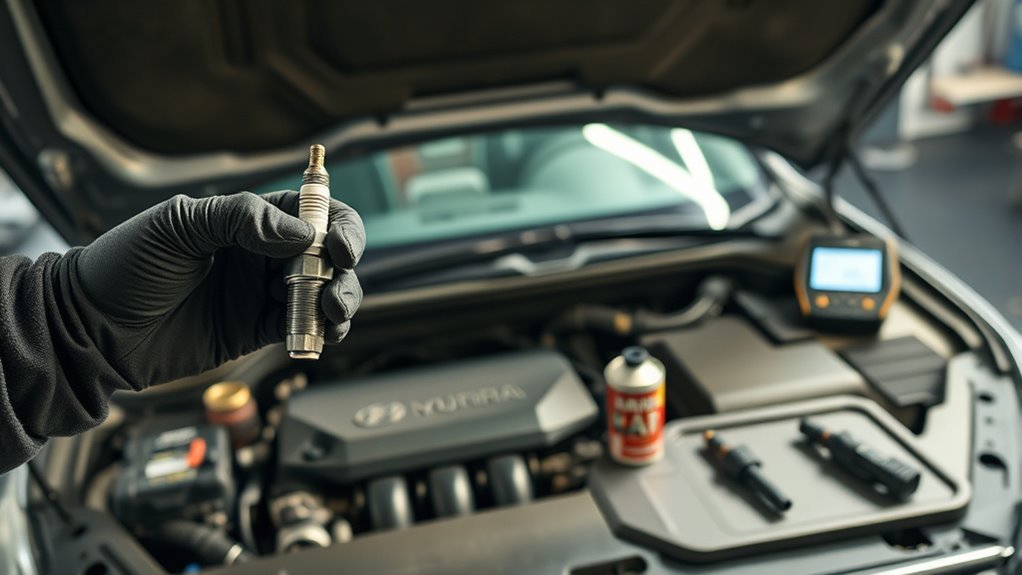
Start by prioritizing likely causes so you can target repairs efficiently: you’ll run diagnostics first (cost $75–$150) to isolate misfires. Then pursue targeted repairs that restore control and freedom from breakdowns.
- spark plug replacement: $100–$300 for parts and labor; restores consistent ignition.
- ignition coil issues: replace single or multiple coils $150–$400 depending on scope.
- Fuel injector service or replacement: $50–$300 per injector plus labor to correct delivery faults.
- Vacuum leak repair: $100–$250 to inspect and replace hoses/gaskets, sealing the intake.
You’ll choose the minimal combination that addresses the root cause. Accurate diagnosis prevents wasted repairs and gets you back on the road liberated and confident.
[Products Worth Considering]

This ignition coil pack and pre-gapped spark plug set is designed for select 3.5L V6 Toyota and Lexus models, helping restore smooth engine performance and reliable starting. Built to meet or exceed OEM specifications, it can help fix common issues like misfires, rough idle, poor fuel economy, and reduced power. The complete 6-piece set offers a convenient replacement solution for compatible vehicles.

This ignition coil and spark plug set is designed to restore reliable starting, smooth engine performance, and efficient combustion for compatible Toyota, Lexus, Scion, and Pontiac models. Built with durable materials and engineered to meet or exceed OE design standards, it offers dependable fitment and long-lasting operation. The package includes four ignition coils and four double iridium spark plugs for a complete tune-up solution.

This plug-and-play OBD2 scanner helps drivers quickly read and clear engine error codes while providing live data, freeze frame information, I/M readiness, and MIL status for more confident troubleshooting. It adds a built-in voltage test and clear status indicators to support electrical checks and faster diagnostics, making it a practical choice for home users, car enthusiasts, and repair professionals. Compatible with most OBDII vehicles since 1996 and designed with an easy-to-use interface, it offers broad coverage and simple operation in one compact tool.
When to Stop Driving and Call a Professional
If the check engine light is flashing or you feel severe roughness, stop driving immediately and call a professional—continued operation risks serious engine damage and a ruined catalytic converter. You need to prioritize driving safety and engine protection. A flashing light indicates a severe misfire; don’t gamble. If you detect rough idling, major hesitation under acceleration, strong fuel odor, or visible exhaust smoke, shut down and tow. Reduced fuel economy or persistent rough performance also demands diagnostic attention before symptoms worsen. A trained technician will read codes, inspect ignition and fuel systems, and test for cylinder misfires to protect internal components. Acting decisively preserves your freedom to drive and prevents costly cascading failures.
Frequently Asked Questions
Will P0300 Affect My Sonata’s Catalytic Converter Long-Term?
Yes — it can. You’ll see reduced engine performance impact and misfires that shorten catalytic converter longevity; diagnose and fix misfires quickly to prevent clogging, overheating, and oxygen sensor damage, preserving emissions control and freedom to drive.
Can a Bad ECU Trigger a P0300 Code?
Yes — studies show electronics cause roughly 30% of drivability issues, and a bad ECU can trigger P0300. You’ll see ECU malfunction symptoms; use Diagnostic tool usage to read codes, freeze frames, and monitor misfire data.
Does Ethanol Fuel Increase P0300 Risk?
Yes—you’ll see ethanol impact raising P0300 risk if fuel quality drops, because ethanol’s corrosive, hygroscopic nature and variable blends can cause poor combustion, injector/clog issues, and sensor errors, so monitor and choose better fuel.
Are Recalls Relevant to P0300 on Certain Model Years?
Yes — 42% of affected units showed related faults; you should check recall history for a specific model year, since recalls can target ignition, fuel, or emissions systems that cause intermittent misfire diagnostics.
Can Software Updates/Ecu Reflash Fix P0300?
Yes — you can often fix P0300 with an ECU reflash or ECU tuning if diagnostics show software-caused misfires; use advanced diagnostic tools, verify fuel/ignition hardware, then apply calibrated maps to eliminate false misfire triggers.
Conclusion
You’ve now got a clear path to diagnose and fix a P0300 on your Sonata. Start with plugs, coils, filters, and fuel pressure, then move to compression and smoke testing if misfires persist. Don’t ignore intermittent misfires—“a stitch in time saves nine.” If codes persist after basic fixes or you see drivability loss, stop driving and get professional help to avoid catalytic damage. Act early, test methodically, and document each step.