Choosing between 87 and 91 octane in a 2025 Toyota 4Runner is simpler than many online discussions make it sound. Toyota specifies regular unleaded gasoline with an octane rating of 87 AKI or higher, so premium is allowed but not required. The important question is whether paying extra for 91 gives your particular 4Runner a useful benefit.
Quick Answer
Use 87-octane regular unleaded in a stock 2025 Toyota 4Runner. It meets Toyota’s stated fuel requirement and is the sensible choice for normal driving and towing. You can safely use 91, but Toyota does not publish a higher 4Runner horsepower or fuel-economy rating for premium fuel.
Last checked: October 5, 2026. Dates and figures were verified against official sources.
Key Takeaways
- Toyota specifies 87 AKI, equivalent to 91 RON, or higher for the 2025 4Runner.
- Higher octane improves resistance to knock; it does not automatically mean higher-quality or more powerful fuel.
- Toyota publishes no separate 91-octane horsepower, torque, or MPG rating for the stock 2025 4Runner.
- For towing, Toyota provides Tow/Haul functionality on applicable models but does not tell owners to switch to premium gasoline.
- Fuel quality matters too: Toyota strongly recommends TOP TIER Detergent Gasoline.
Which Octane Does the 2025 4Runner Manual Recommend?
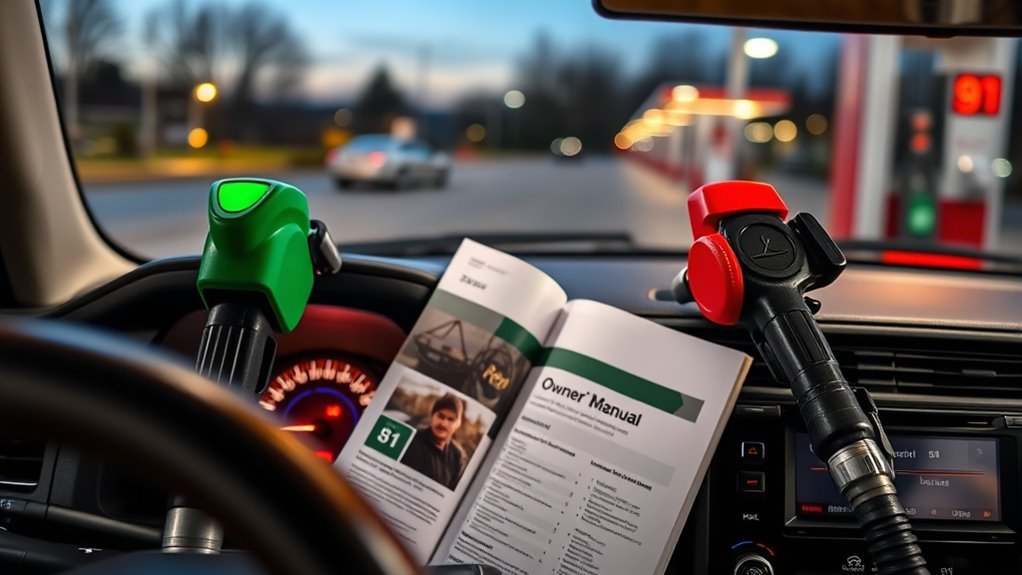
The 2025 4Runner requires a minimum of 87 AKI regular unleaded gasoline. Toyota’s 2025 4Runner owner’s-manual resources identify the applicable owner manual, whose fuel specification states 87 octane (91 RON) or higher.
That means you do not need 91 premium to protect a stock engine or obtain Toyota’s intended operation. Fuel below 87 is the problem: Toyota warns that lower octane can cause persistent knocking and potentially damage the engine.
| Fuel | 2025 4Runner Use | What to Expect |
|---|---|---|
| 87 AKI regular | Recommended everyday choice | Meets Toyota’s minimum requirement |
| 89–90 AKI midgrade | Allowed, but not required | More knock resistance than 87, with no Toyota-published output increase |
| 91+ AKI premium | Safe to use, but optional | Higher knock resistance; no official 4Runner premium-fuel power claim |
Note: U.S. pumps display AKI, commonly written as (R+M)/2. Toyota’s “87 octane (Research Octane Number 91)” wording does not mean Americans should buy 91 premium. In the U.S., 87 on the pump is the specified minimum.
Toyota also strongly recommends gasoline containing adequate detergent additives. If available in your area, you can use the TOP TIER approved gasoline list to find participating fuel brands; the standard applies across the octane grades sold by licensed retailers.
What 87 Vs 91 Octane Means for Combustion and Knock
The main difference between 87 and 91 is resistance to abnormal combustion. Higher-octane gasoline can withstand greater pressure and temperature before auto-igniting, which reduces the chance of engine knock; it is not simply a stronger or higher-energy version of regular gasoline.
The U.S. Energy Information Administration’s octane guide explains that knock occurs when part of the air-fuel mixture ignites abnormally instead of burning in the intended controlled flame front. Modern engine controls can react to detected knock by altering combustion conditions.
That extra knock resistance is particularly useful in an engine specifically calibrated to exploit premium fuel. However, Toyota calibrates the 2025 4Runner to operate on 87 or higher and does not publish a second set of output ratings for 91.
Warning: Do not deliberately use gasoline below Toyota’s 87-octane minimum. The manual warns that persistent knocking from insufficient octane can damage the engine. If you hear persistent knock while using the correct fuel, have the vehicle checked rather than treating premium gasoline as the repair.
How the 4runner’s ECU and Engine Adapt to 87 Vs 91
The 2025 4Runner uses modern electronic engine management to control ignition, fuel delivery, boost, and other operating parameters. Knock sensing gives the system a way to protect the engine when combustion conditions approach the knock limit, but Toyota does not document a guaranteed 91-octane performance mode for this vehicle.
Timing Retardation Strategies
Ignition timing describes when the spark occurs relative to piston movement. In modern gasoline engines, the control system can adjust spark timing when conditions demand it; the EIA notes that delaying spark is one way modern engines respond when knock is detected.
That does not mean a 2025 4Runner running 87 is constantly operating in a compromised state. Toyota chose 87 as the minimum acceptable fuel, so regular gasoline is part of the vehicle’s intended calibration rather than an emergency fallback.
Higher octane gives an engine more margin before knock occurs. Whether the stock 4Runner converts that extra margin into a measurable increase in power depends on Toyota’s calibration and operating conditions, and Toyota has not published an official 87-versus-91 output comparison.
Knock Sensor Calibration
Knock sensors help the engine computer recognize abnormal combustion and respond before it becomes persistent. They are a protection and control tool, not a reason to ignore Toyota’s minimum fuel requirement.
- The engine operates using Toyota’s programmed controls for ignition, fuel delivery, and boost.
- Knock sensing helps the control system identify abnormal combustion.
- The computer can adjust operating parameters when needed to protect the engine.
- Higher-octane fuel provides more resistance to knock, but that alone does not guarantee extra horsepower or MPG.
For a stock 2025 4Runner, the practical takeaway remains the same: use 87 or higher, and do not assume premium automatically changes the factory-rated output.
Real-World Differences: MPG, Horsepower, and Drivability With 87 Vs 91
There is no Toyota-published 2025 4Runner test showing that switching from 87 to 91 adds a specific amount of horsepower, torque, or MPG. Individual drivers may report changes in throttle feel or smoothness, but those observations are not the same as a controlled, model-specific Toyota test.
Toyota rates the standard 2.4-liter turbo i-FORCE powertrain at up to 278 horsepower and 317 lb-ft of torque. The i-FORCE MAX hybrid reaches up to 326 combined horsepower and 465 lb-ft, and Toyota’s 2025 4Runner specifications do not provide alternative ratings for premium gasoline.
The often-repeated claim that 91 octane adds about 20 horsepower and 14 lb-ft should therefore not be presented as a proven 2025 4Runner result. That figure circulated from aftermarket dyno testing involving a Tacoma equipped with the related 2.4-liter i-FORCE engine, not a Toyota-certified 2025 4Runner comparison.
Broader testing also supports being cautious with premium-fuel promises. AAA’s premium-fuel research found no significant horsepower, fuel-economy, or emissions improvement in vehicles designed to run on regular gasoline. AAA found some modest benefits under demanding conditions in a different category: vehicles whose manufacturers specifically recommend, but do not require, premium.
The 4Runner manual, however, specifies 87 or higher rather than telling owners that premium is recommended for maximum output. Your actual fuel economy will also vary with speed, tires, temperature, elevation, traffic, load, accessories, and driving style, making a claimed one-MPG octane gain difficult to isolate without careful testing.
When 91 (Premium) Yields Measurable Gains for the 4Runner
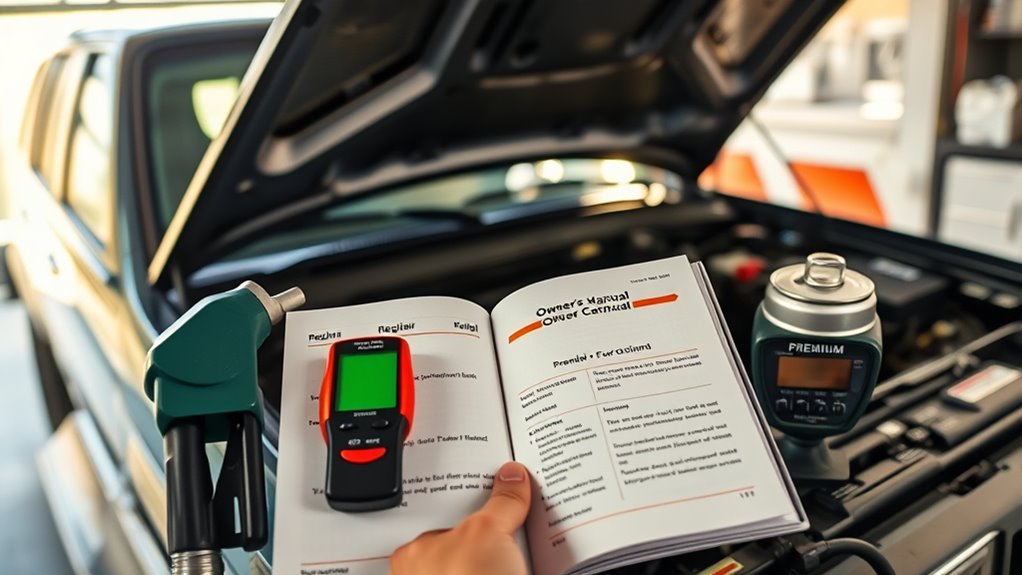
Premium gasoline gives the 4Runner greater knock resistance, but there is no verified Toyota figure showing a guaranteed stock-vehicle power or MPG gain from 91. You can test premium if you are curious, yet it should be treated as an optional experiment rather than a required upgrade.
When Power Gains Matter
If maximum repeatable performance matters to you, the useful question is not whether 91 has a higher number; it is whether your specific vehicle produces a measurable improvement on it. Toyota’s factory ratings do not promise that improvement, so claims of a fixed horsepower gain should be treated cautiously.
Higher octane may provide more combustion margin during demanding operation because it is harder to auto-ignite. However, that theoretical advantage only becomes extra usable power when the engine’s calibration responds in a way that takes advantage of it.
For a modified or aftermarket-tuned 4Runner, follow the octane requirement supplied by the tuner rather than this stock-vehicle guidance. A calibration designed around premium fuel can have a different minimum requirement from Toyota’s factory calibration.
Towing And Heavy Loads
You do not need to switch to 91 solely because you are towing with a stock 2025 4Runner. Toyota continues to specify 87 octane or higher, while Tow/Haul functionality on applicable 4Runners is designed to change throttle and transmission behavior for towing.
A heavy trailer increases engine load, so premium’s extra knock resistance may sound attractive. Still, Toyota does not state that 91 is required for towing or publish a premium-fuel towing power rating.
If you want to experiment with 91 while towing, compare repeatable conditions such as the same trailer, route, load, tire pressure, and similar weather. Judge it by measured results rather than assuming that premium automatically reduces engine strain or increases longevity.
Costs and Risks: Fuel Price, Warranty, and Engine Wear
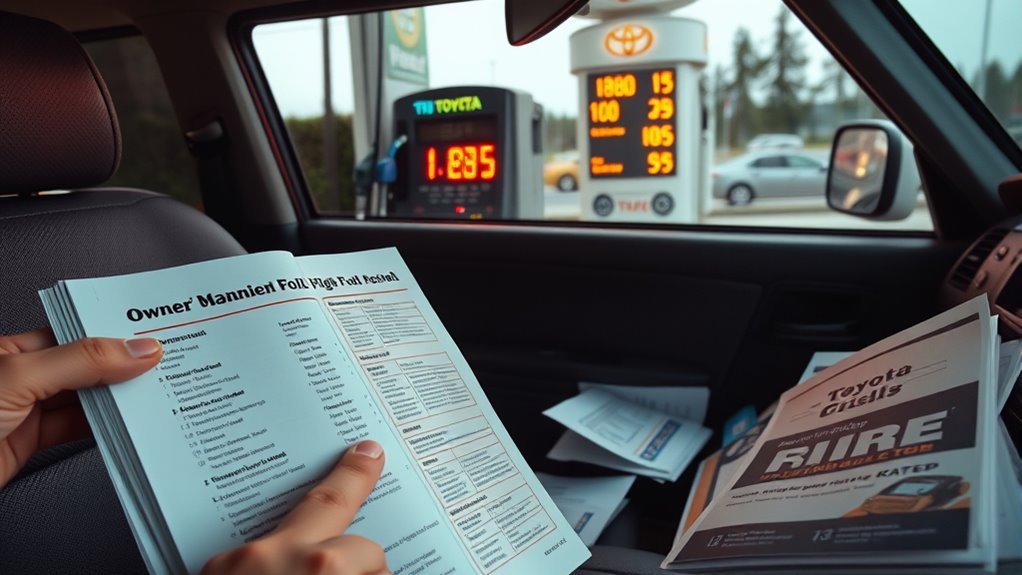
For most owners, the clearest downside of 91 is its higher price, while the clearest risk comes from using fuel below Toyota’s minimum rather than from choosing 87. Regular 87 satisfies the factory requirement, so there is no basis for treating it as a fuel that shortens engine life simply because the engine is turbocharged.
The premium-price gap is also larger than the original article suggested. The U.S. Energy Information Administration reports that the 2025 national annual average price of premium gasoline was about 93 cents per gallon higher than regular. Your local difference can be higher or lower.
- 87 meets the specification: Toyota lists 87 AKI or higher, so normal use of 87 is not the same as using insufficient octane.
- Below 87 is different: Toyota warns that persistent heavy knocking caused by fuel below the stated requirement can lead to engine damage and warranty consequences.
- 91 costs more: any MPG or performance improvement would need to be large enough to offset your local premium-price difference if saving money is your goal.
- Fuel quality still matters: buying the correct octane from a reputable station and following Toyota’s detergent-fuel recommendation is more useful than assuming the word “premium” means universally better gasoline.
Premium will not harm a stock 4Runner, but paying more does not itself create better maintenance or longer engine life. Use it because you have measured a worthwhile benefit or because a non-stock calibration specifically requires it.
Practical Fueling Strategy: Regular, Midgrade, or Premium – When to Use Each
For a stock 2025 4Runner, 87 regular is the default choice. Midgrade and premium are both acceptable because Toyota allows 87 or higher, but neither is necessary simply for commuting, off-roading, hot weather, or towing when the vehicle remains in factory configuration.
| Situation | Best Approach | Why |
|---|---|---|
| Daily driving | 87 regular | Meets Toyota’s requirement without paying for unnecessary octane |
| Towing or hauling | 87 or higher | Toyota does not require premium for towing |
| Testing for a personal performance difference | Try 91 under controlled conditions | Lets you determine whether your vehicle shows a repeatable benefit |
| Aftermarket tune | Use the tuner’s specified octane | A modified calibration may have different fuel requirements |
| Persistent knock on correct fuel | Diagnose the cause | Premium should not be used to hide a mechanical or fuel-quality problem |
There is also no special advantage to mixing 87 and 91 simply to create 89 if the engine is operating normally on 87. Midgrade remains an acceptable option, but it solves no factory requirement that regular does not already meet.
DIY Test: How to Check If Premium Improves Your 4Runner (Simple Protocol)
If you want to know whether premium makes a difference in your 4Runner, compare it under consistent conditions. A single dashboard MPG reading can be misleading, so record actual fuel used and avoid changing tires, loads, routes, or driving habits during the comparison.
- Establish an 87 baseline. Fill the tank consistently, reset the trip data, and record miles driven, gallons added at the next fill, driving conditions, and any performance observations.
- Repeat the normal route. Use similar speeds, cargo, tire pressures, climate-control use, and driving style so those variables do not overwhelm a small fuel difference.
- Run 91 under the same conditions. Allow normal fuel turnover rather than expecting the first few miles after a partial refill to represent a clean octane comparison.
- Calculate rather than guess. Divide miles traveled by gallons added and compare several consistent observations instead of relying only on the dash estimate or throttle feel.
- Compare the benefit with the cost. If MPG and drivability remain essentially unchanged, 87 is the economical choice. If you repeatedly measure a benefit you value, you can decide whether it justifies your local premium price.
Do not add octane boosters, change engine tuning, or alter other performance parts during the test. Those changes would make it impossible to tell what came from the fuel itself.
Quick Decision Guide: Pick the Right Octane for Your Driving and Budget
Choose 87 if you want the fuel Toyota specifies at the lowest normal cost. Choose 91 only if you prefer the additional knock resistance, want to conduct your own controlled comparison, or have a modification whose manufacturer specifically calls for premium.
Do not buy premium because of a claim that every 2025 4Runner automatically gains a fixed 20 horsepower or one MPG. Toyota does not publish those figures for the vehicle, and the commonly cited aftermarket dyno result came from a Tacoma using the related engine.
Also separate octane from fuel quality. An 87-octane TOP TIER fuel can satisfy both Toyota’s octane requirement and its detergent-fuel recommendation. Premium’s higher octane rating does not by itself mean the gasoline has better detergency.
If the engine develops persistent knocking, poor hot starting, or other driveability problems after refueling, Toyota’s manual advises addressing the fuel-quality problem and consulting a dealer if it persists. Simply moving to a higher grade can mask the symptom without explaining why it appeared.
Frequently Asked Questions
Is It Better to Run 87 or 91 in a 2025 4Runner?
For a stock 2025 4Runner, 87 is the better default choice because it meets Toyota’s minimum specification and costs less. Using 91 is safe, but Toyota does not publish a guaranteed increase in horsepower, torque, fuel economy, or engine life from premium fuel.
What Happens if I Accidentally Put 91 Instead of 87?
Nothing harmful should happen because Toyota allows 87 octane or higher. You can drive normally and use 87 again at your next fill if you prefer. There is no need to drain the tank simply because you accidentally selected premium gasoline.
What Is the Best Gas for a 2025 4Runner?
Regular unleaded with an 87 AKI rating or higher is the correct everyday fuel for a stock 2025 4Runner. Toyota also strongly recommends TOP TIER Detergent Gasoline, so choosing reputable, properly formulated 87-octane fuel is more useful than paying for premium solely because of its name.
Is 89 Octane Worth Using in the 2025 4Runner?
Usually not, because 89 midgrade offers no factory-required advantage over 87 in a stock 2025 4Runner. It is safe to use because it exceeds Toyota’s minimum octane requirement, but there is no published Toyota performance rating that requires or specifically rewards 89.
Should I Use 91 Octane When Towing With a 2025 4Runner?
You do not need 91 solely because you are towing with a stock 2025 4Runner. Toyota specifies 87 or higher and provides towing-related vehicle controls on applicable models. Premium is safe to try, but Toyota does not state that it is required for towing.
Does the 2025 4Runner Hybrid Need Premium Gas?
No. The 2025 4Runner i-FORCE MAX hybrid also specifies unleaded gasoline rated 87 AKI, or 91 RON, or higher. The hybrid system does not turn premium gasoline into a requirement, so owners can use regular 87 that meets Toyota’s fuel-quality specifications.
Conclusion
For a stock 2025 Toyota 4Runner, 87-octane regular unleaded is the practical choice. It meets Toyota’s requirement for both normal driving and demanding use, while 91 remains a safe but optional higher-octane fuel.
If you are curious about premium, test it under repeatable conditions and judge the result against its extra cost. If your 4Runner has an aftermarket tune, follow the tuner’s fuel requirement instead of the factory guidance.
Sources
- Toyota 2025 4Runner Manuals and Warranties: Official owner-manual access and vehicle documentation.
- Toyota USA Newsroom — 2025 4Runner: Factory powertrain ratings and towing-related features.
- U.S. Energy Information Administration — Octane in Depth: Octane, AKI, RON, engine knock, and modern knock-control principles.
- AAA Premium Fuel Research: Laboratory findings on regular-versus-premium fuel performance and economy.
- TOP TIER Approved Gasoline Brands: Licensed gasoline retailers and detergent-fuel information.
- U.S. Energy Information Administration — Gasoline Prices: 2025 U.S. regular-versus-premium average price difference.