Your RAV4’s regen system flips the motor to a generator during decel, capturing roughly 60–70% of kinetic energy and returning about 10–20% net range in urban driving; control algorithms blend torque regen with hydraulic brakes to optimize capture and minimize pad wear. Regen cuts energy loss and brake service, but it disengages at full battery, very low speeds (<3 mph), or during hard stops where friction brakes take over. Keep going to see specific tips, limits, and maintenance notes.
How RAV4 Regenerative Braking Works
When you lift off the accelerator or apply the brake, the RAV4’s electric motors switch to generator mode and convert up to 60–70% of the vehicle’s kinetic energy into electrical energy that recharges the battery; this regenerative process is governed by control algorithms and sensors that maximize energy capture while minimizing wear on the friction braking system. You experience intentional energy conversion: motors reverse function to produce electrical current proportional to deceleration demand, feeding the battery until it reaches charge limits. The control unit modulates torque regeneration versus hydraulic braking, prioritizing braking efficiency and component longevity. Integrated sensors—wheel speed, pedal position, battery state—inform the algorithm’s split between regenerative and friction braking in milliseconds. You gain liberated control over energy flows, recovering what was once wasted and reducing mechanical maintenance. The system disengages regeneration at full battery state, seamlessly handing control to friction brakes to preserve stopping performance while maintaining optimized recovery under typical operating conditions.
How Much Range RAV4 Regen Actually Returns
You’ll typically see a measurable city-range gain from regen — on stop-and-go urban routes it can recover about 60–70% of braking energy and translate to a few extra miles on a full charge. Recovery is highest during frequent decelerations, downhill runs, and coasting at moderate speeds, but it drops off below ~3 mph where recovery rates are minimal. Vehicle load, driving pattern, and state-of-charge also influence net range return and must be accounted for when estimating real-world gains.
Typical City Range Gain
In city driving, RAV4 regenerative braking typically recovers about 60–70% of the kinetic energy during deceleration, which translates to roughly 10–20% of the energy lost in acceleration and usually nets a modest few miles of extra electric-equivalent range per trip. You’ll see urban efficiency gains when you exploit stop-and-go traffic and timed decelerations; the system converts braking energy back to the battery, supporting energy conservation and reducing net consumption. Expect a practical boost of a few miles per commute in congested routes, enough to extend range margins and lower fuel draw. This is a system-level benefit: consistent recovery during frequent braking maintains state-of-charge and enhances overall trip economy without changing driving freedom.
Factors Affecting Recovery
Although regen can reclaim roughly 60–70% of braking energy under ideal conditions, the actual range returned depends on a few measurable system and environmental variables. You’ll see variance because the system interacts with battery charge state and temperature influence, limiting capture when the pack is full or cold. Urban deceleration patterns can maximize recovery, but energy reclamation drops near 3 mph. Toyota’s braking algorithms and sensor integration manage shifts to preserve drivability while pursuing efficiency optimization.
- Battery state: high battery charge reduces regen window; algorithms throttle recovery to protect cells.
- Temperature: cold pack lowers capture; thermal management affects net gains.
- Traffic profile: frequent, moderate decelerations yield highest real-world range returns.
How RAV4 Regen Differs From Friction Braking
Because it uses the electric motor as a generator, the RAV4’s regenerative braking captures kinetic energy during deceleration and converts it into electrical power to recharge the battery, whereas friction brakes dissipate that same energy as heat. You’ll notice a system-level change: regen provides active resistance through the motor, enabling measurable energy recovery (roughly 60–70% of braking losses in ideal conditions) and improving overall braking efficiency. Friction brakes, by contrast, rely on mechanical contact and convert all kinetic energy to thermal loss, recovering none.
The RAV4’s regen integrates seamlessly with conventional brakes, so you don’t have to manage modes; the control unit modulates motor torque and hydraulic pressure for smooth changes. Regen also reduces wear on pads and rotors, lowering maintenance load and extending component life. When the battery is full, the vehicle reverts to friction braking, altering pedal feel and ensuring safety. You get a system that conserves energy, simplifies operation, and advances your autonomy on the road.
Driving Tips to Maximize Regen in Your RAV4
Having regen handle much of the initial slowdown, you can maximize energy recovery by changing how you approach deceleration and low-speed driving. Adopt coasting techniques: lift earlier, let the motor convert kinetic energy rather than slamming the brakes. Practice smooth acceleration and steady throttle inputs to reduce losses and keep the regen system within ideal operating ranges. Use EV mode usage in low-speed scenarios to prioritize electric drive and higher regen rates.
- Anticipate stops with coasting techniques and modest downshifting benefits on descents to increase captured energy without engaging friction brakes.
- Integrate smooth acceleration and controlled deceleration into your driving habits; transient spikes waste recoverable energy and hurt efficiency tips.
- Perform battery monitoring during trips; when the pack nears full, regen is limited—adapt by increasing coasting distances or using EV mode strategically to avoid saturation.
These system-focused adjustments free you from inefficient braking cycles and maximize measurable energy recovery.
Maintenance, Brake Wear, and Battery Effects Over Time
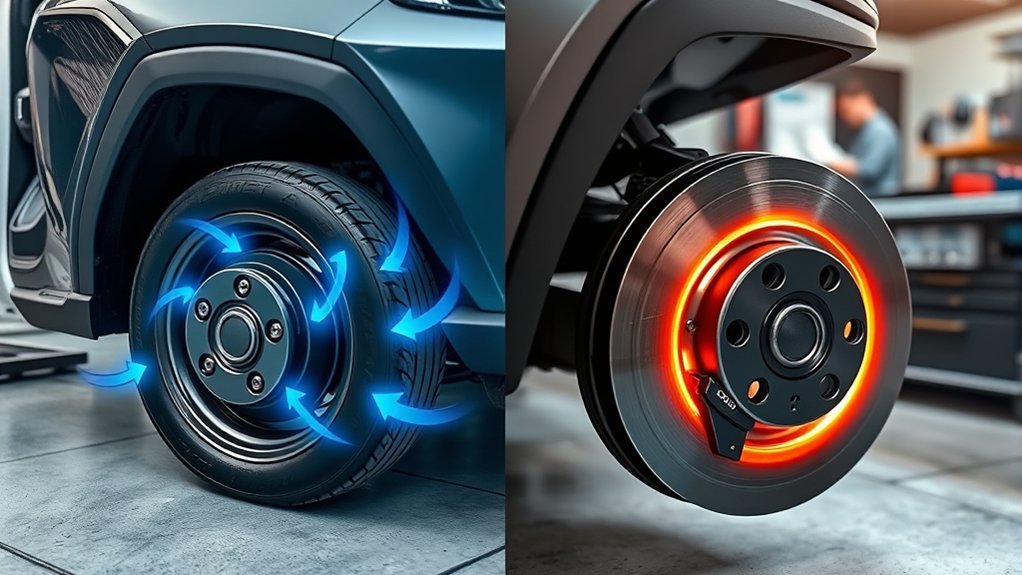
When you rely on regen in a RAV4, expect substantially reduced friction-brake use—many drivers report pad life exceeding 100,000 miles—yet you still need scheduled inspections because environmental exposure and mechanical wear still affect calipers, rotors, and lines. You’ll see longer service intervals for pads and rotors because regen converts kinetic energy to electrical energy instead of generating heat, but brake maintenance remains critical: check fluid, lines, caliper function, and parking-brake components on schedule. The regenerative system also returns energy to the traction battery, supporting battery longevity and vehicle efficiency. Monitor battery state-of-health: as cells age, their charge acceptance can drop, reducing regen capture and shifting load back to friction brakes. Your maintenance plan should include periodic battery diagnostics and cooling-system checks to preserve battery longevity and consistent regen performance. Track wear metrics and intervention thresholds; act when battery SOH or brake component clearance exceeds manufacturer limits to retain control, efficiency, and freedom from unexpected failures.
When to Rely on Regen : Choosing the Right Braking Approach
You should use regenerative braking primarily during gradual deceleration and coasting, where it maximizes energy recovery and extends range. Below roughly 3 mph, and in emergency stops, rely on traditional friction brakes because regen efficiency and stopping power drop off. On steep descents favor regen to capture 60–70% of energy and reduce wear, but always balance energy recovery with safety by anticipating traffic to avoid hard braking.
When Regen Is Effective
If you plan deceleration or coast from higher speeds, rely on regen to capture significant energy—it’s most effective at moderate-to-high speeds and on downhill grades, where you can reclaim roughly 60–70% of kinetic energy, but recovery drops sharply near walking speeds (~3 mph). You should adopt driving that maximizes deceleration efficiency and coasting benefits while respecting speed impact on recovery. Smooth inputs free you from waste; anticipate stops and coast to red lights to let the system harvest energy. Monitor grade and vehicle speed to optimize downhill performance and battery charge rates. Use regen as the primary recovery strategy during normal deceleration to extend range and reduce mechanical wear.
- Anticipate stops; coast to maximize recovered kWh.
- Prefer gradual deceleration to improve capture rate.
- Use downhill coasting to exploit peak regen efficiency.
When Friction Brakes Needed
Although regen handles much routine deceleration, you must rely on friction brakes for immediate, high-force stopping—regenerative systems prioritize energy capture and smooth slowing but can’t match the instant hydraulic/pad response required in emergencies. You choose friction brake scenarios when battery is full, at very low speeds (<3 mph), or during hard braking that forces system fallback. In heavy traffic or sudden obstacle events, apply emergency stop techniques: firm pedal input engages pads, not regen. That gives predictable, liberated control over vehicle deceleration.
| Situation | Outcome |
|---|---|
| Battery full | Regen disabled, use friction |
| Low speed (<3 mph) | Minimal regen, pads primary |
| Hard braking | System defaults to friction |
| Sudden obstacle | Emergency stop: friction wins |
Balancing Regen And Safety
One clear rule: rely on regenerative braking for gradual, predictable deceleration and switch to friction brakes for immediate or high-force stops. You’ll optimize energy recovery while preserving control by matching braking mode to context. Monitor battery state—when full, regen effectiveness drops and the system defaults to friction brakes. Learn the pedal feel; regenerative challenges include reduced low-speed recovery and unfamiliar decel feedback.
- Anticipate stops: coast and modulate throttle to maximize regen energy capture while keeping margins for friction intervention.
- Watch battery charge: if near full, plan for increased friction-brake use to maintain stopping performance and safety considerations.
- Practice shifts: rehearse mixed regen/friction stops to internalize system response and gain confident, liberating control.
Frequently Asked Questions
Is Regenerative Braking Better Than Traditional Braking?
Yes — you’ll prefer regenerative braking: efficiency comparison shows 60–70% energy recovery, reduces brake wear, boosts urban fuel economy, and uses control algorithms for smoother deceleration, though effectiveness drops when the battery’s full.
What Are the Downsides of Regenerative Braking?
You’ll face reduced braking performance in emergencies, jarring shift feel, and limited energy efficiency at low speeds or with a full battery, forcing reliance on friction brakes and requiring adaptation to system behavior.
Conclusion
You can rely on RAV4 regenerative braking to recapture meaningful energy—often 5–15% of urban range—while friction brakes still handle emergency and low-speed stops. Don’t worry that regen will leave you braking-less; the systems blend smoothly and transparently, so you won’t need extra skill. Use steady deceleration and single-pedal driving to maximize recovery. Monitor brake wear and battery state of charge; system limits mean regen varies with speed, temp, and charge level.