Last updated: July 31, 2026
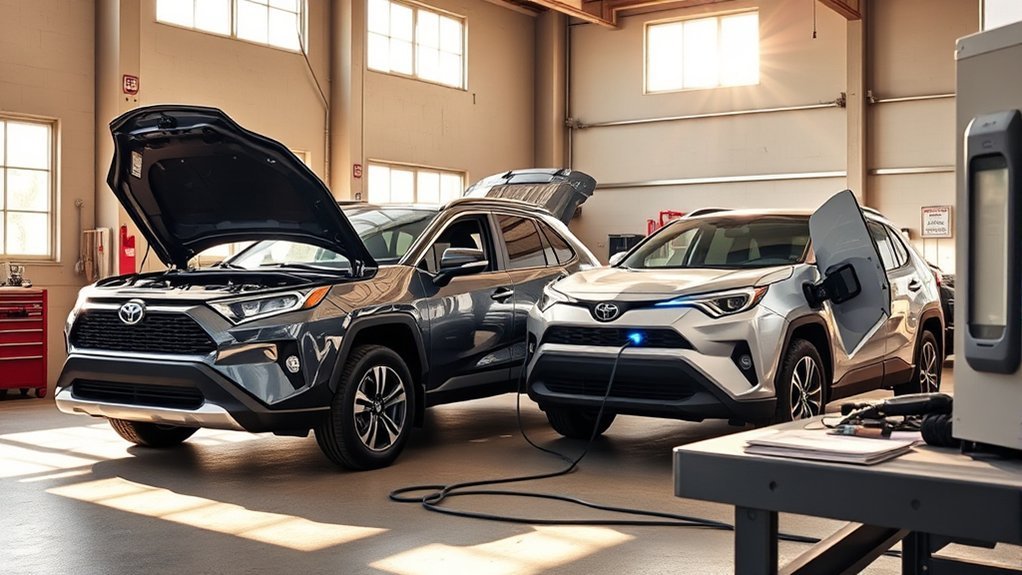
RAV4 Hybrid vs. RAV4 Prime maintenance costs are virtually identical for routine factory scheduled service, averaging $0 out-of-pocket during the 2-year/25,000-mile ToyotaCare period and approximately $350 to $650 annually thereafter. Both vehicles follow Toyota’s standard 5,000-mile or 6-month inspection cadence and 10,000-mile or 12-month synthetic oil change schedule. The primary ownership cost difference lies not in routine service, but in the Prime’s additional plug-in charging electronics, onboard charger, and larger high-voltage traction battery, which carry higher repair exposure after factory warranty coverage expires.
This comprehensive guide compares the U.S. 2025 RAV4 Hybrid and 2024 RAV4 Prime maintenance schedules, outlines real-world mechanical wear factors (such as regenerative brake maintenance and cooling intake filters), separates routine maintenance from charging infrastructure costs, and explains why the redesigned 2026 Plug-in Hybrid requires model-specific service tracking.
Quick Answer
Choose the RAV4 Hybrid for a lower-complexity ownership plan with zero charging logistics. Choose the RAV4 Prime / Plug-in Hybrid if you have reliable home or workplace charging and can maximize EV-mode driving. Routine dealer service schedules and oil change costs are essentially identical because both utilize a 2.5-liter Dynamic Force gasoline engine, conventional friction brakes, suspension components, and cabin/engine filters. The Prime’s financial trade-off is higher upfront purchase cost and out-of-warranty exposure on plug-in hardware, offset by lower fuel expenditures when charged consistently.
Maintenance Cost & Service Differences at a Glance
| Cost / Service Category | RAV4 Hybrid (HEV) | RAV4 Prime / Plug-in Hybrid (PHEV) |
|---|---|---|
| Scheduled service cadence | 5,000 miles or 6 months (rotations, safety inspections) | 5,000 miles or 6 months (rotations, safety inspections) |
| Engine oil & filter interval | 10,000 miles / 12 months (0W-16 full synthetic under normal use) | 10,000 miles / 12 months (0W-16 full synthetic, required even with high EV usage) |
| Years 1–2 scheduled cost | $0 out-of-pocket (Covered by ToyotaCare up to 2 yr / 25k mi) | $0 out-of-pocket (Covered by ToyotaCare up to 2 yr / 25k mi) |
| Estimated annual routine cost (Years 3–5) | $350 – $600 / year (fluid services, tire rotations, inspections) | $350 – $650 / year (identical routine service plus intake/port checks) |
| Dedicated cooling intake filter | HEV battery cooling intake filter (rear seat/cargo area) | DC/DC converter air intake filter (under rear seat area) |
| Charging hardware maintenance | None (no plug-in system) | Charge port door seal inspection, EVSE cable check, terminal cleaning |
| Out-of-warranty hardware risk | Standard high-voltage inverter, e-CVT, and ~1.6 kWh battery pack | Adds 6.6 kW onboard charger, charging inlet, high-capacity 18.1 kWh pack |
How this comparison was built: Routine service intervals and component checklists are derived from Toyota’s official U.S. Warranty & Maintenance Guides for the 2025 RAV4 Hybrid (Publication T-MMS-25RAV4HV) and 2024 RAV4 Prime (Publication T-MMS-24RAV4Prime). The redesigned 2026 Plug-in Hybrid is treated separately due to its overhauled powertrain, DC fast-charging availability on select trims, and updated electrical architecture.
RAV4 Hybrid vs. RAV4 Prime Maintenance: Which Costs More?

The RAV4 Hybrid is the optimal choice for drivers wanting maximum fuel economy without the operational requirement of plugging in. Its high-voltage battery recharges strictly through internal combustion engine generation and regenerative braking, eliminating charging cable management and home electrical upgrades.
The RAV4 Prime (renamed RAV4 Plug-in Hybrid for 2025+) is ideal for drivers who have regular access to Level 1 (120V) or Level 2 (240V) charging and whose daily commute falls largely within its 42-mile EPA-estimated all-electric range. Toyota utilized the “RAV4 Prime” nameplate through the 2024 U.S. model year and transitioned to the RAV4 Plug-in Hybrid badge for 2025.
The redesigned 2026 RAV4 Plug-in Hybrid introduces structural updates to the powertrain platform. Toyota lists 324 net combined horsepower and an EPA-estimated 54 miles of pure electric range on the SE trim, alongside available Level 3 DC fast-charging capability on selected grades. These 6th-generation components, charging rates, and cooling loops should not be backported to 2021–2025 5th-generation vehicles.
Generation & Nameplate Note: “RAV4 Prime” applies to 2021–2024 U.S. plug-in models; 2025 models carry the “RAV4 Plug-in Hybrid” badge, and 2026 initiates a redesigned platform generation. Always match service procedures, filter part numbers, and fluid viscosities to the specific VIN and model year.
[Products Worth Considering]

Restore cloudy, oxidized headlights with a simple three-step kit that removes haze, smooths deeper damage, and leaves behind a durable ceramic coating. Designed for easy use without power tools, it helps improve clarity and adds UV protection for long-lasting results. This professional-grade formula chemically bonds to the headlight surface for a like-new finish and lasting protection.

Chemical Guys Total Interior Cleaner, Protectant & Car Detailer is an all-in-one solution for cleaning and protecting your vehicle's interior surfaces. It safely lifts dirt, dust, body oils, and grime from leather, vinyl, plastic, rubber, glass, dashboards, door panels, seats, trim, and screens while leaving a fresh, natural-looking finish. Designed for quick spray-and-wipe use, it helps resist everyday wear and keeps interiors looking clean, streak-free, and factory fresh.

EPAuto CP134 is a premium cabin air filter designed to help keep the air inside your vehicle cleaner and fresher. It includes activated carbon to help reduce odors and support a more comfortable ride for drivers and passengers. Built as a replacement option for many Honda and Acura models, it offers broad compatibility and dependable cabin air filtration.
Is the RAV4 Prime More Expensive to Maintain?
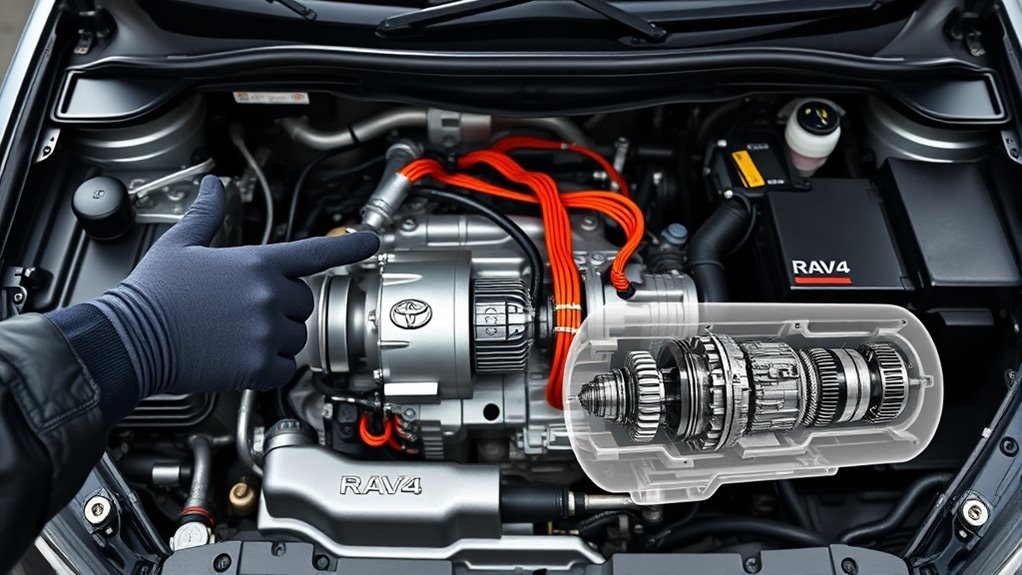
For routine dealer visits, the RAV4 Prime is not more expensive to maintain than the RAV4 Hybrid. Both powertrains share the identical 2.5-liter A25A-FXS four-cylinder engine architecture, electronic continuously variable transmission (e-CVT), electronic on-demand all-wheel-drive rear motor (e-Axle), and hydraulic braking hardware. Consequently, basic maintenance costs for oil, filters, rotations, and fluid checks remain nearly identical.
However, total long-term maintenance exposure diverges in two non-routine areas:
What Counts as Maintenance?
- Scheduled Factory Maintenance: Engine oil and filter replacements, tire rotations, cabin and engine air filters, brake inspections, hybrid cooling filter servicing, and coolant flushes listed in Toyota’s maintenance booklet. Costs are identical between both models.
- PHEV-Specific Operational Upkeep: Inspecting the charging port assembly, checking cable pins for arcing/corrosion, cleaning charge port moisture drain channels, and managing fuel freshness during prolonged EV driving.
- Unscheduled Out-of-Warranty Exposure: Replacement or repair of the 6.6 kW onboard AC charger, high-voltage charging harness, charge inlet temperature sensors, or the larger 18.1 kWh traction battery pack after warranty coverage concludes.
- Charging Infrastructure (Ownership Costs): Installation of a Level 2 240V dedicated home circuit, EVSE hardware, and residential electricity rates. These represent energy and infrastructure costs, not vehicle maintenance.
How Do You Make an Apples-to-Apples Cost Comparison?
To accurately compare true operating costs, evaluate each financial category independently rather than grouping fuel, electrical work, and dealer service into a single number.
| Cost Component | RAV4 Hybrid (HEV) | RAV4 Prime (PHEV) | Cost Impact Driver |
|---|---|---|---|
| Routine Scheduled Service (5 yr) | ~$1,200 – $1,800 total | ~$1,200 – $1,850 total | Parity under standard factory maintenance schedules |
| Home Charging Setup | $0 | $0 (Level 1) to $1,200 (Level 2 install) | Optional convenience investment for faster Level 2 charging |
| Brake Friction Wear (Pads/Rotors) | Low wear (60k–90k mi lifespan) | Very low wear (heavy regen utilization) | Requires regular slide-pin lubrication to prevent corrosion |
| Out-of-Warranty Repair Reserve | Standard hybrid powertrain reserve | Higher reserve (onboard charger & pack) | PHEV adds high-voltage charging components |
For a detailed breakdown of general factory intervals across all trim levels, consult the dedicated Toyota RAV4 maintenance schedule guide.
Do the Maintenance Intervals Differ?
Both the 2025 RAV4 Hybrid and 2024 RAV4 Prime manuals mandate 5,000-mile or 6-month service checkpoints. Each visit focuses on tire rotations, visual brake system inspections, wiper blade checks, fluid level adjustments, and cooling intake filter inspections.
Under normal highway and city driving, full synthetic engine oil and filter changes are scheduled at 10,000 miles or 12 months using SAE 0W-16 oil. However, Toyota shortens the oil service interval to 5,000 miles or 6 months under “Special Operating Conditions,” which include:
- Driving on dirt, gravel, or dusty roads.
- Towing a trailer, using a rooftop carrier, or hauling heavy vehicle loads.
- Repeated short trips under 5 miles in ambient temperatures below 32°F (0°C).
- Extensive idling, police/taxi duty, or low-speed door-to-door delivery driving.
Severe Operating Warning: Short cold-weather trips prevent the gasoline engine from reaching full operating temperature, which can lead to oil dilution from unburned fuel and water condensation. Change oil every 5,000 miles if your driving matches these conditions.
How Do the Battery Warranties Compare?
For 2020-and-newer U.S. Toyota electrified vehicles, the high-voltage traction battery is backed by a 10-year or 150,000-mile limited warranty from the original in-service date, whichever comes first. Key hybrid-system electronics—including the battery voltage sensor, hybrid control module, and inverter with converter—are covered under an 8-year or 100,000-mile warranty.
CARB State Extension: In California and states adhering to California Air Resources Board (CARB / Section 177) emissions rules (such as NY, MA, NJ, OR, WA, and others), qualifying Transitional Zero Emission Vehicles (TZEV) receive extended emissions and hybrid-component warranty coverage up to 15 years or 150,000 miles. Confirm warranty classification by reviewing the specific emissions booklet for your VIN.
How Should You Compare Service Costs?
All newly purchased Toyotas include ToyotaCare complimentary factory scheduled maintenance for 2 years or 25,000 miles, including 24/7 roadside assistance. This covers your 5k, 10k, 15k, 20k, and 25k scheduled dealer visits at zero out-of-pocket cost.
When transitioning to customer-pay maintenance after 25,000 miles, request itemized quotes from service providers. Always separate Toyota-required services (e.g., oil changes, brake inspections, tire rotations) from dealer-recommended add-ons (such as unneeded engine flushes, injector cleanings, or nitrogen tire packages) that inflate maintenance bills.
What Maintenance Do the RAV4 Hybrid and Prime Need?
Both models require standard mechanical servicing alongside hybrid-specific maintenance tasks. The checklist below outlines essential fifth-generation maintenance requirements.
[Products Worth Considering]

Rain-X WeatherBeater wiper blades are conventional replacement blades designed to meet or exceed OEM standards for quality, durability, and dependable performance. The pre-installed multi-adapter helps simplify installation on many vehicles, while the natural rubber squeegee and galvanized steel frame deliver a clean wipe, rust resistance, and long-lasting all-weather reliability.

This 3-piece intake manifold gasket set is designed to help restore a tight, reliable seal between the intake manifold and cylinder head. It is compatible with a range of Lexus and Toyota vehicles and is made from durable silicone for dependable performance under demanding engine conditions. The set is sized to match original specifications for a proper fit and is intended as a practical replacement for worn or damaged intake gaskets.

Compatible with Toyota RAV4 Hybrid 2025 2024 2023 2022 2021 2020 2019(Only Fit Hybrid)
Key Maintenance Tasks
| Maintenance Task | Factory Interval | Technical Rationale |
|---|---|---|
| Tire Rotation & Balance | 5,000 miles / 6 months | Mitigates uneven wear caused by instant electric motor torque and heavy curb weight. |
| Engine Oil & Filter Change | 10,000 miles / 12 months (0W-16) | Lubricates and protects the 2.5L Dynamic Force engine; 5,000 miles for severe service. |
| Brake Caliper & Pad Service | Inspect every 5,000 miles; clean/lube annually | Regenerative braking reduces pad wear, but lack of friction use can cause slide pins to seize in salted climates. |
| Cooling Intake Filter Cleaning | Inspect every 5,000 mi; clean at 20,000 mi | Maintains thermal management airflow across high-voltage electronics and battery modules. |
| e-CVT Transaxle Fluid Check | Inspect every 30,000 mi; drain/fill at 60k–100k mi | Toyota Genuine ATF WS protects internal planetary gears and motor-generator windings under heavy duty. |
| Engine & Inverter Coolant Flush | Engine: 100k mi; Inverter: 150k mi | Toyota Super Long Life Coolant (SLLC) prevents overheating in separate engine and inverter loops. |
What Battery, Filter, and PHEV-Specific Care Is Required?
Hybrid and plug-in powertrains utilize dedicated cooling filters to safeguard electrical components from dust and pet hair buildup:
- RAV4 Hybrid: Equipped with an HEV battery cooling intake filter located beneath the rear passenger seats. Toyota recommends visual inspection every 5,000 miles and cleaning at 20,000-mile intervals.
- RAV4 Prime: Equipped with a DC/DC converter air intake filter located under the rear seat bench, serving the high-capacity power electronics. Follows the identical 5,000-mile inspection and 20,000-mile cleaning rhythm.
For practical day-to-day charging strategies and state-of-charge management, refer to the site’s guide on how to maintain RAV4 Hybrid and Prime battery health.
PHEV Fuel Freshness & 12V Auxiliary Battery Care:
- Fuel Refresh Mode: If a RAV4 Prime is driven almost exclusively in EV mode, gasoline can oxidize and degrade inside the fuel tank. To prevent fuel varnish and fuel injector deposits, Toyota’s powertrain software will automatically run the internal combustion engine if fresh fuel has not been added (minimum ~5.3 gallons) over a 6- to 12-month window.
- 12V AGM Battery Maintenance: Both models use a 12-volt auxiliary battery to power vehicle computers and boot the high-voltage contactors. In the Prime, prolonged parking without charging or repeated very short trips can deplete the 12V battery. Keep terminals clean and verify resting voltage annually.
- Charge Port Maintenance: Periodically inspect the Prime’s J1772 charge inlet for debris, road grit, or moisture. Clean the perimeter rubber seal and ensure the spring-loaded door latches smoothly.
Pro Tip on Brakes: Because regenerative braking handles up to 80% of decelerations, friction pads can last over 80,000 miles. However, road salt and moisture can cause caliper slide pins and pad backing plates to bind. Have a mechanic perform an annual “brake service” (disassemble, clean, and lubricate slide pins) even if pad friction material is thick.
What Should You Check Before Buying a Used RAV4 Prime?
When purchasing a pre-owned RAV4 Prime or Hybrid, verify mechanical and high-voltage health using this diagnostic checklist:
- Service Records: Confirm consistent 5,000-mile rotations and 10,000-mile synthetic oil change intervals.
- Cooling Intake Filter History: Check whether the rear-seat HEV/DC-DC cooling filter was cleaned regularly; clogged filters cause thermal throttling of hybrid systems.
- High-Voltage Cable Inspection (Corrosion / “Cablegate”): Have a technician inspect the rear e-Axle high-voltage wiring harness connector under the rear chassis for corrosion or shielding degradation.
- Diagnostic System Scan: Perform an OBD-II scan with Toyota Techstream or a bidirectional scan tool to read hybrid-system trouble codes (DTCs), cell voltage delta, and inverter temperature history.
- Charge Port & Level 1 Cable: Inspect the charge inlet terminals for heat discoloration, pitting, or broken guide pins. Confirm the OEM 120V portable EVSE cable is present and undamaged.
- Unresolved Recalls: Check the 17-digit VIN on the official NHTSA database for outstanding safety recalls or customer service campaigns.
[Products Worth Considering]
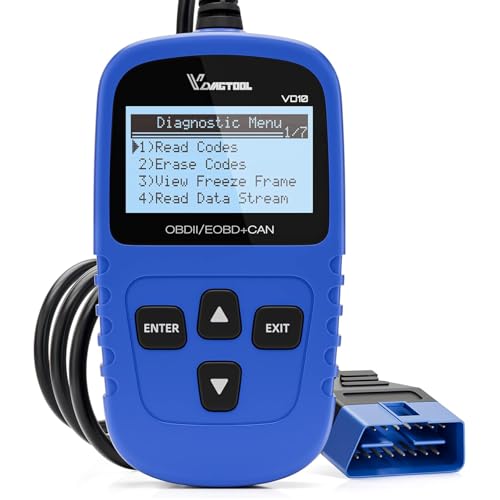
【A MUST-HAVE SCANNER TOOL FOR DIYERS】 - VDIAGTOOL VD10 car code reader is an incredibly useful, handheld obd2 scanner for each car owner or hobbyist, even for those with little to no experience when it comes to vehicle mechanics! Similar to a fixd car diagnostic tool, using this car diagnostic scanner is extremely easy. All you have to do is attach it to your car OBDII port and you can diagnose car problems in seconds! Read Codes (DTCs); Clear Codes; Live Data; View Freeze Frame; I/M Readiness; Vehicle Information.

Multi-Functions - Practical Multi-Functions OBD2 code reader features built-in OBD2 DTC lookup library, which help you to determine the cause of the engine light, read code, erase code, view freeze frame, I/M ready, vehicle information, data flow, real-time curve, get vehicle speed information, calculate load value, engine coolant temperature, get engine speed.

【Diagnose Check Engine Light in Seconds – No Mechanic Needed】The FOXWELL NT301 OBD2 scanner instantly reads & clears engine fault codes (DTCs) with one click. Simply plug into the 16-pin DLC port, turn ignition on, and get accurate results within seconds—No prior car knowledge required. Save hundreds on dealership fees by knowing exactly what’s wrong before you visit a shop. The #1 choice car scanner for DIYers and car owners who want to take control of their vehicle’s health
What Does the Maintenance Required Light Mean on a RAV4 Hybrid or Prime?
The “Maintenance Required” warning on the multi-information display (MID) is a straightforward, mileage-triggered reminder set to illuminate every 5,000 miles. It does not indicate a system failure, check-engine fault, or hybrid battery defect.
At 5,000 miles, the reminder signals tire rotation, fluid inspection, and filter checks. At 10,000 miles, it indicates scheduled engine oil and filter service. Reset the reminder via the steering wheel instrument cluster settings only after the physical service has been performed.
How Do You Keep a RAV4 Hybrid or Prime on Schedule?

Use this fifth-generation master maintenance schedule to track your service milestones across both models:
| Interval | Required Maintenance Actions | Powertrain-Specific Focus |
|---|---|---|
| 5,000 mi / 6 mo | Rotate tires, inspect brake pads/linings, check wiper blades, inspect fluid levels, inspect cooling filter. | Hybrid: HEV battery intake filter check. Prime: DC/DC converter intake filter check. |
| 10,000 mi / 12 mo | Replace engine oil and oil filter (0W-16 synthetic), rotate tires, perform full safety inspection. | Required on both vehicles regardless of pure EV mileage accumulated. |
| 20,000 mi / 24 mo | Repeat 5k service items; physically clean hybrid/DC-DC cooling air intake filter element. | Ensures optimal cooling airflow to prevent high-voltage power derating. |
| 30,000 mi / 36 mo | Replace engine air filter and cabin microfilter; inspect brake lines, rotors, steering linkage, suspension, and exhaust. | Inspect e-CVT transaxle and rear e-Axle fluid for signs of leakage. |
| 60,000 mi / 72 mo | Repeat 30k major service; inspect drive belts; service/lubricate brake caliper slider pins. | Prime: Inspect J1772 charge connector pins and charge-door release cable. |
| 100,000 mi / 120 mo | Replace engine coolant (Toyota SLLC); replace spark plugs (iridium-tipped); inspect e-CVT fluid. | Initial engine coolant service interval; inspect hybrid inverter coolant level. |
| 150,000 mi / 180 mo | Replace hybrid inverter coolant loop; flush and replace brake fluid; full chassis inspection. | Inverter cooling loop requires specialized bleed procedure via Toyota Techstream. |
Routine maintenance on Toyota hybrids is simple, but diligence is required: maintaining clean cooling filters and keeping brake slide pins lubricated prevents the vast majority of four-figure hybrid repair bills.
What Are the Owner’s Maintenance Responsibilities?
To preserve warranty protection and ensure long-term reliability, owners must uphold core maintenance practices:
- Document All Services: Retain itemized invoices from dealerships or certified independent repair facilities, noting the date, mileage, parts numbers, and oil viscosity.
- Adhere to Calendar Intervals: Never exceed 12 months between oil changes or 6 months between tire rotations, even if annual mileage is very low.
- Protect Cooling Vents: Keep rear-seat intake vents clear of cargo, child seats, blankets, and pet hair.
- Inspect High-Voltage Systems Annually: Have a qualified technician inspect bright orange high-voltage wiring harnesses and inverter cooling lines for chafing or leaks.
- Address Warning Indicators Immediately: Never clear dashboard hybrid warnings or charging fault codes without reading and diagnosing active freeze-frame DTCs.
How Do Maintenance Records Affect Resale Value?
Documented maintenance records significantly bolster resale value in the secondary hybrid market. Buyers actively look for verified cooling filter cleanings, timely synthetic oil changes, and documented hybrid health check reports. For the RAV4 Prime, keeping the original OEM Level 1 charging cord and documentation of any battery or charging software updates establishes vehicle provenance and commands top-tier trade-in valuation.
Frequently Asked Questions
Is the RAV4 Prime expensive to maintain?
No. Scheduled factory maintenance costs for the RAV4 Prime are virtually identical to the RAV4 Hybrid, averaging $350–$650 annually after complimentary ToyotaCare expires. Both use the same 2.5L engine, fluids, and routine service cadence. Out-of-warranty repair costs can be higher if unique plug-in components (such as the onboard charger) fail.
Are RAV4 Hybrids expensive to maintain?
The RAV4 Hybrid is among the least expensive compact SUVs to maintain in its segment. It utilizes a reliable e-CVT with no mechanical belts or starter motors to wear out, and regenerative braking substantially extends brake pad life.
Does the 2026 RAV4 Plug-in Hybrid use the same maintenance schedule?
While fundamental intervals (5,000-mile rotations, 10,000-mile oil changes) remain similar, the redesigned 2026 generation introduces revised powertrain components, updated fluid specs, and available DC fast-charging systems. Always follow the model-year-specific 2026 Toyota Warranty & Maintenance Guide.
How often does a RAV4 Hybrid or Prime need an oil change?
Under normal operating conditions, both vehicles require an oil and filter replacement every 10,000 miles or 12 months using SAE 0W-16 full synthetic oil. For severe operating conditions (short trips below freezing, dusty roads, towing), change oil every 5,000 miles or 6 months.
Does EV-mode driving eliminate engine maintenance on a Prime?
No. Even if you drive almost entirely on electricity, Toyota requires oil and filter changes at least once every 12 months. In addition, the vehicle will automatically initiate Fuel Refresh Mode to cycle fresh fuel through the engine if old gasoline sits in the tank for over 6 to 12 months.
How long is the RAV4 hybrid battery warranty?
For 2020-and-newer U.S. models, the high-voltage hybrid traction battery is warranted for 10 years or 150,000 miles, whichever comes first. Key hybrid-system electronics are covered for 8 years or 100,000 miles (extended up to 15 years/150,000 miles in CARB/TZEV states).
Do I have to service my RAV4 at a Toyota dealer?
No. Any ASE-certified independent mechanic can perform scheduled maintenance without voiding your warranty, provided they use correct fluid grades (e.g., 0W-16 oil, Toyota SLLC coolant) and keep detailed records. Dealer visits are recommended for warranty repairs, software updates, and high-voltage diagnostics.
Which is cheaper to own long term: RAV4 Hybrid or RAV4 Prime?
The RAV4 Hybrid is cheaper to purchase and has fewer complex plug-in components to service long term. However, if you have low residential electricity rates and maximize daily 42-mile EV driving, the Prime can offset its higher purchase price through substantial fuel savings.
Does a RAV4 Prime require a dedicated 240V home charger?
No. The RAV4 Prime includes a portable 120V Level 1 charging cord that plugs into a standard household outlet, fully recharging the battery overnight in roughly 12 hours. A 240V Level 2 charger reduces recharge time to approximately 2.5 to 4.5 hours but is entirely optional.
Do regenerative brakes eliminate brake maintenance?
No. While regenerative braking dramatically reduces pad friction wear (pads often last 70,000–100,000 miles), light brake usage makes caliper slide pins and hardware susceptible to rust and seizing in winter climates. Annual brake cleaning and pin lubrication are strongly recommended.
Conclusion
For routine scheduled factory service, the RAV4 Hybrid and RAV4 Prime share identical maintenance costs. Both rely on 5,000-mile rotations and inspections, 10,000-mile full-synthetic oil changes, and shared 2.5-liter Dynamic Force engine architectures. Neither model requires excessive routine dealer expenditures during the initial 5 to 10 years of ownership.
The decision ultimately hinges on your daily driving patterns and infrastructure access. Choose the RAV4 Hybrid for simple, zero-charging ownership with lower long-term electronic component risk. Choose the RAV4 Prime / Plug-in Hybrid if you can charge daily to maximize electric commuting, offsetting the vehicle’s higher initial purchase price and potential post-warranty repair exposure with substantial fuel savings.
Sources
- Toyota: 2026 RAV4 — current-generation RAV4 information
- Toyota: 2026 RAV4 Plug-in Hybrid — current horsepower, electric-range, and model information
- Toyota 2025 RAV4 Hybrid Warranty & Maintenance Guide — service intervals, severe-use requirements, and HEV battery cooling intake filter care
- Toyota 2024 RAV4 Prime Warranty & Maintenance Guide — Prime service intervals and DC/DC converter air intake filter care
- Toyota Hybrid Battery Warranty — hybrid battery and electrified-component coverage information
- Toyota Manuals and Warranties — model-specific manuals and warranty coverage
- Toyota Maintenance Plans — current ToyotaCare maintenance coverage information
- Toyota USA Newsroom: 2025 RAV4 Plug-in Hybrid — change from the Prime name to RAV4 Plug-in Hybrid
- Toyota USA Newsroom: 2026 RAV4 — redesigned plug-in system, onboard-charger differences, and selected-grade DC fast charging