
By Merrick Vaughn · Last updated: July 31, 2026
Method: This guide was checked against Toyota owner-manual guidance, current RAV4 power-door-lock service information, Toyota recall resources, and NHTSA recall guidance. Fuse labels, connector terminals, trim-removal steps, Smart Key behavior, and lock-assembly designs vary by model year, market, trim, and door position. Use the owner’s manual and Toyota service information for your exact vehicle.
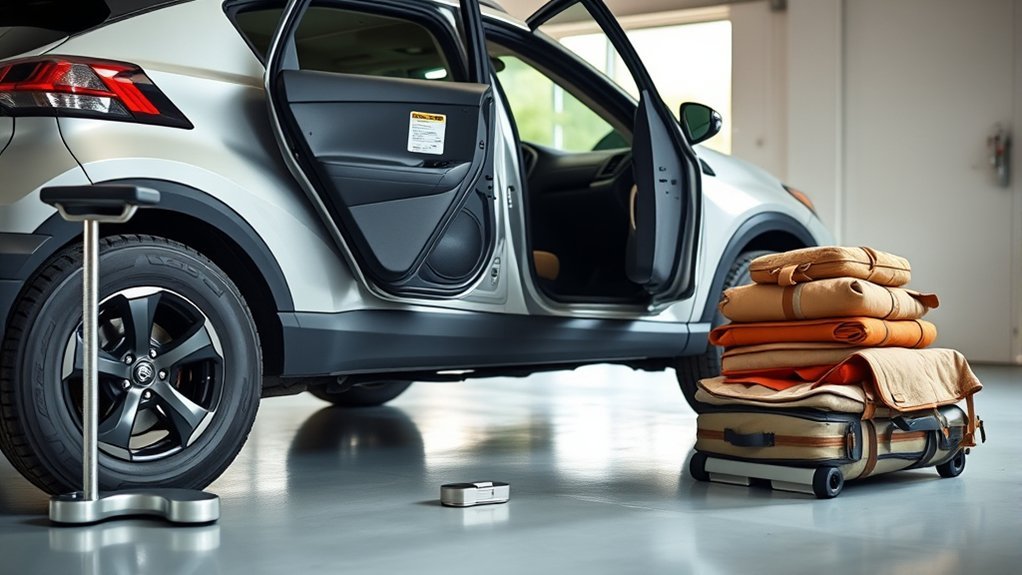
If your RAV4 door won’t lock or unlock, first determine whether the fault affects the remote only, every door, or one door. If the interior lock switch works but the remote does not, check the key-fob battery, spare fob, interference, and key registration. If every door fails from every control, check the vehicle’s 12-volt battery, the correct fuse, power and ground circuits, the master switch, and the main body ECU. If only one door fails, inspect that door’s actuator or latch assembly, linkage, connector, and door-jamb wiring.
Quick Answer
Start with the control comparison, not part replacement. Test the key fob, exterior Smart Key sensor if equipped, interior master switch, manual lock button, and mechanical key where applicable. A remote-only failure points toward the fob or keyless-entry system. An all-door failure points toward the vehicle’s 12-volt supply, a fuse, shared wiring, a switch input, or the main body ECU. A one-door failure points toward that door’s actuator or latch assembly, linkage, connector, or flexing door-jamb wiring.
What Does Your RAV4 Door-Lock Symptom Usually Mean?
| Symptom | Check First | Likely Fault Area |
|---|---|---|
| Fob fails, but the interior switch works | Fob battery, spare fob, interference, damaged buttons, key registration | Key fob or wireless-entry system |
| Every door fails from the fob and interior switches | Vehicle 12-volt battery, correct fuse, shared power and ground, switch inputs | System-level electrical fault or main body ECU path |
| Only one door fails | Listen for movement, test manual operation, inspect the connector and door-jamb harness | Local actuator, latch, linkage, connector, or wiring |
| The lock moves, but the door will not open or close normally | Latch binding, rods, clips, handle cables, striker alignment, rear child lock | Mechanical latch or linkage problem |
| The RAV4 beeps but refuses to lock | Open door or liftgate, key detected inside, power mode, wet handle sensor, gloves | Smart Key operating condition or latch-position input |
What’s in This Article
- Quick Fix: How to Check Why Your RAV4 Door Won’t Lock or Unlock
- Before You Begin: Safety, Tools, and Limits
- Check Easy Fixes First: Fuses, Door Switches, and the Key Fob
- Is It All Doors or One Door? Test Central Locking vs. a Single Actuator
- Remove the Door Card and Inspect the Lock Parts
- How to Test and Replace a Faulty Door Actuator or Lock Motor
- Check Wiring, Fuses, Relays, and Body ECU Signals
- When to Call a Pro, Warranty Steps, and Next Actions
- Frequently Asked Questions
Key Takeaways
- Compare the fob, interior switch, manual lock, and mechanical key before replacing parts.
- Check the vehicle’s 12-volt battery when several electrical functions fail together.
- One failed door usually needs local actuator, latch, linkage, connector, and wiring checks.
- Do not assume the RAV4 has a removable door-lock relay; use model-year-specific service information.
- Do not drive if the door cannot latch and remain securely closed.
Quick Fix: How to Check Why Your RAV4 Door Won’t Lock or Unlock
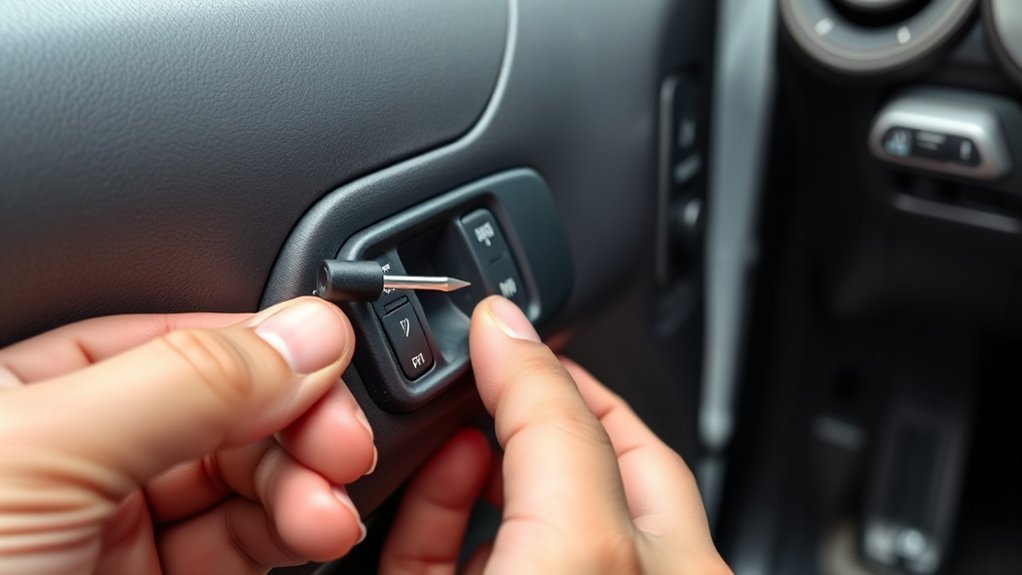
Use the following order to separate a simple operating condition from an electrical or mechanical failure:
- Close every door and the liftgate fully. Confirm that no door-open warning remains on the display.
- Compare every control. Try the fob, exterior handle sensor if equipped, interior master switch, manual lock button, and mechanical key where applicable.
- Count the affected doors. One failed door points toward a local fault. Every door failing together points toward a shared power, input, wiring, or control problem.
- Listen and feel. Clicking, buzzing, partial movement, or a stiff manual lock helps separate an electrical command problem from a binding latch or weak actuator.
- Check power before parts. Inspect the vehicle’s 12-volt battery condition and the correct fuse before removing a door panel.
If the manual lock is stiff, stops partway, or requires unusual force, inspect the latch, linkage, rods, clips, handle cables, door alignment, and striker before testing the actuator motor. If the manual mechanism moves normally but one door ignores every electrical command, the local actuator or its circuit becomes more likely.
Before You Begin: Safety, Tools, and Limits
Work on the door-lock system with the RAV4 on a level surface and the ignition or power switch off. Keep the window closed unless the exact repair procedure says otherwise. Useful tools can include plastic trim tools, a flashlight, a digital multimeter, a fuse puller, and the owner’s manual.
Do not drive with an unsafe latch: If the door will not latch, can open without the normal handle action, or cannot be confirmed securely closed, stop using the vehicle and arrange professional assistance or towing.
Disconnecting the negative battery terminal may be required before unplugging or removing certain components. Follow the service procedure for your exact model year, including any specified waiting period and initialization steps. Do not disconnect the battery during a live-voltage test.
Do not probe random wires, pierce insulation unnecessarily, bypass a fuse, or install a higher-rated fuse. Do not apply battery voltage to unidentified actuator terminals. A higher-rated fuse can allow a short circuit to overheat the harness.
If a replacement fuse blows again, stop. The circuit may have damaged wiring, water intrusion, a shorted component, or an internal control fault that requires a wiring diagram and professional diagnosis.
Check Easy Fixes First: Fuses, Door Switches, and the Key Fob
Before removing trim, rule out conditions that can affect several locks at once. Check door closure, Smart Key operating conditions, the key fob, the vehicle’s 12-volt battery, and the correct fuse for your exact RAV4.
[Products Worth Considering]

This trailer tongue hitch coupler lock helps secure latch-type couplers and deter theft with a padlock-style design. Its high-strength construction, corrosion-resistant finish, and simple locking action make it a practical choice for trailer owners who want dependable protection and easy everyday use. Two keys are included for added convenience.
This electric oil extractor pump makes DIY oil changes cleaner and easier by removing old fluid through the dipstick tube, eliminating the need to crawl under the vehicle or deal with messy drain plugs. It is designed for synthetic oil changes and fluid maintenance across cars, motorcycles, lawn mowers, boats, and Jet Skis, while its pure copper motor delivers stable suction and dependable performance. Built for efficient topside oil changes, it supports multiple fluid types and offers continuous operation for longer service tasks.

Bosch 6029C HEPA cabin air filter is designed to help keep your vehicle’s passenger compartment filled with clean, fresh, odor-free air. Its dense HEPA media and electrostatic layer are engineered to capture fine particles while the added cotton layer supports higher filtration capacity. Built with structural ribs for stability, it helps maintain filter shape and airflow performance over time.
Why Does My RAV4 Beep but Not Lock?
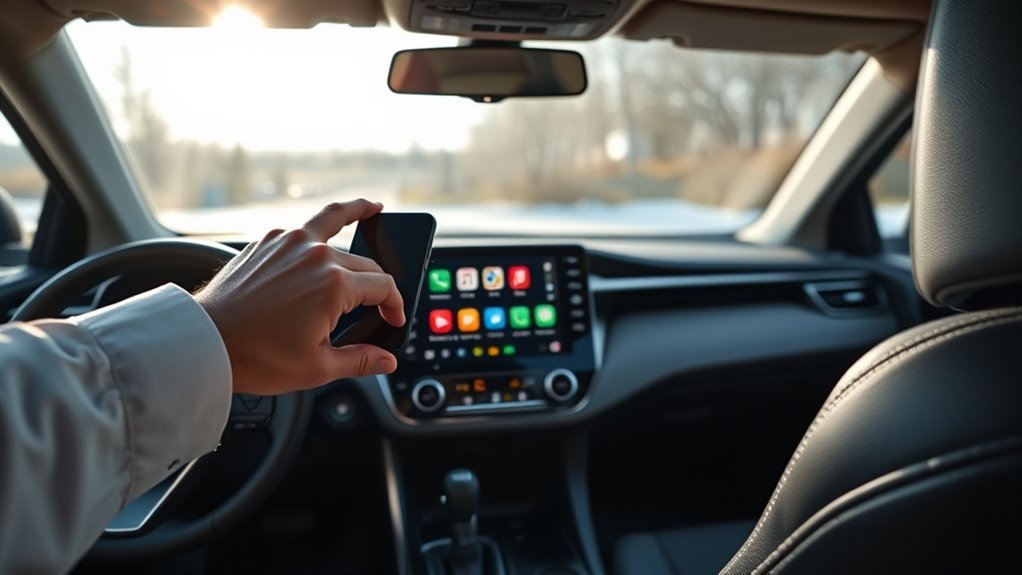
On Smart Key-equipped RAV4 models, an exterior locking request may be rejected when a door or the liftgate is not fully closed, the electronic key is detected inside, or the ignition or power mode is not off. A wet exterior handle sensor, gloves, radio interference, or an unusual key position can also affect entry-sensor operation.
Close every opening firmly, switch the vehicle fully off, remove the key from the cabin, and try the fob button instead of the handle sensor. If the fob works but the handle sensor does not, clean and dry the sensor area and test another Smart Key-equipped door.
Replace the Key Fob Battery
Check the key fob battery when the remote has weak range, requires repeated presses, or fails while the interior lock switch still works. Open the housing carefully and use the battery type and polarity shown in the owner’s manual for that key.
Test the spare fob when available. If the spare works, the primary fob may have a depleted battery, damaged buttons, failed internal contacts, or another fob-specific fault. If both fobs fail but the interior switch works, the vehicle may need wireless-receiver, antenna, key-registration, or body-control diagnosis.
Check the Vehicle’s 12-Volt Battery
Check the RAV4’s 12-volt battery when several electrical systems behave abnormally, cabin lights appear weak, the vehicle has recently needed a jump-start, or every powered lock stops working together. A discharged vehicle battery can prevent Smart Key and powered locking functions from operating normally.
Use an appropriate battery test rather than assuming that a recently driven vehicle has a healthy battery. Correct a low-voltage problem before diagnosing individual actuators or body-ECU outputs.
Check the Correct Fuse
There is no single fuse name or location that applies to every RAV4 generation. Use the owner’s manual, fuse-box lid, or VIN-specific wiring information to identify circuits associated with the body ECU, door locks, Smart Key system, or related power supply.
Inspect the identified fuse and confirm continuity with a meter when possible. Replace a blown fuse only with the same type and amperage rating shown for that position. If the replacement opens again, stop replacing fuses and diagnose the short.
Check the Manual Lock and Rear Child Safety Lock
Operate the inside lock button or lever by hand. Normal, full travel suggests that the basic linkage is free. Stiffness, incomplete movement, or spring-back points toward a binding latch, bent linkage, detached clip, contamination, or alignment problem.
If a rear door opens from outside but not from inside, inspect the rear child safety lock before removing the trim panel. The child lock disables the interior release; it does not normally mean that the powered lock actuator has failed.
Is It All Doors or One Door? Test Central Locking vs. a Single Actuator
If every door fails from every control, diagnose the shared system first. Check the vehicle’s 12-volt supply, the correct fuse, shared power and ground paths, the driver’s master-switch input, and the main body ECU’s door-lock data and outputs.
If the remote fails but the interior switch works, focus on the wireless side. Test the spare fob, replace the correct fob battery, move away from possible radio interference, and determine whether the exterior Smart Key sensors behave differently from the fob buttons.
If only one door fails, focus on that door. Operate the lock while listening near the latch. A short buzz, weak click, grinding sound, delayed travel, or movement that stops halfway can indicate a weak actuator or binding latch. No sound can indicate a failed actuator, but it can also mean that the electrical command is not reaching the door.
Inspect the connector and the wiring where the harness flexes between the door and body. A loose terminal, corrosion, water intrusion, or a broken conductor can produce the same symptom as a failed motor.
Remove the Door Card and Inspect the Lock Parts
Remove the door card or trim panel only after the external checks point toward a local door fault. Use the trim-removal procedure for the exact model year and door. Fastener locations, clips, switch connectors, handle cables, and water-shield designs vary.
Keep screws and clips organized. Support the panel while disconnecting switches and cables, and do not pull against attached wiring. Avoid tearing or cutting the water shield because it helps keep water away from interior trim and electrical connectors.
Inspect the actuator or latch assembly, rods, clips, cables, connector, harness, drain area, water shield, and nearby window components. Look for cracked housings, detached linkage, bent clips, corrosion, water tracks, chafed insulation, pinched wires, and debris that blocks movement.
Operate the manual lock gently while watching the linkage. The motion should reach the latch without a rod flexing, a clip opening, or a cable housing moving out of position. Do not place fingers near powered linkage during a live test.
How to Test and Replace a Faulty Door Actuator or Lock Motor
[Products Worth Considering]

Rain-X Repellency Water Repellent Wiper Blades help improve visibility by clearing your windshield while applying a water-repellent formula that makes rain, sleet, and snow bead and slide away. Built with beam blade technology for a smooth, streak-free wipe, they offer all-weather performance and a universal adapter for easy installation on most vehicles.

These emergency Mylar thermal space blankets are designed to help retain body heat and support survival in cold or unexpected situations. Lightweight and compact, they fit easily into backpacks, cars, bug out bags, and emergency kits for camping, hiking, and disaster preparedness. Their durable, reusable construction makes them a practical choice for long-term emergency readiness.

[Compatible with Toyota models] : 4Runner 2010-2019 | Camry 2007-2017 | Corolla 2009-2013 | Corolla iM 2017-2018 | Highlander 2008-2013 | Land Cruiser 2008-2019 | Matrix 2009-2014 | Prius C 2012 | Prius V 2012-2014 | RAV4 2006-2018 | Sequoia 2008-2019 | Sienna 2011-2014 | Tundra 2007-2019 | Venza 2009-2016.
Confirm the Actuator or Latch Fault
On many RAV4 generations, the electric lock actuator is part of, or closely integrated with, the door-latch assembly. Confirm the exact component design before ordering a replacement.
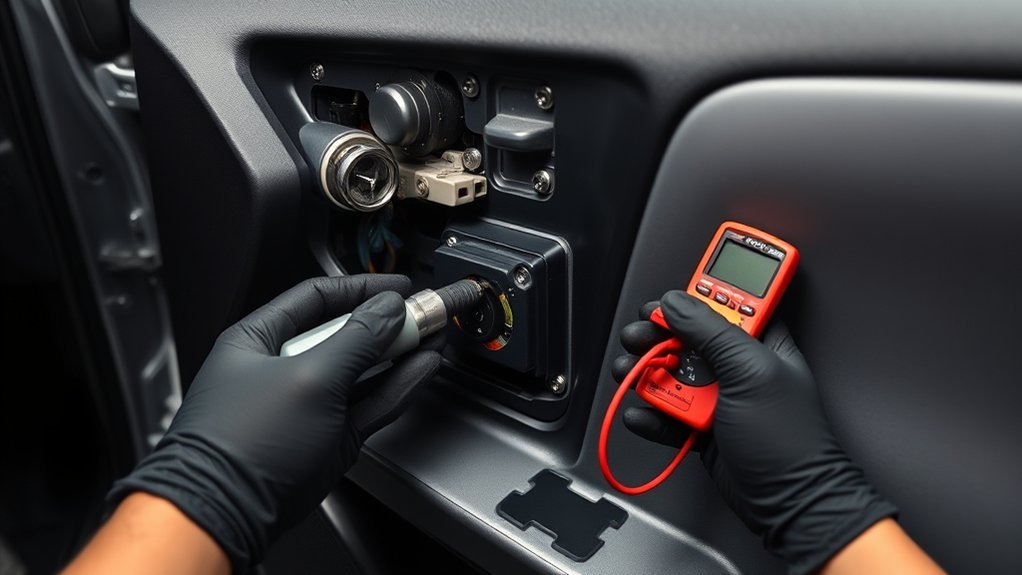
Use the wiring diagram for the exact model year, market, Smart Key configuration, and door position. Back-probe only the identified motor circuit while commanding both lock and unlock. The output may be a brief pulse and may reverse polarity between the two commands, so a slow meter or an incorrect ground reference can produce a misleading result.
If the specified electrical command reaches the assembly, the connector remains stable, the linkage is not bound, and the lock does not move correctly, the actuator or latch assembly is suspect. If the command does not reach the assembly, continue testing the harness, connectors, switch inputs, shared power and ground, and main body ECU path.
Do not apply battery voltage directly to unidentified terminals. The assembly may contain position switches or other circuits in addition to the motor.
Replace the Assembly Only After Confirmation
Before ordering, match the replacement by VIN, model year, build configuration, door position, side, and part number. Front-left, front-right, rear-left, rear-right, and liftgate components are not automatically interchangeable.
Follow the model-specific repair procedure to disconnect the battery when required, remove the trim panel, release the handle cable or rods, unplug the connector, and remove the latch or actuator assembly. Do not force plastic clips or handle-linkage retainers.
After installation, confirm that the door latches mechanically before closing it fully. Then test the manual lock, inside handle, outside handle, fob, interior master switch, exterior Smart Key sensor if equipped, door-ajar display, and rear child safety lock where applicable.
Check Wiring, Fuses, Relays, and Body ECU Signals
If the local actuator or latch passes its checks, diagnose the electrical path with the correct wiring diagram. Inspect the door harness for chafing, pinched insulation, broken strands, loose terminals, and corrosion. Pay close attention to the rubber door-to-body grommet because the conductors flex whenever the door opens.
Do not assume the RAV4 has a removable door-lock relay. On many model years, the main body ECU receives the lock-switch request and controls the door-lock outputs. The applicable fuse names, junction-block arrangement, ECU terminals, and test values depend on the vehicle configuration.
A basic engine-code reader may not access the necessary body-control data. Use a Toyota-compatible, body-capable scan tool or Techstream-class diagnostic system when the procedure calls for body-ECU trouble codes, Data List values, or Active Tests.
| Test Area | What to Check | What the Result Suggests |
|---|---|---|
| Door-jamb harness | Broken conductors, chafing, loose terminals, corrosion | Intermittent or door-specific circuit fault |
| Fuse and power supply | Correct fuse, continuity, battery condition, power and ground | Shared all-door failure when supply is missing |
| Switch Data List | Whether the body ECU sees lock and unlock requests | Switch, input wiring, or ECU-input fault when the value does not change |
| Active Test | Whether a scan-tool command operates the locks | Separates input problems from output, harness, and motor problems |
| Actuator connector | Specified brief lock and unlock output at identified terminals | Local assembly fault if the command is correct but movement fails |
[Products Worth Considering]

【Lexus Fitment】Compatible with Lexus models including CT200h (2011-2016), ES300h (2013-2016), ES350 (2007-2016), GS350 (2013-2015), GS450h (2013-2015), GX460 (2010-2016), HS250h (2010-2012), IS250 Convertible (2010-2015), IS350 Convertible (2010-2015), LS460 (2007-2012), LX570 (2008-2016), RX350 (2009-2015), and RX450h (2009-2015).

【OEM DESIGN】This power door actuator is manufactured to the OE specification to provide factory-fresh appearance and direct-fit, that enables proper door locking function. OE connector helps ensure a solid, positive connection
When to Call a Pro, Warranty Steps, and Next Actions
Call a qualified technician when a fuse opens repeatedly, several doors fail from every control, the problem is intermittent, water has reached connectors, or the diagnosis requires body-ECU Data List, Active Test, CAN communication, or model-specific connector measurements.
Arrange immediate help when a door will not latch, cannot be opened normally, traps an occupant, or may open while driving. A door that merely requires manual locking may still create a security and emergency-access risk, even when the vehicle remains mechanically drivable.
Review the warranty and maintenance guide for the vehicle’s model year and original in-service date. Coverage depends on the VIN, mileage, region, repair history, failed component, and warranty terms. Confirm the part number and coverage before authorizing replacement.
Check both Toyota’s and NHTSA’s VIN tools. Toyota’s U.S. lookup includes applicable open safety recalls and service campaigns released since 1999 for Toyota, Lexus, and Scion vehicles intended for sale or sold in the listed markets. NHTSA’s VIN lookup identifies unrepaired safety recalls. Do not assume that a door-lock symptom is covered unless the result lists an open campaign for that VIN.
Documentation tip: Record which controls failed, which doors were affected, warning beeps or messages, weather conditions, battery condition, scan results, measured circuit results, part numbers, and repair outcomes.
Ask for a written estimate that identifies the confirmed fault, recommended part, labor operation, part number, and warranty status. If the problem returns, provide the earlier diagnosis and repair records when requesting a retest.
Frequently Asked Questions
Why Does My RAV4 Beep but Not Lock the Doors?
On Smart Key-equipped models, the RAV4 may reject an exterior lock request when a door or the liftgate is open, the electronic key is detected inside, or the ignition or power mode is not off. A wet handle sensor, gloves, radio interference, or a latch-position problem can also affect operation. Close every opening, switch the vehicle fully off, remove the key from the cabin, and try the fob button.
How Do I Know if My RAV4 Door-Lock Actuator Is Bad?
A failed actuator is more likely when one door does not respond, the other doors work, the manual linkage moves normally, and the correct lock and unlock commands reach that door’s assembly. Buzzing, grinding, weak movement, or intermittent operation also supports an actuator or latch fault. Wiring and connector problems must be ruled out before replacement.
Can a Weak 12-Volt Battery Stop the RAV4 Door Locks?
Yes. A discharged or severely weak vehicle battery can prevent Smart Key and powered lock functions from operating normally. Check the 12-volt battery when every door fails together or other electrical systems also behave abnormally.
Which Fuse Controls the RAV4 Door Locks?
The fuse name and location vary by model year, market, trim, and Smart Key configuration. Use the owner’s manual, fuse-box diagram, or VIN-specific wiring information. Replace a blown fuse only with the specified type and amperage, and stop if the replacement blows again.
Why Will a Rear RAV4 Door Open Outside but Not Inside?
Check the rear child safety lock first. When engaged, it prevents the inside handle from opening the rear door even though the outside handle may still work. If the child lock is off, inspect the inside-handle cable, linkage, clips, and latch.
Can Water Inside the Door Cause Intermittent Locking?
Yes. Water can corrode connector terminals, damage wiring, affect the actuator or latch assembly, and contaminate moving parts. Inspect the water shield, drain openings, seals, connector pins, and harness before replacing the actuator.
Is It Safe to Drive a RAV4 With a Bad Door Lock?
Do not drive if the door will not latch and remain securely closed. If the door latches normally but only the powered locking function has failed, the vehicle may remain mechanically drivable, but the fault creates security and emergency-access concerns. Arrange repair promptly and verify that the door can be operated manually.
Safety Disclaimer: This article is for informational purposes only and does not replace the Toyota repair manual or professional vehicle diagnosis. Use VIN-specific service information before testing electrical circuits or removing latches, wiring, trim, or safety-related components.
Conclusion
A RAV4 door-lock problem should be diagnosed by comparing controls and counting affected doors. A remote-only failure points toward the fob or wireless-entry system. An all-door failure points toward the vehicle’s 12-volt battery, a fuse, shared wiring, switch inputs, or the main body ECU. A one-door failure points toward the local actuator or latch assembly, linkage, connector, or door-jamb harness.
Do not order an actuator until the manual mechanism moves normally and the correct electrical command has been confirmed. Stop driving if the door cannot latch securely, and use a qualified technician when the fault involves repeated fuse failure, body-ECU testing, CAN communication, or unidentified wiring.
References
- 2025 Toyota RAV4 owner’s manual and warranty resources, Toyota Owners, accessed July 31, 2026
- 2019 RAV4 Smart Key system operation and warning conditions, Toyota Owners, accessed July 31, 2026
- 2023 RAV4 Hybrid checking and replacing fuses, Toyota Owners, accessed July 31, 2026
- 2024 RAV4 Hybrid guidance for a discharged 12-volt battery, Toyota Owners, accessed July 31, 2026
- Toyota Technical Information System, Toyota, accessed July 31, 2026
- Toyota Safety Recalls and Service Campaigns lookup, Toyota, accessed July 31, 2026
- Vehicle recall lookup, National Highway Traffic Safety Administration, accessed July 31, 2026

[…] one Toyota RAV4 door won’t lock or unlock from the key fob or power-lock switch while the other doors respond, the most likely fault is […]