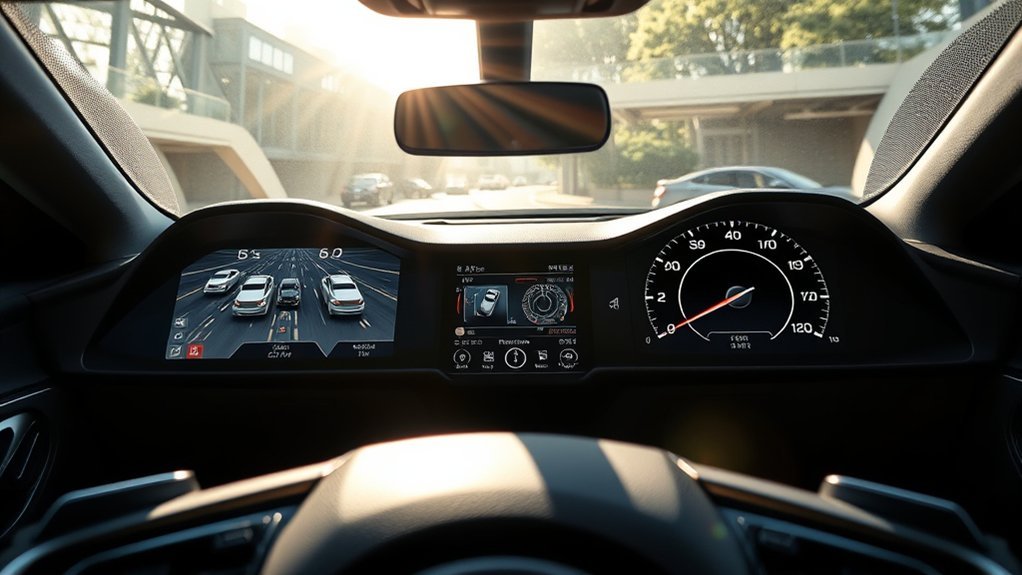
Radar cruise control automatically adjusts your speed based on traffic, maintaining safe following distances to enhance safety. In contrast, standard cruise control keeps a fixed speed, requiring your constant attention and manual braking in changing conditions. While standard is great for highways, radar cruise shines in varied traffic, reducing fatigue and collision risk. Understanding these differences can help you choose the right system for your needs, and there’s plenty more to explore about the future of cruise control technology.
Why Cruise Control Matters for Safe Driving
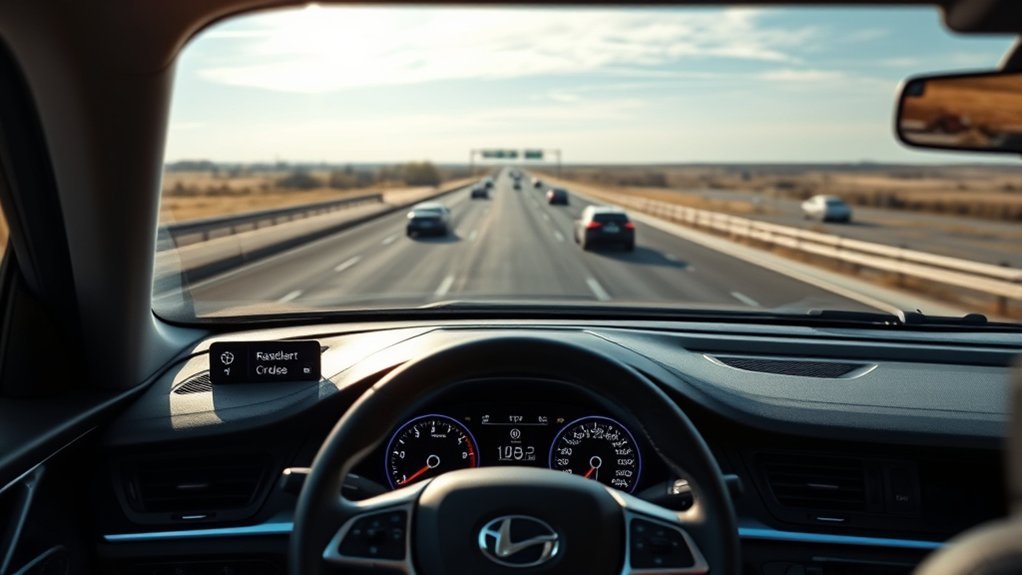
When you’re cruising down the highway, using cruise control can transform your driving experience and enhance safety. This technology, especially adaptive cruise control, greatly reduces driver fatigue during long trips by maintaining a constant speed without needing constant accelerator input. By automatically adjusting speed to match traffic conditions, it plays an essential role in accident prevention, reducing the risk of collisions due to sudden braking or acceleration.
Maintaining a steady speed not only improves fuel efficiency but also allows you to focus more on the road. The radar and camera systems monitor traffic ahead, making timely adjustments that contribute to safer driving. However, it’s vital to stay alert; driver awareness is key. Cruise control isn’t a substitute for attentive driving, particularly in adverse weather or complex environments. Embracing this technology can lead to a more liberated and enjoyable driving experience, but it requires your vigilance.
Understanding Standard Cruise Control Features
Standard cruise control lets you set and maintain your desired speed on long drives, freeing your foot from the accelerator. You can activate it with a simple button press once you reach your target speed, and deactivating it is as easy as tapping the brake. While it enhances comfort, it’s essential to stay alert, especially in changing traffic conditions.
Basic Functionality Overview
Cruise control is designed to enhance your driving experience by maintaining a consistent speed, allowing you to relax on long highway journeys. By taking over throttle management, it frees your foot from the accelerator pedal, making driving less tiresome. You’ll appreciate the cruise control benefits, particularly on open highways where conditions are stable and predictable. Once set, it helps you avoid unnecessary speed fluctuations, optimizing fuel efficiency and reducing your overall consumption. Activating the system is straightforward, usually involving just a button or switch, while deactivation is as simple as tapping the brake. Embracing this technology not only enhances comfort but encourages a more liberated driving experience, enabling you to focus on the road ahead.
Activation and Deactivation Methods
Activating standard cruise control is a straightforward process that lets you set a desired speed with a simple push of a button or a pull of a lever. Once engaged, the system takes over throttle control, maintaining a constant speed, which is perfect for long highway drives. You’ll appreciate the liberation from constant speed adjustments, reducing fatigue during extended journeys.
To deactivate standard cruise control, you can use a couple of easy deactivation methods: simply tap the brake pedal, or turn off the system with a dedicated button. Remember, while the system enhances comfort, you must stay attentive, as it won’t adjust for changes in traffic or road conditions. Your focus is essential for safe driving.
What Is Adaptive Cruise Control and How Does It Work?
Adaptive Cruise Control (ACC) takes standard cruise control to the next level by automatically adjusting your speed based on the traffic around you. Using radar and cameras, it monitors the road to maintain a safe distance from other vehicles, even slowing down and speeding up as needed. This innovative system not only enhances your driving experience but also boosts safety in varying traffic conditions.
Key Features Explained
Imagine a driving experience where you hardly need to touch the accelerator. Adaptive cruise control transforms your journey, making it smoother and safer. Here are three key features that set it apart:
- Adaptive Speed Adjustment: This system automatically alters your speed based on the distance and speed of the car in front, ensuring you maintain a safe following distance.
- Radar Technology Insights: Utilizing radar and sensors, it detects the speed and position of vehicles ahead, allowing for quick, responsive adjustments to your speed.
- Lane and Sign Recognition: Cameras work alongside radar, identifying lane markings and road signs, enhancing navigation in complex environments.
With these features, adaptive cruise control liberates you from constant speed adjustments, offering a seamless driving experience on highways.
Operating Mechanism Overview
Understanding how adaptive cruise control (ACC) functions enhances your appreciation of its benefits. ACC employs radar technology and vehicle sensors to monitor the distance and speed of cars ahead. The radar emits signals that bounce off nearby objects, allowing real-time speed adjustments to maintain a safe following distance.
| Feature | Functionality | Benefit |
|---|---|---|
| Radar Technology | Monitors distance and speed | Enhances safety |
| Vehicle Sensors | Detects lane markings and signs | Improves awareness |
| Automatic Resumption | Returns to preset speed | Increases highway convenience |
While ACC reduces driver fatigue and improves comfort, you must remain alert, ready to take manual control when necessary. Embrace the freedom it offers while staying engaged.
Key Differences Between Standard and Adaptive Cruise Control
When comparing standard cruise control and adaptive cruise control, you’ll notice several key differences that significantly impact your driving experience. Here are three essential distinctions:
- Speed Management: Standard cruise control maintains a fixed speed, while adaptive cruise control uses adaptive technology to adjust your speed based on the distance to the vehicle ahead.
- Traffic Response: Adaptive cruise control employs radar and camera technology to monitor traffic flow, automatically decreasing your speed when necessary. In contrast, standard cruise control requires you to manually brake.
- Driving Environment: Standard cruise control excels on long, open highways, whereas adaptive cruise control is ideal for varying traffic conditions, offering substantial safety enhancements.
With adaptive cruise control, you’ll enjoy reduced fatigue and enhanced focus, as the system handles speed adjustments in moderate traffic. This liberation from constant speed management makes your driving experience more relaxed and enjoyable.
Advantages of Adaptive Cruise Control for Highway Driving
Adaptive cruise control offers significant advantages for highway driving, especially as it automatically adjusts your speed to maintain a safe following distance. This feature enhances safety benefits by reducing the risk of collisions due to sudden speed changes. Plus, it minimizes the need for constant braking and acceleration, which can help reduce driver fatigue on long trips.
| Feature | Adaptive Cruise Control |
|---|---|
| Speed Adjustment | Automatic |
| Following Distance | Maintained |
| Fuel Efficiency Improvement | Yes |
Limitations of Standard Cruise Control
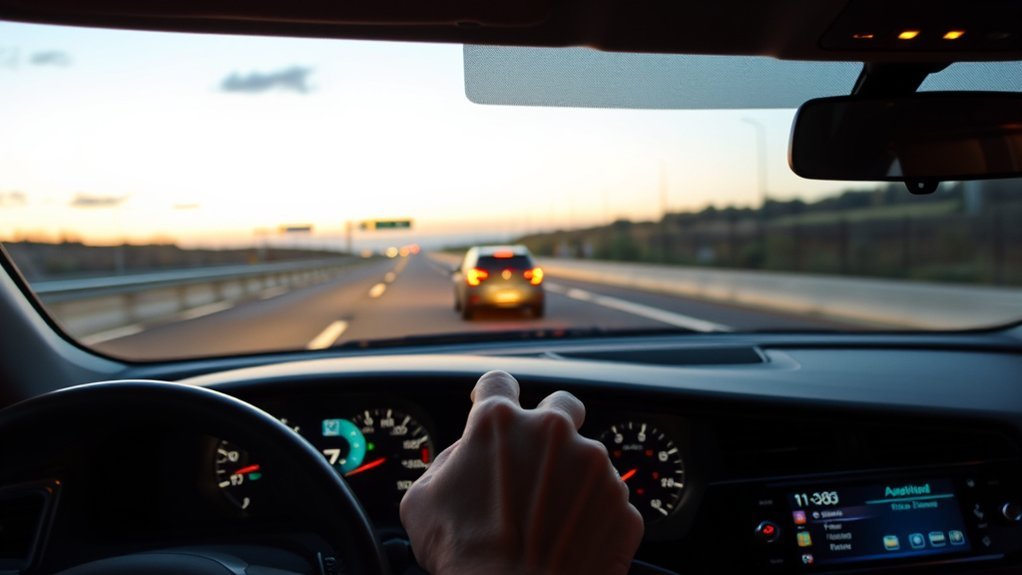
While standard cruise control can enhance long-distance driving comfort, it has notable limitations that can hinder its effectiveness in real-world scenarios. Here are three key drawbacks:
- Traffic Adaptability: Standard cruise control doesn’t adjust speed based on nearby vehicles, making it unsuitable for changing traffic conditions.
- Manual Deactivation: You must manually deactivate the system when encountering slower traffic, which can disrupt the flow of your drive.
- Adverse Weather: Its performance can be considerably impaired by reduced visibility and slippery roads, compromising driver safety.
You need to maintain constant driver awareness since standard cruise control lacks the features to guarantee a safe following distance. This limitation makes it impractical for urban settings, particularly in stop-and-go traffic. By understanding these limitations, you can make better decisions about when and how to engage cruise control for a safer, more liberated driving experience.
Staying Safe With Cruise Control: What You Need to Know
Understanding the nuances of cruise control is essential for maintaining safety on the road. While standard cruise control helps you maintain a set speed, it’s vital to stay vigilant and ready to brake at any moment. Adaptive cruise control enhances this by automatically adjusting your speed to keep a safe distance from the vehicle ahead, greatly improving cruise control safety and reducing the risk of rear-end collisions.
However, both systems have limitations. They’re less effective in adverse weather like rain or snow, where sensor performance can falter. Avoid using cruise control in stop-and-go traffic or on winding roads, as these scenarios require constant adjustments that the systems can’t handle effectively.
Ultimately, regardless of the cruise control type, your driver vigilance is key. Always be prepared to take manual control when necessary, ensuring your safety and that of others on the road.
Emerging Technologies in Cruise Control Systems
As technology evolves, cruise control systems are becoming smarter and more responsive to road conditions. Here are three exciting advancements shaping the future of cruise control:
- Sensor Advancements: Enhanced sensors, including LiDAR, improve distance measurement and object detection, surpassing traditional radar capabilities.
- Vehicle-to-Vehicle (V2V) Communication: These systems can now share real-time traffic updates, allowing for quick adjustments to maintain safety and efficiency.
- Machine Learning: Adaptive cruise control systems are leveraging machine learning to understand your driving habits, making for a more personalized experience.
Next-generation cruise control is also using predictive analytics to foresee traffic patterns, optimizing speed adjustments for better fuel efficiency and safety. As these innovations roll out, you can expect a driving experience that’s not just automated but deeply intuitive and responsive to your needs. Embrace the liberation of advanced cruise control technology!
Frequently Asked Questions
Is Radar Cruise the Same as Cruise Control?
No, radar cruise isn’t the same as standard cruise control. It’s an adaptive technology with enhanced safety features, adjusting your speed based on traffic, while standard cruise simply maintains a constant speed without monitoring surroundings.
Does Radar Cruise Control Use More Gas?
Yes, radar cruise control can use more gas in heavy traffic, as it constantly adjusts speed. However, it often enhances fuel efficiency and driving comfort on highways by maintaining safe distances and optimizing acceleration.
What Is the Purpose of a Radar Cruise Control System?
A radar cruise control system adapts your speed to maintain a safe distance from other vehicles, enhancing driving comfort. Its advanced safety features offer significant benefits compared to standard systems, making your journeys more secure and enjoyable.
Conclusion
To sum up, both standard and adaptive cruise control systems enhance your driving experience, but adaptive features considerably improve safety. Did you know that studies show adaptive cruise control can reduce rear-end collisions by up to 40%? As technology evolves, staying informed about these systems not only enhances your comfort but also keeps you safer on the road. Embracing these advancements can lead to a more relaxed, efficient, and secure driving experience.