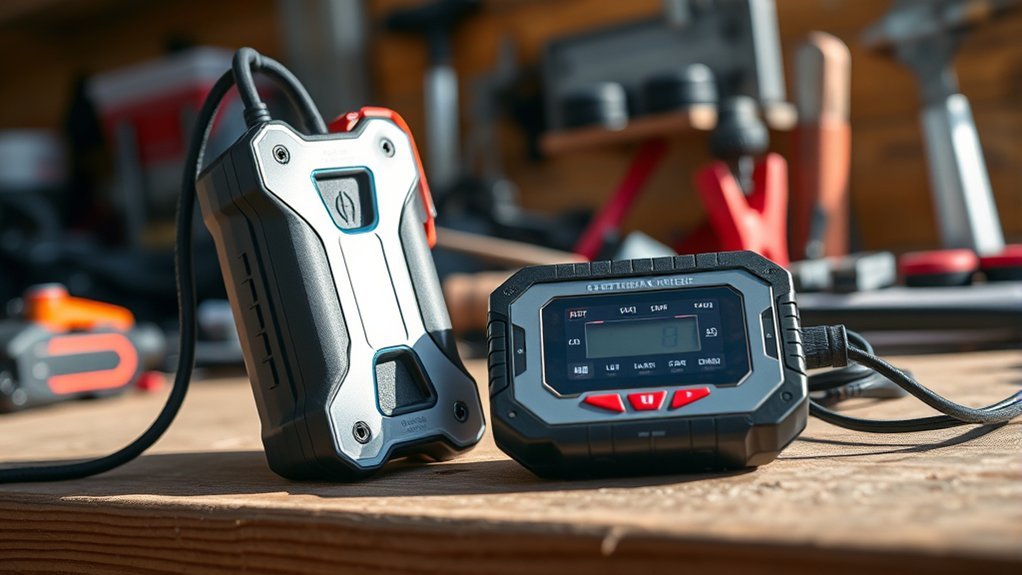
Jump starters and car battery chargers serve different purposes. Jump starters provide immediate power to start your engine, thanks to their built-in battery, making them essential for emergencies. In contrast, battery chargers connect to an outlet and gradually recharge your battery, enhancing its longevity. Chargers are great for long-term maintenance, especially in cold climates. Understanding these differences helps you choose the right tool based on your needs, and there’s more to explore about each option.
Key Differences Between Car Battery Chargers and Jump Starters
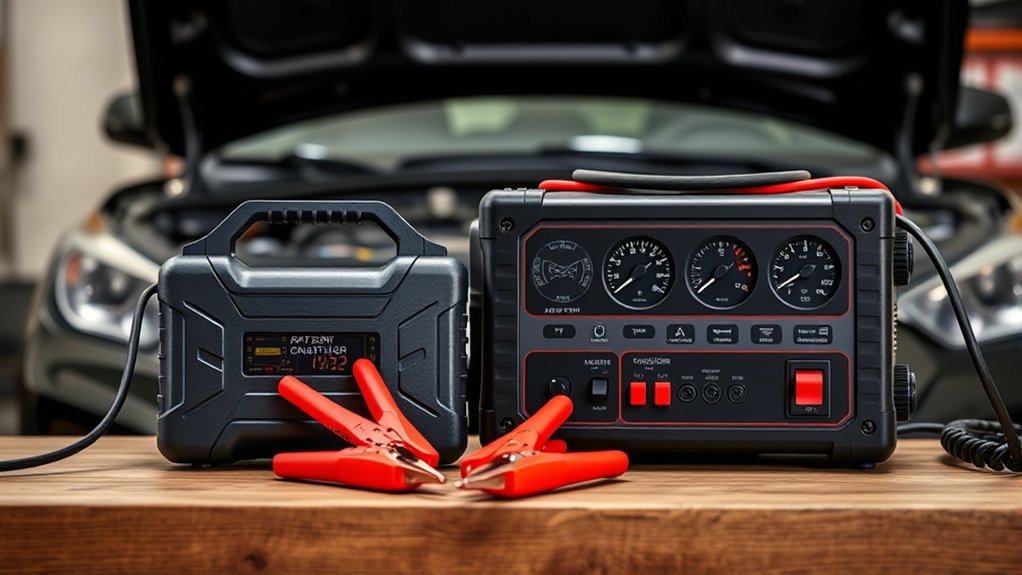
When choosing between a car battery charger and a jump starter, it’s crucial to understand their distinct functions and capabilities. A car battery charger connects to an outlet, converting AC power to 12V DC for long-term charging, emphasizing charger efficiency over time. It can take up to 24 hours to fully recharge, depending on the amp rating, making it ideal for maintenance. In contrast, a jump starter features its own battery, offering immediate starter capacity to crank your engine in seconds without needing an outlet. This portability makes jump starters compact and lightweight, perfect for emergencies. While chargers can recharge a battery while connected, jump starters only provide a power boost, not a recharge. Understanding these differences helps you select the right tool for your needs, ensuring you’re prepared whether you’re maintaining your battery or facing an unexpected breakdown.
How Car Battery Chargers Work and Their Benefits
Car battery chargers convert 120-volt AC power from outlets into 12-volt DC power, efficiently recharging depleted batteries. They automatically shut off when fully charged, preventing overcharging and damage. Regular use of these chargers can maintain battery health and guarantee reliable performance for your vehicle.
Charging Mechanism Explained
Understanding how car battery chargers work is essential for maintaining your vehicle’s battery health. These devices perform a vital voltage conversion, transforming 120-volt AC from electrical outlets into 12-volt DC, which is necessary for recharging depleted batteries. During the charging process, the charger typically operates at various amp ratings; for example, a 48A/2Ah charger may take around 24 hours for a full charge, depending on battery condition. Most chargers automatically shut off once the battery is fully charged, enhancing safety and convenience. While they require access to an electrical outlet and are less portable than jump starters, they excel in long-term battery maintenance, especially during cold weather, preventing unnecessary power depletion.
Advantages of Regular Use
Using a battery charger regularly can greatly enhance your vehicle’s battery life and reliability. By converting 120-volt AC power to 12-volt DC, these chargers guarantee a gradual and complete recharge, maximizing battery longevity. Unlike jump starters, they fully restore a battery’s charge, making them essential for vehicles stored long-term. Automatic shut-off features enhance safety and convenience, assuring you won’t overcharge. Regular use maintains peak battery health, reducing unexpected failures and costly replacements. Plus, with varying charge times based on amp ratings, you can choose a model that suits your schedule. By prioritizing charge efficiency, you empower yourself to keep your vehicle ready for action whenever you need it.
How Portable Jump Starters Work and Their Advantages
When you find yourself with a dead battery, portable jump starters provide a quick and efficient solution. Utilizing advanced jump starter technology, these devices contain a built-in battery that delivers a powerful burst of energy to start your vehicle without needing another car or an outlet. Their compact size, often weighing between 1 to 5 pounds, makes them ideal for emergency readiness.
Here are three advantages of portable jump starters:
- High Peak Current: They can deliver peak currents ranging from 300 to over 2000 amps, effectively starting engines under various conditions.
- Multi-Functionality: Many models include USB ports for charging devices and LED flashlights for emergency lighting.
- Immediate Action: Unlike traditional chargers, they can initiate a vehicle start within seconds, making them essential in urgent situations.
With portable jump starters, you gain peace of mind and independence on the road.
Best Situations to Use a Car Battery Charger
A car battery charger is essential when storing a vehicle for long periods, as it keeps the battery charged and ready for use. If you have a weak battery, using a charger regularly can help maintain its health and prevent deep discharge. In both cases, having access to an electrical outlet is vital for effective charging.
Long-Term Vehicle Storage
While storing a vehicle for an extended period, maintaining the battery’s charge is essential to prevent damage and confirm it remains operational. Using a car battery charger is one of the best storage solutions for battery preservation. Here are three reasons why:
- Continuous Charge: Chargers keep your battery charged, preventing depletion and potential damage.
- Automatic Shut-Off: Many chargers feature this function, allowing safe, unattended charging without overcharging risks.
- Winter Performance: During colder months, battery performance can decline. A charger helps confirm your vehicle starts smoothly.
Weak Battery Maintenance
Maintaining a weak battery is essential for guaranteeing your vehicle’s reliability, especially in situations where it isn’t used regularly. A car battery charger is your best tool for this purpose, gradually replenishing power without risking overcharging due to its automatic shut-off feature. This is particularly useful for vehicles stored for extended periods, keeping the battery charged and ready when needed. During winter months, using a charger helps combat decreased performance caused by cold temperatures. Remember, charging time varies with the charger’s amp rating; for instance, a 48A/2Ah charger may take around 24 hours for a full charge. For peak battery longevity, follow these maintenance tips to guarantee your battery remains healthy and reliable.
When to Choose a Portable Jump Starter?
When should you contemplate a portable jump starter? If you often find yourself in emergency situations or desire travel convenience, a jump starter could be your best ally. Here are three scenarios to contemplate:
- Immediate Power Needs: When you need a quick burst of power to start your vehicle without waiting for battery recharge time.
- Remote Travel: If you frequently venture into areas with limited access to electrical outlets, a compact jump starter guarantees you’re never stranded.
- Cold Weather Performance: In low temperatures, vehicles can struggle to start. A jump starter with high peak current and cold cranking amps will help you get going.
Additionally, many jump starters come equipped with USB ports and LED flashlights, enhancing their versatility in emergencies. Choosing the right jump starter can provide peace of mind and freedom on the road.
Stay Safe: Tips for Using Battery Chargers and Jump Starters
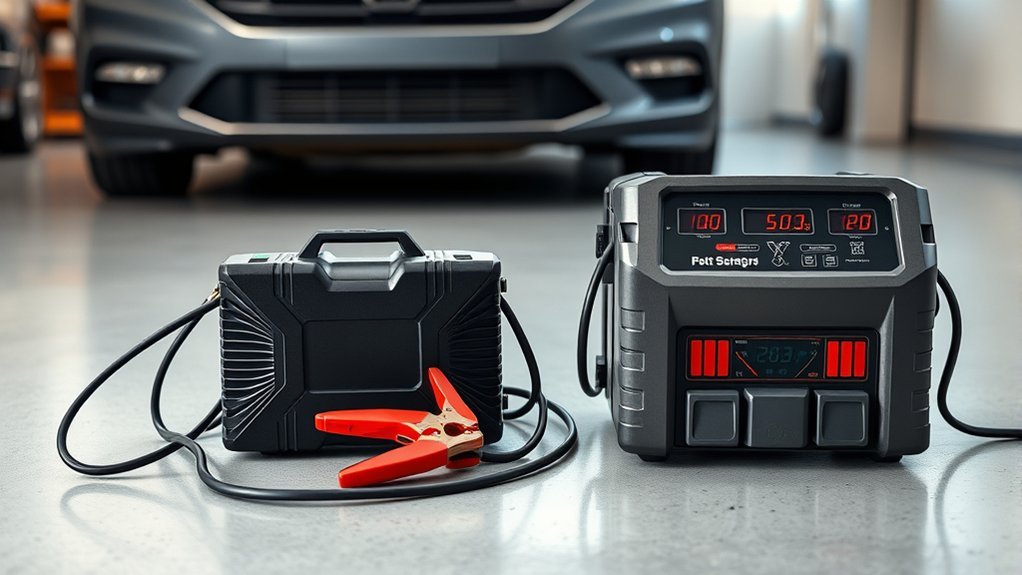
Using battery chargers and jump starters can be straightforward, but safety should always come first. Always read the manufacturer’s instructions before use; they contain essential safety precautions. Verify your car battery terminals are clean and free from corrosion to prevent poor connections. When using a jump starter, connect the positive (red) clamp to the positive terminal first, then the negative (black) clamp to a grounded metal surface to minimize sparks.
For battery chargers, monitor the charging process closely and avoid overcharging, as it can damage the battery and pose safety hazards. Store both devices in a cool, dry place when not in use. Make sure your jump starter is fully charged before storing it for emergency readiness. By following these tips, you can verify safe operation and be prepared for any situation that arises on the road.
Frequently Asked Questions About Battery Maintenance Tools
What do you need to know about battery maintenance tools? Understanding the right tools can enhance your battery health and optimize charging frequency. Here are three key points:
- Battery Chargers: Designed for long-term maintenance, they convert 120-volt AC to 12-volt DC. Charging can take hours, so plan accordingly.
- Jump Starters: These compact devices provide an instant power burst to start your vehicle. They’re portable and don’t require another vehicle, but they’re not meant for charging.
- Specifications Matter: When choosing tools, pay attention to peak current and cold cranking amps for jump starters, and amp ratings for chargers. This guarantees you select the right tool for your needs.
Frequently Asked Questions
Is Charging a Battery Better Than Jumping It?
Charging a battery is better than jumping it for battery maintenance and charging efficiency. It replenishes power fully, ensuring longevity, while jump-starting only provides a temporary boost, lacking the benefits of a complete recharge.
What Drains the Most Battery in a Car?
Headlights, electronics, and cold weather drain your car battery most. For better battery maintenance, avoid frequent short trips, watch for parasitic draws, and replace old batteries to prevent common battery issues and guarantee reliability.
Can a Battery Charger Jump-Start a Dead Battery?
A battery charger can’t jump-start a dead battery; it’s designed for slow recharging. Instead, explore jump start techniques with portable jump starters, which deliver quick bursts of power your vehicle desperately needs.
Is It Better to Use a Jump Starter or Jumper Cable?
Using a jump starter’s advantages, like portability and ease of use, often outweighs jumper cable limitations. With a jump starter, you gain independence and convenience, making it the better choice for emergency vehicle starts.
Conclusion
In conclusion, understanding the differences between car battery chargers and jump starters can save you time and frustration. For instance, imagine you’re stranded with a dead battery after a long road trip. A jump starter gets you back on the road in minutes, while a charger might take hours. Knowing when to use each tool not only enhances your efficiency but also guarantees your car’s battery remains in peak condition. Always choose the right tool for the job!