
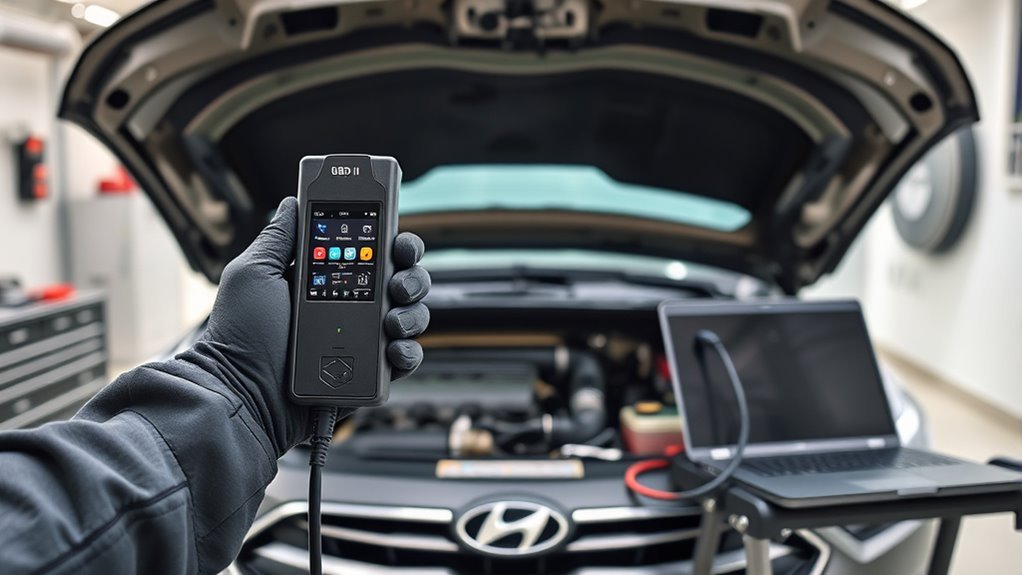
You can get a Hyundai Sonata emissions-test ready by checking for diagnostic trouble codes, confirming the check engine light works normally, keeping the fuel level away from empty or full, and completing enough mixed city/highway driving for the OBD-II readiness monitors to run. The safest final step is simple: scan the car before the inspection and verify the monitors show “complete,” “ready,” or an allowed state-specific exception.
Quick Answer
To make a Hyundai Sonata ready for emissions, repair any check-engine-light problems first, avoid clearing codes right before the test, keep the fuel tank roughly 30–70% full, complete a cold-start drive cycle with city stops and steady highway cruising, then confirm readiness with an OBD-II scanner.
Key Takeaways
- A Sonata is ready when its emissions monitors have completed and the MIL/check engine light is not commanded on.
- Disconnecting the battery or clearing codes resets readiness monitors, so the car must be driven again before testing.
- A generic drive cycle can help, but exact monitor conditions vary by Sonata model year, engine, and hybrid/non-hybrid setup.
- State rules vary: some programs allow one incomplete monitor, while others are stricter about which monitor may remain incomplete.
At a Glance
| Time Required | 30–90 minutes for one drive-cycle attempt; several days of normal driving if monitors are stubborn |
| Difficulty | Easy to moderate |
| Tools Needed | OBD-II scanner that shows I/M readiness, notepad or phone, safe city/highway route |
| Cost | $0 if you already have a scanner; usually low cost for a basic readiness scanner |
What “Emissions Test Ready” Means for Your Hyundai Sonata
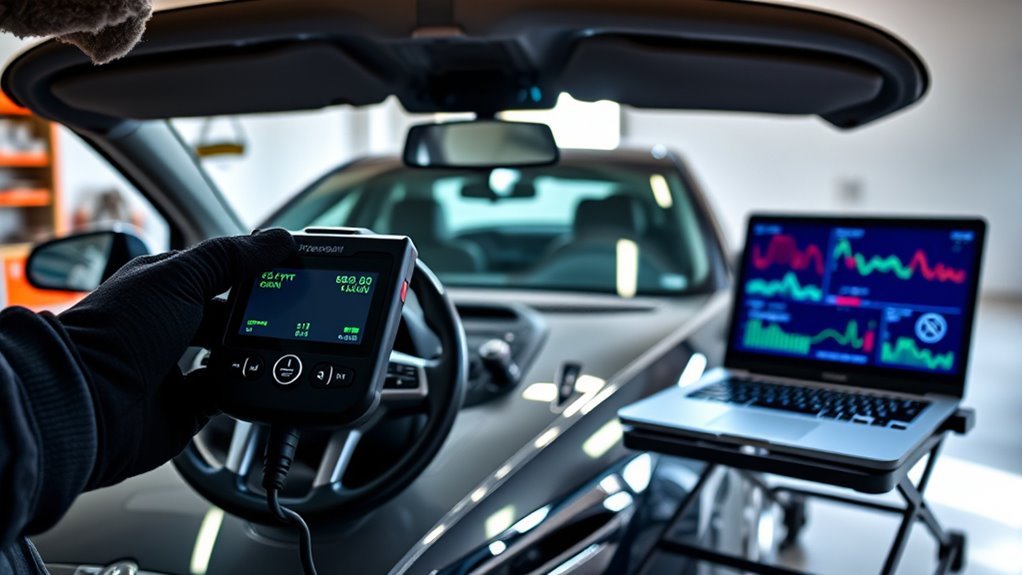
“Emissions test ready” means your Sonata’s OBD-II system has completed the required self-tests for emissions-related systems and is not reporting a failure that would turn on the malfunction indicator lamp, also called the MIL or check engine light. In an OBD inspection, the test equipment checks supported monitors, readiness status, MIL status, and diagnostic trouble code data through the vehicle’s diagnostic connector, as described in the federal OBD inspection procedure in 40 CFR 85.2222.
For a practical pre-test check, confirm these items before you go to the station:
- The MIL/check engine light comes on briefly with key-on/engine-off and turns off after the engine starts.
- No active or MIL-commanding DTCs are stored.
- No pending codes are returning after a drive cycle.
- No permanent DTC is present in a state program that checks PDTCs.
- The OBD-II readiness screen shows the required monitors as complete, ready, or not supported.
Note: “Not supported” does not mean the Sonata failed that monitor. It usually means that monitor does not apply to that vehicle configuration. “Incomplete,” “not ready,” or “not complete” means the car has not finished that self-test yet.
Pre-Drive Checklist for Hyundai Sonata Emissions Readiness
Accurate emissions readiness starts before you drive. A weak battery, a recently cleared code, or a nearly empty/full fuel tank can stop certain monitors from running. Use this checklist before starting the drive cycle:
- Scan first. Read stored, pending, and permanent DTCs. Do not clear codes unless you have already repaired the problem and are prepared to complete the drive cycle again.
- Check the MIL. The check engine light should illuminate with key-on/engine-off and go out after the engine starts. The Hyundai owner’s manual warning-light guidance notes that driving with the MIL on can indicate an emissions or engine-control issue.
- Keep fuel in the middle range. Aim for about 30–70% full, or roughly one-third to two-thirds of a tank. EVAP testing often will not run when the tank is nearly empty or full.
- Verify battery and charging health. A weak or recently disconnected battery can reset readiness data. If the battery was replaced, jump-started, or disconnected, expect to drive again before the test.
- Start from a cold soak when possible. Let the car sit overnight, then begin the cycle from a cold engine if your schedule and weather allow.
- Use a safe route. Plan a route with light traffic, complete stops, a steady 55–60 mph section, and a safe place to coast down without disrupting traffic.
Warning: Do not clear codes just to “turn off the light” before an inspection. Clearing codes usually resets readiness monitors, and the vehicle may fail or be rejected as not ready.
Hyundai Sonata Drive Cycle: Step-by-Step
A drive cycle is a set of driving conditions that lets the powertrain control module run emissions self-tests. The exact Hyundai procedure can vary by model year, engine, transmission, and hybrid system. For model-specific instructions, use Hyundai service information or a professional scan tool; Hyundai’s official service portal lists shop manuals, DTC information, and OBD-II information through HyundaiTechInfo service information subscriptions.
The following general cycle is safe and useful for many Sonata gasoline models when there are no active faults:
- Cold start and idle. Start the engine cold and idle in Park or Neutral for 2–3 minutes. Turn on the headlights, front defroster, and rear defroster for 3–5 minutes if conditions allow.
- City driving. Drive on local roads at about 20–30 mph. Make several complete stops, then accelerate gently to 35–40 mph a few times.
- Moderate acceleration. When safe, accelerate smoothly using about half throttle. Avoid hard launches, wheelspin, or abrupt throttle changes.
- Steady highway run. Drive at a steady 55–60 mph for at least five miles. Use cruise control only if traffic and road conditions make it safe.
- Coast down. Exit or slow down safely by lifting off the accelerator and coasting when possible. Do not force a coast-down if traffic conditions make it unsafe.
- Repeat normal driving. If one monitor remains incomplete, drive normally for a few more trips with both city and highway conditions, then scan again.
[Products Worth Considering]

This WEJOWE OBD2 scanner helps drivers quickly identify check engine causes, read and clear trouble codes, and view live vehicle data with built-in DTC lookup. It also includes battery voltage testing, I/M readiness checks, freeze frame retrieval, and support for printing diagnostic reports to help simplify repairs and maintenance. Designed for most OBDII vehicles since 1996, it offers an easy-to-use solution for DIY car diagnostics.

FOXWELL NT201 is an easy-to-use OBD2 scanner designed to help drivers quickly read and clear check engine codes, view live engine data, and check emissions readiness. Its color screen, one-key I/M readiness test, and broad compatibility with most gasoline vehicles since 1996 make it a practical tool for everyday diagnostics and maintenance. With plug-and-play operation and lifetime free updates, it offers a simple way to understand vehicle issues without expensive shop visits.

This replacement gas cap is designed to restore a tight fuel-tank seal, helping reduce vapor leaks, prevent check engine light issues, and maintain proper fuel system performance. Built in OE-style form for a wide range of Toyota and Lexus vehicles, it offers a direct DIY fix with durable materials for reliable, long-lasting use.
Cold Start Steps
Cold-start conditions help certain monitors compare sensor readings as the engine warms up. Start the Sonata after it has been parked long enough for the engine to cool, then let it idle steadily before driving away.
- Keep the gear selector in Park or Neutral during the initial idle.
- Avoid revving the engine while it is warming up.
- Turn on electrical loads briefly, such as lights and defrosters, to stabilize idle-control checks.
- Begin with gentle city driving before moving into the steady highway portion.
Highway Steady Run
The highway portion helps monitors that need steady speed, stable engine load, and consistent oxygen-sensor and catalyst data. After the city segment, accelerate smoothly to about 60 mph and hold 55–60 mph for at least five miles. Keep your speed as steady as traffic allows, avoid aggressive lane changes, and do not pump the accelerator.
If your Sonata is a hybrid, the gasoline engine may shut off during some light-load conditions. That does not mean the car is broken, but it can make some generic gasoline-engine drive-cycle steps less predictable. For hybrid models, use a scan tool to watch monitor status and rely on the Hyundai-specific service procedure when a monitor will not set.
Pro Tip: If you need only one stubborn monitor to complete, check which one is incomplete before driving more. EVAP, catalyst, oxygen sensor, and EGR/VVT-related monitors may need different temperature, speed, fuel-level, and soak conditions.
Post-Drive Checks
After the drive cycle, park safely and scan the Sonata again. Do not disconnect the battery, clear codes, or unplug the scanner while the vehicle is saving data. Review the I/M readiness screen and record the results.
- Confirm monitor status: look for “complete,” “ready,” or “not supported.”
- Check codes: review stored, pending, and permanent DTCs.
- Check MIL status: confirm the MIL is not commanded on.
- Record mileage: note how many miles and trips you drove after repairs or a battery reset.
- Repair before repeating: if a code returns, diagnose the root cause before doing more drive cycles.
Monitor Sonata Readiness and Codes With an OBD-II Tool
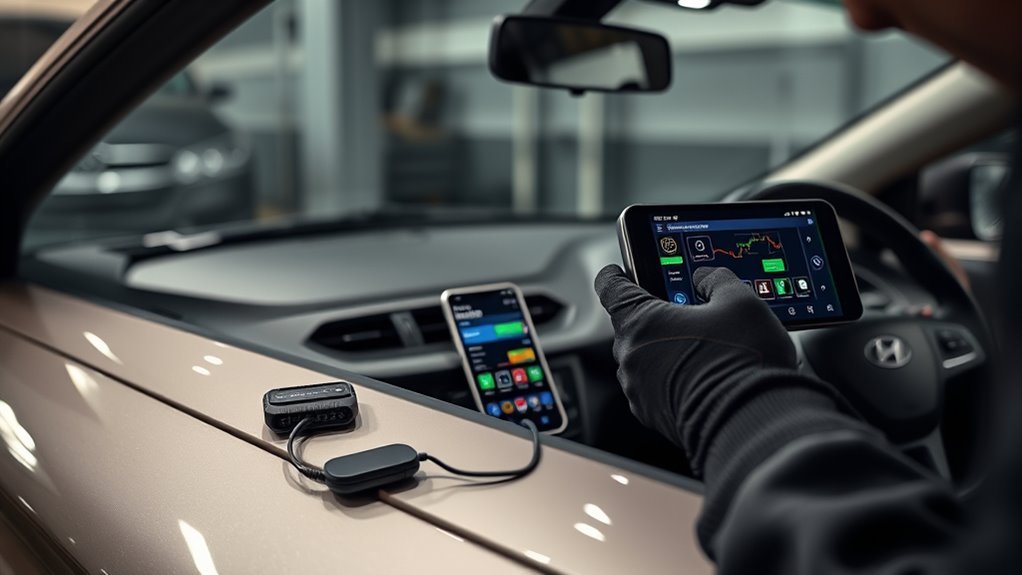
An OBD-II scanner is the easiest way to know whether your Hyundai Sonata is ready before you spend time at the inspection station. Use a scanner that shows I/M readiness, not just basic code reading. A good readiness screen should show each supported monitor as complete/ready, incomplete/not ready, or not supported.
| Scanner Status | What It Means | What To Do |
|---|---|---|
| Ready / Complete | The monitor finished its self-test. | No action needed for that monitor. |
| Not Ready / Incomplete | The monitor has not finished since the last reset, battery disconnect, or repair. | Drive under the correct conditions or diagnose why it will not run. |
| Not Supported | That monitor does not apply to this vehicle or configuration. | Usually no action needed. |
| Pending Code | The system has seen a possible fault but may need another trip to confirm it. | Do not ignore it; repair if it returns or becomes active. |
Federal OBD inspection rules evaluate readiness and MIL status through Mode $01 data, while the California Bureau of Automotive Repair OBD Test Reference gives a stricter example of state-level pass/fail standards, including readiness monitor, MIL, communication, permanent DTC, and modified-software checks. Because rules vary by state, check your local inspection program before assuming one incomplete monitor is acceptable.
A car can run normally and still be “not ready” for emissions if the OBD-II monitors have not completed since the last code clear, repair, or battery disconnect.
[Products Worth Considering]

This replacement gas cap is designed for a wide range of Toyota and Lexus models, offering a direct-fit solution for restoring a proper seal at the fuel tank. It helps address check engine light issues related to the fuel cap while providing easy installation and dependable performance. Built from durable materials and rigorously tested before shipping, it is a practical replacement for worn or damaged fuel caps.

This enhanced OBD2 scanner helps drivers quickly diagnose check engine light issues, read and clear trouble codes, and check emissions readiness before a smog test. It also adds EVAP and O2 sensor testing, live data, freeze frame capture, and a one-click battery health check in a simple plug-and-play tool with a bright color screen.

This OEM replacement fuel tank gas cap is designed for a wide range of Toyota, Lexus, and Scion vehicles, helping restore a proper seal for reliable everyday driving. It helps reduce fuel vapor leakage, may prevent check engine light issues caused by a faulty cap, and offers durable construction for long-lasting performance. Installation is simple with a direct-fit design that twists into place quickly.
Which Readiness Monitors Matter Most?
Your Sonata may not support every OBD-II monitor, but these are the monitors most drivers see when preparing for an emissions inspection:
- Misfire monitor: checks for combustion misfires that can raise emissions and damage the catalyst.
- Fuel system monitor: checks fuel-control operation and air/fuel correction.
- Comprehensive component monitor: checks many sensors and actuators used by the engine-control system.
- Catalyst monitor: checks catalytic-converter efficiency.
- Oxygen sensor monitor: checks oxygen or air/fuel sensor response.
- Oxygen sensor heater monitor: checks sensor-heater operation.
- EVAP monitor: checks the evaporative-emissions system for leaks or purge/vent problems.
- EGR/VVT-related monitor: where supported, checks flow or valve-timing behavior that affects emissions.
Continuous monitors, such as misfire and fuel-system checks, usually run often. Non-continuous monitors, such as catalyst and EVAP checks, need specific conditions. That is why a mix of cold starts, city driving, steady cruising, and overnight parking works better than one short trip around the block.
Top Sonata Problems That Block Readiness and Quick Fixes
If readiness monitors will not complete, stop repeating the same route and look for the reason. These issues commonly block readiness on modern OBD-II vehicles, including Hyundai Sonata models:
- Unrepaired misfires: worn spark plugs, weak coils, vacuum leaks, injector issues, or compression problems can set DTCs and stop monitors from completing. Repair the fault, then drive again.
- EVAP leaks or purge/vent faults: a loose fuel cap, leaking hose, stuck purge valve, or vent-valve issue can keep the EVAP monitor incomplete or set a code. Tighten the cap and diagnose leaks if the code returns.
- Oxygen sensor or catalyst faults: slow sensor response, heater faults, exhaust leaks, or catalyst-efficiency codes can prevent readiness. Fix the underlying issue instead of clearing the code repeatedly.
- Weak battery or recent battery service: a battery disconnect can erase readiness data. Charge or replace a weak battery, then complete enough drive cycles.
- Cooling-system or thermostat problems: if the engine does not reach normal operating temperature, some monitors may not run. Diagnose low coolant, thermostat issues, or temperature-sensor faults.
- Permanent DTCs: a PDTC may remain after the normal code is cleared and can self-clear only after the OBD system verifies the repair during subsequent driving. California’s OBD reference notes that 2010 and newer vehicles subject to the PDTC check can fail when a PDTC is present.
- Aftermarket tuning or modified software: some inspection programs check for non-approved software changes. Restore OEM-approved or CARB-approved software before retesting where required.
Note: A pending code is an early warning. It may not always fail an inspection by itself, but it often explains why a monitor is slow to complete or why the check engine light returns after another trip.
[Products Worth Considering]

This replacement gas cap is designed to fit a wide range of Toyota and Lexus models, helping restore a secure seal for the fuel tank. It is built as a direct replacement for easy installation and reliable everyday use, with compatibility verified by part number to help ensure the right fit. Backed by warranty support and customer service, it is a practical solution for replacing a worn, cracked, or failing fuel cap.

This steering clock spring is designed to restore reliable steering wheel controls across a wide range of Toyota models. It supports audio, cruise control, and other multifunction commands while matching OEM part numbers for confident replacement fitment. Built for dependable signal transfer and straightforward installation, it is an effective solution for repairing steering column control issues.

This replacement gas cap is designed for a wide range of Toyota and Lexus vehicles, offering a direct-fit solution for worn, cracked, or failing fuel caps. Built from durable materials and tested for reliability, it helps restore a secure seal and supports dependable everyday driving. It is a practical replacement part for owners looking for an easy installation and broad vehicle compatibility.
How Many Monitors Can Be Not Ready and Still Pass?
The safest target is all required monitors complete. However, inspection rules are not identical everywhere. Federal OBD guidance allows certain model years to pass with a limited number of unset readiness monitors if the vehicle otherwise passes, but state programs can be stricter. For example, California’s current OBD reference says gasoline vehicles from model year 2000 and newer may pass with only the evaporative system monitor incomplete, while other incomplete monitors can fail the OBD portion of the Smog Check.
Before you test, check your state’s emissions website or call the inspection station and ask which incomplete monitors are allowed for your Sonata’s model year and fuel type. Do not assume advice from another state applies to your inspection.
When to Get a Pro, Typical Timelines, and Retest Tips
Get professional help if the same monitor stays incomplete after several days of mixed driving, if the check engine light returns, if pending codes keep reappearing, or if the vehicle has drivability problems. A shop can use Hyundai service information, enhanced scan data, smoke testing, fuel-pressure testing, and freeze-frame data to find the enable condition or fault that is blocking readiness.
Typical timelines vary:
- After a battery disconnect: many cars need several trips and mixed driving before all monitors complete.
- After a simple repair: one or two correct drive cycles may be enough if no codes return.
- After EVAP or catalyst repairs: expect more specific temperature, fuel-level, and highway conditions.
- After a permanent DTC: the code may need additional successful monitor runs before it clears itself.
Schedule the retest only after your scanner confirms readiness. If your state offers a free or discounted retest window, use it before the deadline, but do not return until the OBD-II data shows the car is actually ready.
Frequently Asked Questions
How do I get my Hyundai Sonata monitor ready for emissions?
Repair any check-engine-light issue first, keep the fuel tank around the middle range, start from a cold engine when possible, drive both city and highway conditions, hold a steady 55–60 mph cruise, and scan the OBD-II readiness screen afterward. Repeat only if no codes return.
Will clearing codes make my Sonata pass emissions?
No. Clearing codes usually resets readiness monitors to incomplete. The check engine light may turn off temporarily, but the inspection equipment can still see that the vehicle is not ready.
How many miles do I need to drive after replacing the battery?
There is no single mileage number for every Sonata. Some monitors complete within a few trips, while others may need several days of cold starts, city driving, highway cruising, and overnight parking. Use an OBD-II scanner instead of guessing by mileage alone.
Can I pass with one monitor not ready?
Maybe, depending on your state, model year, fuel type, and which monitor is incomplete. Some programs allow a limited exception, but others are stricter. All required monitors complete is the safest goal.
Why is my EVAP monitor still not ready?
The EVAP monitor often needs the right fuel level, temperature, soak time, and driving pattern. A loose gas cap, small leak, stuck purge valve, or vent-valve problem can also stop it from completing.
Conclusion
Getting a Hyundai Sonata emissions-test ready is mostly about patience and verification. Fix any real fault first, avoid clearing codes right before inspection, keep the fuel level in a practical middle range, complete a safe mixed drive cycle, and scan the readiness monitors before you retest. If one monitor refuses to complete or a code keeps returning, diagnose the cause instead of repeating the same drive cycle. A clean scan is the best sign that your Sonata is ready for the inspection lane.
Sources
- eCFR — 40 CFR 85.2222 Onboard diagnostic test procedures — backs up OBD inspection sequence, MIL checks, readiness evaluation, and connector-based testing.
- California Bureau of Automotive Repair — On-Board Diagnostic Test Reference — backs up readiness monitor, MIL, communication, permanent DTC, and modified-software standards.
- U.S. EPA — Vehicle Emissions Inspection and Maintenance Policy and Technical Guidance — backs up the role of I/M programs and OBD readiness guidance.
- HyundaiTechInfo — Service Information Subscriptions — backs up where Hyundai service manuals, DTC information, and OBD-II information are available for Hyundai vehicles sold in the United States.
- Hyundai Owner’s Manual — Warning and Indicator Lights — backs up MIL/check engine light guidance and the need to address emissions or engine-control warnings.

[…] diagnose a Hyundai Sonata engine misfire, scan for OBD-II codes first, then inspect the spark plugs, ignition coils or wires, injector operation, fuel pressure, […]
[…] Hyundai Sonata is one of the fastest ways to understand why the check engine light is on, check emissions readiness, and catch small problems before they turn into expensive repairs. The connector is usually under […]
[…] recording the original data. Clearing codes may reset emissions-readiness monitors. Review the Hyundai Sonata emissions-test readiness guide if an inspection is […]