You get boosted power on the Tundra i‑FORCE by using exhaust energy to spin a turbine that drives a compressor, forcing denser air into the engine for richer combustion without bigger displacement. An intercooler drops charge temperature, while a wastegate and blow‑off valve precisely manage boost and protect against surge. Check oil/coolant feeds, seals, and shaft play to avoid failures. Continue for detailed inspection steps, upgrade options, and long‑term care guidance.
How the i‑FORCE Turbo Boosts Tundra Performance
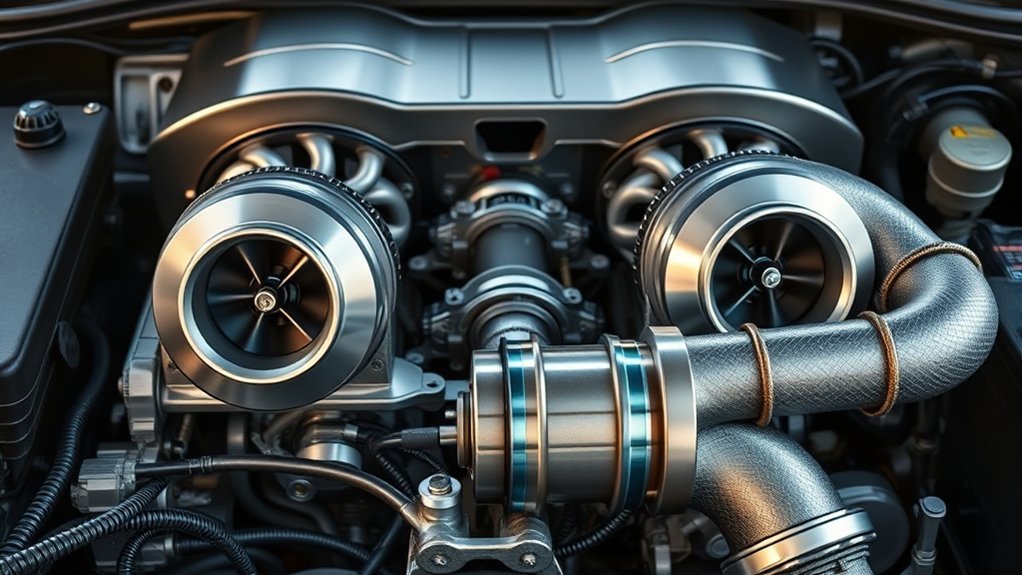
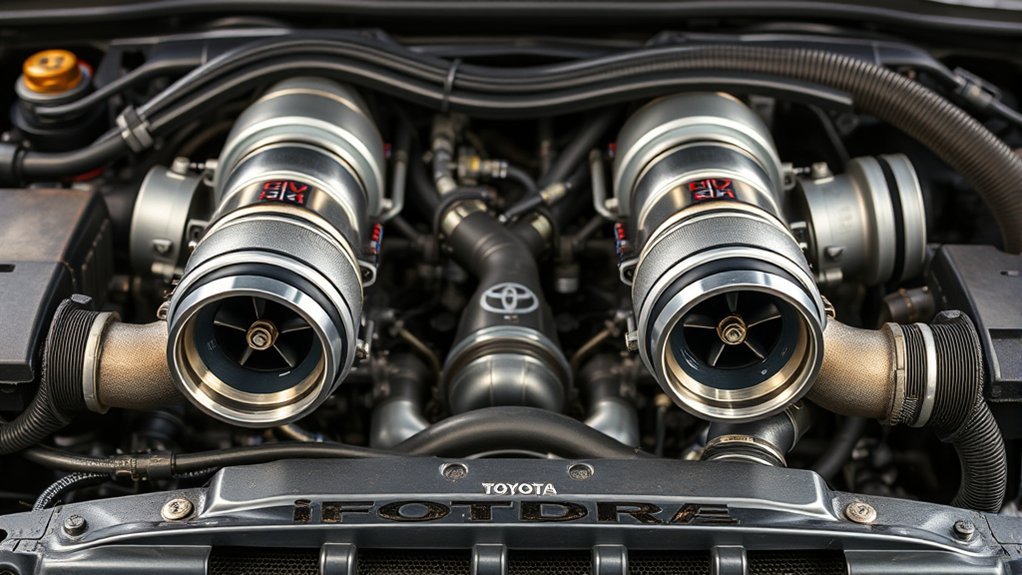
Because it compresses more air into the cylinders, the i‑FORCE turbo lets you get considerably more power from the Tundra without increasing engine displacement. You’ll notice that compressing intake charge raises oxygen density, enabling greater fuel combustion and systematic power gains while preserving engine size. The turbo harvests waste exhaust gases to spin the turbine, converting otherwise lost energy into usable boost—this directly improves turbo efficiency and aids fuel economy and emissions targets. An integrated wastegate modulates exhaust routing to sustain ideal boost across RPM bands, so you get consistent responsiveness under load. The intercooler reduces charge temperature to prevent knock and maintain combustion stability, which supports aggressive performance tuning without sacrificing reliability. A blow-off valve prevents compressor surge during sudden throttle changes, protecting components and smoothing shifts. You’re given a coherent system: managed boost, thermal control, and flow regulation combine to free the vehicle’s potential while keeping efficiency and durability aligned with liberated performance objectives.
Compressor & Turbine: How They Work
When you step on the gas, the turbo’s compressor pulls in ambient air and compresses it, raising density and enabling a richer fuel charge for more power; simultaneously, exhaust gases spin the turbine, converting waste energy into shaft torque that drives the compressor. You’ll notice compressor efficiency is central: the wheel’s aerofoil profile and tight tolerances determine how much pressure rise you get per unit of input energy, and lightweight materials cut rotational inertia so the compressor responds quickly. On the turbine side, turbine design balances flow capacity and backpressure; vane geometry and housing sizing manage exhaust energy capture while the wastegate vents excess flow to prevent over-boost. Thermodynamic coupling means you’ll trade pressure for temperature, so system-level decisions—material choice, clearances, and shaft dynamics—target durable, repeatable boost without lag. You’re offered mechanical liberation: more controllable power by precise coordination of compressor efficiency and turbine design.
Airflow Path: Airbox → Intercooler → Engine
Although the turbocharger supplies pressurized air, the full performance benefit depends on a controlled airflow path: air is drawn through the airbox where filtration and ducting shape flow into the compressor, the compressor raises pressure, and the pressurized charge is routed through the intercooler to shed heat before entering the cylinders. You’ll rely on airflow efficiency and intake optimization to free the engine’s potential. The sequence preserves charge density, reduces detonation risk, and lets you add fuel precisely.
- Clean, low-restriction airbox intake maintains steady mass flow into the compressor.
- Compressor increases manifold pressure; consistent flow prevents surge and lag.
- Intercooler extracts heat from compressed air, restoring density for combustion.
- Ducting and piping geometry limit pressure drop; you minimize losses for true intake optimization.
- Final delivery into cylinders lets injectors and timing exploit denser charge for power.
Control each segment to liberate performance predictably: measure pressure drops, validate temperatures, and prioritize components that support airflow efficiency without compromising reliability.
Tundra Turbocharger Components: Oil, Coolant & Seals to Check
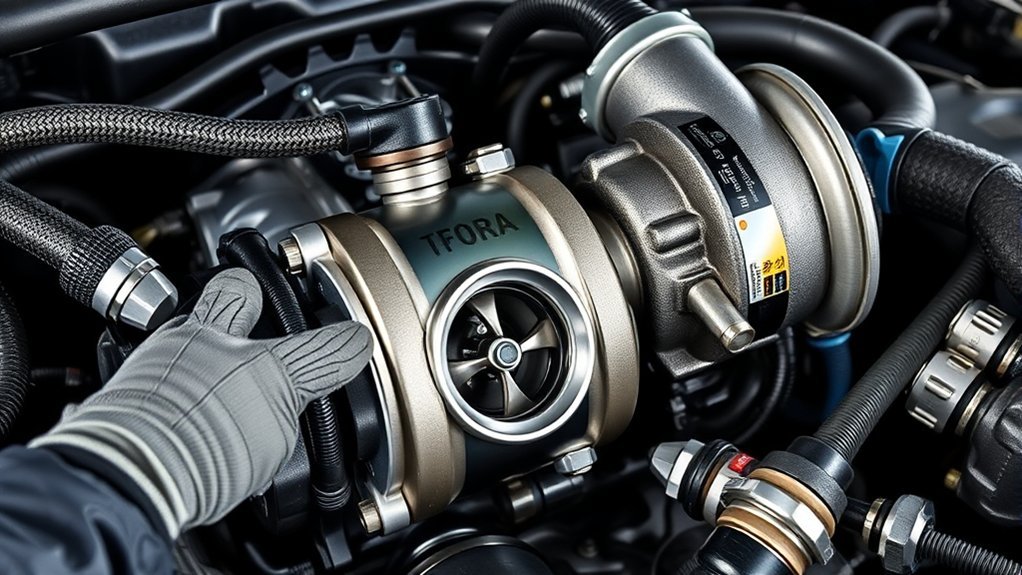
If you want reliable boost delivery and long turbo life, start by inspecting the oil feed and return circuits, coolant connections, and sealing surfaces for wear, leaks, and flow restrictions. You’ll verify the oil feed supplies clean, pressurized lubrication to the shaft; contamination or starvation accelerates bearing wear and reduces efficiency. Check return lines for proper drainage to avoid pooling that degrades seals. Coolant maintenance is equally critical: confirm inlet and outlet hoses, fittings, and passages are clear and leak‑free so the cartridge stays within thermal limits. Seal integrity prevents oil migration into the compressor or exhaust housings; inspect O‑rings and gaskets for hardening, cracking, or extrusion. Use leak detection and flow checks rather than assumptions—restricted coolant or oil flow signals imminent failure. By systematically evaluating these circuits and replacing suspect lines or seals, you liberate performance from preventable failure modes and preserve reliable, efficient turbo operation.
Wastegate & Blow‑Off Valve: Controlling i‑FORCE Turbo Boost
Several key valves control boost behavior on the i‑FORCE turbo system, and you need to understand how the wastegate and blow‑off valve work together to protect performance and the turbocharger. You’ll rely on the wastegate function to modulate exhaust bypass: it opens at low RPMs to prevent over‑boosting and closes at higher RPMs to maximize output. The blow off valve vents excess intake pressure when you close the throttle, preventing compressor surge and preserving transient response.
Master the wastegate and blow‑off valve to balance boost, prevent surge, and protect turbo performance.
- Wastegate function regulates boost via exhaust flow control.
- Blow off valve prevents compressor surge on throttle lift.
- Coordinated operation balances power and durability.
- Proper operation preserves engine efficiency and turbo life.
- Regular checks guarantee system integrity and sustained liberation.
This subsystem gives you controlled power without risking the turbo or engine. By mastering its principles, you free performance while safeguarding components—technical, efficient, and designed for resilient operation.
Common Failures and How to Inspect Them
With the wastegate and blow‑off valve functioning to protect boost and the turbo, you also need a systematic inspection routine to catch failures before they damage the i‑FORCE system. You’ll first check for oil seal leaks by inspecting compressor and turbine housings, intercooler pipes, and intake for oil residue; any seepage means immediate service to prevent contamination. Measure shaft play axially and radially—minimal movement is acceptable, excessive shaft play signals bearing wear and imminent failure. Verify wastegate operation: observe actuator response and gate seating under varying throttle and load to confirm it opens and closes precisely, preventing overboost. Perform coolant inspection of lines and fittings for leaks, blockages, and proper flow; inadequate cooling accelerates wear. Finally, scan clamps, housings, and brackets for rust damage or corrosion that compromises structural integrity and sealing. You’ll document findings, prioritize repairs that protect performance, and act decisively to preserve the i‑FORCE turbo’s durability and your vehicle’s autonomy.
i‑FORCE Turbo Disassembly Checklist
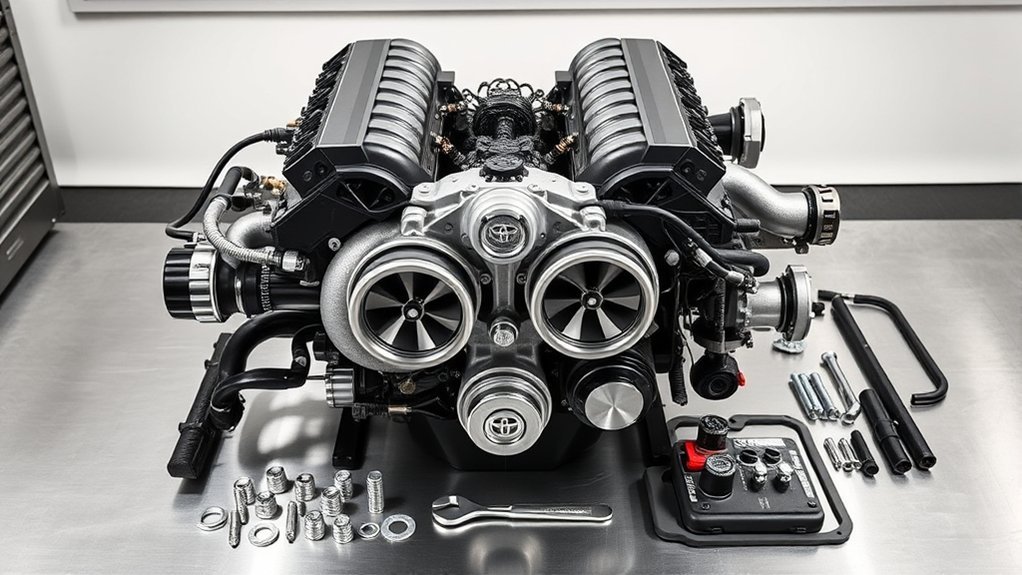
Because access and control determine the success of any teardown, start by removing the compressor tube to expose the intake and check for blockages or wear before proceeding further. You’ll follow disciplined disassembly techniques to preserve evidence of failure and protect components that influence turbocharger efficiency. Work methodically, documenting each step so you can reassemble with confidence.
- Detach vacuum diaphragm and linkages with proper tools; secure small parts to avoid loss.
- Make controlled incisions to relieve pressure and gain access to oil passages and internal cavities.
- Inspect compressor and turbine wheels for nicks, play, or erosion that reduce turbocharger efficiency.
- Check oil and coolant lines for restrictions or leaks; clean or tag lines that fail inspection.
- Photograph gasket orientation and fastener torque marks to maintain factory alignment.
You’ll prioritize liberation from guesswork: analytical inspection, precise disassembly, and clear records let you diagnose root causes and decide next steps without compromising core hardware.
Maintenance & OEM‑Friendly Upgrades for Longevity
When you prioritize routine inspection and targeted OEM‑friendly upgrades, the i‑FORCE turbo system will run cooler, respond more predictably, and resist premature wear; check shaft play to judge bearing health, inspect oil feed/drain lines for leaks or blockages, verify wastegate travel and seating, and consider high‑temperature silicone hoses plus a properly plumbed blow‑off valve to reduce compressor surge and improve longevity. You’ll perform turbocharger care with discipline: measure radial and axial shaft play, record tolerances, and replace cartridges before damage propagates. Keep oil passages clean and fittings torque‑checked to preserve bearing lubrication and thermal control. Test wastegate actuation under load to avoid overboost and detonation. For liberation from frequent failures, choose OEM‑approved high‑temp silicone hoses to resist heat and boost cycles, and fit a correctly plumbed blow‑off valve to relieve transient pressure spikes. These performance enhancements stay within factory parameters, maintaining emissions compliance while extending service intervals and protecting core engine integrity.
Frequently Asked Questions
At What Speed Does the Turbo Kick In?
The turbo kicks in around 1,500 RPM, reducing turbo lag as boost pressure climbs; you’ll feel increasing torque through 3,000 RPM where peak boost pressure arrives, letting you seize spirited, liberated acceleration with precise, controlled response.
Can You Turbo Charge a Tundra?
Yes — you can turbocharge a Tundra. Picture stock calm versus boosted surge: Turbocharger benefits include more power and efficiency, but Installation challenges demand upgraded fuel, intercooler, and precise tuning to free your truck’s potential.
Conclusion
You’ve seen how the i‑FORCE turbo breathes life into the Tundra: compressor and turbine spinning like twin hearts, airflow routed cleanly through intercooler veins, and oil and coolant keeping gears cool. Inspect seals, wastegate, and BOV with surgical focus; watch for leaks, play, or soot. When you maintain it with OEM parts and smart upgrades, the system sings reliably—measured, precise, and ready—so you’ll drive with confidence, not guesswork.