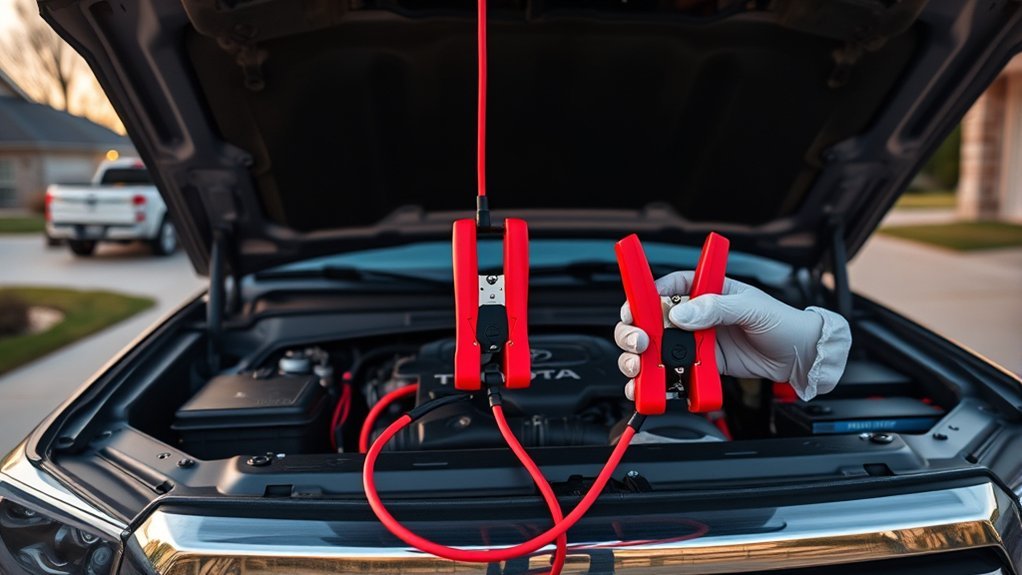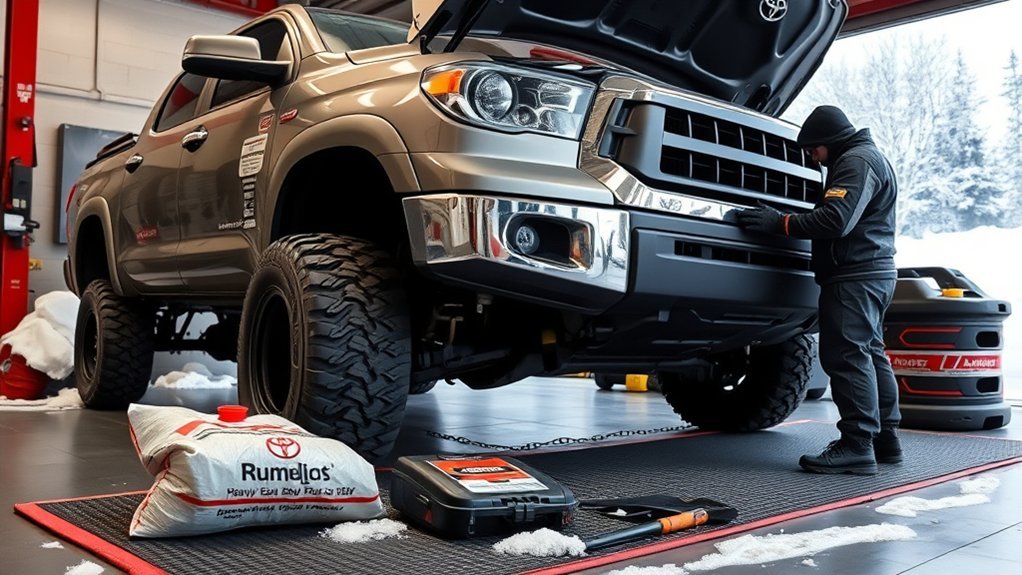
You’ll prep your Toyota Tundra by checking battery terminals, coolant mix, heater/defroster, and swapping to winter‑grade oil and -20°F washer fluid. Fit dedicated snow or studded tires and monitor pressure as temperatures drop. Upgrade lights and wipers for visibility, apply underbody corrosion protection, and touch up paint chips. Pack recovery gear: tow straps, shackles, traction boards, shovel, jumper cables and a first‑aid kit. Follow these steps now and you’ll find detailed setup and gear lists ahead.
Winterize Your Tundra: Quick Inspection Checklist
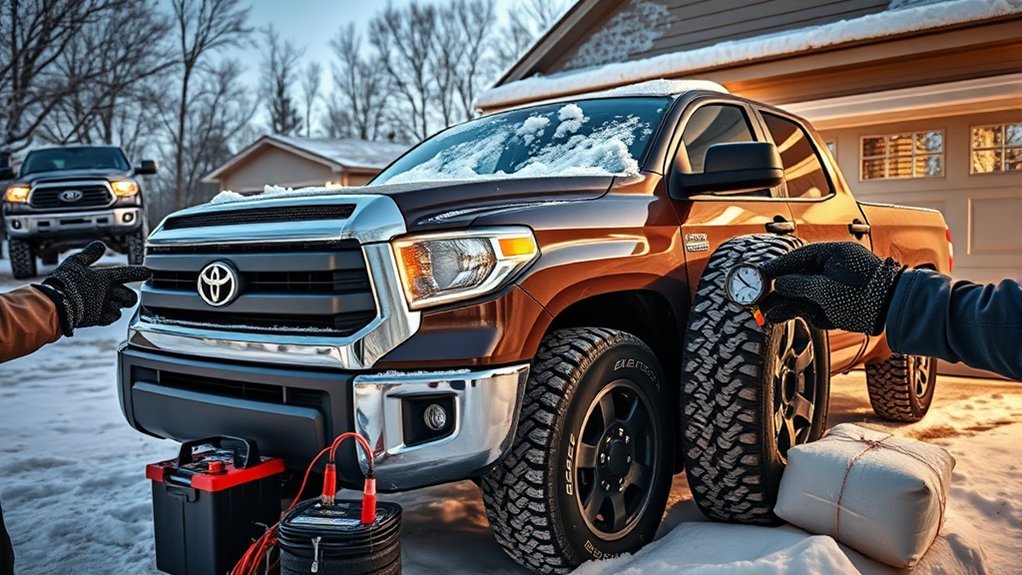
Start with a quick, systematic walk-around that covers five key areas so you can spot winter vulnerabilities fast. You’ll inspect battery connections for corrosion and tightness—cold kills cranking power, so keep terminals clean and secure. Check coolant level and mix to prevent freezing, and swap to winter-grade engine and washer fluids to maintain flow and visibility. Measure tire pressure and tread depth; low temps drop pressure and thin tread cuts traction, so consider dedicated winter tires for grip and control. Confirm an emergency kit: first aid, tow strap, warm layers—be ready to break free from confinement if roads trap you. Finally, upgrade lighting if needed; brighter HID or fog kits cut through snow and long nights, restoring sightlines so you can move with confidence. This checklist treats winter maintenance and snow preparedness as liberation tools—practical steps that return control to you and your Tundra.
Prep Fluids, Battery & Cold‑Weather Systems
Start by confirming your coolant is a 50/50 antifreeze/water mix and that engine oil is switched to a winter-grade viscosity for reliable cold starts. Inspect the battery for corrosion, clean terminals, and test cranking amps since cold dramatically reduces capacity. Top off -20°F washer fluid and verify heater and defroster operation to guarantee visibility and cabin warmth.
Check Cold‑Start Fluids
Because cold starts place extra strain on fluids, battery and HVAC systems, you should verify coolant levels and mix, switch to winter-grade oil, top off -20°F washer fluid, inspect battery terminals and connections for corrosion and tightness, and test the heater and defroster so the Tundra will start reliably and remain safe in freezing conditions. Check coolant for a 50/50 antifreeze/water ratio to prevent freezing and protect the engine. Replace engine oil with a winter-grade viscosity to improve cold start performance and reduce wear from thickened oil. Use washer fluid rated to -20°F to maintain visibility. Inspect battery terminals for corrosion and confirm tight connections. Run the heater and defroster to verify airflow and prevent fogging. These steps free you to drive confidently in winter.
Battery Health Tips
With fluids checked, turn your attention to the battery and cold‑weather electrical systems—low temperatures reduce chemical activity and can leave you stranded even if coolant and oil are correct. You’ll keep freedom on the road by practicing strict battery maintenance: clean posts and terminals, remove corrosion, and secure connections. Test voltage with a meter; if resting voltage or load test shows weakness, replace the battery before winter. Inspect cables for cracks or wear and fix loose clamps to prevent failures in cold weather. Consider a battery warmer or a maintained trickle charger when temperatures drop below freezing. Monitor headlights and accessories for dimming or flicker—those symptoms signal charging or battery issues that demand immediate attention.
Choose Snow Tires, Studs, or All‑Season Tires
Wondering which tire choice will keep your Tundra safest this winter? You’ll weigh tire types and traction levels against local conditions and laws. Choose dedicated snow tires (Bridgestone Blizzak, Nokian Hakkapeliita) for superior grip on snow and ice; they cut stopping distance and improve handling versus all-season rubber. In regions with persistent black ice, consider studded tires for extra bite—confirm local restrictions first. All-season tires can suffice in milder winters, but they won’t match snow tires where temperatures and surfaces are extreme. Remember your Tundra’s 4WD helps control, but it doesn’t replace proper winter tires. Maintain recommended tire pressure—cold lowers pressure and reduces traction and safety—so check it regularly. Swap to a dedicated winter set before sustained cold arrives, then return to all-seasons in spring. This approach frees you to drive confidently: match tire choice to severity of winter, obey regulations, and keep pressure within specs for peak performance and liberation on slippery roads.
Improve Lighting and Windshield Protection
Tires and traction get you moving, but clear sightlines and effective lighting keep you safe once you’re on the road. Upgrade lighting with Baja Designs fog light kits and Morimoto XB LED headlights for wide, clean beams, sharp cutoff, and longer range. Add ditch light brackets with pods to angle light where you need it—spot wildlife and icy shoulders early.
| Component | Benefit | Action |
|---|---|---|
| Baja Designs fog lights | Wide, low beam in fog/snow | Install low on bumper |
| Morimoto XB LEDs | Long-range, sharp cutoff | Replace headlight assemblies |
| Ditch lights + pods | Angled illumination | Mount with brackets |
| Wipers + treatments | Clear glass in freezing rain | Fit winter-rated blades; apply windshield treatments |
Use winter-rated wipers for reliable sweep in ice. Apply a water-repellent windshield treatment so snow and slush shed faster. These lighting upgrades and windshield treatments free you to drive confidently in winter.
Shield Drivetrain & Undercarriage From Salt
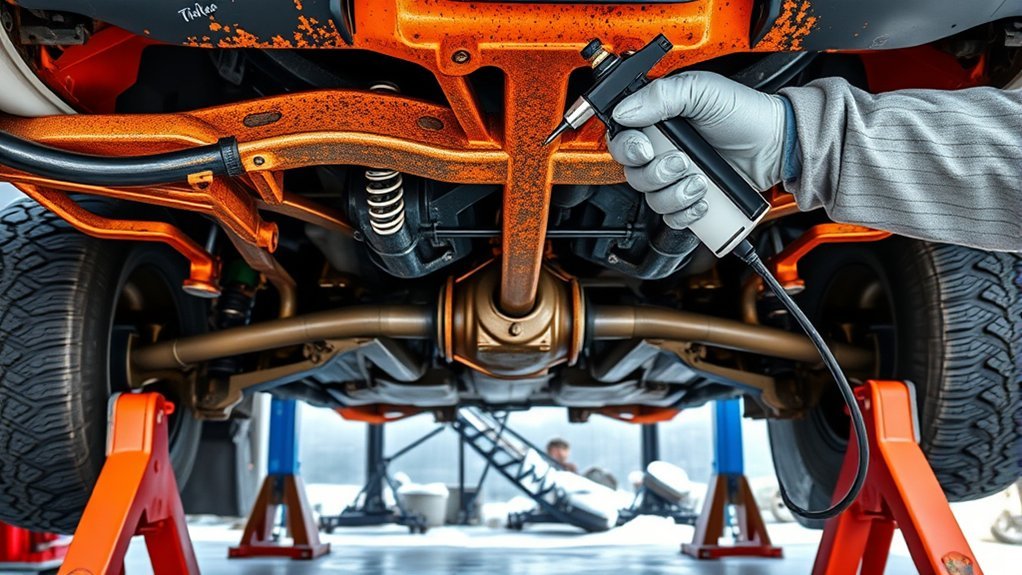
Keep the Tundra’s underside free of corrosive salt by establishing a regular underbody wash routine—especially after snow events—to flush out salt and grit. Apply an annual protective undercoating to key areas and consider lightweight Cali Raised 4×4 skid plates for added drivetrain shielding. Inspect mounts, seams, and exposed hardware on a quarterly corrosion schedule and address any surface rust immediately.
Underbody Wash Routine
Wash your Tundra’s underbody every two weeks during winter, and always after heavy snow or road salt exposure, to prevent corrosion on the drivetrain, suspension, and brake lines. For effective underbody maintenance and winter washing, use a high-pressure washer to target hidden cavities, wheel wells, control arms, and brake-line routes where salt concentrates. Work methodically: lift the rear slightly for access if safe, rinse forward-facing and recessed surfaces, then repeat wheel-to-wheel. Avoid degreasers that strip factory coatings unless you’ll recoat afterward. Dry exposed metal when possible and inspect mounts, fasteners, and rubber lines for pitting or salt pockets. Consistent, disciplined washing liberates you from premature failure—reduce corrosion vectors now so the Tundra stays reliable through thaw cycles and long winters.
Protective Undercoating Application
Because salt and moisture attack hidden steel fast, applying a quality undercoating creates a flexible, moisture‑repellent barrier that shields your Tundra’s drivetrain and undercarriage from corrosion, impacts, and road debris. You’ll gain undercoating benefits: extended component life, lower maintenance spend, and preserved resale value. Choose a flexible product designed for salt exposure. Clean and dry the undercarriage, mask brake components, then apply even coats from front to rear. Follow recommended cure times; many pros suggest annual treatments in harsh climates. Use measured application techniques—spray pattern, distance, and overlap—to avoid drips and guarantee coverage. This preserves freedom to roam winter roads without rust fear.
| Area | Protection focus |
|---|---|
| Frame rails | Moisture seal, impact resistance |
| Drivetrain | Corrosion barrier, contaminant exclusion |
Corrosion Inspection Schedule
When salt is on the road, inspect your Tundra’s drivetrain and undercarriage at least once a month to catch early corrosion, damage, or paint breaks that expose bare metal. Schedule a monthly undercarriage wash to remove salt and grime; do a hands-on corrosion monitoring audit immediately afterward, checking suspension mounts, brake lines, frame seams, and fasteners. Use a flashlight and mirror to spot pinholes, flaking, or new surface rust. Touch up paint chips promptly and apply corrosion-resistant spray to exposed parts. Annually, apply a protective undercoating treatment to seal vulnerable surfaces and extend chassis life. This regimen gives you control—minimizing deterioration, maximizing rust prevention, and keeping your Tundra free to roam without compromise.
Pack Emergency & Recovery Gear for Winter
Before you head out, assemble a compact emergency and recovery kit so your Tundra can handle typical winter incidents without delay. Pack emergency essentials: a tool roll, reliable first aid kit, high-calorie rations, flashlight with spare batteries, portable heater, extra blankets, and layered warm clothing. Store items in labeled, weatherproof containers where you can reach them quickly.
Include recovery techniques and hardware: rated bow shackles, 4–6 meter tow straps, a snatch block if you’ll use a winch, and rigid recovery boards such as MaxTrax. Add traction aids—kitty litter or coarse sand—in a sealed bag for instant grip under tires. Check ratings and condition of straps and shackles before each season; replace frayed gear.
Keep everything organized, accessible, and regularly inspected so you maintain autonomy on winter roads. You’ll reduce downtime, avoid dependency, and regain mobility if snow or ice immobilizes your Tundra.
Frequently Asked Questions
Is a Toyota Tundra Good in the Snow?
Yes—you’ll find a Tundra good in snow: its traction control and 4WD boost stability, snow tires markedly improve grip, high clearance prevents bogging, and routine winter maintenance keeps you liberated and confidently mobile.
Conclusion
Wrap up your winter prep by checking, protecting, and packing: check fluids, battery, and heaters; protect tires, lights, and glass; pack recovery gear, warm clothing, and tools. Bleed salt from the undercarriage, seal vulnerable seams, and treat moving parts. Drive with caution, maintain tire pressure, and monitor systems regularly. With routine inspection, targeted protection, and ready equipment, you’ll keep your Tundra reliable, responsive, and ready for snow and ice.