
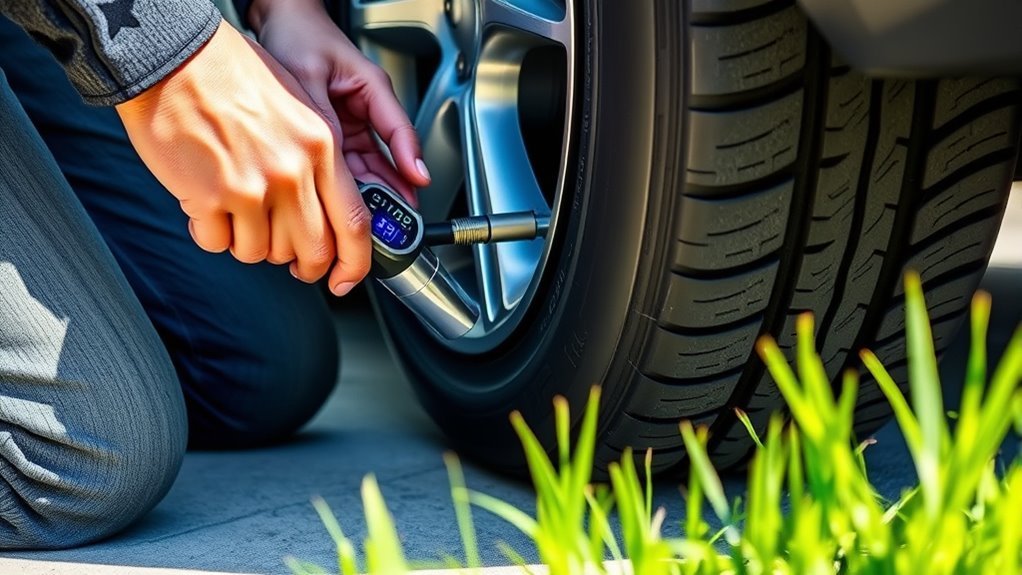
To use a tire inflator for the first time, start by checking your vehicle’s recommended tire pressure. Plug in or charge the inflator, then remove the valve cap from your tire and securely attach the inflator’s nozzle. Monitor the pressure using the inflator’s digital display until you reach the desired PSI. Once inflated, detach the nozzle, replace the valve cap, and store the inflator properly. For a smoother experience, you’ll want to know about important features and troubleshooting tips.
What Is a Tire Inflator and Why Do You Need One?
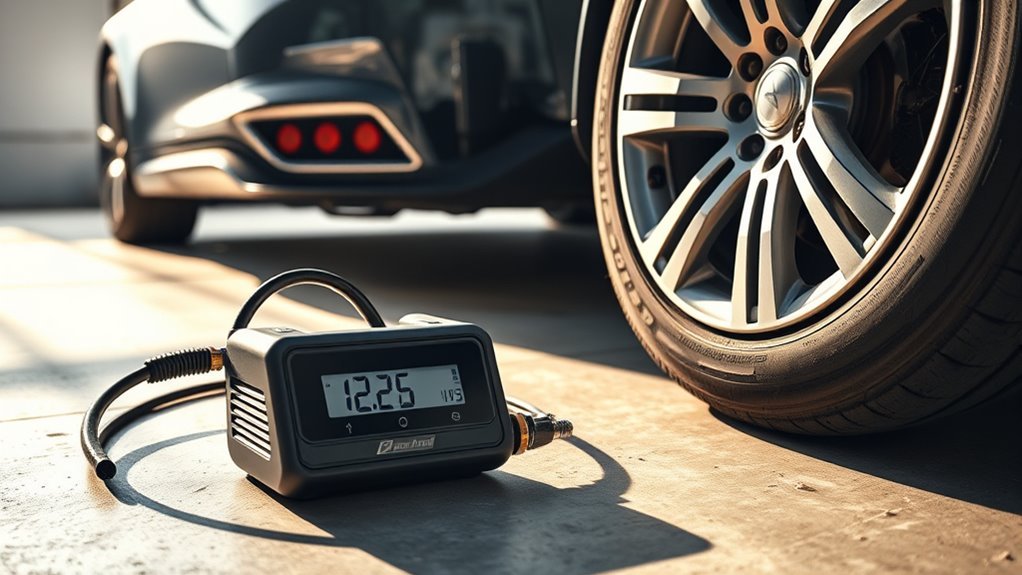
A tire inflator is an essential tool for any vehicle owner, designed to efficiently inflate tires to their ideal pressure. Maintaining proper tire pressure is vital for peak performance, safety, and fuel efficiency. By using a tire inflator, you can reduce uneven tire wear, enhancing your vehicle’s longevity. To achieve this, guarantee a proper connection between the inflator and the tire valve; this minimizes air loss during inflation. It’s recommended to select a tire inflator capable of at least 100 psi (6.89 bar) to meet the demands of most vehicle tires. Regularly checking and inflating your tires—ideally once a month or before long trips—guarantees safe driving conditions and empowers you to take control of your vehicle’s maintenance.
Types of Tire Inflators: Corded vs. Cordless
When deciding between corded and cordless tire inflators, it’s essential to weigh the benefits of each type based on your specific needs. Corded inflators connect to your vehicle’s 12V power outlet, offering consistent power for quick, heavy-duty inflation. They typically exceed 100 psi, making them ideal for larger vehicles. Conversely, cordless inflators run on rechargeable batteries, providing unmatched portability and convenience, allowing inflation without being tethered to a power source. However, battery life and inflation speed can vary.
| Type | Advantages | Disadvantages |
|---|---|---|
| Corded | Consistent power, high psi | Limited mobility, needs power source |
| Cordless | Portable, convenient | Variable battery life, lower psi |
| Portable | Great for emergencies, easy to store | Often less powerful than corded |
Key Features of Effective Tire Inflators
Choosing the right tire inflator involves not just the type—corded or cordless—but also understanding the key features that enhance performance and usability. Here are three essential features to look for:
- Digital Display: A clear, easy-to-read digital pressure gauge guarantees accuracy during inflation, allowing you to monitor tire pressure effortlessly.
- Automatic Shut-Off: This feature lets you set a desired pressure level, preventing over-inflation and making the process worry-free.
- Portable Inflator: Lightweight and compact designs enable easy storage in your vehicle’s trunk, assuring you’re always prepared for emergencies or quick inflation needs.
Understanding Recommended Tire Pressure for Optimal Inflation
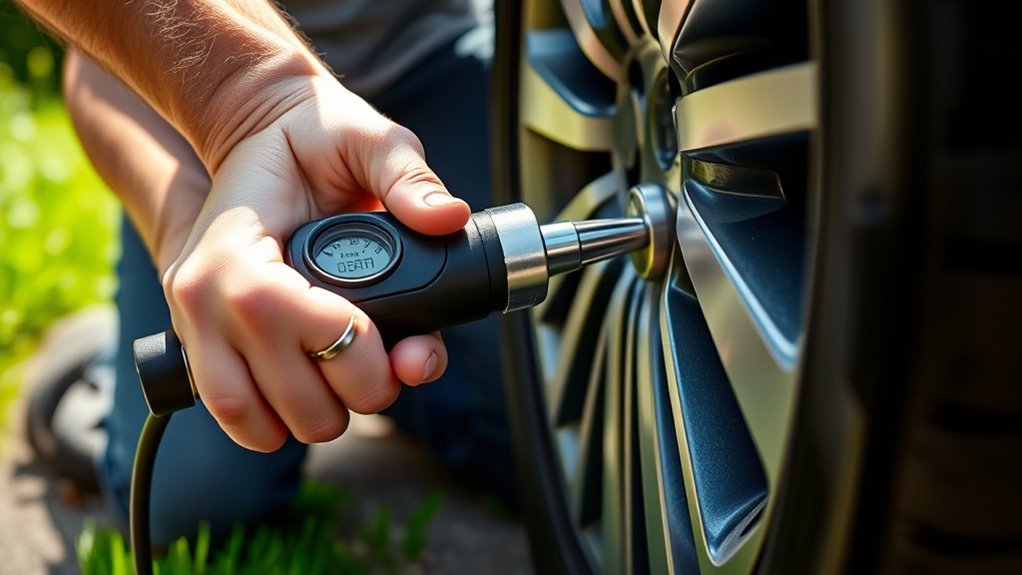
To achieve ideal tire inflation, you must first locate the recommended pressure information, typically found on the driver’s side door pillar or in your owner’s manual. Accurate readings are essential since both under-inflation and over-inflation can lead to safety issues and decreased performance. Always make sure you’re using a high-quality tire pressure gauge to verify the correct PSI before inflating your tires.
Locate Recommended Pressure Information
Finding the correct tire pressure for your vehicle is crucial for ideal performance and safety. To locate the recommended pressure, follow these steps:
- Check the Owner’s Manual: This document typically contains the specific recommended pressure for your make and model.
- Look for the Sticker: A sticker on the driver’s side door pillar often displays the ideal pressure readings, usually between 30 to 35 PSI.
- Use a Tire Pressure Gauge: When measuring, verify your tires are cold for the most accurate readings, avoiding any excess heat from recent driving.
Importance of Accurate Readings
While it may seem minor, ensuring your tires are inflated to the recommended pressure is crucial for both safety and performance. Knowing the specific PSI for your vehicle, found in your owner’s manual or on the driver’s door pillar, is fundamental. Most passenger vehicles require between 30 to 35 PSI, but even slight deviations can impact peak performance. Under-inflated tires can reduce fuel efficiency by up to 3% for every 1 PSI drop, emphasizing the need for regular checks. To achieve accurate readings, use a high-quality tire pressure gauge. This tool will help you maintain correct tire pressure, enhancing tire lifespan and handling, while markedly lowering the risk of blowouts and accidents. Prioritize this small yet essential task.
Getting Your Tire Inflator Ready to Go
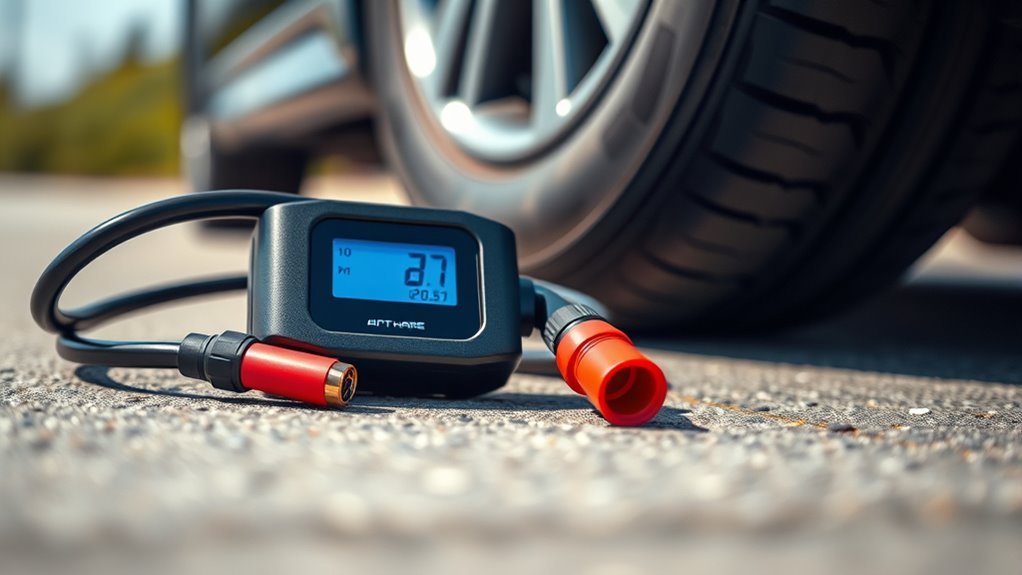
Before you begin inflating your tires, make certain your tire inflator is properly prepared for use. Follow these steps to ascertain you’re ready:
- Power Source: Check whether your tire inflator is plugged into a 12V outlet in your vehicle or confirm the rechargeable battery is fully charged for cordless use.
- Inspect Equipment: Examine the air hose and connections for any visible damage or blockages that could hinder proper inflation.
- Readiness Check: Keep the recommended tire pressure information handy, and have a reliable tire pressure gauge available to double-check readings during and after inflation.
Step-by-Step Guide to Inflating Your Tires
To successfully inflate your tires, follow these straightforward steps for an efficient process. First, check the recommended tire pressure in your owner’s manual or on the driver’s door pillar sticker. Next, verify your tire inflator is powered—plug it into your vehicle’s 12V outlet or charge its battery if cordless. Remove the valve cap from the tire and securely attach the inflator’s nozzle to the valve stem, ensuring no air leaks. Use the inflator’s gauge or a separate pressure gauge to monitor the pressure, gradually inflating the tire until it reaches the desired pressure. Once achieved, detach the inflator, replace the valve cap, and store the inflator safely for future use. Empower yourself with proper tire inflation!
How to Monitor Tire Pressure While Inflating?
How can you guarantee your tires are inflated to the correct pressure without exceeding it? Monitoring tire pressure during inflation is essential for safety and performance. Follow these steps for effective monitoring:
Ensure your tires are safely inflated by regularly checking pressure during inflation to avoid over-inflation and potential hazards.
- Check the Recommended PSI: Refer to your vehicle’s owner’s manual or the sticker on the driver’s door pillar for the ideal tire pressure before you start.
- Use a Gauge: Utilize the inflator’s built-in gauge or a high-quality tire pressure gauge to regularly check the pressure as you inflate.
- Inflate Gradually: Inflate the tire in increments, stopping periodically to monitor the pressure. This helps you avoid over-inflation, which can lead to tire damage or blowouts.
Mistakes to Avoid With Tire Inflators
While using a tire inflator can seem straightforward, many common mistakes can compromise your tire maintenance and safety. First, always check the tire pressure with a gauge before starting the inflation process; beginning with an incorrect baseline can lead to over-inflation or under-inflation. Confirm the inflator nozzle is securely attached to the tire valve stem to prevent air leaks, which can skew your pressure readings. Never exceed the recommended pressure stated on the tire or vehicle manual, as this can damage the tire and heighten the risk of blowouts. Don’t leave the inflator running unattended; it may lead to over-inflation. Finally, allow the inflator to cool between uses to prevent overheating and prolong its lifespan.
How to Troubleshoot Your Tire Inflator?
Troubleshooting your tire inflator requires a systematic approach to identify and resolve common issues. Follow these steps to guarantee peak performance:
- Power Source: If your inflator isn’t powering on, check the power source and verify the vehicle’s battery if you’re using a 12V model.
- Inflation Speed: For slow inflation, inspect the air hose for blockages or leaks. Confirm a secure connection to the tire valve stem to prevent pressure issues.
- Pressure Readings: If you receive inaccurate pressure readings, recalibrate the gauge or compare it with a known working gauge for accuracy.
Essential Maintenance Tips for Your Tire Inflator
Maintaining your tire inflator is key to guaranteeing its longevity and reliable performance. Start by regularly inspecting the air hose and components for any signs of wear or damage, which can compromise safety. After each use, clean the inflator to prevent dust and debris buildup that can impair functionality. Store your tire inflator in a dry, secure location, shielded from extreme temperatures, to prolong its lifespan. Periodically check the pressure gauge for accuracy and calibrate it if necessary to guarantee precise tire inflation. Finally, maintain the inflator’s power source by confirming rechargeable batteries are charged and that corded options are free from frays or damage. Following these maintenance tips will keep your tire inflator performing effectively.
Frequently Asked Questions
How to Put Air in Tires for Dummies?
To put air in tires, know your tire pressure basics. Avoid common inflator mistakes by securely attaching the nozzle. Use an accurate gauge to monitor pressure, ensuring you reach the recommended level for ideal performance.
What Is the 3% Rule for Tires?
The 3% rule for tires states you should maintain tire pressure within 3% of the recommended PSI. Regular inflation frequency and careful tire maintenance prevent over-inflation, ensuring ideal performance, safety, and improved fuel efficiency.
What Is the 5 Psi Rule?
In the domain of tire maintenance, the 5 PSI rule guides your journey: inflate to 5 PSI below the recommended pressure, ensuring safety and ideal performance. Check frequently to maintain proper tire pressure and avoid mishaps.
How to Use a Tire Inflator?
To use a tire inflator, first check the tire pressure. Choose the right inflator type, attach it securely, and follow safety tips. Monitor pressure during inflation to avoid over-inflation and guarantee peak performance.
Conclusion
Using a tire inflator can simplify your vehicle maintenance and enhance your safety on the road. Did you know that over 30% of drivers neglect their tire pressure, potentially risking blowouts and decreased fuel efficiency? By following this guide, you’ll not only guarantee your tires are properly inflated but also extend their lifespan and improve your vehicle’s performance. Remember, a well-maintained tire inflator is key to hassle-free inflation, so take care of it, and it’ll take care of you.


