You’ll replace worn U‑joints when you feel vibration under the seat, hear clunks shifting, or see play at the driveshaft. Support the truck on stands, mark shaft alignment, then unbolt the shaft, pull it from the differential, and press out old caps. Fit new U‑joint caps squarely, install retaining clips, reseal if needed, and torque bolts to spec before a road test for leaks and vibration. Continue for step‑by‑step details and tips.
Quick Answer: When to Replace Tacoma U‑Joints (Symptoms & Urgency)
If you feel strong vibrations under the seat during acceleration that stop when you coast, you’ve likely got worn u-joints and should address them immediately; other clear signs include unusual noises when shifting between drive and reverse, noticeable play when you wiggle the driveshaft, and transmission fluid leaks around the driveshaft seal—ignore these and you risk more severe driveline damage. Act fast: vibration causes tied to failing joints escalate quickly and can strand you. Inspect visually and physically—check for play by wiggling the driveshaft, listen for clunks when shifting, and look for fluid at the seal. Prioritize u joint maintenance on a schedule if you use your Tacoma off-road or tow regularly. If you detect any of these symptoms, plan replacement without delay to reclaim control and freedom on the road. Don’t let small faults limit your mobility; addressing u-joints promptly preserves driveline integrity and keeps you moving confidently.
Tools, Parts, Cost, Time Estimate, and Safety Gear
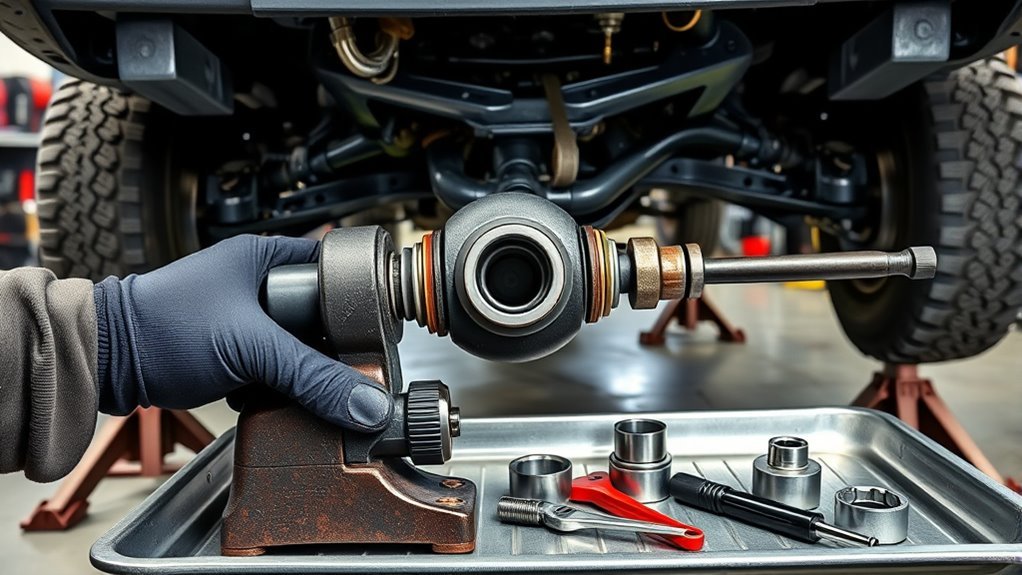
You’ll need a u-joint press, 14mm socket and wrench, pliers or a flathead, a paint marker for alignment, and a jack or stands to support the truck. Buy u-joints that fit your Tacoma plus retaining clips (and seals if you spot leaks); expect parts to cost $50–$100 and professional labor $100–$200. Wear safety glasses and gloves, secure the vehicle on jack stands, and plan for about 2–4 hours depending on experience.
Required Tools List
Before you start, gather the right tools, parts, and safety gear so the job goes smoothly: a u-joint press (or suitable C-clamp and sockets), 14mm socket and wrench, pliers, a flathead screwdriver, and a paint marker for alignment; new U-joints and retaining clips (plus a replacement drive shaft seal if you spot leaks); gloves and eye protection; expect parts to cost $30–$100 and plan 2–4 hours depending on experience, with additional tool costs if you need to buy a press. You’ll perform disciplined U joint maintenance and mark components for Drive shaft alignment before disassembly. Gather tools, clear workspace, and protect yourself. Follow these steps:
- Verify tools and parts.
- Mark alignment and secure shaft.
- Wear gloves and eye protection.
Parts And Costs
1 key to a smooth U-joint replacement is having the right gear: a U-joint press (or rented alternative), pliers and a flathead for retaining clips, a torque wrench for final tightening, and a paint marker for alignment, plus gloves and safety glasses. Choose correct u joint types for your Toyota Tacoma—cross-and-bearing OEM or upgraded sealed units—and confirm fitment before disassembly. Expect parts to run $20–$100 each; buy matched pairs if driveshaft balance matters. Factor rental fees for the press and any fluids if you discover leaks. Plan on 2–4 hours for the job, shorter with experience. Track replacement intervals based on mileage, load, and symptoms rather than calendar time. Budget accordingly and act decisively to reclaim mobility.
Safety Gear And Time
Although the job’s straightforward, you should wear safety glasses and gloves and support the vehicle securely on jack stands before you start work. You’ll use a u-joint press, 14mm socket, pliers, flathead screwdriver, and jack/stands; buy new u-joints, retaining clips, and seals if needed. Expect parts to cost $50–$150. Observe safety precautions: work on level ground, chock wheels, and keep hands clear of pinch points.
- Prep: gather tools and parts, verify compatibility, set repair timeline (2–4 hours).
- Secure: jack, place stands, double-check stability before loosening fasteners.
- Execute: press out old u-joint, install new unit with clips, inspect seals and test drive.
You’ll be empowered and efficient when you follow this plan.
Inspect the Tacoma Drive Shaft for Worn U‑Joints
Start by supporting the truck and safely accessing the drive shaft, then grab the shaft near each u-joint and wiggle to check for any play—significant movement means the joint needs replacement. While you’re inspecting, listen for clunking or grinding when shifting between drive and reverse to corroborate worn u-joints. Finally, check the drive shaft seal area for transmission fluid leaks, mark reference points for alignment, and address any leaks before reassembly.
Check For Play
Before you remove the drive shaft, inspect the u‑joints for visible wear—look for rust, loose caps, or grease leakage—and then firmly wiggle the shaft by hand while watching each joint; any noticeable movement or play, or clunking/popping when shifting between drive and reverse, indicates the u‑joints need replacement. You’ll perform a focused drive shaft inspection and basic u joint maintenance to confirm service is necessary. Mark reference points on the shaft before removal so you can restore balance on reassembly. Follow these steps:
- Visually scan each u‑joint for rust, scoring, or loose caps; note suspect joints.
- Grip the shaft near each joint and twist/wiggle; any perceptible play means replacement.
- Shift between drive and reverse while a helper listens for clunks; document symptoms for repair.
Inspect For Leaks
Inspect the drive shaft and surrounding seals for any fluid leaks, paying close attention to the area where the shaft meets the transmission and differential; fluid at these joints can indicate a failing seal that allows contamination or loss of lubrication, which accelerates u‑joint wear. Begin leak detection by performing a thorough fluid inspection: wipe seals, run the vehicle briefly, then recheck for fresh residue. With the vehicle safely supported, grasp and wiggle the drive shaft to check for play—any movement suggests worn u‑joints. Listen while shifting between drive and reverse for clunks or grinding. Visually inspect u‑joint caps for rust, scoring, or missing grease. Mark reference points on the shaft to preserve alignment during disassembly and maintain your control over the repair.
Mark the Drive Shaft for Alignment Before Removal
1. You’ll start with drive shaft marking using a paint marker to confirm correct reassembly. Make a bold, visible mark on the drive shaft and a matching mark on the differential flange so the original orientation and balance are preserved.
1. Check these alignment techniques visually and note the position of u-joints and surrounding components. Mark any reference points that matter for balance and rotation; clarity now prevents vibration later.
1. Verify marks are distinct and easy to see from under the truck. Before removal, double-check that paired marks line up perfectly and photograph the layout for backup. If a mark is faint, reinforce it.
Follow these steps exactly: clean the contact surfaces, apply the paint marker, record positions, and confirm alignment before loosening fasteners. You’re preserving the truck’s balance and your freedom from needless rework — precise marks and disciplined alignment techniques keep the drive shaft behaving as intended when you reinstall it.
Remove the Drive Shaft From the Rear Differential
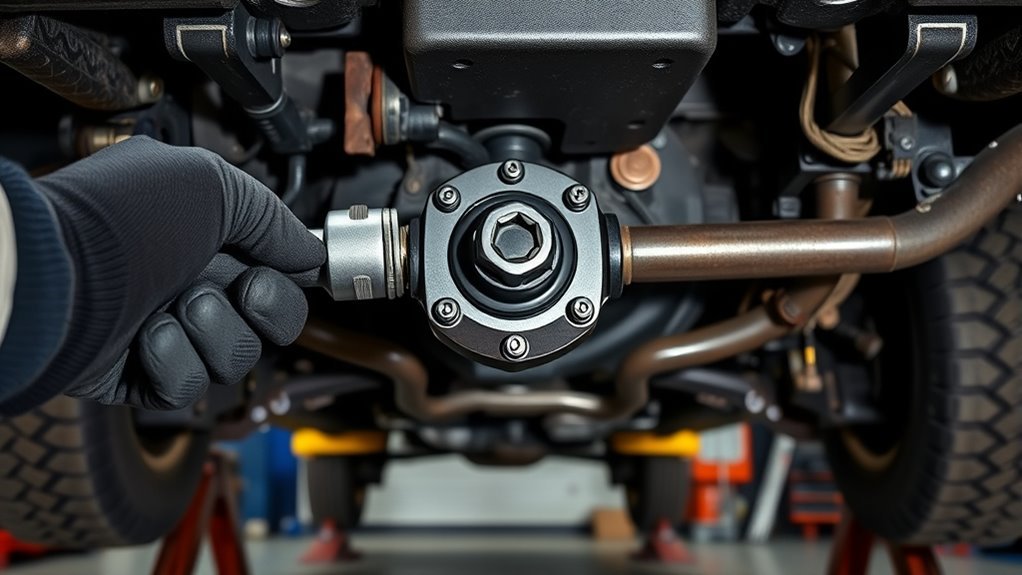
Loosen the four 14mm nuts and bolts securing the drive shaft to the rear differential, spraying PB Blaster on stubborn fasteners and supporting the shaft with a jack or stands to prevent it from dropping. Marked alignment points you made earlier guide reassembly; keep those visible. Break the flange free by tapping the shaft end lightly—don’t let it fall; your support must hold the shaft’s weight. Once loosened, pull the drive shaft straight back from the differential flange, using steady, controlled force to avoid binding universal joints.
As you withdraw the shaft, perform a focused differential inspection: check the seal for leaks, look for scoring or gouges on the yoke, and note any bearing play. This is drive shaft maintenance in action—identify damage now so you can act freely and decisively. Set the shaft on clean stands, keeping the alignment marks aligned, and prepare the assembly area for the next step.
Remove Old U‑Joints: Clips, Bearings, and Common Gotchas
Start by removing the retaining clips with pliers or a flat blade, working one clip at a time so the cross doesn’t suddenly shift; keep the yoke supported as you go. Use proven clip extraction techniques: grip firmly, pry straight out, and avoid twisting that can mar the groove. Remove one clip, then the opposite, so the joint stays constrained.
- Use a u-joint press and follow bearing removal tips: press the cup out squarely, collect any loose needle bearings, and inspect the yoke for pits.
- Check the rubber boot; if it’s torn or hardened, plan for replacement—damage often signals contamination.
- Clean the clip grooves and mating surfaces with a brush and solvent so new clips will seat reliably.
Work deliberately and free yourself from hesitation: clear workspace, light, and steady force minimize surprises. Don’t proceed until all bearings and debris are fully cleared.
Install New U‑Joints and Seat Retaining Clips Correctly
Position the new u-joint to the reference marks and press it squarely into the yoke using a u-joint press, taking care that the needle bearings stay seated in each cap; once the caps are fully seated, install the retaining clips into their cleaned grooves until they snap into place, then verify each clip is flush and fully engaged before moving on.
Clean grooves first so clips seat without obstruction. Align the joint to your marks to preserve balance — this applies to all u joint types. Use steady, centered pressure with the press; if a cap binds, back out and reseat to avoid displacing bearings. After caps are driven, fit clips one at a time, seating them fully in the groove until you hear or feel the snap. Inspect each clip visually and by hand to confirm it’s fully retained. Recheck drive shaft alignment to your reference marks before continuing. These installation techniques minimize vibration and failure, and they let you reclaim control over a safe, reliable drivetrain.
Reinstall the Tacoma Drive Shaft and Torque Bolts to Spec
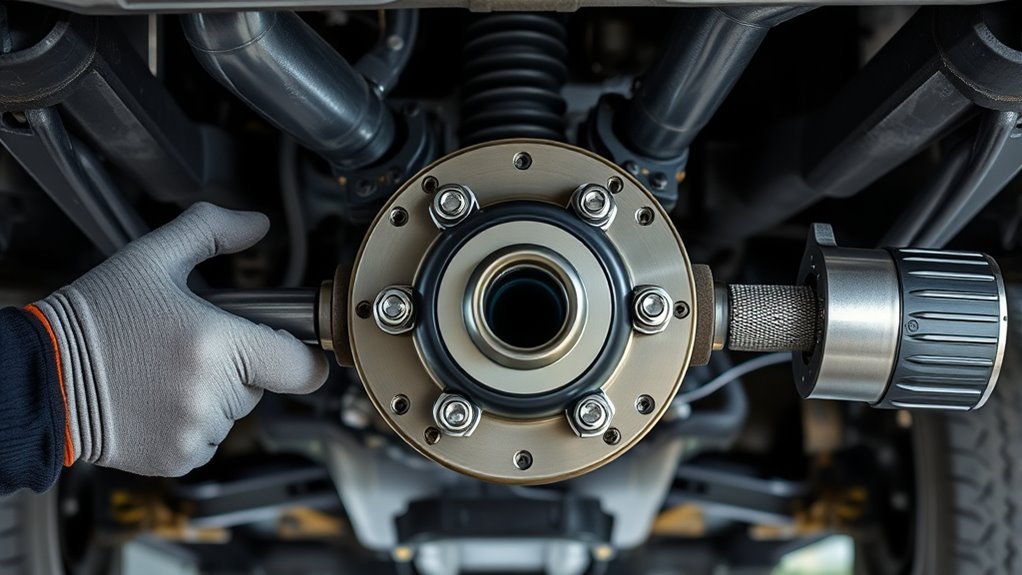
Line up the marks you made on the shaft and flange so the balance is exact before you start. Hand‑thread all bolts and nuts to guarantee proper engagement and avoid cross‑threading. Finally, tighten the support bolts and differential fasteners to the specified torque values and recheck alignment.
Align Marks Precisely
Carefully align the reference marks you made earlier before sliding the drive shaft back into the transmission, since correct orientation preserves balance and prevents vibration. Use deliberate alignment techniques and don’t force the shaft; gentle insertion prevents damage. Reinstall the support and fasteners, then verify marks.
- Match marks on shaft, transmission and differential; insert shaft gently until seated for vibration prevention.
- Fit the drive shaft support and install the two 14mm bolts, aligning bolt holes before seating to maintain balance and freedom.
- Tighten the four rear differential nuts and bolts to specified torque, then recheck all reference marks to confirm correct positioning and guarantee liberated, smooth operation.
Hand-Thread Bolts First
Insert the drive shaft into the transmission gently without forcing it, then hand-thread the two 14mm transmission bolts and the four 14mm differential nuts and bolts into their original reference-marked positions to confirm alignment before any torque is applied. You’ll feel whether splines seat correctly; hand threading benefits include avoiding cross-threading and preserving those reference marks so balance stays true. Use your reference marks and snug each fastener by hand until threads engage smoothly, following installation tips: start opposite corners on the differential to keep even seating, and keep the shaft centered. Once all bolts are hand-threaded and alignment is confirmed, visually recheck marks and verify nothing’s binding. This controlled approach protects components and empowers you to finish with confidence.
Torque To Spec
Now torque the drive shaft fasteners to the factory specs, matching your reference marks and using a calibrated torque wrench to prevent imbalance or damage. You’ll restore drive shaft alignment and guarantee freedom from vibration by following torque specifications precisely. Use the marks you made during removal to orient the shaft before final tightening.
- Tighten the two 14mm drive shaft support bolts to about 40–50 lb‑ft with a torque wrench, confirming alignment marks remain matched.
- Torque the four rear differential bolts and nuts to roughly 75–85 lb‑ft per the specification, using controlled, even passes.
- Recheck every fastener’s torque and visual alignment; secure connections mean safe, liberated driving.
Post‑Repair Checks: Road Test, Vibration, and Leak Inspection
Begin the road test immediately after reassembly to confirm the u-joints and driveshaft behave under load: perform a controlled vibration assessment and noise inspection while accelerating and coasting. Drive at low speed first, then increase to typical highway pace, noting any tremor that appears under throttle and whether it disappears when you let off the gas. Listen for abnormal clunks or grinding when shifting from drive to reverse; those sounds often signal misalignment or loose components.
While driving, glance at the driveshaft through a safe windowed position or after stopping to inspect for visible play or axial movement. Park, recheck torque on flange bolts and nut fasteners to spec if you detect movement. Inspect the seal at the transmission tailshaft for fluid leaks; even a small seep can compromise safety and performance. If everything stays quiet, vibration-free, and dry, you’ve liberated the driveline—document your checks and proceed to regular follow-ups.
Troubleshooting Persistent Vibration and When to Consult a Shop
Even if the driveshaft looks secure after your road test, persistent vibration under the seat when accelerating means you should do a focused inspection before you drive more. You’re looking for drivetrain-related clues: vibration that stops when coasting points at driveline diagnostics, not the engine. Check u-joint play, listen for clunks when shifting between drive and reverse, and inspect the drive shaft seal for transmission fluid leaks. If you find play, torn seals, or fluid, don’t delay.
- Inspect u-joints: lift the shaft, torque by hand, and feel for looseness or rough rotation; replace if any play or binding appears.
- Isolate vibration sources: test at varying speeds and under load; note whether vibration correlates with rpm, speed, or gear changes to narrow the fault to the driveshaft, carrier bearing, or transmission.
- Consult a shop: if you lack tools, the fault persists after replacement, or shifting noises occur, get professional driveline diagnostics to avoid further damage.
Frequently Asked Questions
How Much Does It Cost to Replace a Tacoma U-Joint?
Expect $150–$300 per U-joint for Professional Installation; if you choose DIY U Joint replacement, parts run $20–$50 and you’ll liberate yourself from labor fees while saving most of the typical $75–$150 hourly mechanic charge.
How Long Do Tacoma U-Joints Last?
Like a marathon runner, your Tacoma’s U joint lifespan is typically 60,000–100,000 miles. You’ll inspect regularly, grease sealed bearings, avoid salt/moisture, and follow maintenance tips so you’ll prevent failure and keep drivetrain freedom.
Conclusion
You’ve swapped the worn U‑joints, realigned the drive shaft, and torqued the bolts — like replacing a frayed rope in a pulley, you’ve restored the Tacoma’s steady heartbeat. Drive it gently, listen for new rhythms, and watch for leaks or vibration. If the thump or wobble returns, don’t force it; get a pro to inspect balance and pinion angle. With care and checks, you’ll keep the truck running true and confident.