
You’ll need a 14mm socket with breaker bar, a 5mm Allen, gloves and the correct Continental OE replacement belt. Release the tensioner counterclockwise to create slack, slip the old belt off beginning at the alternator, and remove any remnants. Route the new belt around the fan, power steering, idler, water pump and tensioner per the factory diagram, then release the tensioner slowly to seat ribs fully. Start the engine briefly to check tracking and noise; continue for detailed troubleshooting and tips.
Quick Answer: Tools, Time, and the 5-Step Swap
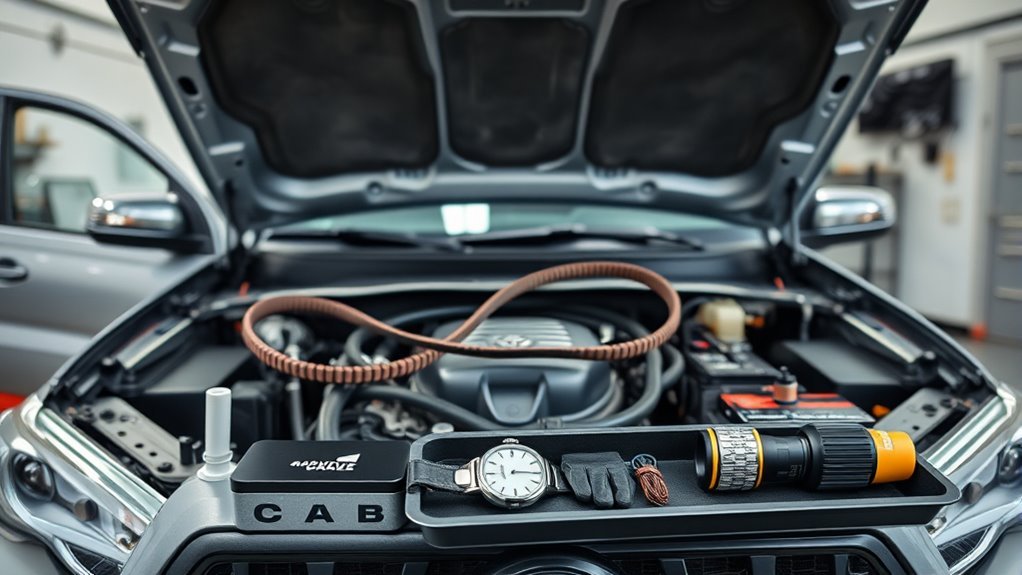
Grab a 14mm socket, breaker bar, and 5mm Allen key — this job takes about 30 minutes. You’ll rotate the tensioner counterclockwise with the breaker bar, then insert the Allen key into the service hole to hold it open. Slide the old belt off the pulleys and fan carefully, watching fan blades as you work. Install the new belt by routing it around the alternator, power steering, idler pulleys, and other key points, following the factory path.
Double-check alignment so the belt sits square in each pulley groove before releasing the tensioner. Start the engine briefly and observe belt tracking; stop immediately if it walks off a pulley.
Follow belt longevity tips: keep pulleys clean, replace worn tensioners, and inspect for cracks or glazing to prevent common wear. You’ll reclaim reliability and autonomy by maintaining this simple system, freeing you from premature roadside failures.
Tools & Parts Checklist for Tacoma Serpentine Belt
Gather these essentials before you start: a 14mm socket, breaker bar, and 5mm Allen key to manipulate the tensioner, plus wire snips in case you need to cut the old belt. Use the Continental OE Technology Series 4070834 as the replacement belt and consider gloves and safety glasses. Plan to replace the belt roughly every 40,115 miles to avoid unexpected failures.
Essential Tools Needed
Before you start, make sure you have the right tools and parts: a 14mm socket for the tensioner, a breaker bar to create slack, and a 5mm Allen key to lock the tensioner in place, plus the replacement belt (for example, Continental OE Technology Series 4070834). You’ll also want safety gloves and glasses, wire snips for removing a damaged belt, and to remove jewelry before you work. Lay tools within reach and clear the workspace to move freely. Use the breaker bar with steady force to relieve tension, then insert the Allen key to hold the tensioner while you route the new belt. Inspect pulleys and practice basic tensioner maintenance now so the system frees you from repeated shop visits. Keep a cold beer for afterward.
Replacement Belt Details
Now that your tools are laid out and the tensioner procedure is clear, confirm you have the specific parts for a Tacoma serpentine belt job: a 14mm socket, breaker bar, and 5mm Allen key for the tensioner; safety gloves and glasses; and the replacement belt—typically a Continental OE Technology Series 4070834. Verify belt quality: inspect the box and part number, check material finish, and confirm fitment to avoid returns. Carry the ~$35 belt and plan about 30 minutes for the swap. Note replacement frequency: change the belt every 40,115 miles or sooner if you see cracking, glazing, or noise. Keep bearings and pulleys in mind; replacing the belt on schedule preserves freedom from roadside failures and sustains your vehicle autonomy.
Removing the Old Belt : Step-by-Step (Safety First)
Start by rotating the belt tensioner counterclockwise with a breaker bar to create slack, then carefully pull the belt off the alternator pulley first and work it around the fan until it’s fully detached from every pulley; remove any jewelry and keep loose clothing clear of the fan while you work, and verify the old belt is no longer looped around any component before proceeding.
- Rotate tensioner: use a breaker bar to rotate counterclockwise, freeing the belt; monitor tension adjustment to relieve load safely.
- Remove from alternator: grip the belt and slide it off the alternator pulley first to avoid binding.
- Work around fan and pulleys: guide the belt around the fan, freeing it from each idler and accessory pulley until fully detached.
- Safety check: confirm no belt wear remnants remain on pulleys, remove debris, and verify you’ve removed jewelry and secured clothing.
You’ll leave the system liberated and ready for the next step without risking injury or contaminating new components.
Installing the New Tacoma Serpentine Belt : Routing Guide
1. Position the new serpentine belt behind the fan so it won’t catch the blades. Begin belt routing by guiding it around the power steering pulley, then slide it over the idler pulley, keeping the ribs seated in the grooves. Pass the belt under the water pump pulley and route it around the tensioner pulley, confirming alignment on each contact surface.
Loosen the tensioner just enough to allow the final approach to the alternator pulley; don’t overextend. After routing the belt around the crank pulley, bring it over the idler pulley and lay it around the AC condenser for final placement. With the belt seated on every pulley, release the tensioner slowly so it applies proper tension to the system. Double-check each pulley for full rib engagement.
Installation tips: work deliberately, follow the belt routing diagram if available, and keep hands clear of the fan. This method frees you from guesswork and secures dependable operation.
Troubleshooting: Misalignment, Tight Fit, and Stuck Tensioner

Check the belt tracking first by inspecting for uneven wear or listening for squeaks, then verify routing and pulley alignment. If the new belt feels tight, work it over the fan and pulleys so it seats fully in every groove before applying tension. For a jammed tensioner, put a 14mm socket on the bolt, use a breaker bar to rotate it counterclockwise with steady force, and lubricate or replace the tensioner if it won’t hold position.
Belt Tracking Issues
If the belt isn’t tracking straight, you’ll quickly see uneven wear or hear rubbing—so inspect seating, routing, and tensioner position before running the engine. You want freedom from breakdowns, so act methodically: perform alignment checks, watch for belt wear, and confirm pulleys accept the belt in their grooves.
- Verify routing against the diagram; reseat the belt fully in each groove.
- Spin pulleys by hand; feel for roughness or play indicating misalignment.
- Observe the tensioner: if it’s locked or slow, replace or service it before finalizing installation.
- With the engine off, run the belt several rotations and recheck tracking on all pulleys; correct any lateral drift immediately.
Stay deliberate—proper tracking prevents failure and keeps you mobile.
Tight Belt Maneuvering
When you encounter a tight fit routing the new serpentine belt around the fan, work deliberately: avoid contacting the fan blades, seat the belt fully in every pulley groove, and use the tensioner service hole or a breaker bar to relieve tension so the belt can slip into place without forcing it. Stay focused on belt routing and fan clearance; small nudges at the correct groove prevent damage. If the tensioner feels stuck, rotate it counterclockwise with controlled force to release preload. After seating the belt, inspect each pulley visually and by finger to confirm the belt sits squarely in the grooves. If you spot misalignment, relieve tension and reseat the belt per the Tacoma routing diagram. Move confidently—this frees you from repeated constraints.
Jammed Tensioner Release
Having seated the belt and verified pulley alignment, address a jammed tensioner methodically to avoid damage and wasted effort. You’ll free it without shortcuts: apply penetrating oil to the pivot, let it soak, then gently tap to break corrosion—this is core tensioner maintenance and rust prevention. Confirm the tensioner aligns with its mounting brackets and nothing obstructs its travel. If movement’s still stiff, rotate counterclockwise; a rough or seized feel signals damaged bearings or a worn assembly that must be replaced.
- Soak pivot with penetrating oil; tap gently to free debris.
- Verify tensioner and bracket alignment; remove obstructions.
- Confirm belt length/profile for tight-fit clearance.
- Replace if bearings feel rough or motion isn’t smooth.
Post-Install Checks, Testing, and Maintenance Tips
After you’ve torqued the tensioner and routed the belt, visually confirm the belt sits snugly in every pulley groove and that pulleys line up; misalignment or gaps can cause rapid wear or failure. Use these installation tips and maintenance reminders: clear debris from pulleys, verify accessory pulleys spin freely, and confirm the belt sits centered on each rib.
Start the engine briefly and listen for squeaks, chirps, or squeals; unusual noises signal improper routing or tension. Shut down, recheck routing and tensioner position if you hear anything. Drive the truck a short distance, then re-inspect tension and seating; belts can settle and need slight retensioning to prevent slippage.
Regularly monitor for cracks, fraying, glazing, or uneven wear, especially after extreme conditions. Replace at roughly 40,115 miles or sooner if signs appear. Keep a maintenance log noting date, mileage, and observations to support proactive replacement and maintain your vehicle’s freedom from roadside failure.
Frequently Asked Questions
How Much Does It Cost to Replace a Serpentine Belt on a Toyota Tacoma?
You’ll pay about $35 for serpentine belt replacement costs if you DIY; shops charge $70–$100 for complete replacement. Buy a Continental OE belt for $25–$35, replace around every 40,115 miles to stay free.
How Often Should You Change the Serpentine Belt on a Toyota Tacoma?
Like a metronome, you should replace the serpentine belt every ~40,115 miles; inspect every 5,000–10,000 miles. Follow maintenance tips, factor driving conditions, and act on noises or steering loss to keep freedom on the road.
Conclusion
You’ve finished the swap: recheck routing, torque fasteners, and verify the belt seats snugly on every pulley. Start the engine briefly, watch for wobble or squeal, then turn off and re-torque if needed. If anything seems off, address misalignment or a weak tensioner before driving. With routine checks every few months, you’ll keep the Tacoma reliable—steady as a heartbeat—so small problems don’t become big, expensive surprises down the road.