You can replace a Toyota Tacoma radiator yourself in 2–4 hours if you’ve got basic mechanical skills and the right parts. Drain the coolant, detach upper/lower hoses, undo fan shroud and mounting bolts, cap automatic trans cooler lines, then lift the old radiator straight up. Fit the new unit with correct bushings, torque bolts, reconnect hoses and shroud, refill with 50/50 coolant, run the engine to purge air and check for leaks. Continue for step‑by‑step tips and troubleshooting.
Can You Replace a Toyota Tacoma Radiator Yourself? (Time, Difficulty, Cost)
Wondering if you can replace a Toyota Tacoma radiator yourself? You can — expect 2 to 4 hours depending on experience and model year. Start by evaluating difficulty: it’s moderate. You’ll use basic mechanical skills and common hand tools like sockets and pliers; you won’t need advanced training, just focus and methodical steps. Cost-wise, a new radiator runs about $150–$300; add coolant and any tools you lack. That saves shop labor, typically $100–$150 per hour, so DIY pays off if you value autonomy.
Follow clear, step-by-step procedures to minimize errors: drain coolant, disconnect hoses, remove mounting hardware, swap the radiator, refill and bleed the system. Use DIY Radiator Tips to keep torque values consistent and avoid cross-threading. These Tacoma Maintenance Insights help you reclaim control over maintenance, cut expenses, and build mechanical confidence. Work deliberately, verify seals, and pressure-test before hitting the road.
Tools & Parts Checklist for Tacoma Radiator Replacement (By Model/Year)
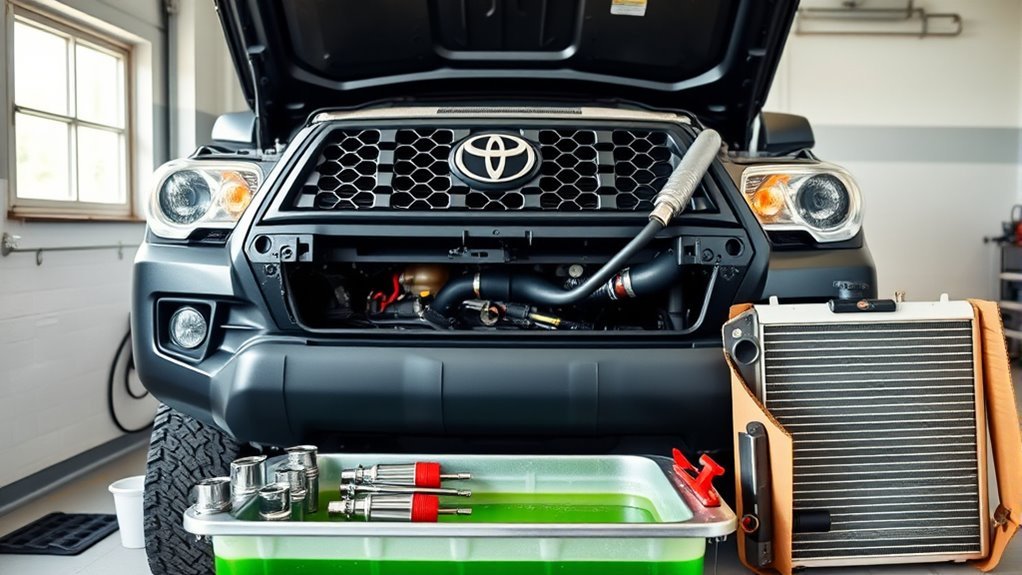
Start by gathering the exact radiator and any model-specific parts for your Tacoma’s year and engine—2005–2015 models require year/engine-matched radiators and often replacement hoses if they show wear. Verify radiator compatibility against VIN, engine code, and transmission type. Collect tools: 10 mm, 12 mm, 15 mm sockets, ratchet, small trim tool, pliers, and a drain bucket sized for full coolant volume.
Prepare parts: new radiator, replacement hoses and clamps, any bushings, and caps for oil cooler lines if you’ll remove them. Have new coolant ready—use the correct coolant types; typically a 50/50 antifreeze/water mix unless dealer specifies otherwise. Bring a funnel for clean refill and a torque spec sheet for mounting bolts.
Lay out tools and parts in order of use. Confirm hose clamp sizes and bushing locations per model year. This checklist frees you to act efficiently and safely during the install.
Drain, Remove Hoses, and Pull the Fan Shroud Safely
Start by positioning a drain pan under the radiator, remove the radiator cap, and open the petcock to fully drain the coolant. Next, pinch the clamps and slide back to detach the upper and lower radiator hoses, keeping the pan in place to catch drips and preventing coolant from contacting engine components. Finally, remove the nine clips on the upper shroud cover, unbolt the fan shroud with a 10 mm socket on both sides, and disconnect the overflow hose so you can lift the shroud clear for radiator removal.
Drain Coolant First
Place a drain bucket beneath the radiator, open the petcock with pliers or your fingers, and remove the radiator cap to accelerate draining, then disconnect the overflow hose to prevent leaks while you work. You’re committing to coolant safety: wear gloves, avoid skin contact, and keep used coolant contained for proper disposal. Follow draining tips: let fluid flow until trickle, then close petcock.
| Step | Action |
|---|---|
| 1 | Position drain bucket |
| 2 | Open petcock & cap |
| 3 | Disconnect overflow hose |
| 4 | Contain & dispose coolant |
After drainage, pinch and slide back the clamp to detach the upper and then lower radiator hoses. Unscrew 10 mm bolts to remove the fan shroud carefully before extracting the radiator.
Disconnect Hoses Carefully
With a drain bucket under the radiator and the petcock opened, pinch and slide back the clamp on the upper radiator hose and pull it straight off the fitting, taking care not to twist or tear the hose; let any residual coolant flow into the bucket, then repeat the same clamp-and-pull procedure on the lower hose. Use proven hose clamping techniques: pinch, back-slide, and avoid levering with screwdrivers that damage radiator hose materials like EPDM or reinforced rubber. Work deliberately, keeping fittings aligned to prevent ragged edges that compromise seals. After hoses are clear, loosen the 10 mm bolts securing the fan shroud on both sides and pull the shroud free to expose the radiator. Maintain spilled-fluid containment and dispose of coolant per local regulations.
Remove Fan Shroud
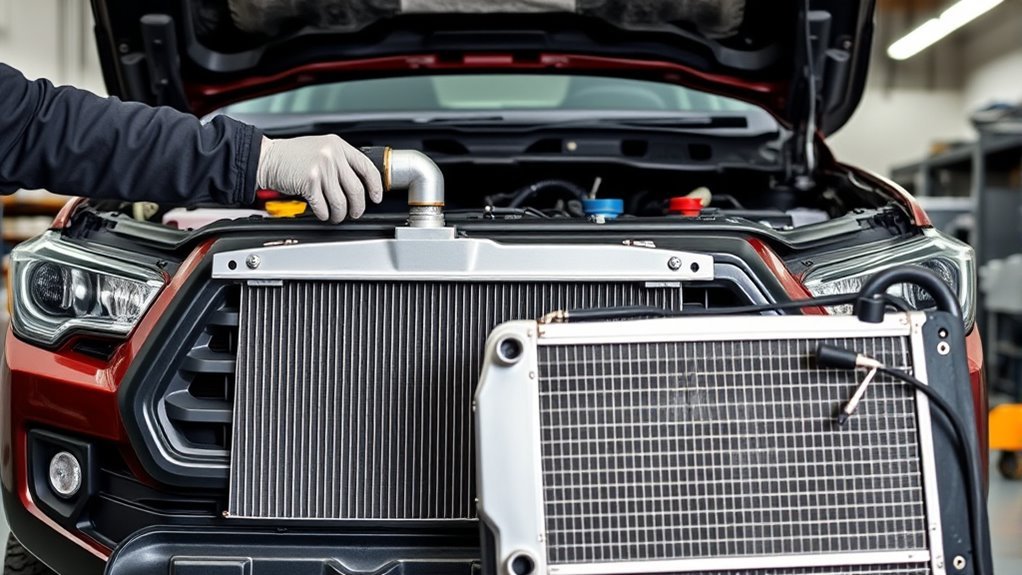
Drain the radiator by opening the petcock and removing the cap, then disconnect the overflow and both upper and lower hoses (pinch each clamp, slide it back, and pull the hose straight off) so the system’s empty and clear of fluid. With fluid contained, remove the nine clips securing the upper radiator shroud cover to expose the fan shroud. Use a 10 mm socket to loosen and remove the bolts holding the fan shroud on both sides. Support the shroud as you free the last fastener to prevent it from dropping onto the radiator or fan. Lift the shroud straight up and out, using controlled movements. These removal techniques protect components and free you to proceed confidently with radiator replacement and reclaim mechanical autonomy.
Remove the Radiator and Handle Automatic Trans Cooler Lines

With the cooling system drained, pinch the clamps on the automatic trans cooler lines, slide them back, pull the hoses off, and immediately cap the lines to prevent fluid loss and contamination. Use a 12 mm socket to remove the radiator mounting bolts (access the top bolts through the front bumper), then lift the radiator straight up and out, avoiding fin or component damage. After reinstalling, reconnect and check the cooler lines for leaks before finishing the job.
Drain And Cap Lines
Start by placing a drain bucket under the radiator and opening the petcock so the coolant empties completely; once drained, close the petcock to prevent spills during removal. You’ll note different radiator types use varied hose fittings and coolant colors—identify them before disconnecting. Cap the automatic transmission oil cooler lines immediately after draining to avoid ATF loss and contamination. Use pliers to pinch the clamps on the trans cooler hoses, slide clamps back, then carefully twist and pull hoses free from the radiator fittings. Keep caps secure and label lines for reinstallation. Verify the petcock is closed and the system is dry before proceeding. Handle cooler lines gently to prevent kinks or damage that would compromise your liberated, empowered repair.
Remove And Lift Radiator
After capping the petcock and transmission cooler lines, disconnect the overflow and upper and lower radiator hoses by pinching their clamps, sliding them back, and pulling the hoses free. Use a 12 mm socket to remove the side bolts; reach top bolts through the front bumper. If you have an automatic, pinch and remove the oil cooler hoses, cap them to limit fluid loss. Lift straight up, guarding fins against tools and edges. Before installing the replacement, verify all ports are sealed.
- Remove hoses and secure clamps to avoid contamination.
- Unbolt radiator mounts with a 12 mm socket.
- Cap automatic trans cooler lines immediately.
- Lift radiator vertically, protect fins from bending.
- Confirm seals and caps to prevent leaks.
Follow these radiator maintenance tips to avoid common radiator problems.
Install the New Radiator and Reassemble the Fan/Shroud
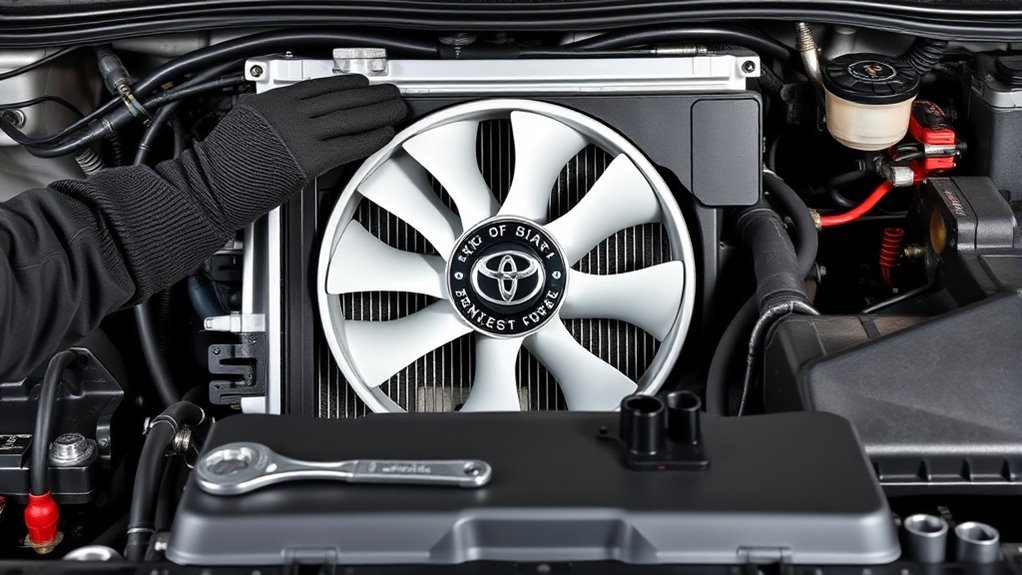
Position the new radiator carefully into the engine bay, making sure the bushings are adjusted so the top hooks sit correctly and you don’t bend the fins. Maintain radiator alignment as you lower it; verify installation tips by visually confirming the top hooks engage the upper mounts and fins remain straight. Once seated, thread the upper bolts and torque them with a 15 mm socket until the radiator is firm but not overstrained.
Reinstall the fan shroud next: align the shroud so the fan clears blades and the shroud tabs match the radiator mounts. Secure both sides with their bolts, tightening evenly to avoid distortion. Reconnect the overflow hose to the filler neck and attach clamps to the upper and lower radiator hoses; make sure clamps are snug and positioned on the hose bead. Final quick inspection: check that wiring and lines are clear of moving parts, bushings are seated, and the assembly is solid. You’re ready to proceed to filling and testing.
Fill, Burp, Test for Leaks, and Troubleshoot Common Issues
With the radiator and fan shroud secured, you’ll move on to filling the cooling system, burping trapped air, and checking for leaks. Use the specified coolant types, a funnel, and a clean workspace. Start cold, pour to the fill neck, then loosely cap.
- Start the engine, watch the temp gauge, and let it reach thermostat open; look for air bubbles rising in the radiator neck.
- Top off coolant as air bubbles escape; continue until level stabilizes with no visible bubbles.
- After a warm cycle, shut down, let the engine cool, then reinstall the cap and recheck level.
- Inspect hose connections, radiator seams, and the petcock for seepage; tighten clamps if you find drips.
- If coolant level drops or leaks persist, re-examine fittings, clamps, and hoses for damage; replace components as needed.
Stay vigilant during initial startup to prevent overheating. These steps free you from repeat failures and secure a reliable cooling system.
Frequently Asked Questions
How Much Does It Cost to Replace a Radiator in a Toyota Tacoma?
You’ll typically pay $300–$800 total for radiator replacement, varying by radiator types and installation tips you follow; expect 2–4 hours labor ($100–$150/hr), plus coolant, hoses, and possible dealership markups.
Conclusion
You can confidently change your Tacoma’s cooling core with care: clear the coolant, carefully cut connections, and connect the correct components. With basic tools, patience, and proper precautions, you’ll prevent leaks and protect performance. Start slowly, secure fittings, and systematically seal, fill, and burp the system. Keep a checklist, consult model-specific notes, and test thoroughly. Steady steps, smart safety, and solid seals save stress and sustain smooth, safe, satisfied driving.