
By: AutoReviewNest Editorial Team · Last updated: July 31, 2026 · Model-year scope, orientation, torque, coolant handling, and schema reviewed.
To replace a Toyota Tacoma thermostat safely, first identify the model year and engine. Tacoma procedures are not universal. Depending on the engine, Toyota may use a separate thermostat and gasket or a water-inlet assembly with the thermostat built in. The jiggle-valve position, fastener count, torque, hose routing, electrical connections, coolant specification, and bleeding method can also differ.
Work only on a fully cold engine. Use the factory repair procedure for the exact engine, drain the coolant below the thermostat level, record the original orientation, install the correct new seal or assembly, tighten the fasteners to the engine-specific specification, refill with the specified coolant, bleed the system, and stop the engine immediately if temperature rises abnormally.
Do not use one generic Tacoma procedure for every truck. For example, verified service information places the jiggle valve downward on the 3.4L 5VZ-FE, while several Tacoma four-cylinder procedures use an upward position or alignment with a housing mark.
Source and experience note: This guide compares published Toyota parts information, model-specific service procedures, FTC warranty guidance, EPA disposal guidance, and cooling-system technical references. It does not claim that the editorial team performed this repair on every Tacoma engine.
What’s in This Article
- Quick Answer: Replacing a Toyota Tacoma Thermostat
- Which Tacoma Thermostat Procedure Applies?
- Should You Replace the Thermostat?
- Safety Notes Before You Start
- What Tools and Parts Do You Need?
- How Do You Remove the Thermostat or Water Inlet?
- How Do You Test the Old Thermostat?
- How Do You Install the New Thermostat Correctly?
- How Do You Refill, Bleed, and Test the System?
- What Should You Check After the Repair?
- Frequently Asked Questions
Quick Answer: Replacing a Toyota Tacoma Thermostat
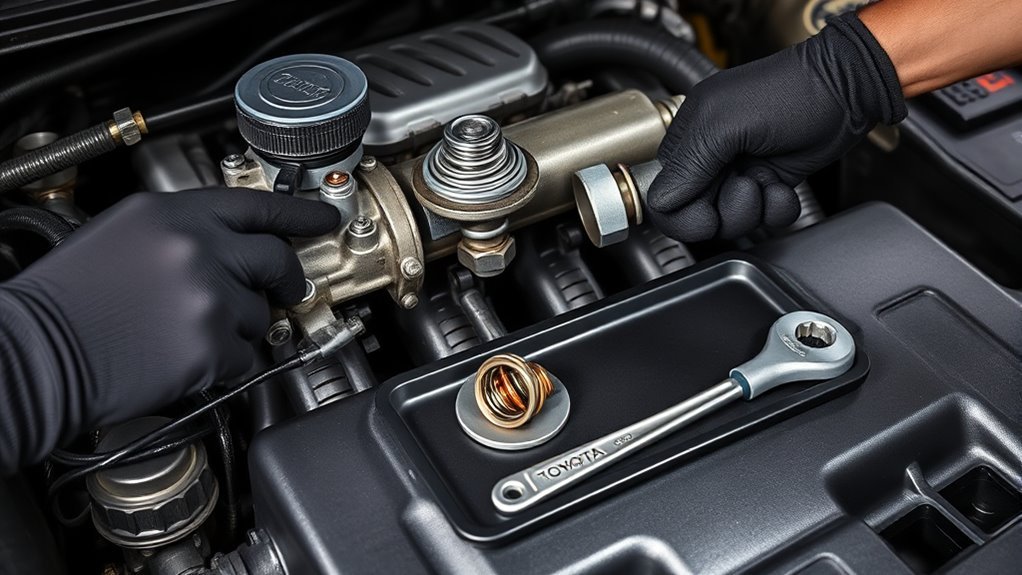
Confirm the Tacoma’s year, engine code, thermostat part or water-inlet assembly, seal type, coolant, fastener torque, and bleeding procedure before opening the cooling system. Let the engine become fully cold, disconnect the negative battery cable when the repair manual requires it, and drain enough coolant to place the level below the thermostat or water inlet.
Remove only the components listed for that engine. Photograph the original hose routing, connector positions, thermostat direction, seal position, and any jiggle valve or housing mark. Clean the sealing surfaces without gouging them. Install the correct new gasket, O-ring, thermostat, or integrated assembly. Hand-start the fasteners, tighten them evenly to the exact specification, refill with the approved coolant, follow the model-specific bleeding procedure, and inspect the system through a complete warm-up and cool-down cycle.
Key Takeaways
- Identify the engine before ordering parts or choosing a procedure.
- Do not assume every Tacoma uses a separate thermostat, a 12mm socket, three fasteners, or an upward jiggle valve.
- Use a new model-specific seal and the exact factory torque.
- Diagnose low coolant, leaks, sensor faults, fan problems, and trapped air before blaming the thermostat alone.
- Bleed the cooling system exactly as specified and stop immediately if the engine overheats.
Which Tacoma Thermostat Procedure Applies?
The table below shows selected verified examples. It is a routing guide, not a substitute for the repair manual or VIN-based parts lookup. Mid-year production changes, market differences, towing equipment, and previous repairs can change the parts you find on the truck.
| Tacoma example | Verified design detail | Orientation or torque note | What it means for the repair |
|---|---|---|---|
| 1995–2004 2.4L 2RZ-FE and selected 2.7L 3RZ-FE | Separate thermostat with a new gasket at the water inlet. | Align the jiggle valve with the housing protrusion or top mark; published examples use 20 N·m. | Do not install by a generic “spring side” rule alone. Match the housing mark and exact manual. |
| 1995–2004 3.4L 5VZ-FE | Separate thermostat and gasket at the water-pump inlet. | Published Tacoma procedures place the jiggle valve downward and use 20 N·m. | The common “jiggle valve always goes up” advice is unsafe for this engine. |
| 2005–2015 2.7L 2TR-FE | Separate thermostat and gasket behind the water inlet. | Published examples place the jiggle valve upward within the allowed angle and use 20 N·m. | Record the old position and confirm the exact service data before tightening. |
| 2005–2015 4.0L 1GR-FE | Water-inlet-with-thermostat assembly rather than the same loose-thermostat procedure used on the 2.7L. | A published 2006 procedure uses three nuts and 9 N·m. | Do not transfer the 2.7L fastener count or torque to the 4.0L. |
| 2016–2023 3.5L 2GR-FKS | Toyota parts information lists a water-inlet subassembly with the thermostat integrated; configuration can differ with equipment such as the towing package. | The procedure includes hoses and an electrical connector, not only a drop-in thermostat. | Order by VIN and equipment, then use the exact 2GR-FKS procedure. |
| 2024–2026 2.4L turbo and hybrid variants | The current cooling layout uses newer thermostat-unit and water-control components. | Older 2.7L, 3.4L, and 4.0L instructions do not establish the correct procedure. | Use Toyota’s current service information for the VIN; professional service is the safer choice when the procedure is unavailable. |
Before buying coolant, review the Toyota Tacoma coolant guide. Do not choose a coolant only by color, and do not dilute a product labeled premixed unless the product instructions and Tacoma manual require it.
Should You Replace the Thermostat?
Replace the thermostat only after the symptoms and basic checks support that diagnosis. A thermostat stuck open can cause slow warm-up, weak cabin heat, a temperature reading that drops during highway driving, or a P0128 code. A thermostat stuck closed can restrict radiator flow and cause rapid overheating. Either pattern can also be confused with low coolant, trapped air, a faulty temperature sensor, abnormal fan operation, a restricted radiator, a damaged cap, a hose problem, or weak coolant circulation.
What Does P0128 Mean on a Tacoma?
P0128 means the engine coolant temperature did not reach the expected regulating temperature within the monitor conditions. Toyota diagnostic procedures treat it as a thermostat or cooling-system fault, then direct the technician to check other trouble codes and the cooling system before condemning the thermostat. Read and save the freeze-frame data before clearing the code.
- Check the cold coolant level and look for leaks.
- Scan for other temperature-sensor, wiring, fan, or engine-control codes.
- Compare scan-tool coolant temperature with actual engine behavior.
- Confirm whether the engine warms slowly, overheats, or shows an erratic reading.
- Do not install a colder thermostat to hide an overheating problem.
For a cold-level check before diagnosis, follow the Tacoma coolant-level guide.
Safety Notes Before You Start
Set aside enough time to complete the repair, refill, bleeding process, leak inspection, and full cool-down without rushing. Park on level ground, apply the parking brake, and keep children and animals away from the work area and drained coolant.
Warning: Never remove a radiator cap, pressure cap, drain plug, hose, thermostat housing, or water inlet while the engine is hot. Pressurized coolant and steam can cause severe burns.
Disconnect the negative battery cable when the engine-specific repair procedure calls for it or when the work places tools near live terminals, the starter circuit, an electric fan, or other powered components. Keep hands, clothing, and tools away from belts and fans. An electric fan can start unexpectedly on some vehicles.
Capture coolant in a clean drain pan. Store used coolant in a labeled, sealed container, separate from oil and other waste. Do not pour antifreeze into a sewer, storm drain, floor drain, onto the ground, or into household trash. Follow the disposal rules for your area.
What Tools and Parts Do You Need?
The correct list depends on the engine. Do not buy a thermostat, gasket, socket, or coolant from the article title alone. Use the VIN, engine code, parts diagram, and service procedure to confirm every item.
- Correct thermostat or water-inlet-with-thermostat assembly
- All required new gaskets or O-rings
- Correct Toyota-specified coolant or approved equivalent
- Drain pan, sealable waste container, gloves, and eye protection
- Engine-specific sockets, extensions, pliers, and trim tools
- Low-range torque wrench suitable for the published fastener torque
- Plastic scraper or other surface-safe cleaning tool
- Clean rags, funnel, and the fill or vacuum-bleed equipment specified for the truck
- OBD-II scan tool when diagnosis or live coolant-temperature monitoring is needed
Pro tip: Photograph the old assembly from several angles before disconnecting hoses, connectors, brackets, or fasteners. Include the thermostat orientation, housing marks, clamp positions, and wiring route.
[Products Worth Considering]

This engine coolant thermostat with seal is designed to help maintain proper engine temperature and support efficient cooling system performance. It is compatible with a wide range of Toyota, Lexus, Ford, Chevrolet, Mitsubishi, Scion, and Pontiac models, making it a versatile replacement choice for many vehicles. With included seal and durable metal-and-rubber construction, it offers a convenient fitment solution for cooling system repairs and maintenance.

AISIN OE matched engine coolant thermostat delivers consistent temperature control for reliable cooling system performance. Built with high-quality materials and designed for perfect OE form, fit, and function, it helps maintain efficient engine operation across a wide range of compatible Lexus, Scion, and Toyota vehicles. The correct OE specified operating temperature supports dependable cooling, while note that a gasket is not included.

This coolant electric water pump is designed as a replacement for select Toyota vehicles, helping maintain proper engine cooling performance and reliable temperature control. Built to OE specifications, it offers fitment support for compatible Avalon, Camry, and RAV4 models with 2.5L L4 engines. It also includes cross-reference part numbers for easier matching and comes with after-sales support for covered defects.
How Do Socket Size and Torque Vary?
There is no single Tacoma thermostat socket size or torque value. The original draft’s 12mm assumption does not apply across all engines. Verified procedures include different fastener arrangements and torque values, including 20 N·m on several early four-cylinder and 3.4L procedures, 20 N·m on the 2TR-FE water inlet, and 9 N·m on a 1GR-FE water-inlet-with-thermostat assembly.
- Use a snug six-point socket that matches the actual fastener.
- Hand-start every bolt or nut to prevent cross-threading.
- Use the exact tightening sequence and torque listed for the engine.
- Do not reuse a torque value from another Tacoma generation.
How Do You Confirm the Thermostat and Seal?
Compare the replacement with the removed part and the VIN-based parts diagram. Check whether the thermostat is separate or integrated into the water inlet, whether towing equipment changes the assembly, how many seals are required, and whether the new part includes a temperature sensor or connector.
Inspect every new seal before installation. It must match the original profile and sit flat without twists, cuts, swelling, or contamination. Unless the exact service procedure says otherwise, use a new gasket or O-ring rather than reusing the compressed seal.
Note: Do not rely on a universal “spring toward the engine” or “jiggle valve at 12 o’clock” shortcut. Use the housing marks and the engine-specific procedure.
Which Tools Reduce the Risk of Damage?
Use a low-range torque wrench that reads accurately near the specified value. Oversized ratchets and long extensions make it easier to over-tighten small fasteners. Use plastic or surface-safe tools on aluminum and plastic sealing faces. Do not use aggressive abrasives that can remove metal or leave debris in the cooling system.
How Do You Remove the Thermostat or Water Inlet?
- Verify the engine procedure. Identify every cover, hose, connector, bracket, drain point, and fastener that must be removed.
- Let the engine cool fully. Confirm there is no residual pressure before opening the system.
- Disconnect power when specified. Follow the repair manual’s battery precautions and protect stored settings when applicable.
- Drain coolant below the component. Position the pan first, open the specified drain, and close it after the required amount has drained.
- Remove access components. Keep fasteners arranged by location and protect open hoses and ports from dirt.
- Release hoses and connectors carefully. Move clamps with the correct pliers. Twist a stuck hose gently instead of prying against a fragile neck.
- Loosen the housing or assembly evenly. Support it as the final fastener is removed and expect residual coolant.
- Record the installed position. Photograph the thermostat, seal, jiggle valve, housing marks, connector, and hose routing before separating the parts.
- Clean the sealing faces. Remove residue without gouging the mating surfaces or dropping debris into the coolant passage.
Inspect the removed housing or water inlet for cracks, warped sealing surfaces, damaged hose necks, corrosion, and connector damage. Replace a damaged component rather than trying to force a new seal to compensate.
How Do You Test the Old Thermostat?
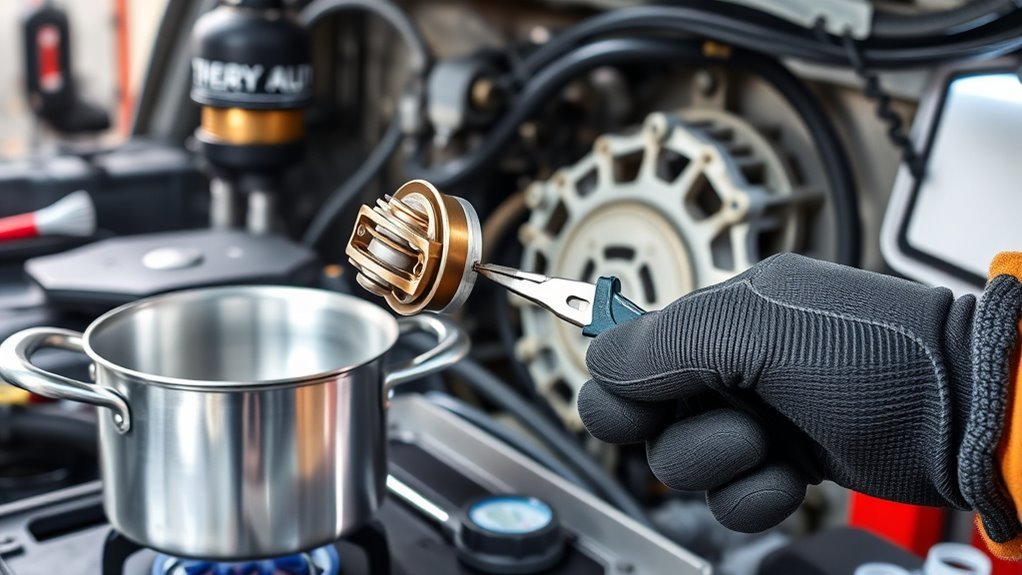
Testing can confirm a suspected mechanical failure on a removable thermostat or thermostat assembly. Use a dedicated non-food container, clean water, and an accurate thermometer. Do not use cookware that will return to food preparation after contact with a used cooling-system part.
Compare the test result with the temperature and valve-lift specification for the exact part. A generic “it opened in boiling water” result is not precise enough.
- Suspend the thermostat so it does not rest directly on the container.
- Heat the water gradually and watch when the valve begins to move.
- Compare opening temperature, valve lift, and closing behavior with the exact service specification.
- Replace the unit if it opens late, remains partly open when cold, sticks, has damaged seals, or fails the published lift check.
Inspect nearby cooling-system components while access is open. Look for dried coolant, wetness, corrosion, loose or damaged connectors, hose deterioration, pulley play, or bearing noise where those checks apply. A circulation problem can mimic or accompany a thermostat fault.
For weak cabin heat or uncertain circulation, compare the symptoms with the Tacoma heater-core coolant-flow guide.
How Do You Install the New Thermostat Correctly?
- Confirm the part one final time. Match the engine, VIN, equipment, connector, hose ports, seal type, and temperature specification.
- Follow the engine-specific orientation. Align the thermostat or assembly with the published housing mark. Do not assume the jiggle valve always faces upward.
- Install every required new seal. Seat each gasket or O-ring in the correct groove without twisting, stretching, or pinching it.
- Position the component squarely. The housing or water inlet should meet the mating surface without being pulled into place by the fasteners.
- Hand-start the fasteners. Verify that each bolt or nut turns freely and that any different-length fasteners return to the correct position.
- Tighten in the specified sequence. Snug the fasteners evenly, then use the exact factory torque for that engine and component.
- Reconnect hoses, clamps, wiring, and brackets. Return every clamp and harness retainer to its original position and confirm connectors lock.
- Inspect before filling. Make sure the housing sits flush, the seal is not visible outside the joint, tools are removed, and drains are closed.
Do not add sealant unless the repair procedure specifically requires it. Extra sealant can prevent the gasket from seating, enter the cooling system, or make the next repair harder.
[Products Worth Considering]

This spill-proof radiator coolant filling funnel kit helps you refill cooling systems cleanly while reducing trapped air pockets that can affect heater and engine performance. It includes a 5-inch extension bar and 45-degree elbow for easier access under shrouds or at awkward angles. Color-matched caps for dedicated adapters make setup simpler and more organized.

This engine water pump kit is designed to help maintain reliable cooling performance across a wide range of compatible Toyota, Lexus, Scion, and Pontiac vehicles. Built with aluminum and tested for leak-free operation, it offers a direct replacement solution that supports engine efficiency and long-term service life. The kit includes a professional water pump and gasket for a convenient installation-ready repair.

This replacement engine thermostat is designed for a wide range of Toyota, Lexus, and Scion vehicles, offering direct-fit compatibility and dependable cooling-system performance. It is rigorously tested before shipping and built from durable materials to support long-lasting reliability. Verify your part number and vehicle fitment before purchase for the best installation experience.
How Do You Refill, Bleed, and Test the Cooling System?
Use the coolant type and mixture specified for the exact Tacoma. Add it slowly through the designated fill point. Some systems can be filled conventionally, while others may require a bleed valve, vacuum-fill equipment, a special sequence, or separate handling of more than one cooling circuit.
- Confirm all drains, hoses, connectors, and fasteners are secure.
- Fill through the specified point with the correct coolant and mixture.
- Follow the exact air-bleeding procedure for the engine and cooling layout.
- Monitor coolant level, leaks, heater output, scan-tool temperature when available, and dashboard warnings during warm-up.
- Shut the engine off immediately if temperature rises abnormally, the heater suddenly turns cold while temperature rises, coolant escapes, or a warning appears.
- After a complete cool-down, recheck the reservoir and any service fill point permitted by the manual.
Trapped air can cause unstable temperature, poor heater performance, noise, or coolant loss after the first heat cycle. Do not keep driving and repeatedly topping off a system that continues to overheat, bubble, or lose coolant.
[Products Worth Considering]

These genuine Toyota oil drain plug gaskets are designed to help maintain a reliable seal during oil changes, reducing the chance of leaks and supporting proper engine maintenance. With an OEM fit and trusted Toyota quality, they are a practical choice for routine service on compatible vehicles. The convenient quantity pack is ideal for keeping multiple maintenance intervals covered.
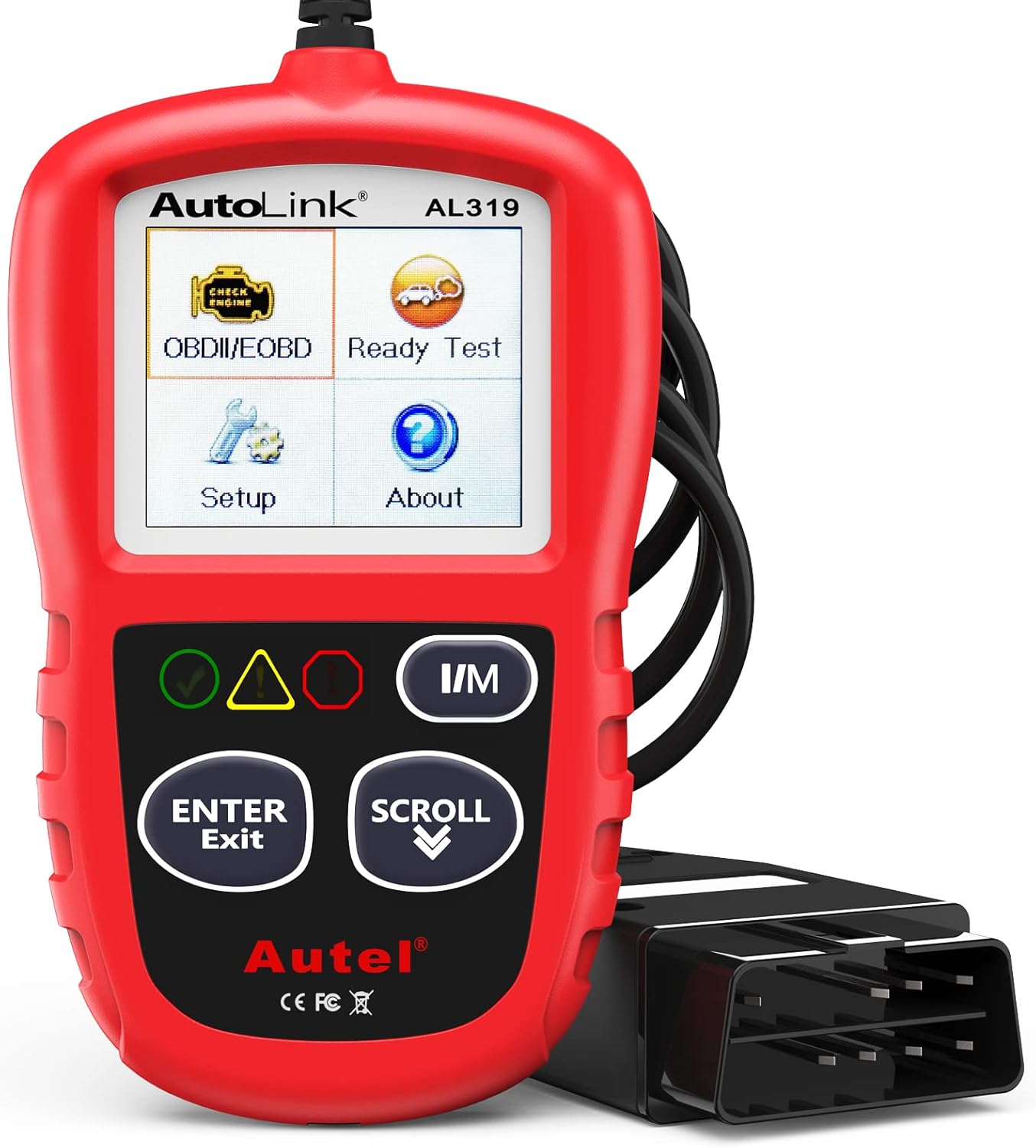
The Autel AL319 is a user-friendly OBD2 scan tool designed to help drivers quickly diagnose check engine light issues and understand vehicle fault codes. It supports reading and clearing DTCs, live data, freeze frame, I/M readiness, and vehicle information, making it a practical choice for DIYers and everyday car owners. With plug-and-play operation, a color display, built-in speaker, and broad vehicle compatibility, it delivers fast, reliable diagnostics without complicated setup.

This Yuirote universal car motor diagnostic tool helps drivers quickly detect engine fault codes and identify system issues for routine inspections and maintenance. It also supports electronic parking brake reset and emergency release functions, making it useful for handling EPB-related problems without a repair shop visit. Its compact, ergonomic design and broad vehicle compatibility make it a practical choice for car owners and DIY repair enthusiasts.
What Should You Check After the Repair?
| Symptom | Likely checks | Safe next step |
|---|---|---|
| Coolant at the housing seam | Wrong or pinched seal, dirty surface, cracked housing, loose fastener, incorrect torque, or damaged hose neck | Let the engine cool fully, identify the leak source, and correct the installation. Do not tighten blindly beyond specification. |
| Temperature rises after replacement | Low coolant, trapped air, wrong orientation, wrong part, blocked flow, pump problem, cap fault, hose problem, or fan fault | Stop the engine and let it cool. Do not continue the test drive until the cause is found. |
| Weak or cold heater output | Air in the heater circuit, low coolant, restricted heater core, poor circulation, or temperature-control fault | Recheck the cold level and approved bleeding procedure, then diagnose circulation if the symptom remains. |
| P0128 returns | Incorrect thermostat or assembly, unresolved cooling-system fault, temperature-sensor or wiring issue, abnormal fan operation, or incomplete diagnosis | Read all codes and freeze-frame data, compare live coolant temperature, and follow the model-specific diagnostic chart. |
| Coolant level keeps dropping | Remaining air, external leak, cap problem, heater leak, pump leak, or internal engine leak | Arrange a cold pressure test and professional diagnosis if the loss continues. |
Stop driving if the temperature warning appears, the gauge enters the hot range, coolant boils, steam appears, or cabin heat suddenly disappears while engine temperature rises. Severe overheating can damage the cylinder head, head gasket, hoses, seals, and engine.
Frequently Asked Questions
How Long Does a Tacoma Thermostat Replacement Take?
Time varies sharply by engine, access, corrosion, and whether Toyota uses a separate thermostat or an integrated water-inlet assembly. A first-time DIYer should reserve a half-day rather than rely on one universal labor time. That allowance should include diagnosis, safe cooling, draining, cleaning, refilling, bleeding, leak checks, and a complete cool-down.
Do I Need to Drain the Entire Cooling System?
Not always. Many procedures only require lowering the coolant below the thermostat or water inlet, but the exact drain points and refill quantity depend on the engine. Capture all drained coolant, keep it clean if the manual permits reuse, and follow the specified refill and bleeding process.
Can I Reuse the Old Thermostat Gasket?
Use a new gasket or O-ring unless the exact Toyota procedure expressly permits reuse. A removed seal can be flattened, hardened, cut, swollen, or distorted even when the damage is difficult to see.
Will DIY Thermostat Replacement Void the Warranty?
No, a DIY repair or aftermarket part does not automatically cancel the entire warranty. FTC guidance says warranty coverage cannot be denied merely because someone else performed the repair or an aftermarket part was used. However, a manufacturer or dealer may deny coverage for related damage if it proves that a defective part or improper installation caused that damage. Keep the receipt, part information, coolant record, photos, and service notes.
Can I Install a Colder Thermostat in a Tacoma?
Use the temperature specification assigned to the exact engine and calibration unless a qualified builder has a documented reason to change it. A colder or incorrect thermostat can delay warm-up, reduce heater performance, affect emissions monitoring, or trigger a fault code. It will not repair a restricted radiator, weak pump, air pocket, sensor fault, or other overheating cause.
Does P0128 Prove the Thermostat Is Bad?
No. P0128 strongly points toward a thermostat or cooling-system problem, but the diagnostic process still requires checking other codes, coolant level, leaks, fan operation, modifications, temperature-sensor data, wiring, and the thermostat itself.
Which Way Does the Tacoma Thermostat Jiggle Valve Face?
There is no universal Tacoma answer. Verified early four-cylinder and 2TR-FE procedures use an upward position or alignment with a housing mark, while the 3.4L 5VZ-FE procedure places the jiggle valve downward. Follow the exact engine procedure and the housing marks.
Safety Disclaimer
Safety Disclaimer: This article provides general information, not a universal repair procedure. Always use Toyota service information for the exact model year, engine, drivetrain, market, and equipment. Contact a qualified technician if you cannot verify the procedure or are not prepared to work around hot pressurized coolant, electric fans, belts, wiring, multiple cooling circuits, or low-torque aluminum and plastic components.
Conclusion
A successful Toyota Tacoma thermostat replacement starts with engine identification, not a socket size. Confirm whether the truck uses a separate thermostat or an integrated water-inlet assembly, follow the correct orientation and torque, install every new seal, and use the specified coolant and bleeding method.
After the repair, verify a stable temperature, steady cabin heat, dry housing seams, and a stable cold coolant level. Recheck the truck after a full heat cycle and cool-down. Stop driving and diagnose the system if overheating, bubbling, repeated coolant loss, or P0128 returns.
References
- 2026 Toyota Tacoma Owner’s Manual and Warranty Resources – Toyota
- Toyota Water Inlet Sub-Assembly With Thermostat – Toyota Genuine Parts
- 1996 Tacoma 2.4L Thermostat Service Procedure – Toyota service information mirror
- 2003 Tacoma 3.4L Thermostat Service Procedure – Toyota service information mirror
- 2010 Tacoma 2.7L Thermostat Installation – Toyota service information mirror
- 2006 Tacoma 4.0L Water Inlet With Thermostat Procedure – Toyota service information mirror
- Tacoma 2GR-FKS Water Inlet With Thermostat Installation – Tacoma service information reference
- Thermostat Jiggle Pin and Cooling-System Bleeding – Gates TechZone
- Auto Warranties and Auto Service Contracts – Federal Trade Commission
- Used Antifreeze Disposal Guidance – U.S. Environmental Protection Agency

[…] will not correct an unrelated fan, thermostat, pump, cap, or engine problem. See the related Tacoma thermostat replacement guide when thermostat diagnosis points in that […]