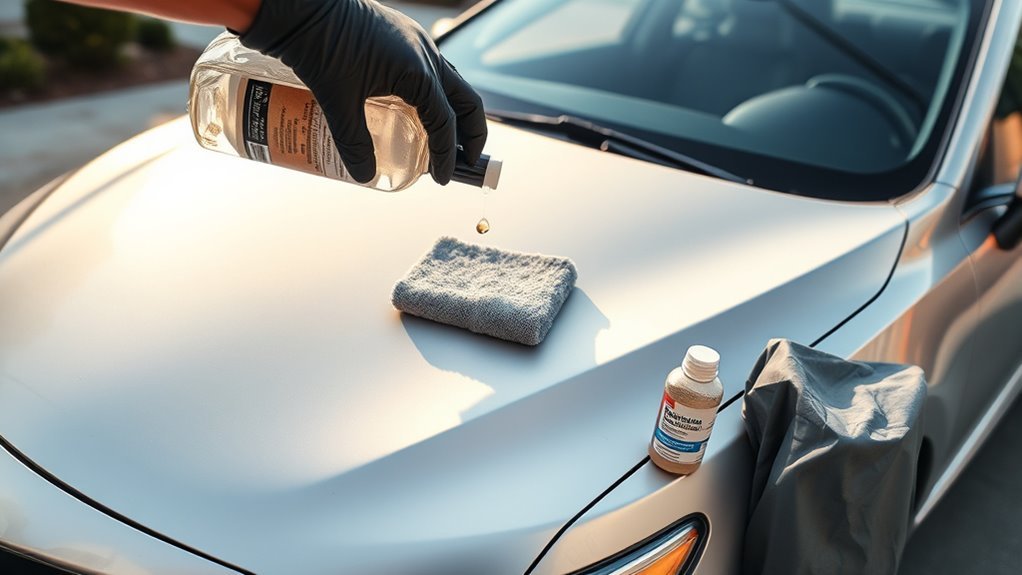
You can stop bird droppings from etching your Camry by acting fast: blot and rinse droppings within hours, lift gently with a microfiber and mild cleaner, then wax or seal the spot. Inspect daily, park in a garage or under cover, and keep a compact cleanup kit in the trunk. Wash biweekly and reapply wax or a synthetic sealant quarterly—or choose a ceramic coating for longer protection. Keep going to learn practical products and safe polishing steps.
Quick How‑To: Stop Bird Droppings Etching Your Camry
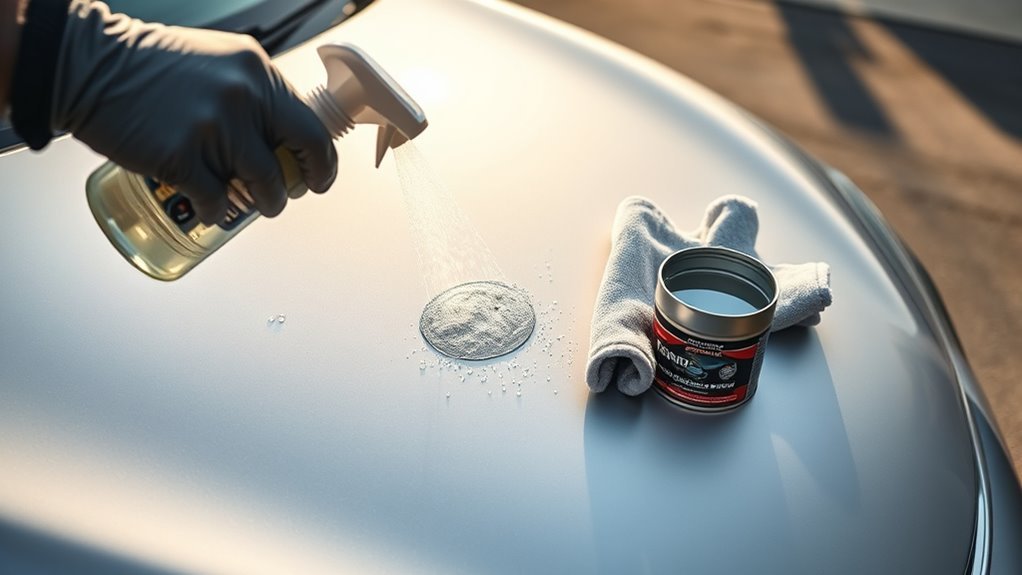
If you spot bird droppings on your Camry, clean them off within a few hours to prevent acids from etching the clear coat: rinse the area with water, spray a quick detailer or pH‑neutral car shampoo, lift the mess with a soft microfiber towel, then rinse and dry. Make this part of your preventive maintenance routine so a small mess doesn’t turn into costly repair. After washing, apply a quality wax or sealant to create a sacrificial barrier; that barrier buys you time and reduces adhesion. When you can, park in a garage or under cover to remove temptation altogether. Use quick detailer sprays between washes to maintain slickness and ease future cleaning. For long-term freedom from constant worry, consider investing in a ceramic coating—more durable protection against droppings and contaminants. Keep a compact cleaning kit in the trunk: spray, microfiber, and water bottle. These concise cleaning techniques let you act fast and keep your paint liberated from cumulative damage.
Why Bird Droppings Damage Clear Coat and Paint
Because bird droppings contain concentrated uric acid and organic enzymes, they act like a mild acid bath on your Camry’s clear coat, especially when the surface is warm and the droppings dry and cement to the paint. You’ll notice etching happens faster in heat and low humidity because chemistry and bird behavior conspire: birds roost, perch, and deposit where they feel safe, often above your car. That concentrated mix weakens the clear coat, exposing base paint to oxidation and staining, shortening paint longevity.
Bird droppings’ uric acid and enzymes etch warm, unprotected clear coat—act fast to preserve paint longevity.
- Heat & chemistry: warm panels accelerate acid action, turning soft clear coat into brittle, etched areas.
- Exposure time: the longer droppings sit, the deeper they penetrate toward the base coat.
- Surface protection: intact wax or sealant buys you time and improves paint longevity by resisting enzyme and acid contact.
Understand this, act deliberately, and you’ll reclaim control over your car’s finish and resist passive decay.
What to Do Immediately: On‑The‑Spot Cleaning for Camry Owners
You’ve seen how bird droppings eat at clear coat, so act fast when you spot one on your Camry: grab a clean microfiber towel and a gentle prep spray or plain water, lay the towel over the spot to soften the mess, then lift—don’t scrub—to remove it, repeating with fresh sections of the towel until the area’s clean. Immediately action matters: assess how long the droppings sat and the ambient temperature, because heat speeds etching. For stubborn residue, keep working wet with the towel and prep spray rather than abrasive motion. Once surface contamination’s gone, consider light correction tools if you want restoration now: a dual-action polisher with a yellow pad and polish for initial correction, checking often to avoid clear coat loss; if necessary, move to a compound with a blue pad, using light pressure. These cleaning techniques free you from panic and give you control—quick, deliberate steps that protect finish and let you reclaim your Camry.
Daily Habits to Prevent Etching
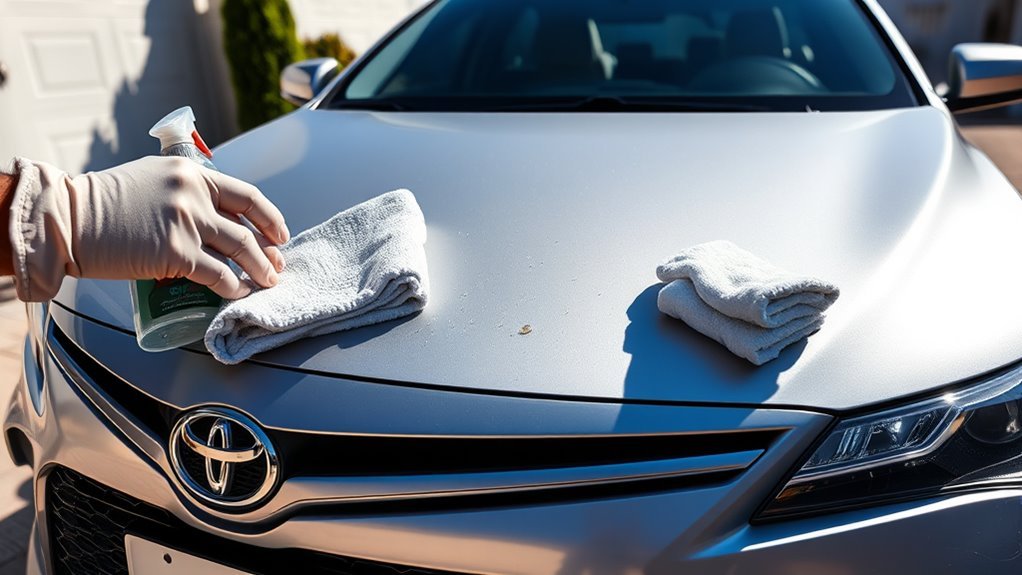
While you can’t control every bird, developing a few daily habits will drastically cut the risk of droppings etching your Camry’s clear coat: Adopt simple, liberating routines that combine preventive maintenance with quick action. Do short daily inspections—scan hood, roof, mirrors—so you catch droppings before they bond. Keep a microfiber cloth and car-safe spray in your trunk for immediate cleanup; prompt removal prevents hardening and etching. Schedule biweekly washes and quarterly wax or sealant applications to strengthen the clear coat. Consider ceramic coating for longer-term defense if you want less worry.
- Inspect daily: quick visual check each morning or before driving; remove droppings immediately.
- Clean fast: use microfiber + gentle cleaner from your emergency kit; avoid abrasive scrubbing.
- Maintain routinely: biweekly washes, quarterly wax/sealant, and consider ceramic coating for added protection.
These habits free you from constant anxiety, keep your Camry’s finish resilient, and make preventive maintenance feel effortless.
Best Parking Choices : Garage, Shade, Covered and Quick Alternatives
Now that you’ve got quick-clean habits down, think about where you park: the spot you choose is the easiest long-term defense against bird droppings. Prioritize garage benefits first — a garage shields your Camry from birds, sun, and weather, preserving paint integrity with minimal effort. If a garage isn’t available, use shade advantages: park under awnings or broad trees to keep droppings from baking and etching on hot days. Covered parking structures combine protection from bird droppings, UV, and hail, making them a smart regular choice. When none of these options exist, deploy a breathable, snug car cover; it blocks droppings without trapping moisture or harming the finish. Whatever you choose, inspect your car daily and remove droppings promptly to protect paint integrity. Make parking decisions that free you from constant worry—use shelter strategically, and your Camry will stay cleaner, stronger, and more resilient with less upkeep.
What to Carry: Essential On‑The‑Go Cleaning Kit for Your Camry
Carry a compact, well-stocked kit so you can tackle bird droppings and other contaminants before they etch your Camry’s clear coat. You want gear that’s efficient, portable, and empowers you to act immediately. Prioritize microfiber efficiency: a soft microfiber towel removes droppings gently, cutting contact time and lowering etch risk. Pair it with spray solutions—a pH-balanced car wash in a small spray bottle to lift deposits safely, plus a quick detailer or spray wax to add a temporary protective layer that makes future cleanups easier.
Carry a compact kit—microfiber, pH-balanced spray, and quick detailer—to remove bird droppings fast and protect paint.
- Microfiber towel (folded for multiple clean faces)
- pH-balanced car wash in spray bottle + quick detailer/spray wax
- Small dual-action polisher with two pads (for on‑the‑go minor etch repairs)
Inspect and replenish the kit regularly so you’re never caught unprepared. Keep items organized in a compact case; freedom to move fast protects your paint and keeps your Camry looking sovereign.
Weekly Wash, Dry, and Contaminant Removal Checklist
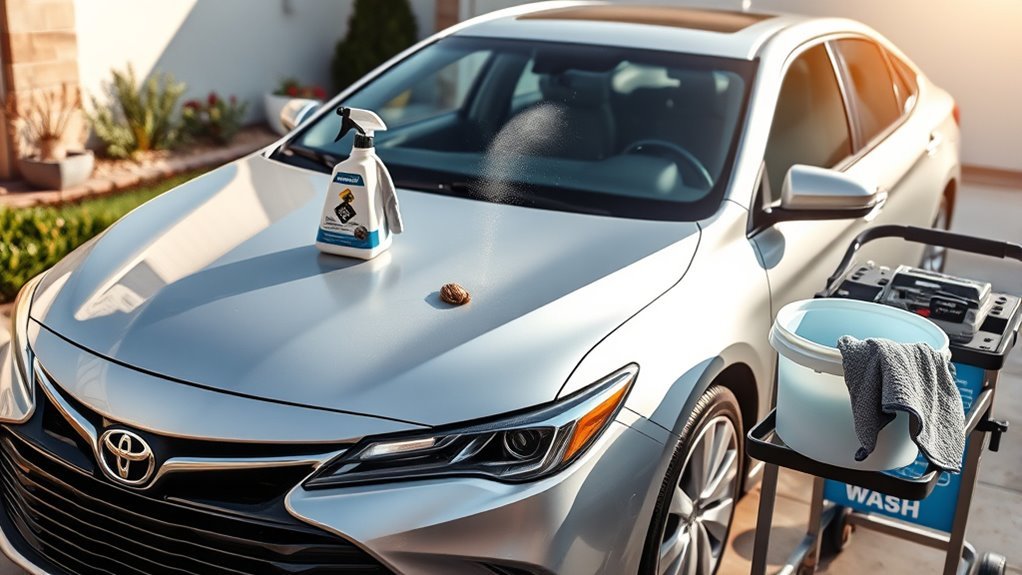
Having your on‑the‑go kit means you can handle emergencies, but a weekly routine keeps paint healthy long-term. For weekly maintenance, wash your Camry with a pH-balanced car soap using the two-bucket method—one bucket for soapy water, one for rinsing—to avoid dragging grit across clear coat. Work top to bottom, rinsing the wash mitt frequently. Dry immediately with a soft microfiber towel to prevent water spots and lift any lingering contamination.
After drying, inspect the paint closely for etching, stains, or embedded contaminants; address etching promptly to stop progressive damage. If you find stubborn fallout, use a gentle clay or dedicated contaminant remover per product instructions. These protective measures reduce repair needs and free you from constant worry about long-term harm. Keep a simple checklist: soap, two buckets, mitt, microfiber towel, inspection, contaminant remover. Stick to it weekly and you’ll maintain a resilient finish without sacrificing time or freedom.
Waxes, Sealants, and Ceramic Coatings: What Works for Camry Owners
Three clear options — wax, synthetic sealant, and ceramic coating — cover most needs for protecting your Camry’s paint from bird droppings and other contaminants. You want protection that fits your schedule and values: quick upkeep, longer duty, or near-permanent defense. Below are concise choices to match that freedom.
Three clear options — wax, sealant, or ceramic coating — match your time and protection needs for Camry paint.
- Waxes — use for quick shine and short-term protection; waxes advantages include easy application and safe, sacrificial layer. Reapply every few months, more often in harsh weather.
- Sealants — choose for sealants longevity; synthetic formulas bond stronger and typically last up to six months, repelling contaminants and easing cleanup.
- Ceramic coatings — prioritize ceramic efficacy if you want multi-year hydrophobic defense; coatings reduce etching risk and cut washing frequency.
Follow maintenance tips: wash with a pH-balanced shampoo, remove droppings promptly with quick detailing sprays, and reseal or reapply as recommended to preserve the chosen barrier.
Safe Polishing Steps for Light Etching (What You Can Do at Home)
If you’ve sealed or polished your Camry and still spot light etching from bird droppings, you can safely correct it at home with the right tools and technique. Inspect the area, clean any residue, and work in shade to avoid heat-related damage. Mount a yellow polishing pad on a dual-action polisher and choose a high-quality polish formulated for light defects. Work in controlled sections, keep the polisher moving, and apply light pressure. Stop frequently to wipe and evaluate—this feedback prevents over-polishing and preserves clear coat depth essential for paint maintenance.
If light polishing doesn’t lift the etch, consider a mild compound with a blue pad, still using light pressure and short passes. Once the defect diminishes, return to the yellow pad with a finishing polish to refine gloss and blend the repair. These polishing techniques let you reclaim your Camry’s finish while maintaining enough clear coat for future protection and easier upkeep.
When to Get Professional Paint Correction or Clear Coat Repair
Wondering when to stop DIY fixes and call a pro? You want freedom from worry and a finish that lasts. Seek a professional assessment when etching is clearly visible after droppings sat on your Camry, or when repeated DIY polishing doesn’t fully restore the surface. A pro confirms whether damage reaches the base coat and recommends paint restoration or clear coat repair.
- Inspect visible etching: if scratches are deep, faded shine remains, or compounds don’t help, book a professional assessment.
- Recurrent damage: frequent droppings or ongoing etching despite maintenance means cumulative harm — professionals preserve resale value with targeted paint restoration.
- Risk or uncertainty: if you’re uneasy about causing more harm, let a specialist perform correction and clear coat repair using proper tools and techniques.
You’ll regain confidence and liberate yourself from constant touch-ups by choosing expert correction at the right time.
Frequently Asked Questions
How to Protect Car Paint From Bird Poo?
You’ll protect car paint by using preventative measures: wax or ceramic coating, PPF, shaded parking or a cover, and quick cleaning with a detailer and microfiber. Stay proactive so you’re free from avoidable paint damage.
Do Bird Droppings Damage Car Paint?
Yes — bird droppings acidity can etch your clear coat, causing paint damage; you should act fast, remove droppings quickly, wash regularly, and apply wax or sealant for paint damage prevention and lasting surface freedom.
Does Car Wax Protect Paint From Bird Droppings?
Yes — wax protects paint from bird droppings by adding a removable barrier; use wax benefits like hydrophobicity and UV defense, and follow maintenance tips: reapply regularly, clean promptly, and keep surfaces waxed to stay free and empowered.
Does Ceramic Coating Protect a Car From Bird Poop?
Yes — think of a shielded knight: you get ceramic coating benefits that repel and ease cleanup, giving long term protection, but you’ll still need prompt cleaning and maintenance to fully free your paint from lasting damage.
Conclusion
You’ve got the tools and habits to keep your Camry’s finish looking new—so use them. Clean fresh droppings right away, park smart, and maintain a protective layer with wax, sealant, or ceramic coating. Do light polishing only when needed, and call a pro for deeper etching. Want your car to turn heads instead of showing spots? Stay proactive with quick cleaning and weekly care, and you’ll avoid costly repairs down the road.