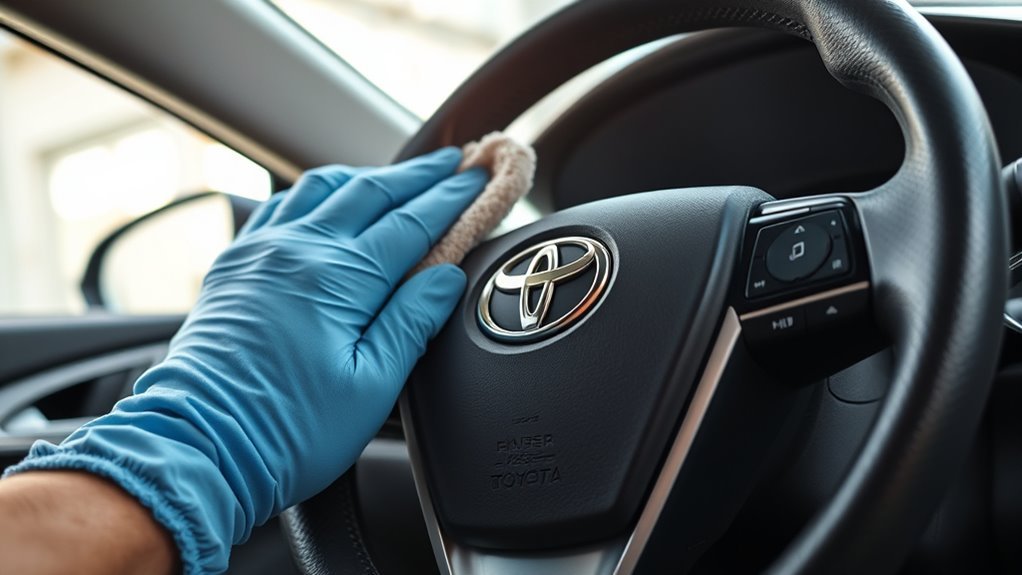
To clean a Toyota Camry steering wheel safely, park the car, switch it off, and let the wheel cool. Vacuum loose grit, then clean the rim with a barely damp microfiber towel and a cleaner approved for the wheel’s material. Apply product to the towel—not directly to the wheel—keep moisture out of buttons and seams, remove all residue, and dry the wheel completely before driving.
Last updated: July 23, 2026. Toyota and Clorox guidance was reviewed for current Camry references, surface compatibility, and disinfecting limits.
Quick Answer
Park your Camry, turn it off, and identify the steering-wheel material before cleaning. Vacuum dust from the rim, stitching, and buttons. Then wipe the rim with a soft cloth lightly dampened with a mild neutral cleaner or material-approved automotive interior cleaner. Never spray the wheel directly or soak switches. Wipe off all residue, dry the wheel, and confirm that it feels secure and nonslip before driving.
Key Takeaways
- Check the material first. Camry steering wheels vary by model year, trim, package, and market.
- Start dry by vacuuming loose grit so it does not scratch the wheel during wiping or brushing.
- Toyota warns against alcohol-containing cleaners on the steering wheel and against bleach, harsh solvents, polish wax, and acidic or alkaline cleaners on interior surfaces.
- Apply cleaner to a towel or brush, never directly to buttons, seams, the airbag cover, or nearby electronics.
- Stop if the finish peels, color transfers to the towel, stitching frays, or a button continues to stick after drying.
At a Glance
| Leather-Trimmed Rim | Vacuum first, then use a leather-safe cleaner or the diluted neutral detergent specified by the owner’s manual. Remove residue and dry fully. |
| Non-Leather Rim | Use a barely damp microfiber towel or an interior cleaner whose label approves the exact plastic, vinyl, or molded surface. |
| Buttons and Seams | Use a barely damp towel, soft brush, or swab. Never spray into gaps or keep a switch visibly wet. |
| Stop Cleaning When | Color transfers, the coating peels, stitching lifts, a button binds after drying, or an airbag or steering-control warning appears. |
What Material Is Your Camry Steering Wheel?
Camry steering-wheel material varies by model year, trim, package, and market. Some current configurations have a leather-trimmed steering wheel, while other wheels use a non-leather molded surface. Do not assume that the steering wheel uses the same material as the seats.
Check your exact vehicle’s owner’s manual, window sticker, or Toyota specification page before choosing a cleaner. Current configuration information is available through the official Toyota Camry specifications.
Toyota’s official interior-care guidance for the 2025 Camry Hybrid says to remove dirt and dust from leather areas with a vacuum, wipe with a soft cloth dampened with diluted detergent, remove the remaining detergent, and dry with a soft cloth. It also warns against cleaners containing alcohol on the steering wheel. Review the source here: Toyota 2025 Camry Hybrid interior cleaning guidance.
Warning: Do not soak the steering wheel, buttons, seams, airbag cover, heated steering-wheel controls, or nearby electronics. Use well-wrung damp cloths, not dripping towels. Stop cleaning if an airbag or steering-control warning appears.
What Do You Need to Clean It Safely?
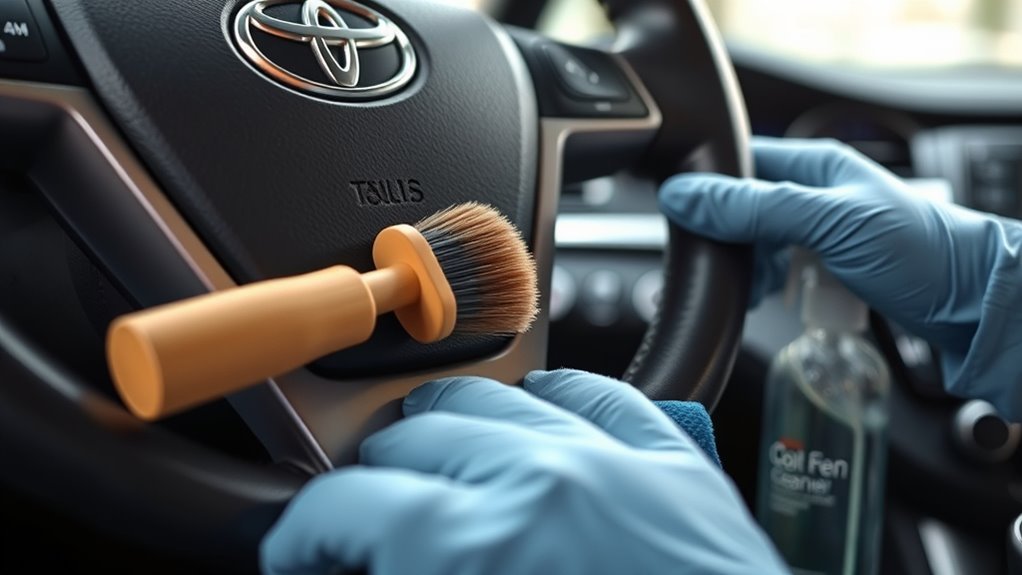
Use tools that lift hand oils and dirt without abrading the coating or leaving a slippery film. Gather these items before you start:
- Soft-brush vacuum nozzle: removes loose grit from the rim, stitching, button edges, and seams.
- Clean microfiber towels: use separate towel faces for cleaning, residue removal, and final drying.
- Soft detailing brush: loosens grime from stitching and textured grips without aggressive scrubbing.
- Material-approved cleaner: use a leather-safe automotive cleaner for a leather-trimmed rim or a mild neutral cleaner approved by the owner’s manual for the exact surface.
- Cotton swabs or foam swabs: useful around button edges and narrow crevices when kept barely damp.
Avoid melamine sponges, stiff scrub pads, household degreasers, and glossy dressings. These may abrade the coating, discolor trim, force grime into seams, or leave the wheel slippery.
[Products Worth Considering]

This durable steering wheel cover helps refresh worn interiors while adding a more comfortable, secure grip for everyday driving. Made with soft microfiber leather and a rubber lining, it offers anti-slip performance, hand comfort, and added protection against sun damage, scratches, fading, dirt, and wear. Its easy slip-on installation and universal fit make it a practical upgrade for many cars, trucks, and SUVs.

This steering wheel cover is designed to fit a wide range of Toyota models and any standard-size wheel for a secure, comfortable upgrade. Made with nappa leather and a carbon fiber texture, it helps improve grip, reduce hand fatigue, and protect your original wheel from everyday wear, sun damage, and sweat. The anti-slip design and easy installation make it a practical interior accessory for daily driving.
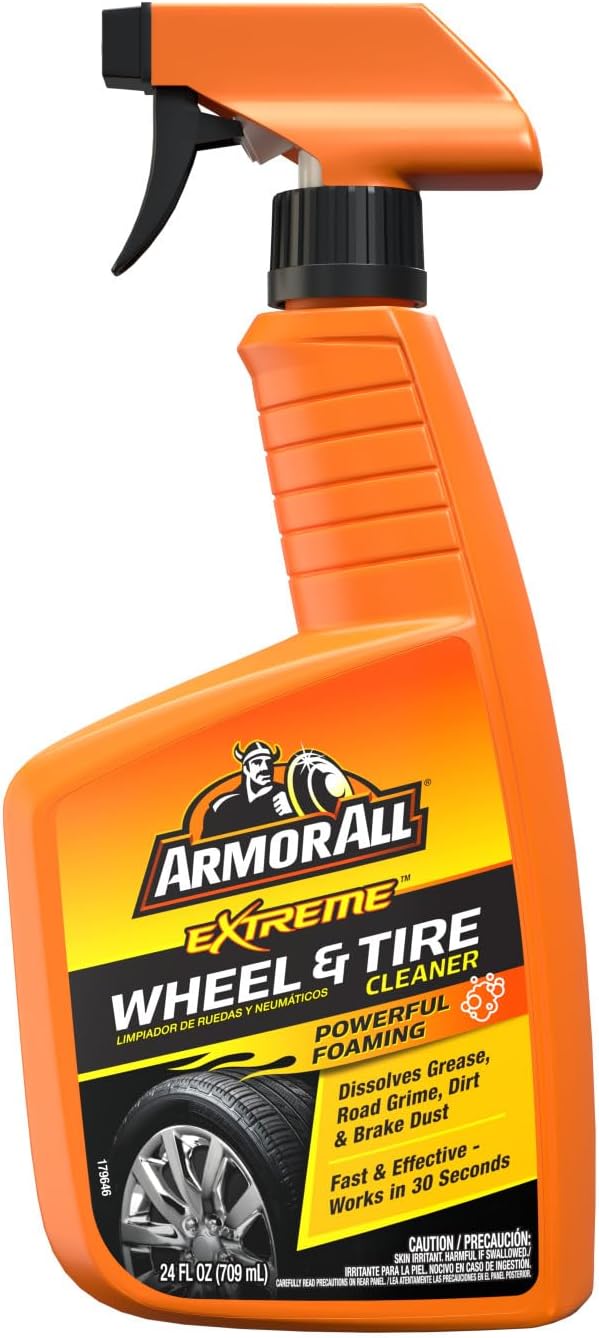
Armor All Extreme Wheel and Tire Cleaner is a powerful spray designed to cut through stubborn dirt, grease, tar, and brake dust on wheels and tires. It is safe for use on factory and aftermarket finishes, including alloy, steel, chrome, and plastic wheel trims, while its fast-acting formula works in just seconds. The deep-cleansing action helps reach hard-to-clean areas and leaves wheels looking clean and shiny.
What Should You Avoid on a Camry Steering Wheel?
The safest cleaner is not the strongest one. Toyota warns against alcohol-containing steering-wheel cleaners and against bleach, acidic or alkaline solutions, organic solvents, polish wax, and polish cleaner on interior surfaces.
- Alcohol-containing cleaners: Toyota specifically warns against cleaners containing alcohol on the steering wheel.
- Bleach, strong solvents, and harsh degreasers: these may discolor, dry, soften, or strip interior finishes.
- Melamine or “magic” erasers: the abrasive foam may remove part of a coated leather or plastic finish along with the grime.
- Dish soap used without checking compatibility: do not assume that a household dish soap is a suitable neutral detergent. Use the detergent and dilution specified by your manual or a cleaner labeled for the exact wheel material.
- Greasy conditioner or glossy dressing: do not use any product that leaves the wheel slick, oily, or heavily polished.
- Disinfecting wipes used without a material check: a wipe approved for a hard, nonporous surface is not automatically approved for leather, coated trim, stitching, or every Camry steering wheel.
Note: Cleaning instructions can vary by model year and equipment. Find the manual for your exact vehicle through Toyota Camry Manuals and Warranties.
Why Should You Vacuum the Wheel First?
Park in the shade, switch the Camry off, and let a sun-heated steering wheel cool before applying cleaner. Wash and dry your hands so you do not add fresh lotion, sanitizer, food residue, or grease while cleaning.
Attach a soft brush nozzle and vacuum the full rim, the back of the wheel, thumb rests, stitching, spokes, and button edges. Dry grit can scratch or dull a coated surface when it is dragged under a cloth or brush.
Use light passes rather than pressing the nozzle into stitching or switches. If dirt is concentrated near a seam or button, vacuum that area again before introducing moisture.
How Do You Clean a Camry Steering Wheel and Buttons?
Work in small sections so cleaner cannot run into buttons or dry on the surface. Never clean the wheel while driving.
| Step | Tool | What to Do |
|---|---|---|
| 0. Prepare | Clean hands | Park, switch the vehicle off, let the wheel cool, and wash and dry your hands. |
| 1. Vacuum | Soft-brush nozzle | Remove dust and grit from the rim, seams, buttons, spokes, and back of the wheel. |
| 2. Test | Damp microfiber | Test the cleaner on a hidden lower or rear section. Let it dry and check for discoloration, whitening, tackiness, or color transfer. |
| 3. Clean | Soft towel | Apply a small amount of cleaner to the towel, not the wheel. Wipe one small section at a time with light pressure. |
| 4. Detail seams | Soft detailing brush | Gently loosen grime from stitching, creases, and textured grips. Stop if thread begins to lift or fray. |
| 5. Clean buttons | Barely damp towel or swab | Wipe button faces and edges without pushing moisture into gaps. Dry each area immediately. |
| 6. Remove residue | Clean damp microfiber | Wipe away the remaining cleaner. Turn the towel often so removed grime is not spread across the wheel. |
| 7. Dry and check | Dry microfiber | Dry the wheel fully. It should feel even and secure, with no slick film, color transfer, raised stitching, or slow-returning buttons. |
If the wheel still feels oily, repeat the light cleaning and residue-removal steps once. Do not keep adding cleaner or pressure. A clean wheel should have an even, dry feel; it does not need to look glossy.
Pro Tip: Fold the microfiber towel into quarters. Flip to a clean face whenever one section becomes soiled so removed grime does not return to the wheel.
Stop cleaning: Do not scrub harder if the surface peels, becomes patchy, transfers color to the towel, or remains tacky after the cleaner has been removed. Those signs may indicate finish deterioration rather than removable dirt.
How Do You Clean Buttons and Plastic Trim?

Apply cleaner to the cloth, brush, or swab rather than directly to the wheel. A barely damp microfiber towel is enough for most button faces and plastic trim. Use a soft swab around a button edge only when needed, then dry the area immediately.
- Do not flood switches: liquid can move behind a button and affect the switch or nearby electronics.
- Do not force a button: repeated pressing can move sticky residue deeper into the assembly.
- Do not use glossy protectant: product can transfer to your hands and reduce grip.
- Do not mix chemicals: use one compatible cleaner and follow its label.
Surface residue from coffee, soda, sunscreen, or lotion may come off around the perimeter of a button. If the button still binds, returns slowly, or does not work after the area is dry, stop applying liquid and have the switch inspected.
How Do You Remove Sticky Cleaner Residue?
Cleaner residue can leave a wheel tacky, streaked, or unusually shiny. Wipe the affected section with a clean microfiber towel that is damp but thoroughly wrung out. Use a separate dry towel immediately afterward.
If the wheel remains sticky, follow this order:
- Re-wipe with a clean damp microfiber towel to lift detergent or product residue.
- Dry the area completely and allow remaining moisture to evaporate naturally.
- Repeat one light material-safe clean only when visible soil remains.
- Stop if color transfers or the surface changes texture. Continued stickiness may come from a deteriorating coating rather than dirt.
Do not use a heat gun or direct high heat. Do not drive until the wheel is fully dry and normal grip has returned.
[Products Worth Considering]

This microfiber leather steering wheel cover adds a sleek black look while improving grip and comfort for everyday driving. Its anti-slip rubber lining helps keep the cover secure, while the durable, protective design helps guard against wear, scratches, heat, and sun exposure. Made for standard steering wheels, it offers a snug fit and easy maintenance for a cleaner, more comfortable driving experience.

This steering wheel cover adds a stylish black-and-red look while improving grip and driving comfort. Made with durable microfiber leather and an anti-slip rubber lining, it helps protect your wheel from wear, scratches, heat, and sun damage. Its universal fit and easy installation make it a practical upgrade for everyday driving.

This microfiber leather steering wheel cover adds a comfortable grip and a clean, upgraded look to your car interior. Designed for middle-size steering wheels, it helps protect the wheel from wear while offering skidproof, heat-resistant performance for more confident driving. It is easy to install and remove, making it a practical choice for everyday use.
Can You Disinfect a Camry Steering Wheel?
The CDC says routine cleaning with soap and water removes most germs in most situations. Disinfection is mainly needed when someone has been sick or is at higher risk. Review the current guidance here: CDC cleaning and disinfecting guidance.
Clorox says its disinfecting wipes may be used on many hard, nonporous car surfaces, including steering wheels. Its product directions require qualifying hard surfaces to remain visibly wet for four minutes when disinfecting. Review its automotive guidance here: Clorox car-interior cleaning guidance.
That guidance does not establish compatibility with every leather-trimmed wheel, coated surface, seam, button, or Camry model. Use a disinfecting wipe only when the exact wheel surface is approved by both Toyota’s instructions and the wipe label. Do not keep leather, stitching, switches, or the airbag cover wet merely to meet a disinfectant contact time.
When exact compatibility is uncertain, use a material-safe cleaner, remove the residue, wash your hands, and avoid applying an unapproved disinfectant to the wheel.
[Products Worth Considering]

This universal leather steering wheel cover adds a comfortable, secure grip while helping protect your wheel from scratches and daily wear. Its reinforced stitching and anti-slip surface improve control, and the beige-black design blends neatly with most car interiors. With a snug glove-like fit for standard steering wheels, it is also easy to install for quick upgraded comfort and style.

This car interior detailing brush is designed to gently remove dust from vents, dashboards, consoles, and other hard-to-reach areas without scratching surfaces. Its soft bristles and comfortable grip make routine interior cleaning easier, while the compact size allows convenient storage in your glove box. It also works well for household cleaning tasks like keyboards, fans, and window tracks.

This 7-piece car cleaning kit brings together essential wash, wheel, and interior care products for a complete at-home detailing routine. It includes foaming car wash soap, interior cleaner and protectant, sprayable wheel cleaner, microfiber towels, and a plush wash mitt to help deliver a safer, scratch-free clean. Designed for beginners and enthusiasts alike, it helps keep cars, trucks, SUVs, motorcycles, and more looking fresh inside and out.
How Often Should You Clean a Camry Steering Wheel?
Clean the wheel based on its condition rather than a rigid schedule. Driving habits, sunscreen, lotion, food, hand sanitizer, heat, and the number of drivers all affect how quickly buildup returns.
- When dust is visible: use a clean, dry microfiber towel or a soft vacuum attachment.
- After sunscreen, lotion, food, or a spill: remove the residue promptly with a material-safe method.
- When the rim feels oily or unusually shiny: perform a light clean, residue wipe, and full dry.
- When the surface becomes patchy, peeling, or persistently tacky: stop treating it as normal dirt and have the finish assessed.
Keeping a clean microfiber towel in the glove box or console can help you address fresh residue before it becomes a heavy film. Do not reuse a towel that contains dashboard dressing, glass cleaner, wheel cleaner, or another incompatible product.
The safest steering-wheel clean uses the least aggressive compatible cleaner, minimal moisture, complete residue removal, and a final grip check before driving.
Troubleshooting Common Steering-Wheel Problems
The wheel still looks shiny
Shine often comes from hand oils or leftover cleaner. Repeat one light clean and residue wipe. If the clean, dry wheel remains glossy in irregular patches, the coating may be polished from wear or beginning to deteriorate. Do not use an abrasive pad to force a matte finish.
The wheel feels sticky
Stickiness may come from cleaner residue, a sugary spill, sunscreen, lotion, old dressing, or a degrading surface coating. Wipe with a clean damp microfiber towel and dry fully. If one careful repeat does not help, stop adding cleaner and have the finish assessed.
The stitching is still dirty
Place a minimal amount of compatible cleaner on a soft detailing brush. Brush along the stitching with light pressure, wipe with a damp towel, and dry. Stop if the thread lifts, loosens, or frays.
Buttons are sticky
Use a barely damp swab around the button perimeter, then dry it immediately. Do not spray into the gap. A button that continues to bind or return slowly may have contamination beneath the switch and needs inspection rather than more liquid.
The finish is peeling or color transfers
Stop cleaning if black, gray, or colored material transfers from the wheel to the towel after a gentle spot test. Peeling, bubbling, patchiness, or exposed backing indicates finish damage rather than normal grime. A qualified automotive interior repairer can determine whether the wheel can be recoated, rewrapped, or must be replaced.
Frequently Asked Questions
How do you clean a Toyota Camry steering wheel?
Park the Camry, switch it off, let the wheel cool, and confirm the wheel material. Vacuum loose grit, apply a mild material-approved cleaner to a microfiber towel, and clean small sections. Use minimal moisture around buttons and seams, remove all cleaner residue, dry the wheel, and confirm normal grip before driving.
Can I use Dawn dish soap to clean my steering wheel?
Do not assume that a dish soap is safe merely because it seems mild. Use the diluted neutral detergent specified by your Camry owner’s manual or an automotive cleaner labeled for the exact steering-wheel material. Remove all detergent residue and dry the wheel fully.
What is the best thing to use to clean a steering wheel?
Use a clean microfiber towel and a mild cleaner approved for the wheel’s exact material. A leather-trimmed wheel needs a leather-compatible product or the diluted neutral detergent specified by the manual. Apply cleaner to the towel, not directly to the wheel, and finish with a residue wipe and complete drying.
Can I use Clorox wipes on a car steering wheel?
Clorox says its disinfecting wipes may be used on many hard, nonporous car surfaces, including steering wheels. That does not confirm compatibility with leather, coated trim, stitching, or every Camry wheel. Use a wipe only when Toyota’s instructions and the exact wipe label both approve the surface; otherwise use a material-safe automotive cleaner.
Should I condition a Toyota Camry leather steering wheel?
Conditioning is optional and depends on the wheel material, Toyota’s instructions, and the product label. If an approved conditioner is used, apply very little and buff away every trace of excess. Do not use a product that leaves the wheel glossy, oily, sticky, or slippery.
How often should I clean my Camry steering wheel?
Clean it when dust, oil, shine, stickiness, sunscreen, lotion, food, or another residue appears. A dry microfiber wipe can handle light dust, while visible or tactile buildup needs a material-safe cleaner. Persistent tackiness, peeling, or color transfer should be inspected instead of repeatedly scrubbed.
Conclusion
A properly cleaned Camry steering wheel should feel dry, even, and secure in your hands. Park and switch the car off, verify the wheel material, vacuum grit, use a compatible cleaner sparingly, keep moisture away from switches, remove residue, and dry the wheel completely.
Stop rather than scrub harder if the coating peels, color transfers, stitching frays, or a button keeps sticking. Those signs point to material or switch damage that cleaning alone may not correct.
Sources
- Toyota 2025 Camry Hybrid Owner’s Manual: Cleaning and Protecting the Vehicle Interior — supports vacuuming, diluted detergent, residue removal, drying, and steering-wheel cleaner cautions.
- Toyota Camry Manuals and Warranties — provides model-year-specific owner documentation.
- Toyota Camry Specifications — supports checking steering-wheel equipment by current configuration.
- Toyota: How to Clean Your Car’s Interior — supports selecting cleaner by steering-wheel material and drying surfaces thoroughly.
- Clorox Car-Interior Cleaning Guidance — supports the company’s hard, nonporous surface guidance and steering-wheel use language.
- Clorox Disinfecting Wipes Product Guidance — supports the four-minute wet contact time for disinfecting qualifying hard, nonporous surfaces.
- CDC Cleaning and Disinfecting Guidance — supports routine cleaning in most situations and disinfecting when illness is present.