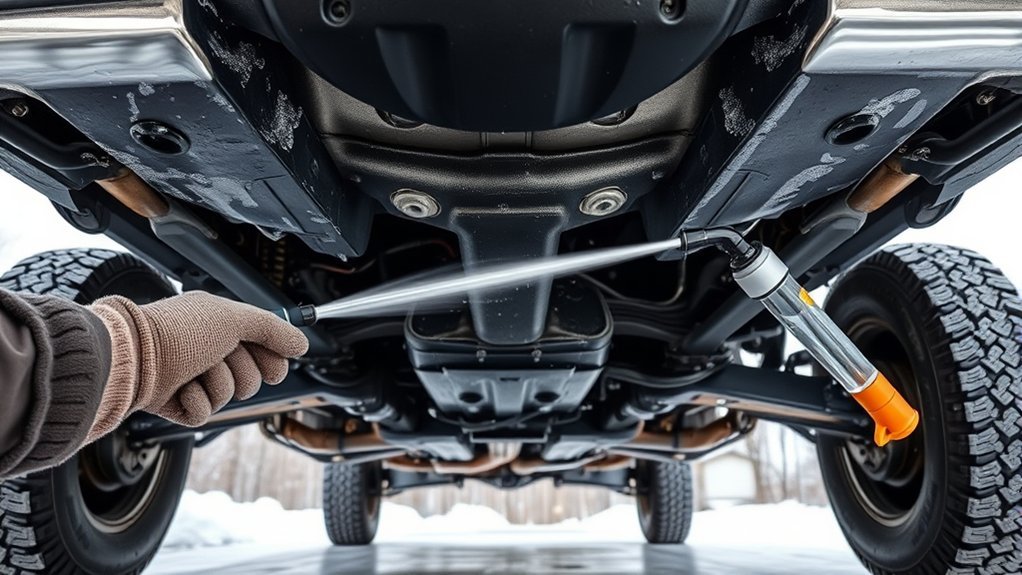
You can stop Tundra frame rust by rinsing salt off biweekly in winter, degreasing and pressure-washing the undercarriage, and inspecting welds, seams, and suspension for early corrosion. Apply a corrosion inhibitor like Fluid Film to frame rails, axle and spring eyes annually (3–6 cans initial) or choose POR‑15 for longer life after abrasive prep. Install sacrificial anodes on vulnerable components and touch up surface rust immediately; continue below for detailed steps and schedules.
Quick Checklist: Prevent Tundra Frame Rust
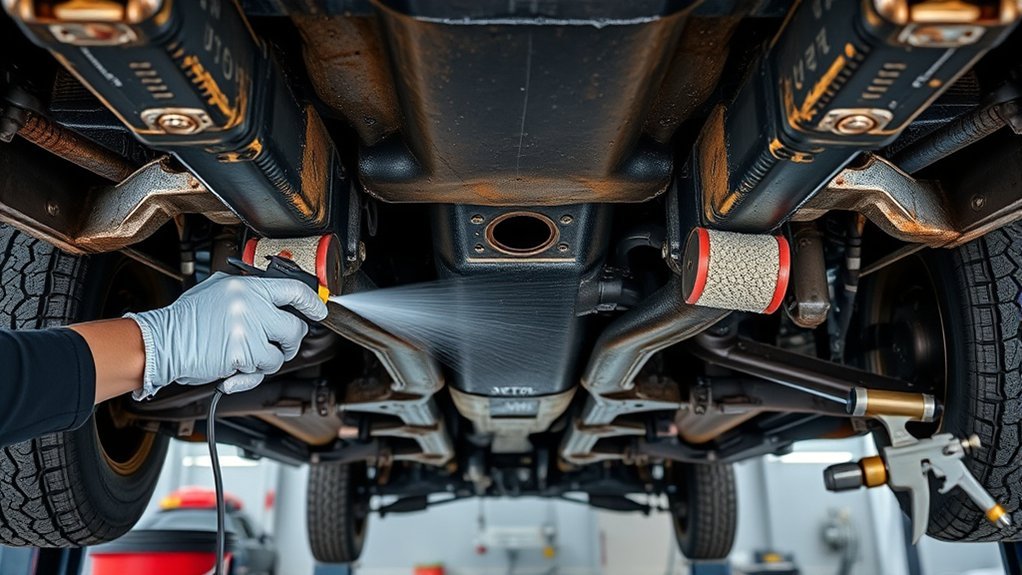
Start with a simple, repeatable routine: apply a corrosion inhibitor like Fluid Film to the frame and undercarriage before winter, wash the underside regularly during the salt season, inspect welds/joints and suspension components for early corrosion, consider installing sacrificial anodes on vulnerable areas such as the rear axle and leaf springs, and schedule an annual inspection with reapplication of rust treatments to maintain protection. You’ll follow a compact checklist: pre-season inhibitor application, biweekly undercarriage maintenance washes while roads are salted, targeted inspections of welds/joints and mounting points, and installation of sacrificial anodes where analysis shows galvanic risk. Track findings in a service log, noting coating thickness, visible pitting, and fastener condition. When you detect surface oxidation, remove loose scale, apply rust converter, then recoat with a lithium- or lanolin-based protectant. Schedule an annual professional inspection to verify frame integrity and refresh treatments. This evidence-based, tactical approach gives you practical control over rust prevention and structural freedom.
Prepare the Tundra Undercarriage (Clean, Inspect, Access)
Lift the Tundra securely and clear the undercarriage with a high-pressure washer and a petroleum-safe degreaser to remove salt, road grime, and oil before any rust treatment. You’ll perform undercarriage maintenance by lifting on rated jacks or ramps, wearing protective gear, and directing concentrated spray at frame welds, leaf springs, rear axle, gas tank support cross members, and tie rod ends. After drying, inspect seams and fasteners with a bright light and a screwdriver to detect blistering or flaking metal; document locations and measure extent. Access hard-to-reach cavities with flexible extension nozzles and a mirror; repeat washes during winter to minimize salt buildup. These steps let you act decisively, preserving mobility and autonomy while applying later rust prevention techniques.
- Feel empowered reclaiming control over corrosive damage.
- Experience the relief of precise, evidence-based inspection.
- Take pride in methodical, safety-first maintenance.
- Liberate your Tundra from avoidable decay.
Which Coating to Choose: Fluid Film, POR‑15, or Wax/Oil
Which coating you pick depends on the service environment, preparation discipline, and how much maintenance you’ll commit to: Fluid Film, POR-15, or wax/oil each have trade-offs. If you want penetration and ongoing protection in salty, wet climates, Fluid Film’s lanolin chemistry penetrates steel capillaries, encapsulates existing rust, and suppresses electrochemical activity; expect annual reapplication and targeted spray or brush application methods for frame rails and springs. POR-15 yields superior coating longevity when applied to bare, dry metal; it forms a hard barrier but will trap moisture and propagate hidden corrosion if surface prep is incomplete, so abrasive cleaning and inspection are mandatory before brushing or rolling multiple coats. Wax/oil treatments give temporary, liberating simplicity but require frequent renewal in winter and are best applied by spray or drip for coverage. You’ll choose based on acceptable maintenance cadence versus maximum protection; document your prep and reapplication schedule to avoid deferred failure.
How to Apply Fluid Film : Step‑by‑Step for Frame, Axle, Springs
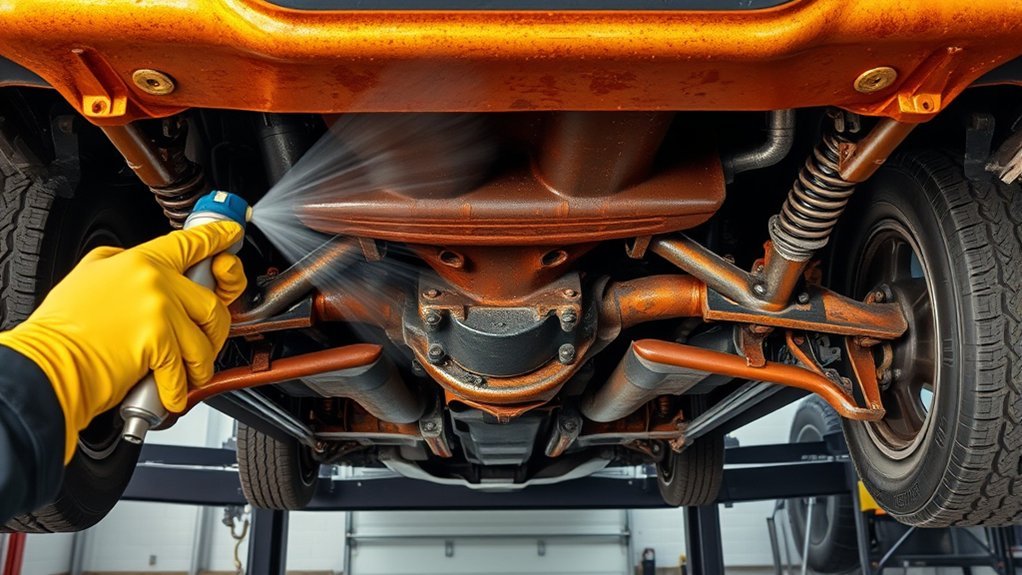
Prepare the truck by completely degreasing and pressure‑washing the undercarriage so Fluid Film can penetrate and bond to clean metal and rust scales; do this before any coating so contaminants don’t lock in moisture or debris. You’ll use aerosol cans or bulk Fluid Film, applying generous coatings to the frame, inside frame rails, rear axle, and leaf springs. Target welds, joints, and spring eyes; expect to use 3–6 cans for an initial pass depending on condition. Adopt steady application techniques: maintain 6–12 inches distance, use overlapping spray patterns, and hold the nozzle to let oily film pool briefly in seams for capillary penetration. Work methodically, section by section, allowing 10–15 minutes between passes for settling. Clean nozzle tips to prevent clogging. Record coverage areas and quantities so you liberate future maintenance from guesswork. Reapply annually and inspect vulnerable spots regularly; the residue may attract dirt but encapsulates and halts further corrosion.
- Relief in control
- Confidence in protection
- Freedom from premature failure
- Pride in durable care
Seasonal Schedule and Quick Fixes for Rust Spots
Because road salt and moisture accelerate corrosion, set a seasonal maintenance rhythm: wash the undercarriage every 2–4 weeks during winter, inspect frame rails, leaf springs, axle seams, and tie-rod ends at each wash, and apply Fluid Film or another protective coating annually—ideally before the first freeze. You’ll document dates, salt exposure levels, and performed actions so you can correlate interventions with outcomes. For quick fixes, treat surface rust immediately: wire-brush to clean to bright metal, apply a rust converter to neutralize oxidation, then prime and touch-up paint within 24 hours to stop progression. Use sacrificial anodes in vulnerable cavities and monitor their depletion; replace when 50% consumed. If corrosion has advanced beyond surface pitting, schedule professional undercoating and frame repair—don’t delay. This regimen emphasizes measurable, evidence-based winter maintenance and rust prevention steps so you can reclaim control of your vehicle’s longevity and avoid escalating structural damage.
Frequently Asked Questions
How to Keep Road Salt From Rusting Car?
You protect your car by taking preventative measures: wash and decontaminate frequently, apply undercarriage protection coatings, inspect welds and joints, treat minor corrosion immediately, and use sacrificial anodes to chemically divert salt-driven electrochemical attack.
What Is the Toyota Frame Rust Lawsuit?
The Toyota frame rust lawsuit challenges compromised frame integrity in 2000–2003 Tundras, alleging inadequate rust prevention, undisclosed risks, and withheld recalls; you’re urged to seek evidence-based remediation, reparations, and stronger regulatory accountability.
Does Spraying WD-40 Prevent Rust?
Yes — imagine a thin, glossy film: you’ll see WD‑40 applications displace moisture and provide temporary rust prevention, but you’ll need frequent reapplication; it’s evidence‑based short‑term protection, not a permanent corrosion solution.
How Long Does Toyota Rust Proofing Last?
Toyota rust proofing typically lasts 3 to 5 years; in heavy salt regions it can degrade sooner. You’ll extend benefits by following Toyota maintenance tips, inspecting annually, reapplying durable products, and documenting evidence-based touch-ups.
Conclusion
You’ve got the tools and a clear plan to stop road salt eating your Tundra’s frame, so act now and stay consistent. Clean thoroughly, inspect for damage, and pick a proven coating—Fluid Film for penetration, POR‑15 for hard barrier, or wax/oil for seasonal protection—then apply methodically to frame, axles, and springs. Follow a seasonal recoat schedule and touch up chips immediately. Ready to keep corrosion from undermining your truck’s safety and value?