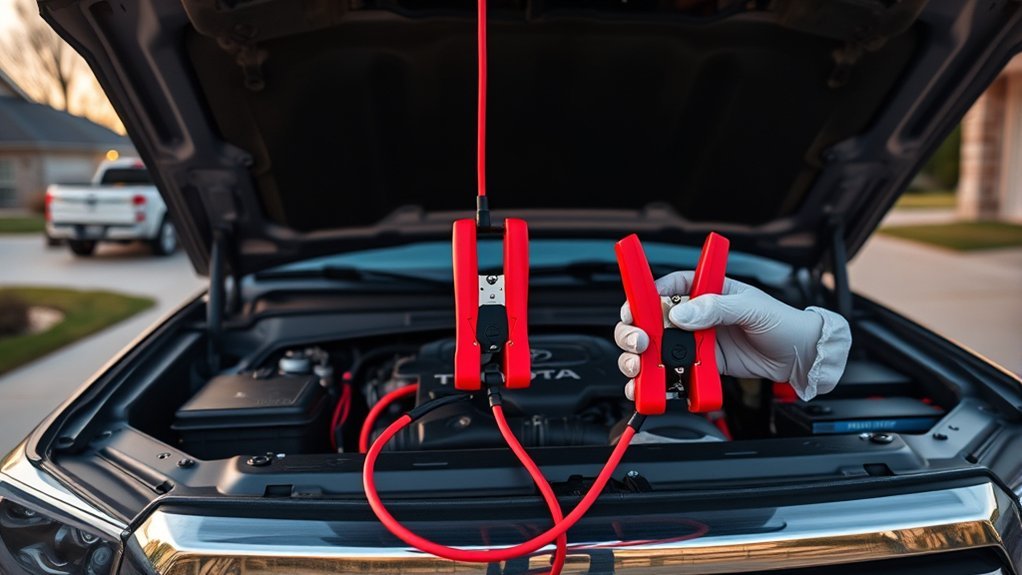
Park both trucks close, engines off, and set parking brakes; wear gloves and goggles. Identify the Tundra’s 12V battery (driver side), inspect terminals, and clean if corroded. Connect red to positive on each battery, black to donor negative, and attach the other black to a grounded metal point on the Tundra. Start the donor, wait minutes, then start the Tundra; remove cables in reverse order. If it starts, let it charge and check voltage—more tips follow.
Quick 6-Step Jump-Start for a Toyota Tundra
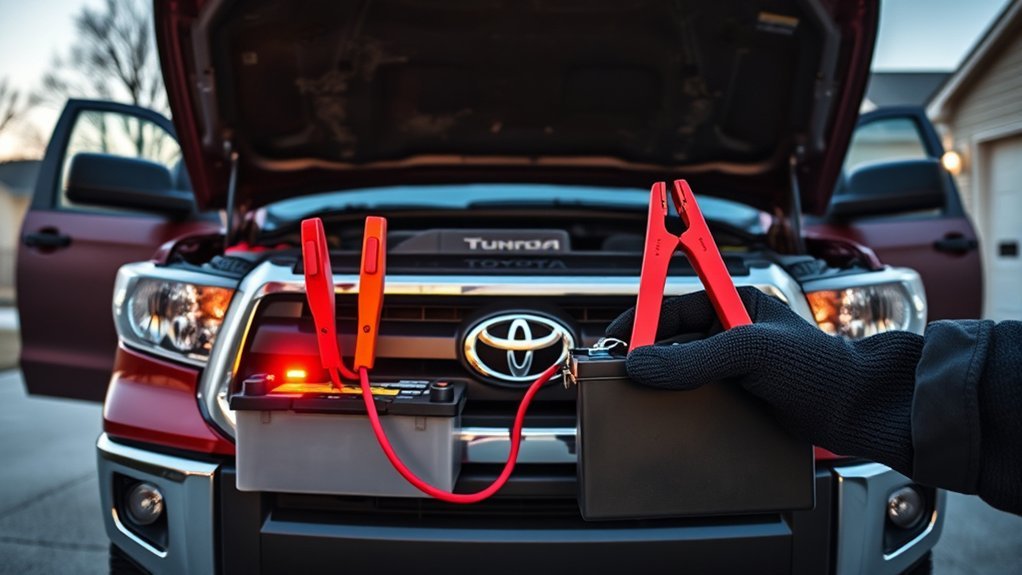
Start by parking both vehicles close enough for the jumper cables to reach, turn both ignition switches off, and set the parking brakes—this positions you for a safe, controlled jump-start. You’ll connect the red cable to the Tundra’s positive terminal, then to the assisting vehicle’s positive terminal, reducing confusion that fuels jump start myths. Attach the black cable to the assisting vehicle’s negative terminal, then clamp the other end to an unpainted metal ground on the Tundra to avoid sparks at the battery. Start the assisting vehicle first and let it run for a few minutes while you listen for unusual sounds; that run-in stabilizes voltage transfer. Attempt to start the Tundra; if it fires, idle it to recharge the 12-volt battery. Remove cables in reverse order: black ground, black negative, red positive on helper, red positive on Tundra. Practice this routine as part of battery maintenance so you stay self-reliant and free from roadside dependence.
Prepare Safely Before Jump-Starting a Tundra
Before you touch the cables, turn both vehicles off, remove the keys, and set the parking brakes so nothing can move while you work. You’ll control risk and preserve freedom by preparing methodically: position the donor vehicle close enough for cables, confirm a ventilated, non-flammable environment, and inspect everything before making electrical contact. Follow these focused steps to reduce surprises and protect systems.
Before touching cables, turn both vehicles off, remove keys, set parking brakes, and inspect surroundings for a safe jump-start.
- Park nose-to-nose or side-by-side so jumper cables reach without stretching.
- Engage both parking brakes and place vehicles in Park (or neutral for manuals).
- Check surroundings for fuel, solvents, or sparks; clear the area.
- Visually inspect battery terminals for corrosion, damage, or loose mounts.
- Consider battery maintenance tips and extreme weather precautions like warm-up or shielding.
You’ll avoid shocks and component damage by working deliberately, using clean clamps, and keeping metal tools away from terminals. This disciplined approach liberates you from risky improvisation and readies the vehicles for a safe jump-start.
Where the Tundra’s 12V Battery and Terminals Are
On a Toyota Tundra, you’ll find the 12‑volt battery under the hood on the driver’s side near the front; its positive terminal has a red cover and ‘+’ marking, the negative a black cover and ‘−’ marking, and both must be clean and corrosion‑free before you make any connections. Locate any retaining bracket or plastic cover and remove it to expose the posts; if the battery is inaccessible due to a locked trunk, use the hidden key from the fob to gain manual entry. Inspect both terminals visually and by touch for looseness or crusty buildup. Apply basic battery maintenance tips: keep terminals tight, verify venting areas aren’t blocked, and replace a swollen or cracked case. Use proven terminal cleaning techniques—baking soda paste or a commercial cleaner and a brush—to neutralize corrosion, then rinse and dry thoroughly. Work with purpose and respect for stored energy: correct identification and clean contacts are essential to a safe, effective jump start.
Tools and Safety Checks to Have on Hand
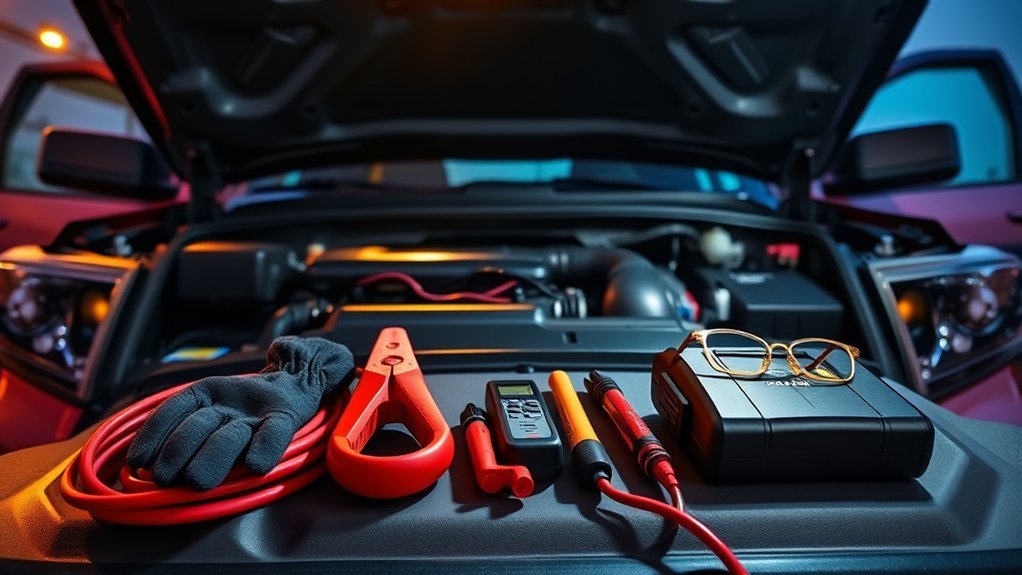
A small kit of the right tools and protective gear will make the jump-start safe and efficient: use heavy‑duty jumper cables (at least 4‑gauge for a Tundra), a flashlight for inspecting terminals in low light, chemical‑resistant gloves and safety goggles, and a wire brush or terminal cleaner to remove any corrosion so you get a solid connection. You’ll also confirm vehicles are parked safely with parking brakes engaged and batteries are clean to prevent poor contact or sparks. Treat this as part of your emergency preparedness checklist and battery maintenance tips routine to stay autonomous on the road.
- Heavy‑duty jumper cables (≥4‑gauge) and insulated clamps
- Flashlight or headlamp with fresh batteries
- Chemical‑resistant gloves and safety goggles
- Wire brush/terminal cleaner and rags
- Basic tool (wrench) to access terminals if needed
Prepare deliberately, follow PPE and location checks, and keep this compact kit in your Tundra to preserve freedom and safety during roadside incidents.
Step-by-Step: Connecting Jumper Cables Correctly
Start by attaching the red cable to the positive terminal on the dead Tundra, then to the positive terminal on the assisting vehicle—always follow that cable order. Next connect the black cable to the assisting vehicle’s negative terminal and clamp the other black end to a clean, unpainted metal ground on the Tundra away from the battery. Double-check each clamp is secure and free of corrosion before starting the assisting vehicle and allowing a few minutes of charge.
Correct Cable Order
Because sparks near the battery can be dangerous, you’ll connect the cables in a strict sequence: red to the Tundra’s positive terminal, red to the booster vehicle’s positive, black to the booster’s negative, and black to an unpainted metal ground on the Tundra; reverse this order when disconnecting. This exact order minimizes ignition risk and preserves your control when liberating yourself from a dead battery.
- Use correct cable types: heavy-gauge, insulated clamps for safe current flow.
- Clamp red to Tundra positive first; guarantee a tight fit.
- Clamp red to booster positive; confirm polarity.
- Attach black to booster negative; avoid battery vicinity.
- Attach black to Tundra ground on clean, unpainted metal.
Follow these jump starting tips to manage risk and regain mobility efficiently.
Secure Metal Ground
Having attached the positives and the booster negative, you’ll now secure the Tundra’s negative clamp to a clean, unpainted metal surface away from the battery to serve as the ground. Choose a heavy, painted-free chassis bolt, engine bracket, or dedicated grounding point—no painted sheet metal, no terminal on the dead battery. This ground connection minimizes spark risk by distancing the clamp from hydrogen off-gassing and enforces battery safety. Firmly tighten the clamp so it won’t slip; a loose jaw yields poor conductivity and failed starts. After the donor vehicle is connected and you start the Tundra, let it idle to recharge. Remove cables in reverse order, maintaining the same caution: positive first, then the grounded negative last, preserving safety and autonomy.
Starting the Donor Vehicle and Your Tundra
Once the donor vehicle is running and its connections are verified—red clamps on both positive terminals and the black clamp on the donor’s negative terminal—let it idle for a few minutes to build charge before you try your Tundra. You’re using proven jump start techniques: let the donor vehicle stabilize voltage, then attempt a controlled start on the Tundra.
With clamps secure, let the donor idle a few minutes to stabilize voltage, then attempt a controlled start on the Tundra.
- Wait 2–5 minutes with the donor idling to transfer charge without overloading either alternator.
- Turn your Tundra’s ignition to “start” briefly; avoid excessive cranking to protect the starter motor.
- If the Tundra fails to start, return to idling for additional charge, then retry after a short pause.
- Once the Tundra starts, let both engines idle so the alternator recharges the battery to a safe state.
- Maintain confident awareness of heat, smells, or unusual sounds; be ready to stop and reassess.
These steps are precise and safety-focused, giving you the freedom to act decisively and reclaim mobility while minimizing risk.
Safely Disconnecting Cables and Immediate Checks
After you’ve got the Tundra running, remove the black (negative) clamp from your truck first to minimize the risk of a short, then visually inspect both batteries and their terminals for cracks, swelling, leakage, or heavy corrosion; if you see damage, don’t drive—address the battery or call professional help. Next, remove the black clamp from the donor vehicle, then remove the red (positive) clamp from the donor last. During each step perform a systematic cable inspection: check insulation for cuts, clamps for secure teeth, and wires for exposed copper. Note corrosion signs such as white powder, green-blue deposits, or pitting at terminals; clean only if you can do so safely and with appropriate tools. Before stowing cables, confirm all clamps are fully open and separated from metal, then coil and store them dry to prevent future degradation. Finally, recheck that your Tundra’s terminals are tight and that electrical systems operate normally before you depart.
Troubleshooting: If Your Tundra Won’t Start
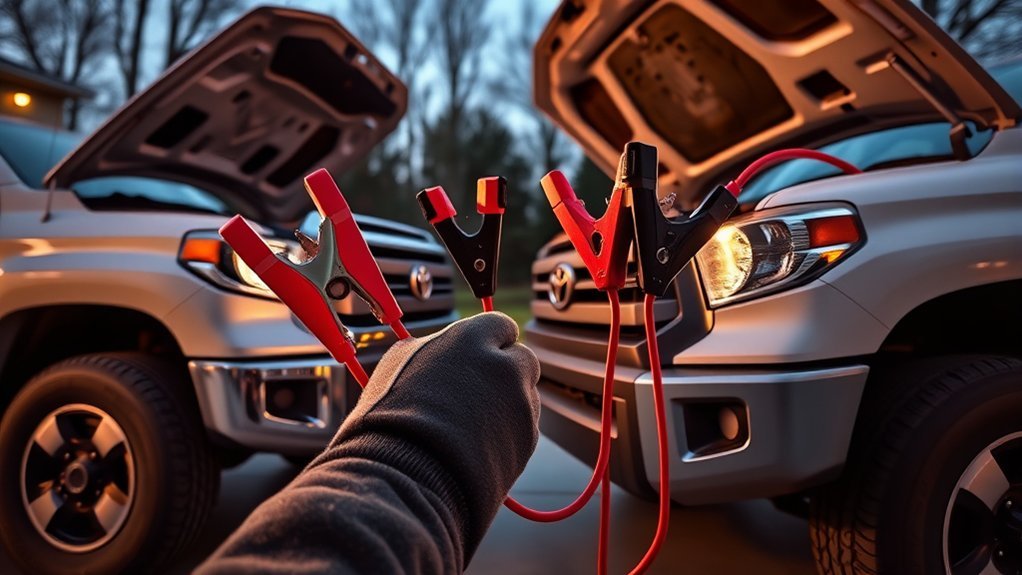
Start by performing key electrical checks: verify the 12‑volt battery voltage, inspect terminals for corrosion or looseness, and note whether dashboard lights flicker or remain dark. Confirm the shifter is in Park or Neutral and listen for clicking that could indicate a weak battery or a failing starter. If basic checks don’t restore power or you suspect a starter/electrical fault, call roadside assistance to avoid unsafe on‑vehicle troubleshooting.
Key Electrical Checks
Before you try a jump, perform a quick set of electrical checks to rule out common faults that mimic a dead battery. You’ll apply basic battery maintenance and electrical diagnostics to confirm the issue before connecting cables. Use a multimeter, visual inspection, and simple tests to avoid wasting your freedom on unnecessary jumps.
- Measure battery voltage with a multimeter; ≥12.4 V indicates acceptable charge.
- Inspect terminals for corrosion or looseness; clean and tighten as needed.
- Check ignition-related fuses for continuity; replace any blown fuse.
- Test the key fob battery and spare; a dead fob can prevent recognition.
- Turn the key and listen: rapid clicks may mean a weak battery; single heavy click may indicate starter trouble.
If checks pass, proceed to jump-start safely.
When To Call Roadside
If your quick battery and electrical checks didn’t reveal a fix, recognize when you need professional help rather than risking further damage or a failed jump. If the dashboard lights are dead, you likely have a completely drained 12-volt and should call roadside assistance instead of repeatedly attempting jumps. If you hear unusual clicking when turning the key, or the engine cranks but won’t fire, get a technician—clicks can indicate a starter fault or weak battery; cranking without start suggests fuel or ignition failure. If warning lights or electrical anomalies appear, avoid jump-starting to prevent damage and request roadside support. Check your owner’s manual for coverage and steps; be prepared to authorize battery replacement or tow to reclaim mobility and freedom quickly.
Hybrid Tundra? 12V vs Traction Battery and Special Steps
While the Hybrid Tundra uses both a conventional 12‑volt battery and a high‑voltage traction battery, only the 12‑volt can be jump‑started and you must treat the traction pack as off‑limits for any jump procedures. You’ll rely on hybrid technology and disciplined battery maintenance to stay free from roadside dependence. If the 12‑volt is dead you may need the hidden metal key in the fob to open the door before accessing the battery.
- Confirm you’re connecting the red clamp to the 12‑volt positive terminal; never clip to traction components.
- Attach the negative clamp to a grounded metal point, not plastic or the traction enclosure.
- Wait while the vehicle’s computer analyzes conditions; the engine may not start instantly after clamping.
- Never use a hybrid to jump a non‑hybrid—mismatched systems can cause serious damage.
- Keep tools, gloves, and the owner’s manual accessible so you can act decisively and reclaim mobility safely.
Aftercare: Charge, Test, and Prevent Future Dead Batteries
Right after the Tundra starts, let it run for at least 30 minutes so the alternator can recharge the 12‑volt battery. Use a multimeter to verify resting voltage (12.4–12.7 V is healthy) and measure alternator output with the engine running to confirm proper charging. If terminals show corrosion or voltage/charge rates are abnormal, clean connections and consider a maintainer or diagnostic check to prevent repeat failures.
Charge Immediately After Start
After the engine takes, let it idle for at least 15–30 minutes or drive for a minimum of 20 minutes so the alternator can recharge the 12‑volt battery and stabilize system voltage. You’ll want a clear plan: the charge duration matters for restoring capacity and preserving freedom from roadside dependency. Monitor voltage if you can; running voltage should sit between 13.7–14.7 V. Perform quick visual checks and basic upkeep to prevent repeat failures.
- Keep drive time to at least 20 minutes after a jump for adequate charging.
- Use a multimeter to confirm resting voltage near 12.6 V when off.
- Inspect battery terminals and cables for corrosion and tightness.
- Prioritize routine battery maintenance to avoid being stranded.
- If issues persist, get professional service to diagnose underlying faults.
Test Battery And Alternator
Because a jump only gets you moving, you need to verify both battery state and alternator output before you head back to normal use: immediately measure battery voltage with a multimeter—12.4–12.7 V indicates a full charge. Run the engine and perform alternator testing; charging voltage should rise to 13.7–14.7 V. Inspect and clean corroded terminals to restore solid connections, preventing repeat failures. If the battery is over three years old, use a battery tester to assess capacity and load performance. Schedule routine battery maintenance and replace the battery every three to five years as a preventive measure. These checks secure your independence on the road, confirming the charging system sustains operation and freeing you from unexpected stalls.
Frequently Asked Questions
Is It Safe to Jump-Start a Truck With a Car?
Yes — you can, but you’ve got to follow jump starting precautions and confirm battery compatibility: match CCA and voltage, connect positive first, ground negative, avoid prolonged cranking, and consult manuals so you’re safely empowered.
Can You Damage Your Alternator by Jump Starting a Toyota?
About 70% of alternators last over 100,000 miles; you won’t usually damage yours by jump-starting a Toyota if you follow jump start precautions. You should connect correctly, avoid excessive cranking, and maintain alternator lifespan proactively.
Conclusion
You’ve followed precise, safety-first steps to jump-start your Toyota Tundra: confirm locations, use correct clamps, and ground properly to avoid sparks or damage. If a start still fails, you’ve checked connections and battery health and know when to call a pro. Hybrid models need special 12V precautions. Truthfully, preventing dead batteries is easier than emergency fixes—regular charging and inspections vastly reduce risk. Stay technical, cautious, and proactive to keep your Tundra reliable.