For most late-model Toyota Tundras, the safest oil choice is the viscosity printed in the owner’s manual and on the oil cap. For current U.S.-market Tundras, Toyota specifies Toyota-approved or equivalent ILSAC GF-6A SAE 0W-20 engine oil. SAE 5W-20 may be used only as a short-term fallback when 0W-20 is unavailable, and 5W-30 should not be treated as a routine towing upgrade unless your exact model-year manual allows it.
Quick Answer
Use SAE 0W-20 full synthetic that meets Toyota’s required oil specification for most late-model Tundras. If 0W-20 is unavailable, Toyota allows SAE 5W-20 temporarily on current models, but it should be replaced with 0W-20 at the next oil change. Do not switch to 5W-30 for towing unless your manual specifically permits it.
Key Takeaways
- The owner’s manual wins every time; oil advice should be model-year specific.
- For current U.S.-market Tundras, Toyota lists ILSAC GF-6A SAE 0W-20 as the recommended viscosity.
- SAE 5W-20 is a temporary substitute when 0W-20 is unavailable, not a warm-climate upgrade.
- Towing, dirt roads, off-road driving, repeated cold short trips, and extensive idling usually call for shorter oil-change intervals, not thicker oil.
- Using oil outside the listed specification can make an engine-related warranty claim harder to defend, especially without receipts and maintenance records.
At a Glance
| Time Required | 5 minutes to verify the oil spec; 30–60 minutes for a DIY oil change |
| Difficulty | Easy for oil selection; moderate for DIY service |
| Tools Needed | Owner’s manual, oil cap, maintenance guide, receipts; oil-change tools if servicing yourself |
| Cost | Varies by oil brand, filter, shop labor, and engine capacity |
Which Oil Should You Use for Your Tundra?

Start with your exact Tundra’s owner’s manual, not a forum thread or a one-size-fits-all oil chart. Toyota changes specifications by model year, engine, market, and emissions calibration. The oil cap is a helpful quick check, but the owner’s manual and Warranty & Maintenance Guide are the final references.
For current U.S.-market Toyota Tundras, Toyota’s published maintenance data calls for ILSAC GF-6A SAE 0W-20. Toyota also says SAE 5W-20 may be used if SAE 0W-20 is not available, but it must be replaced with SAE 0W-20 at the next oil change. That means 5W-20 is a temporary fallback, not the preferred oil for hot weather, high mileage, or towing.
| Your Situation | Best Move | Why |
|---|---|---|
| Normal late-model Tundra driving | Use the listed SAE 0W-20 oil spec | Matches Toyota’s calibration, cold-start needs, and fuel-economy target |
| 0W-20 is unavailable | Use 5W-20 only if your manual allows it | Toyota treats it as a temporary substitute on current models |
| Towing, dirt roads, off-road use, cold short trips, or heavy idling | Keep the correct viscosity and shorten the interval | Severe use affects oil life more than it changes the required grade |
| Considering 5W-30 | Do not use it unless your exact manual or Toyota service information permits it | A thicker grade may be outside the engine’s specified range |
| Older Tundra or non-U.S. market truck | Verify by VIN, manual, and market | Specifications can differ by year, engine, and country |
Warning: Do not choose a thicker oil simply because you tow or live in a hot climate. Use only viscosities allowed for your exact Tundra. If your truck is under warranty, keep receipts showing the oil grade, oil specification, mileage, and date.
Toyota’s Recommended Oil for the Tundra: And Why
Toyota recommends SAE 0W-20 for current U.S.-market Tundras because the engine is designed around that viscosity grade for cold-start flow, fuel economy, emissions performance, and proper lubrication through tight oil passages. The important point is not just the “0W-20” label. The oil also needs to meet the required performance standard, such as ILSAC GF-6A for current models.
The first number in a viscosity grade describes cold-temperature behavior. A lower “W” number generally means the oil is designed to flow better during cold starts. The second number describes the oil’s high-temperature viscosity grade. So 0W-20 and 5W-20 are both SAE 20 oils at operating-temperature classification, but 0W-20 has better low-temperature performance.
| Feature | 0W-20 Role | What It Means for a Tundra |
|---|---|---|
| Fuel economy | Lower pumping and friction losses than thicker grades | Helps the truck meet its designed efficiency target |
| Cold starts | Fast flow at low temperatures | Helps oil reach critical parts quickly after startup |
| Oil standard | Must meet the required ILSAC/API performance category | Look for the correct certification on the bottle |
| Warranty documentation | Matches the listed grade when serviced correctly | Makes maintenance records cleaner if a claim ever comes up |
| Service interval | Follow Toyota’s maintenance schedule | Normal and severe-service intervals are not the same |
Note: Oil viscosity and oil quality are different things. A bottle can say 0W-20 and still be the wrong choice if it does not meet the oil standard your manual requires.
0W-20 vs 5W-20 vs 5W-30: Protection, Cold Starts, MPG
Choosing between 0W-20, 5W-20, and 5W-30 is not just about “thin” versus “thick.” You need to compare both numbers and then check whether Toyota allows that grade for your specific truck.
| Oil Grade | Cold-Start Behavior | Operating-Temperature Grade | Use in a Late-Model Tundra |
|---|---|---|---|
| 0W-20 | Best cold-flow rating of these three | SAE 20 | Recommended grade for current U.S.-market Tundras |
| 5W-20 | Slightly less cold-flow capability than 0W-20 | SAE 20 | Temporary fallback if 0W-20 is unavailable and your manual allows it |
| 5W-30 | Similar winter grade to 5W-20 | SAE 30, thicker at operating-temperature classification | Do not use unless approved for your exact year, engine, and market |
The MPG difference between approved oil grades is usually smaller than the difference caused by speed, tires, payload, wind, terrain, idle time, and towing profile. If you want real data, log fuel economy over several tanks with the same route, tire pressure, load, and driving speed. One tank is not enough to prove an oil-related MPG change.
For a Tundra, the best viscosity is not the thickest oil you can buy. It is the oil grade Toyota lists for that engine, changed at the correct interval for how the truck is actually used.
[Products Worth Considering]

Castrol GTX Full Synthetic 5W-30 motor oil is designed to deliver maximum engine protection in severe driving conditions. It helps fight wear, control sludge, and resist viscosity breakdown while supporting longer intervals between oil changes. Formulated to meet or exceed key industry and vehicle manufacturer specifications, it offers dependable performance for modern engines.

Castrol EDGE 0W-20 advanced full synthetic motor oil is engineered for drivers seeking strong wear protection, excellent viscosity control, and thermal stability. It delivers superior performance in critical engine areas, including fuel economy, high-temperature protection, sludge control, and wear defense. Designed for extended oil-change intervals, it helps keep modern engines running smoothly under demanding conditions.
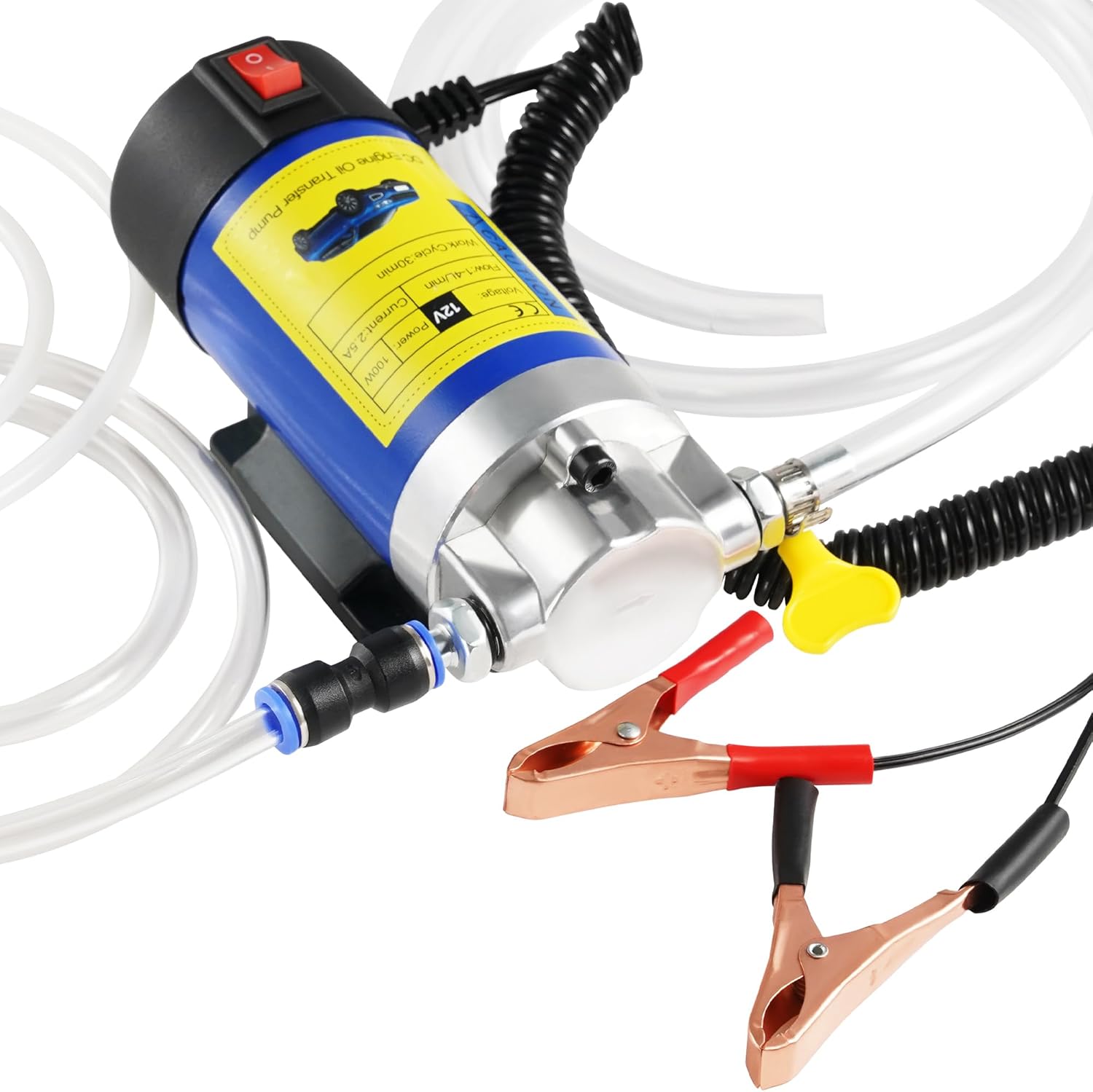
This electric oil extractor pump makes DIY oil changes cleaner and easier by removing old fluid through the dipstick tube, eliminating the need to crawl under the vehicle or deal with messy drain plugs. It is designed for synthetic oil changes and fluid maintenance across cars, motorcycles, lawn mowers, boats, and Jet Skis, while its pure copper motor delivers stable suction and dependable performance. Built for efficient topside oil changes, it supports multiple fluid types and offers continuous operation for longer service tasks.
How Viscosity Affects Wear, Bearings, and Oil Consumption
Oil viscosity helps form a protective film between moving engine parts. Too little film strength can increase wear, but oil that is too thick for the engine can also create problems. It may flow more slowly when cold, reduce fuel economy, affect variable valve timing behavior, and make the oil pump work harder than intended.
That is why “more viscosity” is not automatically “more protection.” Toyota engineers choose an oil grade based on bearing clearances, pump design, turbocharger lubrication needs, oil temperature, emissions goals, and fuel-economy targets. Your job is to keep the oil clean, full, and in specification.
Viscosity And Bearing Load
Engine bearings rely on a thin oil film to separate metal surfaces. Under normal operation, the correct oil grade helps maintain that film while still flowing quickly enough at startup. If you use an oil grade outside the listed range, you may change the balance Toyota designed into the engine.
Low oil level, old oil, overheating, fuel dilution, and extended intervals can be more damaging than using the correct 0W-20. Before blaming the viscosity, check the basics: level, change history, oil quality, filter quality, coolant temperature, and whether the truck is operating under severe-service conditions.
Oil Thickness And Consumption
Some high-mileage engines consume less oil with a thicker viscosity, but that does not make a thicker oil the right first step for every Tundra. Oil consumption can come from leaks, PCV issues, worn rings, valve-stem seals, turbocharger problems, or extended drain intervals. Diagnose the cause before changing viscosity.
If your Tundra is consuming oil, record how much oil is added per 1,000 miles, inspect for leaks, check the PCV system, and talk to a Toyota service department or qualified technician. If the vehicle is still under warranty, do not experiment with unlisted grades without written guidance.
Pro Tip: Oil pressure alone does not prove better protection. A thicker oil can raise pressure while still being the wrong viscosity for cold flow, timing components, fuel economy, or warranty documentation.
Real-World MPG: Owner Reports When Switching Viscosities

Owner reports can be useful, but they are not controlled tests. A change in weather, tire pressure, fuel blend, highway speed, trailer weight, or wind can easily hide or exaggerate any MPG change from oil viscosity.
Real-World Fuel Impact
In normal driving, 0W-20 is chosen partly because it reduces pumping losses and helps the engine meet its designed fuel-economy target. That does not mean every driver will see a dramatic MPG gain on the dashboard. The effect is usually small enough that you need consistent tracking to see it.
Use the same pump when practical, fill to the same click-off method, reset your trip meter, and compare several tanks. If your route, payload, tires, or driving speed changes, the MPG comparison is not clean.
Towing And Economy
When towing, trailer shape, trailer weight, speed, grade, wind, and tire setup dominate fuel economy. Switching from an approved oil to an unapproved thicker oil is not a smart way to improve towing durability. For severe use, focus on the right oil specification, correct oil level, shorter service intervals, transmission and cooling-system health, and proper trailer setup.
If your Tundra tows frequently, check the maintenance guide for severe-service intervals. Toyota’s support guidance says special operating conditions such as towing a trailer, off-road driving, dirt roads, repeated short trips below 32°F, and extensive idling require engine-oil replacement at 5,000-mile intervals.
Warranty Risk: When Thicker Oil Could Void Coverage for Your Tundra
The better way to frame this is warranty risk, not automatic warranty loss. Using a non-specified oil does not automatically erase your whole warranty. However, if an engine problem occurs and the service record shows the wrong oil grade or missing maintenance records, an engine-related claim can become harder to defend.
The Federal Trade Commission explains that companies cannot refuse warranty coverage solely because a third-party part or service was used, but they may refuse coverage for defects or damage caused by third-party parts or services. The FTC also advises keeping maintenance records because warranty companies can ask for them.
Warning: If your Tundra is under factory warranty, extended warranty, or service contract, avoid unlisted oil grades. Keep receipts showing the oil viscosity, performance standard, filter, date, mileage, and shop name or DIY notes.
Good records are simple protection. Save receipts, take a photo of the oil bottle label if you service the truck yourself, write down mileage, and reset the maintenance reminder only after the work is complete.
Choose Oil by Climate, Towing, and Driving Habits
Climate and duty cycle matter, but they usually change the service interval before they change the viscosity. In cold weather, 0W-20 has an advantage over 5W-20 because it is rated for better low-temperature flow. In hot weather or towing, the answer is not automatically 5W-30; the answer is to stay within Toyota’s allowed oil grades and shorten the interval if the truck meets severe-service conditions.
- Cold climate: Use the listed 0W-20 because it is designed for strong cold-start flow.
- Hot climate: Keep the specified oil grade unless your exact manual allows another viscosity.
- Regular towing: Use the correct oil specification and follow severe-service intervals.
- Dusty roads or off-road use: Shorten service intervals and check the air filter regularly.
- Short-trip driving: Repeated cold starts and short trips can contaminate oil faster, especially below freezing.
- High-mileage engine: Diagnose leaks or consumption first; do not jump to an unlisted viscosity while under warranty.
[Products Worth Considering]

This 2-piece oil control variable valve timing solenoid set is designed to help restore proper VVT operation and engine performance across a wide range of Toyota, Lexus, Scion, and Pontiac applications. Built to meet or exceed OE performance, it uses quality seals for reliable oil control and helps reduce issues caused by improper oil flow. It is a practical replacement choice for maintaining smooth engine timing and dependable drivability.
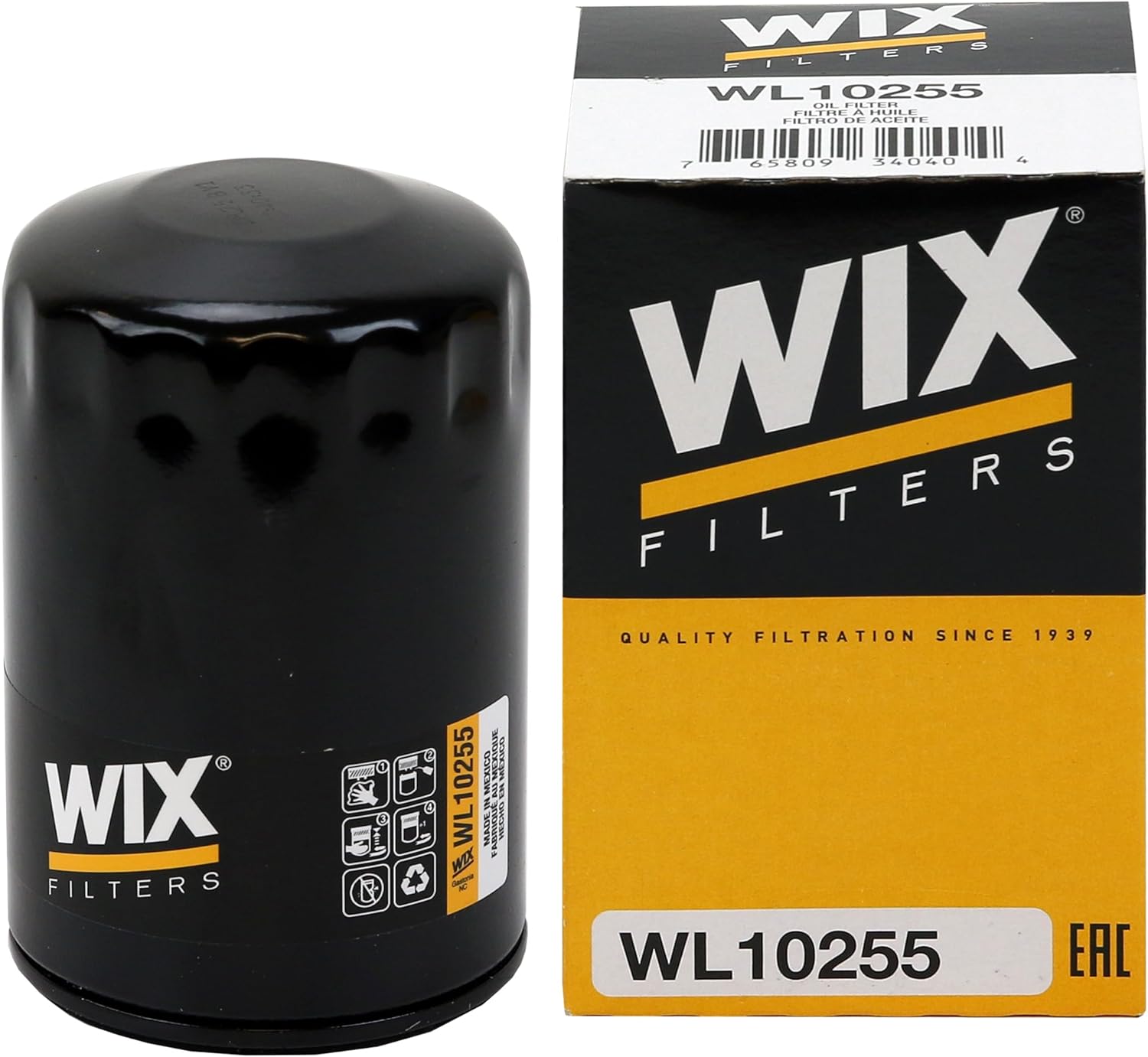
WIX WL10255 is a premium oil filter designed for synthetic and high-mileage oils, delivering reliable protection in everyday driving, towing, stop-and-go traffic, and long highway trips. Its advanced blended media captures fine contaminants with high efficiency, while the silicone anti-drainback valve helps prevent dry starts and supports dependable engine performance over extended service intervals.

The ECOGARD S5608 is a premium cartridge oil filter designed for vehicles using synthetic oil and extended drain intervals. It delivers long-lasting engine protection with high filtration capacity, silicone anti-drain back, and durable construction for dependable performance. Built for a wide range of Toyota, Lexus, and Scion applications, it helps maintain clean oil flow and consistent engine health over time.
Practical Maintenance Plan: Oil Choice, Intervals, and Checks
A good Tundra oil plan is simple: verify the spec, use a quality oil and filter, choose the correct interval, and keep proof. The exact capacity and filter can vary by model year and engine, so check the owner’s manual before buying oil.
- Check the manual and oil cap. Confirm viscosity, oil standard, and capacity for your exact year, engine, and market.
- Buy oil that meets the listed standard. For current U.S.-market Tundras, look for ILSAC GF-6A SAE 0W-20 or the specification listed in your manual.
- Use the correct filter. Choose Toyota Genuine or an equivalent high-quality filter that matches your engine.
- Choose the right interval. Toyota’s support guidance says vehicles requiring 0W-20 synthetic oil can use 10,000-mile/12-month oil-change intervals under normal conditions, but special operating conditions require shorter intervals.
- Shorten the interval for severe use. Towing, off-road driving, dirt roads, repeated cold short trips, and extensive idling call for 5,000-mile oil replacement intervals.
- Check oil level monthly. Also check before long trips, after towing, and after sustained high-speed driving.
- Keep documentation. Save receipts and write down mileage, date, oil grade, oil standard, and filter.
Note: Do not rely on “10,000 km” or “10,000 miles” without checking your market-specific guide. U.S., Canadian, and other market manuals may present maintenance schedules differently.
[Products Worth Considering]

These heavy-duty running board side steps are designed to improve access to your Toyota Tundra without reducing ground clearance. Built for Double Cab and CrewMax front door applications, they offer practical convenience for everyday entry, roof loading, and off-road use. The durable iron construction and easy no-drill installation make them a reliable upgrade for rugged driving.

This oil filter housing cap assembly is designed as a direct replacement for a wide range of Toyota and Lexus vehicles, helping restore a secure seal for proper oil filtration. It is made for easy installation and tested for compatibility with multiple part numbers and model years. The package includes the cap, plug, and gasket for a complete replacement solution.

This upgraded engine oil funnel kit makes oil changes cleaner and easier with a spill-proof design, flow control valve, and transparent body for precise filling. Built from durable polycarbonate and equipped with 12 adapters, two 45-degree elbows, and a debris filter, it fits a wide range of vehicles and works well in tight engine spaces. The secure, hands-free setup helps reduce mess while improving control during oil filling and fluid transfers.
Frequently Asked Questions
Can I use 5W-20 instead of 0W-20 in a Toyota Tundra?
On current U.S.-market Tundras, Toyota allows SAE 5W-20 only if SAE 0W-20 is unavailable, and it should be replaced with SAE 0W-20 at the next oil change. Treat 5W-20 as a temporary fallback, not a preferred upgrade.
Should I use 5W-30 in my Tundra for towing?
Do not use 5W-30 unless your exact owner’s manual or Toyota service information allows it. For towing, the safer maintenance move is usually to use the specified oil and shorten the oil-change interval for severe service.
Is 5W-30 or 5W-40 more viscous?
5W-40 is more viscous at operating-temperature classification than 5W-30. Both have a 5W winter rating, but the second number is higher on 5W-40, so it is the thicker high-temperature grade.
Which oil has lower viscosity, 0W-20 or 5W-30?
0W-20 has the lower cold-temperature rating and the lower operating-temperature grade. It flows better in cold starts than 5W-30 and is thinner at operating-temperature classification.
How often should I change oil in a Toyota Tundra?
Follow your Warranty & Maintenance Guide. Toyota’s general support guidance says vehicles requiring 0W-20 synthetic oil use 10,000-mile/12-month intervals under normal conditions, while special operating conditions such as towing, dirt roads, off-road driving, repeated cold short trips, or extensive idling require 5,000-mile oil replacement intervals.
Can the wrong oil void my Tundra warranty?
The wrong oil does not automatically void the entire warranty, but it can create problems if an engine-related failure occurs and the oil is outside Toyota’s listed specification. Keep receipts and use the viscosity and oil standard required by your manual.
Conclusion
The right Tundra oil is not a guess and not a forum popularity contest. For most late-model U.S.-market Toyota Tundras, the correct answer is ILSAC GF-6A SAE 0W-20 or the exact specification printed in your manual. Use 5W-20 only as a temporary fallback when Toyota allows it, and do not jump to 5W-30 for towing unless your exact truck’s documentation permits it.
If your Tundra works hard, protect it with the correct oil, shorter severe-service intervals, regular level checks, and clean records. That does more for engine life and warranty peace of mind than experimenting with a thicker bottle.
Sources
- Toyota Owners — 2025 Tundra maintenance data — backs the ILSAC GF-6A SAE 0W-20 recommendation and 5W-20 temporary-substitute rule.
- Toyota Support — synthetic oil change intervals — backs normal and special-operating-condition oil-change interval guidance.
- American Petroleum Institute — latest oil categories — backs API SP and ILSAC GF-6A/GF-6B oil-standard context.
- SAE International — J300 engine oil viscosity classification — backs how SAE viscosity grades are classified.
- Federal Trade Commission — warranty restrictions — backs the warranty nuance around third-party parts, service, and damage-related claim denial.