By: Ryker Calloway · Reviewed for accuracy by: Auto Review Nest Editorial Team · Last updated: July 31, 2026
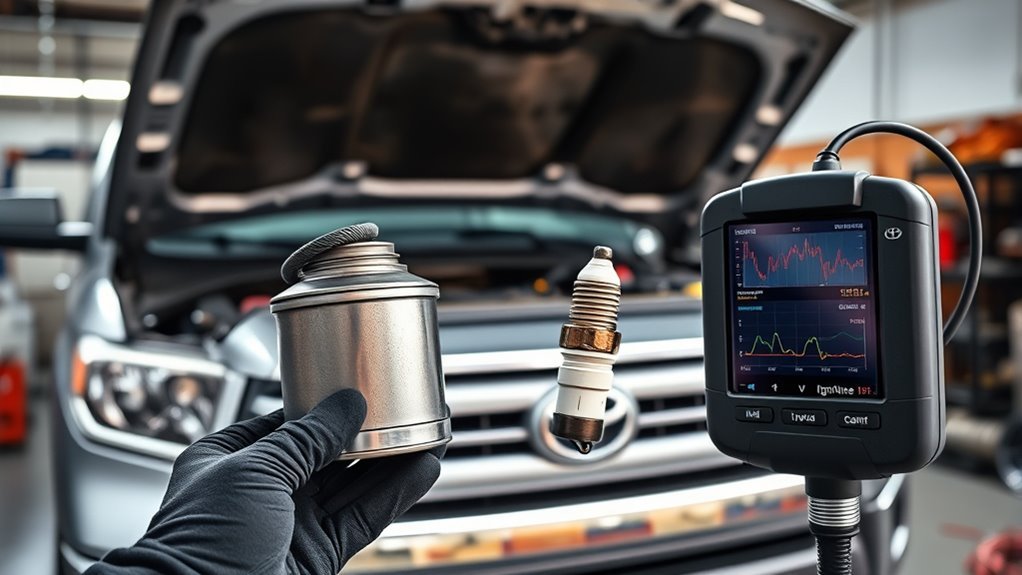
A Toyota Tundra misfire should be diagnosed from the code and operating condition before you buy ignition parts. P0300 means random or multiple-cylinder misfires. P0301 through P0306 identify cylinders 1–6 on six-cylinder engines, while eight-cylinder Tundras may report P0301 through P0308. Save the stored, pending, and permanent codes, freeze-frame data, fuel trims, and misfire counts before clearing anything. For one-cylinder codes, test that cylinder’s plug, coil, connector, injector, and compression. For P0300 or several affected cylinders, check shared causes such as intake leaks, fuel delivery, airflow, wiring, timing, or low voltage. Stop driving if the check engine light flashes while the engine shakes, loses power, knocks, or smells strongly of raw fuel.
Toyota Tundra Misfire Quick Answer
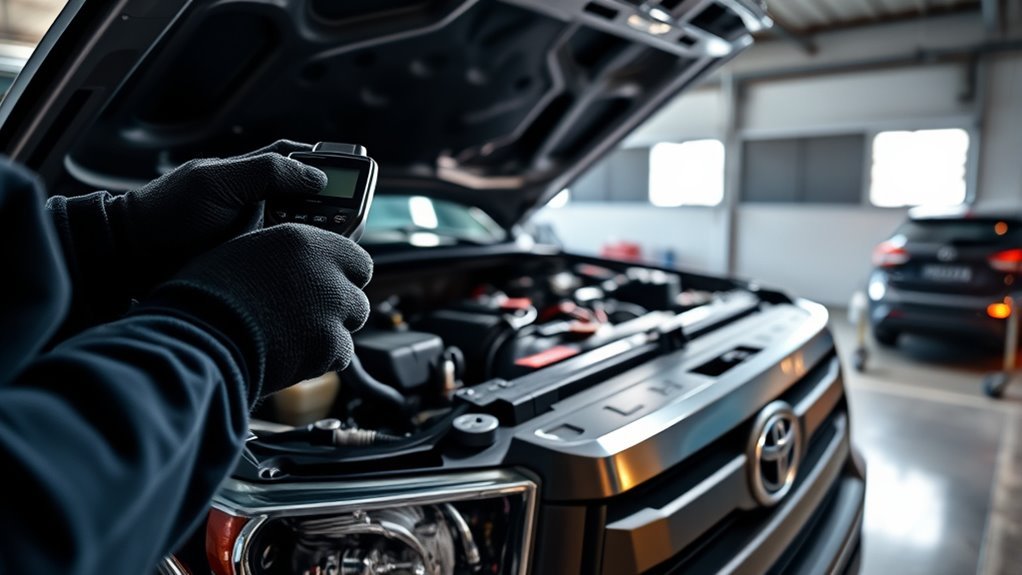
Spark plugs and ignition coils are common starting points, but a misfire code does not prove either part has failed. P0300 means the computer detected random or multiple-cylinder misfires. P0301 through P0306 identify the reported cylinder on six-cylinder engines, while P0301 through P0308 may appear on eight-cylinder Tundras.
For a cylinder-specific code, inspect that cylinder’s plug, coil, connector, injector, and wiring. Swap the coil only after recording its original position and confirming that the replacement location uses the same compatible coil. If the code moves with the coil, the coil or boot is suspect. If the code stays on the original cylinder, continue with plug, injector, wiring, intake-leak, and compression checks instead of replacing more coils.
Key Takeaways
- Record stored, pending, and permanent codes, freeze-frame data, fuel trims, misfire counts, and symptom timing before clearing the computer.
- Match cylinder-specific codes to the correct six- or eight-cylinder engine configuration for your model year.
- Inspect spark plugs for worn electrodes, oil or fuel fouling, carbon tracking, cracked porcelain, and an incorrect part number or gap.
- Confirm a suspected coil by checking whether the misfire follows it to another compatible cylinder location.
- Check injectors, wiring, intake leaks, fuel delivery, airflow, timing, and compression when the code does not move with the coil.
- Check the VIN of a 2022–2024 conventional-gas Tundra for applicable engine recalls before paying for major repairs.
- Stop driving if the check engine light flashes and the engine shakes, loses power, knocks, or smells strongly of raw fuel.
Warning: If the check engine light flashes and the engine shakes, loses power, or smells strongly of raw fuel, pull over safely and shut the engine off. The engine computer can flash the light when the detected misfire rate threatens to overheat the catalytic converter. Continuing to drive may damage the converter and may leave you without reliable engine power.
Current recall check: Certain 2022–2024 conventional-gas Tundras may be included in one of Toyota’s engine-debris recalls. Toyota’s announcements describe possible engine knocking, rough running, no-start, or loss of motive power. Similar recall groups were announced in May 2024, November 2025, and May 2026.
Recall inclusion is VIN-specific and does not mean every misfire is caused by engine debris. Use Toyota’s VIN recall lookup before buying parts or authorizing major engine work.
Hybrid safety: An i-FORCE MAX Tundra contains a high-voltage hybrid system. Do not touch, disconnect, move, pierce, or back-probe orange cables, hybrid battery components, the inverter, or other high-voltage parts. Limit do-it-yourself checks to ordinary low-voltage and engine components that the correct Toyota procedure identifies as safe and accessible.
Which Tundra Engine and Misfire-Code Range Do You Have?
Identify the model year, engine, and hybrid status before locating a cylinder or moving a component. Tundras do not all use the same engine layout, component access, firing order, or fuel-system procedure.
| Tundra configuration | Cylinder-specific code range | Diagnostic caution |
|---|---|---|
| 2000–2021 models | P0301–P0306 on a six-cylinder engine or P0301–P0308 on an eight-cylinder engine | Confirm the exact engine and cylinder layout. Do not use a firing-order diagram from a different V6 or V8. |
| 2022–2026 conventional-gas models | P0301–P0306 for the twin-turbo V6 | Check the VIN for applicable engine recalls and avoid opening high-pressure fuel components. |
| 2022–2026 i-FORCE MAX hybrid models | P0301–P0306 for the six engine cylinders | Observe hybrid high-voltage precautions and do not touch orange cables or hybrid-system components. |
Use the VIN, under-hood information label, Toyota owner resources, or verified service information to confirm the engine. A cylinder number is useful only after you know where that cylinder is on your exact engine.
Tundra Misfire Fast Diagnostic Map
Use each test result to narrow the fault instead of treating a code as a parts order.
| What you find | What it makes more likely | Best next step |
|---|---|---|
| One P0301–P0308 code | A fault concentrated on one cylinder | Inspect that cylinder’s plug, coil, connector, injector, wiring, and compression |
| P0300 or several cylinder codes | A shared air, fuel, voltage, timing, wiring, or mechanical fault | Review related codes and fuel trims, then inspect intake plumbing, fuel delivery, grounds, and shared circuits |
| Misfire follows a swapped coil | The moved coil or boot is faulty | Inspect the boot and coil, replace the confirmed failed part, and repeat the original test condition |
| Misfire stays on the original cylinder | The coil becomes less likely | Reinstall the coils and test the plug, connector, injector, wiring, intake sealing, and compression |
| P0351–P0358 appears with the misfire | An ignition-coil primary or secondary circuit problem | Inspect the connector, terminal fit, power, ground, control circuit, and harness before replacing the coil |
| Both banks show strongly positive fuel trims | Unmetered air or weak fuel delivery may affect the whole engine | Inspect for intake leaks and test fuel delivery using model-specific procedures |
| Compression is low on the affected cylinder | A valve, ring, head-gasket, timing, or other mechanical problem | Stop replacing ignition parts and continue with leak-down or internal-engine diagnosis |
[Products Worth Considering]

This ignition coil and spark plug set is designed to restore reliable starting, smooth acceleration, and consistent engine performance for a wide range of GM vehicles. It fits many Chevy, Buick, and Cadillac models and is built with quality materials to support long service life and dependable operation. Always verify OE numbers and vehicle fitment before purchasing.

This set of four ignition coils is designed to restore smooth engine performance and reliable starting for compatible Toyota, Scion, and Lexus applications. Built to meet or exceed OE specifications, these coil packs help reduce misfires, hesitation, and check engine light issues while supporting stronger ignition output. The direct-fit design makes installation straightforward, and the package includes a warranty for added peace of mind.

This ignition coil pack and pre-gapped spark plug set is designed for select 3.5L V6 Toyota and Lexus models, helping restore smooth engine performance and reliable starting. Built to meet or exceed OEM specifications, it can help fix common issues like misfires, rough idle, poor fuel economy, and reduced power. The complete 6-piece set offers a convenient replacement solution for compatible vehicles.
What Does Your Tundra Misfire Code Mean?
Start with the complete scan result rather than the first code on the screen. Related lean, injector-circuit, ignition-circuit, airflow, voltage, imbalance, or timing codes can change the diagnosis.
| Code or symptom pattern | What it suggests | First checks |
|---|---|---|
| P0300 | Random or multiple-cylinder misfire | Related codes, fuel trims, intake leaks, fuel pressure, several plugs or coils, timing, and compression |
| P0301–P0306 or P0301–P0308 | The computer detected a misfire concentrated on the numbered cylinder | That cylinder’s plug, coil, connector, injector, wiring, intake sealing, and compression |
| P0351–P0358 | Ignition-coil primary or secondary circuit fault | Connector locking tab, terminal fit, power, ground, control circuit, and harness damage |
| P0171 or P0174 | The affected bank is running lean or the computer is adding substantial fuel | Intake leaks, PCV plumbing, airflow data, exhaust leaks near sensors, and fuel delivery |
| P219A or P219B | Air-fuel ratio imbalance across cylinders on one bank | Misfire counts, injector balance, intake sealing, compression, and bank-specific wiring |
| Misfire mainly at idle | An intake leak, injector imbalance, weak spark, or mechanical cylinder problem may be more noticeable at low speed | Vacuum hoses, intake seals, fuel trims, plug condition, and cylinder contribution |
| Misfire under acceleration or towing | Higher cylinder pressure can expose weak ignition or poor fuel delivery | Plug gap, coil performance, fuel delivery, injector flow, and charge-air plumbing on turbo models |
| Cold-start-only misfire | Deposits, moisture, an intake leak, injector leakage, coolant entry, or a mechanical sealing problem may be involved | Coolant-temperature data, plug condition, injector behavior, intake leaks, coolant level, and compression |
| Misfire after rain or engine cleaning | Moisture may have entered a connector or spark-plug well | Coil boots, plug wells, connector seals, and damaged harness insulation |
| Engine shakes but no P030x code or misfire counts appear | The vibration may not be a combustion misfire | Confirm engine-speed instability and inspect mounts, exhaust contact, accessory loads, and other vibration sources |
These patterns narrow the search, but they do not confirm a failed part by themselves. Use the pattern with scan data and physical tests.
What Are the Common Symptoms of a Tundra Misfire?
A misfire happens when one or more cylinders do not burn the air and fuel mixture correctly. The engine may run unevenly because the affected cylinder produces less torque than the others.
- Rough or shaking idle when stopped
- Hesitation when you press the accelerator
- Reduced power while climbing, towing, or passing
- A steady or flashing check engine light
- Misfire codes such as P0300 or cylinder-specific P0301–P0308 codes
- Fuel smell, increased fuel use, or an uneven exhaust note
- Hard starting or a brief cold-start stumble
Write down when the symptom appears. Note whether the engine is cold or warm, whether the truck is idling or under load, and whether rain, refueling, or recent repair work preceded the problem. For a broader explanation of scanner information and related code families, see how to read Toyota Tundra OBD2 codes.
What Scan Data Should You Check Before Removing Parts?
A basic code reader may show only the stored trouble code. A more capable scan tool can provide the operating conditions that existed when the fault was detected.
- Stored, pending, and permanent codes: Pending codes can expose an intermittent fault before the light stays on. Permanent codes may remain until the monitor confirms that the fault is gone.
- Freeze-frame RPM and load: These values show whether the fault appeared at idle, during acceleration, or at cruising speed.
- Coolant temperature: This helps confirm whether the engine was cold or fully warmed.
- Short- and long-term fuel trims: Compare both banks at idle and at a raised engine speed.
- Misfire counters: If your scan tool and truck support them, watch which cylinder accumulates counts and under what conditions.
- Battery or control-module voltage: Low or unstable voltage can interfere with testing and create misleading electrical symptoms.
Do not clear the codes until you record this information. Clearing them erases useful freeze-frame data and resets monitors that may help confirm the repair.
[Products Worth Considering]

This complete ignition kit includes six direct replacement coil packs and six pre-gapped iridium spark plugs designed for select Toyota and Lexus 3.5L V6 vehicles. It can help address misfires, rough idle, hard starting, hesitation, and check engine light issues caused by worn ignition components while supporting smooth, reliable engine performance. Built for easy installation and backed by testing, warranty coverage, and technical support, it is a convenient tune-up solution.

This ignition coil and spark plug set is designed to restore smooth starting, stronger acceleration, and more reliable engine performance for a wide range of Toyota, Scion, Lexus, and Pontiac models. Built with quality materials and engineered to match OE fitment, it helps address common misfire, shaking, and fuel economy issues when your ignition system is worn. It is an ideal replacement choice for drivers looking to refresh their tune-up with dependable components.

This automotive electrical disconnect pliers set makes it easier to remove stubborn wire connectors, fuel injector plugs, ignition coil connectors, and other tight-fitting automotive terminals without damage. Built from high-carbon steel with comfortable anti-slip handles, the tools are designed for durability, control, and one-handed use in narrow spaces. The set includes multiple disconnect and separator tools plus hose clamp pliers to help with a wide range of vehicle repair tasks.
Tundra Misfire Diagnostic Record
Record the same fields before and after each test. This prevents several changes from being mixed together and gives a repair shop usable evidence if the fault remains.
| Item to record | Before the test | After the test |
|---|---|---|
| Stored, pending, and permanent codes | Write or photograph the full list | Note which codes returned or changed |
| Coolant temperature, RPM, and load | Copy the freeze-frame values | Recreate the same condition when safe |
| Bank 1 and Bank 2 fuel trims | Record at idle and raised RPM | Compare direction and size of change |
| Cylinder misfire counts | Identify the cylinder and trigger condition | Confirm whether the count stopped, moved, or increased |
| Component moved or replaced | Mark its original cylinder | Record its new location and the result |
How Do You Test Individual Tundra Ignition Coils?
Read the OBD code and identify the cylinder reported by the computer. Confirm the correct cylinder location for your model year and engine before moving any parts. Do not assume that every online firing-order diagram applies to your truck.
Inspect the suspect cylinder’s coil, connector, boot, and spark-plug well first. Look for oil, water, torn insulation, carbon tracking, damaged locking tabs, loose terminals, and burn marks.
You can then swap the suspect coil with a compatible coil from another cylinder if both coils are safely accessible and use the same part:
- Turn the ignition off and let the engine cool.
- Mark both coil locations so you can track the move.
- Confirm that the two locations use the same compatible coil.
- Swap the two coils without changing other parts.
- Reconnect every connector fully.
- Run the engine under the conditions that normally trigger the fault, but stop if the light flashes or the truck shakes heavily.
- Scan for stored and pending codes and review misfire counts again.
If the misfire moves to the cylinder receiving the suspect coil, inspect the coil and boot closely and replace the coil if the test confirms the fault. If the misfire remains on the original cylinder, reinstall the coils and test the plug, connector, injector, wiring, intake sealing, and compression.
A code that does not move is valuable evidence. It prevents you from replacing several good coils while the actual fault remains in one cylinder.
Pro tip: Move only one component at a time. Swapping the coil and spark plug together makes it impossible to know which part changed the result.
Avoid unplugging coils while the engine is running unless the model-specific service procedure specifically calls for it. Disconnecting live ignition circuits can create additional faults and exposes you to high ignition voltage.
[Products Worth Considering]

This ignition coil pack and double iridium spark plug set is designed to restore reliable ignition performance for compatible Toyota, Scion, and Lexus 2.5L and 2.7L L4 gas models. It helps improve starting, fuel efficiency, and smooth engine operation while reducing misfires and emissions. Built for direct plug-and-play installation, this kit is a practical replacement for worn ignition components.

This ignition coil pack and spark plug set is designed to restore strong spark, smoother starts, and reliable engine performance for a wide range of Toyota, Lexus, Pontiac, and Scion vehicles. Built with durable materials and engineered to meet or exceed OE standards, it helps improve combustion efficiency and long-term dependability. The kit includes four ignition coils and four spark plugs for a convenient all-in-one replacement solution.

This ignition coil and spark plug set is designed to restore reliable starting, smooth acceleration, and efficient engine performance for a wide range of compatible vehicles. It features quality coil pack construction with iridium spark plugs to help address misfires, shaking, and hard-start issues. Ideal as a replacement set for aging ignition components, it offers a practical upgrade for maintaining dependable vehicle operation.
How Can Worn Spark Plugs Affect Coils and Performance?
A worn, damaged, fouled, or incorrectly matched spark plug can cause a Tundra misfire directly and can increase the voltage demand placed on its ignition coil. A worn electrode or excessive gap may first cause a misfire during acceleration, towing, or another high-load condition.
Use the plug’s condition to guide the next check:
| Symptom | Possible cause | Next check |
|---|---|---|
| Recurrent misfire | Worn electrode, cracked insulator, or contamination | Compare the plug with the other cylinders and replace the correct plug set if due |
| Weak spark under load | Excessive plug gap or damaged coil boot | Verify the model-specific gap and inspect the boot for tracking |
| Rough idle after a plug change | Wrong plug, damaged plug, loose connector, or installation problem | Verify the part number, installation, and coil connection |
| Oil-wet plug | Oil entering the cylinder or plug well | Identify whether the oil is on the firing tip or outside the plug body |
| Fuel-wet plug | The cylinder is receiving fuel but may not be igniting it | Test spark, injector control, and compression before repeated cranking |
Do not use one universal plug gap or torque value for every Tundra. Use Toyota’s manuals and warranty-maintenance resources or verified service data for your exact model year, engine, and plug part number. Do not copy a specification from a different Tundra engine.
For service intervals by engine and model year, see the separate guide to Toyota Tundra spark-plug intervals.
Can Short Trips Contribute to Spark-Plug Fouling?
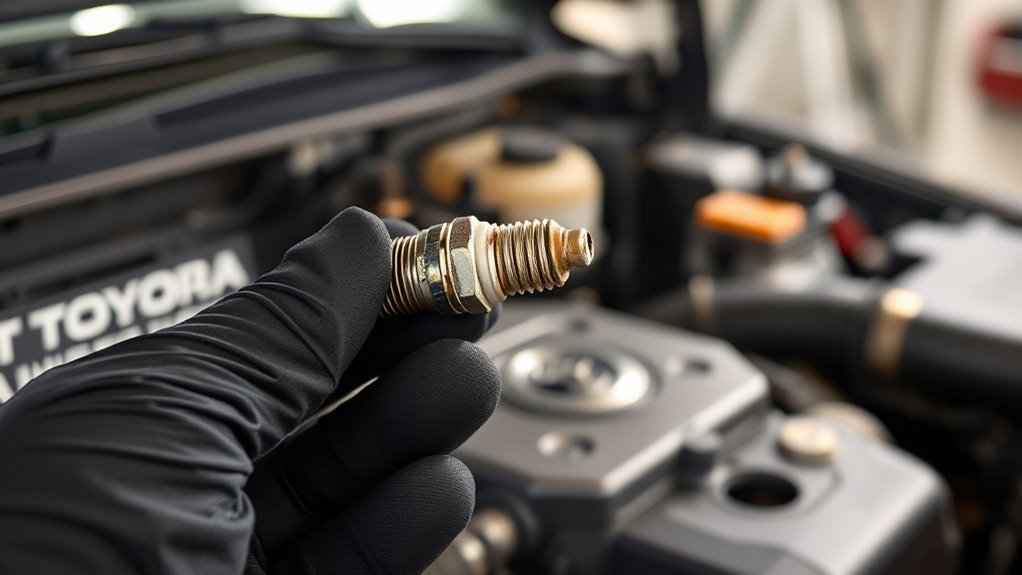
Low mileage does not always mean the engine operates under ideal conditions. Repeated short trips may end before the engine and exhaust remain fully warm for long. Moisture and deposits can accumulate, especially when another fuel, oil, ignition, or temperature-control problem already exists.
- Compare all plug tips rather than judging one plug in isolation.
- Check for dry black carbon, wet fuel, oil, ash, cracks, or tracking marks.
- Measure the gap only with a gauge suitable for the plug design.
- Confirm that the installed plugs match the engine and model year.
- Investigate the cause of abnormal deposits before installing another set.
Short trips alone should not be used as proof that plugs caused the misfire. If one plug looks different from the rest, concentrate on that cylinder’s ignition, injector, sealing, and possible oil or coolant entry.
Why Does Your Tundra Misfire Under Acceleration or Load?
A spark that works at idle may fail when cylinder pressure rises during acceleration, towing, or climbing. Worn plugs, excessive gap, a weak coil, damaged coil boots, poor fuel delivery, or an injector problem can become more noticeable under load.
On turbocharged Tundra models, also inspect accessible intake and charge-air connections for loose clamps, damaged hoses, or leaks. Do not loosen pressurized components while the engine is running.
Use freeze-frame load and RPM data to recreate the condition safely. If the truck loses power, flashes the check engine light, or shakes heavily, stop the road test. A controlled shop test is safer than repeatedly forcing a severe misfire on public roads.
What Should You Check When Several Cylinders Misfire?
If several misfire codes appear together, do not assume several coils failed at the same time. A common fault can affect an entire bank or the whole engine.
- Inspect plug condition, gap, age, and correct part number.
- Check shared wiring, grounds, battery voltage, fuses, and connectors.
- Look for disconnected hoses, intake leaks, and loose intake or charge-air clamps.
- Review fuel trims at idle and at a raised engine speed.
- Check fuel pressure and delivery using the correct service procedure.
- Inspect for timing, airflow, imbalance, or sensor codes stored with the misfire codes.
- Check open recalls or service campaigns by VIN.
A lean mixture can produce misfires that feel like weak ignition. Fuel trims that rise strongly positive on both banks can support an air-leak or fuel-supply direction, but the acceptable range and test conditions depend on the engine. Compare the readings with model-specific service information instead of using one universal cutoff.
The separate vacuum leak versus engine misfire guide explains how fuel trims, idle behavior, sound, and code patterns can separate those two fault directions.
When Should You Test a Tundra Fuel Injector?
Test the injector when the misfire remains on the same cylinder after a known-good coil and correctly matched plug have been confirmed. Injector-circuit codes, an unusual plug appearance, or a cylinder that does not respond normally during a contribution test can provide more direction.
An injector can fail electrically, become restricted, leak, or receive a poor control signal. Listening for injector operation does not confirm correct flow. A full diagnosis may require circuit testing, an injector balance test, or professional scan-tool control.
Do not move high-pressure fuel components or open a pressurized direct-injection system without the correct service procedure, tools, and protective equipment. Relieve pressure only through the model-specific Toyota procedure.
When Should You Perform a Compression or Leak-Down Test?
Move to mechanical testing when the misfire stays on one cylinder after the plug, coil, connector, wiring, intake-sealing, and injector checks pass. Mechanical testing should also move higher on the list when you hear abnormal engine noise, see coolant or oil contamination, find one unusually clean or damaged plug, or have a persistent cold-start misfire.
A compression test compares the cylinder’s ability to build pressure. A leak-down test can help identify whether pressure escapes through an intake valve, exhaust valve, piston rings, head gasket, or another path. Use the model-specific procedure because test preparation and acceptable results can vary.
Low compression does not automatically name the failed component. It tells you to stop replacing ignition parts and investigate the engine mechanically.
Tundra Misfire Diagnostic Checklist
Follow a fixed order so each result determines the next test.
- Confirm oil and coolant levels, battery condition, grounds, and any recent repair work.
- Scan the truck and record stored, pending, and permanent codes plus freeze-frame data.
- Note whether the misfire occurs cold, warm, at idle, under load, or after wet weather.
- Identify the exact engine and check the VIN for open Toyota recalls or service campaigns.
- Inspect the air intake, hoses, clamps, connectors, and visible wiring.
- Remove the suspect spark plug and compare it with the other cylinders.
- Swap only the suspect coil and check whether the misfire moves.
- Test the connector, wiring, grounds, and injector if the code stays on the same cylinder.
- Review fuel trims and test fuel delivery if several cylinders are affected.
- Perform compression or leak-down testing when ignition and fuel checks pass.
- After the repair, repeat the original triggering condition and review pending codes and misfire counts.
Replacing all spark plugs together may make sense when they are due and show similar wear. Replacing every ignition coil without confirming a shared failure usually adds cost without improving the diagnosis.
How Do You Confirm That the Misfire Is Repaired?
A successful repair should correct the symptom, stop the affected cylinder from accumulating misfire counts, and prevent the stored or pending misfire code from returning under the original operating condition.
- Confirm every connector, hose, clamp, coil, and fastener disturbed during testing is properly reinstalled.
- Check for fuel, oil, coolant, or vacuum leaks before starting the engine.
- Start the truck and watch the idle, misfire counters, fuel trims, and warning lights.
- Repeat the original cold-start, idle, cruising, or load condition only when it can be done safely.
- Scan again for stored, pending, and permanent codes.
- Allow the required monitors to run before treating a remaining permanent code as a failed repair.
Do not keep clearing a returning code. A code that comes back after the same controlled test condition is evidence that the root cause remains or that another fault is also present.
When Should You Stop Testing and See a Mechanic?
Stop driving and arrange professional diagnosis or towing when the check engine light flashes with heavy shaking, raw-fuel odor, knocking, overheating, stalling, or a major loss of power.
You should also stop the do-it-yourself process when:
- The misfire remains after a confirmed good plug and coil.
- Several cylinders misfire and fuel pressure must be tested.
- You suspect a high-pressure direct-injection fault.
- Compression is low or uneven.
- You hear knocking or another mechanical noise.
- The truck may be covered by an open engine recall or service campaign.
- Testing requires live high voltage, pressurized fuel, control-module terminal work, or internal-engine disassembly.
A qualified shop can run cylinder-contribution, injector-balance, fuel-pressure, smoke, compression, and leak-down tests. It can also check model-specific service bulletins and control-module data that a basic code reader cannot access.
Official Sources and Model-Specific References
Use VIN-specific and model-year-specific Toyota information before applying a specification or authorizing a major repair:
- Toyota VIN recall lookup
- Toyota’s November 6, 2025 Tundra engine-recall announcement
- Toyota’s May 20, 2026 Tundra engine-recall announcement
- Toyota owner manuals and warranty-maintenance guides
Owner manuals do not replace the correct repair procedure for fuel pressure, compression, electrical terminal, or hybrid-system testing. Use verified service information for the exact VIN and engine.
Frequently Asked Questions
What Are the Three Main Categories of Misfire Causes?
The three main categories are ignition faults, fuel or air-delivery faults, and mechanical-compression faults. Start with the code and symptom pattern, then test the affected cylinder instead of assuming the first category is responsible.
What Is Code P0300 on a Toyota Tundra?
P0300 means the engine computer detected random or multiple-cylinder misfires. It does not identify one cylinder, so check related codes, fuel trims, intake leaks, shared wiring, fuel delivery, timing, and the condition of several plugs or coils.
Can You Drive a Tundra With a Misfire?
A brief drive to a safe stopping place may be necessary, but you should not continue if the check engine light flashes, the engine shakes heavily, power drops, knocking occurs, or you smell raw fuel. Those signs can indicate a catalyst-damaging or safety-related fault.
Should You Replace All Tundra Ignition Coils at Once?
You do not normally need to replace every coil because one tested coil failed. Replace the confirmed failed part, then inspect the remaining coils for cracking, arcing, oil contamination, damaged boots, or repeated faults.
Can Worn Spark Plugs Damage Ignition Coils?
Worn plugs or an excessive gap can increase the voltage needed to fire the mixture. That extra demand can stress a coil or expose a coil that is already weak. Correct the plug problem when replacing a failed coil.
Why Does My Tundra Misfire Only Under Acceleration?
Acceleration raises engine load and cylinder pressure. A worn plug, excessive gap, weak coil, poor injector flow, low fuel delivery, or an intake or charge-air leak may appear under load even when the engine idles smoothly.
Why Does the Misfire Stay on the Same Cylinder After Swapping the Coil?
If the code does not follow the coil, the coil becomes less likely. Check that cylinder’s spark plug, connector, wiring, injector, intake sealing, and compression. Move only one component at a time so each test has a clear result.
Can a Vacuum Leak Cause P0300 on a Tundra?
Yes. Unmetered air can make the mixture too lean and cause random or multiple-cylinder misfires, especially at idle. Check related lean codes, both banks’ fuel trims, PCV hoses, intake seals, and accessible intake plumbing before assuming several coils failed.
Can Low Compression Cause a Tundra Misfire?
Yes. A leaking valve, worn rings, head-gasket problem, incorrect valve timing, or another mechanical fault can keep one cylinder from producing normal torque. If ignition and injector checks pass, use a model-specific compression and leak-down procedure.
Conclusion
A Toyota Tundra misfire needs an ordered diagnosis rather than random parts replacement. Record the complete scan result and freeze-frame data first. Identify the engine and check applicable recalls, then use the code type and symptom timing to inspect the correct plug, coil, connector, injector, intake system, fuel supply, and cylinder compression.
If a swapped coil carries the misfire to another cylinder, you have useful evidence against that coil or boot. If the code stays on one cylinder, stop replacing coils and test that cylinder more deeply. After any repair, repeat the original triggering condition and check pending codes and misfire counts. If the light flashes, the truck shakes hard, knocking occurs, or power drops, stop driving and arrange professional help.