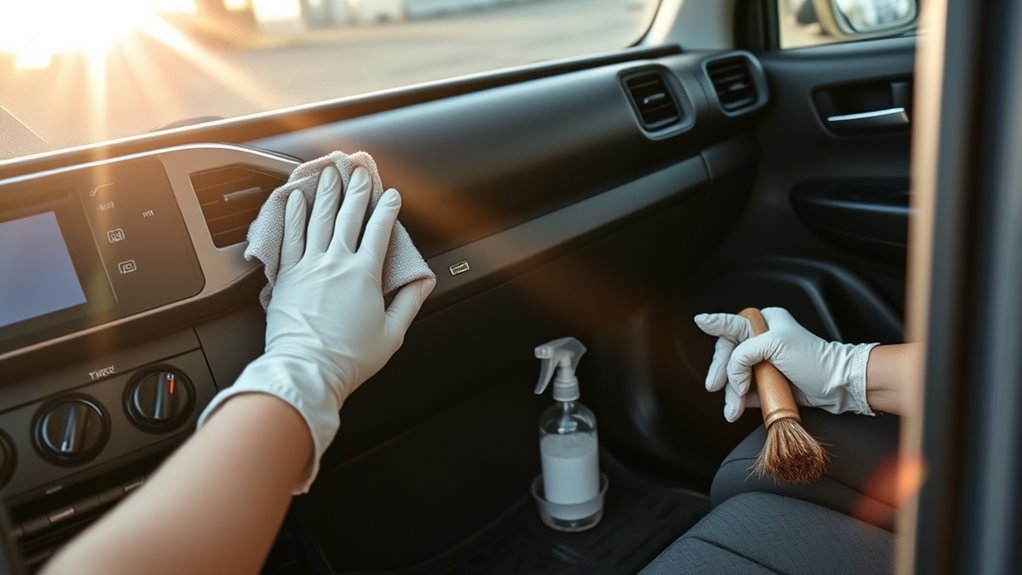
The safest way to clean Toyota Tacoma interior plastics is to vacuum loose grit first, spray a pH-neutral automotive interior cleaner onto a microfiber cloth (never directly onto panels), work textured grain and seams with a soft-bristle detailing brush, and immediately buff the surface dry with a separate clean towel. Use the mildest cleaning method that removes soil, keep liquids away from electronic dials and switchgear, clean screens with lukewarm water only, and finish compatible plastic with a non-greasy, matte-finish UV protectant.
Last updated: August 30, 2026 | Written by: [VERIFY: Add author name, e.g., AutoReviewNest Detailing Team / Certified Automotive Specialist]
Affiliate disclosure: This article may contain affiliate links. If you buy through them, we may earn a commission at no extra cost to you.
Quick Answer
Dust and vacuum loose debris first. Apply a plastic-safe interior cleaner to a microfiber towel, wipe the dashboard, console, and door trim with light pressure, agitate textured seams and vent slats with a soft brush, and dry each panel immediately with a second towel. For Toyota infotainment touchscreens and digital gauge clusters, use a clean microfiber lightly dampened only with lukewarm water. Apply UV protectant solely to compatible non-control surfaces, buffing to a dry, factory-matte finish; for 303 Automotive Protectant, reapply every 30–45 days.
Key Takeaways
- Use separate microfiber towels for dry dusting, wet cleaning, and final buffing to prevent trapped grit from scratching delicate surfaces.
- Always apply cleaners directly to the microfiber cloth rather than spraying the dashboard, switches, 4WD selector dials, speaker grilles, or screens.
- Distinguish between hard textured polypropylene trim, soft-touch padded surfaces, and scratch-prone clear acrylic gauge cluster lenses.
- Treat infotainment displays and digital instrument panels as delicate optics: avoid alcohol, ammonia, solvents, degreasers, and protectants.
- Use melamine foam (Magic Eraser) only as an abrasive last resort on non-glossy, unpainted hard plastic; never use it on soft-touch dash tops or glossy trim.
- Buff protectants completely dry after application to avoid shiny glare on the dashboard and prevent off-gassing haze on the inside of the windshield.
At a Glance
| Job Scope | Routine maintenance dusting or deep decontamination of textured plastic, seams, vents, switchgear, and cupholders |
| Difficulty | Easy (15–30 minutes) |
| Tools Needed | 3–4 clean microfiber towels (300+ GSM), soft-bristle detailing brush, vacuum with soft brush attachment, pH-neutral interior cleaner, lukewarm water, matte UV protectant |
| Estimated Cost | $15–$35 for towels, cleaner, and protectant |
What Do You Need to Clean Tacoma Interior Plastics?
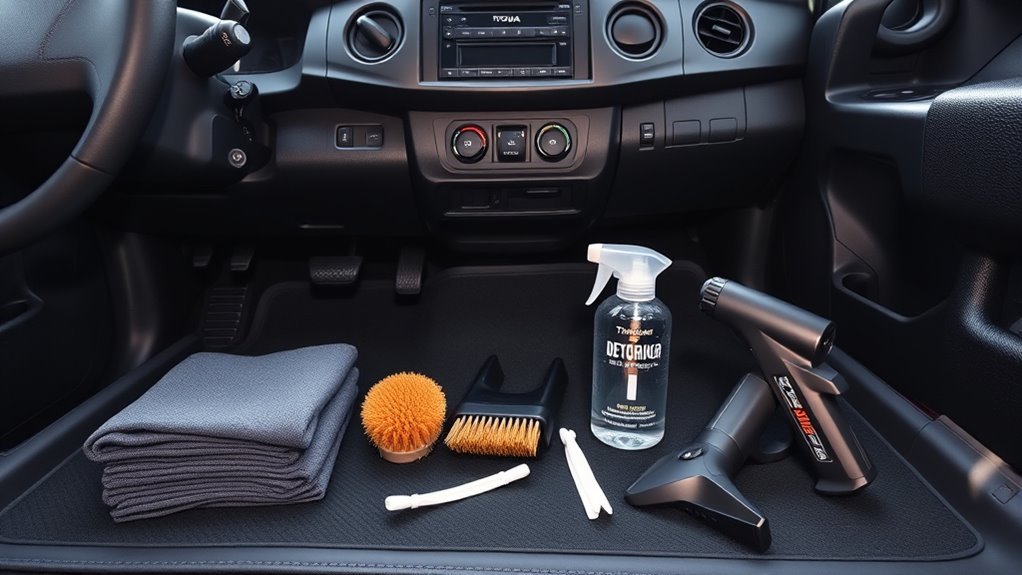
To safely clean a Tacoma cabin, gather several clean microfiber towels (300+ GSM edgeless towels are ideal), a pH-neutral, plastic-safe automotive interior detailer, a boar’s-hair or synthetic soft-bristle detailing brush, and a vacuum with a soft brush attachment. A quality cleaner such as Meguiar’s Quik Interior Detailer is formulated for textured plastics, vinyl, rubber, metal, and display screens without stripping factory matte finishes. For long-term UV defense on compatible trim, 303 Automotive Protectant provides sun protection without adding artificial gloss or greasy silicone residues.
Adopt a strict three-towel system: Towel 1 for dry pre-dusting, Towel 2 for cleaning with product, and Towel 3 for the immediate dry buff. Keeping towels dedicated prevents trail dust and abrasive grit from being dragged across glossy dash trim or soft instrument lenses. Use the detailing brush to agitate vent louvers, cupholder seams, shift-boot bezels, and the intricate crevices around the 4WD selector dial and Multi-Terrain Select switchgear.
Note: Always spot-test a new product on an inconspicuous spot first, such as the lower side of the center console or beneath the steering column. Tacoma cabins combine hard utilitarian polypropylene, soft-touch vinyl dash toppers (standard on TRD Sport, TRD Off-Road, Limited, and TRD Pro), piano-black accents, and sensitive anti-reflective touchscreen coatings. Your owner’s manual instructions always take priority.
| Surface or Soil | Start With | Stop If You Notice |
|---|---|---|
| Dust on textured dashboard/door plastic | Vacuum with brush attachment, soft brush, dry microfiber | Grit dragging or surface marring |
| Fingerprints, skin oils, light grime | Interior detailer sprayed onto a microfiber cloth | Tackiness, color transfer, or unnatural shine |
| Sticky cupholder or console residue | Warm water with a drop of neutral soap on a damp towel | Moisture pooling near switches or USB ports |
| Infotainment screen & gauge cluster | Clean, soft microfiber lightly dampened with lukewarm water | Streaking, hazing, or coating micro-scratches |
| Shoe transfer marks on lower door sill | Plastic-safe cleaner, soft brush agitation, light passes | Grain flattening or white chalking |
| Deep gouge or scratch in plastic | Clean gently and leave alone; apply matte protectant | Aggressive rubbing (cleaners cannot restore missing plastic grain) |
[Products Worth Considering]
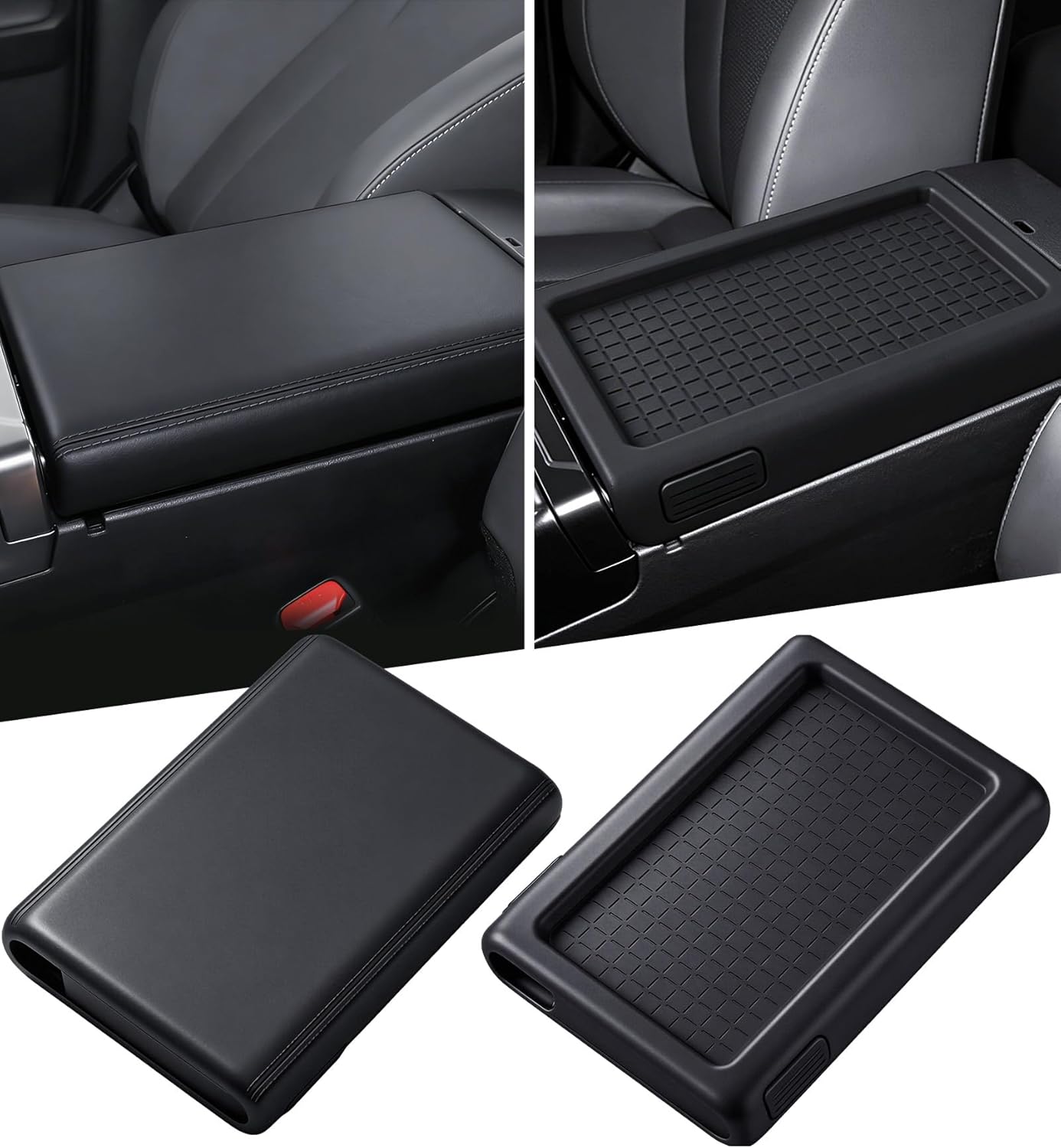
This center console cover is designed for a custom fit on the Toyota RAV4 2026, helping protect the armrest area from dirt, pet claws, and everyday wear. Made from soft silicone, it adds comfort for your arm and a clean, stylish look to the vehicle interior while being easy to install without tools.

This car interior detailing brush is designed to gently remove dust from vents, dashboards, consoles, and other hard-to-reach areas without scratching surfaces. Its soft bristles and comfortable grip make routine interior cleaning easier, while the compact size allows convenient storage in your glove box. It also works well for household cleaning tasks like keyboards, fans, and window tracks.

This central dashboard cover strip trim is designed as a replacement for the instrument cluster panel area on compatible Toyota RAV4 models. It helps restore the look of your interior with a precise fit, durable construction, and reliable long-term performance. Ideal for replacing worn or damaged trim while maintaining a clean factory-style appearance.
What Is the Best Cleaner for Tacoma Interior Plastics?
No single chemical should be used indiscriminately across the entire Tacoma cabin. The safest and most effective solution is a dedicated, pH-neutral automotive interior cleaner or detailer that leaves zero residue. Match the cleaning strength directly to the contamination level rather than reaching for aggressive degreasers.
- Dry surface dust: Vacuum with a soft dusting brush, then wipe gently using a clean, dry microfiber cloth.
- Light smudges & fresh dust: Use a high-pile microfiber towel lightly misted with distilled or lukewarm water.
- Everyday body oils & dirt: Spray a pH-neutral interior cleaner directly onto the towel (not the panel) and wipe with light-to-moderate pressure.
- Syrupy spills & dried beverage stains: Apply a mild solution of warm water and a few drops of neutral dish soap using a damp cloth, then wipe away all soap film with a second water-dampened towel.
- Stubborn grime & transfer scuffs: Use an automotive-specific interior cleaner with a soft-bristle detailing brush, working the lather in circular motions before wiping dry.
Household all-purpose cleaners (such as undiluted Simple Green, Lysol, or bleach sprays) contain alkaline builders and surfactants that can dry out automotive plastics, strip UV inhibitors, and leave unsightly white hazing on textured grains. Always stick to products formulated specifically for vehicle cabins.
Warning: Never use bleach, ammonia-based glass cleaners (like standard Windex), rubbing alcohol, acetone, or heavy industrial degreasers on Tacoma interior panels. Never apply protectants or dressings to the steering-wheel rim, brake/accelerator pedals, or rubber floor mats, as slick surfaces present a direct driving hazard.
[Products Worth Considering]

This anti-glare matte tempered glass screen protector is designed for compatible 2026 Toyota RAV4 and RAV4 Hybrid models with a 12.9-inch touchscreen. It helps reduce glare, resists scratches and fingerprints, and maintains responsive touch performance for a clearer, cleaner driving experience.

These HOMEXCEL microfiber cleaning cloths deliver excellent absorbency and gentle, scratch-free cleaning for cars, homes, and glass surfaces. The soft, lint-free towels help remove dirt, water, and streaks quickly for a polished finish, and they are machine washable for repeated everyday use.

This two-piece horsehair brush set is designed for gentle yet effective cleaning of leather and interior surfaces. The soft bristles help lift dirt from seams, tight spaces, upholstery, carpets, and shoes without scratching, while the two sizes support both broad cleaning and detailed polishing. A comfortable wooden handle improves grip and control for easier daily care.
What Should You Avoid on Tacoma Interior Plastics?
Certain detailing products deliver an instant high-gloss shine but create substantial long-term damage. Greasy silicone dressings attract airborne trail dust, reflect bright sunlight off the dash onto the windshield, and accelerate plasticizer off-gassing (which creates a stubborn oily film on interior glass). Harsh solvents and abrasive scrubbers will permanently dull fine plastic textures.
| Avoid | Why It’s Risky | Use Instead |
|---|---|---|
| Ammonia glass cleaner on screens/gauges | Strips anti-glare coatings and turns clear acrylic cloudy | Clean microfiber dampened with lukewarm water |
| Undiluted APCs or citrus degreasers | Dries plasticizers, causing chalky discoloration and fading | Dedicated pH-neutral automotive interior detailer |
| High-gloss, silicone-heavy dressings | Creates dangerous windshield glare and attracts dust | Matte-finish, water-based UV protectant (e.g., 303) |
| Scouring pads or stiff nylon brushes | Scratches clear plastics and flattens OEM grain textures | Soft boar’s-hair or synthetic detailing brushes |
| Melamine foam (Magic Eraser) on dark/gloss trim | Micro-abrasive structure sands down satin and glossy finishes | Microfiber towel paired with mild interior cleaner |
How Do You Clean a Tacoma Dashboard, Console, and Trim?
Always work systematically from top to bottom. This ensures that loose dust dislodged from the upper dash and climate vents falls onto uncleaned lower areas, preventing duplicate effort.
- Vacuum loose debris: Use a soft-bristle brush attachment on your vacuum to clear loose dust from the top of the dashboard, instrument hood, center console pockets, and lower door bins.
- Pre-treat the cleaning cloth: Mist 2–3 sprays of your interior cleaner directly onto a folded microfiber cloth. Never spray the cleaner directly onto the dashboard or electronic areas.
- Wipe broad panels: Clean the upper dashboard, glove box face, center stack surround, and door cards using light, overlapping strokes. Flip the towel to a clean face as it collects soil.
- Agitate textured grain & crevices: For textured grain, air vent louvers, window switch bezels, and shift console trim, gently work a soft detailing brush in small circular motions to lift embedded dirt.
- Collect suspended dirt: Immediately follow brush agitation with your damp cleaning towel to capture the lifted grime before it dries back into the grain.
- Execute the dry buff: Wipe every cleaned section immediately with a fresh, dry microfiber towel to eliminate moisture streaks and prevent mineral spots.
- Apply UV protectant (optional): Apply a nickel-sized amount of matte-finish protectant to an applicator pad or cloth, spread a thin, even layer across compatible dash and door trim, and thoroughly buff dry with a clean towel.
Pro Tip: Never let cleaners or protectants air-dry on automotive plastics. The secret to an OEM matte finish is the immediate secondary dry buff with a clean, dry microfiber cloth. This removes excess carrier agents and eliminates high-gloss streaks.
[Products Worth Considering]

Restore responsive touch control to your Toyota navigation system with this 6.1-inch digitizer replacement designed for select Camry, Corolla, Prius C, and RAV4 models. It helps fix unresponsive, ghost-touch, and cracked-screen issues while matching OEM fitment for a straightforward repair and improved in-car usability.

AstroAI’s extra-long windshield cleaner kit makes interior and exterior glass cleaning easier with an extendable handle and 180° rotating head that reaches tight corners without strain. It includes reusable microfiber pads, a spray bottle, and a storage bag for streak-free, lint-free results at home or on the road. Designed for cars, SUVs, RVs, and household windows, it helps deliver clearer visibility with less effort.

This LED dome light board upgrade delivers bright white cabin lighting for compatible Toyota vehicles, improving interior visibility with a modern, clean look. Designed for easy plug-and-play installation, it matches the original ceiling light socket and wiring for a seamless fit without fault code concerns. With efficient heat dissipation and a dispersed light pattern, it offers a comfortable, reliable upgrade over standard interior bulbs.
How Should You Clean Each Tacoma Interior Area?
Different areas of your Tacoma endure different types of wear. Adjust your cleaning technique based on the specific surface and soil characteristics of each cabin section.
Dashboard and Upper Trim
The upper dashboard receives intense UV radiation and heat. Wipe with a lightly damp microfiber cloth to remove dust. When using an interior detailer, apply minimal product and buff completely dry to maintain a non-reflective matte finish that eliminates sun glare on the windshield.
Center Console, Shifter, and 4WD Controls
The center console accumulates body oils, crumbs, and beverage drips. Vacuum thoroughly around the shift boot, 4WD dial, and cup holders. Spray cleaner onto a microfiber towel to clean the console sides and armrest. For electronic switch clusters (Crawl Control, Multi-Terrain Select, and drive mode buttons), use a dry or barely damp detailing brush to flick dust out of crevices without introducing liquid into the circuitry.
Door Panels and Kick Areas
Door armrests gather sweat and arm oils, while lower door cards suffer scuffs from boots. Clean the upper armrests with a mild detailer. For lower door sills and speaker grilles, use an interior cleaner paired with a soft brush to lift scuff transfer from the textured grain.
Textured Trim and Grainy Plastic
The textured polypropylene trim in Tacomas traps trail dust in the microscopic valleys of the plastic grain. A flat microfiber wipe often glides over this trapped dirt. Use a soft detailing brush to gently agitate the cleaner into the texture in multiple directions, then immediately lift the foam with a clean towel.
Clear Plastic and Glossy Trim
Clear instrument cluster lenses (especially on 3rd Gen analog gauges and 4th Gen full digital screens) and piano-black trim scratch very easily. Blow or gently brush away loose grit first. Wipe exclusively with a clean, high-pile microfiber towel using virtually zero pressure. Never use paper towels, coarse shop rags, or chemical protectants on clear gauge lenses.
Is the Mark Dirt, a Transfer Scuff, or a Scratch?
Before treating an unsightly mark on your Tacoma plastic, inspect it under good lighting to determine whether it is surface contamination or physical substrate damage.
- Dirt or sticky residue: Sits on top of the surface, feels tacky or slightly raised, and dissolves with warm soapy water or interior cleaner.
- Transfer scuff: Caused by rubber soles, boots, or cargo sliding across the panel. Foreign material is deposited on top of the plastic grain. The underlying texture remains intact, and the mark will gradually lift with repeated gentle agitation using cleaner and a soft brush.
- Scratch or gouge: Physical damage where the plastic has been cut, deformed, or had its textured grain flattened. A fingernail will catch in the groove. Cleaning will remove surrounding dirt, but chemical cleaners cannot rebuild missing plastic or restore compressed texture.
Decision Rule: If the scuff mark gradually lightens while the surrounding panel texture remains unaltered, continue with light cleaning passes. If the panel begins turning white, shiny, or smooth, stop immediately—you are wearing down the plastic grain.
How Do You Remove Oil, Stains, and Scuffs From Tacoma Plastic?
When dealing with stubborn skin oil stains on armrests or shoe scuffs on lower door panels, follow a controlled three-step escalation process:
- Step 1 (Mild Detailer): Apply a standard automotive interior detailer to a microfiber cloth and rub the mark in circular motions with light pressure.
- Step 2 (Warm Soapy Agitation): Mix warm water with a few drops of mild neutral dish soap. Dip a soft-bristle detailing brush into the solution, shake off excess water, and gently agitate the scuff along the plastic grain. Wipe clean with a damp microfiber cloth and dry thoroughly.
- Step 3 (Targeted Spot Cleaner): If the transfer persists, use a dedicated automotive plastic cleaner or mild all-purpose cleaner diluted at least 10:1. Test in an inconspicuous spot first, work with minimal product, and wipe away all residue immediately.
Melamine foam (Magic Eraser) functions like ultra-fine 3000–5000 grit sandpaper. It should only ever be considered as an extreme last resort on hard, unpainted, non-glossy lower door kick panels. Never use it on the dashboard, soft-touch vinyl, steering wheel, infotainment display, or piano-black console trim, as it will permanently strip the factory sheen and leave a dull, chalky patch.
Warning: Never use heat guns or open flames to “restore” scuffed interior plastic on a Tacoma. While this technique is sometimes shown online, it pulls oils to the surface, alters the flame-retardant chemistry of the plastic, creates uneven blotches, and permanently weakens the panel structure.
How Do You Clean Tacoma Screens, Buttons, and Vents Safely?
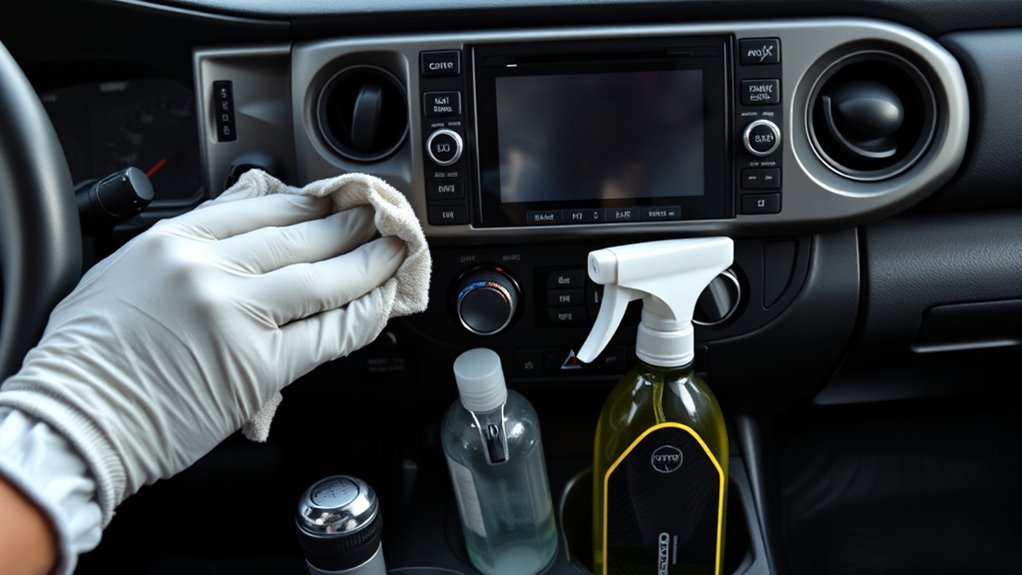
Modern Tacoma cabins feature sensitive infotainment displays (ranging from 7-inch and 8-inch screens on 3rd Gen models to the 14-inch multimedia display on 4th Gen trucks) and delicate digital instrument clusters. Toyota explicitly instructs owners to clean touchscreens using only a soft cloth lightly dampened with lukewarm water. Toyota specifically warns against using organic solvents, alcohol, gasoline, acidic solutions, or alkaline cleaners, which can permanently strip anti-reflective coatings and cause screen discoloration.
- Touchscreen Display: Turn the truck off so the screen is black and cool to the touch. Take a clean, plush microfiber towel, dampen a corner with lukewarm (or distilled) water, and wipe gently in straight, overlapping passes. Immediately dry with a clean section of the towel.
- Instrument Cluster Lens: Dust with a dry ultra-soft detailing brush or canned air first. Lightly wipe with a water-dampened microfiber cloth with almost zero pressure to prevent micro-marring.
- HVAC & Dash Vents: Use a dry detailing brush to loosen dust from the vent slats while holding a vacuum nozzle nearby to capture airborne debris. Wrap a damp microfiber cloth around a foam swab or finger to wipe slat surfaces clean.
- Switchgear & Dials: Keep moisture away from climate control pushbuttons, steering-wheel controls, and the Qi wireless charging pad. Clean these areas using a soft detailing brush misted very lightly with quick detailer, ensuring liquid never seeps into button seams.
How Do You Protect Tacoma Plastics Without Greasy Shine?
Applying a quality interior protectant shields plastics from UV degradation, drying, and cracking. However, avoid oil- or silicone-based dressings that leave a slick, glossy film. Instead, use a water-based, matte-finish protectant designed to restore factory appearance while providing robust UV blockers.
For products like 303 Automotive Protectant, spray a small amount onto a microfiber applicator pad, spread a thin, uniform coat over the dashboard, door panels, and center console, and let it bond for 1–2 minutes. Then, thoroughly buff the entire surface with a dry, clean microfiber cloth. Buffing is crucial—303 is not designed to air-dry, and proper buffing leaves a completely dry, non-greasy, factory-matte finish. Reapply every 30–45 days on trucks parked outdoors in high-sun climates.
| Maintenance Task | Recommended Frequency | Best Method & Tools |
|---|---|---|
| Routine Dusting | Weekly or after trail runs | Soft vacuum brush & dry edgeless microfiber |
| Maintenance Wipe-Down | Every 2–4 weeks | Microfiber cloth misted with pH-neutral detailer |
| Deep Decontamination | Quarterly / Seasonally | Interior cleaner, soft detailing brush agitation, dry buff |
| Matte UV Protection | Every 30–45 days (per label) | Thin layer of 303 Protectant buffed completely dry |
Troubleshooting Common Cleaning Problems
Why Does My Dashboard Look Streaky After Cleaning?
Streaking is caused by applying too much cleaner, using a dirty or saturated towel, or allowing product to air-dry on warm plastic. Rewipe the streaked area using a clean microfiber cloth dampened with warm distilled water, then immediately buff it dry with a separate clean towel. Always clean panels out of direct sunlight when the interior is cool.
Why Does My Plastic Look Faded After Cleaning?
A white or chalky appearance usually means dried soap residue or cleaner surfactants remain trapped in the textured plastic grain. Rewipe the panel with a clean cloth dampened with warm water, agitate lightly with a soft brush, and dry completely. If the chalky appearance remains after thorough drying, the plastic may have existing sun fade or chemical etching from prior use of harsh cleaners; applying a water-based matte UV protectant will restore depth of color.
How Do I Remove Sticky Residue From Cupholders?
Tacoma cupholders collect dried coffee and soda syrup. Remove any removable rubber bottom inserts and wash them in warm soapy water at the sink. For fixed console cupholders, lay a warm, damp microfiber cloth over the sticky residue for 2 minutes to soften the sugar, then wipe clean. Never pour standing water directly into the center console, as it can seep into lower wiring harnesses.
How Do I Avoid Scratching Gauge Plastic?
Clear instrument lenses are made of soft acrylic that scratches under minimal friction. Never use paper towels, standard napkins, dry dirty rags, or glass cleaner. Blow loose dust away first, use a plush microfiber cloth dampened only with water, and wipe with feather-light pressure.
Frequently Asked Questions
What should I use to clean the inside of a Toyota Tacoma dashboard?
Use a clean microfiber cloth and a mild cleaner labeled safe for automotive interior plastic or vinyl. Spray the cleaner directly onto the cloth, wipe the dashboard gently, and dry it immediately with a second microfiber towel. For the infotainment screen, use Toyota’s recommended soft cloth dampened with lukewarm water.
What is the best thing to clean car interior plastic with?
The best option is a pH-neutral automotive interior detailer paired with clean microfiber towels and a soft-bristle detailing brush. For light cleaning, warm water on a damp microfiber works well. Avoid harsh solvents, ammonia-based glass cleaners, bleach, and greasy silicone dressings.
Can I use Simple Green on Tacoma interior plastics?
Do not assume general household Simple Green dilutions are safe for every Tacoma cabin surface. Strong all-purpose cleaners can dry out plasticizers and leave chalky white residue. A dedicated automotive interior detailer is the safer choice. If using an APC, dilute it heavily (10:1 or higher), test an inconspicuous spot, and wipe all residue away completely.
Can I use a Magic Eraser on Tacoma plastic trim?
Do not use melamine foam as a routine cleaner. Magic Erasers are micro-abrasive and act like ultra-fine sandpaper, which can permanently dull satin, dark, glossy, clear, or soft-touch dash trim. Reserve it only as an extreme last resort for stubborn transfer marks on unpainted lower door kick panels after testing a hidden spot.
How often should I protect Tacoma interior plastics?
Follow the protectant manufacturer label. The current 303 Automotive Protectant instructions recommend reapplication every 30–45 days for maximum UV defense. Apply a thin layer to compatible dash and door trim, and always buff completely dry so the surface retains a non-greasy, factory-matte finish.
How can I tell whether a Tacoma plastic mark is a scuff or a scratch?
A transfer scuff is foreign material sitting on top of the plastic that typically lightens or disappears with gentle cleaning and brush agitation. A scratch or gouge is physical damage that cuts into the plastic or flattens the texture, catching a fingernail. Cleaners can lift transfer scuffs but cannot repair missing or cut plastic grain.
Can I use alcohol or disinfecting wipes on Tacoma interior plastics?
Avoid isopropyl alcohol and household disinfecting wipes on touchscreens, digital gauge clusters, and coated dashboard trim. Alcohol can dissolve anti-glare screen coatings and dry out interior vinyl. For routine cleaning, use a pH-neutral interior cleaner applied to a microfiber towel.
Conclusion
Keeping your Toyota Tacoma interior plastics looking factory-fresh comes down to gentle chemistry and proper mechanical technique: remove abrasive trail dust first, spray cleaner onto a microfiber cloth rather than panels, agitate textured grain with a soft detailing brush, and immediately dry buff each section. Treat delicate touchscreens and acrylic gauge lenses as separate optical surfaces using only clean water and light pressure.
Always spot-test cleaners in an inconspicuous area and halt cleaning if you notice tackiness, color transfer, or changes in sheen. Remember that while cleaning can lift stubborn dirt and rubber transfer marks, it cannot rebuild damaged or gouged plastic grain. Reapply a matte-finish UV protectant every 30–45 days to guard against sun fading without creating hazardous dashboard glare. If you are also dealing with stubborn pet hair on cabin fabric, check out our guide on how to remove pet hair from carpet and seats.
Sources
- Toyota Support: How should I clean the touch screen panel in my vehicle?: official guidance specifying water-dampened soft cloth methods and chemical solvent restrictions.
- 2026 Toyota Tacoma Owner’s Manual: official manufacturer portal for vehicle interior cleaning and maintenance guidelines.
- Meguiar’s Quik Interior Detailer Specifications: compatibility specifications for automotive interior plastics, vinyl, rubber, and LCD screens.
- 303 Automotive Protectant Application Guide: manufacturer instructions for matte-finish UV protection and clear plastic exclusions.
- BASF Basotect Technical Data: structural analysis of melamine resin foam and its micro-abrasive cleaning characteristics.
- Mr. Clean Magic Eraser Surface Guide: official manufacturer surface recommendations and warnings regarding dark, satin, and high-gloss finishes.