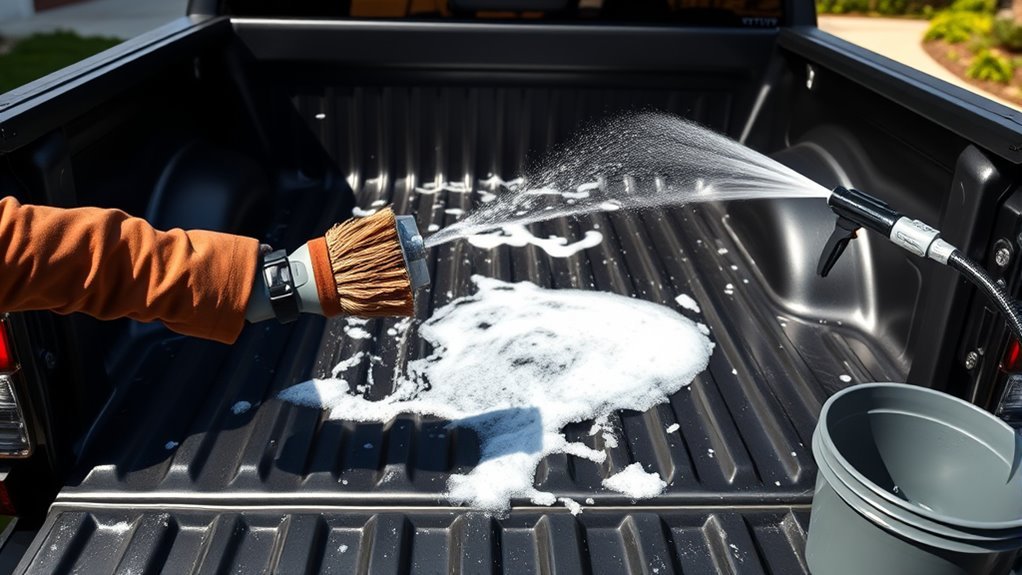
You can restore your Toyota Tacoma bed liner by rinsing with a pressure washer at about 1,200 PSI from 12 inches away, applying an automotive degreaser and letting it dwell 5–10 minutes, then scrubbing textured areas with a soft flag-tip brush and a citrus-based cleaner. Rinse top to bottom, repeat on stubborn spots, and finish with a ceramic conditioner like Hydro Shield, buffing off excess with microfiber towels. Continue for tips on tools, timing, and maintenance.
Quick Results: What to Expect for a Tacoma Bed Liner
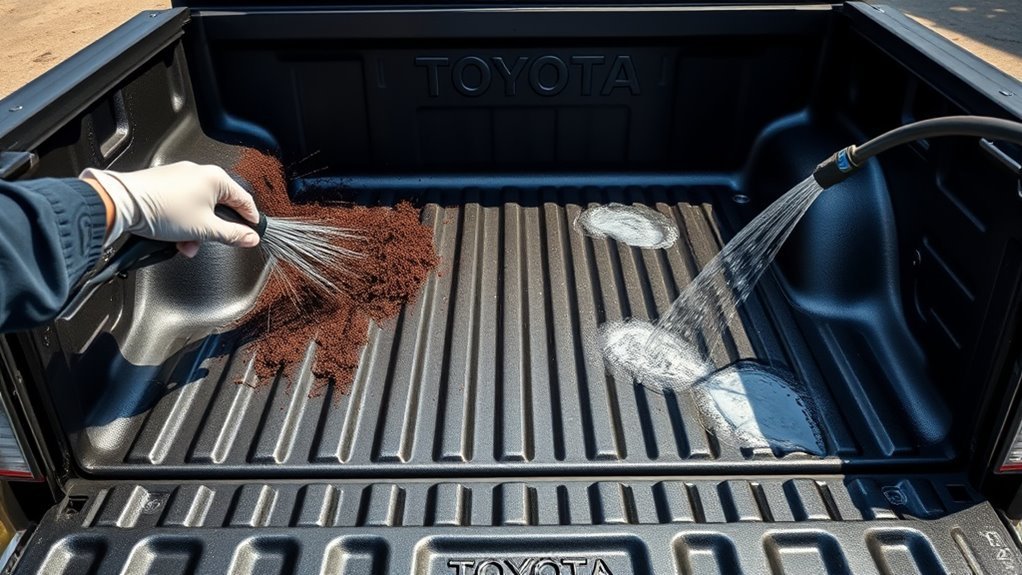
When you finish the basic cleaning steps, you’ll notice an immediate visual improvement: rinsing removes loose debris, a foam cannon with Citrus Washing Gloss lifts embedded dirt, and targeted scrubbing with a soft, flexible brush gets into grooves without harming the liner. You’ll see a clear visual transformation as grime clears and the surface evens out, making the bed liner look revitalized and closer to its original finish. That renewed look isn’t just cosmetic; it starts the maintenance benefits cycle by preventing dirt buildup that traps moisture and accelerates corrosion. After restoration, apply a ceramic shine coating like Hydro Shield to lock in a glossy, UV-resistant layer that reduces future wear. You’ll gain both freedom from constant worry and measurable resale value improvement, since buyers notice a well-kept bed. Keep cleaning on a schedule you control, and you’ll preserve that smooth, protected surface with minimal effort.
Tools & Products for Cleaning a Tacoma Bed Liner
Start with five reliable items you’ll use every time: a Torque Big Mouth Max Release Foam Cannon for even soap coverage, Citrus Washing Gloss to cut grease without harming the liner, a soft Wheie flag-tip brush to scrub textured areas safely, Hydro Shield ceramic coating to lock in protection and shine after cleaning, and several microfiber towels to remove excess product and buff the finish. You’ll pair that core kit with gloves, a bucket, and extension wands when needed. Focus product selection on gentleness and strength—Citrus Washing Gloss breaks down grime without degrading the liner, while Hydro Shield adds UV and dirt resistance. Use the foam cannon to distribute cleaner uniformly; then employ the Wheie flag-tip brush for aggressive but non-abrasive agitation on textured surfaces. Microfiber towels finish the job, removing residue and polishing the ceramic layer. These tools support effective cleaning techniques that free you from recurring chores and keep the Tacoma bed liner resilient, tidy, and ready for whatever comes next.
Rinse & Degrease the Bed Liner: Safe Pressure and Dwell Time
Start by rinsing the bed liner with a pressure washer set low and held at least 2 feet away, using a gentle spray pattern to avoid gouging or lifting the material. Let the water and any applied degreaser dwell on the surface for 5–10 minutes to loosen embedded dirt and stubborn grease, but don’t let chemicals dry. After rinsing, visually inspect the liner to confirm debris and residue are gone before moving to scrubbing or drying.
Safe Pressure Levels
Set your pressure washer to no more than 1,200 PSI and hold the nozzle at least 12 inches from the Tacoma bed liner while you rinse, so you remove dirt without etching or peeling the surface. Use pressure washer settings that balance power and surface protection; start low and increase only if needed. Test in an inconspicuous spot first to confirm there’s no damage.
- Choose an automotive degreaser and apply; it targets grime without harming the liner.
- Keep the wand moving, maintain distance, and avoid concentrated bursts that can abrade texture.
- Recheck the test area after rinsing to verify the finish stayed intact before proceeding across the whole bed.
Proper Dwell Time
Now that you’ve confirmed safe pressure levels and tested a small area, let the degreaser sit on the Tacoma bed liner for 5–10 minutes so it can break down grime and oil without evaporating or drying out. This dwell time importance is real: it frees stubborn contaminants so you’ll need less scrubbing and lower pressure. After 5–10 minutes, rinse top to bottom at no more than 1200 PSI, thoroughly washing away all chemical residues to prevent discoloration and material degradation. Use a soft brush to gently agitate persistent spots while rinsing. Consider cleaning frequency based on use—heavy-duty work may need monthly attention, light use only seasonally—to keep the liner liberated from buildup without overworking the surface.
Scrub Stubborn Grime Without Damaging the Liner
Grab a soft, flexible Wheie flag tip brush and a suitable cleaner like Citrus Washing Gloss, because tackling baked-on grime gently will protect the liner while restoring its look. You’ll start by testing the cleaner and brush on a hidden patch to confirm your scrubbing techniques won’t harm the surface. Work in manageable sections, spraying cleaner, letting it sit briefly, then using the brush in small, circular motions to lift embedded dirt without abrasion.
- Pre-test and section: confirm compatibility, divide the bed into workable zones.
- Apply and agitate: use Citrus Washing Gloss, then scrub gently with the Wheie flag tip brush in circular strokes.
- Rinse and inspect: wash away residue thoroughly, check for missed spots, repeat if needed.
These effective solutions prioritize the liner’s integrity while freeing you from grime. Rinse completely to remove cleaning agents and debris so the surface stays resilient and ready for whatever comes next.
Apply a Ceramic Conditioner: Coverage, Dry Time, and Removing Excess
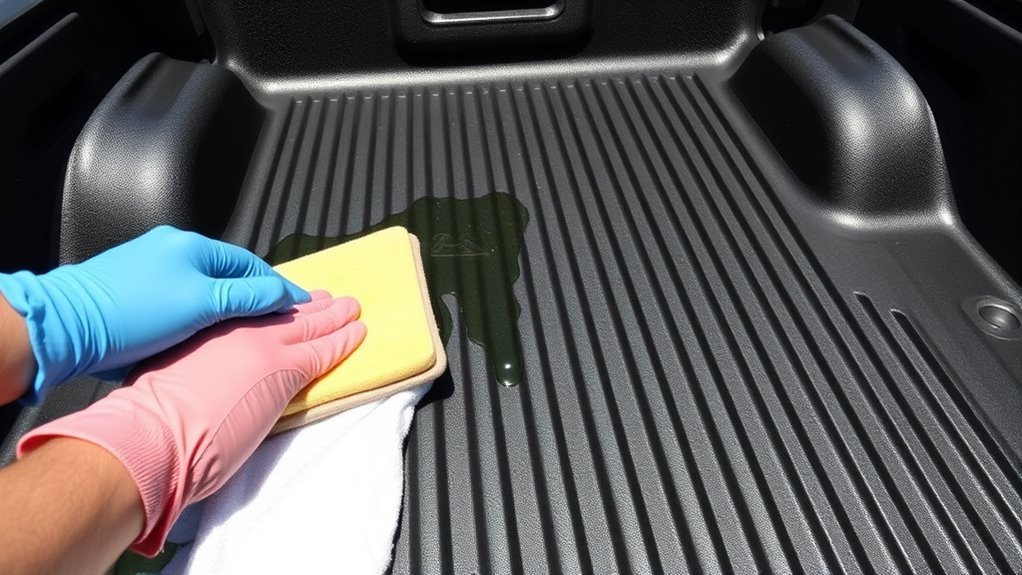
A ceramic conditioner like Hydro Shield will give your Tacoma’s bedliner added protection and shine, so work methodically to cover every textured surface and groove using a flexible-bristle brush to spread the product evenly. For reliable application techniques, divide the bed into sections and brush the conditioner in overlapping strokes so it bonds uniformly with the textured material. Pay special attention to seams and deep grooves; those areas need the product benefits most.
Let the conditioner dry undisturbed for at least 30 minutes so it properly bonds and builds durability. After the surface feels tack-free, take a clean microfiber towel and gently remove any excess—don’t scrub hard; you want a polished, even finish without lifting the coating. Regular applications will make future cleaning easier and extend liner life, giving you more freedom from constant maintenance. Follow these steps and you’ll maintain protection and shine without wasting product or effort.
Common Problems & a Maintenance Schedule to Keep It Looking New
Because your Tacoma bed liner takes the brunt of hauling and weather, you should watch for a few recurring problems—fading and UV damage, scratches and gouges, surface wear in high-contact zones, and embedded dirt that can trap moisture and promote rust on exposed metal. You can prevent most issues with a simple maintenance rhythm focused on bed liner longevity and straightforward maintenance tips.
- Inspect every 3–6 months: look for scratches, worn areas, and dirt buildup; address gouges immediately to avoid corrosion.
- Clean after heavy use: rinse debris right away and wash with a gentle automotive soap to prevent embedding and material degradation.
- Protect every 6–12 months: apply a ceramic-based coating and keep the truck shaded or covered to reduce UV fade.
Stay proactive: a short inspection and targeted clean or coating session frees you from bigger repairs, preserves utility, and keeps your Tacoma looking and performing like it’s built to last.
Frequently Asked Questions
How to Clean a Rubber Truck Bed Mat?
You remove the rubber mat, rinse it, apply mild cleaning products mixed with water, scrub gently, rinse thoroughly, let it dry, and reinstall—maintenance tips: avoid harsh chemicals, store mats flat, and clean regularly to stay free.
What Is the Best Thing to Clean a Truck Bed Cover With?
Brightly banish buildup: you should use a pH-balanced automotive soap for bed cover maintenance, spot-treat stubborn grime with a citrus-based cleaner, use soft brushes or microfiber, rinse carefully, and condition with protectant cleaning products.
Conclusion
You’ve got a cleaner, protected Tacoma bed liner now—think of it like giving your truck’s heart a little spa day. Keep rinsing after messy hauls, spot-clean grease quickly, and reapply ceramic conditioner every few months to maintain protection. Use a soft-bristled brush and moderate pressure so you don’t damage the surface. With consistent, simple care and the right products, your bed liner will stay functional and look sharp for years.