Interior windshield haze on a Toyota Camry is usually a thin film of dust, plastic off-gassing, skin oils, cleaner residue, humidity, and fragrance vapors. The fix is simple: use the right glass-only tools, clean the cabin sources that keep recontaminating the glass, and finish the windshield with a dry buff so it stays clear in sunlight and at night.
Quick Answer
To remove inside windshield haze on a Toyota Camry, park in the shade, spray an ammonia-free automotive glass cleaner onto a clean microfiber towel, wipe the glass in vertical and horizontal passes, then buff dry with a second towel. For greasy film, use a 1:1 distilled water and white vinegar mix or a careful isopropyl alcohol wipe on untinted glass.
Key Takeaways
- Use two clean, glass-only microfiber towels: one damp towel for cleaning and one dry towel for buffing.
- Spray cleaner onto the towel, not directly onto the windshield, to avoid overspray on the dashboard, sensors, trim, and electronics.
- Remove the source of the haze by wiping the dash, vacuuming dust, limiting oily air fresheners, and keeping cabin humidity under control.
- Avoid ammonia-based cleaners on tinted glass or aftermarket film unless the product label clearly says it is safe.
- If haze returns quickly with a sweet smell, damp carpet, or greasy fog, inspect for a coolant leak, moisture leak, or HVAC issue.
At a Glance
| Time Required | 5–10 minutes for a quick clean; 20–30 minutes for a deep clean |
| Difficulty | Easy |
| Tools Needed | Ammonia-free glass cleaner, 2–4 microfiber towels, optional squeegee, optional glass wand, small vacuum or dash brush |
| Cost | About $10–$35 if you need to buy towels and cleaner |
Quick Fix: Remove Camry Windshield Haze Now
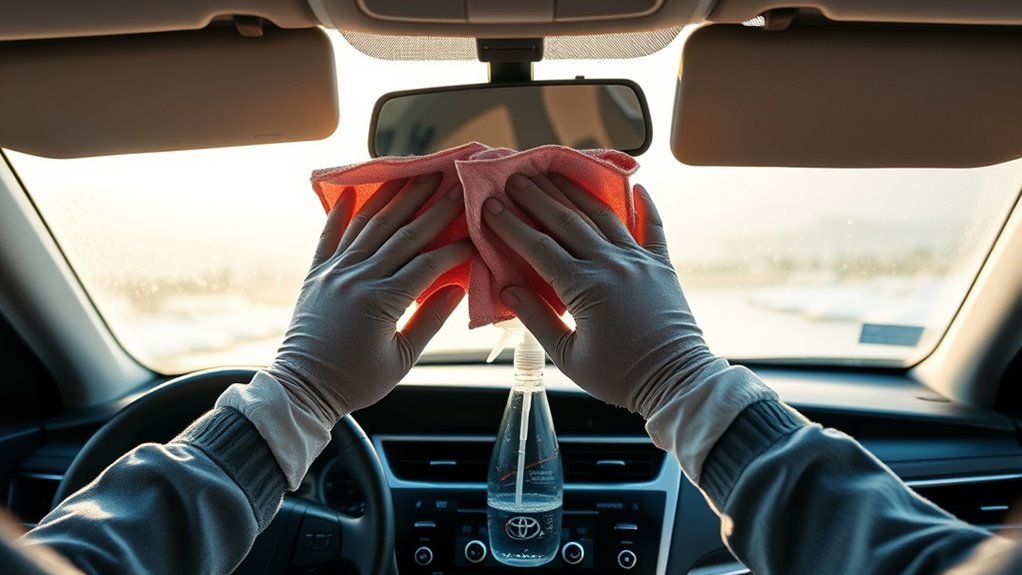
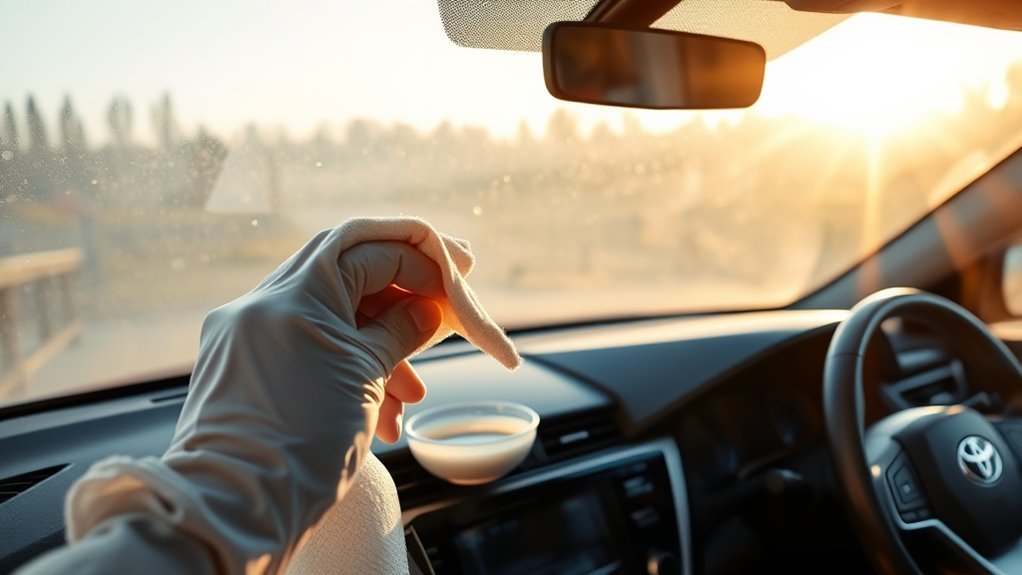
Start with the easiest safe method before reaching for stronger products. Park the Camry in the shade, let the glass cool, and move the front seats back so you can reach the lower corners of the windshield. Fold a clean microfiber towel into quarters, lightly mist the towel with ammonia-free automotive glass cleaner, and wipe the inside of the windshield from top to bottom.
Use a simple two-pass pattern: first wipe vertically, then cross-wipe horizontally. This makes streaks easier to spot because streaks on the inside and outside of the glass will run in different directions. Finish with a second dry microfiber towel and light pressure until the glass looks clear from the driver’s seat.
Warning: Do not clean the windshield while driving. Do not spray cleaner directly toward the dashboard, speaker grilles, infotainment screen, driver-assist camera area, or defroster vents. Spray the towel instead.
If the film feels oily or smears instead of lifting, mix equal parts distilled water and white vinegar, dampen a fresh microfiber towel, and wipe the problem area again. For stubborn greasy spots on plain, untinted interior glass, a small amount of isopropyl alcohol on a towel can help, but keep it away from tint film, plastic trim, leather, screens, and painted surfaces.
[Products Worth Considering]

This cabin air filter combines odor control and HEPA-level filtration to help keep your vehicle’s interior air fresher and cleaner. Its activated charcoal and baking soda work to neutralize odors without added scent, while multi-layer filtration captures dust, pollen, and other airborne contaminants. Designed for dependable airflow and easy installation, it’s a practical upgrade for compatible Toyota, Lexus, Subaru, and other select vehicles.

This activated carbon cabin air filter helps improve in-cabin air quality by capturing dust, smoke, pollen, and odors for a fresher driving experience. Designed as a direct replacement for many Toyota, Lexus, Subaru, and other compatible models, it supports HVAC performance and offers easy, tool-free installation.

This cabin air filter replacement is designed to help keep your vehicle’s interior air fresher and cleaner by capturing dust, odors, and fine particles with a multi-layer filtration structure. The activated carbon layer helps reduce unwanted smells, while the extended service life makes it a practical maintenance part for many compatible Toyota, Lexus, Subaru, Scion, and Jaguar models.
Why the Inside of a Camry Windshield Gets Hazy
Interior windshield haze is not just “dirt.” It is usually a mixed film that builds up slowly. Common causes include dashboard plastic vapors, dust, moisture, fingerprints, vaping or smoking residue, oily interior dressings, and fragrance products. The EPA explains that many household products, including cleaners and air fresheners, can emit volatile organic compounds, and research on car air fresheners has found that they can release a range of volatile chemicals into vehicle cabins.
The windshield is also a safety item, not just a cosmetic surface. Federal glazing standards for motor vehicles are designed, in part, to preserve the transparency needed for driver visibility. A clean interior windshield helps reduce glare from low sun, streetlights, and oncoming headlights, especially when the haze is only visible at certain angles.
A windshield can look clean in the driveway but turn cloudy when sunlight or headlights hit it. Always check the glass from the driver’s seat after cleaning.
Deep-Clean Your Camry Windshield Step by Step
If a quick wipe does not clear the haze, do a full deep clean. This removes the film from the glass and reduces the cabin dust and oily residue that would otherwise land back on the windshield.
| Step | Action | Goal |
|---|---|---|
| 1 | Vacuum and wipe the dash | Remove dust and oily sources |
| 2 | First glass pass with cleaner | Lift loose film |
| 3 | Degrease stubborn areas | Cut oily residue |
| 4 | Squeegee or dry buff | Prevent streaks |
| 5 | Final driver-seat check | Confirm clear visibility |
- Cool the glass. Work in shade or inside a garage. Hot glass dries cleaner too fast and leaves streaks.
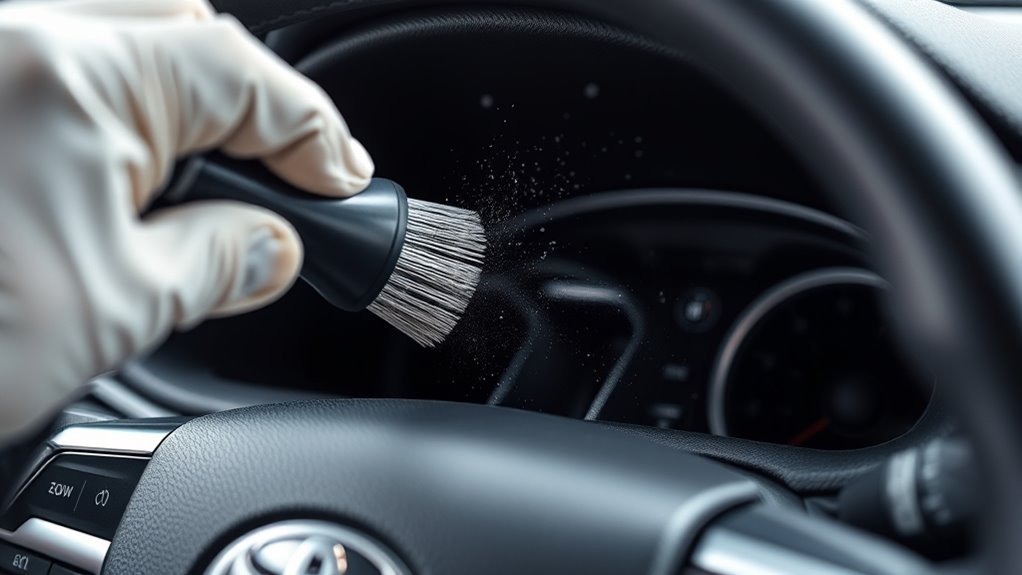
- Clean nearby surfaces first. Vacuum the dashboard, vents, seats, and front floor area. Then wipe the dash with a barely damp microfiber towel.
- Use the first towel for cleaning. Lightly spray glass cleaner onto a folded microfiber towel. Wipe the passenger side first, then the driver side.
- Reach the bottom edge. Use the back of your hand, a glass cleaning wand, or a microfiber-wrapped pad to reach the tight area where the dash meets the glass.
- Degrease only where needed. If film remains, use the vinegar-water mix on a fresh towel. Use alcohol only on plain glass and only when needed.
- Dry immediately. Use a dry microfiber towel or a small clean squeegee from top to bottom, then buff the edges and corners.
- Check outside too. Clean the exterior windshield separately. If the inside is wiped vertically and the outside horizontally, you can tell which side still has streaks.
Pro Tip: Fold microfiber towels into quarters and rotate to a clean side as soon as the towel starts dragging. A dirty towel is one of the fastest ways to move haze around instead of removing it.
Tools and Cleaners to Keep Just for Glass
Keep one small set of tools only for glass. If you use the same towel on the dashboard, door panels, leather protectant, exterior wax, or tire dressing, oils can transfer to the windshield and recreate the haze.
[Products Worth Considering]

This CF10285 cabin air filter is designed to help keep your vehicle's interior air cleaner by capturing dust, pollen, soot, and road grime. It is compatible with a wide range of Toyota, Lexus, Jaguar, Land Rover, Subaru, Scion, and Pontiac models, making it a versatile replacement choice. The activated carbon design and easy glove-box installation make it a practical upgrade for fresher driving comfort.

This KAX HEPA cabin air filter is designed to help keep your vehicle interior air cleaner by capturing fine particles and reducing airborne contaminants. Its multi-layer structure with activated carbon supports strong filtration performance while helping improve HVAC airflow for more efficient heating and cooling. Built for a wide range of Toyota, Lexus, Subaru, and Mazda models, it offers a practical replacement option for maintaining fresher cabin air.
Dedicated Glass Gloves or Glass Wand
A soft glass-cleaning glove, microfiber pad, or windshield wand helps you reach the lower corners of the Camry windshield without leaning hard on the dashboard. Choose a lint-free microfiber tool made for glass, inspect it for grit before every use, and wash it separately from greasy towels.
Use straight, overlapping motions for the final pass. Small circular motions are helpful only for loosening a stubborn spot; they are not the best final pattern because they can hide swirls and streaks until sunlight hits the glass.
Microfiber Towels Only
Use short-nap or waffle-weave microfiber towels made for glass. Avoid paper towels, old cotton shop rags, and towels that have been washed with fabric softener. Fabric softener leaves residue that can smear on glass.
For best results, use at least two towels: one damp towel for the cleaner and one dry towel for the final buff. Launder glass towels with mild detergent, skip fabric softener and dryer sheets, and store them in a clean bag or bin away from waxes, polishes, and interior dressings.
Separate Cleaning Bucket
If you use a bucket, reserve it for glass work. A bucket that has held car wash soap, wheel cleaner, or waxy rinse water can contaminate your glass towels. Fill the bucket with clean water only, or use it to hold clean towels while the glass cleaner stays in its own bottle.
After each session, rinse the towels, wipe the squeegee blade, and let everything dry fully before storage. A damp towel stored in the trunk can develop odor and leave more residue the next time you use it.
Prep Steps Before You Start Cleaning the Windshield
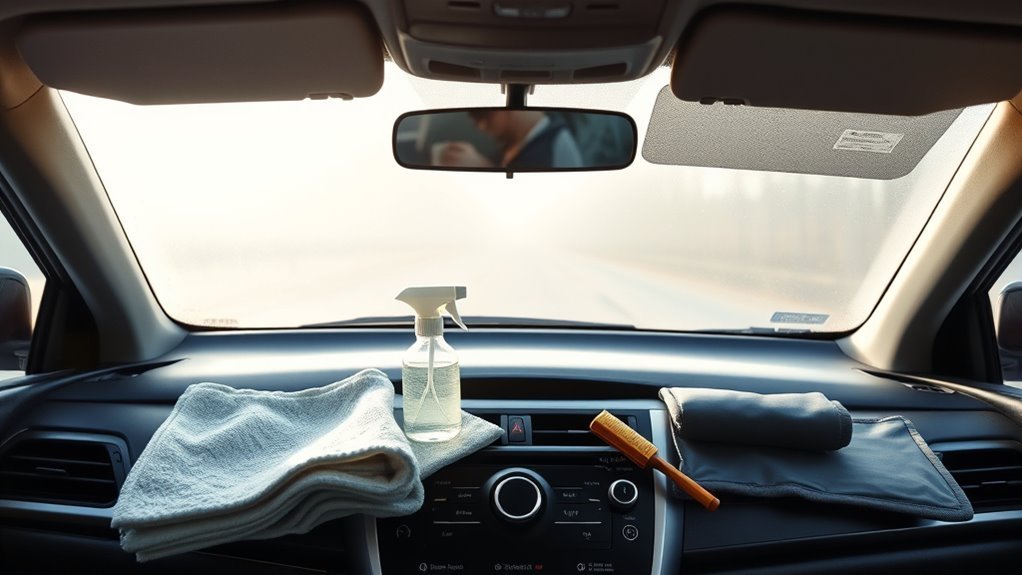
Good prep saves time. Most recurring windshield haze comes from the cabin, not from the glass itself. Before you clean the windshield, remove loose dust, oily fragrance sources, and moisture that can settle back on the glass.
Gather Dedicated Glass Tools
Set out an ammonia-free automotive glass cleaner, two to four clean microfiber towels, a small squeegee if you like using one, and an optional windshield wand for the lower edge. Use warm water only for rinsing towels or dampening a cloth; do not soak the dashboard or let water run into the defroster vents.
If your Camry has aftermarket tint or a film strip on the inside of the windshield, check the tint installer’s care instructions before using vinegar, alcohol, or strong cleaners. When in doubt, use a cleaner labeled safe for tinted windows.
Remove Interior Contaminants
Clear the cabin so your cleaning step removes haze instead of spreading it. Focus on the areas closest to the windshield.
- Remove hanging air fresheners, oily vent clips, and loose fragrance products near the dashboard.
- Vacuum the dashboard, front seats, floor mats, and crevices where dust collects.
- Wipe the dashboard and center console with a clean, barely damp microfiber towel.
- Make sure wet umbrellas, damp floor mats, and soaked towels are not adding humidity to the cabin.
- Switch the HVAC out of long-term recirculation when you need to reduce interior moisture.
Note: Toyota owner manuals vary by model year and trim. Use Toyota’s official owner manual portal to confirm your Camry’s specific maintenance guidance, especially for cabin air filter service and interior-care cautions.
Quick Touch-Up Method for Light Haze and Fog
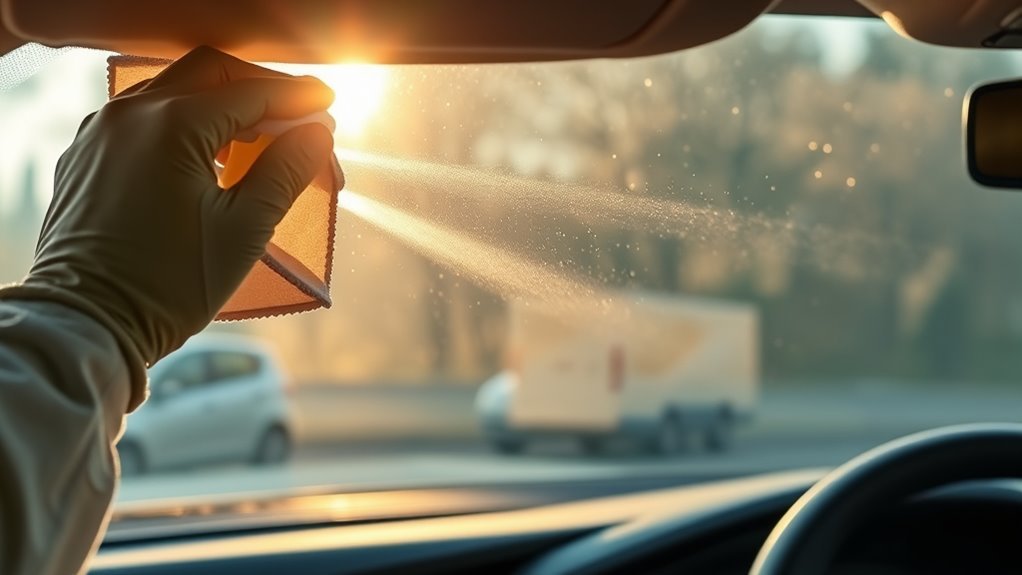
For light haze, you do not need to repeat the full deep clean. Keep a small touch-up kit in the car: one clean glass towel sealed in a bag and a small bottle of automotive glass cleaner. Do not store a soaked towel in the cabin.
| Item | Purpose |
|---|---|
| Glass microfiber | Removes film without lint |
| Ammonia-free cleaner | Breaks down light residue |
| Straight wipe pattern | Makes streaks easy to spot |
| Squeegee or dry towel | Clears moisture |
| Driver-seat check | Confirms safe visibility |
Lightly mist the towel, clean one half of the windshield at a time, then buff dry. If the windshield fogs because of humidity rather than residue, use the defrost setting, fresh-air mode, and air conditioning to dry the cabin air. A clean windshield fogs less dramatically because moisture has fewer residues to cling to.
Prevent Residues From Cleaners and Air Fresheners
The best way to keep the Camry windshield clear is to stop new residue from forming. Avoid oily interior dressings on the upper dashboard, do not spray fragrance products near the windshield, and be careful with vent clips that sit directly in the airflow toward the glass.
- Choose an ammonia-free automotive glass cleaner instead of a multi-surface interior spray.
- Spray cleaner onto the towel, not the glass, so cleaner does not run into trim or vents.
- Use separate towels for glass, dash, seats, exterior paint, and wheels.
- Skip greasy dashboard shine products near the windshield.
- Do not smoke or vape in the cabin if you want the glass to stay clear longer.
- Remove damp items from the car and dry wet floor mats to reduce condensation.
Air fresheners are not automatically unsafe, but fragrance products can add vapors and particles to a closed vehicle cabin. If haze keeps returning, remove scented products for two weeks and see whether the windshield stays clear longer.
Routine Maintenance Schedule to Stop Haze Buildup
A simple 2–4 week windshield routine is enough for most Camry drivers. Clean more often if the car is new, parked in hot sun, used for rideshare work, exposed to smoke or vaping, or driven with pets and dusty cargo.
- Weekly: Check the windshield in morning or evening light. Buff small streaks with a clean dry glass towel.
- Every 2–4 weeks: Clean the inside windshield with glass cleaner and two microfiber towels.
- Every 1–2 months: Vacuum the dash, vents, floor mats, and front seats to reduce dust that settles on the glass.
- At service intervals: Check your Camry maintenance guide for cabin air filter replacement timing. Replace it sooner if airflow is weak, odors linger, or you drive in dusty conditions.
- Seasonally: Inspect for wet carpets, clogged drains, or moisture leaks if fogging becomes frequent.
Use the defroster and A/C together when needed. Air conditioning helps remove moisture from the cabin air, while defrost directs airflow at the windshield. For routine driving, avoid using recirculation mode for long periods in humid weather because it can trap moisture inside the cabin.
Troubleshooting: Stubborn Haze, Re-Fogging, Visibility Issues
If the haze keeps coming back, diagnose the cause instead of scrubbing harder. Stronger cleaning is not always the answer.
| Symptom | Likely Cause | What to Do |
|---|---|---|
| Greasy smear after cleaning | Oily towel, dash dressing, smoke, or fragrance residue | Use fresh towels, degrease carefully, remove oily sources |
| Fog returns quickly | High cabin humidity | Dry floor mats, use A/C defrost, inspect for leaks |
| Sweet smell with greasy fog | Possible heater core or coolant issue | Stop guessing and have the vehicle inspected |
| Streaks only in sunlight | Cleaner dried too fast or towel left residue | Clean in shade and buff with a dry towel |
| Haze remains in one shape or patch | Adhesive, tint damage, etched glass, or exterior issue | Check both sides; avoid abrasives on interior film |
Warning: Do not use razor blades, abrasive pads, magic erasers, detailing clay, or glass polish on the interior side of the windshield if there is any tint film, coating, camera area, or defroster-related component nearby. These methods can scratch or damage films and trim.
If you see oily fog with a coolant smell, if the carpet is damp without an obvious spill, or if the defroster makes the windshield worse, schedule an inspection. A cleaning routine cannot fix a heater core leak, water intrusion, or HVAC problem.
Recommended Products to Buy for Camry Windshield Care
You do not need a large detailing kit. Buy simple, residue-free products and keep them clean.
- Ammonia-free automotive glass cleaner: Choose a product labeled safe for automotive glass and tinted windows. Invisible Glass, Meguiar’s Perfect Clarity, Sprayway Automotive, and similar products are common choices.
- Glass-specific microfiber towels: Use lint-free towels with a short nap or waffle weave. Keep them separate from exterior and interior-detailing towels.
- Small squeegee: Helpful for removing moisture from large glass areas, especially during a deep clean.
- Windshield cleaning wand: Useful if you struggle to reach the lower corners of the windshield.
- Distilled white vinegar: Useful when diluted 1:1 with distilled water for stubborn residue on plain glass.
- Isopropyl alcohol: Use sparingly only for greasy spots on untinted glass, applied to a towel rather than sprayed.
Avoid using exterior rain-repellent products on the interior windshield unless the label specifically says the product is meant for inside glass. Exterior water repellents are designed for rain on the outside of the windshield; interior anti-fog products are different and should be used only according to the label.
[Products Worth Considering]

Pack includes 2 blue dual-sided automotive glass cleaner towels measuring 16 inches by 16 inches for your car detailing kit, home, and other glass surfaces

ABSORBENT & FAST DRYING - Microfiber material provides super absorbent water ability of the cloths makes quick drying large surface. They deliver extreme absorbency, so at the same time ensure quick drying.
Frequently Asked Questions
Why does the inside of my windshield look cloudy?
The inside of your windshield usually looks cloudy because a thin film of dust, oils, moisture, plastic vapors, cleaner residue, smoke, vaping residue, or fragrance vapors has settled on the glass. Clean the glass with a dedicated microfiber towel and automotive glass cleaner, then reduce the source by wiping the dash and controlling cabin humidity.
Can I use Windex on the inside of a Camry windshield?
Use caution. Some household glass cleaners contain ammonia, which is not ideal around aftermarket tint, certain films, and interior surfaces. A safer choice is an ammonia-free automotive glass cleaner labeled safe for tinted windows. Always spray the towel instead of spraying directly at the windshield.
Is vinegar safe for interior windshield haze?
A 1:1 mix of distilled water and white vinegar can help remove stubborn residue from plain automotive glass. Apply it to a microfiber towel, not directly to the windshield, and keep it away from tint film, leather, screens, and sensitive trim. If your windshield has aftermarket film, use a tint-safe cleaner instead.
Why does my windshield haze come back after cleaning?
Recurring haze usually means the source is still inside the cabin. Common sources include greasy towels, dashboard dressing, air fresheners, smoke, vaping residue, damp floor mats, dirty vents, or a clogged cabin air filter. Clean the dash and vents, remove oily fragrance products, and keep glass towels separate.
How often should I clean the inside windshield?
For most drivers, every 2–4 weeks is enough. Clean weekly if the Camry is new, exposed to smoke or vaping, driven in dusty conditions, or parked in hot sun. A quick dry buff between cleanings can prevent light haze from becoming a heavy film.
What if the windshield fog has a sweet smell?
A sweet smell with greasy fog can point to a coolant-related issue, such as a heater core leak. Do not treat that as normal windshield haze. Have the Camry inspected, especially if coolant level drops, the passenger carpet feels damp, or the defroster makes the glass oilier.
Conclusion
Keep your Camry’s inside windshield clear by using clean glass-only microfiber towels, an ammonia-free automotive glass cleaner, and a dry final buff. The real long-term fix is removing the sources that create haze: dusty vents, oily dash products, air fresheners, smoke residue, damp floor mats, and dirty towels.
For stubborn film, use a controlled vinegar-water wipe or a careful alcohol wipe only on untinted glass. Skip harsh abrasives on the inside windshield, check your Toyota owner manual for model-year-specific care guidance, and investigate recurring greasy fog or moisture problems instead of repeatedly scrubbing the glass.
Sources
- Toyota Owners Manuals and Warranties — official Toyota portal for checking Camry-specific owner manual and maintenance guidance.
- Toyota: Cleaning and Protecting the Vehicle Interior — Toyota interior-care guidance on cleaning dust and interior surfaces.
- U.S. EPA: Volatile Organic Compounds’ Impact on Indoor Air Quality — background on VOCs from common products, including cleaners and air fresheners.
- Air Quality, Atmosphere & Health: Volatile Chemical Emissions from Car Air Fresheners — study on emissions from car air freshener products.
- 49 CFR § 571.205: Glazing Materials — federal standard describing visibility and transparency purposes for vehicle glazing.