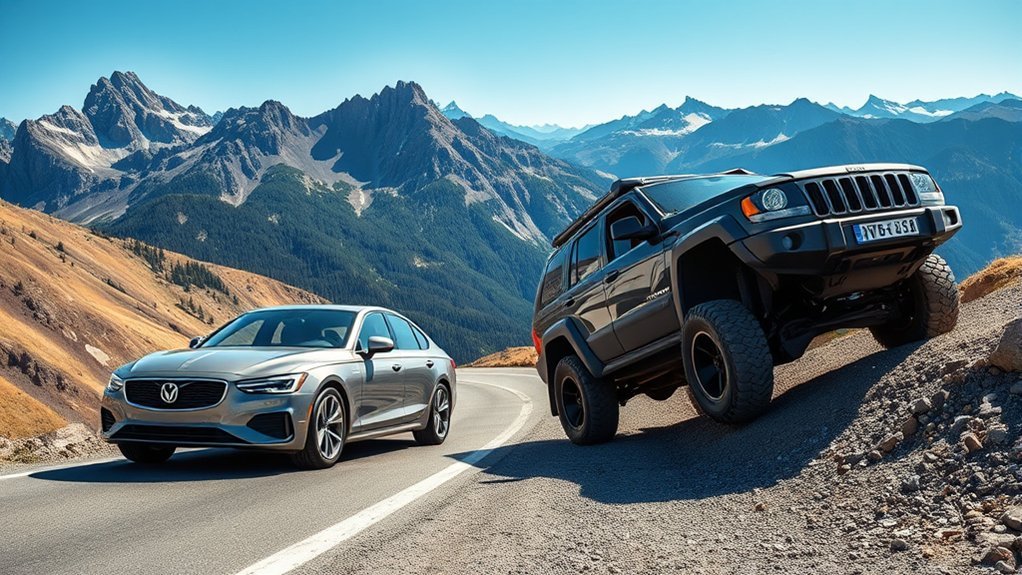
Choosing between front-wheel drive (FWD) and all-wheel drive (AWD) comes down to where you drive, what weather you face, and how much you want to spend. FWD is usually the simpler, lighter, and more fuel-efficient choice for daily commuting. AWD adds traction when roads are wet, snowy, steep, or uneven, but it costs more and does not replace safe driving or good tires.
Quick Answer
FWD is usually better if you want lower cost, better fuel economy, and simple daily driving. AWD is better if you often drive in heavy rain, snow, steep hills, gravel roads, or mixed conditions. For severe winter weather, AWD helps you get moving, but winter tires matter most for stopping and turning.
Key Takeaways
- Choose FWD for city driving, mild climates, lower purchase prices, and better fuel economy.
- Choose AWD if you regularly face snow, heavy rain, steep driveways, gravel, or poorly maintained roads.
- AWD is not the same as 4WD; 4WD is usually better for deep mud, rocks, and serious off-road use.
- Tires matter more than drivetrain for braking; AWD can help you accelerate, but tires provide the grip for stopping and turning.
At a Glance
| Best For | FWD: commuters and mild climates; AWD: snow, rain, hills, gravel, and mixed roads |
| Decision Difficulty | Easy if you compare climate, road type, fuel economy, and budget |
| What to Check | EPA fuel economy rating, tire type, ground clearance, owner’s manual, and trim-level drivetrain |
| Typical Cost Impact | AWD usually costs more to buy, may use more fuel, and can add maintenance complexity |
What Is Front-Wheel Drive (FWD) and How Does It Work?
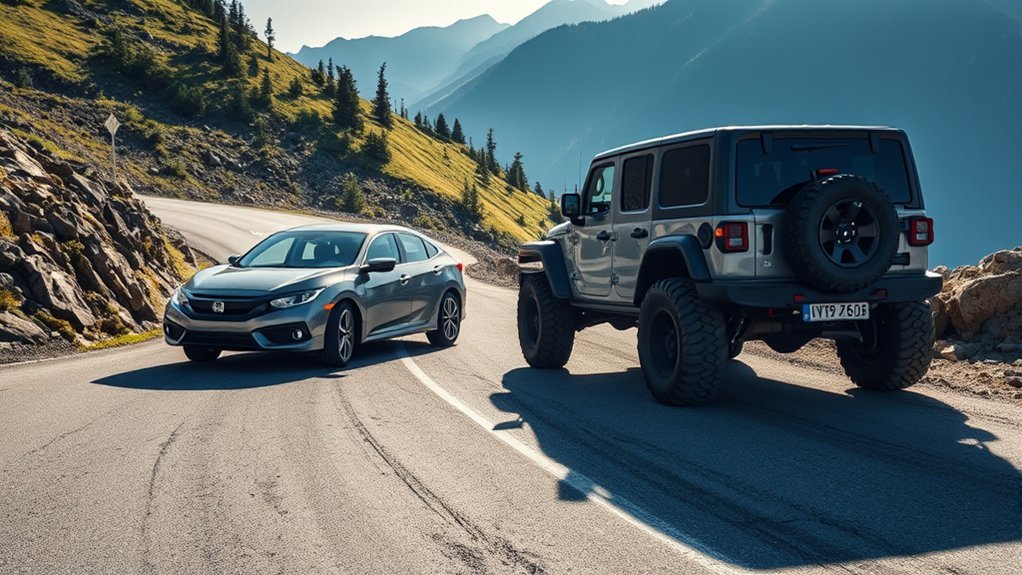
Front-wheel drive sends engine power to the front wheels only. Those same front wheels steer the vehicle and pull it forward. Because the drivetrain is compact and does not need a long driveshaft running to the rear axle, FWD vehicles are often lighter, simpler, and more space-efficient than comparable AWD vehicles.
This layout is common in compact cars, sedans, hatchbacks, minivans, and many crossovers. It works well for commuting, parking, highway driving, and normal wet roads. The engine’s weight over the front tires can also help traction in light snow or rain, especially when the vehicle has good tires.
FWD does have limits. Under hard acceleration, some vehicles can experience torque steer, where the steering pulls slightly to one side. In sharp corners, FWD vehicles may also understeer, meaning the car wants to continue forward instead of turning as tightly as intended. For most daily drivers, these limits are manageable, but they matter if you drive aggressively, climb icy hills, or often travel on rough roads.
Best Reasons to Choose FWD
- Lower cost: FWD vehicles are usually less expensive to buy than AWD versions of the same model.
- Better fuel economy: Less drivetrain weight and fewer moving parts often help MPG.
- Simple maintenance: FWD systems are generally less complex than AWD systems.
- Good cabin packaging: Without a rear driveshaft tunnel, many FWD vehicles make efficient use of interior space.
Where FWD Falls Short
- Steep snowy hills: FWD can struggle when the front tires lose grip.
- Rough or loose surfaces: Gravel, mud, and rutted roads may expose its limits.
- Performance launches: Powerful FWD vehicles can have traction issues when accelerating hard.
What’s Great About All-Wheel Drive (AWD)?
All-wheel drive can send power to all four wheels, usually automatically. Modern AWD systems monitor wheel slip, throttle input, steering angle, and road conditions, then shift power where it is useful. Toyota, for example, describes its AWD system as automatically distributing drive torque between the front and rear wheels for traction and fuel economy during normal driving.
That extra traction can make a real difference when pulling away from a stop on a wet road, climbing a snowy driveway, driving on gravel, or accelerating through a slippery corner. Subaru describes AWD as a drivetrain that gives all four wheels power as needed to improve control and stability in harsh weather and challenging terrain.
Enhanced Traction Control
AWD is strongest when the vehicle needs to move forward on a low-grip surface. If one or two tires begin to slip, the system can send power to wheels with more available grip. That can help in rain, light snow, slush, gravel, muddy parking areas, and uneven roads.
For drivers in snowy states, mountain areas, rural roads, or places with steep driveways, AWD can reduce the stress of poor weather. It can also improve launch traction in some performance cars by spreading power across more tires.
Versatile Driving Conditions
AWD is useful because it adapts to changing roads without much driver input. You may appreciate AWD if you often deal with:
- Heavy rain: AWD can help reduce wheelspin when accelerating from stops or merging.
- Snow and slush: AWD can help the vehicle get moving and climb grades more confidently.
- Gravel and dirt roads: AWD can improve traction on loose surfaces.
- Light trails: Some AWD crossovers handle mild unpaved roads well, especially with enough ground clearance.
Warning: AWD helps a vehicle accelerate on slippery surfaces, but it does not magically shorten braking distance. NHTSA advises drivers to slow down and increase following distance because slick or snow-covered roads make vehicles harder to control or stop.
What AWD Does Not Do
AWD is helpful, but it is not a safety shield. It does not create traction by itself; the tires do that. If the tires are worn, underinflated, or not suited for cold weather, even a capable AWD system will struggle. AWD also does not turn an ordinary crossover into a rock-crawling off-roader.
If you drive in frequent snow or freezing temperatures, consider winter tires. Bridgestone notes that all vehicle traction comes from the tires and that AWD does little to help turning and braking on snow and ice compared with the effect of proper tires.
FWD vs. AWD: Key Differences in Traction and Performance
The biggest difference between FWD and AWD is how many wheels can receive engine power. FWD powers only the front wheels. AWD can power all four wheels, often only when the system senses a need. That difference affects traction, cost, fuel economy, and maintenance.
| Category | FWD | AWD |
|---|---|---|
| Power delivery | Front wheels only | Can send power to all four wheels |
| Rain and light snow | Good with proper tires | Better acceleration traction |
| Heavy snow or hills | Can struggle on steep or icy roads | Usually more confident, especially with winter tires |
| Fuel economy | Often better | Often slightly lower due to added weight and drivetrain drag |
| Purchase price | Usually lower | Usually higher |
| Maintenance | Simpler drivetrain | More components and stricter tire-matching needs |
| Off-road use | Limited | Good for light trails, but not a substitute for true 4WD |
Fuel economy should always be checked by model and trim. The EPA and U.S. Department of Energy fuel economy tool lets shoppers compare official ratings. As one current example, the 2026 Honda CR-V is rated at 30 MPG combined in LX and EX 2WD trims and 29 MPG combined in comparable AWD trims, while hybrid 2WD and AWD ratings also differ by trim.
NHTSA reports that in 2023 there were 320 fatal crashes and an estimated 22,293 injury crashes when snow or sleet was present, which is why drivetrain choice should be paired with safe winter-driving habits and proper tires.
[Products Worth Considering]
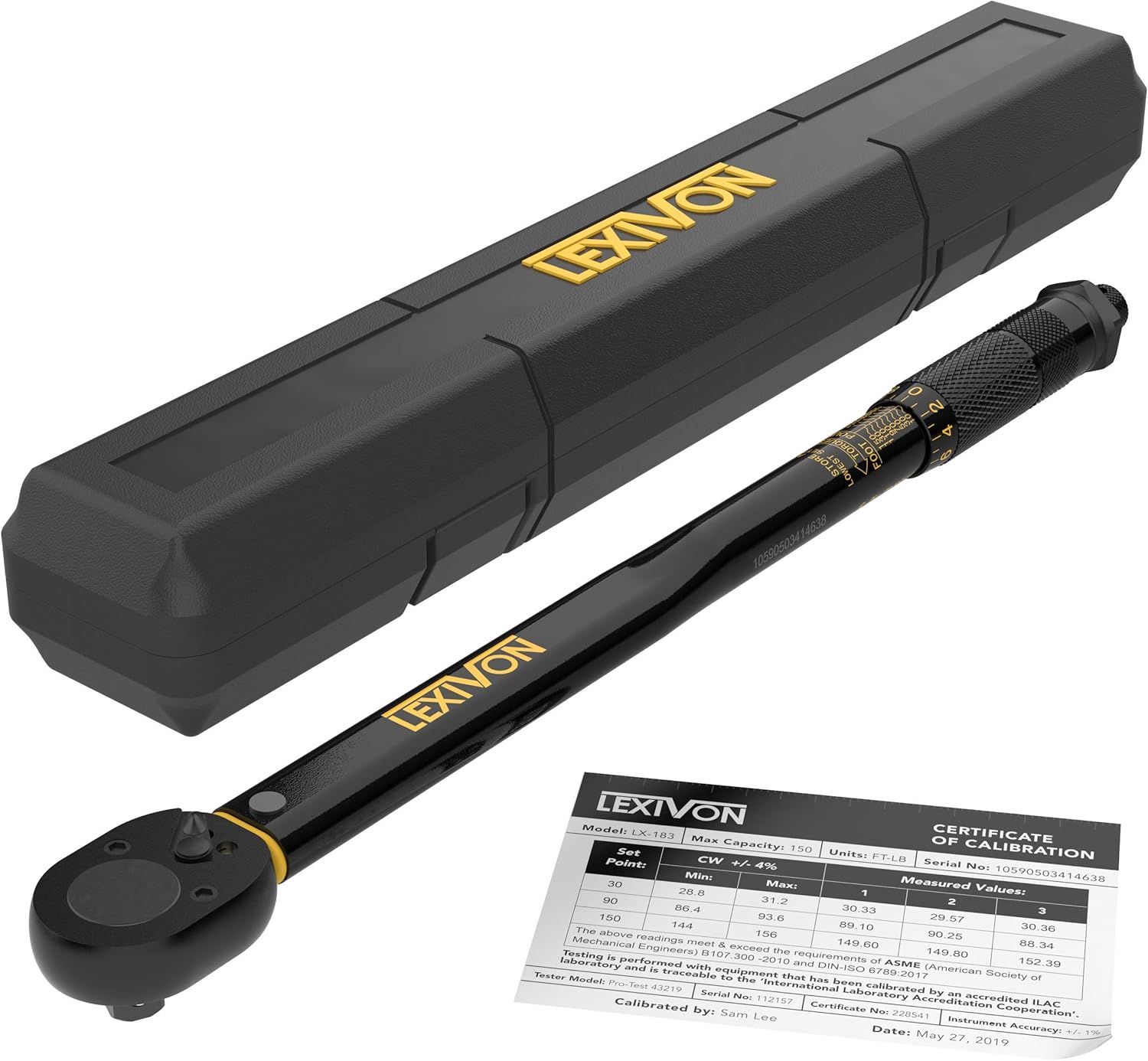
The LEXIVON 1/2-inch drive click torque wrench delivers accurate, dependable tightening for automotive and mechanical jobs with pre-calibrated precision. Its dual-range scale, reversible ratchet head, and ergonomic knurled handle make it easy to set, read, and use comfortably in a variety of applications. Built with hardened chrome vanadium steel and a corrosion-resistant finish, it is designed for lasting performance and reliability.

Designed for Toyota RAV4 models from 2013 through 2018, this three-piece windshield wiper set delivers clear, quiet performance for dependable visibility in changing weather. The precision-fit blades provide streak-free wiping, simple installation, and durable all-season use with reduced wind noise and consistent pressure across the windshield.
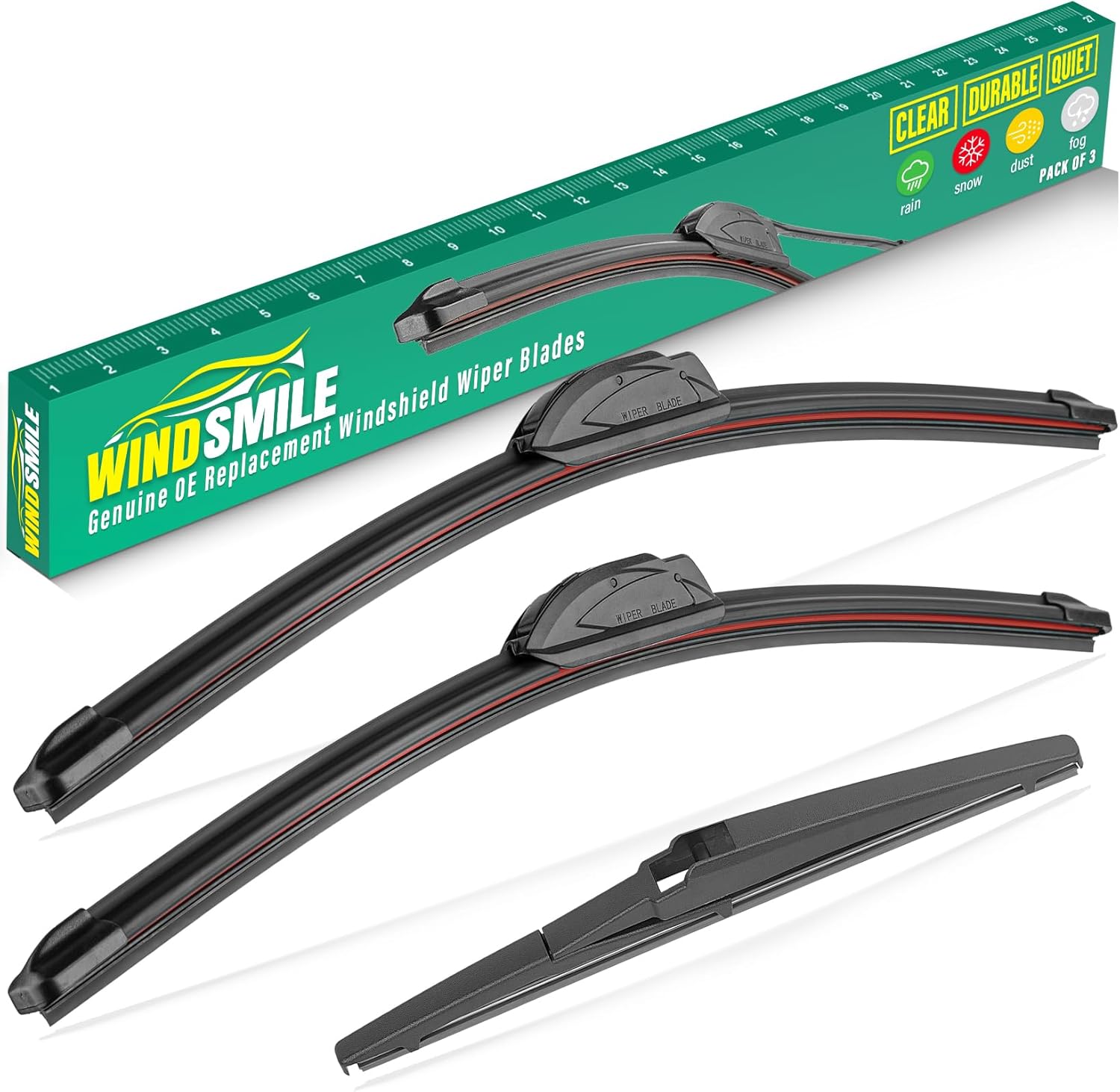
This replacement windshield wiper blade set is designed for Toyota RAV4 models from 2006 to 2012, offering a complete front and rear fit for dependable all-weather visibility. The premium rubber blades help deliver streak-free, quiet wiping while the aerodynamic design reduces wind lift and noise for smoother performance. Built for easy installation and long service life, it is a convenient upgrade for restoring clear driving vision.
Pros of Choosing Front-Wheel Drive
Choosing front-wheel drive can be a smart decision if your roads are mostly paved and your weather is mild or moderate. FWD gives many drivers the best blend of value, efficiency, and everyday control.
- Better fuel economy in many vehicles: FWD is often lighter than AWD, which can help reduce fuel use.
- Lower purchase price: When the same model offers both drivetrains, FWD usually costs less.
- Predictable daily handling: FWD is easy to drive in normal commuting, parking, and highway situations.
- Good light-weather traction: With proper tires, FWD can handle rain and moderate snow well.
- Lower long-term complexity: Fewer drivetrain components can mean fewer expensive drivetrain repairs.
Pro Tip: If you live in a city where roads are plowed quickly, a FWD vehicle with quality all-season or winter tires may be a better value than paying extra for AWD you rarely use.
Advantages of All-Wheel Drive
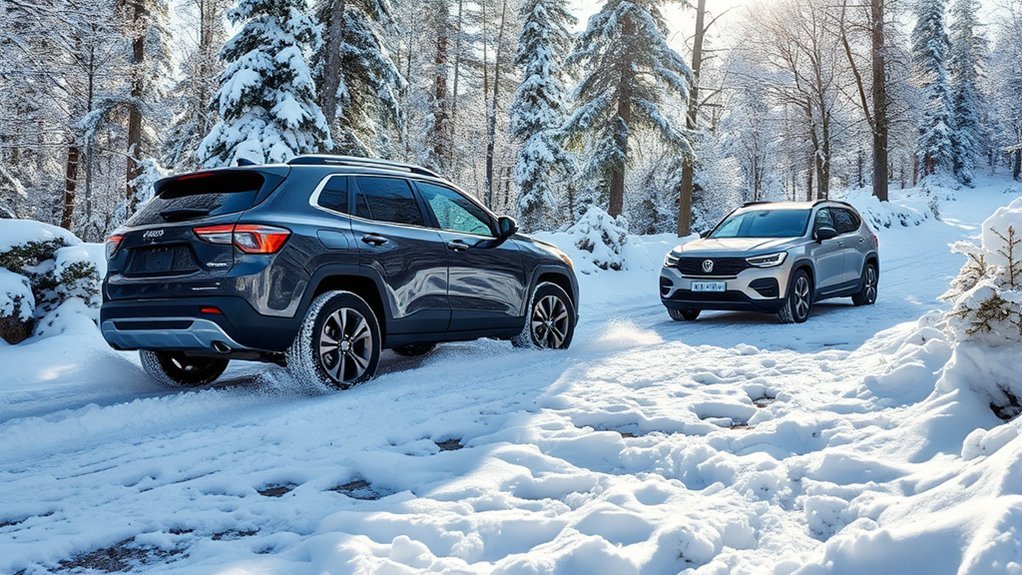
All-wheel drive is best when traction changes often. If your commute includes snow-packed side streets, steep roads, gravel lanes, wet hills, or rural routes, AWD can make the vehicle feel more stable and easier to launch from a stop.
AWD is also common in SUVs, crossovers, wagons, and some performance cars. Depending on the vehicle, it may improve acceleration, corner-exit grip, and confidence on wet roads. In snowy regions, AWD can also make a vehicle more appealing to used-car buyers, though resale value still depends on the exact model, mileage, condition, and local demand.
Best Reasons to Choose AWD
- More traction when accelerating: AWD can spread power across more tires.
- Better confidence in bad weather: It helps in rain, snow, slush, and loose gravel.
- Useful for hills: AWD can help on steep driveways and mountain roads.
- Good for active lifestyles: It is useful for ski trips, camping roads, trailheads, and rural driving.
Possible Downsides of AWD
- Higher upfront cost: AWD is often an added-cost option.
- Lower MPG in many models: Added weight and drivetrain drag can reduce efficiency.
- More maintenance complexity: AWD systems can include extra differentials, transfer units, driveshafts, and sensors.
- Tire replacement can cost more: Many AWD vehicles need closely matched tire tread depths, so replacing one damaged tire may require replacing more than one tire.
FWD vs. AWD vs. 4WD: Do Not Mix Them Up
AWD and 4WD are often confused, but they are not the same. AWD is usually automatic and designed for changing road conditions such as rain, snow, and gravel. It is common in crossovers, SUVs, wagons, and some cars.
Four-wheel drive, or 4WD, is usually built for tougher terrain. Many 4WD systems have driver-selectable modes and may include low-range gearing for slow, high-torque movement through deep snow, mud, rocks, sand, or steep trails. If you are choosing a vehicle for serious off-road driving, deep rural snow, or work-site terrain, 4WD may be more appropriate than AWD.
Note: For most paved-road drivers, the real choice is FWD vs. AWD. Choose 4WD only if you need extra off-road capability, low-range gearing, or rugged trail performance.
[Products Worth Considering]

This AUTOBOO windshield wiper blade set is designed to fit Toyota RAV4 models from 2013 to 2018 with an OE-style replacement fit. It includes front and rear blades for clear visibility, quiet operation, and dependable all-weather performance, while the easy J/H arm installation helps make replacement quick and simple.

This ANRDDO wiper blade set is designed as a direct replacement for compatible Toyota RAV4 and Mazda 5 models, delivering reliable front and rear windshield coverage. The precision-tensioned springs and asymmetrical spoiler help maintain even pressure for a cleaner wipe, while the rubber compound is engineered for smooth, quiet performance in all seasons. It installs easily with U/J hook arms for a convenient fit and dependable visibility.

This three-piece windshield wiper set is designed for compatible Toyota RAV4 and Highlander models to help deliver clear visibility in everyday driving. The natural rubber blades feature a graphite-treated surface for quiet, smooth wiping performance and reliable weather resistance. Installation is quick and tool-free, making it easy to replace worn blades on the front and rear of your vehicle.
How to Choose the Right Drivetrain for Your Needs
The right drivetrain is the one that fits your normal driving, not the worst storm you imagine once every few years. Use these questions before paying extra for AWD:
- Check your climate: If winters are mild and roads are paved, FWD is often enough. If snow, ice, and steep hills are common, AWD is worth considering.
- Think about your roads: City streets and highways favor FWD. Gravel roads, rural routes, and mountain roads favor AWD.
- Compare official MPG: Use EPA ratings to compare the exact trim you are buying, not just the model name.
- Price the full ownership cost: Include purchase price, fuel, insurance, tire replacement, and maintenance.
- Consider tires first: Good tires can improve any drivetrain. In winter climates, winter tires may matter more than AWD alone.
- Read the owner’s manual: Some AWD systems have special tire, towing, or service requirements.
[Products Worth Considering]

These paddle shifter extension trims are designed to improve driving feel and add a sporty look to compatible Toyota models. Made from premium aluminum alloy, they offer a precise fit, stronger grip, and easy adhesive installation without damaging the original paddle shifters. The set includes left and right covers with tape for a secure upgrade.

Upgrade your Toyota RAV4 with bright, road-clarifying LED lighting designed for 9012/HIR2 sockets and compatible with both high and low beam applications. These plug-and-play bulbs deliver cool white illumination, quick installation, and dependable performance in challenging weather, while the built-in cooling system helps support long service life.

This replacement gas cap is designed to restore a tight fuel-tank seal, helping reduce vapor leaks, prevent check engine light issues, and maintain proper fuel system performance. Built in OE-style form for a wide range of Toyota and Lexus vehicles, it offers a direct DIY fix with durable materials for reliable, long-lasting use.
Simple Recommendation by Driver Type
- Budget commuter: Choose FWD.
- City driver in a mild climate: Choose FWD.
- Suburban driver with moderate snow: FWD with winter tires may be enough; AWD adds confidence.
- Mountain or rural driver: Choose AWD, especially with winter tires.
- Outdoor driver on light trails: Choose AWD with enough ground clearance.
- Serious off-road driver: Look for 4WD, not just AWD.
Frequently Asked Questions
Do I really need 4 wheel drive?
You probably do not need 4WD unless you drive in deep snow, mud, sand, rocks, steep trails, or remote work-site conditions. For normal paved roads, FWD or AWD is usually enough. AWD is better for mixed weather, while 4WD is better for serious off-road use.
Is FWD good in snow?
FWD can be good in light to moderate snow because the engine weight sits over the front drive wheels. However, tires make the biggest difference. A FWD car with good winter tires can be safer and more predictable than an AWD vehicle on worn or poor all-season tires.
Is AWD worth the extra money?
AWD is worth it if you regularly drive in snow, heavy rain, steep hills, gravel, or rural areas. It may not be worth the added cost if you mainly commute on paved roads in a mild climate and want the best fuel economy.
Does AWD use more gas than FWD?
Often, yes. AWD usually adds weight and drivetrain friction, so it can reduce fuel economy compared with FWD. The difference depends on the exact vehicle, engine, transmission, hybrid system, and trim, so compare official EPA ratings before buying.
Does AWD help with braking?
AWD mainly helps with acceleration and power delivery. Braking and turning depend heavily on tire grip, road surface, vehicle speed, and driver input. On snow or ice, slow down, leave extra following distance, and use tires suited to the conditions.
Conclusion
FWD is the better choice for many drivers because it is efficient, affordable, simple, and capable on normal roads. AWD is the better choice when your daily life includes snow, steep grades, heavy rain, gravel, or rural routes. The most important takeaway is balance: do not buy AWD just for peace of mind, and do not dismiss it if your roads truly demand extra traction.
If you are still unsure, compare the exact FWD and AWD trims you are considering, check the official fuel economy ratings, price the tire and maintenance costs, and be honest about your weather. For mild climates and city driving, FWD usually makes sense. For mixed weather and tougher roads, AWD can be worth the upgrade.
Sources
- Subaru: What Is All-Wheel Drive? — supports the explanation of AWD power delivery and traction benefits.
- Subaru: Difference Between 4WD and AWD — supports the AWD vs. 4WD distinction.
- Toyota Support: AWD and FWD Torque Distribution — supports automatic AWD torque distribution wording.
- FuelEconomy.gov: Find and Compare Cars — supports official fuel economy comparison guidance.
- Honda Info Center: 2026 CR-V EPA Fuel-Economy Ratings — supports the current FWD/2WD vs. AWD MPG example.
- NHTSA: Winter Weather Driving Tips — supports winter-driving safety, braking caution, tire checks, and snow/sleet crash data.