
You can clear interior windshield haze on your Toyota Camry quickly with oil-free glass cleaner, fresh microfiber towels, and a squeegee. Spray cleaner sparingly on the cloth, wipe vertically then cross-wipe horizontally to lift film, and squeegee top-to-bottom to remove moisture. Clean the dash, vents, and any air-freshener sources to stop recontamination. For stubborn residue use a vinegar-water mix and repeat problem areas. Follow up with a buff dry and keep dedicated glass tools for ongoing care—more step-by-step tips follow.
Quick Fix: Remove Camry Windshield Haze Now
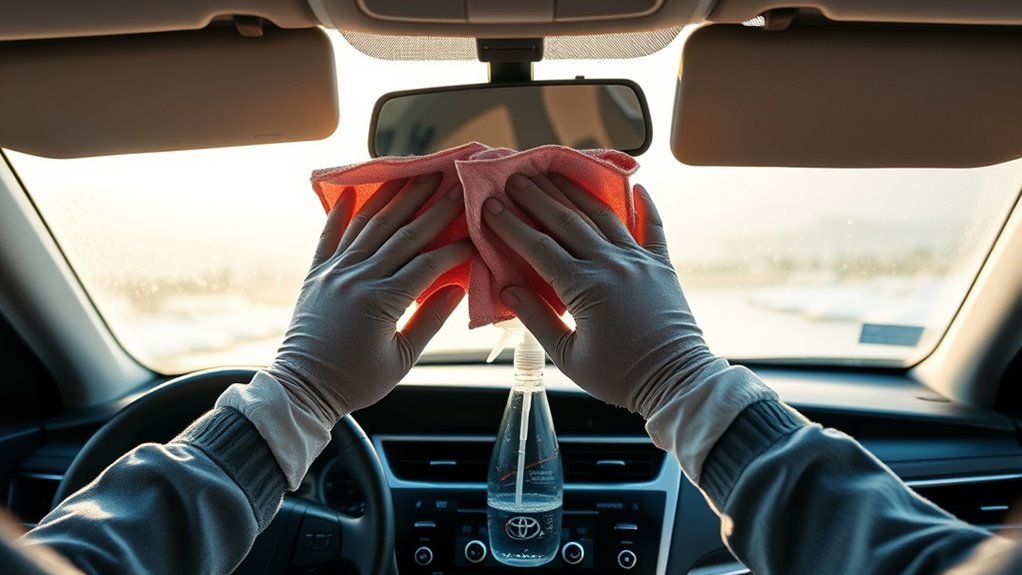
Start by wiping the inside of the windshield with a clean microfiber cloth and a dedicated, oil-free glass cleaner to remove surface film; these cleaners won’t leave residues that cause fogging. You’ll work methodically: spray sparingly, wipe in vertical strokes, then cross-wipe horizontally to catch missed streaks. Address haze causes by cleaning the dashboard, vents, and nearby plastic surfaces—airborne oils settle and recontaminate glass. If oily film resists, mix equal parts white vinegar and water, apply to a fresh microfiber, and cut through residue without harsh solvents. After cleaning, squeegee excess moisture from top to bottom to prevent streaking and restore clear sightlines. Set a cleaning frequency based on use and interior smoke or cooking exposure; heavy use means weekly checks, otherwise monthly. You’ll reclaim control of visibility and safety by following this lean routine, avoiding products with oil, and keeping a squeegee and microfiber on hand for quick, liberating maintenance.
Deep-Clean Your Camry Windshield (Step-by-Step)
If the quick wipe didn’t fully clear the film, move on to a deeper clean that targets stubborn oils and trapped grime.
Start with a dedicated microfiber cloth and an automotive glass cleaner to prevent streaks. Use a small washing glove to work the cleaner across the interior surface, covering edges without transferring oils. Move deliberately: spray, glide the glove, then use a squeegee in a continuous downward motion to push dirt and moisture away. Finish each pass with a dry microfiber cloth to remove residual moisture and restore clarity. Check for fogging and repeat zones that still haze. These cleaning techniques deliver real visibility enhancements and free you from recurring buildup.
| Step | Action | Goal |
|---|---|---|
| 1 | Prep cloth & cleaner | Prevent streaks |
| 2 | Wash with glove | Remove oils |
| 3 | Squeegee down | Avoid streaking |
| 4 | Dry wipe | Guarantee clear view |
Tools and Cleaners to Keep Just for Glass
Keep one set of tools just for glass to prevent oils and grit from other jobs causing haze. Use a dedicated soft glass glove and only lint-free microfiber towels when you’re scrubbing or drying the windshield. Store those items with a separate bucket and squeegee so you never contaminate them with car wash soap or interior cleaners.
Dedicated Glass Gloves
A dedicated set of glass gloves and tools will cut down on streaks and contamination: use microfiber gloves made for glass to lift grit and oils without scratching, store them separately from general rags, and pair them with a reserved bucket and squeegee so cleaning solutions don’t pick up wax or detergent residues. You’ll see glass glove benefits immediately: reduced transfer of skin oils and fewer streaks. Choose lint-free microfiber designed for glass and keep a squeegee solely for windows. Use these cleaning techniques: pre-rinse, apply cleaner, wipe in straight motions, finish with the squeegee and a single gentle buff. Wash gloves and the bucket after use, air-dry, and rotate tools to maintain effectiveness and keep your windshield clarity uncompromised.
Microfiber Towels Only
Choose microfiber towels made only for glass and store them separately from other cloths so oils and residues never touch your Camry’s windshield. Pick short-nap microfibers designed for glass; their microfiber benefits include low lint, superior dust trapping, and reduced scratching risk. Label a set for windshield use and keep them isolated so cross-contamination never reintroduces grease.
Use focused cleaning techniques: dampen a towel with your chosen cleaner, wipe in straight strokes, then follow with a dry towel for a streak-free finish. Wash towels in warm water without fabric softener, air or low-heat dry, and inspect for embedded debris before each use. Replace towels that snag or lose pile. This discipline frees you from recurring haze and keeps visibility uncompromised.
Separate Cleaning Bucket
After designating microfiber towels just for glass, set up a separate cleaning bucket solely for windshield work so residues from waxes, soaps, or polishes never migrate back onto your Camry’s glass. Fill the cleaning bucket with plain water and a dedicated, oil-free glass cleaner diluted per label. Place one microfiber cloth in the bucket for wet wiping and keep a dry glass-only microfiber nearby for polishing. Add a small squeegee to remove excess liquid and finish edges. Work one section at a time to control runoff and avoid cross contamination with interior cleaners or waxes. After each session, rinse and hang-dry the cloths, wipe the squeegee blade, and inspect tools so they never reintroduce oils or debris.
Prep Steps Before You Start Cleaning the Windshield
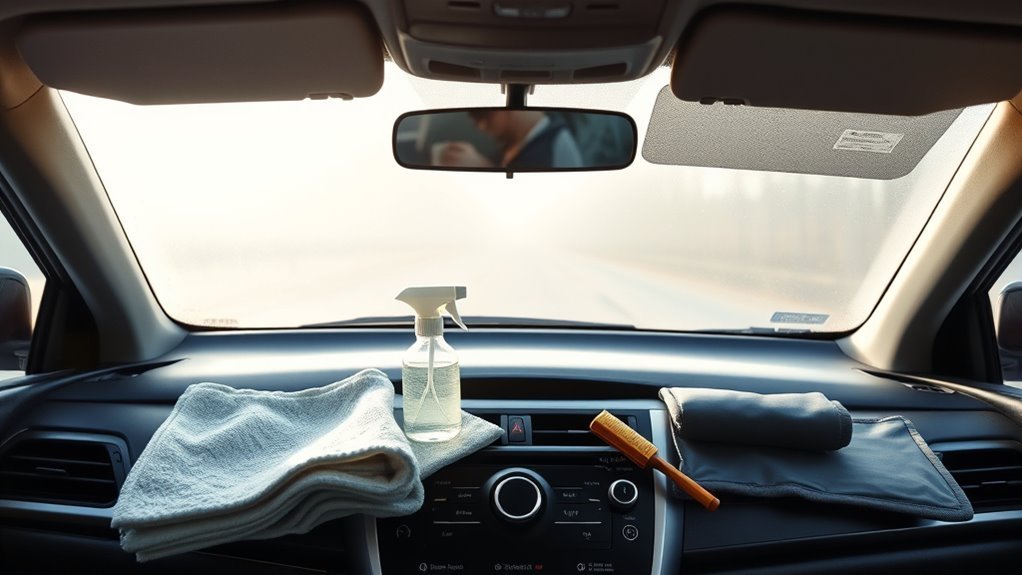
Start by gathering only your dedicated glass tools — a small washing glove, microfiber cloth, squeegee, and a bucket with warm water mixed with your oil-free glass cleaner. Remove any interior airborne contaminants like air fresheners or loose cleaning products that could redeposit residue during cleaning. Park in the shade so the solution stays wet long enough to break down grime without streaking.
Gather Dedicated Glass Tools
Before you clean the windshield, gather a small glass-specific washing glove, a lint-free microfiber cloth, a window squeegee, and a bucket with warm or hot water so you’ll have all the right tools on hand; keep these items separate from your other car cleaning supplies to avoid transferring oils or residues that can worsen haze. Use dedicated tools for glass maintenance to prevent cross-contamination: the glove traps grime without oil transfer, the microfiber lifts film without lint, and the squeegee removes moisture cleanly. Fill the bucket with warm or hot water to boost cleaning agent performance. Inspect tools for debris before use, and reserve a clean cloth for final buffing. This disciplined setup frees you to work efficiently and reclaim a clear view.
Remove Interior Contaminants
Clear the cabin of airborne sources and surface residues so your windshield-cleaning step actually removes haze instead of redistributing it. Start with intent: you’re reclaiming a clear view. Follow these steps for effective haze prevention and interior cleaning.
- Remove hanging air fresheners and loose items that emit particles or vapors.
- Vacuum seats, floor, and crevices thoroughly to eliminate dust that will settle on glass.
- Wipe the dashboard and center console with a clean microfiber to lift oils and product residues.
- Verify all surfaces are fully dry—no trapped moisture that worsens fogging.
- Use a dedicated glass cleaner for the initial wipe-down to avoid introducing new contaminants.
Proceed only when the cabin is dry and residue-free; then tackle the windshield.
Quick Touch-Up Method for Light Haze and Fog

When you notice light haze or fog on your Camry’s interior windshield, grab a glass-specific microfiber cloth and a warm water–glass cleaner mix to remove residue without leaving lint or streaks; wipe in circular motions to lift contaminants, then squeegee downward and finish with a dry microfiber cloth to guarantee a streak-free, dry surface. You’ll address haze causes quickly and practice fog prevention by keeping a routine touch-up kit in the cabin.
| Item | Purpose |
|---|---|
| Glass microfiber | Removes film without lint |
| Warm water + cleaner | Breaks down residues |
| Circular wipe | Lifts contaminants |
| Squeegee down | Clears cleaning solution |
| Dry cloth | Removes moisture, ensures clarity |
Procedure: mist solution lightly, work one panel at a time, use circular motions to loosen grime, follow immediately with downward squeegee strokes, then buff dry. Check visibility from the driver’s seat. Repeat regularly to reclaim clear sightlines and maintain your driving freedom.
Prevent Residues From Cleaners and Air Fresheners
You’ll want to stop new residues before they form: remove hanging air fresheners or relocate them away from the windshield and choose fragrance options that don’t spray oils into the cabin. You’ll also adopt disciplined cleaning techniques to cut residue sources and free yourself from recurring haze. Work methodically, use the right tools, and don’t let oils recontaminate the glass.
- Use a dedicated glass cleaner labeled for automotive interiors; avoid multi-surface sprays that contain oils.
- Replace sponges with a clean microfiber cloth made for glass to prevent transfer of oils and streaks.
- Inspect air fresheners: switch to non-atomizing options (pads or vent clips) placed well away from the windshield.
- Wipe in overlapping horizontal strokes, finishing with vertical passes to catch remaining film.
- Store cleaning cloths dry and separate from oily rags; launder cloths with a mild, oil-free detergent.
These steps reduce residue buildup at the source and keep your windshield clear, restoring control and visibility.
Routine Maintenance Schedule to Stop Haze Buildup
Although it takes just a few minutes, stick to a 2–4 week windshield routine so haze never has a chance to form: schedule routine cleaning, set reminders, and treat it like a small act of freedom from smeared visibility. When you clean, use a dedicated microfiber cloth and a non-oily automotive glass cleaner. Wipe in vertical then horizontal strokes, focusing on corners and the lower edge where haze collects. Inspect and clear AC vents with a brush or compressed air; change the cabin air filter per service intervals to stop contaminants recirculating. Avoid interior products with oils or fragrances—they leave residues that undo your work. Monitor cabin humidity during seasonal shifts; run the defrost briefly after startup to equalize temperatures and reduce moisture-driven haze. Keep a small cleaning kit in the car so you can act fast. With this disciplined, minimal routine cleaning plan, you reclaim clear sightlines and prevent haze from ever limiting your drives.
Troubleshooting: Stubborn Haze, Re-Fogging, Visibility Issues
Keeping up that 2–4 week cleaning rhythm prevents most haze, but if a stubborn film, repeated re-fogging, or visibility problems persist you’ll need a focused troubleshooting approach. Start by identifying haze causes: residues from cleaners, oils from hands or air fresheners, and airborne contaminants. Clean thoroughly with a dedicated glass cleaner and microfiber cloth, using a squeegee downward to avoid streaks.
- Inspect and replace or clean the cabin air filter to cut humidity and particulates.
- Remove interior items (air fresheners, oily objects) that emit residues contributing to film.
- Use A/C or defrost settings to lower cabin humidity and practice fog prevention after cleaning.
- Re-clean with a fresh microfiber and glass cleaner if streaks remain; apply firm, even pressure.
- If re-fogging persists, dry the car interior overnight with windows slightly cracked in a secure area.
You’ll regain clear visibility by systematically eliminating sources, controlling humidity, and using proper tools.
Recommended Products to Buy for Camry Windshield Care
Start with three core tools: a dedicated oil-free glass cleaner (Invisible Glass or Meguiar’s Perfect Clarity), several lint-free microfiber cloths (Chemical Guys or AmazonBasics), and a compact squeegee (Unger Professional). You’ll use the cleaner to dissolve film without oily residue, the cloths to lift contaminants without lint, and the squeegee to strip moisture and prevent streaks.
Add a windshield treatment like Rain‑X to repel water and reduce fogging; apply per product instructions after you’ve removed haze. Keep a dedicated glass cleaning glove for interior work to prevent transfer of skin oils that recreate film. When choosing products prioritize oil‑free formulations and tight‑weave microfibers.
Combine these tools with disciplined cleaning techniques: wipe in overlapping passes, follow with a squeegee stroke, then buff with a dry microfiber. Consider windshield coatings only after confirming glass is spotless. You’ll free your view and stay in control of visibility, not chance.
Frequently Asked Questions
Why Does the Inside of My Windshield Look Cloudy?
Your windshield looks cloudy because dust, oils, and residues cause foggy windows and visibility issues; you should remove contaminants with a dedicated glass cleaner, microfiber, and circular strokes, then ventilate to prevent condensation and restore clear sight.
Conclusion
Keep your Camry’s inside windshield clear by cleaning regularly, using the right glass cleaners, and removing residue sources. For example, a commuter I know stopped morning fog by deep-cleaning the glass, replacing a scented vent clip, and running the AC briefly after wiping—visibility improved immediately and haze didn’t come back. Follow prep steps, use a clay or alcohol-based cleaner for stubborn film, and add light weekly touch-ups to prevent buildup and keep your view safe.