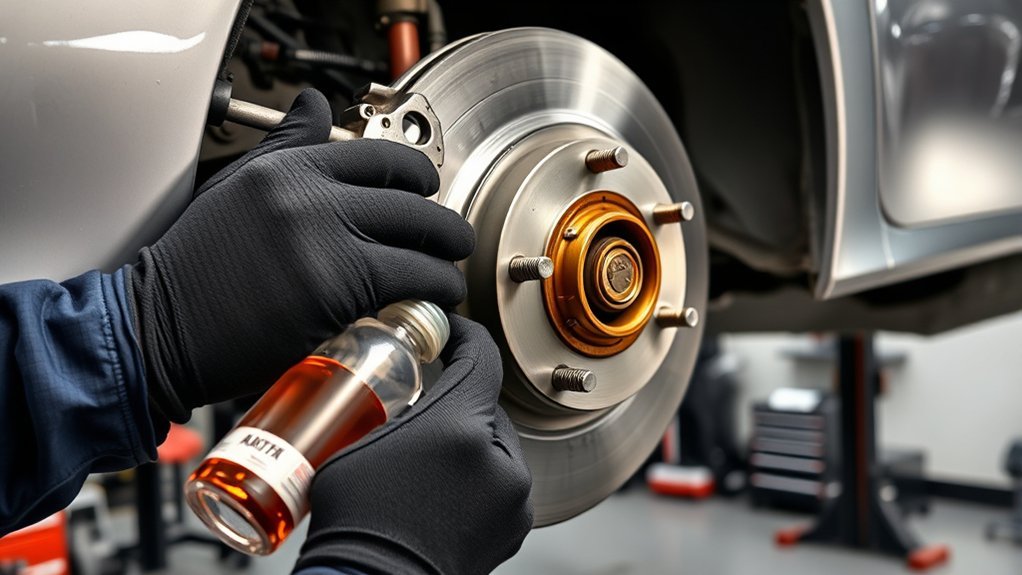
To bleed the brakes on your Toyota Camry, start by gathering an 8 mm wrench, a plastic tube, and fresh brake fluid. Secure the vehicle and remove the wheels for access. Open the bleeder valve on the rear brakes first and pump the brake pedal while keeping the reservoir topped up. Close the valve when fluid runs clear without bubbles. Repeat for the front brakes. If you face any issues with air or pedal feel, further troubleshooting techniques can greatly help.
The Importance of Brake Fluid Maintenance
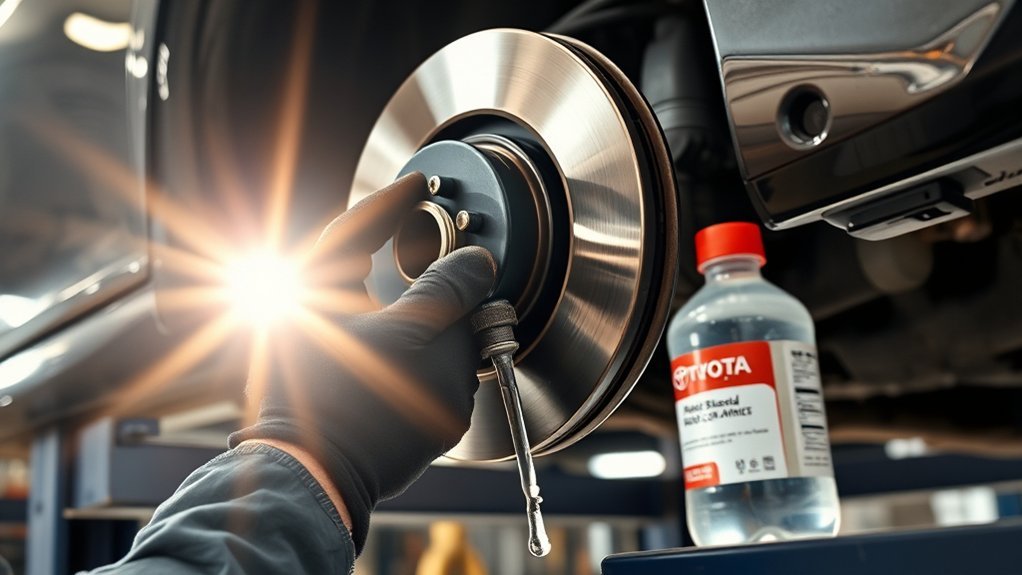
Maintaining brake fluid is essential, as it absorbs moisture over time, which can considerably impair braking efficiency. Regularly replacing brake fluid every 1-2 years is critical; contaminants can compromise the hydraulic system’s performance. As moisture seeps in, the boiling point of brake fluid decreases, risking brake fade during heavy use, especially in high-temperature conditions. This can lead to a lack of responsiveness in your brake pedal, endangering vehicle safety.
Furthermore, old or contaminated brake fluid can cause corrosion in brake components, resulting in costly repairs and potential brake failure. To guarantee peak hydraulic pressure, keep your brake fluid levels in check; this provides a firm and responsive pedal feel. By prioritizing brake fluid maintenance, you’re not just enhancing brake efficiency—you’re also investing in your overall vehicle safety and performance. Don’t underestimate the importance of this simple yet critical task.
Essential Tools for Brake Bleeding
To bleed the brakes on your Toyota Camry effectively, you’ll need a few essential tools. An 8 mm wrench, a plastic tube, and a container for old brake fluid are vital for the job. Don’t forget safety equipment like a jack and jack stands to guarantee you work securely while accessing the brake calipers.
Required Tools Overview
Bleeding the brakes on a Toyota Camry requires a few essential tools to guarantee the process goes smoothly. Here’s what you’ll need to get started:
- 8 mm wrench – This fits the bleeder valve, allowing you to access the brake system components effectively.
- Plastic tube – Directs the old fluid into a jar, preventing spills and mess.
- Brake fluid pump or siphon – Vital for removing old brake fluid types from the reservoir before introducing new fluid.
- Brake cleaner spray – Keeps the area around the bleeder valves clean, preventing contamination during the bleeding process.
With these tools in hand, you’re ready to tackle the task and regain control over your braking system!
Safety Equipment Essentials
Before starting the brake bleeding process on your Toyota Camry, guaranteeing your safety is essential. Equip yourself with vital safety gear. Always wear safety glasses to protect your eyes from brake fluid, which can cause irritation and damage. Use nitrile or rubber gloves to maintain skin safety, as brake fluid is corrosive and harmful. A brake bleeder kit, complete with a wrench, plastic tube, and jar, is key for effective air removal from the brake lines. Additionally, sturdy jack stands are necessary for securely lifting the vehicle while you access brake components. Finally, a torque wrench guarantees that all bolts are reassembled to the manufacturer’s specifications, allowing for precise fluid handling and peak brake performance.
Preparing Your Toyota Camry for Brake Bleeding
Properly preparing your Toyota Camry for brake bleeding involves several essential steps. Ensuring your brake system is ready not only enhances safety but also empowers you to take control of your vehicle’s maintenance. Follow these maintenance tips:
- Turn off the ignition and set the parking brake to prevent any movement.
- Open the hood and remove the brake fluid reservoir filter to access the old fluid.
- Use a pump to empty the old brake fluid from the reservoir before refilling it with new fluid.
- Lift the vehicle securely and remove the wheels for better access to the brake calipers.
Step-by-Step Guide to Bleeding Rear Brakes
To guarantee ideal brake performance on your Toyota Camry, follow these precise steps to bleed the rear brakes effectively. Start by accessing the rear brake caliper bleeder valve after removing the stopping plug. Use an 8 mm wrench to unscrew the bleeder valve, making sure you have a plastic tube and jar ready to catch the expelled fluid. Gently pump the brake pedal while the bleeder valve is open to evacuate air from the system, and keep the reservoir topped up with new brake fluid types to prevent air from entering. Once fluid runs clear without bubbles, close the bleeder valve. Clean the area with brake cleaner for proper caliper maintenance and to prevent contamination. Repeat this process for the opposite rear brake caliper, making sure both sides are bled. This guarantees peak brake performance, giving you the freedom to drive confidently.
How to Properly Bleed Front Brakes
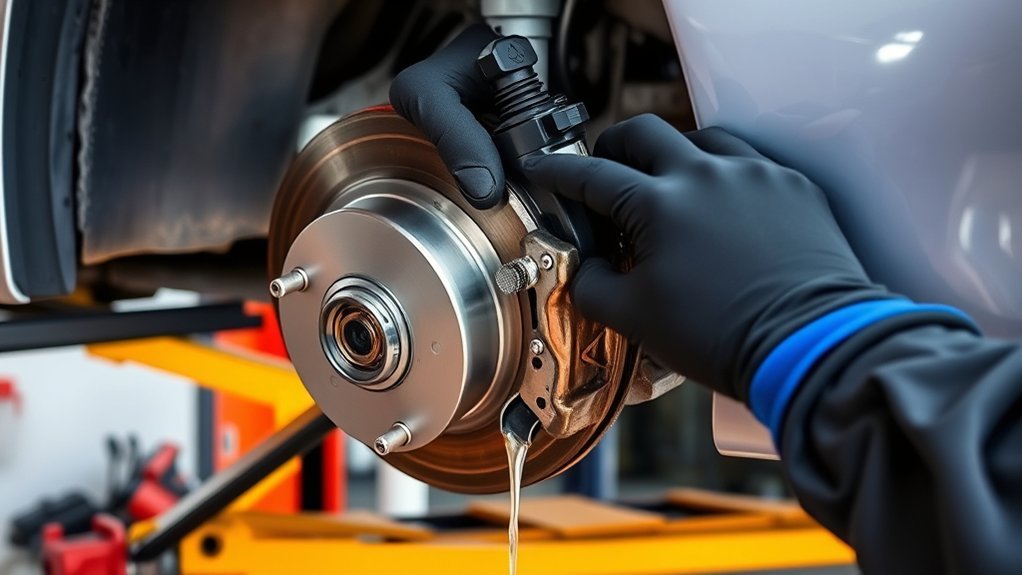
To properly bleed the front brakes on your Toyota Camry, you’ll need specific tools like a wrench, a clear plastic tube, and a jar for the brake fluid. Follow a step-by-step process to guarantee all air is expelled from the system, and be aware of common mistakes that can compromise your brake performance. Getting this right is essential for maintaining safe and effective braking.
Tools Required For Bleeding
Bleeding the front brakes on a Toyota Camry requires a few essential tools to guarantee the process goes smoothly and effectively. Here’s what you’ll need:
- 8 mm wrench – To open the bleeder screws.
- Plastic tube – This connects to the bleeder screw, preventing air re-entry.
- Jar – For collecting old brake fluid, ensuring cleanliness.
- Penetrating oil – Helps free corroded bleeder screws for smooth operation.
With these tools, you’re set to tackle this significant maintenance task. Remember, using fresh brake fluid is essential for peak performance. Following these maintenance tips will not only enhance your braking system but also empower you as a capable car owner. Your safety and driving experience depend on it!
Step-by-Step Process
Before you start bleeding the front brakes of your Toyota Camry, make certain the vehicle is securely lifted and the front wheels are removed for better access to the brake calipers and bleeder valves. Clean the bleeder valves with a wire brush and apply penetrating oil if necessary. Attach a plastic tube to the bleeder valve, submerging the other end in a jar filled with brake fluid. Have an assistant press the brake pedal slowly while you open the bleeder valve; close it once fluid flows without air bubbles. Repeat until the system is free of air. After bleeding both calipers, refill the brake fluid reservoir to the maximum level and check the brake pedal for firmness before reassembling the wheels.
Common Mistakes To Avoid
While bleeding the front brakes of your Toyota Camry, it’s crucial to avoid common mistakes that can compromise the process. Focus on these key points to guarantee success:
- Neglecting Cleanliness: Always clean the bleeder valve before starting to prevent debris from contaminating the brake fluid quality.
- Improper Tube Connection: Confirm the plastic tube is securely attached to the bleeder valve and submerged in a jar to prevent air from re-entering.
- Solo Work: Don’t attempt to bleed brakes alone; have an assistant press the pedal while you manipulate the bleeder valve, enhancing your bleeding techniques.
- Ignoring Fluid Levels: Continuously monitor the brake fluid reservoir to avoid introducing air by letting it drop too low.
Troubleshooting Air Issues in Your Brake System
To guarantee your brake system operates effectively, troubleshooting air issues is essential. If your brake pedal feels spongy after bleeding, it likely means there are trapped air pockets in the ABS hydraulic control unit. You’ll need to perform additional bleeding procedures to resolve this. Always verify the brake fluid reservoir is filled during the process; this prevents air from entering the system. Next, inspect all brake lines and connections for leaks, as even a small one can allow air to infiltrate. A vacuum bleeder can be a valuable tool for removing stubborn air pockets, particularly in hard-to-reach areas. After you’ve completed the bleeding, test the brake pedal feel before driving. It should feel firm, confirming that all air has been successfully eliminated from the system. Addressing these air issues promptly will enhance your braking performance and safety on the road.
Final Checks After Bleeding Your Brakes
Once you’ve bled your brakes, it’s crucial to perform a series of final checks to confirm peak functionality. These steps will guarantee your brake performance is ideal and that your vehicle remains safe on the road.
- Check the Brake Fluid Reservoir: Verify it’s filled to the maximum level to maintain proper hydraulic pressure.
- Evaluate Brake Pedal Feel: The pedal should be firm and responsive, indicating all air is evacuated from the system.
- Inspect for Leaks: Look for any brake fluid leaks around calipers and connections; leaks can severely compromise braking performance.
- Test Drive: Drive at low speeds to confirm proper brake function and listen for any unusual sounds or sensations.
If your brake pedal feels soft or spongy, you might have trapped air in the ABS unit, requiring professional assistance. Prioritize these checks for a safe driving experience!
Tips for Optimal Brake Performance
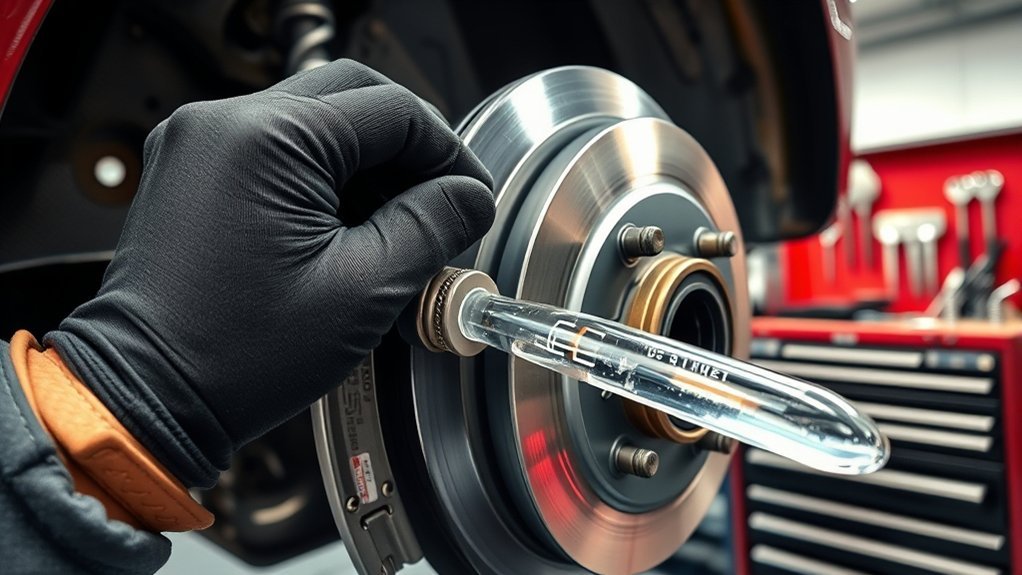
Achieving ideal brake performance requires attention to detail in both maintenance and operation. Start by ensuring the brake fluid is fresh and meets your manufacturer’s specifications. This not only enhances brake performance but also prevents moisture contamination, which can lead to corrosion. Regularly check the brake fluid level in the reservoir—keeping it at the maximum level guarantees consistent brake response.
When bleeding the brakes, follow the correct order: driver’s side rear, passenger side rear, driver’s side front, and passenger side front. This method effectively removes air from the brake lines. Afterward, confirm that your brake pedal feels firm and responsive; a spongy pedal indicates air may still be trapped. Finally, clean around the bleeder valves and apply penetrating oil if needed to prevent rust, ensuring smooth operation. Prioritizing fluid quality and meticulous maintenance will empower your braking system’s performance.
Common Mistakes to Avoid When Bleeding Brakes
When bleeding brakes, overlooking common mistakes can greatly hinder your results. To guarantee a successful process, keep these vital points in mind:
- Skipping the Proper Bleeding Order: Always bleed in the correct sequence—driver’s side rear, passenger side rear, driver’s side front, passenger side front—to prevent air traps and a spongy pedal.
- Not Using the Right Tools: Don’t forget an 8 mm wrench and a clear plastic tube. These tools make the process cleaner and help reveal air in the system.
- Neglecting to Clean the Bleeder Valve: Clean the valve with a wire brush and apply penetrating oil. This avoids introducing dirt and guarantees smooth operation.
- Failing to Monitor Brake Fluid Levels: Keep an eye on the brake fluid reservoir. Running it dry can reintroduce air into the system, defeating your efforts.
Pay attention to these details for the best brake performance and safety.
Frequently Asked Questions
How Often Should I Bleed My Brakes?
You should bleed your brakes every two years or when you notice spongy pedals. Regular brake maintenance helps guarantee your brake system’s longevity and performance, providing you with a safer, more reliable driving experience.
Can I Use Any Brake Fluid Type?
You can’t just grab any brake fluid type; it’s essential for safety! Stick to manufacturer recommendations for ideal brake performance. Regular brake maintenance tips guarantee your vehicle stops like a dream, keeping you safe on the road.
What if I Can’t Find a Helper?
If you can’t find a helper, use single person methods like the pump-and-hold technique or a vacuum bleeder. These brake bleeding techniques guarantee you effectively remove air, maintaining your braking system’s performance and safety.
Is It Necessary to Replace Brake Fluid?
Like a garden needs fresh soil, your brake system requires quality brake fluid. Replacing it guarantees peak performance and longevity. Regular brake fluid maintenance prevents moisture buildup, which can compromise your brake system’s effectiveness.
What Signs Indicate Air in the Brake Lines?
If you notice spongy brakes, reduced brake performance, or hear air bubbles when you press the pedal, it’s likely that air’s trapped in the brake lines. Address this promptly to guarantee safe driving.
Conclusion
To sum up, bleeding your Toyota Camry’s brakes isn’t just a task; it’s a rite of automotive passage! With your newfound expertise, you’ll transform your car into a braking powerhouse, capable of stopping on a dime—like a superhero in a high-speed chase! Remember, regular maintenance keeps your brakes whispering sweet nothings instead of screaming for help. So gear up, follow these steps, and let your brakes shine brighter than a thousand suns! Your safety’s worth it!