If your Toyota Camry clicks and won’t start, start with the 12-volt battery, terminal tightness, cable condition, and ground connections. Rapid repeated clicking usually means the starting system does not have enough usable voltage or current. One solid click with bright dash lights points more toward a starter, relay, Park/Neutral switch, or wiring fault on a conventional gas Camry. For U.S.-market 2025 and 2026 Camrys, which are hybrid-only, focus on the 12-volt auxiliary battery, key and brake-pedal recognition, fuses, warning messages, and Toyota’s hybrid start procedure rather than assuming the car has a conventional starter or alternator.
Last updated: August 31, 2026 · Written by: Daxon Steele · Technical review: [VERIFY: add the real qualified reviewer and relevant credentials]
Quick Answer
Rapid repeated clicks usually mean low 12-volt power or a bad battery connection. One solid click on a conventional gas Camry points more toward the starter or its control circuit. On U.S.-market 2025 and 2026 Camrys, which are hybrid-only, focus instead on the 12-volt auxiliary battery, key and brake recognition, fuses, warning messages, and Toyota’s hybrid start procedure. A successful jump-start is useful evidence of a low-power problem, but it does not prove the battery alone is bad.
Key Takeaways
- Rapid clicking usually means low available electrical power from the battery, terminals, cables, or ground connection.
- One solid click with bright lights can point to a starter, starter relay, neutral safety switch, or wiring fault on a conventional gas Camry.
- Below about 12.4 volts at rest is a screening sign that the battery needs charging and testing; chemistry, temperature, and recent charging affect the reading.
- U.S.-market 2025 and 2026 Camrys are hybrid-only, so use Toyota’s designated 12-volt jump-start points and avoid guessing at conventional starter or alternator repairs.
At a Glance
| Time Required | 10–20 minutes for visual and voltage checks; longer for professional diagnosis |
| Difficulty | Beginner for battery checks; intermediate for starter voltage testing |
| Tools Needed | Safety glasses, gloves, flashlight, multimeter, battery brush, baking soda/water, jumper cables or jump pack |
| Model-Year Split | Conventional gas Camrys may use starter/alternator diagnosis; U.S.-market 2025–2026 Camrys are hybrid-only and require hybrid-specific 12-volt diagnosis |
| Cost | No-cost visual checks; tools, testing, batteries, starters, and other repairs vary by model year and location |
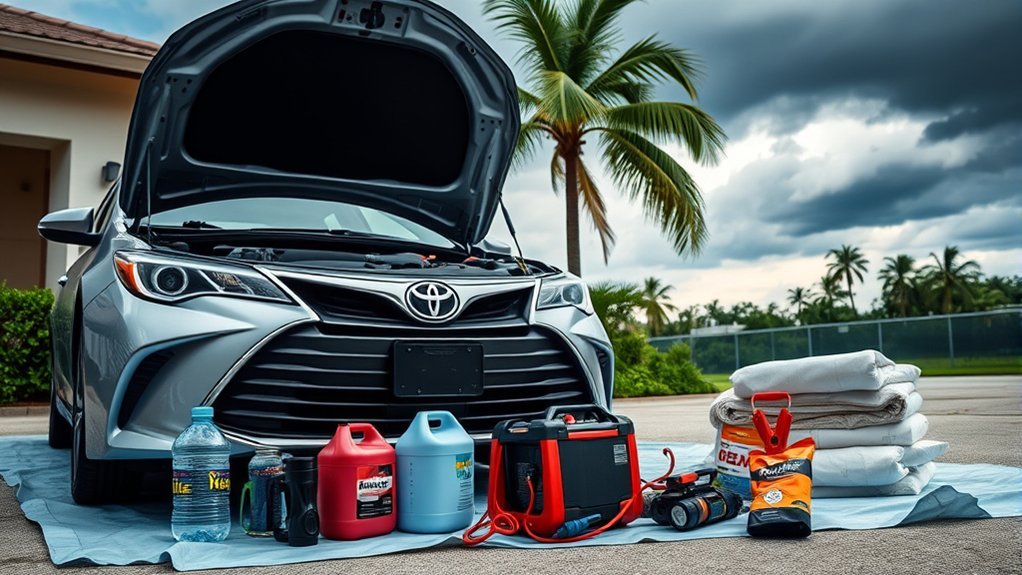
Warning: Do not jump-start a battery that is cracked, swollen, leaking, frozen, smoking, or giving off a strong sulfur smell. Put the Camry in Park, set the parking brake, turn accessories off, and wear eye protection and gloves before working near the battery. On hybrid Camrys, use the jump-start points and procedure in the owner’s manual.
How Do You Tell Whether the Battery, Starter, or Something Else Is at Fault?
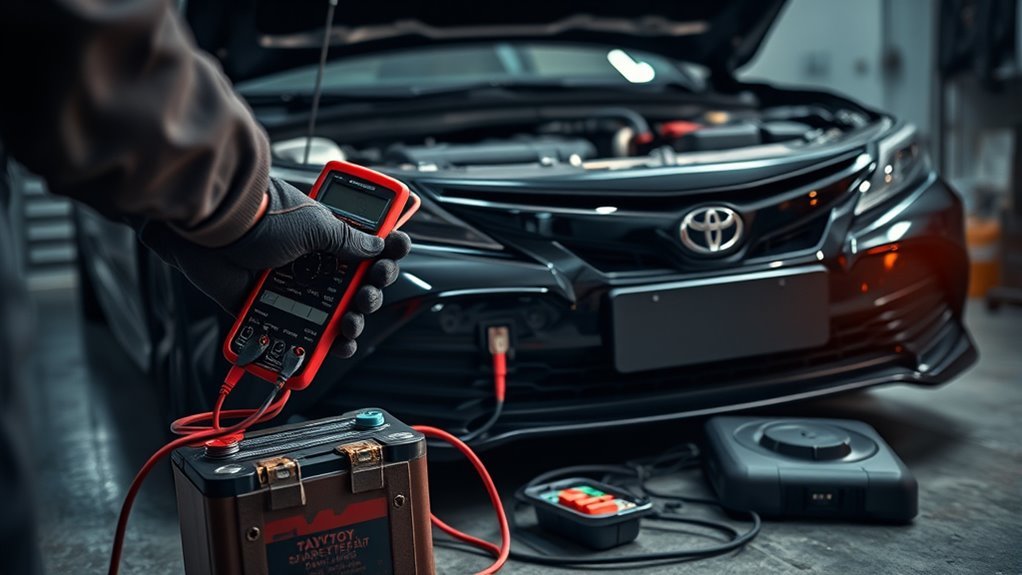
Listen to the sound first. The pattern tells you where to start and can save you from replacing the wrong part. The starter-specific rows below apply to conventional gas Camrys; hybrid models use a different starting and 12-volt charging architecture.
| What you hear or see | Most likely cause | What to check first |
|---|---|---|
| Rapid repeated clicks | Weak battery, loose terminals, corrosion, poor ground, or voltage drop | Battery voltage, clamps, cable ends, ground strap, jump-start result |
| One solid click | Starter solenoid, starter motor, relay, wiring, or Park/Neutral switch on a conventional gas Camry | Starter voltage, relay/fuse, shift position, starter ground |
| No click and no dash lights | Dead 12-volt battery, disconnected cable, blown main fuse, or severe connection fault | Battery posts, main fuse, cable tightness, 12-volt power |
| No click but dash lights work | On a conventional Camry: brake switch, starter relay, ignition switch, Park/Neutral switch, immobilizer, or wiring. On a hybrid: key recognition, brake switch, fuse, immobilizer, 12-volt power, or hybrid-control fault. | Try the spare key/fob, press the brake firmly, check warning messages and fuses; on a conventional model, also try Neutral |
| Grinding during a start attempt on a conventional gas Camry | Starter gear, flywheel/flexplate teeth, or starter engagement problem | Stop repeated attempts and have the starter/flywheel inspected |
Note: A successful jump-start strongly points to low available 12-volt power or poor battery connections, but it does not prove the battery alone is bad. Have the battery load-tested and inspect the cables before buying parts.
How Do You Check the Camry Battery and Terminals?
Start with the 12-volt battery because it is the fastest no-start item to verify. A conventional Camry can click even when the battery still shows some voltage because the starter needs high current, not just a small surface charge. A Camry Hybrid also depends on adequate 12-volt power to initialize its control systems and reach Ready mode.
Quick Visual Inspection
Before you grab a multimeter, look closely at the battery, terminals, cables, and ground connection. Many “bad starter” symptoms come from a clamp that is loose enough to pass small accessory power but not enough current to crank a conventional engine.
| Item inspected | What to look for | What it means |
|---|---|---|
| Battery terminals | White, blue, or green corrosion; loose clamp; cracked terminal | Current may be blocked even if lights turn on |
| Battery cables | Fraying, swelling, stiffness, overheated insulation | Cable resistance can cause clicking and voltage drop |
| Battery case | Swelling, cracks, leaks, wetness, sulfur smell | Do not jump-start; replace or get professional help |
| Ground strap | Loose, rusty, broken, or oily engine/body ground | Bad grounds mimic weak battery or starter failure |
| Age label | Battery is 3–5 years old or older | Battery is in a common replacement window, especially in severe heat or cold |
AAA says automotive batteries commonly last about three to five years, with temperature, vibration, driving habits, and charging patterns affecting actual life. Age alone does not prove failure, so test the battery before replacing it.
Jump and Voltage Tests
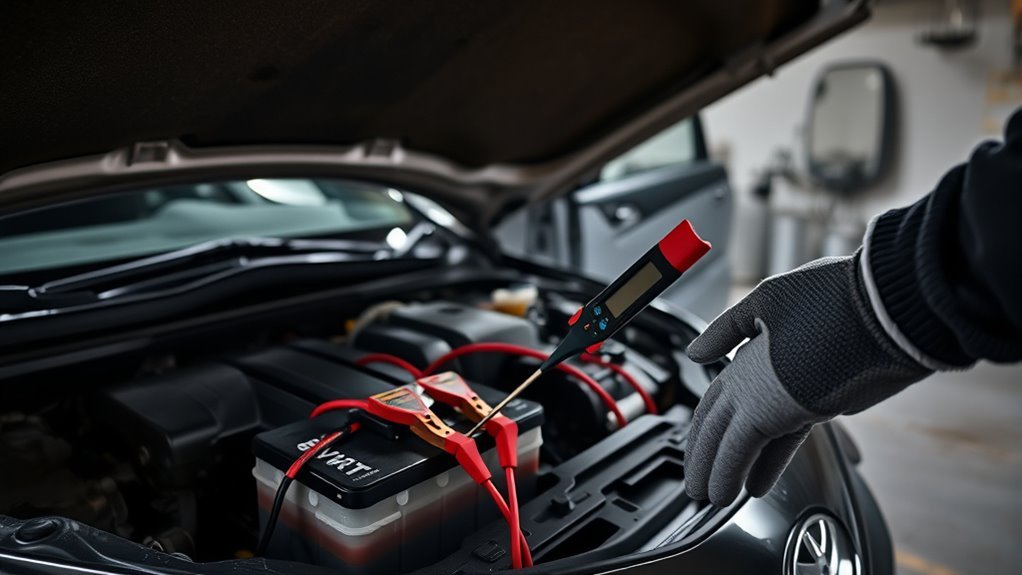
Use a digital multimeter at the battery posts, not just the cable clamps. After the car has been off long enough for surface charge to settle, a fully charged conventional lead-acid 12-volt battery often reads around 12.6 volts at moderate temperature. Battery chemistry, temperature, and recent charging can change the reading. Below about 12.4 volts is a reason to charge and test the battery, not proof by itself that the battery has failed.
- Measure at rest: With the car off, place the red probe on the positive battery post and the black probe on the negative post.
- Watch the dash and lights: Very dim or disappearing dash lights usually point to low power or a bad connection.
- Try a safe jump-start: Follow the owner’s manual. For conventional 12-volt systems, connect positive to positive first, then connect the final negative clamp to a clean chassis ground away from the discharged battery.
- Retest after it starts: On a conventional gas Camry, compare charging-system voltage with the specification for the exact model year. On a hybrid Camry, the DC-DC converter manages the 12-volt system when the vehicle is in Ready mode, so use Toyota service information if warning lights remain.
What Does the Jump-Start Result Mean?
| Result | Most useful next step |
|---|---|
| The engine starts or the hybrid enters Ready mode | Low 12-volt charge or poor connections are likely. Load-test the battery and inspect the terminals and grounds before assuming the problem is solved. |
| It starts, but a battery, charging, or hybrid warning remains | Test the conventional charging system or hybrid DC-DC system and scan stored diagnostic codes. |
| It still clicks with a known-good boost and clean, tight connections | Check the starter-control circuit on a conventional gas Camry. On a 2025 or 2026 hybrid, move to Toyota-approved 12-volt and hybrid-control diagnosis. |
Why Does It Start After a Jump but Die Again Later?
If the Camry starts after a jump but the 12-volt battery goes flat again, do not replace the alternator or battery by guesswork. First fully charge and load-test the battery, then inspect the terminals and grounds and test the charging path. If the battery and charging system pass, investigate a key-off electrical drain after the vehicle’s modules have gone to sleep using the correct model-year procedure. For that deeper branch, see the Camry battery-drain troubleshooting guide.
Pro Tip: If the Camry starts with a jump, drive only if the vehicle is operating normally and no stop-driving warning is active, then get the 12-volt battery tested under load as soon as practical. A weak battery can restart once and still leave you stranded again.
How Do You Clean Corroded Battery Terminals Safely?
If you see white, blue, or green powder on the posts or clamps, clean the terminals before condemning the battery or starter. Corrosion can block enough current to cause clicking even when the battery itself is not completely dead.
Before disconnecting a battery: A 12-volt battery disconnect can reset stored settings or require model-specific initialization. On a Camry Hybrid, stay completely away from orange high-voltage wiring, traction-battery components, the inverter, and the high-voltage service plug. If the correct battery procedure for your model year is unclear, use the owner’s manual or leave the work to a qualified shop.
- Turn the ignition off, remove the key when applicable, and keep the vehicle in Park with the parking brake set.
- Wear safety glasses and gloves.
- Disconnect the negative cable first, then the positive cable.
- Mix baking soda with a small amount of water to make a paste or mild solution.
- Brush the corrosion from the posts and cable ends with a battery brush or old toothbrush.
- Rinse lightly with clean water if needed, keeping liquid away from battery vents, then dry everything fully.
- Reconnect positive first, then negative. Tighten the clamps so they do not rotate by hand.
- Apply battery terminal protectant if available.
Interstate Batteries recommends baking soda and water for cleaning battery terminal corrosion, along with careful brushing and drying before the terminals are put back in service. If the battery needs removal or replacement, use the model-specific precautions in the Camry 12-volt battery replacement guide.
How Is the Starter Tested on Conventional Gas Camrys?
If the battery tests good, the terminals are clean, and the Camry still clicks, move to the starter-control circuit. This section applies to non-hybrid Camrys with a conventional starter motor. For U.S.-market 2025 and 2026 Camrys, skip replacement guesses and focus on the auxiliary 12-volt system, fuses, relays, hybrid warnings, and Toyota-approved diagnosis.
Quick Starter Voltage Check
A starter needs both voltage and current, so a static voltage reading alone is not enough. A technician should perform loaded voltage-drop tests on the positive cable, ground path, and starter-control circuit while the start command is active. If adequate power and control voltage reach the starter but it only clicks, the starter or solenoid may be failing. If control voltage is missing, the fault may be upstream at a relay, fuse, ignition switch, Park/Neutral switch, brake switch, immobilizer, or wiring connection.
| Test result | Likely direction |
|---|---|
| Voltage drops sharply during the start attempt or falls below the model-year service specification | Weak battery, poor cable connection, bad ground, or excessive starter draw |
| Good battery voltage reaches starter but no crank | Starter motor or solenoid likely needs testing/replacement |
| No control voltage at starter when key is turned | Relay, fuse, ignition switch, brake switch, neutral safety switch, immobilizer, or wiring fault |
| Starter works after moving shifter to Neutral | Park/Neutral switch or shifter alignment issue may be involved |
Is Tapping the Starter a Safe Test?
On some older conventional gas Camrys, a technician may use a light tap on the starter housing as a temporary diagnostic clue for worn internal contacts. Do not treat this as a repair, strike the starter hard, or attempt it where access requires crawling under an unsupported vehicle. If the engine cranks only after the starter is tapped, arrange proper testing and replacement.
Note: Do not hit the starter hard, do not strike wires or connectors, and do not crawl under a vehicle supported only by a jack. If access is poor, leave this test to a shop.
How Is a 2025 or 2026 Camry Hybrid Different?
Toyota made the U.S.-market 2025 Camry exclusively hybrid, and the 2026 lineup remains hybrid-only. That matters because a clicking or no-start complaint on these Camrys often involves the 12-volt auxiliary battery and control electronics, not a conventional starter motor or alternator. Toyota’s owner information provides model-specific procedures for diagnosing a hybrid system that will not start and for starting the hybrid system when the auxiliary battery is discharged.
Hybrid safety: Limit DIY diagnosis to visible 12-volt checks and owner-manual procedures. Do not touch, probe, disconnect, open, or attempt to service orange high-voltage wiring, the inverter, traction-battery components, or the high-voltage service plug.
For a 2025 or 2026 Camry Hybrid, check these items before assuming a major hybrid-system failure:
- 12-volt battery state of charge and visible terminal condition.
- Designated jump-start terminal and ground point in the Toyota owner’s manual.
- Key fob battery and whether the car recognizes the electronic key.
- Brake pedal switch operation when pressing Start.
- Fuel level if the hybrid system will not start even though 12-volt power appears normal.
- Immobilizer or key-related warning messages.
- Dashboard warning messages such as hybrid-system or 12-volt battery warnings.
- Fuses, relays, stored diagnostic trouble codes, and open recalls or service campaigns tied to the vehicle identification number if the problem returns.
Review Toyota’s official 2025 Camry Hybrid “If the hybrid system will not start” guidance. Use Toyota’s procedure for the 2025 Camry Hybrid when the 12-volt battery is discharged, and review Toyota’s 12-volt battery precautions before charging or replacing the battery. Owners of other model years should open the manual for their exact Camry rather than assuming terminal locations and procedures are identical.
What Should You Try First?
If your Camry will not crank, will not enter Ready mode, or only clicks, use this order so you do not skip the cheap fixes:
- Confirm the basics: Put the car in Park, press the brake firmly, turn off accessories, and try the spare key or a fresh key-fob battery if the dash acts odd. On a hybrid that will not start, also confirm there is fuel.
- Inspect the battery: Do not jump a cracked, swollen, leaking, or frozen battery.
- Clean and tighten terminals: Loose or corroded clamps are common causes of clicking.
- Measure voltage: Below about 12.4 volts at rest means the battery is low or partly discharged and should be charged and tested.
- Try a safe jump-start: Follow the Toyota owner’s manual for your exact model. For general cable-order guidance, see the Camry jump-start guide and AAA’s jump-start safety guidance.
- If it starts: Load-test the battery and test the conventional charging system or hybrid DC-DC system. Do not assume the problem is gone.
- If it still clicks: On a conventional gas Camry, check ground straps, starter relay/fuse, and starter voltage. On a hybrid, continue with Toyota-approved 12-volt and hybrid-control diagnosis.
- If it grinds, smokes, or shows a serious hybrid warning: Stop trying to start it and call a qualified shop or tow service.
[Products Worth Considering]

This automotive test light combines a bright LED voltage display with quick polarity indication for fast, accurate circuit checks in a wide range of vehicle systems. It helps diagnose battery, charging, lighting, and fuse issues with a sharp stainless probe, long spring wire, and easy-to-use alligator clip for efficient troubleshooting.
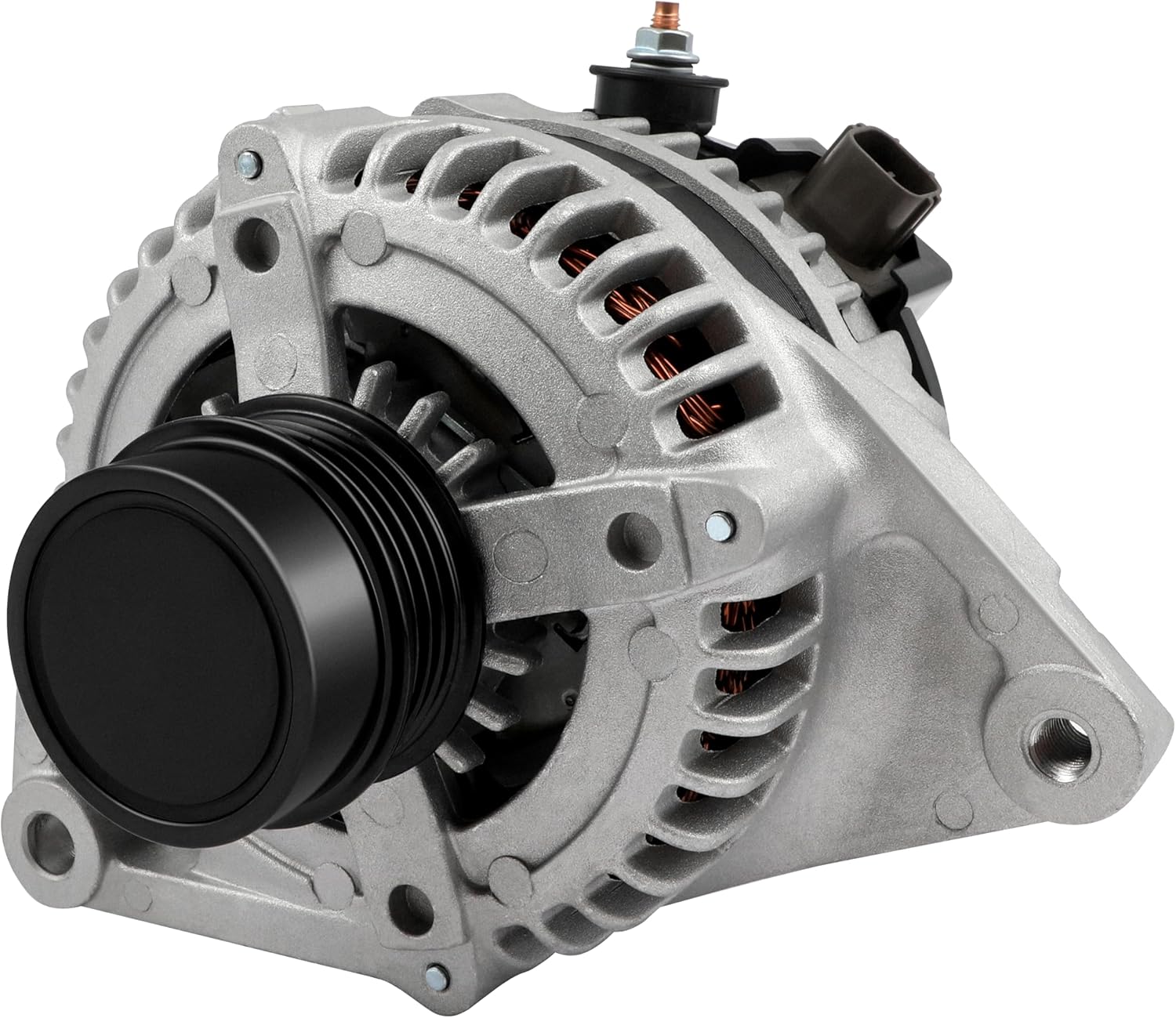
This high output alternator is designed to fit select Toyota, Scion, and RAV4 2.5L applications, delivering reliable charging performance for everyday driving. Built with a 12-volt, 100-amp design and precision-engineered components, it helps support battery recharge, stable electrical output, and consistent operation when your vehicle shows signs of charging issues.

This battery terminal cleaning and repair kit helps restore worn or damaged top-post battery connections for cars, RVs, boats, and other vehicles. It includes lead shims for improving fit, stainless steel brushes for removing corrosion and debris, and fiber washers to help reduce future buildup and maintain a reliable electrical connection.
When Should You Replace the Battery, Starter, or Alternator?
Replace parts only after testing. A weak battery, corroded cable, and failing starter can sound similar from the driver’s seat, and replacing the wrong part is expensive. Starter and alternator replacement below applies to conventional gas Camrys, not the hybrid-only U.S. 2025–2026 lineup.
| Part | Replace when | Typical cost guidance |
|---|---|---|
| 12-volt battery | Fails a load test, will not hold charge, is damaged, or is 3–5+ years old with no-start symptoms | DIY battery pricing varies by group size and type; installed pricing is higher, especially for applications requiring model-specific battery types or procedures |
| Starter | Conventional gas Camry has good battery power and control voltage at the starter but still clicks or will not crank | RepairPal’s August 7, 2026 national Camry estimate is $436–$632, excluding taxes, fees, location differences, and related repairs; model-year estimates vary |
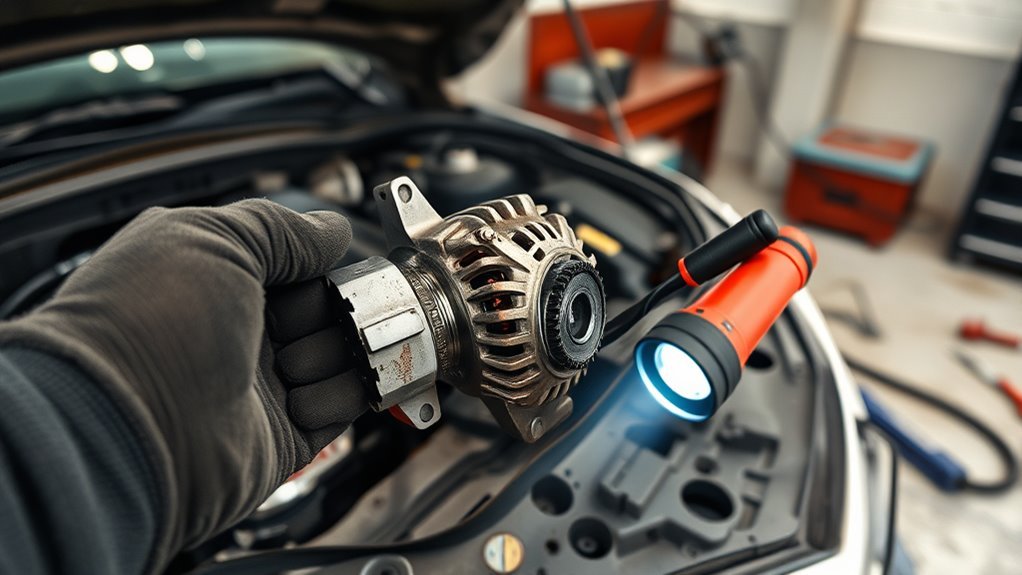
| Alternator | On a non-hybrid Camry, the battery warning light stays on, charging voltage is outside the model-year specification, a confirmed-good battery repeatedly discharges, or the charging system fails testing. See the Camry alternator testing guide for the deeper diagnosis. | RepairPal’s August 7, 2026 national Camry estimate is $561–$866, excluding taxes, fees, location differences, and related repairs; model-year estimates vary |
| Cables/grounds/relay | Voltage drop, heat damage, corrosion under insulation, loose engine ground, or missing control voltage at the starter on a conventional model | Often cheaper than a starter or alternator; diagnosis time may be the main cost |
The smartest repair is the one proven by testing: battery load test first, cable and ground inspection second, then model-appropriate starter, charging-system, or hybrid diagnosis.
[Products Worth Considering]

This 12V bus bar set provides a reliable and organized way to distribute power for marine, automotive, and solar wiring systems. Built with tinned copper conductors, insulated ABS bases, and multiple terminal connections, it helps simplify installation while improving safety and reducing the risk of short circuits. The included covers, lugs, and terminals make it a practical solution for clean, durable battery wiring.
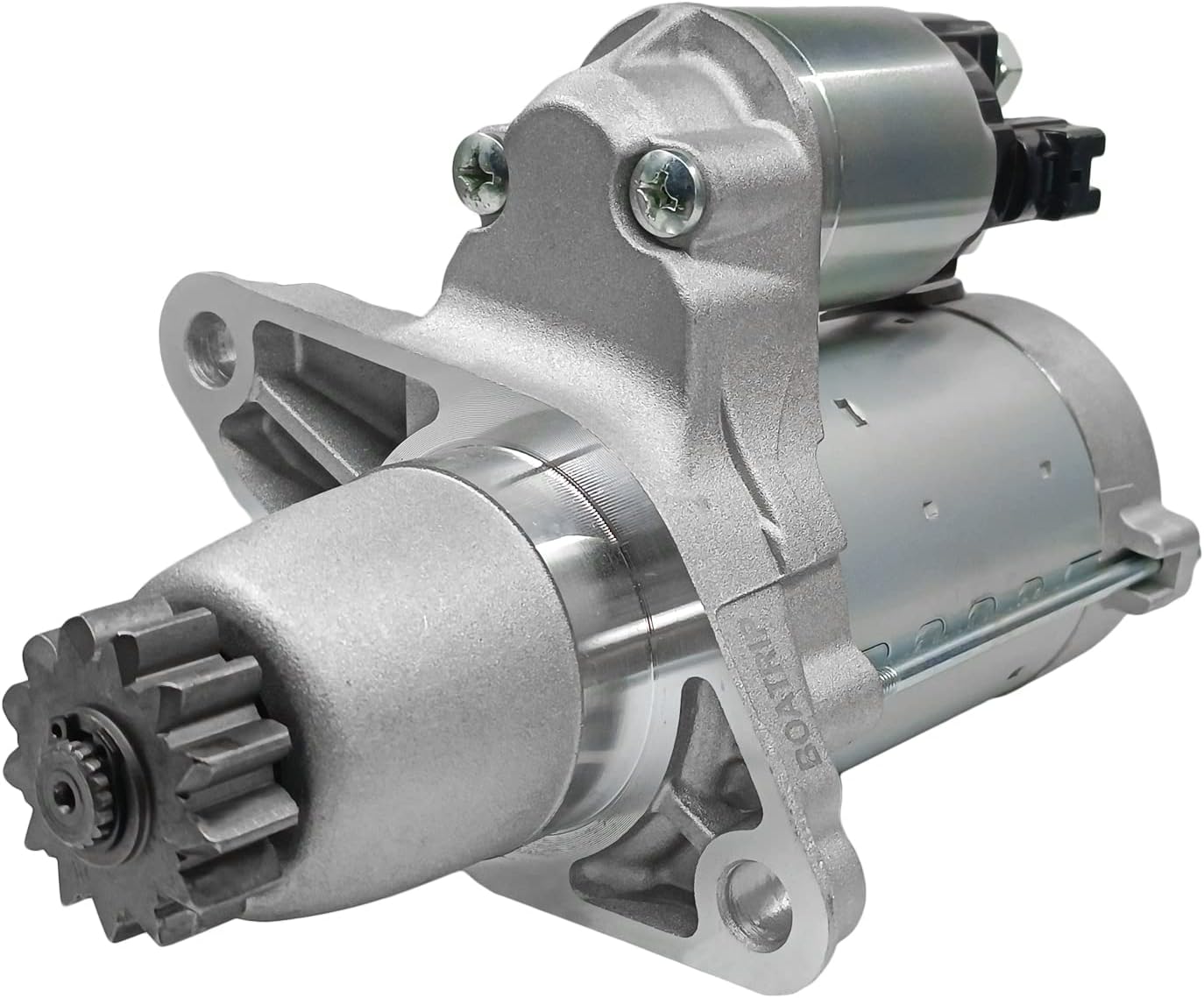
This replacement starter motor is engineered for a broad range of Toyota, Lexus, Scion, and Pontiac vehicles, making it a versatile solution for common no-start issues. Built with premium components to meet or exceed OEM specifications, it is designed for accurate fitment, reliable installation, and dependable starting performance. Backed by a two-year warranty and supported by long-term manufacturing expertise, it offers confidence for repair and replacement projects.

This battery cable crimper kit is built for creating secure, low-resistance connections on automotive, marine, solar, and DIY wiring projects. It includes multiple die sizes for a wide range of cable gauges, a rotating head for quick size changes, and durable carbon steel construction for dependable performance. The kit also comes with copper lugs, heat shrink tubing, and a cable cutter for convenient all-in-one wiring work.
What Are the Lowest-Cost Next Steps?
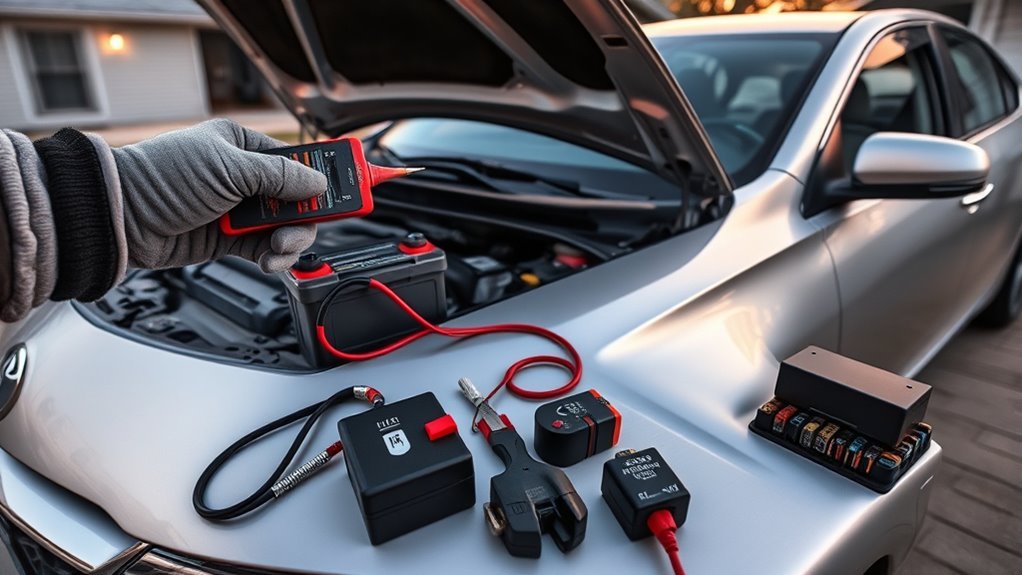
Start with the no-cost and low-cost checks: clean the terminals, tighten clamps, test the 12-volt battery, and inspect the cable ends. If the battery is within its warranty period, take the receipt and battery test result back to the seller before buying a replacement.
If the Camry starts after cleaning or a jump, have the battery load-tested and the correct charging system checked. Some parts retailers offer 12-volt battery testing, but call first to confirm availability. A qualified shop is the better choice when the fault is intermittent, warning messages remain, or the vehicle is a newer hybrid.
If clicking continues after a confirmed-good battery, ask the shop for a written diagnosis before approving parts. A useful estimate should state whether the failed item is the battery, cable, ground, starter, relay, alternator, or hybrid 12-volt system. Ask whether the failed part can be returned to you when practical; warranty or core-return requirements may require the shop or parts supplier to retain it.
[Products Worth Considering]

This automotive circuit tester checks low-voltage DC systems from 3-65V, making it useful for diagnosing headlights, taillights, fuses, sockets, and other vehicle wiring issues. The digital backlit display provides clear voltage readings with fine accuracy, while the bidirectional polarity indicator helps you test from either ground or positive. Built with a durable probe, insulated tip, and extra-long spring wire, it is designed for dependable everyday use in automotive and household electrical work.

This Yuirote universal car motor diagnostic tool helps drivers quickly detect engine fault codes and identify system issues for routine inspections and maintenance. It also supports electronic parking brake reset and emergency release functions, making it useful for handling EPB-related problems without a repair shop visit. Its compact, ergonomic design and broad vehicle compatibility make it a practical choice for car owners and DIY repair enthusiasts.
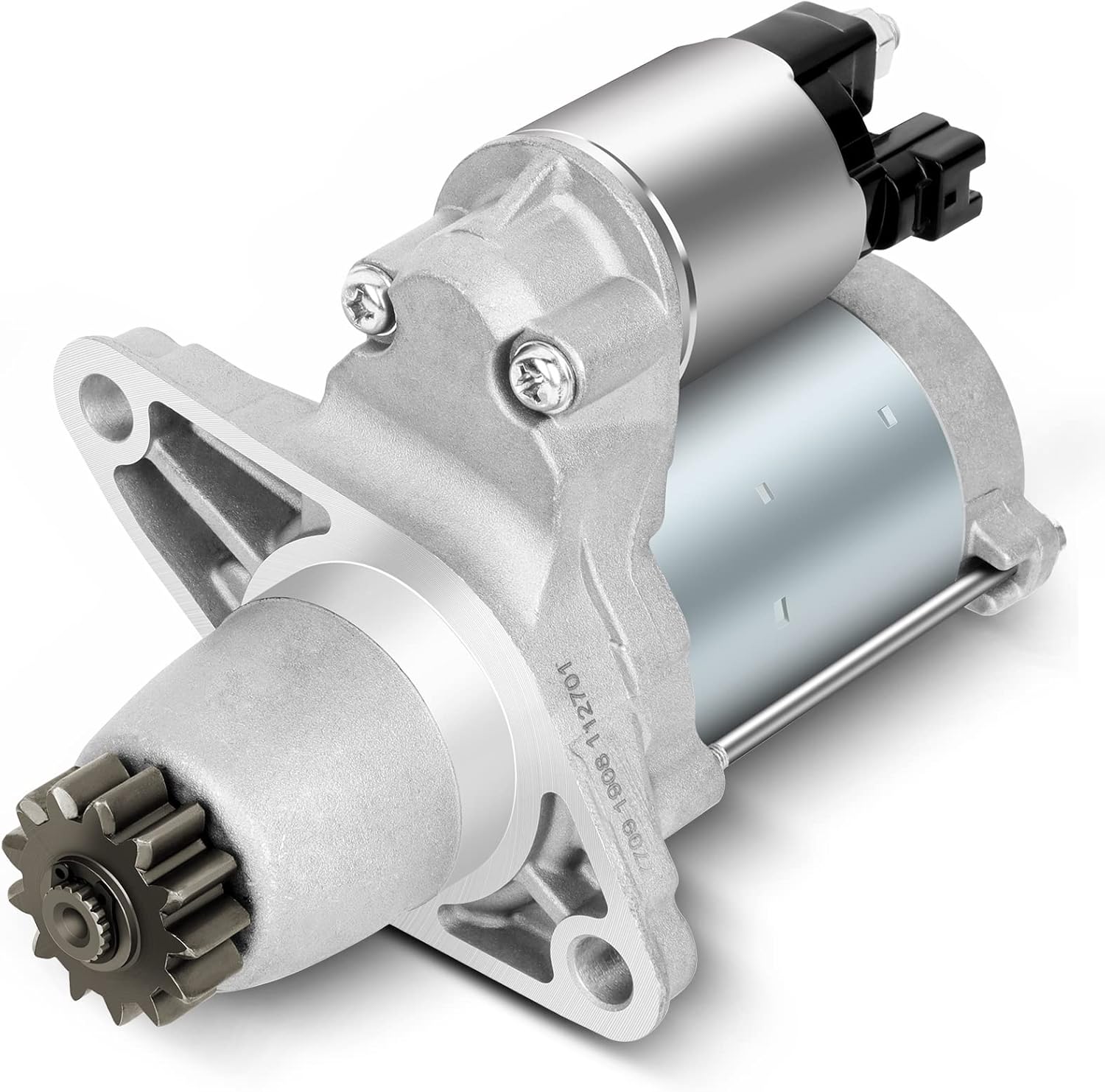
This replacement starter motor is designed for a wide range of Toyota, Lexus, and Scion vehicles, helping restore reliable engine cranking and dependable daily starting performance. It features a 12V PMGR design with a 10-tooth pinion, clockwise rotation, and durable internal components engineered for efficient flywheel engagement, low noise, and consistent operation. Built to match multiple OEM part numbers and vehicle applications, it offers a practical solution for replacing a failing starter.
When Should You Stop DIY and Call a Shop?
Stop testing and get professional help if any of these happen:
- You smell burning plastic, see smoke, or find melted wiring.
- The battery case is swollen, cracked, leaking, or hot.
- A conventional gas Camry grinds loudly during a start attempt.
- The car starts only after repeated tapping or cable movement.
- The battery or charging warning stays on while driving or after a hybrid enters Ready mode.
- A hybrid warning message appears or the car will not enter Ready mode after a safe jump-start.
- You are not sure where the correct hybrid jump-start terminal or ground point is located.
- Diagnosis would require touching orange high-voltage wiring, the inverter, traction battery, or service plug.
Frequently Asked Questions
Why is my Toyota Camry clicking and not starting?
The most common reasons are a weak or discharged 12-volt battery, loose battery clamps, corroded terminals, a bad ground connection, or a starter circuit problem on a conventional gas Camry. Rapid clicking usually points to low available power. One solid click with bright lights points more toward the starter, relay, or wiring on conventional models.
Does clicking mean a bad alternator?
Usually no. Clicking at start-up is more often a battery, terminal, ground, or starter-circuit issue. A bad alternator on a conventional gas Camry can still be involved indirectly because it can leave the battery discharged after driving. If the Camry starts with a jump but dies again later, test the battery and the correct charging system for that powertrain.
What voltage should my Camry battery show?
A fully charged conventional lead-acid 12-volt battery often reads around 12.6 volts at rest after surface charge settles. Below about 12.4 volts is a reason to charge and test it, but temperature, chemistry, and recent charging affect the number. During a start attempt, compare the voltage drop with Toyota’s specification for the exact model year.
Can I jump-start a Camry that only clicks?
Yes, if the battery is not cracked, swollen, leaking, frozen, smoking, or producing a strong sulfur smell, and if you follow the owner’s manual. Put the car in Park, set the parking brake, turn accessories off, and connect the cables in the correct order. For 2025 and 2026 Camry Hybrid models, use Toyota’s designated jump-start terminal and procedure.
Why does my Camry start after a jump but click again later?
That usually means the 12-volt battery is weak, not charging fully, or losing charge while parked. It can also happen from dirty terminals, a bad ground, a failing alternator on a conventional model, a hybrid DC-DC charging fault, or a parasitic electrical draw. Get a battery load test and model-appropriate charging-system test before replacing parts.
Is a 2025 or 2026 Camry clicking problem different?
Yes. U.S.-market 2025 and 2026 Camrys are hybrid-only, so diagnose a clicking or no-start condition around the 12-volt auxiliary battery, jump-start terminal, fuses, relays, electronic-key recognition, brake switch, warning messages, and hybrid-control system. Do not assume the repair is a conventional starter or alternator replacement.
Can a weak Camry battery still power the lights?
Yes. Dash lights, cabin lights, and the radio use far less current than a conventional starter motor. A weak battery or high-resistance terminal connection can power accessories but still collapse under the heavier demand of a start attempt or fail to initialize a hybrid system correctly.
How can I tell whether the battery or starter is bad?
Rapid clicking, dimming lights, low resting voltage, or a successful jump-start points first to the battery or its connections. One solid click with a charged, load-tested battery and clean cables points more toward the starter or its control circuit on a conventional gas Camry. Confirm the diagnosis with voltage-drop and control-circuit testing before replacing parts.
Will shifting a Camry to Neutral help it start?
It can provide a diagnostic clue on a conventional Camry. If the car will not crank in Park but starts in Neutral, the Park/Neutral safety switch, shifter adjustment, or related wiring may need inspection. Keep your foot on the brake and do not rely on this as a permanent fix.
Can a weak 12-volt battery stop a 2025 or 2026 Camry Hybrid from entering Ready mode?
Yes. The 12-volt auxiliary battery supplies the low-voltage electrical power needed for the vehicle’s control systems to initialize. Toyota lists a discharged 12-volt battery and loose or corroded 12-volt terminals among the causes to check when the hybrid system will not start. The high-voltage traction battery and 12-volt battery are separate systems.
Conclusion
A Camry that clicks but will not start usually has a 12-volt power, connection, or control problem. Start with the battery, terminals, cables, and grounds, then try a safe model-specific jump-start and load-test the battery. If power and connections test good but clicking remains, diagnose the starter-control circuit on a conventional gas Camry. On a U.S.-market 2025 or 2026 Camry, use Toyota-approved auxiliary-battery and hybrid-control diagnosis instead of conventional starter or alternator guesses. Testing first is the fastest way to avoid replacing working parts.
Sources
- Toyota USA Newsroom — 2025 Toyota Camry — confirms the U.S.-market 2025 Camry went exclusively hybrid.
- Toyota USA Newsroom — 2026 Toyota Camry — confirms the 2026 Camry remains exclusively hybrid.
- Toyota Owners — 2025 Camry Hybrid If the Hybrid System Will Not Start — supports the electronic-key, immobilizer, fuel, fuse, 12-volt battery, and terminal checks.
- Toyota Owners — 2025 Camry Hybrid 12-Volt Battery Discharged Procedure — supports hybrid jump-start guidance.
- AAA — How to Safely Jump-Start a Car — supports jump-start setup and safety steps.
- AAA — How Long Do Car Batteries Last? — supports the typical three-to-five-year battery-life guidance.
- Interstate Batteries — How to Clean Battery Corrosion Safely — supports baking soda/water terminal cleaning and battery-safety precautions.
- RepairPal — Toyota Camry Starter Replacement Cost — supports the national estimate updated August 7, 2026.
- RepairPal — Toyota Camry Alternator Replacement Cost — supports the national estimate updated August 7, 2026.