Tire inflation greatly affects wear patterns, longevity, and safety. Underinflated tires wear on outer edges, while overinflated ones suffer center wear, both leading to reduced traction. Causes for uneven wear include misalignment and aggressive driving habits. Regular pressure checks and maintenance enhance performance, prevent blowouts, and improve fuel efficiency. Measure tread depth periodically and rotate tires based on manufacturer recommendations. Understanding these factors is vital for maintaining peak tire health and performance. Explore these aspects to guarantee your tires last longer.
How Tire Inflation Impacts Tire Wear Patterns

When you maintain proper tire inflation, you not only enhance your vehicle’s performance but also greatly influence tire wear patterns. Adhering to the manufacturer’s recommended pressure prevents uneven tire wear, ensuring more even tread wear across the tire surface. Underinflation leads to excessive wear on the outer edges, while overinflation accelerates center tire wear, reducing contact area. A few PSI below ideal levels increases rolling resistance, elevating fuel costs and tire deterioration. Regular tire maintenance, including pressure checks, enhances vehicle safety and handling while reducing increased road noise. By consistently monitoring and adjusting tire pressure, you can considerably extend tire life, preventing premature replacements and maximizing your driving experience.
Recognizing Signs of Underinflated and Overinflated Tires
You need to recognize the signs of underinflated and overinflated tires to guarantee peak performance. Underinflated tires show excessive wear on the outer edges, while overinflated tires wear more rapidly in the center. Regular inspections can help you identify these issues early, preventing uneven wear and enhancing safety.
Identifying Underinflated Tire Symptoms
Identifying symptoms of underinflated tires is crucial for maintaining vehicle safety and performance, as inadequate tire pressure can lead to severe consequences. Monitoring your tire’s condition can prevent excessive wear and guarantee peak efficiency.
| Symptoms | Indicators |
|---|---|
| Excessive Wear | Outer edges wearing faster |
| Uneven Contact | Increased vibration while driving |
| Fuel Efficiency Loss | Higher rolling resistance |
Perform a visual inspection for bulging sidewalls and use a tire pressure gauge to check that pressure is within the manufacturer’s recommended range. The penny test can also help; if Lincoln’s head is fully visible, it indicates both under-inflation and insufficient tread depth, signaling the need for tire replacement.
Recognizing Overinflated Tire Signs
While maintaining proper tire pressure is essential for vehicle safety, recognizing the signs of overinflated tires can be equally important. Over-inflated tires often display excessive center wear due to increased contact pressure, leading to reduced traction and stability, particularly on wet surfaces. During a tire inspection, you should look for a bulging center tread, which indicates that tire pressure exceeds the recommended levels. Additionally, a harsher ride can signal overinflation, as less surface area contact diminishes comfort and handling. Regularly checking your tire pressure against manufacturer specifications is critical; even a few PSI above the recommended pressure can lead to significant safety and performance risks. Keep a close eye on tread wear patterns to guarantee ideal driving conditions.
Common Causes of Uneven Tire Wear
Uneven tire wear often stems from a combination of factors that impact how tires interact with the road. Understanding these causes is vital for maintaining ideal tire performance.
| Cause | Effect |
|---|---|
| Improper tire inflation | Outer edges wear (under-inflated) |
| Misalignment | Heavy wear on inner/outer edges |
| Worn suspension components | Cupped or scalloped tread appearance |
You might notice tire wear patterns revealing issues like improper tire inflation or misalignment. Always check your tire pressure to prevent uneven wear. Furthermore, aggressive driving habits can exacerbate the wear on your tires. Regular tire maintenance and addressing worn tires are essential for prolonging tire life and enhancing safety on the road.
Why You Should Check Your Tire Pressure Regularly
Regularly checking your tire pressure is essential for optimal vehicle performance and safety, as even minor fluctuations can lead to significant issues. Proper tire inflation not only guarantees safety but also enhances the longevity of your tires. Here’s why you should be diligent:
Regular tire pressure checks are crucial for safety and performance, preventing issues and prolonging tire life.
- Prevents uneven wear caused by improper inflation.
- Maintains manufacturer-recommended pressure for peak fuel efficiency.
- Supports better vehicle handling and traction, reducing blowout risks.
- Extends tire life, saving you money on premature replacements.
Measuring Tire Tread Depth: Best Practices
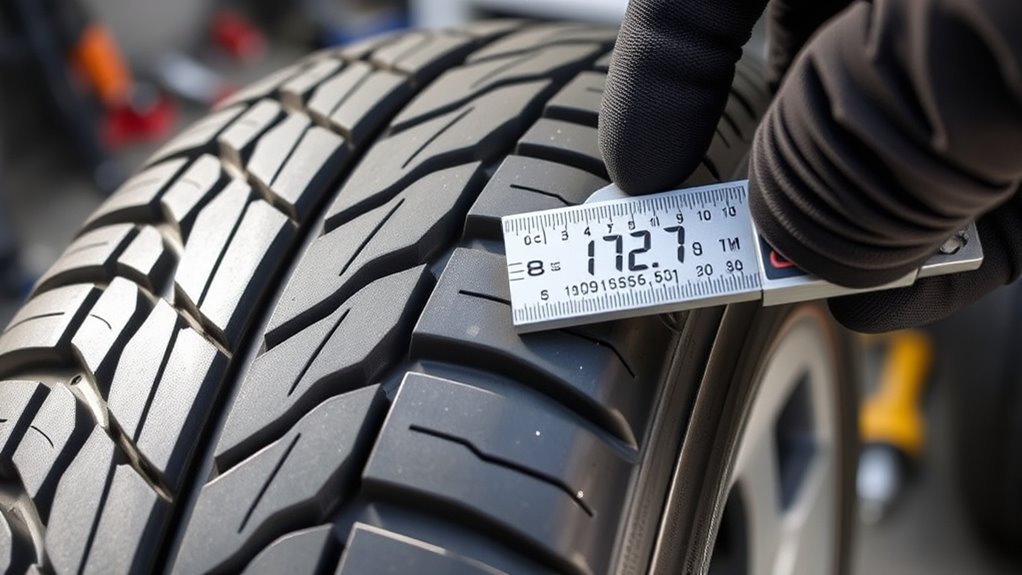
How can you guarantee your tires are safe and effective? Start by measuring tire tread depth regularly. Use a tread depth gauge for accuracy or perform the penny test—insert a penny into the tread; if Lincoln’s head is visible, it’s time for new tires. Verify your tread depth meets the minimum of 2/32 of an inch to maintain traction, especially in wet conditions. Built-in wear bars signal when replacement is necessary. Regularly checking tread helps you catch uneven wear patterns early, which may indicate alignment issues or inflation problems. Remember, for peak performance and safety, tires should be replaced every six years, irrespective of tread wear, as rubber deteriorates over time.
Preventative Maintenance for Extending Tire Life
To extend tire life, you must maintain proper tire pressure, perform regular rotations, and schedule alignment checks. These practices help prevent uneven wear and guarantee your tires perform efficiently. By addressing these key areas, you’ll greatly enhance the longevity and safety of your tires.
Maintain Proper Tire Pressure
Maintaining proper tire pressure is essential for maximizing tire life and guaranteeing vehicle safety. By adhering to the manufacturer-recommended pressure, you can prevent uneven wear and enhance overall driving performance. Regularly checking your tire’s pressure at least once a month can greatly prolong tire lifespan.
- Underinflated tires lead to excessive outer edge wear and increased blowout risk.
- Overinflated tires wear faster in the center, compromising traction and comfort.
- Proper inflation enhances vehicle handling and stability, promoting safer driving.
- Monitoring tire pressure improves fuel efficiency by reducing rolling resistance.
Investing time in regular vehicle maintenance, specifically tire pressure checks, not only saves money but also guarantees a smoother, safer ride.
Regular Tire Rotations
Regular tire rotations play an essential role in promoting even wear and extending the life of your tires. By rotating your tires every 5,000 to 7,500 miles, you prevent uneven tire wear that can lead to premature tire replacement. This process redistributes weight and driving forces, enhancing tire performance while improving overall driving stability and safety.
| Tire Position | Wear Type | Rotation Frequency |
|---|---|---|
| Front Left | Edge Wear | Every 5,000-7,500 miles |
| Front Right | Diagonal Patches | Every 5,000-7,500 miles |
| Rear Left | Center Wear | Every 5,000-7,500 miles |
| Rear Right | Uneven Tread Patterns | Every 5,000-7,500 miles |
Neglecting this regular vehicle maintenance can result in increased road noise and vibrations, complicating your driving experience.
Schedule Alignment Checks
When you schedule alignment checks at least once a year or after encountering considerable potholes, you greatly enhance your tires’ longevity and performance. Misalignment can cause uneven tire wear patterns, compromising vehicle safety. Proper alignment not only extends tire life but also improves fuel efficiency.
- Prevents excessive wear on tires
- Guarantees proper contact with the road
- Maintains vehicle safety and performance
- Reduces long-term maintenance costs
When to Rotate Tires for Optimal Wear
To guarantee ideal tire wear and longevity, it’s essential to rotate your tires every 5,000 to 8,000 miles. Regular tire rotation guarantees even distribution of wear, extending the lifespan of your tires and enhancing overall vehicle performance. If you notice uneven tire wear patterns or frequently drive in harsh conditions, increase the frequency of rotations. Always follow the manufacturer’s recommended rotation pattern for front-wheel, rear-wheel, or all-wheel drive vehicles to achieve peak results. Additionally, monitoring tire wear closely after each rotation can help identify potential alignment or suspension problems, which may require further attention. By committing to regular vehicle maintenance, you prevent issues like patchy wear and cupping, guaranteeing your tires perform efficiently for longer.
When to Replace Tires for Safety
How can you guarantee your safety on the road? Regularly evaluating your tires is essential. Replace tires when:
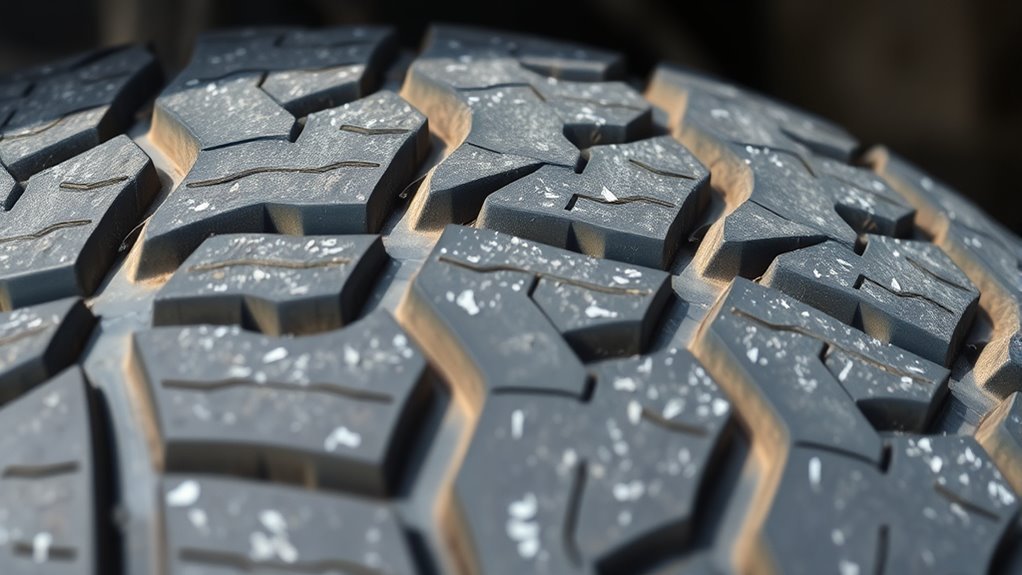
- Tread depth falls below 2/32-4/32 of an inch, reducing traction.
- You notice visible damage like cracks or bulges.
- Irregular wear patterns, such as cupping or feathering, appear.
- Performance declines, shown by reduced traction or increased noise.
Regardless of tread wear, replace tires every five to six years, as rubber degrades over time. Verify your tires are inflated to the manufacturer’s recommended pressure to maintain peak performance in various driving conditions. Taking these proactive steps not only enhances safety but also guarantees that your driving experience remains liberating and enjoyable. Your safety relies on vigilant tire maintenance.
Impact of Tire Inflation on Wear, Safety, and Fuel Efficiency
Maintaining proper tire inflation is essential not only for tire longevity but also for your safety and fuel efficiency. Underinflated tires can cause uneven wear, reducing tread life by up to 25% and increasing the risk of blowouts. Conversely, overinflated tires wear faster in the center, decreasing traction, especially on wet surfaces, which compromises safety. By adhering to the manufacturer’s recommendations for tire pressure, you can prevent these issues while enhancing fuel efficiency by about 3-4%. Regular vehicle checks, ideally monthly, guarantee your tires remain properly inflated, preventing heat buildup that can lead to tire failure. Prioritizing these practices keeps your vehicle safe on the road and optimizes your driving experience.
Frequently Asked Questions
How Often Should I Check My Tire Pressure?
You should check your tire pressure monthly and during seasonal changes. Utilize tire pressure sensors and a reliable gauge. Regular inspections counteract common myths, preventing underinflation and overinflation consequences, ensuring ideal tire performance and longevity.
What Tools Do I Need to Measure Tire Pressure?
To measure tire pressure, you’ll need a digital gauge or analog gauge, a pressure monitor, and an inflation tool. An air compressor and tire inflator help adjust pressure, while a valve stem allows access to the tire.
Can Temperature Affect Tire Pressure?
Yes, temperature fluctuations affect tire pressure. In cold weather, air density decreases, leading to lower pressure. Seasonal changes require regular pressure adjustments to maintain ideal tire performance, ensuring safe driving conditions and adherence to inflation guidelines.
What Is the Ideal Tire Pressure for My Vehicle?
You’d think tire pressure’s just a number, but it’s essential for peak performance. Check your vehicle specifications for the ideal pressure; it enhances fuel efficiency, safety standards, and tire lifespan, adapting to seasonal changes and driving conditions.
How Can I Identify the Correct Tire Pressure?
To identify the correct tire pressure, consult your vehicle manual and tire placard. Use a pressure gauge at the valve stem, adjust with an air compressor, and consider seasonal changes to guarantee proper inflation and prevent tire damage.
Conclusion
To summarize, maintaining proper tire inflation is like tuning a musical instrument; when everything’s in harmony, your tires perform at their best. By regularly checking tire pressure and recognizing wear patterns, you not only enhance safety but also improve fuel efficiency and extend tire life. Remember, a little preventative maintenance goes a long way. Don’t let uneven wear be the discord in your driving symphony—stay proactive and verify your tires are always in tune.