
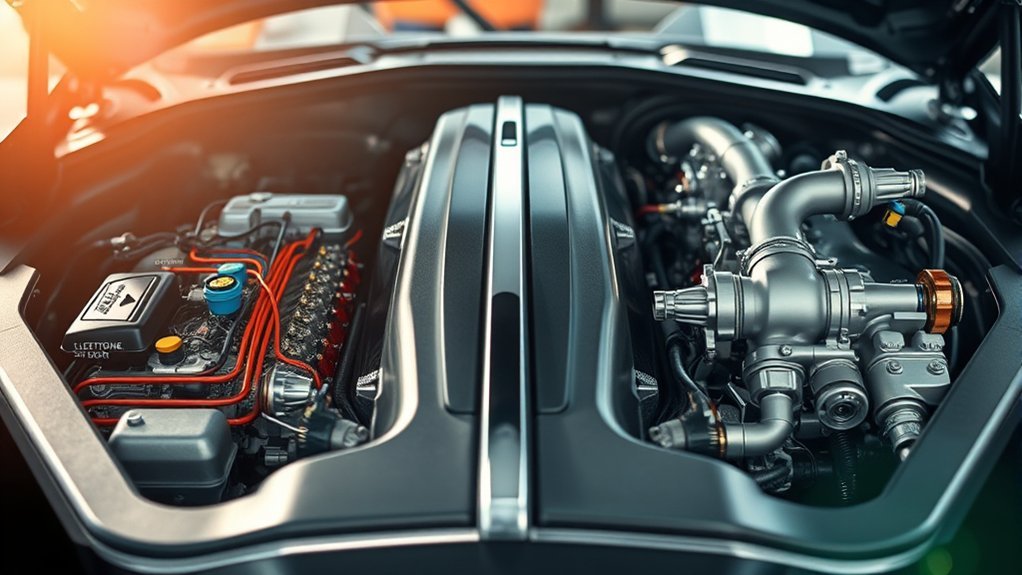
Electronic fuel injection and direct injection both replaced older fuel-delivery methods with computer-controlled fuel metering, but they do not deliver fuel in the same place or at the same pressure. For most drivers comparing “EFI vs direct injection,” the real decision is usually between port fuel injection, which sprays fuel into the intake port, and gasoline direct injection, which sprays fuel directly into the cylinder.
Quick Answer
Direct injection usually offers better power density, fuel control, and efficiency potential because it sprays fuel directly into the combustion chamber at high pressure. Traditional EFI, usually meaning port fuel injection, is simpler, often cheaper to maintain, and helps keep intake valves cleaner because fuel washes over them.
Key Takeaways
- EFI is a broad term, but in everyday comparisons it usually refers to port or multi-port electronic fuel injection.
- Direct injection sprays fuel into the cylinder at much higher pressure, helping modern engines make more power from less displacement.
- Port fuel injection is usually simpler, lower cost, and less prone to intake-valve carbon buildup.
- Direct injection can need more attention to fuel quality, injector condition, intake-valve deposits, and particulate emissions control.
- Some modern engines use both systems, combining port injection’s valve-cleaning benefit with direct injection’s power and efficiency advantages.
What Is Electronic Fuel Injection (EFI)?
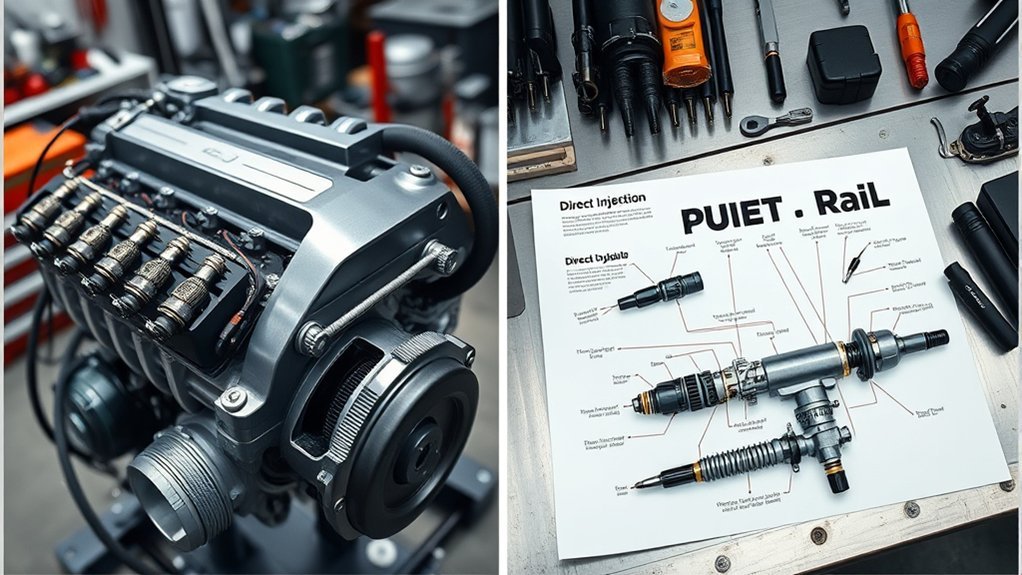
Electronic Fuel Injection (EFI) is a computer-controlled fuel delivery system that replaced carburetors on most modern gasoline engines. Instead of relying on vacuum and mechanical jets, EFI uses sensors, an engine control unit, a fuel pump, and electric injectors to meter fuel more precisely.
In common automotive language, EFI often refers to port fuel injection or multi-port fuel injection. In a port fuel injection system, each injector sprays fuel into the intake port near the intake valve. The incoming air carries the fuel mixture into the cylinder, where it is compressed and ignited.
Note: Direct injection is also electronically controlled, so it is technically a form of electronic fuel injection. When people compare “EFI vs direct injection,” they usually mean port EFI versus gasoline direct injection.
EFI systems adjust fuel delivery based on data from sensors such as throttle position, crankshaft position, coolant temperature, oxygen sensors, manifold pressure, and mass airflow. This helps the engine start more easily, idle more smoothly, use fuel more efficiently, and produce lower emissions than a carbureted setup.
Key Differences Between EFI and Direct Injection
The biggest difference is where the injector sprays the fuel. Port EFI sprays fuel before the combustion chamber, usually near the intake valve. Direct injection sprays fuel directly into the combustion chamber, which requires a much higher-pressure fuel system.
| Feature | Port EFI / PFI | Direct Injection / GDI |
|---|---|---|
| Fuel delivery location | Intake port or manifold | Directly inside the combustion chamber |
| Typical pressure range | Low pressure; Bosch describes gasoline PFI as about 6 bar, with many vehicle systems varying by design | High pressure; modern gasoline direct-injection systems can operate up to about 350 bar |
| Main advantage | Simplicity, cost, smooth operation, and cleaner intake valves | More precise combustion control, better power density, and efficiency potential |
| Common drawback | Less flexible combustion control than DI | More complex hardware and possible intake-valve carbon buildup |
| Best fit | Reliable daily driving, lower-cost engines, and simpler service needs | Turbocharged, downsized, high-output, and efficiency-focused engines |
Because direct injection delivers fuel inside the cylinder, engineers can use the cooling effect of fuel evaporation to support higher compression, turbocharging, and more aggressive ignition timing. Port EFI, however, has a useful cleaning effect because fuel passes over the back of the intake valves.
How Does Direct Injection Work?
Gasoline direct injection uses a low-pressure pump to send fuel from the tank to the engine, then a high-pressure pump raises the pressure before fuel reaches the injectors. The engine computer controls injection timing, injection duration, and sometimes multiple injection pulses during one combustion event.
Fuel Delivery Mechanism
In a direct-injection system, the injector tip sits inside the combustion chamber. Fuel is sprayed as a very fine mist so it can mix quickly with air and burn efficiently. According to Bosch Mobility, modern gasoline direct-injection systems can be designed for pressures up to 350 bar.
That high pressure is one reason DI can support strong torque, quick response, and smaller turbocharged engines. The trade-off is added complexity: the high-pressure pump, injectors, rail, seals, and control strategy all have to work precisely.
Combustion Chamber Injection
Because fuel enters the combustion chamber directly, the engine can control when and where the fuel spray mixes with air. In many modern gasoline engines, DI is used mainly to improve charge cooling, knock resistance, torque, and fuel economy while still operating near a stoichiometric air-fuel ratio for emissions control.
Some direct-injection strategies can use lean or stratified combustion under certain conditions, but that is not universal. Real-world operation depends on the engine design, emissions equipment, software calibration, and local emissions rules.
Advantages Over Traditional Systems
Compared with port fuel injection, direct injection gives engineers more control over combustion. That can help an engine produce more power from a smaller displacement, especially when paired with turbocharging. The U.S. Department of Energy describes gasoline direct injection as a fuel-delivery technology that improves combustion by spraying fuel directly into the cylinders, helping fuel economy and engine performance.
Direct injection also helps reduce fuel pooling in the intake manifold because the fuel is not sprayed upstream. This improves cold-start control and can reduce some forms of unburned hydrocarbon emissions when the system is properly calibrated.
Benefits of Direct Injection Technology
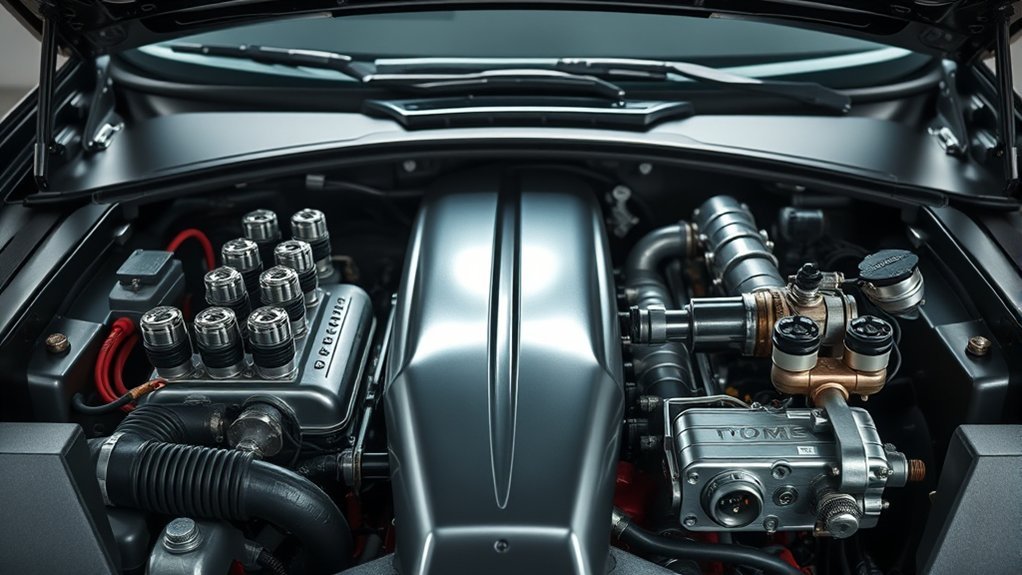
The main benefit of direct injection is precise fuel control. By injecting fuel directly into the cylinder, the engine can better manage mixture formation, charge cooling, and combustion timing. This is why DI is common in modern turbocharged and downsized engines.
- Better power density: DI can help a smaller engine make the torque and horsepower expected from a larger engine.
- Improved knock resistance: Fuel evaporation inside the cylinder cools the charge, which can help the engine tolerate higher compression or boost.
- More precise cold-start fueling: The system can meter fuel close to the combustion event instead of relying on intake-wall wetting behavior.
- Efficiency potential: DI can support combustion strategies that reduce fuel use when matched with the right engine, turbocharger, transmission, and calibration.
Direct injection is not automatically “better” in every engine. It is best when the engine design uses its strengths: high-pressure atomization, charge cooling, turbocharging, and precise combustion control.
Disadvantages of Direct Injection Systems
Direct injection has real advantages, but it also brings service and emissions challenges that port EFI does not face to the same degree. The most common concerns are intake-valve deposits, high-pressure component cost, injector sensitivity, and particulate emissions.
Carbon Buildup Issues
In a port fuel injection engine, fuel passes over the intake valves and can help wash away oily residue from crankcase ventilation and exhaust-gas recirculation. In a direct-injection engine, fuel does not normally touch the back of the intake valves. Over time, oil vapor and soot can bake onto the valves and form hard carbon deposits.
Symptoms of heavy intake-valve deposits can include rough idle, hesitation, misfires, reduced fuel economy, and loss of power. Cleaning may require a professional intake-valve cleaning service, and on some engines that means walnut-shell blasting or another mechanical cleaning process.
Warning: Do not spray random cleaners into the intake of a direct-injection engine unless the product and procedure are approved for your vehicle. Incorrect cleaning methods can damage sensors, catalytic converters, turbochargers, or engine internals.
Higher Maintenance Complexity
DI systems use high-pressure pumps, high-pressure rails, and precision injectors. These parts can be more expensive to diagnose and replace than many port-injection parts. They also depend heavily on clean fuel, correct oil, proper maintenance intervals, and accurate engine software.
Not every DI engine is troublesome, and many run for high mileage with normal maintenance. Still, the system is more complex than traditional port EFI, so diagnosis usually requires a scan tool, fuel-pressure testing, misfire data, and service information for the exact engine.
Particulate Emissions and Aftertreatment
Gasoline direct-injection engines can produce more particle-number emissions than comparable port fuel injection engines because mixture preparation happens inside the cylinder and may be less homogeneous under some conditions. EPA-hosted research reviews note that GDI particulate emissions have been widely studied and that gasoline particulate filters are one technology used to control them.
This does not mean DI engines are dirty by default. It means emissions performance depends on the full package: injector design, spray targeting, combustion chamber shape, calibration, fuel properties, catalytic converter strategy, and, in some markets, a gasoline particulate filter.
How Port Fuel Injection (PFI) Works and Its Applications
Port Fuel Injection (PFI), also called multi-port fuel injection when each cylinder has its own injector, sprays fuel into the intake port before the intake valve. The air and fuel mix before entering the cylinder, then the spark plug ignites the mixture after compression.
Bosch describes gasoline port fuel injection as a low-pressure system with comparatively simple operation and cost advantages over high-pressure direct injection in many applications. That is why PFI remains common in economy cars, hybrids, motorcycles, small engines, and vehicles where reliability and low manufacturing cost matter more than peak specific output.
| PFI Feature | Why It Matters |
|---|---|
| Fuel sprays before the intake valve | Helps mix fuel with air before combustion |
| Fuel washes over intake valves | Reduces the risk of hard intake-valve deposits |
| Lower system pressure | Usually simpler and less expensive than DI hardware |
| Mature technology | Easier to service in many repair shops |
Pros and Cons of Port Fuel Injection
Port fuel injection is not outdated just because direct injection is newer. It remains a strong choice where simplicity, cost, and valve cleanliness are priorities.
Pros of Port Fuel Injection
- Lower system complexity: PFI does not need the same high-pressure fuel hardware as DI.
- Lower manufacturing cost: The simpler system can reduce vehicle and repair costs.
- Cleaner intake valves: Fuel passing over the intake valves helps reduce deposit buildup.
- Smooth drivability: PFI can provide quiet operation and good low-speed behavior.
- Fuel tolerance: PFI is often more forgiving of minor fuel-quality differences than DI injectors.
Cons of Port Fuel Injection
- Less combustion control: Fuel enters before the cylinder, so injection timing is less flexible than DI.
- Lower power-density potential: PFI usually cannot match DI’s charge-cooling benefit in turbocharged engines.
- More intake fuel wetting: Some fuel can contact intake surfaces, especially during cold starts.
- Less ideal for aggressive downsizing: Modern small turbo engines often benefit more from DI.
How Should You Choose Between EFI and Direct Injection?
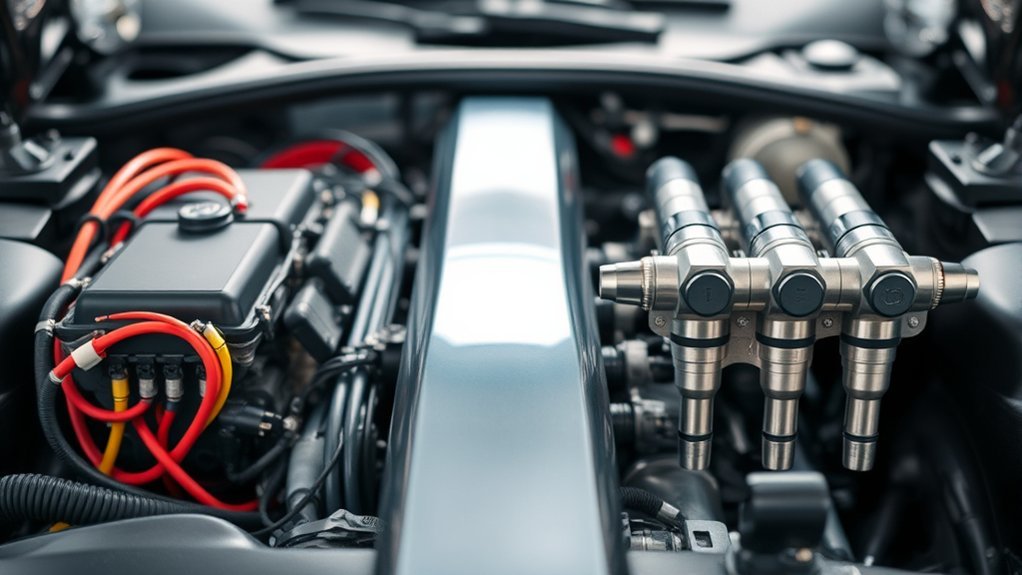
The best choice depends on what you value most: lower maintenance risk, stronger performance, fuel economy, emissions technology, or long-term ownership cost.
Choose Port EFI If You Want Simplicity
Port EFI is usually the better fit if you want a straightforward, proven system with fewer high-pressure parts. It is especially appealing for long-term ownership, lower repair cost, and vehicles driven in areas where fuel quality may be inconsistent.
Choose Direct Injection If You Want Performance and Efficiency Potential
Direct injection is often the better fit if you want a modern turbocharged engine, strong low-end torque, and better efficiency from a smaller displacement. It is also common in newer vehicles because it helps automakers balance power, fuel economy, and emissions targets.
Consider Dual Injection for the Best of Both Systems
Some engines use both port injection and direct injection. This design can use DI when high power, charge cooling, or precise combustion control is needed, then use port injection during conditions where valve cleaning, smoothness, or emissions control are priorities.
Pro Tip: When comparing two vehicles, do not judge the engine only by injection type. Look at the full design: turbocharging, compression ratio, service history, oil-change intervals, known engine issues, fuel requirements, and warranty coverage.
Impact of Fuel Quality on Injection Systems
Fuel quality matters for both systems, but it matters in different ways. Port EFI benefits from detergent fuel because it helps keep injectors, intake valves, and combustion chambers cleaner. Direct injection benefits from quality fuel because DI injector tips operate in a harsh combustion environment and need clean, consistent spray patterns.
AAA testing found that non-TOP TIER gasoline produced significantly more engine deposits than TOP TIER gasoline in a controlled test. TOP TIER also publishes detergent fuel performance standards designed to reduce deposits in fuel injectors, intake valves, and combustion chambers.
- Use the octane your owner’s manual requires. Premium fuel is not automatically better unless your engine requires or recommends it.
- Choose quality detergent fuel when possible. Cleaner injectors and fewer deposits can improve drivability and long-term performance.
- Do not ignore misfires or rough idle. Fuel-system issues can damage catalytic converters if left unresolved.
- Follow the oil specification. Low-quality oil or long oil-change intervals can increase deposit problems, especially in DI engines.
[Products Worth Considering]

Restore power and performance - Restores lost power and performance by removing gum, varnish, and other fuel system deposits.
Maintenance Checklist for DI and EFI Engines
Good maintenance helps both systems last longer. The details vary by vehicle, so the owner’s manual and factory service information should always come first.
| Maintenance Item | Why It Matters |
|---|---|
| Use the recommended fuel octane | Prevents knock, poor performance, and unnecessary fuel cost |
| Use quality detergent gasoline | Helps reduce injector and combustion deposits |
| Change oil on schedule | Limits oil vapor and sludge that can contribute to deposits |
| Replace air filters as needed | Keeps airflow readings accurate and protects engine internals |
| Fix vacuum, PCV, and EGR issues promptly | Reduces oil mist, soot, rough idle, and deposit formation |
| Scan warning lights early | Prevents small fuel or ignition problems from becoming expensive repairs |
Future Trends in Fuel Injection Technologies
Fuel injection technology is moving toward smarter control, higher precision, and better emissions management. Modern systems increasingly rely on advanced sensors, faster processors, improved injector spray patterns, and software that can adjust fueling under changing load, temperature, altitude, and emissions conditions.
One major trend is dual injection, where an engine uses both port and direct injectors. Bosch notes that combining port and direct gasoline injection can contribute to fuel-consumption and emissions improvements when the system strategy is optimized. Another trend is wider use of gasoline particulate filters in markets with strict particle-number limits.
Alternative fuels and hybrid powertrains will also shape future injection systems. Even as electrification grows, gasoline engines used in hybrids still need clean, efficient combustion because they may start and stop often, run at high loads, and operate across a narrower but more demanding efficiency range.
Frequently Asked Questions
What are the downsides of direct injection?
The main downsides of direct injection are higher system complexity, possible intake-valve carbon buildup, more expensive high-pressure components, sensitivity to injector deposits, and potential particulate emissions. These issues vary by engine design, fuel quality, oil maintenance, and driving conditions.
What are the three main types of fuel injection?
The three common gasoline fuel-injection types are throttle body injection, port or multi-port fuel injection, and direct injection. Throttle body injection sprays near the throttle body, port injection sprays near the intake valves, and direct injection sprays directly into the combustion chamber.
Is direct injection better than EFI?
Direct injection is better for many performance and efficiency goals, especially in turbocharged engines. Port EFI is often better for simplicity, lower cost, and intake-valve cleanliness. The best system depends on the engine design and how the vehicle is used.
Do all direct-injection engines have carbon buildup problems?
No. Some direct-injection engines develop noticeable intake-valve deposits, while others are well controlled through improved PCV systems, valve timing, oil specifications, and dual-injection designs. Driving style and maintenance also make a difference.
Does premium fuel prevent direct-injection carbon buildup?
Premium fuel does not automatically prevent carbon buildup unless the engine specifically needs higher octane. A quality detergent gasoline can help keep injectors and combustion areas cleaner, but intake-valve deposits in DI engines often come from oil vapor rather than fuel washing over the valve.
Conclusion
EFI and direct injection are both effective fuel-delivery technologies, but they serve different priorities. Port EFI is simpler, proven, and naturally helps keep intake valves clean. Direct injection gives engineers more control over combustion, which can improve power, efficiency, and turbocharged engine performance.
For most drivers, the best choice is not the newest system by default. Choose port EFI if you value simplicity and lower long-term maintenance risk. Choose direct injection if you want modern performance and efficiency potential. If available, a well-designed dual-injection engine can offer the strongest balance of both.
Sources
- Bosch Mobility — Gasoline Direct Injection — direct-injection system benefits and high-pressure capability.
- Bosch Mobility — Gasoline Port Fuel Injection — PFI system operation, pressure context, cost advantages, and valve-cleaning benefit.
- U.S. Department of Energy — Gasoline Direct Injection Fact of the Week — GDI definition, adoption, and performance/fuel-economy context.
- EPA HERO — Review of Particulate Number Emissions from Gasoline Direct Injection Engines — GDI particulate-emissions background.
- AAA — Not All Gasoline Is Created Equal — detergent gasoline and engine-deposit testing.
- TOP TIER Fuel Standards — Performance Standards — gasoline detergent deposit-control standards.



[…] Neither injection type is automatically better in every engine. The complete engine design, calibration, maintenance history, and operating conditions matter more than the abbreviation alone. For a broader technology comparison, see this guide to EFI versus direct injection. […]