The door jamb tire pressure sticker is essential for your vehicle’s safety. You’ll find recommended tire pressure, size specifications, and load capacity listed there. The numbers indicate the ideal tire pressure for performance and safety, while also suggesting the right tire size for replacements. Understanding these details helps prevent tire blowouts and guarantees better handling. If you want to know more about interpreting these numbers effectively, there’s plenty more to discover.
What Is a Door Jamb Tire Pressure Sticker?
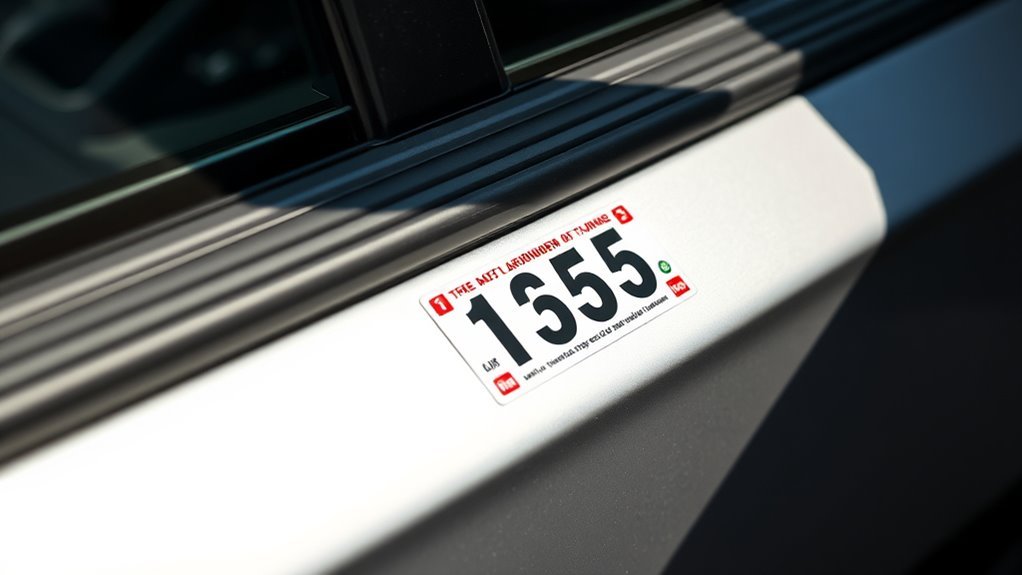
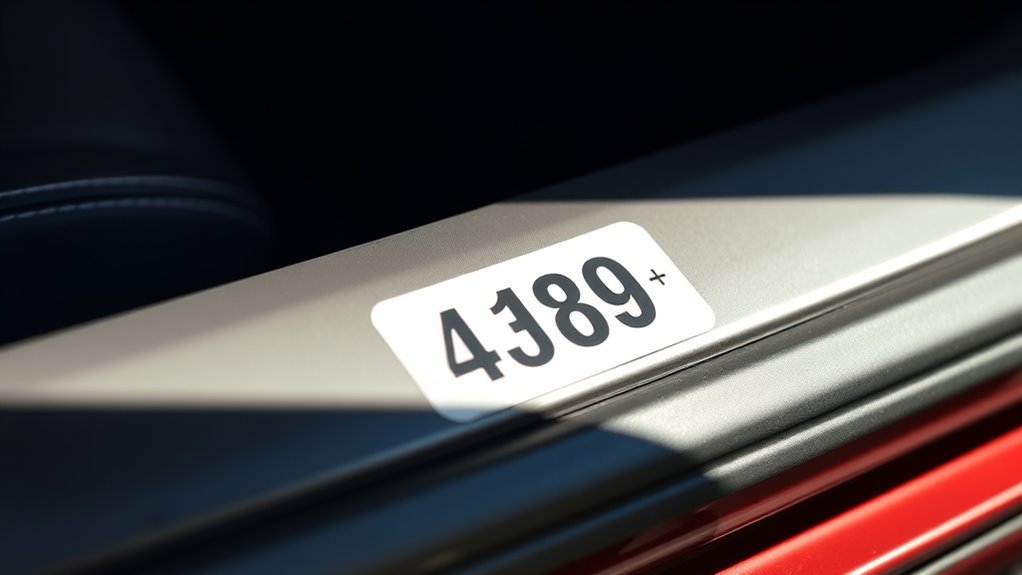
When you open your vehicle’s driver-side door, you might notice a small sticker on the door jamb, which is known as the door jamb tire pressure sticker or tire placard. This crucial label, provided by vehicle manufacturers, displays critical information about your tires. It outlines the recommended cold tire pressure for both front and rear tires, usually in pounds per square inch (PSI) or kilopascals (kPa). Furthermore, it specifies the correct tire sizes, ensuring safety and compatibility when you replace or inflate them. The placard also indicates your vehicle’s maximum load capacity, helping you avoid the dangers of overloading. Understanding this sticker is essential for maintaining ideal tire performance and ensuring your safety on the road.
Understanding Tire Placard Size Specifications
Understanding the tire size specifications on your door jamb placard is essential for selecting the right tires for your vehicle. The format typically appears as “P225/50R16.” Here, “P” signifies a passenger vehicle tire, while “225” indicates the section width in millimeters. The number “50” represents the aspect ratio, showing the tire’s height as a percentage of its width—the higher the percentage, the taller the sidewall. The letter “R” stands for radial construction, and “16” specifies the rim size in inches. Knowing these tire size details guarantees you choose tires that fit properly, enhancing safety and performance. Always pair your chosen tire size with the recommended air pressure for ideal driving experience.
Recommended vs. Maximum Tire Pressure: Key Differences
Understanding the difference between recommended and maximum tire pressure is essential for your vehicle’s performance. Recommended pressure, usually found on the door jamb sticker, guarantees safe driving and fuel efficiency, while maximum pressure indicates the highest safe limit for your tires. Keeping your tires at the recommended level helps prevent issues like poor handling and tire blowouts.
Understanding Recommended Pressure
Knowing the difference between recommended and maximum tire pressure is vital for your vehicle’s performance and safety. The recommended tire pressure, often found on your door jamb sticker, indicates the ideal air pressure for your tires under normal driving conditions. Typically measured in pounds per square inch (PSI), this pressure is essential for ensuring better handling, fuel efficiency, and tire longevity. In contrast, the maximum tire pressure, located on the tire sidewall, signifies the highest pressure the tire can safely hold. Misunderstanding these values can lead to under-inflation or over-inflation, both of which can pose serious safety risks. Regularly checking and maintaining your recommended tire pressure will help you enjoy a safer, more efficient driving experience.
Recognizing Maximum Pressure
While maintaining the recommended tire pressure is key for safety and performance, it’s equally important to recognize the maximum tire pressure. This figure, usually marked on your tire placard, indicates the highest pressure your tires can safely handle. Confusion often arises between the two, leading many to inflate tires to the maximum instead of the recommended level. Here’s what you should keep in mind:
- Maximum tire pressure is not suitable for everyday use.
- Recommended tire pressure guarantees ideal handling and safety.
- Overinflation can reduce traction and increase tire wear.
- Stick to recommended levels for better fuel efficiency.
- Regularly check your tire pressure to maintain balance.
Understanding these differences can help you drive more safely and confidently.
Why Load Capacity Is Critical for Vehicle Safety
Understanding load capacity is essential for your vehicle’s safety, as it determines how much weight your tires can handle. When you exceed this limit, you risk tire blowouts and serious mechanical issues that could lead to a loss of control. By adhering to the manufacturer’s guidelines, you guarantee a safer driving experience for yourself and everyone on the road.
Load Capacity Explained Simply
Load capacity is vital for your vehicle’s safety, as it indicates the maximum weight your tires can handle without risking failure. Understanding this concept is imperative for maintaining proper tire pressure and guaranteeing overall vehicle performance. Here’s why load capacity matters:
- Prevents tire failure and blowouts
- Maintains vehicle stability and control
- Reduces wear and tear on tires
- Guarantees safety for all occupants
- Accounts for modifications affecting weight limits
Consequences of Overloading Vehicles
When you overload your vehicle, the consequences can be far more serious than just a bumpy ride. Exceeding the specified load capacity can lead to increased tire wear and a higher risk of blowouts, jeopardizing your safety. Your vehicle’s suspension and braking systems may become overstressed, resulting in mechanical failures that affect performance. Plus, overloaded vehicles can have longer stopping distances and reduced stability, making them harder to control. Don’t forget the legal repercussions, either; driving an overloaded vehicle can lead to fines. By ensuring that the total weight of passengers and cargo stays within the manufacturer’s limits, you not only enhance safety but also improve fuel efficiency and prolong your vehicle’s life. Stay safe and informed!
Importance of Proper Maintenance
Maintaining your vehicle’s load capacity is essential for guaranteeing safety on the road. Properly monitoring this capacity helps you avoid dangerous situations, so pay attention to these key factors:
- The load capacity reflects the maximum weight your vehicle can safely carry.
- Exceeding this limit can lead to mechanical failure and loss of control.
- Each additional passenger adds weight, increasing the risk of exceeding capacity.
- Modifications require a Load Carrying Capacity Modification Label for safety compliance.
- Adhering to manufacturer specifications optimizes tire performance and fuel efficiency.
Regularly check your cold tire pressure and make sure you don’t overload your vehicle. Doing so not only enhances your vehicle’s longevity but also keeps you and your passengers safe on every journey.
How to Read and Interpret Your Tire Placard
Understanding how to read and interpret your tire placard can greatly enhance your vehicle’s safety and performance. Located on your driver’s door jamb, this sticker provides essential details. First, check the recommended cold tire pressure, listed in PSI, which guarantees proper inflation for peak performance. Next, note the tire sizes, such as “P225/50R16,” indicating width, aspect ratio, and rim size. This information is significant for selecting the right tires. Finally, pay attention to the load rating, which shows the maximum weight each tire can support. Regularly maintaining tire pressure according to these specifications, especially when tires are cold, can prevent under-inflation, a common cause of tire damage and accidents. Stay informed and drive safely!
Common Misconceptions About Tire Pressure
Many vehicle owners carry misconceptions about tire pressure that can affect their safety and vehicle performance. It’s important to understand the difference between maximum tire pressure and the recommended operating pressure. Here are some common misconceptions:
- Maximum tire pressure is the ideal inflation level.
- You should always inflate tires to the maximum pressure listed.
- Lower tire pressures are unsafe.
- Recommended pressures are just suggestions, not requirements.
- Under-inflation isn’t a serious safety concern.
These misunderstandings can lead to issues like over-inflation, poor handling, and tire failure. Always refer to your vehicle’s door jamb sticker for the manufacturer-recommended pressure to guarantee peak performance and safety on the road. Staying informed empowers you to make the best choices for your vehicle.
How to Maintain Optimal Tire Pressure for Safety
Keeping your tires properly inflated is essential for safety and performance. Regularly check your tire pressure when the tires are cold for the most accurate readings; this helps you avoid under-inflation, a leading cause of tire failure. Always adhere to the recommended tire pressure listed on your door jamb sticker, which shows the ideal pressure for both front and rear tires under normal conditions. Remember, the maximum tire pressure isn’t the same as the recommended operating pressure—it’s often lower for better safety. Adjust your tire pressure based on load conditions, as heavier loads may need higher inflation. Inspect your tire pressure monthly and before long trips to guarantee peak performance, fuel efficiency, and extend your tires’ lifespan. Refer to your owner’s manual for additional guidance.
Where to Find Tire Placard Information
To maintain your tires effectively, knowing where to find the tire placard information is essential. This valuable resource is typically found in the driver’s side door jamb, making it easily accessible when you need it. Here’s what you can expect to find on the placard:
- Recommended cold tire pressures for front and rear tires (in PSI)
- Original equipment tire sizes for proper fitment
- Maximum load capacity for safe vehicle operation
- Additional specifications for various applications, especially in 4x4s
- Sometimes, multiple placards for different driving conditions
Frequently Asked Questions
How to Read Tire Pressure Door Sticker?
To read your tire pressure door sticker, check the recommended PSI for cold tires, noting specifications for normal and maximum loads. Regular pressure monitoring guarantees safe driving and effective tire maintenance, keeping your vehicle in top shape.
How to Read a Door Jamb Sticker?
“An ounce of prevention’s worth a pound of cure.” To read a door jamb sticker, check tire sizes, cold pressure values, and load capacity. These tire maintenance tips guarantee proper pressure monitoring for safe driving.
What Is the Tire Pressure for a Door Jamb Car?
The tire pressure for your car’s door jamb is essential for safety. Always check the sticker for recommended PSI. Following these safety tips guarantees peak performance, preventing under-inflation or over-inflation that can damage your tires.
How Many Bars Is 30 to 35 PSI?
Picture driving smoothly on a sunlit road. For 30 to 35 PSI, you’re looking at about 2.07 to 2.41 bars in bar conversion. Understanding these PSI measurements guarantees your ride’s safety and efficiency remains excellent.
Conclusion
Now that you understand the importance of the door jamb tire pressure sticker, think of it as your vehicle’s essential heartbeat. Maintaining ideal tire pressure keeps you safe on the road, ensuring a smooth ride and better fuel efficiency. So, next time you get in your car, take a moment to check those numbers, just like you’d glance at a compass before setting off on an adventure. Your tires will thank you, and so will your passengers!