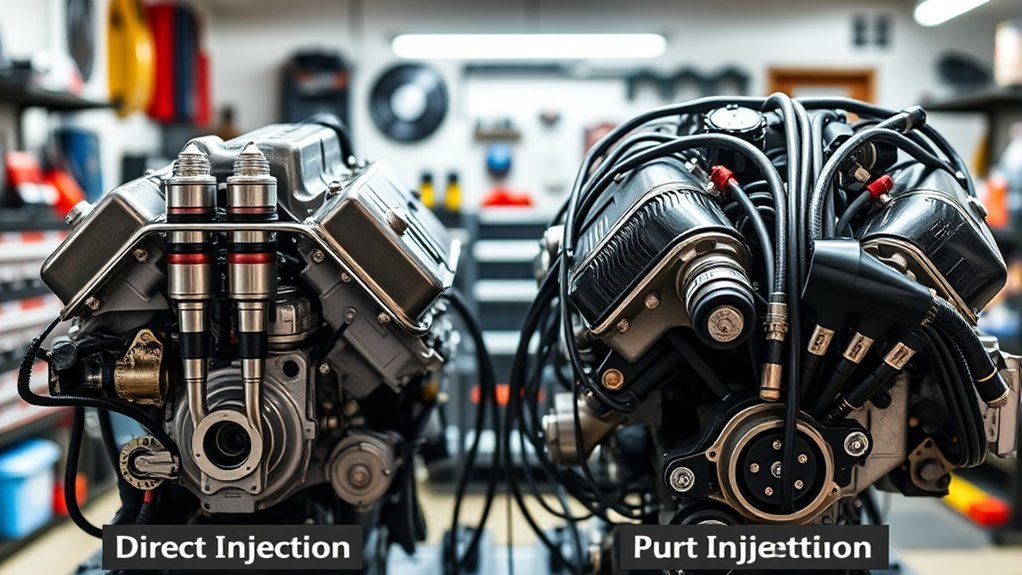
Direct injection (DI) injects fuel directly into the combustion chamber at higher pressures, enhancing efficiency and torque but risks carbon buildup. Port injection (PI) delivers fuel into the intake manifold, improving atomization and throttle response. DI cools the combustion chamber, while PI optimizes the air-fuel mixture. Each has distinct benefits depending on your driving habits and performance needs. If you’re curious about other aspects of these systems, you can discover more insights ahead.
Understanding Fuel Injection Basics
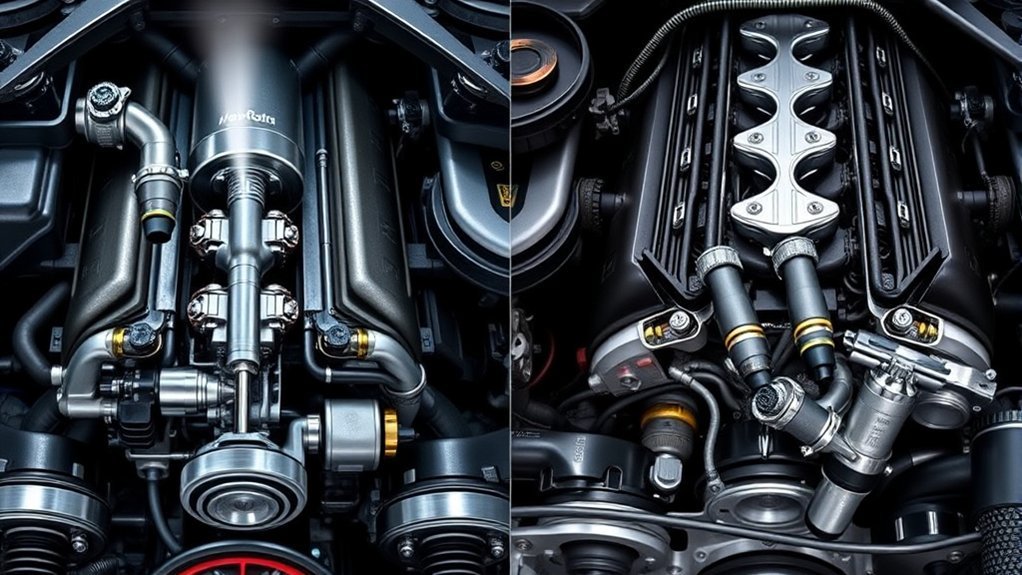
Fuel injection systems have revolutionized engine performance since their introduction in the 1930s, replacing traditional carburetors. This technology evolution marked a pivotal shift in fuel delivery methods, optimizing combustion for modern internal combustion engines. You’ll find two primary types of fuel injection: direct injection (DI) and port injection (PI). DI injects fuel directly into the combustion chamber at pressures up to 2,200 psi, enhancing efficiency and reducing emissions. In contrast, PI delivers fuel into the intake manifold, improving atomization and air-fuel mixture cooling, which can boost power potential.
Some vehicles utilize dual injection systems, combining both DI and PI to optimize performance. This approach allows PI to handle low to medium loads while DI excels under high load conditions. Understanding these fundamentals helps you appreciate how fuel injection history shapes your driving experience, empowering you with knowledge about engine efficiency and performance dynamics.
How Do Direct and Port Injection Compare?
When comparing direct injection (DI) and port injection (PI), you’ll notice significant differences in fuel delivery mechanisms and combustion efficiency. DI injects fuel directly into the combustion chamber, enhancing efficiency but increasing the risk of carbon buildup on intake valves, a problem that PI helps alleviate. Understanding these distinctions is vital for evaluating performance and maintenance needs in modern engines.
Fuel Delivery Mechanism Differences
While both direct injection (DI) and port injection (PI) serve the essential function of delivering fuel to the combustion chamber, they employ distinct mechanisms that greatly influence engine performance and efficiency.
| Feature | Direct Injection (DI) |
|---|---|
| Fuel Delivery Location | Directly into combustion chamber |
| Pressure | 50-100 times higher than PI |
| Cooling Effects | Cools combustion chamber |
| Carbon Buildup | Prone to buildup on intake valves |
DI’s high-pressure fuel atomization techniques enhance efficiency and torque, while PI’s injector types comparison leads to improved throttle response. Understanding these differences helps you choose the right system for peak performance.
Combustion Efficiency Impacts
Understanding how direct injection (DI) and port injection (PI) influence combustion efficiency is essential for optimizing engine performance. Each method plays a distinct role in combustion dynamics, affecting efficiency metrics:
- DI injects fuel directly into the combustion chamber at high pressures, promoting better atomization and more complete combustion.
- PI cools the air-fuel mixture, enhancing density and power potential while mitigating detonation.
- A dual injection system combines DI’s high compression benefits with PI’s valve cleanliness advantages.
Carbon Buildup Risks
Combustion efficiency directly ties into the carbon buildup risks associated with direct injection (DI) and port injection (PI) systems. In DI engines, carbon deposit formation occurs more frequently due to the absence of fuel washing over the intake valves. This lack of cleaning not only leads to deposits but also raises engine temperatures, exacerbating the issue. In contrast, PI systems continuously inject fuel into the intake manifold, effectively cleaning the valves and minimizing carbon accumulation. To combat potential carbon buildup in DI engines, manufacturers recommend regular maintenance, including specialized engine cleaning techniques and the installation of oil catch cans. Understanding these differences is essential for maintaining engine performance and longevity.
Advantages of Direct Injection Technology
Direct Injection (DI) technology offers several compelling advantages that enhance engine performance and efficiency. By delivering fuel directly into the combustion chamber at pressures up to 2,200 psi, DI enables more precise fuel atomization, resulting in improved combustion efficiency. This technology cools the air-fuel mixture, allowing for higher compression ratios and better performance tuning.
- Achieves better fuel economy and lower emissions through optimized fuel delivery.
- Increases torque output, demonstrated by engines like Ford’s 3.5-liter V-6.
- Provides engine flexibility, enabling compact designs and lighter components.
With DI, you benefit from an efficient system that maximizes engine capabilities while minimizing environmental impact. The potential for enhanced performance and flexibility in engine layouts makes DI a transformative choice for modern vehicles, allowing you to access the full power of your engine.
Benefits of Port Injection Systems
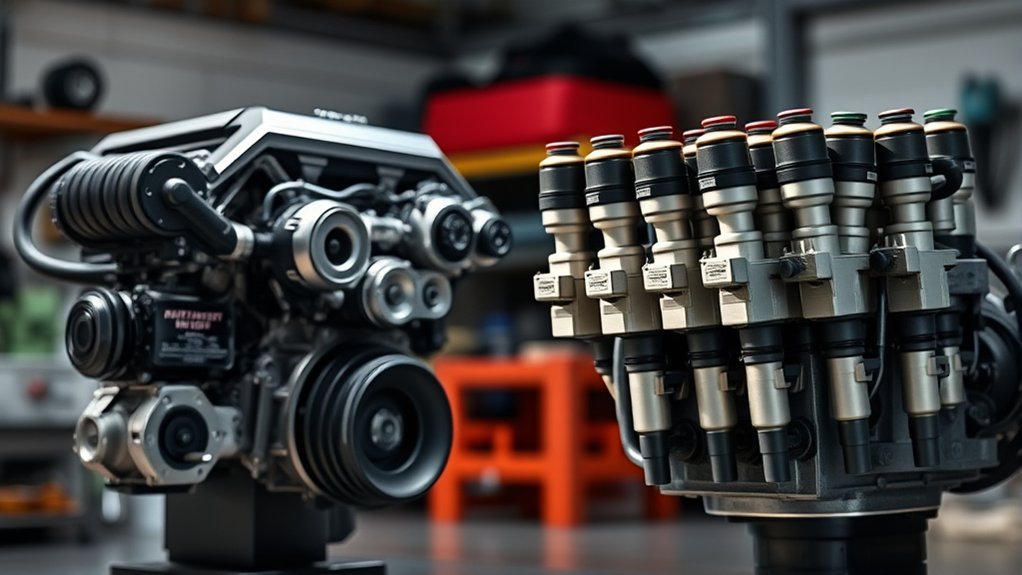
While many modern engines benefit from Direct Injection, Port Injection Systems also offer significant advantages that enhance overall performance. These systems improve fuel vaporization benefits by allowing injectors to position effectively within intake ports, guaranteeing complete fuel vaporization before combustion. This process cools the incoming air, increasing its density and boosting power potential.
Port injection also reduces the risk of detonation by cooling the air-fuel mixture, especially beneficial for naturally aspirated engines during normal driving conditions. Additionally, it promotes throttle response improvement, particularly under low-load situations, which enhances fuel delivery efficiency. Another critical advantage is the system’s ability to clean carbon deposits from intake valves, contributing to better engine performance and longevity.
| Benefit | Description | Impact |
|---|---|---|
| Improved Fuel Vaporization | Guarantees complete vaporization before combustion | Enhanced power and efficiency |
| Throttle Response Improvement | Facilitates better fuel delivery under low load | Quicker acceleration and responsiveness |
| Cooling Effect | Reduces the risk of detonation | Safer operation |
| Carbon Cleaning | Cleans intake valves | Promotes longevity and performance |
Dual Injection Systems Explained
In dual injection systems, you gain the advantages of both direct and port injection, optimizing engine performance across varying conditions. By employing strategies that enhance fuel atomization and power output, these systems also address maintenance issues like carbon buildup. Understanding these key benefits will help you appreciate how dual injection can elevate efficiency and reliability in modern engines.
Key Benefits Overview
Combining port injection (PI) and direct injection (DI) in dual injection systems offers significant benefits for modern engines. This integration enhances fuel economy and power output across varying driving conditions, optimizing your overall driving experience. By leveraging both methods, you gain:
- Improved throttle response at low RPMs with PI, ensuring smoother acceleration.
- Enhanced combustion efficiency and higher compression ratios through DI, maximizing performance.
- Better emissions control and reduced carbon buildup, promoting engine longevity and lowering maintenance needs.
Manufacturers like Toyota and Ford showcase these technology advancements, illustrating how dual systems cater to diverse performance tuning needs while maintaining efficiency and reliability. This synergy not only elevates performance but also supports sustainable driving practices.
Performance Optimization Strategies
As manufacturers endeavor for greater efficiency and performance, dual injection systems have emerged as a sophisticated solution that dynamically adjusts fuel delivery based on engine load. By integrating port injection (PI) and direct injection (DI), these systems optimize tuning strategies for various driving conditions. At low to medium loads, PI enhances fuel atomization and maintains cleaner intake valves, while DI takes over at high loads, improving cooling and torque. This load optimization enables precise fuel mapping, resulting in improved engine responsiveness and throttle response. Enhanced performance calibration leads to better power delivery and driving dynamics, considerably boosting fuel economy and efficiency metrics. Ultimately, dual injection systems balance performance and efficiency, elevating your driving experience.
Maintenance and Carbon Management
While dual injection systems, such as Toyota’s D-4S, enhance engine performance, they also necessitate careful attention to maintenance and carbon management. To optimize longevity and efficiency, consider the following:
- Implement carbon cleaning techniques, like walnut blasting, to remove deposits from intake valves.
- Adhere to recommended maintenance intervals to prevent excessive buildup and guarantee smooth operation.
- Explore the use of oil catch cans to mitigate carbon accumulation, though their effectiveness can be debated.
Regular driving habits and effective engine management strategies play vital roles in controlling carbon deposits. By being proactive about these aspects, you can maintain your engine’s health and performance, allowing you to fully enjoy the benefits of your dual injection system.
How to Tackle Carbon Buildup in Direct Injection Engines?
Since direct injection engines lack the fuel washing action found in port injection systems, they are particularly susceptible to carbon buildup on intake valves. To tackle this issue, consider using high-quality gasoline with detergents, which helps in carbon cleaning and maintains the fuel system’s integrity. Installing an oil catch can is also advisable; it reduces oil vapor entering the intake system, thereby limiting additional carbon deposits.
Scheduled valve maintenance is essential. Regularly cleaning the intake valves through methods like walnut blasting effectively removes stubborn carbon buildup. Furthermore, some manufacturers offer specific fuel additives designed to clean both fuel injectors and intake valves, serving as a preventative measure against carbon accumulation. By combining these strategies, you can greatly enhance the performance and longevity of your direct injection engine, keeping it running smoothly and efficiently.
Fuel Injection Performance and Emissions Comparison
Carbon buildup on intake valves is a significant challenge for direct injection engines, highlighting the importance of understanding fuel injection systems’ performance and emissions profiles. When comparing direct injection (DI) and port injection (PI), several factors come into play:
- Fuel Economy: DI allows for higher compression ratios, enhancing fuel economy without sacrificing power.
- Emissions Reduction: DI systems offer significant emissions improvements, though they can lead to carbon buildup that PI helps mitigate.
- Combustion Stability: PI cools the air-fuel mixture, reducing detonation risks and promoting cleaner intake valves.
Technology advancements have led to dual injection systems that optimize performance tuning and emissions control. By leveraging the strengths of both systems, you can enhance engine longevity and guarantee system compatibility with various fuel types. Employing effective tuning strategies and maintenance tips can further improve performance and emissions outcomes, giving you the best of both worlds.
How to Choose the Best Fuel Injection System for Your Needs?
How do you determine the best fuel injection system for your vehicle’s needs? Start by analyzing your driving habits. If you often encounter heavy acceleration, port injection (PI) might offer better throttle response. For fuel efficiency, consider direct injection (DI), which excels in atomization and combustion, appealing to eco-conscious drivers. Evaluate your performance goals; DI can enhance power and torque, particularly in high-compression engines.
Next, assess engine compatibility and how each system aligns with emerging technology trends. A dual injection system, like Toyota’s D-4S, can minimize carbon buildup while maximizing performance. Don’t forget cost analysis; DI systems are typically pricier due to high-pressure components, whereas PI offers a more straightforward, budget-friendly option. Finally, keep maintenance tips in mind—choose a system that fits not just your performance needs but also your willingness to invest in upkeep.
Frequently Asked Questions
What Is the Difference Between Port Injection and Direct Injection?
Port injection delivers fuel into the intake manifold, enhancing fuel atomization, while direct injection injects fuel directly into the combustion chamber, optimizing performance. Injector placement profoundly impacts combustion efficiency and engine response in both systems.
Does Direct Injection Make More Power Than Port Injection?
Yes, direct injection typically makes more power than port injection by enhancing fuel efficiency and engine performance. It delivers fuel directly into the combustion chamber, allowing for better atomization and combustion efficiency, resulting in improved torque.
What Is the DIfference Between PFI and DI?
PFI injects fuel into the intake manifold, enhancing fuel atomization and combustion efficiency at lower pressures. In contrast, DI injects directly into the chamber, achieving higher efficiency but risking carbon buildup on intake valves.
Conclusion
In summary, understanding the differences between direct and port injection systems can greatly impact your vehicle’s performance and efficiency. Did you know that direct injection engines can improve fuel efficiency by up to 15% compared to traditional systems? Choosing the right injection type for your needs is essential, whether you’re seeking power or better emissions. As technology evolves, staying informed helps you make smarter decisions for your vehicle’s longevity and performance.