Last updated: August 31, 2026 · Toyota, Thule, Prorack, and NHTSA sources rechecked; cross-brand load-rating clarification added.
Do not place cargo directly on a Toyota Camry’s bare roof. Use a roof rack confirmed for your exact model year, 4-door body style, roof type, and market. The cited Thule fit sheets for 2012–2017, 2018–2024, and 2025+ Camry sedans each show a maximum of 75 kg / 165 lb for the specified rack setup and show a 7 kg / 15.4 lb rack assembly. In those Thule sheets, the rack plus the carried load must remain within the published 75 kg maximum.
That does not make 165 lb a universal Camry roof limit. A different rack maker can publish a different figure or define its rating differently. For example, Prorack Australia lists a 60 kg load rating for one 2022 Camry 4-door sedan package. Calculate the remaining allowance under each applicable vehicle, rack, carrier, attachment, and payload rating according to that rating’s own definition. Your usable cargo limit is the smallest remaining allowance.
Quick Answer
A Camry’s bare roof should not be used as a cargo platform. The cited Camry-specific Thule systems publish a 75 kg / 165 lb maximum for the specified rack setup and show a 7 kg / 15.4 lb rack assembly. However, 165 lb is not universal: another rack, model year, roof type, or market can have a different limit or rating definition. Verify your exact setup and use the smallest remaining cargo allowance after every applicable rating is interpreted correctly.
Key Takeaways
- Do not place cargo directly on the Camry roof. Use a vehicle-specific rack installed exactly as the rack maker instructs.
- A 165-lb figure is not universal. Different rack systems and markets can publish different capacities or define the rating differently.
- Count every component required by the applicable rating definition, including the rack, carrier, attachment hardware, straps, and cargo when the instructions say those items are included.
- Roof equipment and cargo also consume the Camry’s available vehicle payload along with passengers and items inside the vehicle.
- A moving-load rating does not establish a static limit for people or a rooftop tent.
- Keep the load low, centered, evenly distributed, and secured with rated straps. Recheck it shortly after you start driving.
How This Guide Was Verified
This guide compares Toyota’s official manual resources and vehicle-load guidance with Camry-specific rack documentation from Thule and a current Prorack fit example, plus NHTSA cargo-securement guidance. The 165-lb figure is presented only for the cited Thule applications, not as a universal Toyota bare-roof rating. This is a document-verified safety guide; it does not claim hands-on load testing of every listed rack.
At a Glance
| Published Thule examples | 75 kg / 165 lb maximum for the cited 2012–2017, 2018–2024, and 2025+ Camry applications |
| Thule rack weight shown | 7 kg / 15.4 lb in each cited fit sheet |
| Cross-brand example | Prorack Australia lists 60 kg for one 2022 Camry 4-door sedan package |
| What counts | Depends on how the vehicle, rack, carrier, and attachment maker defines each rating |
| Required equipment | Owner’s manual, exact rack instructions, carrier instructions, scale, rated straps, and the specified torque tool if required |
| Controlling rule | Calculate each applicable remaining allowance correctly, then use the smallest result |
How Much Weight Can a Camry Roof Hold: Moving vs. Parked?
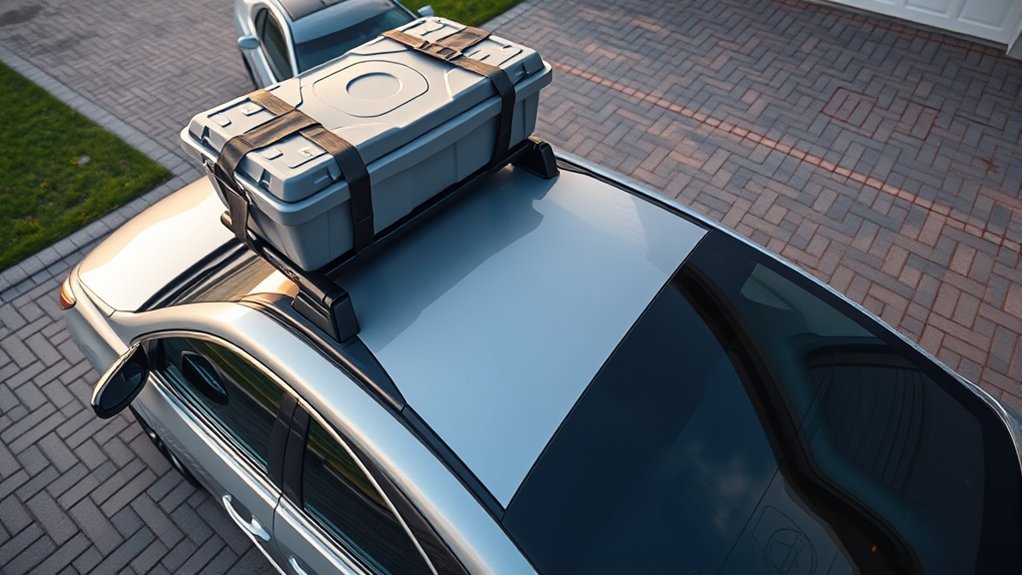
For driving, use the dynamic load limit defined for your exact vehicle-and-rack combination. The cited Thule fit sheets for 2012–2017, 2018–2024, and 2025+ Camry 4-door sedans each show 75 kg / 165 lb as the maximum and show a 7 kg / 15.4 lb rack assembly. Their pictogram presents the rack plus the carried load against that 75 kg maximum.
That 165-lb figure applies only to the correctly installed Thule applications identified in those fit sheets. It is not a Toyota bare-roof rating and should not be copied to an unlisted Camry year, another market, another vehicle, or a different rack system.
For parked use, do not infer a static limit from the moving-load number. A dynamic rating does not establish safe support for people, sitting, standing, sleeping, or a rooftop tent. Use a tent only when Toyota, the rack maker, and the tent maker approve the exact combination and provide all required dynamic, static, fit, and mounting information.
Warning: Do not simply choose the smallest raw number printed on several products. First determine what each number includes. Calculate the remaining cargo allowance under the vehicle, rack, carrier, attachment, and payload rules, then use the smallest remaining allowance.
Find Your Camry’s Roof Capacity in the Manual and Rack Instructions
Start with Toyota’s official owner resources. Use the Toyota Owners manual portal to select your exact Camry year. Search the manual for “roof rack,” “roof luggage carrier,” “cargo,” “luggage,” “vehicle load limits,” and “total load capacity.”
Toyota’s section on 2025 Camry vehicle load limits is a useful example of vehicle-load guidance, but it is not a substitute for a roof-rack fit sheet. Use the manual that matches your own model year, powertrain, and market.
Check the Door-Jamb Payload Label
Open the driver’s door and find the Tire and Loading Information label. It states the combined occupant-and-cargo capacity for that vehicle. Passengers, trunk luggage, cabin cargo, aftermarket rack equipment, a roof carrier, and roof cargo all add weight to the loaded vehicle. Equipment added after the vehicle was built therefore reduces how much payload remains for other items.
If a bulky item can safely travel inside the vehicle instead, compare its size with the measurements and cargo-volume guidance in our Camry trunk dimensions guide.
Check the Rack Maker’s Fit Instructions
A vehicle-specific fit sheet is as important as the general owner’s manual. The cited Thule instructions identify the Camry model years, 4-door body style, required fit-kit parts, rack weight, maximum load, mounting positions, bar spacing, and speed guidance.
Do not mix clips, pads, feet, or fit-kit parts from different applications. Do not copy a load limit from another Camry generation simply because the bars look similar.
Note: If your owner’s manual does not publish a clear roof-load number, that does not make the roof unlimited. Use Toyota guidance, the vehicle payload information, and a rack system explicitly confirmed for your exact Camry.
Published Camry Roof-Rack Limits and Examples by System
The figures below are examples from published vehicle-specific rack documentation. They are not universal Toyota bare-roof ratings, and the raw numbers are not automatically interchangeable because manufacturers may define “load rating” differently. Verify your rack model, parts, instructions, market, and vehicle before loading.
| Camry application | Rack source | Published figure | Important qualification |
|---|---|---|---|
| 2012–2017 Camry 4-door sedan | Thule Kit 145149 | 75 kg / 165 lb maximum | The sheet shows a 7 kg / 15.4 lb rack assembly plus carried load against the 75 kg maximum. |
| 2018–2024 Camry 4-door sedan | Thule Kit 145082 | 75 kg / 165 lb maximum | Use the listed feet, pads, clips, bar positions, measurements, and compatible bar system. |
| 2025+ Camry XV80 4-door sedan | Thule Kit 145405 | 75 kg / 165 lb maximum | The application is listed specifically for the Camry XV80 4-door sedan. |
| 2022 Camry 4-door sedan, Australian fit example | Prorack Heavy Duty Bar Package | 60 kg listed load rating | This demonstrates that 165 lb is not universal. Read Prorack’s own calculation rules before comparing the number directly with Thule’s rating. |
| Older Camry models or an unknown rack | Exact owner’s manual, Toyota support, or rack manufacturer | Verify before loading | Do not transfer a newer fit sheet or load rating to an older or unlisted installation. |
The practical limit is not how strong the roof panel feels or which product displays the smallest raw number. It is the smallest remaining cargo allowance after every applicable vehicle, rack, carrier, attachment, and payload rating is interpreted according to its own instructions.
[Products Worth Considering]
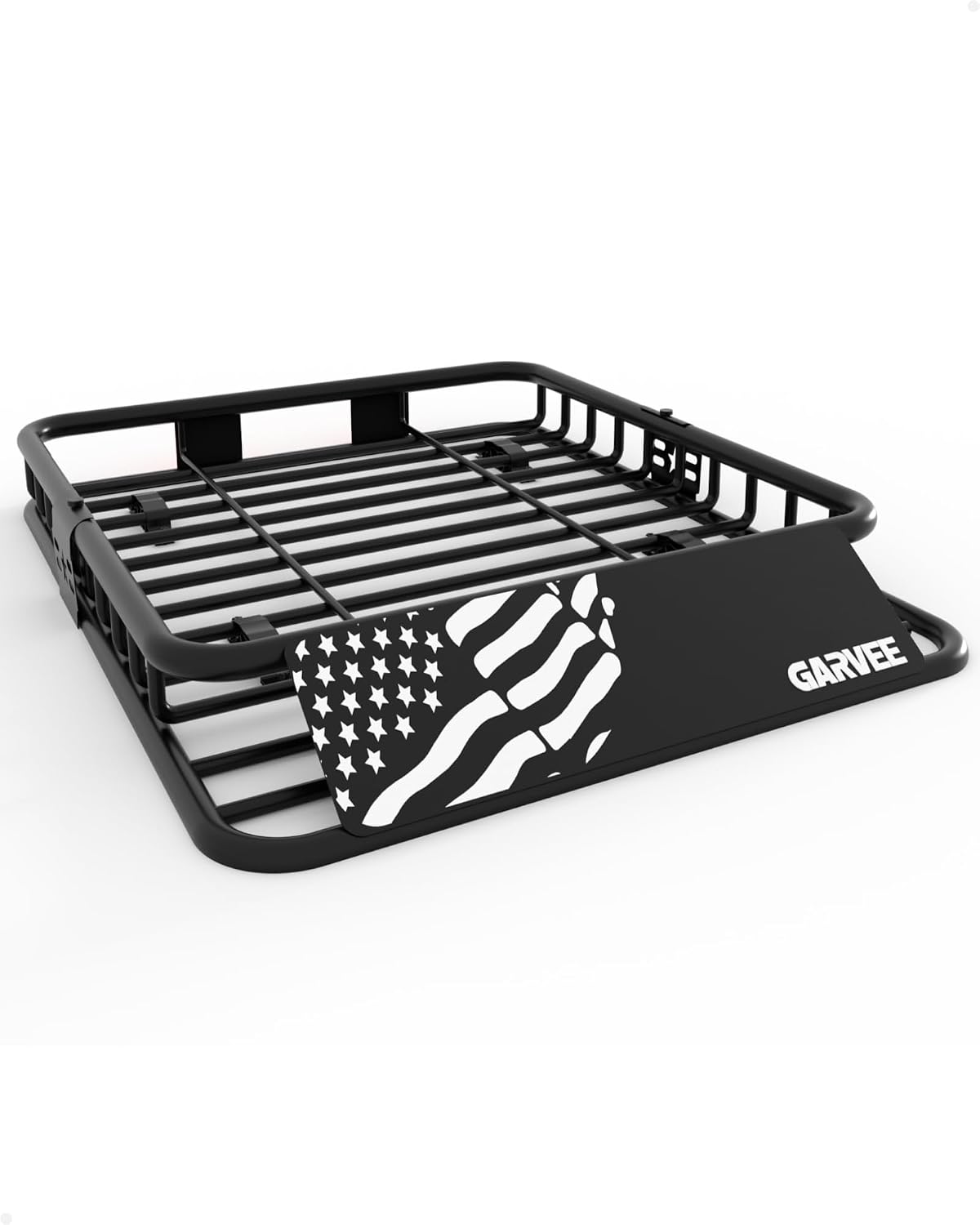
This universal roof rack cargo basket adds extra storage space for road trips, camping, and everyday hauling while keeping gear secure on the roof. Built with powder-coated steel and a wind deflector, it helps protect cargo from the elements and reduce drag. The universal U-bolt mounting design makes installation quick and compatible with many vehicles that have crossbars.
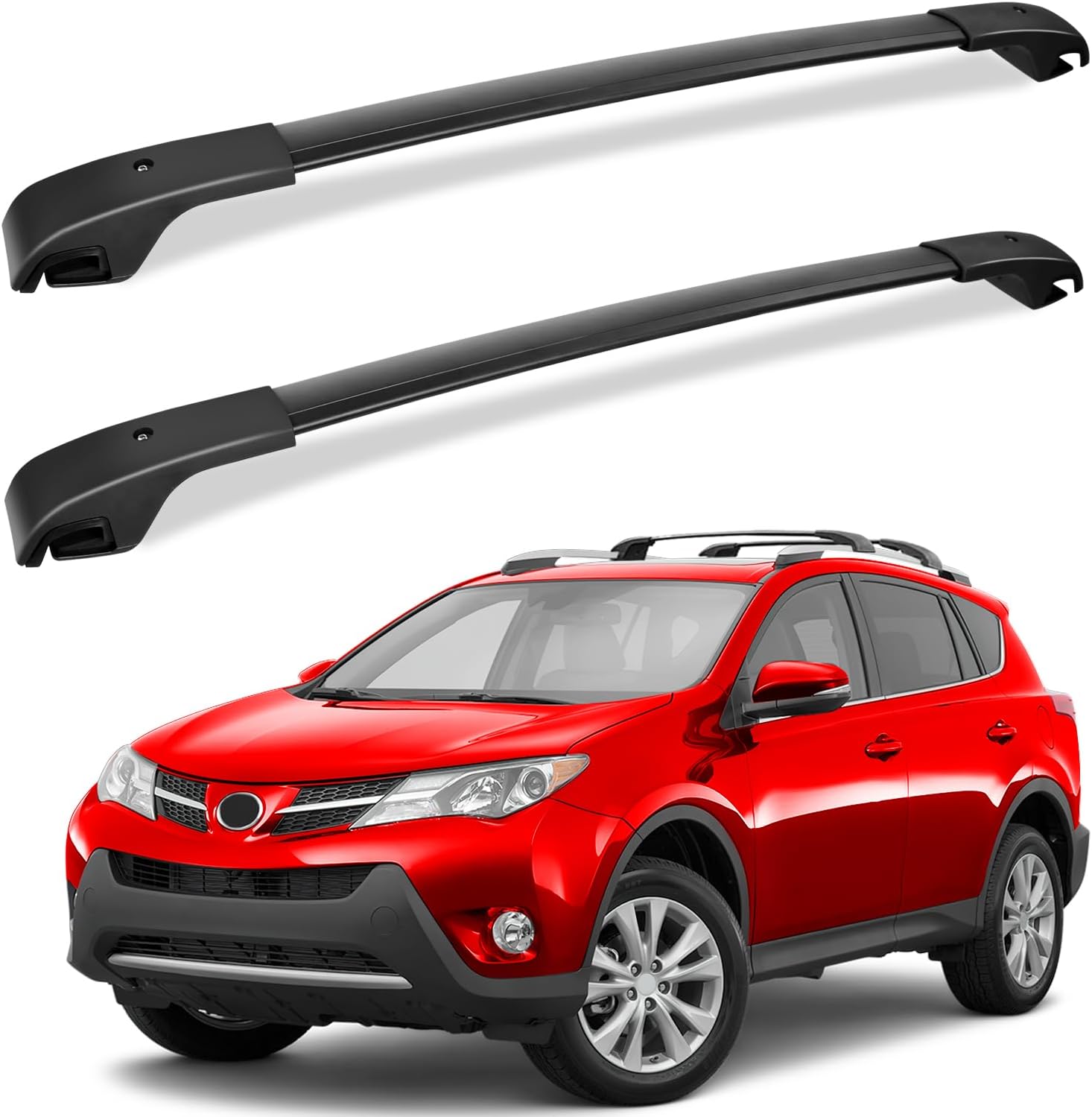
These roof rack cross bars are designed specifically for Toyota RAV4 models from 2013 to 2018 with side rails, offering a secure fit across multiple trims. Built with thickened aluminum, durable clamps, rubber padding, and stainless steel hardware, they provide dependable cargo support for travel and daily hauling. The easy-install design and high load capacity make them a practical upgrade for carrying luggage and other gear.

This windshield sun shade is designed to fit Toyota RAV4 models from 2019 to 2025 and RAV4 Prime models from 2021 to 2024. It helps block UV rays, reduce interior heat buildup, and protect your dashboard, seats, and steering wheel from sun damage. The accordion-folding design makes it easy to set up, store, and carry, while the durable triple-laminate construction adds long-lasting performance.
Can You Put a Roof Rack on a Toyota Camry?
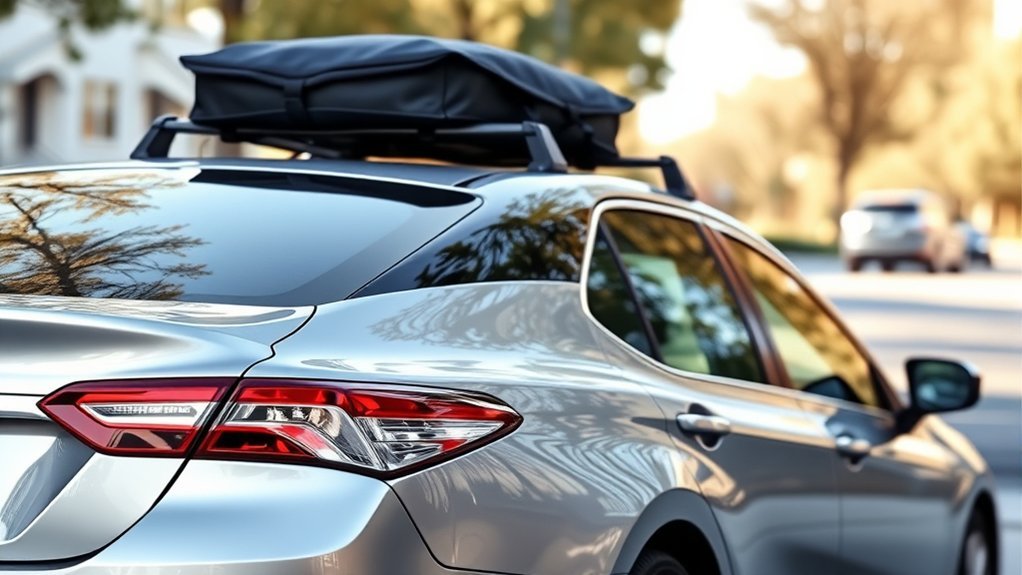
Yes, when a rack manufacturer confirms a fit for your exact Camry model year, 4-door body style, roof configuration, and market. The cited Thule applications use vehicle-specific fit kits rather than a generic one-size-fits-all installation.
A suitable rack listing or fit sheet should identify the vehicle, required fit kit, approved components, installation measurements, load rating, and any operating restrictions.
Before buying or installing a rack, check these points:
- Vehicle match: Confirm the year, generation, 4-door body style, market, and roof configuration.
- Mounting method: Use the approved clips, pads, feet, bars, and hardware. Avoid improvised clamps or mixed kits.
- Rating definition: Find out whether the published number covers the complete roof system, load on the bars, or cargo inside a carrier.
- Load rating: Calculate the remaining allowance under every applicable vehicle, rack, carrier, attachment, and payload rule.
- Glass clearance: Make sure the rack and cargo do not contact a moonroof, panoramic panel, antenna, doors, or trunk lid.
- Installation measurements: Follow the exact bar spacing, pad location, torque, and positioning instructions.
- Operating guidance: Follow the rack and carrier makers’ inspection and speed requirements.
Pro Tip: Save the exact rack and carrier instructions on your phone. You may need the rating definition, bar spacing, torque steps, speed warnings, and reinspection guidance whenever you reinstall or change the setup.
[Products Worth Considering]

These foldable emergency tire traction pads help give your vehicle the grip it needs to get unstuck from snow, ice, mud, or sand. Each lightweight pad is easy to carry and designed with a honeycomb surface and adjustable angle to improve traction across different road conditions. Built to support heavy loads, they make a practical roadside recovery tool for unexpected driving emergencies.

Upgrade your Toyota 4Runner with these heavy duty roof rack cross bars designed for raised side rails and secure cargo transport. The aluminum construction, anti-theft locking system, and tie-down loops help keep gear stable on the road while the low-profile design helps reduce wind noise. Easy to install with no drilling required, they provide a durable and convenient solution for road trips, hauling, and outdoor adventures.
How Do You Calculate a Camry Roof Load?
Start by identifying what each published rating actually includes. Do not subtract every component from every number. A vehicle roof-system limit, a rack’s carried-load capacity, a cargo box limit, and the vehicle’s payload label may all measure different things.
How to Compare Different Load-Rating Definitions
| Rating type | How to use it |
|---|---|
| System-total rating that includes the base rack | Subtract the base rack and every carrier, attachment, strap, and cargo item that the manufacturer says is included. |
| Rack rating defined as load carried on the bars | Subtract only the accessories and cargo counted as carried load. Do not automatically subtract the base rack unless the maker tells you to. |
| Carrier cargo limit | Follow the carrier maker’s definition for the amount allowed inside or on that box, basket, tray, cradle, or other carrier. |
| Vehicle payload / total load capacity | Check passengers plus all cargo and added equipment against the vehicle’s available payload separately from the roof-system calculation. |
Important: Do not subtract the base rack from a capacity merely because another manufacturer includes rack weight in its own number. Follow the definition printed in the instructions for the exact system you are using.
For the cited Thule Camry fit sheets, the graphic shows the 7 kg / 15.4 lb rack assembly plus carried load against the 75 kg / 165 lb maximum. Under that specific definition, use this formula:
Available carried load = 165 lb maximum − 15.4 lb rack assembly = 149.6 lb before other carriers or cargo are added
If you then add a cargo box, basket, bike tray, kayak saddle, or other carrier, its weight reduces the remaining allowance further.
What a 165-lb Thule Example Leaves for Cargo
| Calculation step | Example weight | Capacity remaining |
|---|---|---|
| Cited Thule maximum | 165 lb | 165 lb |
| Subtract rack assembly shown in fit sheet | 15.4 lb | 149.6 lb |
| Subtract example cargo box | 35 lb | 114.6 lb |
| Maximum cargo in this example | Up to 114.6 lb | Only if every vehicle, carrier, attachment, and payload calculation also allows at least that much |
More Roof-Load Examples
- Example A: Under the cited Thule-style system-total definition, rack 15.4 lb + cargo box 35 lb + clothing bags 65 lb = 115.4 lb. This is below 165 lb, but the full vehicle must also remain within its payload capacity.
- Example B: Rack 15.4 lb + basket 30 lb + luggage 130 lb = 175.4 lb. This exceeds the cited 165-lb maximum, so the load must be reduced.
- Example C: Rack 15.4 lb + kayak carrier 12 lb + kayak 45 lb = 72.4 lb. The weight is lower, but the kayak still requires the carrier maker’s approved straps, positioning, and tie-down method.
Note: Weight is not the only concern. Roof cargo also adds height, frontal area, and wind exposure. A light but bulky load can still affect steering, braking, noise, efficiency, and crosswind stability.
Best Practices for Placing and Securing Loads on a Camry Roof

Place heavier roof items as low and centered as the approved carrier permits. Distribute weight evenly from left to right and keep the load within the carrier’s supported area. Long items such as kayaks, ladders, and boards require extra attention because wind can create lift and side forces even when the weight is below the limit.
Use these loading rules:
- Keep the heaviest approved roof items low and near the center of the rack.
- Distribute cargo evenly instead of concentrating the full load on one bar or one side.
- Use a roof box or weather-resistant carrier designed for the cargo and rack.
- Use rated straps and follow the carrier maker’s approved routing method.
- Use at least two independent securement points for large cargo when the instructions require them.
- Use the required front and rear tie-downs for long loads such as kayaks when specified by the carrier maker.
- Do not use bungee cords as the primary securement method.
- Keep straps away from sharp edges, hot exhaust areas, moving parts, and places where they could damage door seals.
The National Highway Traffic Safety Administration reports that about 850 people are killed and almost 19,000 are injured each year in crashes involving objects in the road. NHTSA says 73% of the vehicles in those crashes are passenger vehicles. It advises drivers to tie cargo down, avoid excessive loads, and double-check that the load is secure. NHTSA also states that all 50 states and the District of Columbia have laws addressing unsecured loads.
Driving Tips and Speed Limits When Carrying Roof Cargo
Roof cargo changes how a Camry responds. It raises the vehicle’s center of gravity, catches wind, and can increase the distance or time needed for sudden steering and braking. Accelerate smoothly, leave more following distance, and avoid abrupt lane changes.
Follow the lowest legal and equipment speed requirement that applies to your rack, carrier, cargo, road, and conditions. The cited Thule Camry fit sheets show a maximum of 130 km/h / 80 mph for the listed rack system. The sheets also show a separate 80 km/h / 50 mph pictogram beside a long-load/tie-down illustration.
Those figures are equipment guidance, not a recommendation to drive that fast and never permission to exceed a posted speed limit. Rain, crosswinds, rough roads, traffic, construction, and a tall or heavy load can require a much lower speed.
- Accelerate, brake, and steer gradually.
- Slow down in crosswinds, storms, construction zones, and on mountain roads.
- Listen for whistling, rattling, strap flutter, shifting, or thumping.
- Stop after the first 10–30 miles to inspect the rack, carrier, straps, and cargo.
- Check the setup again at fuel or rest stops and after rough roads.
- Stop immediately if the rack moves, a strap loosens, or cargo changes position.
Risks, Common Failures, and Inspection Issues on Older Camrys
Overloading or incorrectly mounting a roof rack can bend rack components, dent paint, damage pads, loosen clips, affect door seals, and reduce vehicle stability. A shifting load can also damage glass, scratch the roof, or separate from the vehicle.
Age alone does not create a different published roof-load limit. Condition is what matters. Rust, collision repairs, dents near mounting areas, cracked paint, damaged door frames, loose trim, deteriorated seals, or previous water leaks may prevent the rack pads and clips from seating correctly.
Do not install or load a rack over visible damage until the vehicle and mounting area have been inspected. Replace worn, missing, corroded, or damaged rack hardware according to the manufacturer’s instructions.
Warning: A moonroof or panoramic glass panel is not a cargo surface. Never rest cargo directly on glass, and confirm rack and cargo clearance before operating any roof glass.
Pre-Trip Checklist: Weigh, Mount, Inspect, and Secure
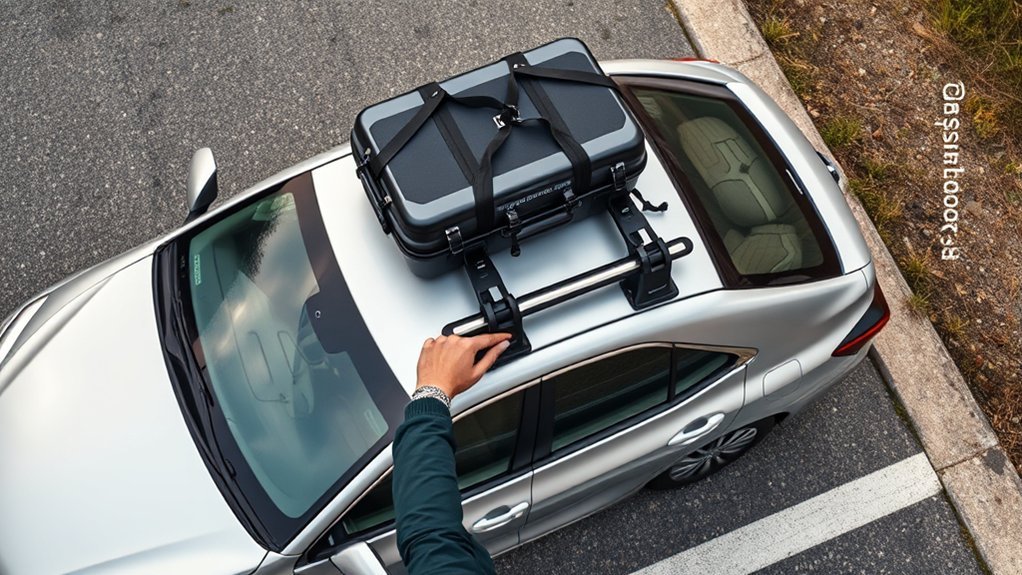
Use this checklist before every trip with roof cargo:
- Confirm the fit: Verify that the rack is approved for your exact Camry year, 4-door body style, market, and roof configuration.
- Read every rating: Check Toyota guidance, the payload label, rack instructions, carrier instructions, and attachment ratings.
- Understand the definitions: Determine whether each number includes the base rack, only carried load, only carrier cargo, or total vehicle payload.
- Calculate each allowance: Work out the remaining cargo capacity under every applicable rating.
- Use the smallest result: Never exceed the smallest remaining allowance in the complete system.
- Weigh the components: Weigh any rack, carrier, mounting hardware, straps, and cargo whose weight is not already known.
- Inspect the mounting area: Look for rust, dents, damaged seals, cracked paint, loose trim, or previous repairs.
- Mount the rack correctly: Follow the specified bar spacing, clip position, pad orientation, and torque requirements.
- Center the load: Keep cargo low, balanced, and within the carrier’s supported area.
- Secure the cargo: Use the approved straps, attachment points, and independent tie-down paths.
- Check moving parts: Confirm clearance from doors, roof glass, antennas, and the trunk lid.
- Measure total height: Check clearance before entering garages, drive-throughs, ferries, car washes, or areas with low branches.
- Recheck after departure: Stop after a short drive and inspect the rack, straps, and cargo again.
Frequently Asked Questions
How much weight can a Toyota Camry roof hold?
Do not use the bare Camry roof as a cargo platform. The cited Thule fit sheets for 2012–2017, 2018–2024, and 2025+ Camry 4-door sedans show a 75 kg / 165 lb maximum for their specified rack setups. That number is not universal, so verify your exact vehicle, market, and rack before loading.
Does the 165-lb limit include the roof rack and carrier?
In the cited Thule fit sheets, the graphic shows a 7 kg / 15.4 lb rack assembly plus carried load against the 75 kg / 165 lb maximum. A separate carrier, such as a box or basket, therefore reduces the remaining allowance. Do not assume another rack brand defines its published capacity the same way.
Can I put luggage directly on a Camry’s bare roof?
No. Use a rack and carrier approved for your exact Camry. Direct contact can dent or scratch the roof, damage glass or seals, and leave the cargo without a verified attachment system.
Can I put 300 kg on my Camry roof?
No. The three cited Camry-specific Thule applications show a 75 kg / 165 lb maximum for their specified rack setups. A 300 kg load is about 661 lb and would greatly exceed those limits.
What does maximum roof load mean?
The meaning depends on the manufacturer’s instructions. A number may refer to a complete roof system, the load carried on the bars, or cargo allowed inside a carrier. Read the definition first, calculate the remaining allowance under every applicable rating, and use the smallest result.
How much weight can a Toyota roof rack hold?
The limit depends on the Toyota model, roof, rack application, components, market, and installation. The cited Camry-specific Thule systems show 75 kg / 165 lb, while another Camry rack listing can publish a different number. Use only the instructions for the exact vehicle-and-rack combination.
Can I use a rooftop tent on a Toyota Camry?
Only when Toyota, the rack maker, and the tent maker explicitly approve the exact Camry setup and provide the required dynamic, static, mounting, and compatibility limits. A dynamic cargo rating alone does not authorize people to sleep on the rack.
Does roof cargo count toward the Camry’s payload limit?
Yes. Check passengers, trunk luggage, cabin cargo, added rack equipment, the roof carrier, and roof cargo against the vehicle’s available payload. A roof-rack capacity does not increase the Camry’s total load capacity.
Can you put a roof rack on a Toyota Camry?
Yes, when the rack manufacturer confirms a fit for your exact Camry model year, body style, roof configuration, and market. Use the specified bars, feet, clips, pads, fit kit, measurements, and installation procedure rather than a generic or mixed-component setup.
Why might another Camry rack have a lower limit than 165 lb?
Rack systems use different components, fit methods, markets, and rating definitions. For example, Prorack Australia lists a 60 kg rating for one 2022 Camry 4-door sedan package. That is why a 165-lb Thule figure should not be transferred to every Camry rack.
Conclusion
Do not load a Camry’s bare roof or assume that every rack supports 165 lb. Start by selecting your exact model year and market in Toyota’s manual resources, then open the instructions for the precise rack and carrier you plan to use.
Next, determine what every published rating includes. Calculate the remaining cargo allowance under the vehicle, rack, carrier, attachment, and payload rules separately, then use the smallest remaining allowance. Keep the load centered and secure, measure the vehicle’s new height, follow the applicable speed guidance, and inspect the setup shortly after departure.
Sources
- Toyota Owners Manuals and Warranties: Official Toyota manual lookup by model year.
- Toyota 2025 Camry Hybrid Vehicle Load Limits: Toyota’s vehicle-load guidance for the listed model.
- NHTSA: Drive Safe, Secure Your Load: Cargo securement guidance, road-object crash data, and unsecured-load law context.
- Thule Kit 145149 for 2012–2017 Toyota Camry: Camry-specific fit, rack weight, load, mounting, and speed guidance.
- Thule Kit 145082 for 2018–2024 Toyota Camry: Camry-specific fit, rack weight, mounting measurements, load, and speed guidance.
- Thule Kit 145405 for 2025+ Toyota Camry XV80: Camry-specific fit, rack weight, mounting measurements, load, and speed guidance.
- Prorack Heavy Duty Bar Package for 2022 Toyota Camry 4-Door Sedan: Cross-brand example showing a listed 60 kg load rating for a Camry application.