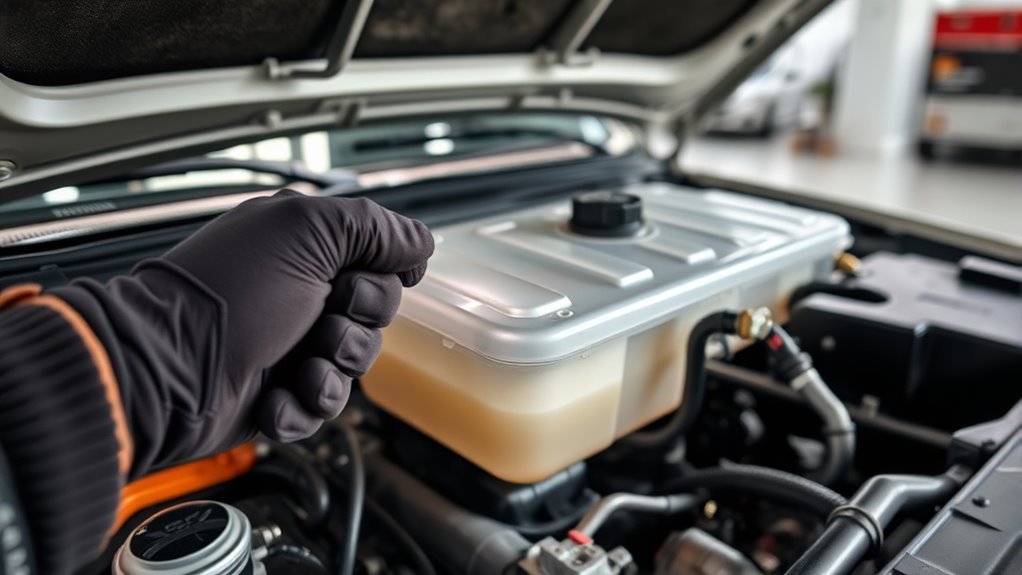
Checking your Toyota Land Cruiser’s coolant takes only a few minutes once the vehicle is fully cold. The exact layout depends on the model year, however, and newer hybrid models may have more than one coolant reservoir. Use the markings and coolant specification in the owner’s manual for your exact vehicle rather than relying only on cap color or coolant color.
Quick Answer
Park on level ground, switch the vehicle completely off, and let it cool. Find every coolant reservoir shown in your model-year manual. The cold level should be between its FULL and LOW or MAX and MIN marks. Add only the specified Toyota coolant if needed, and never open a hot pressure cap.
Key Takeaways
- Check the coolant only when the Land Cruiser is parked level, fully switched off, and cold.
- Use the owner’s manual to identify the correct reservoir or reservoirs. Current hybrid models may have separate engine and power-control-unit coolant circuits.
- Choose coolant by Toyota’s required specification, not by color alone.
- Repeated coolant loss, steam, overheating, oily fluid, or a large leak requires professional diagnosis.
- Do not remove a radiator or pressurized reservoir cap while the system is hot.
At a Glance
| Time Required | 5–10 minutes, plus enough time for the vehicle to cool completely |
| Difficulty | Easy for a visual level check and minor top-off |
| Tools Needed | Flashlight, gloves, clean rag, and a clean funnel used only for coolant |
| Cost | No cost to inspect; coolant cost varies by container size and seller |
Warning: Hot cooling systems can remain pressurized and spray boiling coolant or steam. Never loosen a radiator cap or pressurized coolant-reservoir cap while the system is hot. Keep your hands, clothing, and tools away from electric cooling fans, which may start unexpectedly.
How to Check the Coolant Level Step by Step
- Park on level ground. Select Park, apply the parking brake, switch the vehicle completely off, and remove the key or keep the smart key away from the vehicle.
- Wait until the system is cold. Do not rely on the hood or outside air feeling cool. The coolant and pressure cap can remain dangerously hot after driving.
- Open the hood safely. Secure it with the support rod if your model uses one. Do not touch the engine, radiator, exhaust parts, or cooling fan.
- Identify the correct reservoir or reservoirs. Compare the engine-compartment layout with the Toyota owner’s manual for your exact year. Do not identify a reservoir only by cap color. Depending on the model, you may need to inspect an engine-coolant reservoir and a separate hybrid or power-control-unit reservoir.
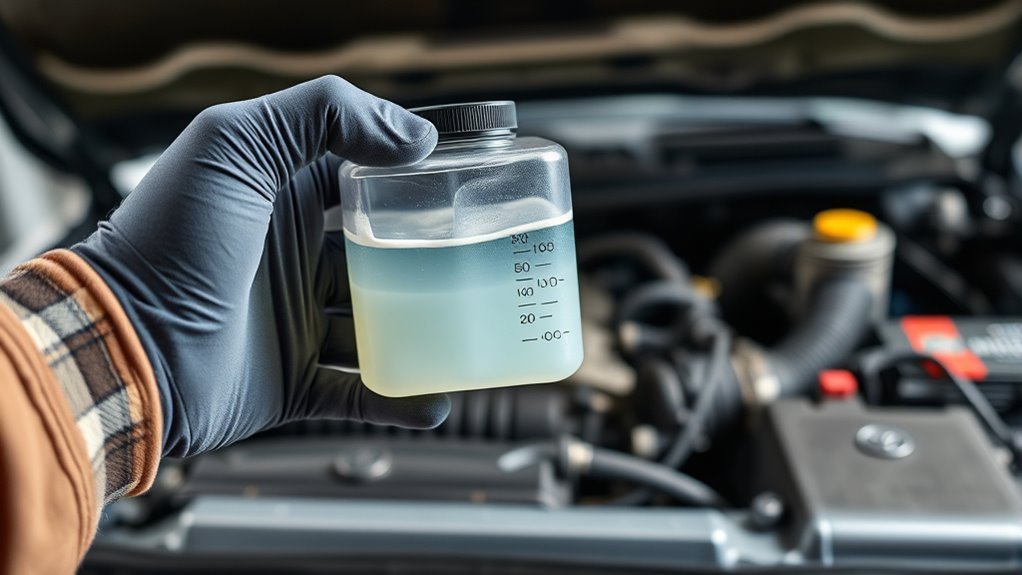
- Read the cold-level marks. The fluid should sit between the reservoir’s FULL and LOW lines or between its MAX and MIN lines. Follow the wording molded into that specific reservoir.
- Inspect the fluid. Normal Toyota Super Long Life Coolant is commonly pink, but the fluid should also look clean and consistent. Oily film, thick sludge, rust-colored fluid, floating debris, or severe cloudiness needs investigation.
- Add coolant only when necessary. If the cold level is at or below the lower mark, add the coolant specified in the manual slowly until it reaches the upper cold mark. Do not overfill it.
- Secure the cap and clean spills. Tighten the reservoir cap correctly. Rinse spilled coolant from painted or engine-compartment surfaces and keep coolant away from children and animals.
- Record and recheck the level. Note the date and level. Recheck it when the vehicle is cold after normal use. A quick second drop indicates a leak or another cooling-system fault.
Pro Tip: Take a clear photo of the cold reservoir level after each check. Comparing photos makes a slow leak easier to notice than relying on memory.
When to Check: Timing, Frequency, and Seasonal Triggers
Check the coolant as part of your regular under-hood inspection and before a long trip, towing, off-road driving, or other heavy use. A monthly cold check is a practical owner habit, but it does not replace the inspection and replacement intervals in the maintenance guide for your model year.
| Trigger | Action | Timing |
|---|---|---|
| Routine inspection | Check every applicable reservoir, its cap, and visible hoses | About monthly or as directed by the maintenance guide |
| Long trip, towing, or off-road use | Confirm the cold level and look beneath the vehicle for leaks | Before departure |
| Very hot or cold weather | Inspect more often if the vehicle is working harder or has a history of coolant loss | Before demanding use |
| High-temperature warning, steam, or red-zone gauge | Pull over safely and follow the overheating procedure in the owner’s manual | Immediately |
| Recent top-off or repair | Recheck every reservoir when fully cold | After the next few normal trips |
Coolant should not require frequent topping off in a sealed, healthy system. A small change between hot and cold readings is normal, which is why comparisons should always be made under similar cold conditions.
Reservoir vs. Radiator: What to Check When Cold
For a routine owner inspection, start with the translucent coolant reservoir or reservoirs identified in the owner’s manual. Check each cold level against the marks on its own tank. This is safer and more useful than opening the radiator cap.
Do not remove a radiator cap or another pressurized cooling-system cap as part of a normal monthly check. Some older Land Cruiser manuals or specific diagnostic procedures may direct a technician or experienced owner to check beneath a pressure cap, but that instruction applies only when the system is completely cold and the exact manual calls for it.
Note: A 2024–2026 hybrid Land Cruiser may not have the same cooling-system layout as an older V8 or diesel Land Cruiser. Always match the instructions to the year, engine, and market specification.
[Products Worth Considering]

This spill-proof radiator coolant filling funnel kit helps you refill cooling systems cleanly while reducing trapped air pockets that can affect heater and engine performance. It includes a 5-inch extension bar and 45-degree elbow for easier access under shrouds or at awkward angles. Color-matched caps for dedicated adapters make setup simpler and more organized.

This 12V relay box provides six organized relay slots and six fuse positions, helping you build cleaner, safer electrical setups for vehicles and marine systems. Pre-wired, color-coded 12 AWG wiring simplifies installation while the sealed cover and gasket help protect against dust and splashing water in demanding environments. It is a versatile solution for controlling lights, pumps, motors, and other accessories in automotive, truck, RV, or boat applications.
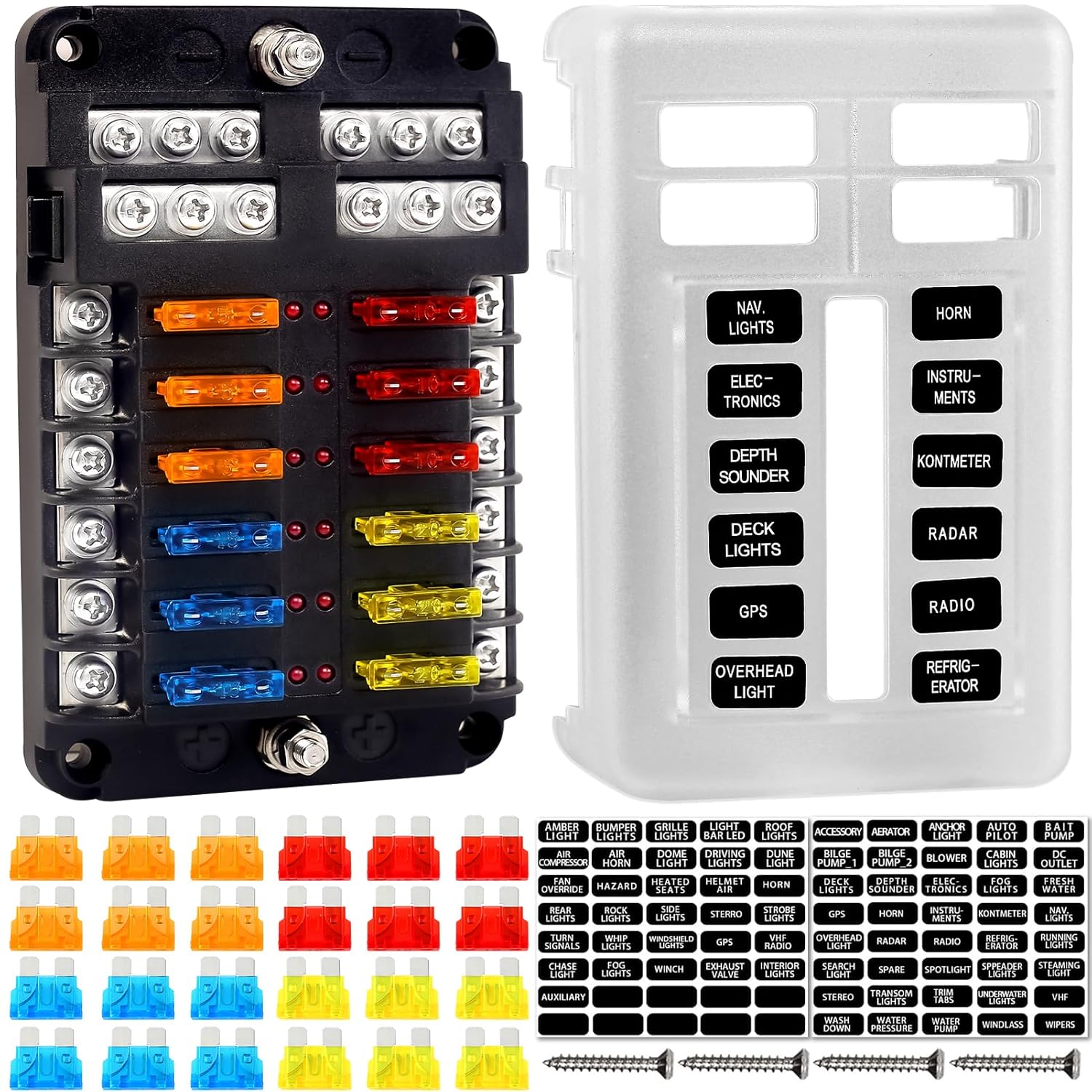
This 12-circuit fuse block provides organized, independent protection for vehicle and marine electrical systems, helping keep wiring neat and easier to maintain. Built with flame-retardant materials, nickel-plated copper components, and a protective cover, it offers reliable conductivity, corrosion resistance, and splash protection. LED indicators quickly identify blown fuses, while the included labels and extra blade inserts simplify installation and future service.
Check for Coolant Leaks: Water Pump, Hoses, and Overflow Signs
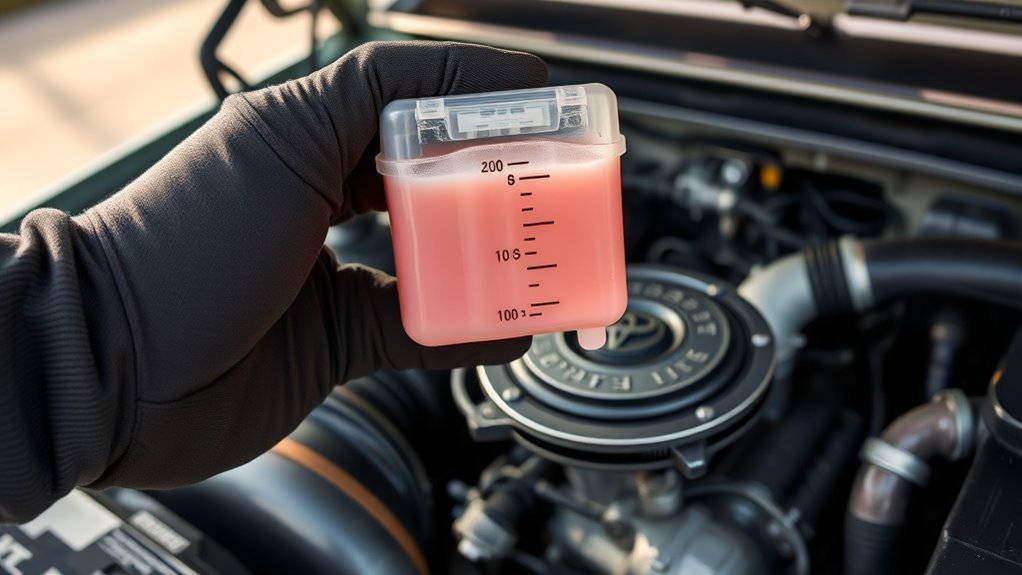
Inspect for leaks only with the vehicle switched off and the system cold. Use a flashlight and keep clear of the electric fan. Do not reach near belts, pulleys, or fans while the vehicle is running.
- Reservoirs and caps: Look for wetness, dried residue, cracks, damaged seals, or staining around each tank.
- Hoses: Check visible sections for cracks, swelling, abrasion, damp areas, or dried coolant near connections.
- Clamps and fittings: Look for corrosion, staining, or a wet trail. Do not overtighten a clamp without knowing the correct service procedure.
- Water-pump area: Dried pink or whitish residue can indicate seepage, but residue alone does not identify the exact failed part.
- Radiator area: Look through the grille and from a safe position under the hood for staining, wet fins, or damaged components.
- Ground beneath the vehicle: Note the color, location, and size of any puddle after parking.
- Odor: A persistent sweet smell may indicate coolant escaping onto a hot component or inside the heating and ventilation system.
A leak that appears only under pressure may leave little visible evidence when the engine is cold. A repair shop can pressure-test the appropriate circuit and inspect the radiator, water pump, heater circuit, hoses, caps, and hybrid cooling components as applicable.
Warning: Do not crawl beneath a vehicle supported only by a jack. If the leak cannot be inspected safely from above or from ground level, have the vehicle examined professionally.
[Products Worth Considering]
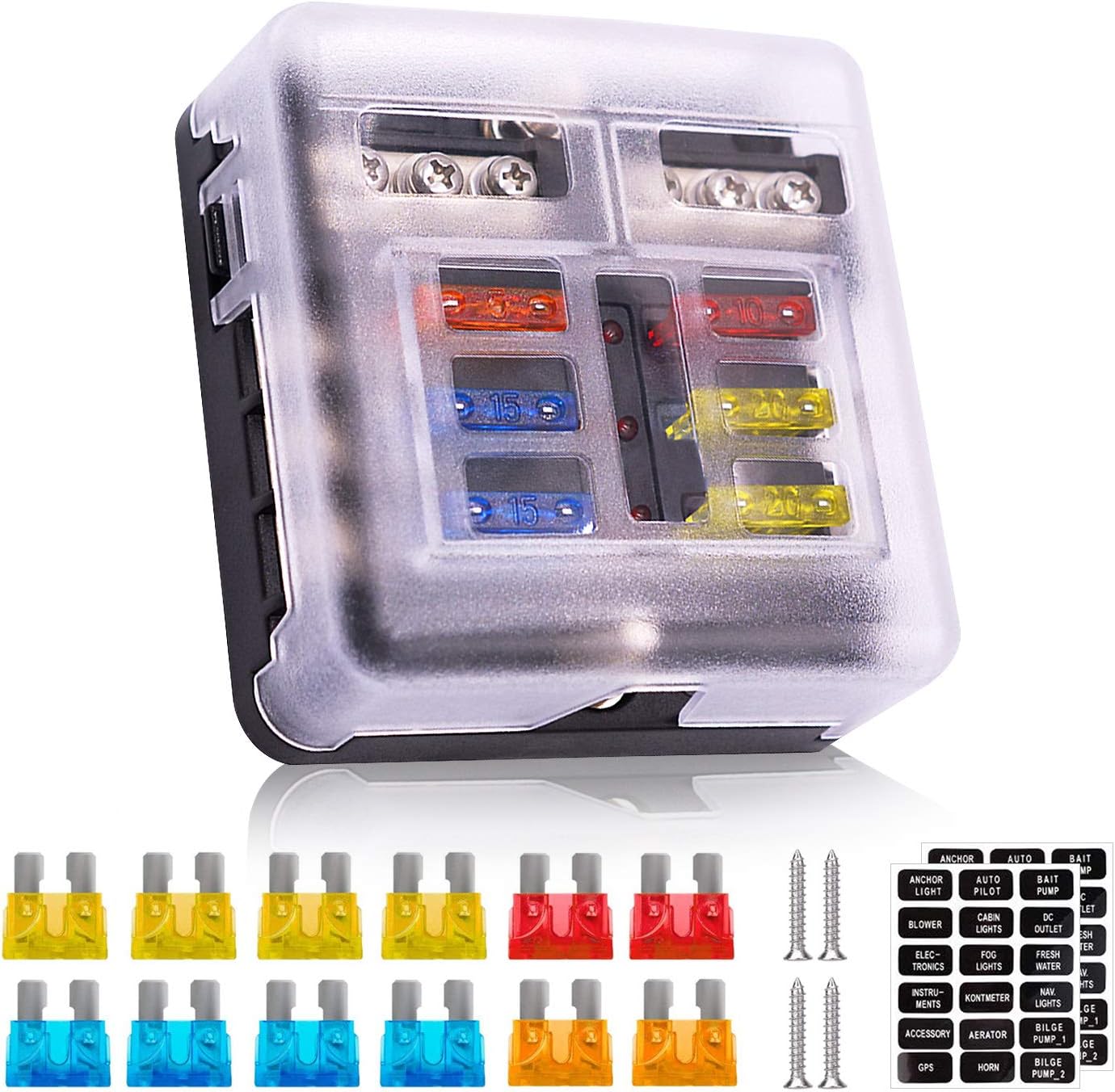
This 6-way fuse block provides organized circuit protection for marine, automotive, boat, truck, and other 12V or 24V electrical systems. Built with a fire-resistant housing and a ground bus, it helps keep wiring neat while the LED indicators quickly show when a fuse has blown for fast troubleshooting. It includes assorted blade fuses, labels, and mounting screws for an easier installation.

This 12V bus bar set provides a reliable and organized way to distribute power for marine, automotive, and solar wiring systems. Built with tinned copper conductors, insulated ABS bases, and multiple terminal connections, it helps simplify installation while improving safety and reducing the risk of short circuits. The included covers, lugs, and terminals make it a practical solution for clean, durable battery wiring.
What Low or Oily Coolant Means
A low level does not identify one specific failure. Possible causes include an external leak, a weak cap, trapped air after recent service, an incorrectly filled reservoir, heater-system leakage, or an internal engine or heat-exchanger problem. The rate of loss and the presence of other symptoms help determine how urgent the problem is.
Oily film, thick brown sludge, or milky contamination is not normal. Stop topping off the system repeatedly and arrange diagnosis. A failed head gasket is one possibility, but it is not the only possible cause.
Oily Coolant Signs
Inspect the cold coolant through the translucent tank whenever possible. Warning signs include:
- An oily rainbow-like film floating on the coolant.
- Beige, brown, or milky sludge on the tank wall or beneath the cap.
- Coolant that rapidly turns dirty again after a proper repair and flush.
- Simultaneous coolant loss, overheating, white exhaust steam after warm-up, or abnormal engine-oil appearance.
Do not open a hot cap to obtain a better view. A technician may need to test fluid samples, inspect heat exchangers, pressure-test the cooling system, and check for combustion gases.
Possible Head-Gasket Symptoms
A breached head gasket can allow combustion gases, coolant, or oil to cross between passages. Possible signs include repeated overheating, unexplained coolant loss, persistent bubbles in the cooling system, white exhaust vapor after the engine is warm, rough running, misfires, or abnormal oil contamination.
None of these signs proves head-gasket failure by itself. A correct diagnosis may require a cooling-system pressure test, combustion-gas test, cylinder leak-down test, compression test, scan data, and inspection of the oil and coolant.
Other Contamination Causes
Other possible sources of discolored or oily coolant include:
- Oil-cooler or heat-exchanger failure on models equipped with those components.
- A cracked cylinder head, engine block, or internal housing.
- Mixing incompatible coolant products.
- Old coolant, corrosion, or neglected cooling-system service.
- Sealant, stop-leak products, dirt, or residue left from an earlier repair.
- Incorrect fluid added to the coolant reservoir.
The system should be repaired before it is flushed. Replacing contaminated coolant without correcting the source will not solve the problem.
Which Coolant to Use in a Toyota Land Cruiser
Toyota’s current Land Cruiser specification calls for Toyota Super Long Life Coolant or a similar high-quality ethylene-glycol coolant that is non-silicate, non-amine, non-nitrite, and non-borate and uses long-life hybrid organic acid technology. Check the exact manual before buying coolant because requirements can vary across older model years, engines, and markets.
In the United States, Toyota Super Long Life Coolant is normally supplied as a 50% coolant and 50% deionized-water premix. Toyota documentation for Canada commonly specifies a 55% coolant and 45% deionized-water premix. Do not add water to a premixed product unless the manual or product instructions specifically require it.
Pink is the usual color of Toyota SLLC, while older Toyota Long Life Coolant was commonly red. However, color is not a technical compatibility standard. Two coolants can look similar while using different inhibitor packages. Match the written specification, not merely the color.
Pro Tip: Keep the receipt or photograph the coolant label. If a leak develops later, the technician will know exactly what product was added.
Do not mix concentrated antifreeze, premixed coolant, and water by guesswork. If the existing coolant type is unknown, badly contaminated, or clearly incompatible, have the system inspected and serviced rather than trying to correct the mixture with repeated top-offs.
[Products Worth Considering]

Antifreeze Coolant

OUR CYCLEMAX PACK CONTAINS: Three Quarts for Suzuki Ecstar Super Long Life Coolant 990A0-02E00-01Q along with a Convenient Disposable Funnel
Simple Fixes: When to Top Off and When to See a Shop
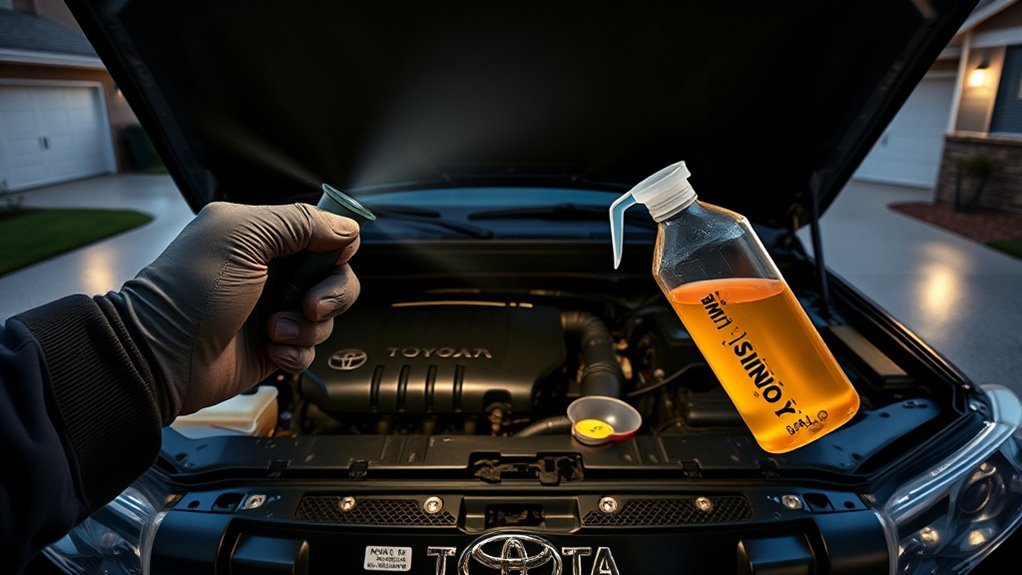
A minor top-off is reasonable when the vehicle is fully cold, the correct reservoir is only slightly below its lower mark, the coolant looks clean, no warning is active, and there are no signs of leakage or overheating.
When to Top Off
- Confirm the vehicle is level, fully off, and cold.
- Verify the correct reservoir and coolant specification in the owner’s manual.
- Use a clean funnel reserved for coolant.
- Add the specified premixed coolant slowly.
- Stop at the upper cold mark. Do not fill above it.
- Install the cap securely and clean any spill.
- Recheck the level cold after normal driving.
If the level falls again within a short time, stop treating it as a routine top-off. The system needs leak testing or further diagnosis.
When to Seek Professional Help
| Symptom | Recommended Action |
|---|---|
| Level repeatedly falls | Arrange a cooling-system inspection and pressure test |
| High-temperature warning or red-zone gauge | Pull over safely, switch off, and follow the owner’s manual |
| Steam from under the hood | Do not open the hood until the steam subsides; arrange assistance |
| Large puddle or fast leak | Do not continue driving; have the vehicle towed |
| Sweet smell inside the cabin | Have the heater circuit and ventilation system inspected |
| Oily, milky, rusty, or sludged coolant | Stop unnecessary driving and arrange contamination diagnosis |
| Cooling fan does not operate during an overheating event | Switch the vehicle off and contact a qualified repair facility |
Monitor Coolant Temperature: Dashboard vs. OBDII Readings
The factory gauge, warning light, and multi-information display are the driver’s primary warnings. A high-coolant-temperature warning, gauge entering the red zone, steam, unusual power loss, or an overheating message means you should pull over safely and follow the model-specific emergency procedure.
An OBDII reader can display the coolant-temperature value reported by the engine-control system, but it is a diagnostic aid rather than a replacement for the dashboard warning. There is no single normal or stop-driving temperature that applies to every Land Cruiser engine and model year. Temperature changes with engine design, load, speed, ambient conditions, thermostat strategy, and sensor location.
- Use a compatible scan tool and select the correct coolant-temperature data item.
- Record the reading only after confirming which cooling circuit and sensor it represents.
- Compare trends under similar operating conditions rather than relying on one isolated number.
- If the reading climbs abnormally, the dashboard warns of overheating, or the vehicle produces steam, pull over and switch it off.
- Have abnormal readings checked using Toyota service information for the exact engine.
A scan-tool number is useful only when it is interpreted for the correct model, engine, sensor, and operating condition.
Frequently Asked Questions
Can I still drive if the Land Cruiser says to check the coolant?
Pull over safely and identify the exact warning. Let the vehicle cool fully before inspecting it. Do not continue driving if the vehicle is overheating, producing steam, losing coolant rapidly, showing a high-temperature warning, or leaking heavily. A slightly low cold reservoir may be topped off with the correct coolant only after you confirm there is no serious fault.
Do I need to open the radiator cap to check the coolant?
Not for a normal routine check. Inspect the cold coolant reservoir or reservoirs identified in the owner’s manual. Never remove a radiator or pressure cap while the system is hot. Open one only if the exact model-year procedure specifically requires it and the system is completely cold.
Is any pink coolant safe for a Toyota Land Cruiser?
No. Pink color alone does not prove compatibility. Use Toyota Super Long Life Coolant or a product whose label explicitly meets the coolant specification listed in the owner’s manual for your year and engine.
Can I add plain water when the coolant is low?
Do not use plain water for a normal top-off because it reduces freeze, boil, corrosion, and lubrication protection. Some Toyota manuals permit water temporarily during an overheating emergency when the correct coolant is unavailable. Treat that as an emergency measure and have the mixture corrected promptly.
Why does the coolant level keep dropping?
Repeated loss may come from a hose, reservoir, cap, radiator, water pump, heater circuit, heat exchanger, or internal engine problem. Trapped air after recent service can also change the level. A system that needs repeated top-offs should be pressure-tested.
Why does my Land Cruiser have two coolant reservoirs?
Applicable hybrid models use separate cooling circuits for the gasoline engine and hybrid or power-control components. Each reservoir must be identified and checked according to the owner’s manual. Do not assume that filling one reservoir corrects the level in the other circuit.
Conclusion
Check your Land Cruiser’s coolant only when the vehicle is fully cold, switched off, and parked on level ground. Identify every reservoir shown in the manual for your exact year, read its cold-level marks, and add only coolant that meets Toyota’s stated specification. Do not choose coolant by color alone or open a hot pressure cap.
A small one-time correction may be simple, but repeated loss, steam, a temperature warning, a large leak, or contaminated fluid is not normal. Stop driving when overheating or rapid coolant loss is present and arrange a proper cooling-system diagnosis.
Sources
- Toyota 2026 Land Cruiser Owner’s Manual: Maintenance Data — coolant-system capacities and required coolant specification
- Toyota 2025 Land Cruiser Owner’s Manual: Warning Lights and Indicators — high-coolant-temperature warning information
- Toyota 2025 Land Cruiser Owner’s Manual: Hood Safety — hot-component and electric-cooling-fan precautions
- Toyota Genuine Super Long Life Coolant — genuine coolant product and cooling-system protection information
- Toyota Manuals and Warranties — model-year-specific owner’s manuals and maintenance guides