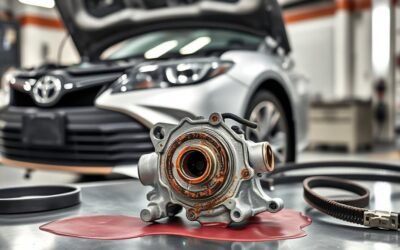
You’ll get smoother stops and better fuel economy because your Camry’s motor converts kinetic energy to electricity through the inverter and stores it in the hybrid battery, then blends that regenerative torque with hydraulic braking for predictable deceleration. The system prioritizes regen, adds friction brakes at low speed or under heavy demand, and continuously adjusts control logic to optimize recovery and pedal feel. Brake wear shifts rearward and inspection’s important—keep going and you’ll learn how to maintain and troubleshoot it.
Quick Take: What Camry Regenerative Braking Means for Drivers

Regenerative braking in the Camry captures kinetic energy during deceleration and converts it to electricity to recharge the hybrid battery, so you’ll see improved fuel economy and reduced reliance on friction brakes. You’ll notice blended braking: the system prioritizes regenerative torque at speed and brings hydraulic brakes in at low speed or for full stops. That blend yields measurable regenerative benefits — reduced fuel use, lighter wear on front pads, and service intervals extending to 70k–100k miles in many cases. The Camry’s brake pedal is mediated by an ABS module that simulates requests from sensors, so pedal feel differs from purely mechanical systems; you’ll adapt quickly with deliberate inputs. Increasing driver awareness of speed, throttle modulation, and smooth deceleration optimizes energy capture and furthers your independence from frequent refueling and maintenance. In short, grasp the system’s behavior, drive predictively, and you’ll exploit regenerative benefits while maintaining confident control and longer-lived friction components.
How Camry Regenerative Braking Works (Motor, Inverter, Battery)
While you slow down, the Camry’s electric motor reverses and acts as a generator, converting wheel-rotation torque into electrical energy that the inverter conditions and returns to the hybrid battery; the motor provides primary braking force while hydraulic brakes fill in at low speeds or when extra stopping power’s required. You’ll feel the motor’s resistance as controlled deceleration while its design maximizes motor efficiency, reclaiming usable kilowatt-hours instead of wasting them as heat. The inverter functionality is critical: it switches AC/DC direction, synchronizes frequency and voltage, and conditions regenerative current so the battery accepts charge safely. The hybrid battery stores that recovered energy for propulsion, enabling you to reduce fuel use and extend autonomy from fossil fuels. An onboard energy monitor makes the flow visible, so you can drive with intent and reclaim momentum. Components are managed by control software that prioritizes safe braking, battery state-of-charge limits, and peak motor efficiency to free you from excess consumption.
How and When Camry Blends Regenerative and Hydraulic Brakes
You’ll see the Camry’s control logic prioritize regenerative braking to recapture kinetic energy first, switching torque to the inverter and battery whenever conditions allow. At low speeds or when you need a full stop, the system smoothly blends in hydraulic brakes to provide reliable stopping force and pedal feel. Use the energy monitor to observe how regeneration tapers with speed and prolonged braking as hydraulic contribution increases.
Regeneration Priority Logic
Because the Camry’s control system favors energy recovery, it routes deceleration through the electric drive first, using the motor-generators to capture kinetic energy and only adding hydraulic braking when speed, pedal demand, or battery state make regen insufficient. You’ll notice regenerative efficiency is maximized during pedal-off coasting and moderate brake application, with the battery’s state-of-charge guiding how much energy the system accepts. The control unit continuously computes braking optimization by blending torque requests: motor torque for energy capture, friction torque for terminal deceleration or high-demand inputs. You retain control; the system responds to your inputs while prioritizing recapture. Dashboard charging feedback shows real-time performance so you can drive assertively yet sustainably, reclaiming kinetic energy without compromising stopping authority.
Blending At Low Speed
When you’re slowing to parking speeds, the Camry routes braking through the motor-generators first and only brings in hydraulic brakes as regen capacity tapers off or full stop pressure is required; this gradual handoff preserves smooth deceleration while maximizing energy capture. You feel consistent braking smoothness because the control system modulates torque from the electric motor based on pedal input, using motor-generated drag for primary deceleration. As speed falls and regen limits are reached, hydraulic pressure is blended in proportionally to maintain deceleration targets and safety margins. Light pedal applications bias electric braking to maximize energy recovery, while firmer inputs command earlier hydraulic intervention. The result is a liberated driving experience: efficient, predictable, and mechanically harmonious during low-speed stops.
Why Camry Brakes Wear Differently : And Friction‑Material Tips
Although regenerative braking handles most deceleration energy on a Camry hybrid, you’ll often see rear pads wearing faster than fronts because the system’s energy-recapture strategy shifts more friction duty rearward. You should track brake pad longevity and wear patterns; hybrids routinely let front pads last 70k–100k miles while rears need earlier attention. Use high-quality friction to avoid corrosion and separation since pads may never reach conventional operating temperatures.
| Item | Cause | Recommendation |
|---|---|---|
| Rear wear | Regenerative bias | Inspect rear pads more often |
| Front life | Low friction use | Expect extended longevity |
| Material risk | Low operating temp | Choose corrosion-resistant pads |
When replacing pads, follow standard Camry procedures and cycle the ABS module to maintain hydraulic integrity. Pick pads with stable binders and anti-corrosion backing. That preserves braking performance, reduces premature failures, and gives you control—mechanical freedom aligned with efficient energy recovery.
Why Your Camry May Make Noises or Feel Inconsistent When Braking

If you notice unusual noises or a variable pedal feel, the Camry’s brake blending between regenerative and hydraulic systems is the likely cause. You’ll hear mechanical noise sources from the high-speed electric motor or pump, especially with the engine off and the brake applied; these are normal operational sounds tied to energy recovery. You may also encounter inconsistent braking sensations because the system modulates regenerative torque first at speed, then hands off progressively to hydraulic friction as speed falls. The pedal’s feedback changes during that transfer and can feel distinct, less responsive, or stiff if ABS or valve control modulates pressure to manage the transition. Customer reports of noise and varying deceleration align with this control strategy: blended braking prioritizes efficiency over uniform pedal force. Understand that these effects result from intended control logic rather than conventional faults; however, persistent harshness or erratic ABS intervention warrants diagnostic inspection to restore predictable braking sensations.
Maintenance Checklist, Diagnostics, and Driving Tips to Maximize Regen
Check your brakes regularly for pad wear, rotor condition, and any signs of corrosion specific to hybrid use so regenerative and friction braking remain predictable. Run hybrid system diagnostics and monitor the energy-display readouts to verify regen effectiveness and identify sensor or actuator faults. Adopt steady deceleration, use B mode where appropriate, and tune pedal modulation to maximize recovered energy while maintaining safe stopping distances.
Regular Brake Inspections
When you schedule regular brake inspections on a Camry hybrid, focus equally on the regenerative system and the hydraulic components to keep braking performance and energy recovery at its best. You’ll monitor brake pad wear, inspect rear pads closely, verify brake fluid level, and test ABS operation so blending stays seamless. Use hybrid-specific pads to avoid corrosion and separation. Track the charging gauge while driving to gauge regen effectiveness.
| Task | Target |
|---|---|
| Rear pad check | Measure thickness; watch uneven wear |
| Brake fluid | Maintain manufacturer level |
| ABS/module | Functional test at service |
| Pad type | Hybrid-rated, high-quality material |
Set inspection frequency based on mileage and driving style to preserve safety and maximize liberation through efficient regen.
Hybrid System Diagnostics
Because regenerative braking behavior depends on both electrical and hydraulic systems, you should run a concise diagnostic routine that verifies pedal feel, ABS/hydraulic integrity, pad condition, and regen output. Use calibrated diagnostic tools to log regen current, state-of-charge changes, and ABS fault codes. Check brake responsiveness at low speed for smooth shift between regen and friction braking; inconsistent pedal travel or delayed engagement signals blending faults. Inspect pads for high-quality material, corrosion, and secure fitting—hybrid low-temperature duty can promote glazing or separation. Probe the ABS module and hydraulic lines for leaks, pressure drops, and sensor faults that impair blending. Monitor the charging gauge while decelerating to validate energy capture. Record findings, prioritize corrective action, and maintain autonomy over system performance.
Driving Habits For Regen
1 simple adjustment will increase regen capture: anticipate stops and lift off the accelerator gradually so the electric motor can engage and recover energy instead of forcing the hydraulic brakes to work. You’ll use braking techniques that favor motor resistance, watch the charging gauge, and choose “B” mode on descents to boost energy efficiency.
- Inspect brake pads and hydraulic components regularly — prioritize high-quality pads and ABS module checks to prevent corrosion and uneven wear.
- Monitor the dashboard charging gauge after maneuvers — adapt timing and throttle release to maximize recovered charge and reduce friction braking.
- Practice controlled deceleration patterns and use “B” mode on hills — this increases regen torque, lowers reliance on friction brakes, and preserves system integrity.
These habits free you from wasteful driving and extend hybrid performance.
Frequently Asked Questions
What Is the Disadvantage of a Toyota Camry Hybrid?
You’ll sacrifice consistent brake feel and some stopping predictability; regenerative blending can cause pedal oddities and uneven rear pad wear, and while fuel efficiency’s strong, battery lifespan concerns and repair complexity may limit long-term freedom.
What Happens if You Run Out of Gas in a Camry Hybrid?
Imagine a taut wire: you’ll lose normal propulsion and see warnings as the Camry hybrid shifts to electric-only, reducing hybrid performance; fuel management fails to recharge the system, so you’ll need to refuel to restore full operation.
Conclusion
So your Camry’s trying to be both eco‑saint and ordinary commuter—regenerative braking harvests energy via the motor/inverter/battery while hydraulic brakes step in when needed, and the blend’s controlled to keep performance predictable. Expect different pad wear, occasional noises, and finely tuned modulation; follow the maintenance checklist and diagnostics to avoid surprises. Embrace the hybrid paradox: fewer brake changes, more software faith, and the smug satisfaction of recuperated watts.