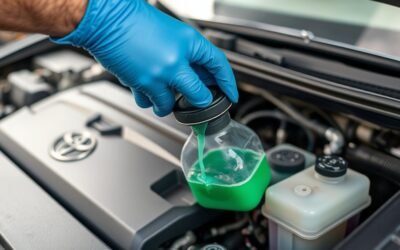
If your Camry hesitates during acceleration, start by checking fuel pressure, pump and filter, then inspect spark plugs, coils and injector spray for misfires. Scan live MAF, TPS and O2 data and test battery/alternator voltage. Clean the throttle body, verify air filter and smoke-test intake/vacuum for leaks. Confirm transmission fluid level and shift behavior under load. Follow this diagnostic order—sensors, ignition, fuel, airflow, transmission—and you’ll be set to troubleshoot further.
Quick Diagnostic Checklist for Camry Hesitation
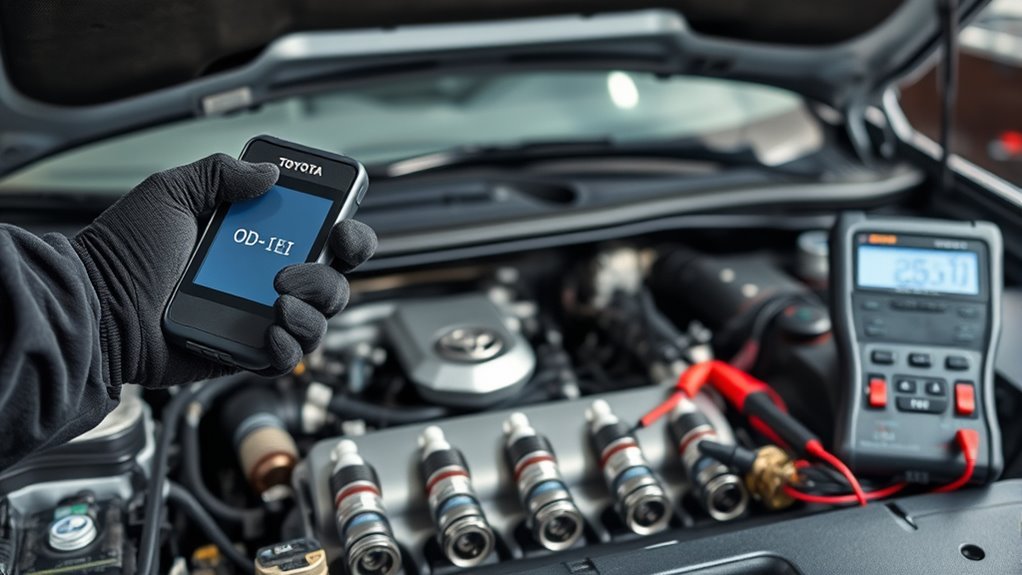
Start by checking fuel delivery: measure fuel pressure during acceleration to spot pump or rail issues under load, then scan live data from the MAF, TPS, and O2 sensors with a factory-level tool to catch faulty inputs affecting mixture and timing; clean the throttle body to remove buildup that blunts response, verify transmission fluid level and condition to rule out shift-related hesitation, and pressure-test or smoke-test vacuum hoses for leaks that upset the air–fuel ratio.
You’ll use diagnostic tools to log sensor traces and correlate fuel pressure with throttle position and O2 feedback. Prioritize repairs that restore baseline performance before adding performance upgrades; an ill-fitting intake or tune can amplify unresolved fuel, sensor, or vacuum faults. When you find abnormal readings, isolate components: swap sensors or apply known-good actuators to confirm faults. Check transmission pressure or codes if shifts coincide with hesitation. Document live-data snapshots to guide parts replacement and verify fixes. Work methodically, reject cosmetic modifications until drivability is solid, and reclaim control through precise, evidence-driven interventions.
Symptoms to Confirm: When and Where the Camry Hesitates
When the Camry hesitates during acceleration—often from a stop or on inclines—you’ll commonly feel a distinct pulsing or lag as the engine struggles to pick up speed. You should note when it happens, where it happens, and how it changes with temperature. These observations narrow down likely hesitation triggers and isolate specific driving conditions for targeted diagnostics.
- At low speeds (10–20 mph): you’ll sense a rhythmic pulsing or momentary loss of thrust during initial throttle input, often easing as you maintain speed.
- At mid speeds (30–40 mph): intermittent lag under light acceleration or passing maneuvers can occur without warning lights, forcing you to press harder on the pedal.
- Temperature and load dependency: hesitation that lessens when warmed or worsens on inclines points toward fuel delivery, throttle response, or sensor-related issues—document these patterns for a focused, liberating repair path.
Engine Ignition and Injector Faults: Plugs, Coils, Injectors, MAF
Check the ignition and fuel-delivery components first, since worn plugs, failing coils, clogged injectors, and a dirty or faulty MAF sensor are common causes of acceleration hesitation. You’ll want to verify spark plug condition and consider spark plug replacement every 60,000–100,000 miles to prevent misfires that cause hesitation and loss of propulsion. Conduct ignition coil testing when you detect jerking or a cylinder misfire; a weak coil degrades combustion and fuel economy.
Inspect injectors for spray pattern disruption; clogged injectors cause uneven delivery and jerking, so schedule fuel injector cleaning as preventive maintenance or after detecting rough acceleration. Evaluate the MAF sensor for contamination or failure—MAF sensor maintenance, including careful cleaning or replacement, corrects incorrect air-fuel calculations that manifest as rough running. Also scan for intake vacuum leaks; hissing near the engine often points to air leaks that upset mixture balance. Diagnose sequentially to reclaim control and engine responsiveness.
Check Fuel System and Pressure: Pump, Filter, Rail
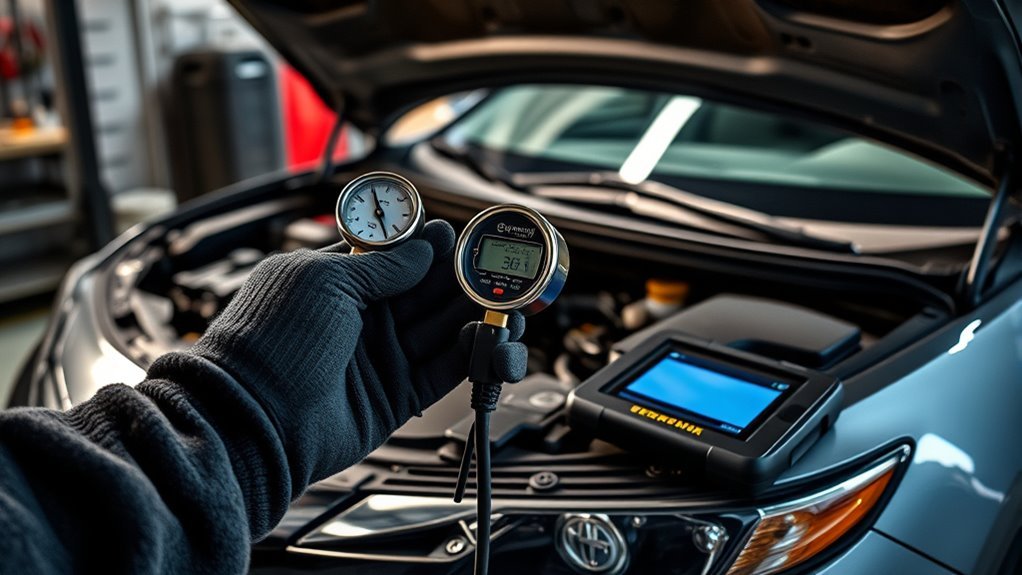
After verifying ignition and intake components, move on to the fuel-delivery hardware: fuel pump, filter, and rail. You’ll assess whether fuel pressure meets specs and if fuel delivery is consistent under load. Use a pressure gauge at the rail to confirm pump output and watch for drop-off during acceleration — a failing pump or weak delivery will show a voltage/pressure sag. A clogged filter shows normal idle pressure but collapses under demand. Inspect the rail and fittings for leaks or pressure irregularities that cause uneven injector feed.
- Test fuel pressure at rest and under throttle; compare to spec to isolate pump vs. restriction.
- Replace the fuel filter on schedule; a restrictive filter throttles fuel delivery and triggers hesitation.
- Inspect fuel rail integrity and connections; low rail pressure equals uneven fuel distribution.
Stay systematic: measure, replace suspect components, and restore reliable fuel pressure to reclaim control of your Camry’s acceleration.
Transmission and Load-Related Checks: Fluid, Filter, Shift Behavior
If your Camry hesitates under load, start by verifying transmission fluid level and condition—low or burnt fluid directly causes delayed engagement and limp acceleration. Check color and smell; amber, sweet-smelling fluid is healthy, dark/burnt indicates overheating or wear. Use OEM fluid for proper friction and longevity. Perform fluid maintenance on schedule and document intervals.
Run an OBD2 scan for transmission codes and test drive while monitoring shift points. Notice delayed engagement, hard shifts, or slipping under acceleration—these are diagnostic flags. A clogged filter restricts flow; prioritize filter replacement during service. If filters and fluid are correct but symptoms persist, you’ll need deeper diagnostics: valve body, solenoids, or torque converter.
| Checkpoint | Action |
|---|---|
| Fluid condition | Inspect color/smell; top or replace with OEM |
| Filter status | Replace filter; prevents flow restriction |
| Shift behavior | Scan codes; road-test for engagement/slip |
These measures free you from uncertainty and guide targeted repairs.
Airflow and Vacuum Checks: Throttle Body, Intake Leaks, Air Filter
Check the throttle body for carbon buildup and clean it if the throttle plate sticks or response is slow, since proper airflow is critical to the air-fuel ratio. Inspect intake manifold and vacuum hoses for leaks—listen for hissing and pressure-test suspect joints—to rule out air intrusion that causes rough idle and jerking. Verify the air filter is clean and correctly seated, replacing it if restricted to restore ideal airflow and reduce hesitation.
Throttle Body Cleaning
When carbon deposits restrict the throttle body, you’ll notice reduced airflow and delayed throttle response that mimic transmission or fuel delivery issues; cleaning the throttle body restores proper air passage, helps the electronic throttle control operate correctly, and sharpens acceleration. You should inspect and address carbon buildup on a scheduled basis to free the engine, reclaim performance, and protect electronic control systems. Use focused cleaning techniques, a throttle-body cleaner, and soft brushes; avoid harsh tools that damage sensors. Check the air filter and surrounding vacuum seals while you work.
- Inspection frequency: every 30,000–50,000 miles; look for soot, sticky plate action, and wiring corrosion.
- Maintenance tips: clean, retorque clamps, replace filter, test idle and throttle response.
- Performance enhancement: verify airflow optimization and resolve vacuum leaks promptly.
Intake Manifold Leaks
Because unmetered air upsets the engine’s calibrated fuel delivery, intake manifold leaks often show as hesitation and uneven acceleration you can trace to vacuum loss or cracked hoses. You should inspect the intake manifold gasket, runner seals, and all vacuum lines for hairline cracks or disconnections; even small leaks skew the air fuel mixture and cause stumbling under load. Perform a controlled smoke test or use a hand-held vacuum gauge to quantify leak severity. If smoke pinpoints a leak, replace the gasket or hose rather than patching; you want a durable seal to regain consistent idle and throttle response. After repairs, verify with a scan tool that fuel trims have normalized and that hesitation and TPS behavior are resolved.
Air Filter Condition
If your Camry’s intake air is restricted, the engine will hesitate under acceleration and run richer than designed; start by inspecting the air filter for clogging or heavy contamination. You’ll free performance by following disciplined air filter inspection and air filter maintenance routines—replace every 15,000–30,000 miles or sooner in dusty conditions. Also check seals, vacuum hoses, and the throttle body for buildup.
- Visually inspect filter element, replace if dark, oily, or collapsed; document mileage for maintenance.
- Probe intake seals and vacuum hoses for cracks or loose clamps; unmetered air causes erratic AFR and hesitation.
- Remove throttle body and clean carbon deposits if throttle response is sluggish; confirm smooth plate movement.
Act decisively to regain control and efficient acceleration.
Electrical and Sensors: Battery, Alternator, TPS, O2
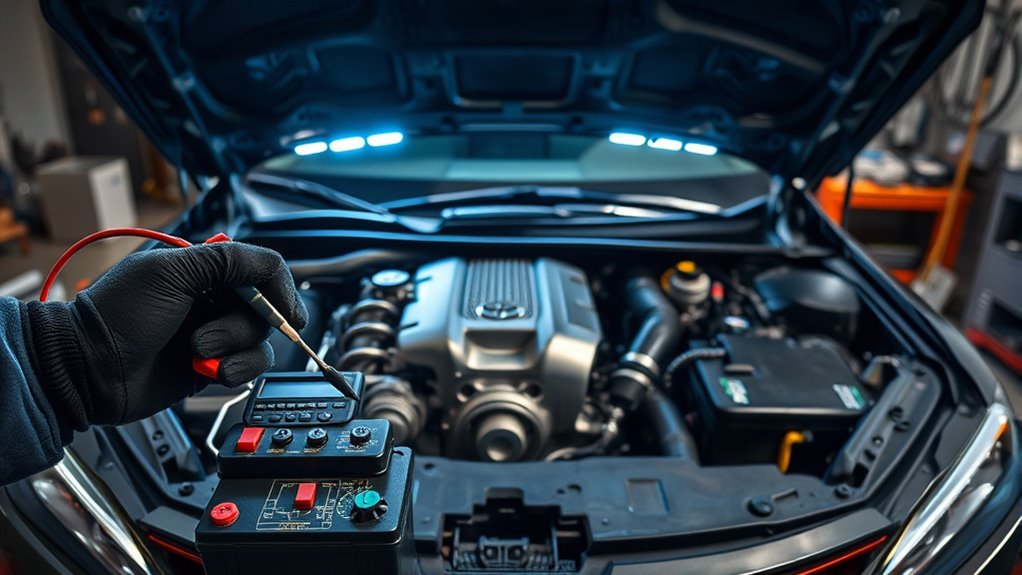
Check the battery and charging system first, since low voltage from a weak battery or bad alternator will impair sensors and ECU control of acceleration. Use a scanner to read fault codes and monitor real-time TPS and O2 sensor data to spot signal dropouts or out-of-range readings that correlate with hesitation. Replace or bench-test suspect sensors and confirm charging health before pursuing mechanical fixes.
Battery And Charging Health
While diagnosing hesitation, verify the battery and charging system first, since voltage irregularities can trigger erratic sensor readings and misreported throttle or oxygen data. You’ll measure battery voltage at rest—12.4–12.7 V is healthy—and with the engine running the charging system should show about 13.7–14.7 V. A weak battery or failing alternator lets voltage sag, which can corrupt TPS and O2 inputs and create intermittent hesitation.
- Load test battery and confirm 12.4–12.7 V off, 13.7–14.7 V running; replace if unstable.
- Inspect alternator output and belt; repair or replace if output falls outside spec.
- Clean and tighten terminals and grounds to guarantee consistent power; corrosion steals reliability.
Sensor Faults And Codes
Because sensor readings and stored codes directly reflect what the engine control unit sees, start your hesitation diagnosis by retrieving DTCs with a reliable OBD2 scanner and inspecting live TPS and O2 sensor data for anomalies. You’ll run sensor diagnostics to confirm whether the TPS is reporting smooth throttle travel or intermittent jumps, and whether O2 sensors show expected post-cat stability. Check battery and alternator voltage during tests — low voltage skews sensor outputs. Fault codes guide targeted repairs: replace a bad TPS, O2, or address charging issues. Replace MAF or other sensors if codes and live data match symptoms. Below is a concise reference to map codes, symptoms, and actions.
| Component | Common Codes | Diagnostic Action |
|---|---|---|
| TPS | P0120–P0124 | Verify voltage, replace if erratic |
| O2 | P0130–P0167 | Check heater circuit, replace sensor |
| Battery/Alt | P0562 | Load test, inspect charging system |
| MAF | P0100–P0104 | Clean/replace if contaminated |
Step-by-Step DIY Tests You Can Run at Home
If your Camry hesitates under acceleration, start with a few straightforward DIY diagnostics you can run at home to isolate the cause. These tests help you reclaim control, improve fuel efficiency, and learn how driving habits affect performance. Work safely, with the parking brake engaged and engine cool when required.
- Use a fuel pressure gauge while someone revs the engine; pressure should sit roughly 30–50 psi. Low or fluctuating readings point to pump or regulator issues.
- Pull a spark plug from each cylinder; inspect for wear, oil, or carbon. Replace per intervals (60k–100k miles) if fouled—misfires cause hesitation.
- Scan live OBD2 data for MAF, TPS, and O2 values, then visually check throttle body and vacuum hoses for carbon buildup or cracks. Clean throttle body and fix leaks if readings are erratic.
These steps isolate fuel, ignition, airflow, and vacuum faults before you pursue repairs.
Repair Options and Maintenance Plan: Quick Fixes to Shop Diagnostics
Start with a multi-point inspection at a certified shop to pinpoint the root cause of acceleration hesitation and prioritize repairs. You’ll get a mapped diagnosis: sensor faults, fuel delivery, ignition, or transmission. Use that roadmap to choose repair techniques that match severity — from throttle-body cleaning and air-filter replacement to targeted sensor swaps.
Follow tight maintenance tips: replace spark plugs every 60,000–100,000 miles, clean the throttle body, and change the air filter to restore airflow and combustion consistency. Use an OBD2 scanner to monitor live sensor data before and after service so you can verify fixes and stay in control.
If hesitation persists after quick fixes, authorize professional diagnostics for fuel-pressure testing, transmission scans, or advanced sensor calibration. That escalation path preserves your autonomy: you act informed, demand focused repairs, and avoid unnecessary parts replacement.
Frequently Asked Questions
What Causes a Toyota Camry to Hesitate When Accelerating?
You’re experiencing hesitation because fuel system faults, dirty throttle body or sensors reduce throttle response, worn plugs or vacuum leaks disrupt combustion, and transmission issues delay engagement—diagnose each component to reclaim reliable, liberated driving control.
How Do You Fix Hesitation When Accelerating?
Clean throttle body and injectors, replace spark plugs, fix vacuum leaks, scan OBD2 for MAF/TPS faults, and service the fuel system to restore throttle response—you’ll reclaim control and freedom from hesitation with decisive, diagnostic action.
Why Is My Camry Jerking When Accelerating?
Your Camry’s jerking when accelerating likely stems from compromised engine performance or poor throttle response due to dirty fuel injectors, worn ignition parts, faulty MAF sensor, vacuum leaks, or transmission issues; diagnose and replace failing components promptly.
Can a Bad Transmission Cause Hesitation When Accelerating?
Like a slowed clockmaker’s gear, yes — you’ll feel hesitation when transmission issues or fluid problems cause slipping or delayed engagement; check fluid levels, solenoids, and clutches so you can reclaim smooth, liberated acceleration.
Conclusion
About 1 in 4 drivers report intermittent hesitation at some point, so you’re not alone. Start with spark plugs/coils and fuel pressure — they’re the most common causes — then check MAF, throttle body, and vacuum leaks. Use the DIY tests to isolate ignition, fuel, airflow, and sensor faults before spending on parts. If hesitation persists, take the Camry to a shop for live-data diagnostics and pressure tests to avoid misdiagnosis and wasted repairs.