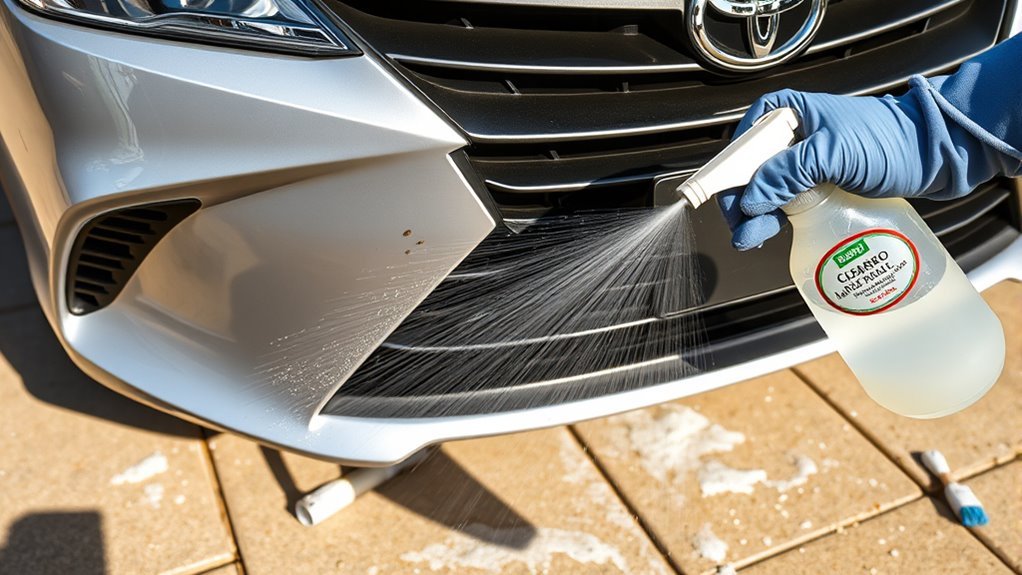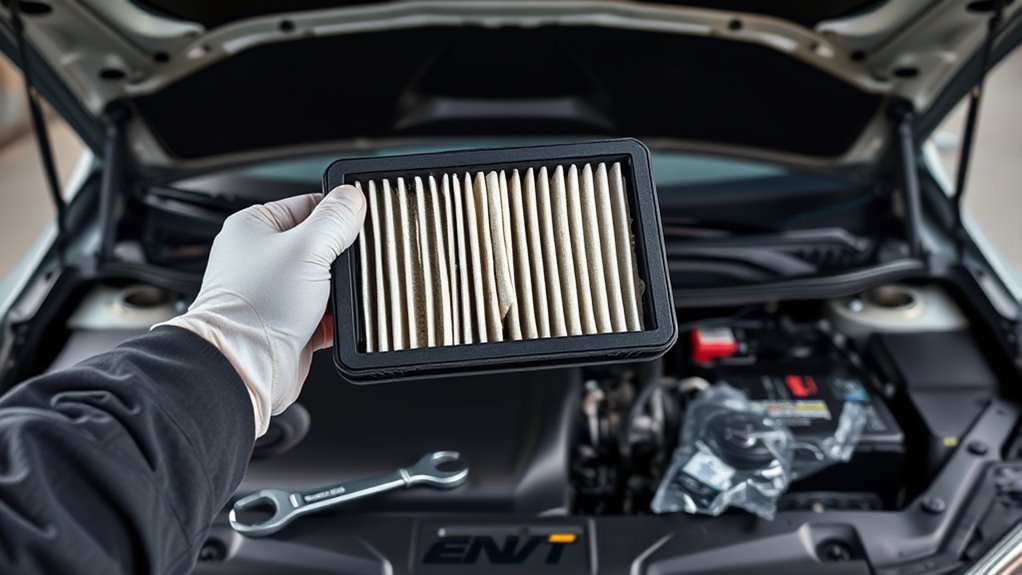
Your Toyota Camry’s engine air filter is small, inexpensive, and easy to ignore—but it protects the intake system every time the engine runs. For most Camry owners, the safest baseline is to replace the engine air filter at Toyota’s scheduled interval and inspect it sooner when driving conditions are dirty, dusty, or demanding.
Quick Answer
Replace a Toyota Camry engine air filter about every 30,000 miles or 36 months under normal driving, using your model-year maintenance guide as the final authority. Inspect it during regular 5,000-mile or six-month service checks, and inspect sooner if you drive on dirt, dusty, muddy, salted, or debris-heavy roads.
Key Takeaways
- Toyota’s Camry maintenance schedule uses 5,000-mile or six-month service intervals, with the engine air filter normally replaced at 30,000-mile intervals on recent models.
- Dusty roads, muddy roads, road salt, towing, heavy loads, and frequent short trips justify more frequent inspections.
- Replace the filter immediately if the media is torn, oil-soaked, collapsed, heavily clogged, or no longer seats tightly in the airbox.
- A clogged air filter on modern fuel-injected cars usually hurts acceleration and power more than fuel economy, according to U.S. Department of Energy guidance.
- Match the replacement filter by year, trim, engine, and VIN; do not rely on one universal Camry part number.
Camry Engine Air Filter Interval: The 30,000-Mile Baseline
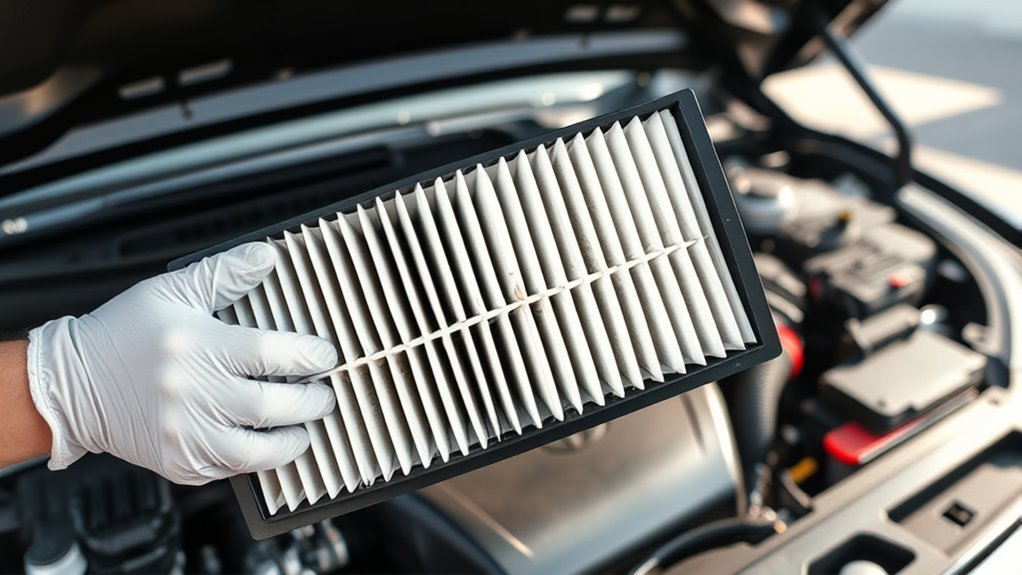
For many late-model Toyota Camry vehicles, the normal maintenance baseline is simple: follow Toyota’s 5,000-mile or six-month service rhythm, and replace the engine air filter at the scheduled 30,000-mile service. The 2025 Toyota Camry Warranty & Maintenance Guide shows scheduled maintenance every 5,000 miles or six months and lists engine air filter replacement at the 30,000-mile interval. The 2024 Toyota Camry Warranty & Maintenance Guide follows the same basic 30,000-mile replacement pattern for the engine air filter.
That does not mean you should ignore the filter until 30,000 miles. The better routine is to inspect it during regular service, especially if you do your own oil changes or tire rotations. Remove the filter, check the pleats, look for debris, and confirm the rubber seal is still flexible and intact. If it looks clean and undamaged, reinstall it correctly and keep driving. If it is heavily loaded with dirt or the pleats are damaged, replace it early.
Note: Toyota schedules can vary by model year, engine, market, and operating conditions. Use the owner’s manual or warranty and maintenance guide for your exact Camry as the final rule.
When to Change Sooner: Driving Conditions That Matter
The 30,000-mile interval is a normal-use baseline, not a guarantee. Toyota’s maintenance guides call out special operating conditions where extra maintenance items apply. For the engine air filter, dirt, dust, mud, road salt, towing, car-top carriers, and heavy loading are the situations that deserve extra attention.
Driving on Dirt, Dusty, Muddy, or Sandy Roads
If you regularly drive on dirt roads, construction areas, sandy roads, gravel shoulders, farm roads, or dusty rural routes, inspect the filter more often. Dust can pack deep into the pleats before the outside of the filter looks completely blocked.
- Inspect the filter at each 5,000-mile or six-month service.
- Replace it before 30,000 miles if the pleats are packed with grit.
- Check the airbox for leaves, sand, seed pods, and insect debris.
- Do not blow high-pressure compressed air through a disposable paper filter because it can damage the media.
- Confirm the filter seal sits flat so unfiltered air cannot bypass the filter.
Frequent Short Trips and Stop-and-Go Driving
Short trips do not always clog the air filter quickly on their own, but they often happen in urban traffic where dust, pollen, construction debris, and road grime are common. If most trips are short city hops, inspect the filter at normal service intervals and replace it when the media looks dark, restricted, damp, or damaged.
| Condition | What It Can Do | Best Action |
|---|---|---|
| Dusty commute | Loads pleats with fine particles | Inspect every 5,000 miles |
| High pollen season | Darkens and coats filter media | Inspect and compare to a new filter |
| Road salt or winter slush | Can leave damp, gritty residue | Check airbox and filter seal |
| Leaves or debris in airbox | Restricts intake airflow | Clean the housing before reinstalling |
Heavy Load, Car-Top Carrier, and Towing Use
Not every Camry is designed or equipped for towing, so check your owner’s manual before towing anything. If your Camry is approved for towing, or you often carry heavy loads or use a car-top carrier, the engine works harder and the intake system deserves more frequent checks.
- Inspect the engine air filter during every scheduled service.
- Replace it early if acceleration feels restricted and the filter is visibly clogged.
- Look for a distorted seal or warped filter frame after repeated heat cycles.
- Log mileage, driving conditions, and replacement dates so your next interval is based on evidence.
Inspect Your Camry Air Filter: A 5-Minute Check
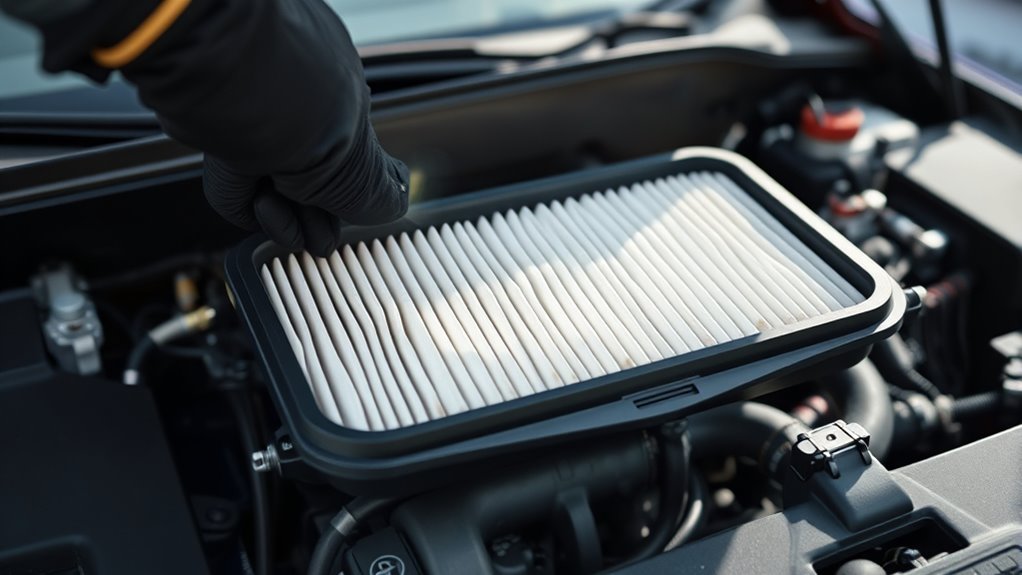
You can inspect most Camry engine air filters in about five minutes. Park on a level surface, turn the car off, let the engine bay cool, and open the hood. The engine air filter sits inside the airbox, usually a rectangular plastic housing connected to the intake duct.
Visual Light Test
Remove the filter and hold it toward a bright light. A clean paper filter should allow some light through the pleats. If most of the media looks dark and little light passes through, the filter is likely restricted. A side-by-side comparison with a new filter is the easiest way to judge it accurately.
- Good condition: light dust, even color, no tears, flexible seal.
- Borderline condition: darkened pleats, debris between folds, weak light transmission.
- Replace now: torn media, collapsed pleats, oil saturation, rodent damage, moldy smell, or a damaged frame.
Pleat and Debris Check
Inspect each pleat edge-to-edge. Look for compacted dirt, seeds, leaves, bug debris, oily patches, or sections that are crushed flat. Then look inside the airbox. A new filter cannot work correctly if loose debris is sitting underneath it or if the cover does not close evenly.
Warning: Do not run the engine with the air filter removed. Even a short test run can allow dust or debris into the intake tract.
Quick Tap or Vacuum Clean
If the filter has only light surface dust, you can tap it gently on a clean surface to dislodge loose particles. You may also use a vacuum with a soft brush near the dirty side of the filter. This is only a temporary inspection aid, not a full restoration. If the media is deeply clogged, replace the filter.
- Tap gently; do not bend the frame.
- Do not wash a disposable paper engine air filter.
- Do not use high-pressure air through the pleats.
- Wipe the airbox sealing surface with a clean lint-free cloth.
- Reinstall the filter in the correct orientation before closing the cover.
Signs Your Air Filter Needs Replacing Now
Replace the engine air filter immediately if the filter is physically damaged or clearly restricted. Waiting for a warning light is not a good plan because many dirty air filters cause drivability symptoms before they trigger a diagnostic code.
- Heavy dark clogging: the filter media is packed with dirt and very little light passes through.
- Torn or collapsed pleats: damaged media can let debris bypass the filter.
- Oil or water saturation: a wet or oily filter can restrict airflow and may point to a separate mechanical issue.
- Poor acceleration: a clogged filter can reduce the engine’s ability to breathe at higher load.
- Unusual intake noise: a loose cover or bad seal can create hissing, whistling, or rough running.
- Rodent damage: nesting material, chewed filter edges, or debris in the airbox means the filter should be replaced and the housing cleaned.
The U.S. Department of Energy notes that replacing a clogged air filter on modern fuel-injected vehicles usually improves acceleration rather than fuel economy. That makes filter condition a performance and engine-protection issue, not just a mileage question.
[Products Worth Considering]

ECOGARD XA5786 is a premium engine air filter designed to help protect your engine by trapping dust, dirt, pollen, and road particles before they enter the intake system. It supports smooth airflow for consistent engine response and fuel efficiency, and it is intended for regular replacement to help maintain reliable performance and engine longevity.

KAX CA12377 Premium Engine Air Filter is designed as a replacement for select Toyota and Lexus vehicles, helping keep harmful particles out of the engine while supporting steady airflow. Its high-efficiency filtration and longer service life can help improve acceleration, maintain consistent performance, and support better fuel economy. Built for broad vehicle coverage, it offers dependable protection for everyday driving and extended maintenance intervals.

KAX CA12377 engine air filter is designed as a replacement for select Toyota and Lexus vehicles, helping deliver cleaner airflow to the engine for smoother operation and maintained performance. Its resin-impregnated fiber paper media and 3-layer composite construction are engineered to meet or exceed OE air filter requirements with low resistance and high efficiency. Built for dependable fit and recommended periodic replacement, it supports long-term engine protection across a wide range of compatible models.
Which Filter Should You Buy? OEM vs. FRAM, WIX, K&N, and Washable Filters
The right filter depends on your Camry’s model year, engine, trim, and driving conditions. Do not buy by appearance alone. Use your VIN, owner’s manual, or a reliable parts catalog to confirm fitment before ordering.
| Filter Type | Best For | Watch Out For |
|---|---|---|
| Toyota Genuine / OEM | Factory fit, predictable sealing, warranty-friendly service records | Usually costs more than budget aftermarket filters |
| Quality paper aftermarket | DIY maintenance at lower parts cost | Fit and sealing quality vary by brand and part number |
| High-flow reusable | Owners who want a washable filter and are willing to maintain it | Must be cleaned, dried, and oiled exactly as directed |
| Dry washable | Reusable filter buyers who want to avoid oiling | Still requires scheduled cleaning and correct drying time |
For most daily-driven Camrys, an OEM or high-quality paper replacement is the easiest choice: install it, log the mileage, and replace it again at the next interval. Reusable filters can make sense for owners who keep cars long-term, but only if maintenance is done correctly. K&N’s official cleaning instructions require specific cleaning, drying, and re-oiling steps; the company also warns not to saturate oiled filters.
Pro Tip: If you are unsure between two filter part numbers, choose the one confirmed by VIN. A filter that almost fits can leak around the seal, which is worse than using an older but properly seated filter for a short time.
[Products Worth Considering]

This A-Premium engine air filter is designed to help deliver cleaner airflow to compatible Toyota, Lexus, Scion, and Pontiac vehicles. It supports a wide range of fitments across select Camry, RAV4, Avalon, Matrix, Venza, ES350, tC, xB, and Vibe models, making it a convenient replacement choice. Built for straightforward maintenance, it is intended for regular service intervals to help keep engine intake performance on track.

KAX CA10741 is a premium engine air filter designed to help maintain clean airflow for compatible Toyota and Lexus vehicles. It offers extended service life, strong filtration efficiency, and dependable protection for critical engine components while supporting smoother performance and fuel economy. The rectangular, box-packaged filter is built for easy replacement in supported models.
Air Filter vs. Oil Filter: Replacement Timing and Why It Differs

The engine air filter and oil filter protect different systems, so they do not follow the same replacement logic. The air filter protects the intake tract from dust and debris. Its life depends heavily on outside conditions, which is why inspection matters. The oil filter protects the engine’s lubrication system and should be replaced with the engine oil at the interval listed for your model year and driving conditions.
On recent Camry maintenance schedules, normal service usually includes engine oil and oil filter replacement at 10,000-mile or 12-month intervals, with shorter oil service under special operating conditions. The air filter, by contrast, is normally replaced at 30,000-mile intervals but inspected sooner when conditions are dirty or demanding.
Camry Air Filter DIY: Step-by-Step Replacement Checklist
At a Glance
| Time Required | 5–15 minutes |
| Difficulty | Beginner |
| Tools Needed | Usually no tools, or a basic screwdriver/socket depending on model year |
| Cost | One correct replacement filter; dealer labor is optional |
Tools and Supplies
Gather everything before opening the airbox. You do not need a large tool set for most Camry air filter replacements.
- Correct engine air filter matched by year, engine, and VIN
- Gloves to keep dirt and oil off the new filter
- Clean lint-free cloth for the airbox sealing surface
- Flashlight for checking the housing and pleats
- Screwdriver or small socket only if your airbox uses fasteners
Locate the Airbox
Open the hood and find the rectangular plastic airbox connected to the intake duct. Before removing anything, note how the clips, tabs, or screws hold the cover in place. Also check whether any hoses or sensors are attached nearby. You should not need to disconnect sensors for a basic filter replacement on most Camrys.
Remove the Old Filter
Release the clips or fasteners and lift the cover just enough to remove the old filter. Avoid forcing the cover against hoses or wiring. Pull the filter straight out and notice its orientation so the new one goes in the same way.
Clean the Housing
Before installing the new filter, remove leaves, sand, or debris from the airbox. Wipe the sealing surface with a clean cloth. Do not push debris into the intake tube. If the airbox contains rodent nesting material or chewed pieces, clean it thoroughly and inspect nearby wiring.
Install and Test the New Filter
Seat the new filter fully in the housing groove. The rubber edge should lie flat all the way around. Close the cover evenly and secure every clip or screw. Start the engine and listen for abnormal hissing or whistling, which can indicate a loose cover or mis-seated filter.
- Confirm the filter is fully seated with no folded edges.
- Make sure all clips or screws are back in place.
- Do not over-tighten plastic airbox screws.
- Write down the date and mileage.
- Recheck the cover after a short drive if anything sounded unusual.
When to Book Service at a Toyota Dealer in Houston
Book dealer service if you prefer Toyota Genuine parts, want service history documented, or notice symptoms that go beyond a dirty filter. A Toyota dealer can confirm the correct filter by VIN, inspect the intake housing, and check for related issues such as loose ducting, sensor problems, rodent damage, or warning lights.
Dealer service is also smart if the airbox is cracked, the cover will not latch, a sensor connector looks damaged, or the engine has a check-engine light. When scheduling, mention your mileage, driving conditions, recent symptoms, and whether the filter has ever been replaced.
Maintenance Plans and Cost Templates for Low-, Average-, and High-Mileage Drivers
A simple plan keeps you from replacing the filter too early or too late. Use your official Toyota maintenance guide as the base, then adjust inspections to match your driving environment.
| Driver Type | Inspection Plan | Replacement Plan |
|---|---|---|
| Low mileage Under 10,000 miles/year |
Inspect every six months or at each scheduled service | Replace at the scheduled time interval or sooner if dirty |
| Average mileage 10,000–20,000 miles/year |
Inspect during regular oil/tire service visits | Plan around the 30,000-mile baseline |
| High mileage Over 20,000 miles/year |
Inspect every 5,000 miles, especially in dust or road salt | Replace early when inspection shows restriction or damage |
| Severe dust or dirt roads | Inspect at every 5,000-mile or six-month service | Replace based on condition, not just mileage |
For budgeting, track three items: filter price, labor cost if you use a shop, and how often your real-world driving makes the filter dirty. After two or three inspections, you will know whether your Camry can comfortably follow the normal schedule or needs earlier replacement.
Frequently Asked Questions
Should you change a Camry air filter every 10,000 miles?
Not usually. Under normal driving, a recent Toyota Camry engine air filter is commonly replaced around the 30,000-mile service. However, you should inspect it at regular service intervals and replace it earlier if it is dirty, damaged, wet, oil-soaked, or no longer seals correctly.
What is the 10K maintenance on a 2025 Camry?
The 2025 Camry maintenance schedule uses 5,000-mile or six-month service intervals. Around 10,000 miles or 12 months, normal scheduled service includes items such as engine oil and oil filter replacement, tire rotation, fluid checks, brake inspection items, and other checks listed in Toyota’s maintenance guide. The engine air filter is normally replaced later, at the 30,000-mile interval, unless inspection shows it needs replacement sooner.
What maintenance do I need when my 2018 Toyota Camry hits 90,000 miles?
At 90,000 miles, follow the 2018 Camry warranty and maintenance guide for your exact engine and drivetrain. In general, 90,000-mile service is a major interval that can include engine air filter replacement, cabin air filter replacement, engine oil and oil filter replacement, tire rotation, fluid checks, brake inspection, drivetrain inspections, and other model-specific items.
Can I clean and reuse a Toyota Camry paper engine air filter?
You can gently tap off loose dust during inspection, but a disposable paper engine air filter is not designed to be washed and reused. If it is deeply dirty, wet, oily, torn, or collapsed, replace it. Washable filters are a separate product type and must be serviced according to their manufacturer’s instructions.
Will a new air filter improve my Camry’s gas mileage?
On modern fuel-injected vehicles, a clogged air filter usually affects acceleration and high-load performance more than fuel economy. Replacing a dirty filter is still important because it protects the engine and restores proper airflow, but it should not be sold as a guaranteed MPG fix.
Conclusion
Keep your Camry’s intake system simple and clean: inspect the engine air filter during regular service, replace it at the normal 30,000-mile baseline for recent models, and change it sooner when dirt, dust, mud, road salt, towing, heavy loading, or visible damage calls for it. Use the correct filter, seat it carefully, and document the mileage so the next service is based on a real record—not guesswork.
Sources
- 2025 Toyota Camry Warranty & Maintenance Guide — scheduled maintenance rhythm, engine air filter replacement interval, and special operating conditions.
- 2024 Toyota Camry Warranty & Maintenance Guide — recent Camry maintenance schedule and 30,000-mile engine air filter replacement reference.
- Toyota Manuals and Warranties — official place to check manuals and maintenance guides by model year.
- FuelEconomy.gov Vehicle Maintenance Guide — government guidance on clogged air filters and modern fuel-injected vehicles.
- U.S. Department of Energy: Replacing a Clogged Air Filter — performance versus fuel-economy effect of clogged filters.
- K&N Official Air Filter Cleaning Instructions — cleaning and servicing guidance for washable reusable filters.