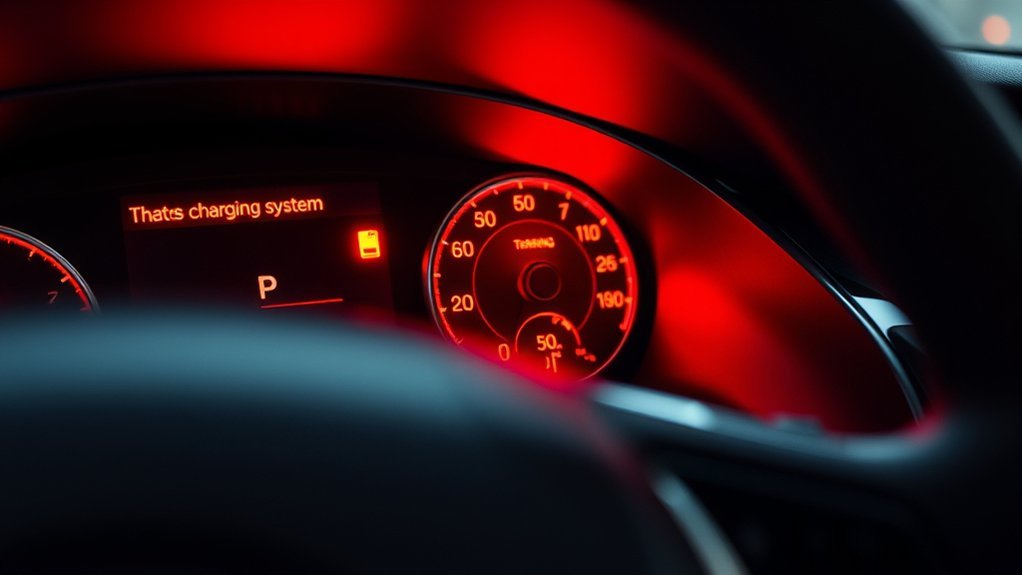
If your Camry’s charging system warning light is on, check the battery voltage; it should be above 12.5 volts at idle. Inspect the alternator’s yellow wire for proper voltage, and look for any corrosion on connections. Dimming headlights or accessory malfunctions can signal deeper issues. If the light stays on after replacing components, or if you notice low voltage readings, it’s time to contemplate professional help. There’s more to understand about diagnosing this issue effectively.
Understanding the Charging System in Your Camry

Understanding the charging system in your Camry is important, especially when you see the “Check Charging System” warning light. The system consists of key components: the alternator, battery, wiring, and engine control unit (ECU). Each plays a critical role in maintaining electrical power while the engine runs.
The alternator function is particularly essential, generating between 13.8 to 14.03 volts to keep the battery charged and power your vehicle’s electrical components. You should regularly check the yellow wire connected to the alternator; it should display battery voltage when the engine runs. A noticeably lower reading might indicate a wiring issue. Additionally, don’t overlook the serpentine belt—if it’s worn or broken, the alternator won’t charge effectively. By understanding these charging system components, you’re better equipped to diagnose problems and guarantee your Camry runs smoothly and efficiently.
Common Symptoms of Charging System Warning Light Issues
When the “Check Charging System” warning light appears, it’s essential to recognize the common symptoms that may indicate underlying issues. Proper symptom identification is vital to prevent further complications. Here are some typical signs to watch for:
- Dimming Headlights: A noticeable decrease in brightness can signal inadequate voltage.
- Electrical Accessories Malfunctioning: If your radio or power windows act erratically, it may indicate power supply problems.
- Difficulty Starting the Engine: Struggling to start can be a direct result of battery depletion.
- Low Voltage Reading: If you measure less than 12.5 volts at idle, even with a seemingly functioning alternator, a charging issue likely exists.
If you notice any of these symptoms alongside the warning light, it’s vital to address the problem promptly to avoid battery failure and potential vehicle breakdown.
Immediate Reasons for the Check Charging System Light Activation?
The activation of the “Check Charging System” light signals immediate concerns with your vehicle’s charging system that need attention. This warning often indicates insufficient voltage from the alternator, suggesting a potential failure. A faulty alternator, typically lasting between 80,000 to 150,000 miles, may not generate adequate power. In addition, a weak or dead battery, with a lifespan of 3 to 5 years, can trigger this alert due to its inability to hold a charge. Corroded wiring or poor connections can disrupt power flow, necessitating a thorough inspection to verify integrity. Moreover, a broken serpentine belt, which powers the alternator, can also cause the warning light to appear, so visual checks for wear or fraying are essential. Prioritizing battery maintenance and conducting regular alternator testing can help avoid these issues and guarantee your vehicle operates smoothly.
Initial Steps for Diagnosing the Problem
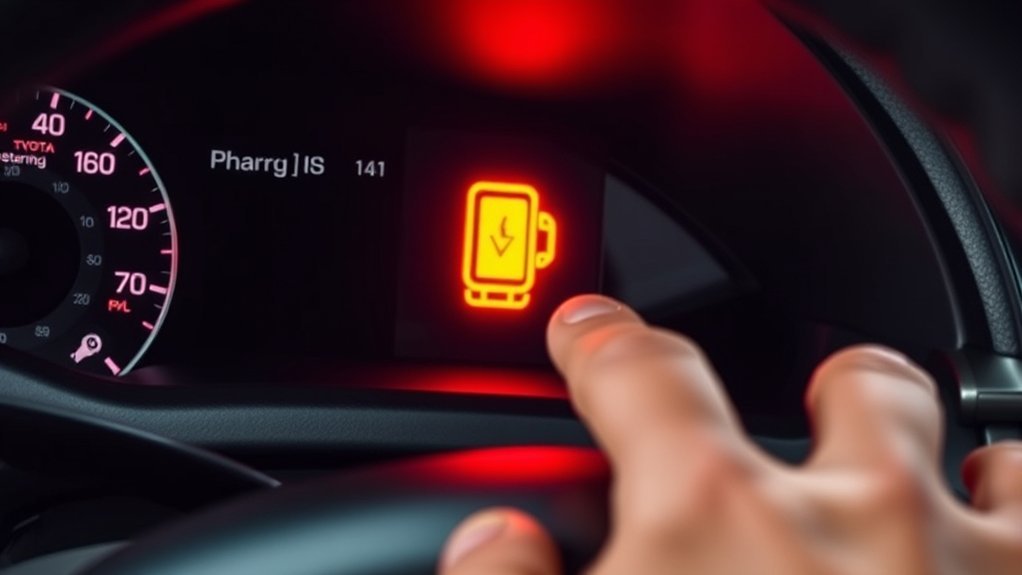
- Start by checking the voltage at the yellow wire on the alternator; it should match your battery voltage. A reading of 4.56 volts indicates potential wiring issues.
- While the engine is running, disconnect the alternator. If the “Check Charging System” light goes off, the alternator might be the culprit.
- Inspect both the IA3 connector in the left kick panel and the EA2 connector in the engine compartment fuse box for corrosion or poor connections, which can affect charging.
- Use a multimeter to measure the battery voltage. It should stay above 12.5 volts at idle to confirm the charging system is functioning properly.
How to Check Your Alternator First
After addressing potential wiring and connection issues, checking the alternator becomes a priority in diagnosing your Camry’s charging system. Start by measuring the voltage at the battery terminals with the engine running; it should read between 13.8 and 14.5 volts for proper charging. If the voltage is below this range, your alternator may be failing. Next, conduct a belt inspection to verify the alternator belt is not worn or loose, as this can greatly impact output. Also, examine the connections at the alternator for any corrosion or loose wires; poor connections can hinder electrical flow. For a direct assessment, use a multimeter for alternator testing by connecting it to the output terminal. A reading below 13 volts indicates an issue. If you suspect a fault, consult your vehicle’s service manual for specific testing procedures tailored to your model.
How Your Battery Affects the Charging System
Your battery plays a critical role in the charging system’s overall performance, acting as the primary energy source for starting the engine and powering electrical components. A healthy battery, typically lasting 3 to 5 years, should maintain around 12.6 volts; anything below 12.5 volts can trigger warning lights and indicate potential issues. By ensuring your battery’s voltage is stable and performing regular maintenance, you help protect the charging system from unnecessary strain and complications.
Battery Lifespan Impact
As your car battery ages, its ability to supply sufficient voltage to the charging system diminishes, often leading to warning lights illuminating on your dashboard. To guarantee your battery supports the charging system effectively, keep an eye on these lifespan indicators:
- Voltage Levels: A healthy battery should read 12.6 volts or higher when off.
- Charge Retention: A weak battery struggles to hold a charge, indicating impending failure.
- Terminal Condition: Corroded terminals can increase resistance, burdening the alternator.
- Regular Testing: Routine battery maintenance helps identify issues before they escalate.
Voltage Regulation Importance
The battery directly influences the charging system’s performance, acting as a key component in voltage regulation. It guarantees voltage stability by supplying a consistent power supply to your vehicle’s electrical components while the engine runs. A healthy battery typically maintains a voltage range of 12.6 to 12.8 volts at rest, which is essential for proper charging system operation. If the voltage drops below 12.5 volts, it signals battery health issues, potentially triggering the “Check Charging System” warning light. Voltage regulators within the alternator adjust output to keep the battery charged without overloading the system. Regularly testing both the battery and alternator voltage can help you catch problems early, preventing system failures and promoting peak vehicle performance.
Inspecting Wiring and Connections in Your Charging System
When troubleshooting the charging system, inspecting wiring and connections is essential for guaranteeing peak performance. Neglecting these elements can lead to persistent issues. Here are key steps for effective wiring inspection and connection maintenance:
- Check Connectors: Inspect the IA3 (26 pin) and EA2 (20 pin) connectors for corrosion or loose connections, which can disrupt functionality.
- Monitor Voltage: While the engine runs, check the yellow wire at the alternator for battery voltage. It should match; if not, further inspection is necessary.
- Secure Ground: Verify the ground cable from the battery is tight and free of corrosion. A poor ground can cause significant charging problems.
- Examine Wiring Harness: Look for frayed or damaged wires in the harness. Compromised wiring can lead to voltage loss or short circuits.
Regular maintenance of these components will help keep your Camry’s charging system operating efficiently.
Diagnosing Errors With Diagnostic Tools

To effectively diagnose charging system errors, utilizing diagnostic tools is essential for pinpointing specific electrical component issues. Start with a diagnostic scanner to reveal stored trouble codes related to the charging system. This helps you identify precise faults within the electrical components. Next, monitor the Powertrain Control Module (PCM) system voltage; this assessment is vital for evaluating the alternator’s control signals and ensuring it’s functioning correctly. Measuring the actual voltage output of the alternator with a multimeter confirms it’s generating adequate power to charge the battery while the engine runs. Regular use of these diagnostic tools enhances your troubleshooting techniques, allowing you to track voltage fluctuations and detect wiring problems or sensor malfunctions. Finally, after repairs, clear error codes to reset the vehicle’s computer system, which can resolve persistent warning lights indicating charging system issues.
When to Seek Professional Help for Charging Issues
If the “Check Charging System” warning light stays on after you’ve replaced both the alternator and battery, it’s time to consult a professional. A voltage reading below 12.5 volts at idle signals a failing charging system that needs expert evaluation. Additionally, if you encounter error codes post-replacement or feel uncertain about diagnostic tasks, engaging a certified technician is essential to guarantee proper repairs.
When to Replace Components
Several indicators can signal the need for professional help with your Camry’s charging system. Recognizing these replacement indicators can save you time and hassle. Here are key signs to watch for:
- Low Voltage Readings: If the alternator’s yellow wire shows consistently low voltage (e.g., 4.56 volts), it may indicate a wiring issue.
- Recurring Warning Light: A warning light reappearing after replacing the alternator and battery suggests deeper electrical problems.
- Serpentine Belt Issues: Loose or worn belts affecting alternator performance should be addressed by a mechanic if you can’t easily replace them.
- Corroded Wiring: Visibly damaged or corroded connections warrant professional inspection to avoid further complications.
Being aware of these component lifespans helps maintain your vehicle’s efficiency.
When to Consult Experts
Recognizing when to seek professional help for your Camry’s charging issues is essential for maintaining ideal vehicle performance. If the “Check Charging System” warning light stays on after replacing the alternator and battery, you should consult a professional for advanced electrical diagnostics. Complex problems like faulty wiring or an errant ECU often require specialized tools and expertise. If you’ve followed troubleshooting tips but still face issues, a certified mechanic can conduct tests on critical components like the voltage regulator. Additionally, significant voltage irregularities, such as a yellow wire at the alternator showing low voltage, suggest potential wiring problems that need expert attention. If multiple warning lights appear or electrical failures persist, it’s wise to seek professional intervention.
Frequently Asked Questions
How Do I Fix My Charging System Warning?
To fix your charging system warning, check for battery issues and inspect the alternator for problems. Use a multimeter to measure voltage output, ensuring it’s between 13.8 and 14.7 volts while running.
What Is the Charging System Light on a Toyota Camry?
“When the battery’s weak, the car’s bleak.” The charging system light on your Toyota Camry signals issues with battery health or alternator function, indicating potential problems that could leave you stranded if ignored.
Conclusion
In conclusion, keeping an eye on your Camry’s charging system is essential for a smooth drive. If that warning light flickers, don’t ignore it—address the issue promptly. By checking your alternator, battery, and connections, you can often pinpoint the problem before it snowballs. Remember, if the road ahead seems unclear, seeking professional help can guide you safely back on track. A little attention now can save you from a much bumpier ride down the line.